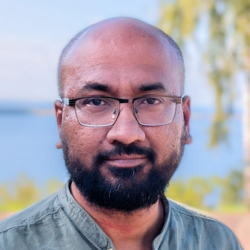
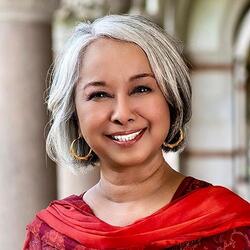
Authors
Noa Ronkin
News Type
News
Date
Paragraphs

Bangladesh last year staged a rare pivot against a global tide of democratic backsliding. In August 2024, a student-led uprising toppled the country’s long-entrenched authoritarian rule and opened a window for democratic reform. At that turning point, Netra News, Bangladesh's premier independent, investigative journalism platform, rose to the occasion in the role it was built for.

Founded in exile to investigate high-level abuse of power by Bangladesh's regime and press for accountability, Netra News delivered verified, real-time coverage amid internet blackouts and a deadly crackdown by the brutal government of Sheikh Hasina. In the aftermath of Hasina’s ouster, as an interim government has been working to introduce reforms and restore Bangladesh to democratic rule, Netra News’ evidence-driven, nonpartisan reporting helps frame policy debates, establish press freedom, and push for democratic norms.

For its courageous reportage and efforts to defend democracy in Bangladesh, Stanford University’s Asia-Pacific Research Center (APARC) honored Netra News with the 2025 Shorenstein Journalism Award, presenting it to Tasneem Khalil, the outlet’s founding editor-in-chief. At the award ceremony, held at Stanford University on October 7, 2025, Khalil delivered a keynote that reflected deeply on the purpose and power of public interest journalism, tracing the philosophy behind Netra News, which he titled “To Comfort the Afflicted and Confront Power.”


To receive insights from our experts and guest speakers, sign up for APARC newsletters >


Following his keynote remarks, Khalil joined a panel discussion with William Dobson, the coeditor of the Journal of Democracy and a veteran in international reporting, and Elora Shehabuddin, a professor of gender and women's studies and the director of the Chowdhury Center for Bangladesh Studies at UC Berkeley. James Hamilton, Stanford University’s vice provost for undergraduate education, the Hearst Professor of Communication, and director of the Journalism Program, chaired the discussion. Both Dobson and Hamilton also serve on the judging committee for the Shorenstein Award.

The Shorenstein Award, which carries a cash prize of $10,000, recognizes outstanding journalists and news outlets whose work has deepened the understanding of Asia while advancing the values of a free press.
 

Bearing Witness 


Khalil opened his remarks by sharing a photograph of himself listening to a Bangladeshi woman whose son had been abducted by the Rapid Action Battalion, the country’s elite counterterrorism force that has been accused of serious human rights violations and abuse of power. For Khalil, the image encapsulates the animating question at the heart of Netra News: What does it truly mean to comfort the afflicted?

Investigative journalists, he argued, are first and foremost witnesses. Their work requires listening and documenting, for as long as it takes. He described an investigation that started with a phone call from a day laborer in Malaysia, who recounted his experience being abducted in Dhaka and held in a secret site by a plainclothed squad. Khalil kept calling back with questions, continuing the conversation over months. The source shared precise recollections that helped Netra News map a clandestine detention facility in the heart of the Bangladeshi capital. The investigation, "Secret Prisoners of Dhaka," published in 2023, shed light on hidden abuses and was shortlisted for the Global Shining Light Award for investigative journalism in developing countries. 

Comforting the afflicted and confronting power is at the heart of the kind of journalism Netra News aspires to practice.
Tasneem Khalil

Khalil described other Netra News investigations that have sought to expose high-level crimes. “Body Count” combined data journalism and fieldwork to analyze more than a decade of alleged extrajudicial killings and acts of torture by Bangladeshi security forces. The patterns revealed which agencies were involved, geographic concentration, and spikes in killings during election cycles, all underscoring a systematic practice. For this work, the newsroom won a 2024 Sigma Award for Data Journalism.

Bearing witness, Khalil noted, means that public interest journalism must listen not only to the afflicted, but also to the perpetrators of horrible crimes. In another project, collaborating with German TV broadcaster Deutsche Welle, Netra News interviewed former Rapid Action Battalion commanders on camera about how extrajudicial killings were carried out. The investigation, "Inside the Death Squad," was the first to provide evidence of targeted killings and torture by the RAB, and was recognized with a 2024 Human Rights Press Award for documentary video.

Another joint investigation with DW exposed a pattern of deploying RAB members implicated in torture and killings to serve as United Nations peacekeepers. The revelations were cited by governments and lawmakers, and intensified scrutiny of peacekeeping vetting practices. 

“This is accountability journalism at its purest: reporting that not only informs, but also confronts power and demands justice, said Hamilton in his remarks before the award presentation.

Khalil situated this kind of reportage within a normative framework of journalism that defends democracy and human rights, for which he outlined four roles: monitorial (watching and warning), facilitative (bringing opposing segments of society together), radical (challenging institutions in the name of rights and freedoms), and collaborative (engaging with power when appropriate). First and foremost, this kind of journalism serves the public interest.

Instead of defending democracy in Bangladesh, we decided to cover the country as if it were a democracy, like Sweden or the United States, and report accordingly.
Tasneem Khalil

An Experiment in Exile


Those commitments guided Netra News from its inception. Khalii established the outlet in 2019 in Sweden, where he had lived in exile since 2008, seeking refuge following his detention and torture by the Bangladeshi military intelligence agency. As he set up the newsroom in exile with colleagues, he made a deliberate choice: rather than defending democratic norms from afar, they would “cover Bangladesh as if it were a democracy, like Sweden or the United States, and report accordingly.”

That meant reporting with no self-censorship or fear. Due to security risks to staff in-country, Netra News adopted the discipline of an intelligence operation, eschewing daily news coverage and opinions to concentrate instead on meticulously vetted investigations. With its reporters distributed across multiple countries and some working undercover in Bangladesh, the newsroom combined offshore editorial independence with on-the-ground reporting, publishing its investigations in both Bangla and English. This approach uniquely positioned the newsroom to cover the July 2024 uprising in Bangladesh with uncommon access.

Now, a year after mass protests toppled Sheikh Hasina’s authoritarian regime, and 18 years after he fled the country, Khalil has returned to open a Netra News bureau in Dhaka. Receiving the Shorenstein Journalism Award on behalf of the outlet at this moment, he said, is both recognition of its impact since its founding and a signal of support to the next generation of journalists carrying its mission forward.
 

Youth-Led Uprising in Context


During the discussion that followed Khalil’s keynote, the panelists considered the prospects for democracy in Bangladesh, the economics of investigative reporting, and the dynamics of youth-led protests in Asia.

Asked how the media landscape in Bangladesh had shifted since the 2024 uprising, Khalil said the media’s muscle memory remains one of censorship and fear. The challenge now is to “unlearn stenography,” that is, the practice of reporting only what those in power say, and build habits of dispassionate public interest journalism that scrutinizes both state and non-state power. That includes the interim government, corporate interests, and majoritarian religious forces.

You’re seeing entrenched political leaders challenged by decentralized youth movements.
William Dobson

Investigative journalism is a tough business to monetize and sustain. Khalil explained that Netra News is a nonprofit and that grant funding from the National Endowment for Democracy has made it possible. Long-term independence, however, will require earning monetary support from the people it serves. “The ultimate test is asking the public, ‘Will you pay for this?’”

Turning to Gen Z protest movements that have swept across South Asia, Dobson noted a wave of digitally savvy youth mobilizations pressing entrenched elites for substantive change. “People want real change, not shuffling the same roster of political players.” The youth-led uprisings that swept through Sri Lanka, Bangladesh, and, more recently, Nepal, explained Dobson, had not originally set out to topple the established regimes, but to fight deepening inequality and economic disparities. The agendas changed, however, due to the lack of responsiveness from political institutions that have been hollowed out by patronage and corruption.

Shehabuddin underscored the central role women activists played in Bangladesh’s 2024 protests, leading from the front to help topple the authoritarian government, only to find themselves largely absent from decision-making led by the interim government.

The event concluded with questions from the audience about journalism in transitional contexts and under strain amid democratic backsliding. Newsrooms should aim to serve the entirety of society, said Khalil, alluding to the fragmented media landscape in the United States. As for standing up to anti-democratic power, he returned to first principles: the media’s charge is to bear witness, especially when those in power disapprove.

Read More

Colonade at Stanford Main Quad with text: call for applications for APARC's 2026-28 fellowships.
News

Applications Open for 2026-2028 Fellowships at Stanford's Asia-Pacific Research Center

The center offers multiple fellowships in Asian studies to begin in fall quarter 2026. These include a postdoctoral fellowship on political, economic, or social change in the Asia-Pacific region, postdoctoral fellowships focused on Asia health policy and contemporary Japan, postdoctoral fellowships and visiting fellow positions with the Stanford Next Asia Policy Lab, and a visiting fellow position on contemporary Taiwan.
Applications Open for 2026-2028 Fellowships at Stanford's Asia-Pacific Research Center
In Keny, a doctor administers to an AIDs patient holding her child.
Blogs

Global Health at a Crossroads

Why Now Is the Time for Fundamental Reform
Global Health at a Crossroads
Seoul Cheonggyecheon
News

Frontiers in Sociology: From Korea, Takeaways for the World

At the 4th International Conference on the Sociology of Korea, a cross-generational community of scholars gathered at Stanford to examine how Korea’s fast-changing society illuminates shared challenges of demographic transition, inequality, mental health, migration, and more.
Frontiers in Sociology: From Korea, Takeaways for the World
Hero Image
Tasneem Khalil delivers remarks at a lectern.
Tasneem Khalil, the founding editor-in-chief of Netra News, winner of the 2025 Shorenstein Journalism Award, delivers keynote remarks, "To Comfort the Afflicted: Defending Democracy in Bangladesh," at the award ceremony, October 7, 2025, Stanford University.
Rod Searcey
All News button
1
Subtitle

The 2025 Shorenstein Journalism Award recognized Netra News, Bangladesh’s premier independent media outlet, at a celebration featuring Tasneem Khalil, its founding editor-in-chief, who discussed its mission and joined a panel of experts in considering the prospects for democracy in Bangladesh.

Date Label
-
Flyer for the 2025 Shorenstein Journalism Award celebrating Netra News. Text: "To Comfort the Afflicted: Defending Democracy in Bangladesh." Images: in the background, a protest for democracy in the country, August 2024; in the foreground: headshots of the panel speakers.

To Comfort the Afflicted: Defending Democracy in Bangladesh


The 2025 Shorenstein Journalism Award Honors Netra News and its Founding Editor-in-Chief Tasneem Khalil


As the maxim goes, public interest journalism is about comforting the afflicted and afflicting the comfortable. Since its inception in 2019, Netra News has striven to serve the afflicted in Bangladesh while ceaselessly challenging a one-party police state that engaged in a campaign of enforced disappearances and extrajudicial executions. Tasneem Khalil, the editor-in-chief of Netra News, discusses its mission of defending democracy in Bangladesh.

Join Stanford's Asia-Pacific Research Center in celebrating Netra News, winner of the 2025 Shorenstein Journalism Award for its courageous reportage and efforts to establish and uphold fundamental freedoms in Bangladesh.

Following Khalil's keynote, he will join in conversation with panelists William Dobson, a co-editor of the Journal of Democracy and a member of the selection committee for the Shorenstein Journalism Award, and Professor Elora Shehabuddin, the director of the Chowdhury Center for Bangladesh Studies at UC Berkeley.

Panel Chair: James Hamilton, vice provost for undergraduate education, Hearst Professor of Communication, director of Stanford Journalism Program, Stanford University, and a member of the selection committee for the Shorenstein Journalism Award.

The event will conclude with a Q&A session. It is free and open to all.
Lunch will be provided for registered attendees. 


Speakers   
 

Tasneem Khalil

Tasneem Khalil, a pioneer of investigative journalism in Bangladesh, is the founding editor-in-chief of the bilingual (English and Bengali) Netra News. Putting the theory of human rights-centric public interest journalism into practice, Netra News stands as Bangladesh's premier independent, non-partisan media outlet. It is committed to establishing and upholding fundamental freedoms in the country via a free press pursuing the truth. Khalil is also the author of Jallad: Death Squads and State Terror in South Asia

William Dobson

William Dobson is the co-editor of the Journal of Democracy. Previously, he was the chief international editor at NPR, where he led the network’s award-winning international coverage and oversaw a team of editors and correspondents in 17 overseas bureaus and Washington, DC. He is the author of The Dictator’s Learning Curve: Inside the Global Battle for Democracy, which examines the struggle between authoritarian regimes and the people who challenge them. It was selected as one of the “best books of the year” by Foreign Affairs, The AtlanticThe Telegraph, and Prospect, and it has been translated into many languages, including Chinese, German, Japanese, and Portuguese.

Before joining NPR, Dobson was Slate magazine’s Washington bureau chief, overseeing the magazine’s coverage of politics, jurisprudence, and international news. Previously, he served as the Managing Editor of Foreign Policy, overseeing the editorial planning of its award-winning magazine, website, and nine foreign editions. Earlier in his career, Dobson served as Newsweek International’s Asia editor, managing a team of correspondents in more than 15 countries. His articles and essays have appeared in the New York TimesWashington PostFinancial TimesWall Street Journal, and elsewhere. He has also served as a visiting scholar at the Carnegie Endowment for International Peace. Dobson holds a law degree from Harvard Law School and a Master’s degree in East Asian Studies from Harvard University. He received his Bachelor’s degree, summa cum laude, from Middlebury College.

Elora Shehabuddin

Elora Shehabuddin is a professor of gender & women's studies, equity advisor in gender & women's studies, director of the Global Studies Program, and director of the Subir and Malini Chowdhury Center for Bangladesh Studies, all at the University of California, Berkeley. Before moving to Berkeley in 2022, she was a professor of transnational Asian studies and core faculty in the Center for the Study of Women, Gender, and Sexuality at Rice University. She was an assistant professor of women's studies and political science at UC Irvine from 1999 to 2001. She received her bachelor's degree in social studies from Harvard University and her doctorate in politics from Princeton University.

She is the author of Sisters in the Mirror: A History of Muslim Women and the Global Politics of Feminism (University of California Press, 2021), Reshaping the Holy: Democracy, Development, and Muslim Women in Bangladesh (Columbia University Press, 2008), and Empowering Rural Women: The Impact of Grameen Bank in Bangladesh (Grameen Bank, 1992). She has published articles in Meridians, Signs, Journal of Women's History, History of the Present, Economic & Political Weekly, Modern Asian Studies, Südasien-Chronik [South Asia Chronicle], Journal of Bangladesh Studies, and Asian Survey, as well as chapters in numerous edited volumes. She was a guest co-editor of a special issue of Feminist Economics on “Gender and Economics in Muslim Communities.” She is co-editor of the Journal of Bangladesh Studies and serves on the editorial board of a new Cambridge University Press book series titled "Muslim South Asia."

Panel Chair
 

James Hamilton

James T. Hamilton is vice provost for undergraduate education, the Hearst Professor of Communication, and director of the Journalism Program at Stanford University. His books on media markets and information provision include All the News That’s Fit to Sell: How the Market Transforms Information into News (Princeton, 2004), Regulation Through Revelation: The Origin, Politics, and Impacts of the Toxics Release Inventory Program (Cambridge, 2005), and Channeling Violence: The Economic Market for Violent Television Programming (Princeton, 1998). His most recent book, Democracy’s Detectives: The Economics of Investigative Journalism (Harvard, 2016), focuses on the market for investigative reporting. Through research in the field of computational journalism, he is exploring how the costs of story discovery can be lowered through better use of data and algorithms. Hamilton is co-founder of the Stanford Computational Journalism Lab, senior fellow at the Stanford Institute for Economic Policy Research, affiliated faculty at the Brown Institute for Media Innovation, and member of the JSK Fellowships Board of Visitors.

For his accomplishments in research, he has won awards such as the David N Kershaw Award of the Association for Public Policy Analysis and Management, the Goldsmith Book Prize from the Kennedy School’s Shorenstein Center (twice), the Frank Luther Mott Research Award (twice), and a Center for Advanced Study in the Behavioral Sciences Fellowship. Teaching awards from Harvard, Duke, and Stanford include the Allyn Young Prize for Excellence in Teaching the Principles of Economics, Trinity College Distinguished Teaching Award, Bass Society of Fellows, Susan Tifft Undergraduate Teaching and Mentoring Award, and School of Humanities and Sciences Dean’s Award for Distinguished Teaching.

Before joining the Stanford faculty, Hamilton taught at Duke University’s Sanford School of Public Policy, where he directed the De Witt Wallace Center for Media and Democracy. He earned a bachelor's degree in economics and government (summa cum laude) and a doctorate in economics, both from Harvard University.

James Hamilton


Fisher Conference Center
Frances C. Arrillaga Alumni Center
Stanford University
326 Galvez Street, Stanford, CA

Tasneem Khalil
William Dobson
Elora Shehabuddin
Panel Discussions
Date Label
Authors
Noa Ronkin
News Type
News
Date
Paragraphs

Stanford University’s Walter H. Shorenstein Asia-Pacific Research Center (APARC) announced today, in the run-up to World Press Freedom Day, that Bangladesh-focused investigative newsroom Netra News is the recipient of the 2025 Shorenstein Journalism Award. Banned in Bangladesh, Netra News is a Sweden-based, independent platform for public interest journalism that publishes reportage, analysis, and debate on Bangladeshi politics and society. The award recognizes the media outlet for its courageous investigations into high-level corruption and human rights abuses in Bangladesh, defending press freedom, and championing the rule of law and democratic values in the country, one of the world’s most difficult places for practicing journalism. APARC will present the Shorenstein Award to Tasneem Khalil, the platform’s founding editor-in-chief, at a ceremony at Stanford University in autumn 2025.

Sponsored by APARC, the annual Shorenstein Award carries a $10,000 cash prize and honors journalists and journalism organizations for advancing a greater understanding of Asia through outstanding reporting on critical issues in the region. Emulating this purpose, Netra News and its team of editors and reporters have published fearless investigations into human rights violations and corruption in Bangladesh, including extrajudicial killings and acts of torture by security forces, deadly custodial abuse by military personnel, an illegal secret prison run by Bangladesh’s notorious military intelligence agency, and state-sponsored cybercrime

Bangladesh had experienced political corruption for decades and had long been a dangerous environment for journalists. Between 2001 and 2006 — a time when an interim government supported by the military took over — journalists in the country suffered threats, intimidation, harassment, and torture from law enforcement agencies.

Image
Tasneem Khalil

Investigative reporter Tasneem Khalil experienced the regime’s brutality firsthand. A pioneer of investigative journalism in Bangladesh and author of Jallad: Death Squads and State Terror in South Asia, Khalil had worked for the Bangladeshi English-language Daily Star, consulted Human Rights Watch, and was a news representative for CNN. In 2007, he was arrested and tortured by Bangladesh’s military intelligence agency in response to his reports on human and civil rights violations by state forces. He was released thanks to international pressure and, after several weeks spent in hiding, escaped Bangladesh and took refuge in Sweden.

Over the next decade, press freedom in Bangladesh steadily declined as then-Prime Minister Sheikh Hasina and her ruling party, the Awami League, tightened their grip by brutally harassing and silencing opposition voices and independent civil society figures. To stifle peaceful dissent and curb free expression, the government passed draconian laws, such as the 2018 Digital Security Act (DSA), under which journalists and critics of the Awami League were routinely targeted and prosecuted.

Khalil launched Netra News on December 26, 2019, to hold Bangladesh’s government and security forces accountable and defend fundamental freedoms in the country. Within 48 hours of publishing its first exposé on alleged ministerial corruption, its site was blocked in Bangladesh. Since then, Khalil has overseen Netra News’ growth into the country’s premier independent, non-partisan investigative media outlet, combining offshore human rights-centric public interest journalism with on-the-ground reporting. 


Sign up for APARC newsletters to receive our updates in your inbox > 

Operating amid severe risks, Netra News has become a vital force for speaking truth to power and defending the rule of law in Bangladesh. Under Tasneem Khalil’s leadership, its investigations have pushed the boundaries of accountability journalism and innovative storytelling.
Gi-Wook Shin
Director, APARC

The newsroom's bold coverage, published in English and Bangla, has earned international recognition, including a Sigma Award, a Human Rights Press Award, and a Global Shining Light Award. In summer 2024, as mass student-led protests against Ms. Hasina broke out across Bangladesh and authorities imposed violent crackdowns and internet blackouts, Netra News emerged as a rare source of non-partisan information on the unfolding events. The protests toppled Hasina’s authoritarian government, whose actions may amount to crimes against humanity, according to a recent United Nations report.

“Operating amid severe risks, Netra News has become a vital force for speaking truth to power and defending the rule of law in Bangladesh,” said Stanford sociologist Gi-Wook Shin, the William J. Perry Professor of Contemporary Korea and the director of APARC. “Under Tasneem Khalil’s leadership, the newsroom investigations have pushed the boundaries of accountability journalism and innovative storytelling. We are excited to honor Netra News with the 2025 Shorenstein Journalism Award and recognize Mr. Khalil’s fight for human rights and press freedom.”

Presented annually by APARC, the Shorenstein Award honors the legacy of APARC’s benefactor, Mr. Walter H. Shorenstein, and his twin passions for promoting excellence in journalism and understanding of Asia. The judging committee for the award, which selected Netra News as the 2025 honoree, noted that the newsroom’s work will be crucial as Bangladesh, now led by an interim government headed by Nobel Laureate Muhammad Yunus, tries to pursue constitutional reform, safeguard what young people have made possible, and avert a return to authoritarian rule.

The judging committee members are William Dobson, co-editor of the Journal of Democracy; Anna Fifield, Asia-Pacific Editor of the Washington Post and recipient of the 2018 Shorenstein Journalism Award; James Hamilton, vice provost for undergraduate education, Hearst Professor of Communication, and director of the Stanford Journalism Program at Stanford University; Louisa Lim, associate professor, audio-visual journalism culture and communication at the University of Melbourne; and Raju Narisetti, partner and leader of McKinsey Global Publishing, McKinsey & Company.

Twenty-three honorees previously received the Shorenstein award, including most recently Chris Buckley, chief China correspondent for the New York Times; India's premier magazine of long-form journalism The Caravan; NPR’s Emily Feng for her work as Beijing correspondent; Swe Win, editor-in-chief of the independent Burmese news organization Myanmar Now; Tom Wright, co-author of the bestseller Billion Dollar Whale and a veteran Asia reporter; and Nobel Laureate Maria Ressa, CEO and executive editor of the Philippines-based news organization Rappler.

Information about the 2025 Shorenstein Journalism Award ceremony and panel discussion featuring Mr. Khalil will be forthcoming in the fall quarter.

Read More

Chris Buckley delivers remarks at the 2024 Shorenstein Journalism Award.
News

Shorenstein Journalism Award Winner Chris Buckley Considers How Historical Memory Determines China’s Present

In the era of Xi Jinping, the Chinese Communist Party has reasserted control over the recollection and retelling of the past as vital sources for shaping Chinese national identity and global power projection, says Chris Buckley, the chief China correspondent for The New York Times and the recipient of the 2024 Shorenstein Journalism Award.
Shorenstein Journalism Award Winner Chris Buckley Considers How Historical Memory Determines China’s Present
Pita Limjaroenrat
News

Inside Thailand’s Political Struggle for Democracy: Insights from Pita Limjaroenrat

At a discussion hosted by APARC’s Southeast Asia Program, Thai politician and democracy advocate Pita Limjaroenrat assessed the challenges facing Thailand and provided a hopeful vision for its future, one that relies on perseverance, strategic electoral victories, and the pursuit of a more just and equitable political system.
Inside Thailand’s Political Struggle for Democracy: Insights from Pita Limjaroenrat
A collage of group photos featuring speakers at the Taiwan Forward conference.
News

Stanford Conference in Taipei Ponders Taiwan’s Path Forward in a Changing World

At its first convening in Taiwan, APARC’s Taiwan Program gathered scholars and industry experts to consider policy measures and practices for tackling the technological, economic, social, and demographic forces shaping the island nation’s future and strategies for ensuring its continued growth and success.
Stanford Conference in Taipei Ponders Taiwan’s Path Forward in a Changing World
Hero Image
Photo of Stanford Main Quad and logos of APARC and media outlet Netra News, winner of the 2025 Shorenstein Journalism Award.
All News button
1
Subtitle

Sponsored by Stanford University’s Shorenstein Asia-Pacific Research Center, the 24th annual Shorenstein Journalism Award honors Netra News, Bangladesh's premier independent, non-partisan media outlet, for its unflinching reportage on human rights abuses and corruption in Bangladesh and its efforts to establish and uphold fundamental freedoms in the country.

Date Label
News Type
News
Date
Paragraphs

Protecting freedom of expression is essential to vibrant democracies and to meet the needs of people now and into the future, Indian historian Ramachandra Guha said at a Stanford event seeking to draw people together for policy-relevant discussions about India’s growth following 25 years of reforms.

Guha’s remarks were part of a colloquium titled “Eight Threats to Freedom of Expression in India,” and one in a series, co-hosted by the Shorenstein Asia-Pacific Research Center (APARC) and Center for South Asia.

The colloquia, which continue this spring, are motivated by an opportunity to garner reflections and expertise from Kathleen Stephens, the William J. Perry Fellow in the Freeman Spogli Institute, who served as chargé d'affaires at the U.S. Embassy New Delhi in 2014.

“As I was preparing to go to India, I read Ram’s extraordinary book India after Gandhi, which provided much-needed historical, cultural and political context,” Stephens said. “When I visited Bangalore, we met and instantly clicked as we talked about U.S.-India relations. It’s a pleasure to welcome him back to Stanford.”

Guha, a renowned author and scholar, has written numerous critically acclaimed books about India’s history and culture as well as social ecology, and is a frequent commentary contributor to publications such as The Telegraph and Hindustan Times. In 2000, Guha was a visiting professor at Stanford, where he taught courses on the politics and culture of South Asia and cross-cultural perspectives on the global environmental debate.

India is often referred to as the world’s largest democracy for its population size of 1.3 billion and system of governance since partition and independence in 1947. Guha said that, while India is “solidly and certifiably democratic,” there are serious flaws, including growing threats to freedom of expression of Indian artists, filmmakers and writers.

Indian society, Guha said, has become too sensitive to criticism, wherein “somebody will take objection” to any message. This kind of environment has encouraged newspaper editors to self-censor, for example, and led public figures to, at times, neglect to protect artists, filmmakers and writers.

In total, Guha detailed eight threats to freedom of expression in contemporary India: 1) archaic colonial laws affecting the first amendment, 2) imperfections in the judicial system, 3) rising importance of identity politics, 4) complicity of the police force, 5) pusillanimity of politicians, 6) dependence of media on government-sponsored advertisements, 7) dependence of media on commercially-sponsored advertisements and 8) ideologically–driven writers.

Would an absence of those threats imply freedom of expression? Responding to the question from the audience, Guha lamented that the answer wasn’t simple. His task was to offer a diagnosis of the challenges, he said, and not provide instruction on how to solve them, but in general, focused efforts bear change.

“Building democracies is about quiet persistent work,” Guha said of next steps in the process to extinguish threats to freedom of expression. “I think quiet persistent work in repairing our institutions, modernizing our laws and improving civil society institutions can still mitigate some of the threats.”

Guha expressed optimism about India’s civil society, noting an expansion in the supply of non-governmental organizations working on social issues and private philanthropists funding projects in that sector. But he tempered: “we could do more.”

Stephens ended the event by thanking Guha for leading the discussion, and referenced America’s first president George Washington, who at the end of his term in office, called upon citizens to be “‘anxious, jealous guardians of our democracy.’”

“And, I see that today in Ram and in the many people here – very jealous, anxious and passionate guardians of our democracy – who we can learn a lot from,” she said.

Listen to an audio recording of the colloquium.

Hero Image
guha news headline
Indian historian Ramachandra Guha speaks to an audience of nearly 100 faculty, students and community members about freedom of expression in contemporary India, Oksenberg Conference Room, April 5, 2017.
Debbie Warren
All News button
1
News Type
News
Date
Paragraphs

Fourteen Stanford researchers addressing global poverty through a range of academic disciplines are receiving a total of $4.6 million in awards from the university-wide Global Development and Poverty (GDP) initiative.

Their projects, which are the first to be funded by the GDP, deal with challenges of health, violence, economics, governance and education in the developing world.

“GDP seeks to transform scholarly activity and dialogue at Stanford around the topic of global poverty, so that the university may have a greater impact on poverty alleviation in developing economies,” said GDP faculty co-chair Jesper B. Sørensen. “By focusing on placing a small number of big bets, GDP encourages researchers to think big, and to move beyond the conventional way of doing things. We are thrilled by the inaugural set of awardees, as they demonstrate the creative, inter-disciplinary approaches that will make Stanford a leader in this area.”

The GDP initiative is part of the Stanford Institute for Innovation in Developing Economies (SEED) and is administered in partnership with Stanford's Freeman Spogli Institute for International Studies (FSI). The GDP is co-chaired by Sørensen, the faculty director for SEED and the Robert A. and Elizabeth R. Jeffe Professor of Organizational Behavior at the Graduate School of Business; and Mariano-Florentino Cuéllar, senior fellow and director of FSI and the Stanley Morrison Professor at Stanford Law School.

SEED, which seeks to alleviate poverty by stimulating the creation of economic opportunities through innovation, entrepreneurship and the growth of businesses, was established in 2011 through a generous gift from Robert King, MBA '60, and his wife, Dorothy.

Through complementary areas of focus, GDP funding and other SEED research initiatives will stimulate research, novel interdisciplinary collaborations and solutions to problems of global poverty and development. GDP research aims to pursue answers to crucial questions that are essential to an understanding of how to reduce global poverty and promote economic development. That includes governance and the rule of law, education, health, and food security – all of which are essential for entrepreneurship to thrive. By contrast, other SEED research focuses on innovation, entrepreneurship, and the growth of businesses in developing economies.

Since 2012, SEED’s Entrepreneurship and Innovation in Developing Economies Award program also has doled out 22 awards and seven PhD fellowships to help support and scale businesses in developing economies. Among the $1 million in funded projects were studies of how to improve the livelihoods of small-holder cacao farmers throughout the tropics; how to identify startups with high job- and wealth-creating potential in Chile; how political accountability affects the ability to attract investment in Sierra Leone; and how managerial practices affect trade entrepreneurship in China.

First GDP Awards

The first 14 GDP award recipients are professors of economics, political science, law, medicine, pediatrics, education and biology, and senior fellows from FSI, the Woods Institute, and the Stanford Institute for Economic Policy Research (SIEPR).

“Each of these projects cuts across disciplines, reflects innovative thinking, and has the potential to generate crucial knowledge about how to improve the lives of the poor around the world,” Cuéllar said. “These projects, along with a variety of workshops engaging the university and external stakeholders, will help us strengthen Stanford’s long-term capacity to address issues of global poverty through research, education and outreach.”

Among the award recipients is Pascaline Dupas, an associate professor of economics and senior fellow at SIEPR. Dupas, along with faculty from the Center for Health Policy and Center on Democracy, Development and the Rule of Law, will launch the Stanford Economic Development Research Initiative using GDP funds.  This initiative will focus on collecting high-quality institutional and individual-level data on economic activity in a number of developing countries over the long term, and making these data available to scholars around the world.

Beatriz Magaloni, an associate professor of political science and senior fellow at FSI, is receiving an award to lead a team focused on criminal violence and its effects on the poor in developing economies, and the practical solutions for increasing security in those regions.

Douglas K. Owens, a professor of medicine and FSI senior fellow, was awarded an award to help him lead a team that will develop models to estimate how alternative resource allocations for health interventions among the poor will influence health and economic outcomes.

Stephen Haber, a professor of political science and history and a senior fellow at the Hoover Institution, received an award to bring together Stanford researchers interested in examining the long-term institutional constraints on economic development. Their goal will be to provide policymakers with a framework for determining the conditions under which particular innovations are likely to have positive payoffs, and the conditions under which resources will likely be wasted.

Other projects will address the educational impacts of solar lighting systems in poor communities; identifying interventions to improve the profits and safety among poor, smallholder pig farmers in Bangladesh and China; the role of law and institutions in economic development and poverty reduction; and how to rethink worldwide refugee problems. Awards are also being provided to researchers focused on microfinance, online education and teacher training.

The project proposals were reviewed by an interdisciplinary faculty advisory council chaired by Cuéllar and Sørensen. 

“We were very encouraged by the impressive number of project proposals from a wide range of areas and are looking forward to introducing several new capacity and community-building activities in the fall,” Sørensen said.. “This wide range of research initiatives will form a vibrant nucleus for Stanford’s growing community of scholars of global development and poverty.”

All News button
1
Authors
Lisa Griswold
News Type
News
Date
Paragraphs

Myanmar's opening to the outside world and the country's tentative steps from military rule to democracy has captivated many observers of the region. But Aung Zaw, an exiled Burmese journalist pushing for democratic change, warns that the image of rapid reform does not necessarily match reality these days.

“What we see now is serious backsliding,” Zaw told a packed house at the Bechtel Conference Center on March 6.  “The changes have become more superficial; the changes are not real.” 

Zaw, the founding editor of The Irrawaddy newsmagazine, delivered these remarks at Stanford upon receiving the Shorenstein Journalism Award. This annual award is conferred upon a journalist who promotes mutual understanding between the U.S. and Asia, and also honors Asian journalists who have been at the forefront of the effort to create an independent media in the Asia-Pacific.

Zaw joined scholars Donald K. Emmerson and Daniel C. Sneider from the Walter H. Shorenstein Asia Pacific Research Center in the Freeman Spogli Institute for International Studies and Yale University’s Nayan Chanda at a lunchtime panel discussion of the question – “Burma's Democracy: How Real?

Zaw, who was forced into exile after the abortive democratic revolt of 1988, described Myanmar’s dynamic history as “up and down.” During the long period of military rule in the country, “Burma was a pariah,” he observed. The military government repressed all opposition, enriching itself while Burma slide into deep poverty, while the country was largely cut off from the outside world except for a trickle of tourists. But the regime made a clear decision to open the doors to the outside and, in response to international and domestic pressure, take tentative steps toward political change, including releasing political prisoners and allowing the media to operate more freely.

The panelists agreed that the uprisings within Burma, such as the Buddhist monk led revolt in 2007, and the leadership of Burmese human rights activist Aung San Suu Kyi pushed the regime toward change. In addition, Chanda and Emmerson pointed to the geopolitics of Burma, the desire of the regime to free itself from isolation and dependence only on China and North Korea as backers.

Zaw credited these changes with bringing some semblance of “communal balance” to the society. Emmerson argued, however, that the West has colored their view of Burma with a romantic notion of democratization that tends to overlook the still tentative, and somewhat transient, nature of the changes to date.

“The regime has carefully manipulated… international [public] opinion in trying to open the doors to the international community,” Zaw said. Especially in the past year, there have been efforts by the government to curb public protest and censorship has become pervasive once again. A commentary piece written by Zaw provides an analysis of the contemporary media environment in Myanmar.

The panel members pointed in particular to the rise of tensions between the Buddhist Burmese majority and ethnic and religious minorities in the country. In particular, they expressed concern over the discrimination against and violence suffered by minority Muslims, the ethnic Rohingya who live along the border with Bangladesh, often taking place with the complicity of government officials, or at least with their indifference. They suggested the government played upon anti-Muslim feelings to boost its popularity among the majority Buddhist populace.

With elections looming in 2015, the government may now feel it has been “moving too fast” toward reform and begun to ratchet back, warned Zaw. Conservative factions in Myanmar’s leadership who fear losing power may be gaining influence.

Nayan Chanda, the former editor of the Far Eastern Economic Review and a previous recipient of the Shorenstein Award, pointed to Myanmar’s long tradition of despotism. “Burmese rulers have had a way of governing the country that is still present among the generals we see in Burma today,” he said.

Emmerson focused his remarks on the significance of the changes in Burma to American foreign policy in the region. The Burmese shift away from Chinese domination and its opening to the West has been seen as a key part of the so-called U.S. “pivot” to Asia and its attempts to balance Chinese influence in East Asia. These changes allowed Myanmar to assume its role as chairman of the Association of Southeast Asian Nations (ASEAN), an annual rotation in leadership. But it is far from clear if the Burmese leadership is prepared to go toward a deeper democratic transformation. The upcoming presidential elections in 2015 remain an uncertainty. Aung San Suu Kyi is still constitutionally barred from running for president but she has been allowed to resume a powerful role in the system itself, no longer simply a “Joan of Arc” symbol of purity sitting on the outside.

In all this, the role of a free press in Burma is even more vital than ever. After his arrest in 1988 for his role in the uprising against General Ne Win’s regime, Zaw had to flee to neighboring Thailand where he has spent 25 years in exile. Zaw created The Irrawaddy, an émigré-based publication that is widely acclaimed for its on-the-ground analysis of Myanmar. In 2012, the publication reopened offices in Burma. 

The Irrawaddy’s diverse contributors offer an independent platform to unravel the complex developments within the country. The Shorenstein Award given to Zaw recognizes his history of leadership as a journalist in Burma.

“It is very exciting for us this year to give this award to Aung Zaw,” said Sneider, a member of the jury that selects the awardees. “He has been intimately involved in the process of not only creating independent media for Burma but also in the process of independent change itself, starting with his own activism in the 1980s.”

Zaw received the award at a dinner ceremony later on March 6 attended by students, faculty and prominent members of the Stanford community. “I feel very humbled,” Zaw told the Voice of America in an interview. “It is an acknowledgement to our work, our commitment and our independent journalism as we try to make things different [in Myanmar].”

The video and transcript of the event, and the original press release on Zaw being named the 2013 Award recipient are posted below.


An article was published by The Irrawaddy on Zaw’s acceptance of the award. Interviews conducted with Voice of America's Kyaw Zan Thaw in Burmese and Kaye Lin in English aired internationally on March 13 and are posted below. An interview was also conducted with LinkAsia and is scheduled to air in the upcoming week and will be subsequently posted online. 
 

Hero Image
Zaw Profile LOGO
All News button
1
Authors
News Type
News
Date
Paragraphs

The favelas of Rio de Janeiro are some of the most dangerous places in the world. Havens for drug lords and their booming narcotics businesses, the urban slums that are home to 20 percent of the city’s population are notorious for soaring murder rates and a dearth of public services. Police often have little or no presence in most of Rio’s 800 favelas. And when they do, their conflicts with criminals frequently result in the killing of bystanders.

Brazilian officials have tried to bring order to the favelas with a set of policies and initiatives launched in 2008. A so-called pacification program has trained special teams of police to take a more targeted approach to fighting crime. The program has increased stability and reduced violence in about 30 favelas.

But Stanford researchers have found a hitch: When criminals are put out of business in one favela, they relocate to another. And that can lead to an increase in violence in the non-pacified slums.

“The cost of violence is disproportionately felt by the poor,” said Beatriz Magaloni, an associate professor of political science and senior fellow at Stanford’s Freeman Spogli Institute for International Studies. “Where there is violence, there is no investment. We are working with the government and the police and the community on ways to make these places safer and reduce that poverty by improving the quality of the police and devising ways to reduce the level of lethality they tend to use.”

To support the research she’s doing and the relationships she’s building in Brazil, Magaloni is working with FSI’s International Policy Implementation Lab, a new initiative that will bolster impact-oriented international research, problem-based teaching and long-term engagement with urgent policy implementation problems around the world.

Collaborating with a team of Stanford students, Magaloni is working with community groups, police organizations, government officials and other scholars to study existing policies and training procedures that could broaden the pacification program and make it more effective. The relationships have paid off with access to high-level government data, exclusive research findings and a pipeline between academics and policymakers that can improve living conditions for some of Rio’s poorest and most vulnerable people.

Her project is an example of the work being supported by the International Policy Implementation Lab, which recently awarded Magaloni’s project and those led by five other researchers a total of $210,000.

The lab, which is being supported in part by an initial $2 million gift from two anonymous donors, will grant another round of funding later this fiscal year to support projects led by Stanford faculty.

Recognizing that many Stanford scholars are engaged in international policy analysis, the Implementation Lab will help researchers who want to better understand policy implementation – a process often stymied by bureaucracy, politicking and budget constraints, but also often reflecting deliberation and experimentation by people across different countries, organizations, and cultures.

“The Implementation Lab will help us better understand health, security, poverty and governance challenges in an evolving world,” said FSI Director Mariano-Florentino Cuéllar.  “It will serve as a resource to foster communication across projects, so we can learn more about how implementation plays out in different settings and regions. Through the Implementation Lab, we can better engage faculty and students in understanding how policymakers and organizations change longstanding practices and actually execute policy.”

The Implementation Lab will support long-term projects grounded in policy-oriented research on a specific international topic. The projects must strive to connect scholarly research to interdisciplinary teaching, and will often involve long-term engagement with particular problems or international settings to better understand and inform the implementation of policy.

The first round of funding from the Implementation Lab will help shore up projects aimed at bolstering rural education in China, improving health care in India, curbing violence in Mexico and Brazil, and training government officials and business leaders in developing countries to improve economic growth and development.

And it will support a project led by political scientist Scott Sagan that uses online polling to better gauge the public’s tolerance for the use of nuclear weapons under certain scenarios – work that will lead to the collection of data that can inform how government officials craft military and diplomatic strategy.

“I can imagine two big benefits of the Implementation Lab,” said Sagan, a senior fellow at FSI and the institute’s Center for International Security and Cooperation.

“It will help pay for specific tasks that are sometimes not adequately funded elsewhere, especially in terms of student involvement,” he said. “And it will create a greater focus on policy implementation work that allows us to present our research results and see whether those results will have an impact on change.”

To encourage and support these ventures, the Implementation Lab will provide targeted funding, space for research projects and teaching, and a variety of support functions, including connections to on-campus resources that can assist with data visualization, locating interested students, and other tasks.  Those activities will be phased in during the next year based on the advice and feedback of faculty and others who are early participants.

The Implementation Lab is poised to be different from – but complementary to – other Stanford initiatives like the Hasso Plattner Institute of Design. FSI’s Implementation Lab is specifically focused on supporting long-term relationships and engaging students and faculty in the study of policy implementation in different national, organizational, and cultural settings.

Image
FSI Senior Fellow Grant Miller is working on improving health care in India.

“The Stanford International Policy Lab is creating an exciting new community that will catapult our ability to have meaningful and sustained policy engagement and impact through common learning and sharing of experiences with like-minded scholars from all corners of campus,” said Grant Miller, an associate professor of medicine and FSI senior fellow whose project on improving health care in India is being supported by the Implementation Lab.

Ann Arvin, Stanford’s vice provost and dean of research, said the International Policy Implementation Lab will help and encourage faculty to make their scholarship more relevant to pressing problems.

Demands for specialized resources, narrowly focused engagement of students, the ability to consider a long-term horizon, and an understanding of the often opaque processes of policy formulation and implementation pose considerable challenges for researchers seeking to enhance the potential of their policy-oriented research to achieve real impact.

“The International Policy Implementation Lab will help our faculty and students address these obstacles,” Arvin said. “We anticipate that this novel program will bring together Stanford scholars who seek solutions to different policy-related problems at various places around the world, but whose work is linked by the underlying similarities of these challenges. The Implementation Lab will give them the opportunity to learn from each other and share ideas and experiences about what succeeds and what is likely to fail when it comes to putting policy into practice.”

That’s what attracts Stephen Luby to the lab.

“The mistake that researchers often make is that they work in isolation,” said Luby, whose work on reducing pollution caused by the brick making industry in Bangladesh is being supported by the Implementation Lab. “Then they think they’re ready to engage in the implementation process, and realize they haven’t engaged with all the stakeholders. Policy implementation is an iterative process. You need feedback from all the right people along the way.”

Luby, a professor of medicine and senior fellow at FSI and the Stanford Woods Institute for the Environment, is working with brick makers and suppliers, as well as anthropologists and government regulators, to identify better ways to curb the pollution created by the coal-burning kilns throughout Bangladesh.

“Pneumonia is the leading cause of death among kids in Bangladesh,” Luby said. “And the brick kiln pollution is largely responsible for that. They’re using a 150-year-old technology to bake bricks, and there are better, cleaner ways to do it.”

But swapping coal-burning kilns for ones that are fired with cleaner natural gas is expensive, and there is little incentive for brick makers to change.

The government has passed regulations aimed at reducing pollution, but corruption, toothless laws and poor enforcement continue to undermine those policies.

"The country is caught in an equilibrium where people are getting cheap bricks but at a high cost to health and the environment,” Luby said. “We need to disrupt that equilibrium, and I look to the Implementation Lab to help us think this through. There’s a community of scholars who want to transform their work into implementation, and the lab will help convene them.”


For more information about FSI's International Policy Implementation Lab, please refer to this Concept Note or contact Elizabeth Gardner.

Hero Image
fsi implementation lab
All News button
1
News Type
News
Date
Paragraphs

Comparative, policy-oriented research aimed at improving health care and the overall quality of life across the Asia-Pacific region is at the heart of AHPP’s mission and activities. As a research program within a world-class university, focusing exclusively on comparative health policy in Asia, it is unique. AHPP aims to provide evidence for addressing key health policy challenges in the Asia-Pacific, from links between poverty and ill health, to improving “value for money” and defining appropriate government and market roles in health systems. The program brings researchers to Stanford for on-site collaboration, and creates opportunities for Stanford students to conduct research in and about Asia.

The study of comparative health policy at the Walter H. Shorenstein Asia-Pacific Research Center (Shorenstein APARC) dates back almost a quarter century, with its roots in the Comparative Health Care Policy Research Project inaugurated in 1990. Starting with pioneering research on health economics in Japan, the program has expanded since then to encompass research on health policy and demographic change throughout the region, albeit with a continuing focus on East Asia in comparative perspective.

Collaborative initiatives and global researchers

Image
AHPP’s leading-edge research involves experts on both sides of the Pacific. Among its current core research initiatives, AHPP is investigating the economic and social implications of Asia’s unprecedented demographic change, especially population aging and gender imbalance in China, as well as examining the determinants of health and health disparities among Asian populations.

AHPP is also analyzing evidence on health service delivery and financing in the Asia-Pacific region, such as the impact of expanding insurance coverage, reforming provider payment incentives, and contracting with the private sector. In addition, the program is conducting a comparative analysis of the historical development of health care institutions — like physician drug dispensing and recent reforms to separate prescribing from dispensing. AHPP also sponsors collaborative initiatives to address critical global health issues, including tobacco control, promotion of child health, and control of infectious diseases.

Preparing future health care policy experts

Image
The program is dedicated to training the next generation of health policy experts: undergraduate and graduate students gain crucial research experience by their involvement in AHPP’s research initiatives, as well as invaluable mentoring for their own projects. A postdoctoral fellowship was initiated in 2008, followed three years later by a fellowship for young health policy experts from low-income countries of Asia.

In addition to numerous peer-reviewed journal articles, recent AHPP publications include Aging Asia: The Economic and Social Implications of Rapid Demographic Change in China, Japan, and South Korea and Prescribing Cultures and Pharmaceutical Policy in the Asia-Pacific. AHPP also runs its own working paper series that is open to scholars and health policy experts around the world.

Annual workshops and engaging seminars

Each year, AHPP assembles some of the world’s greatest health policy minds at Stanford to examine focused topics at conferences and workshops, resulting in special issues of journals, edited volumes, and ongoing collaborative research. In this thirtieth anniversary year of Shorenstein APARC, director Karen Eggleston organized a conference on “Economic Aspects of Population Aging in China and India,” co-sponsored by several related research programs at Harvard University.

In addition, AHPP organizes numerous public seminars throughout the academic year. Recent topics have included the battle against HIV/AIDS in Cambodia; immunizations and child health in Bangladesh; population aging in Japan; Vietnam’s health policy challenges; tobacco control in China; air pollution in South Asia; private health insurance in South Korea; and many other important health policy-related issues.

Hero Image
KarenHospitalChina NEWSFEED
AHPP director Karen Eggleston with physicians and nurses of Shandong
Provincial Hospital's Endocrinology department.
courtesy Karen Eggleston
All News button
1
Subscribe to Bangladesh