
2025 Shorenstein Journalism Award: Netra News' Tasneem Khalil on Defending Democracy in Bangladesh
2025 Shorenstein Journalism Award: Netra News' Tasneem Khalil on Defending Democracy in Bangladesh
Tuesday, October 7, 202512:00 PM - 1:30 PM (Pacific)
Fisher Conference Center
Frances C. Arrillaga Alumni Center
Stanford University
326 Galvez Street, Stanford, CA

To Comfort the Afflicted: Defending Democracy in Bangladesh
The 2025 Shorenstein Journalism Award Honors Netra News and its Founding Editor-in-Chief Tasneem Khalil
As the maxim goes, public interest journalism is about comforting the afflicted and afflicting the comfortable. Since its inception in 2019, Netra News has striven to serve the afflicted in Bangladesh while ceaselessly challenging a one-party police state that engaged in a campaign of enforced disappearances and extrajudicial executions. Tasneem Khalil, the editor-in-chief of Netra News, discusses its mission of defending democracy in Bangladesh.
Join Stanford's Asia-Pacific Research Center in celebrating Netra News, winner of the 2025 Shorenstein Journalism Award for its courageous reportage and efforts to establish and uphold fundamental freedoms in Bangladesh.
Following Khalil's keynote, he will join in conversation with panelists William Dobson, a co-editor of the Journal of Democracy and a member of the selection committee for the Shorenstein Journalism Award, and Professor Elora Shehabuddin, the director of the Chowdhury Center for Bangladesh Studies at UC Berkeley.
Panel Chair: James Hamilton, vice provost for undergraduate education, Hearst Professor of Communication, director of Stanford Journalism Program, Stanford University, and a member of the selection committee for the Shorenstein Journalism Award.
The event will conclude with a Q&A session. It is free and open to all.
Lunch will be provided for registered attendees.
Speakers
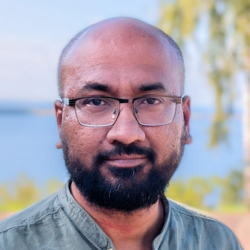
Tasneem Khalil, a pioneer of investigative journalism in Bangladesh, is the founding editor-in-chief of the bilingual (English and Bengali) Netra News. Putting the theory of human rights-centric public interest journalism into practice, Netra News stands as Bangladesh's premier independent, non-partisan media outlet. It is committed to establishing and upholding fundamental freedoms in the country via a free press pursuing the truth. Khalil is also the author of Jallad: Death Squads and State Terror in South Asia.

William Dobson is the co-editor of the Journal of Democracy. Previously, he was the chief international editor at NPR, where he led the network’s award-winning international coverage and oversaw a team of editors and correspondents in 17 overseas bureaus and Washington, DC. He is the author of The Dictator’s Learning Curve: Inside the Global Battle for Democracy, which examines the struggle between authoritarian regimes and the people who challenge them. It was selected as one of the “best books of the year” by Foreign Affairs, The Atlantic, The Telegraph, and Prospect, and it has been translated into many languages, including Chinese, German, Japanese, and Portuguese.
Before joining NPR, Dobson was Slate magazine’s Washington bureau chief, overseeing the magazine’s coverage of politics, jurisprudence, and international news. Previously, he served as the Managing Editor of Foreign Policy, overseeing the editorial planning of its award-winning magazine, website, and nine foreign editions. Earlier in his career, Dobson served as Newsweek International’s Asia editor, managing a team of correspondents in more than 15 countries. His articles and essays have appeared in the New York Times, Washington Post, Financial Times, Wall Street Journal, and elsewhere. He has also served as a visiting scholar at the Carnegie Endowment for International Peace. Dobson holds a law degree from Harvard Law School and a Master’s degree in East Asian Studies from Harvard University. He received his Bachelor’s degree, summa cum laude, from Middlebury College.
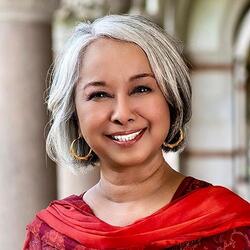
Elora Shehabuddin is a professor of gender & women's studies, equity advisor in gender & women's studies, director of the Global Studies Program, and director of the Subir and Malini Chowdhury Center for Bangladesh Studies, all at the University of California, Berkeley. Before moving to Berkeley in 2022, she was a professor of transnational Asian studies and core faculty in the Center for the Study of Women, Gender, and Sexuality at Rice University. She was an assistant professor of women's studies and political science at UC Irvine from 1999 to 2001. She received her bachelor's degree in social studies from Harvard University and her doctorate in politics from Princeton University.
She is the author of Sisters in the Mirror: A History of Muslim Women and the Global Politics of Feminism (University of California Press, 2021), Reshaping the Holy: Democracy, Development, and Muslim Women in Bangladesh (Columbia University Press, 2008), and Empowering Rural Women: The Impact of Grameen Bank in Bangladesh (Grameen Bank, 1992). She has published articles in Meridians, Signs, Journal of Women's History, History of the Present, Economic & Political Weekly, Modern Asian Studies, Südasien-Chronik [South Asia Chronicle], Journal of Bangladesh Studies, and Asian Survey, as well as chapters in numerous edited volumes. She was a guest co-editor of a special issue of Feminist Economics on “Gender and Economics in Muslim Communities.” She is co-editor of the Journal of Bangladesh Studies and serves on the editorial board of a new Cambridge University Press book series titled "Muslim South Asia."
Panel Chair
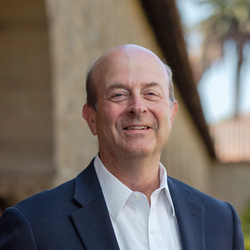
James T. Hamilton is vice provost for undergraduate education, the Hearst Professor of Communication, and director of the Journalism Program at Stanford University. His books on media markets and information provision include All the News That’s Fit to Sell: How the Market Transforms Information into News (Princeton, 2004), Regulation Through Revelation: The Origin, Politics, and Impacts of the Toxics Release Inventory Program (Cambridge, 2005), and Channeling Violence: The Economic Market for Violent Television Programming (Princeton, 1998). His most recent book, Democracy’s Detectives: The Economics of Investigative Journalism (Harvard, 2016), focuses on the market for investigative reporting. Through research in the field of computational journalism, he is exploring how the costs of story discovery can be lowered through better use of data and algorithms. Hamilton is co-founder of the Stanford Computational Journalism Lab, senior fellow at the Stanford Institute for Economic Policy Research, affiliated faculty at the Brown Institute for Media Innovation, and member of the JSK Fellowships Board of Visitors.
For his accomplishments in research, he has won awards such as the David N Kershaw Award of the Association for Public Policy Analysis and Management, the Goldsmith Book Prize from the Kennedy School’s Shorenstein Center (twice), the Frank Luther Mott Research Award (twice), and a Center for Advanced Study in the Behavioral Sciences Fellowship. Teaching awards from Harvard, Duke, and Stanford include the Allyn Young Prize for Excellence in Teaching the Principles of Economics, Trinity College Distinguished Teaching Award, Bass Society of Fellows, Susan Tifft Undergraduate Teaching and Mentoring Award, and School of Humanities and Sciences Dean’s Award for Distinguished Teaching.
Before joining the Stanford faculty, Hamilton taught at Duke University’s Sanford School of Public Policy, where he directed the De Witt Wallace Center for Media and Democracy. He earned a bachelor's degree in economics and government (summa cum laude) and a doctorate in economics, both from Harvard University.