-

This is a virtual event. Please click here to register and generate a link to the talk. 
The link will be unique to you; please save it and do not share with others.


Once considered incapable of innovation, China’s contribution to technological advancement has become impossible to ignore as it continues its historic rise. Now home to such tech giants as Alibaba, Tencent, and Huawei, China is competing in the global market. But what does this technological success mean in the context of China's internal and international politics, particularly its tense relationship with the United States? Will efforts to decouple help or hinder progress in tech? Can China’s educational system produce the next generation of innovators and propel them to the forefront of technology? What effects, if any, is the recent tightening on tech giants having on the sector at large? In this program, experts Denis Simon, Senior Adviser to the President for China Affairs at Duke, and Dan Wang, technology analyst for Gavekal Dragonomics, will be discussing the status and consequences of decoupling for the US and China and their technological sectors.  


Image
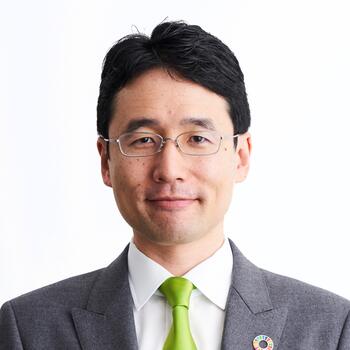
Portrait of Denis Simon
Denis Fred Simon is Senior Adviser to the President for China Affairs at Duke and Professor of China Business and Technology at Duke's Fuqua School of Business.  He also serves as Executive Director of the Center for Innovation Policy at Duke.  Fluent in Mandarin Chinese, Simon has more than four decades of experience studying business, competition, innovation and technology strategy in China. In 2006, he was awarded the China National Friendship Award by Premier Wen Jiabao in Beijing.  Prior to returning to Duke, Dr. Simon served as Executive Vice Chancellor at Duke Kunshan University in China (2015-2020).  Simon’s career included spells as senior adviser on China and global affairs in the Office of the President at Arizona State University; vice-provost for international affairs at the University of Oregon; and professor of international affairs at Penn State University’s School of International Affairs. He also has had extensive leadership experience in management consulting having served as General Manager of Andersen Consulting in Beijing (now Accenture) and the Founding President of Monitor Group China.

Simon is the author of several books including Corporate Strategies Towards the Pacific Rim; Techno-Security in an Age of Globalization; and China’s Emerging Technological Edge: Assessing the Role of High-End Talent.


Image
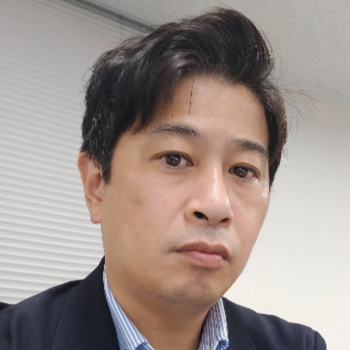
Portrait of Dan Wang
Dan Wang is the Shanghai-based technology analyst for Gavekal Dragonomics, the China economics research firm. He tracks the prospects for China's industrial policy, US regulatory measures and the activities of multinationals in China. He has given keynotes for a variety of organizations and his work is widely cited in the press. Dan previously worked in Silicon Valley and studied philosophy at the University of Rochester. Dan's essays have been published in Foreign Affairs, The Atlantic, New York Magazine, and he is a contributor to Bloomberg Opinion

.


Image
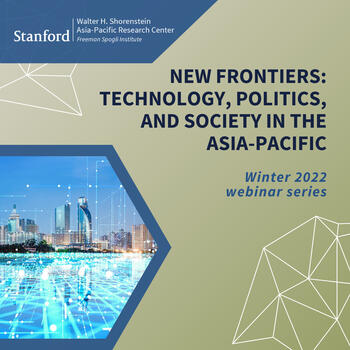
New Frontiers event series promo image

This event is part of the 2022 Winter webinar series, New Frontiers: Technology, Politics, and Society in the Asia-Pacific, sponsored by the Shorenstein Asia-Pacific Research Center.


Image
Chinese 100 yuan bills

This event is part of the 2022 Winter webinar series, The Future of China's Economy, sponsored by the APARC China Program.


Via Zoom Webinar. Register at: https://bit.ly/3IA7MdJ

Denis F. Simon Senior Adviser to the President for China Affairs, Duke University; Professor of China Business and Technology, Duke Fuqua School of Business
Dan Wang Technology Analyst, Gavekal Dragonomics
Seminars
-

This event will offer simultaneous translation between Japanese and English. 
当イベントは日本語と英語の同時通訳がついています。

This is a virtual event. Please click here to register and generate a link to the talk. 
The link will be unique to you; please save it and do not share with others.
当イベントはZoomウェビナーで行われます。ウェビナーに参加するためには、
こちらのリンクをクリックし、事前登録をして下さい。


February 7, 5-6:30 p.m. California time/ February 8, 10-11:30 a.m. Japan time

This event is part of the 2022 Japan Program Winter webinar series, The Future of Social Tech: U.S.-Japan Partnership in Advancing Technology and Innovation with Social Impact


Japan’s startup scene has become more exciting in recent years, but in the medical field, the failure to develop COVID-19 vaccines highlighted the shortcomings of Japan’s medical industry. What should Japan do to foster more impactful biotechnology entrepreneurship that would leverage vibrant medical research carried out at Japanese universities? The panel features two speakers who founded and grew their medical ventures in Japan's rapidly maturing startup ecosystem, both with deep connections to university research. 

Tadahisa Kagimoto founded his first company right after finishing his medical degree at Kyushu University, pioneering a pathway of commercializing biotechnology from Japanese university research. His second startup, Healios, founded in 2013 with the goal of becoming a pioneer in regenerative medicine utilizing iPS, was successfully listed on the Tokyo Stock Exchange in 2015 and has been growing since.

Shoko Takahashi was a PhD student in molecular bioscience at the University of Tokyo when she founded her company, Genequest, to offer home DNA testing. The firm was purchased by another biotech startup founded by a University of Tokyo graduate, Euglena, in 2017, and the company has partnered with a variety of pharmaceutical, food and beverage companies, and universities in its research. Their entrepreneurial journeys reveal Japan's changing startup ecosystem that has rapidly matured over the past decade and signal a need for further development in regulatory environments, human resource development, and university-industry collaboration in the biotechnology industry.


Panelists

Image
Photo portrait of Tadahisa Kagimoto
Hardy TS Kagimoto, MD is founder, Chairman and CEO of HEALIOS K.K., a Tokyo-based, clinical-stage world leader in regenerative medicine and cell therapy. 

After founding Healios in 2011, Dr. Kagimoto led the company’s listing on the Tokyo Stock Exchange in 2015 and has built the company to its current scale of more than 140 people across its Japan and US offices. Healios leverages the favorable Japanese regulatory framework for regenerative medicine to efficiently deliver results for patients and its stakeholders. It is currently running two pivotal clinical trials for ischemic stroke and acute respiratory distress syndrome using bone marrow-derived allogeneic multipotent adult progenitor cells. At the same time, Healios is developing best-in-class, next generation pipeline assets in immuno-oncology, ophthalmology, and organ buds utilizing its innovative, proprietary universal donor iPS cell platform.


Image
Photo of Shoko Takahashi
Shoko Takahashi founded the Japanese personal genome company Genequest Inc. in 2013 while a graduate student at the University of Tokyo. Genequest provides a web-based personal genetic service for consumers and collaborates with research institutions in a large-scale genome research project to maximize synergistic effects between research and personal genome services. She is filled with ambition to accelerate genetic research and contribute to human health all over the world. She graduated from the University of Tokyo with a Ph.D. in Molecular Bioscience in 2015, and Kyoto University with a Bachelor of Biochemistry Science in 2010. She has been awarded the Japan Venture Award and received the highest rating by the Japan Ministry of Economy. In 2015, she was commended by the Japan Minister of Education, Culture, Sports, Science and Technology as one of the researchers contributing major innovations to science technologies in Japan.

She received the 2018 Young Global Leaders award from the World Economic Forum and was selected for Newsweek's ‘100 respected Japanese in the world’ list.


Moderator

Image
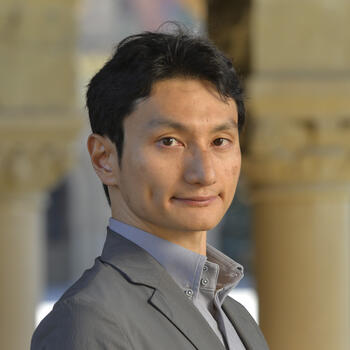
Photo portrait of Kenji Kushida
Kenji E. Kushida is a Senior Fellow, Carnegie Endowment for International Peace. He previously was with the Japan Program at the Walter H. Shorenstein Asia-Pacific Research Center as a research scholar.

Kushida’s research and projects focused on the following streams : 1) how politics and regulations shape the development and diffusion of Information Technology such as AI; 2) institutional underpinnings of the Silicon Valley ecosystem, 2) Japan's transforming political economy, 3) Japan's startup ecosystem, 4) the role of foreign multinational firms in Japan, 4) Japan's Fukushima nuclear disaster. He spearheaded the Silicon Valley - New Japan project that brought together large Japanese firms and the Silicon Valley ecosystem.

He has published several books and numerous articles in each of these streams, including “The Politics of Commoditization in Global ICT Industries,” “Japan’s Startup Ecosystem,” "How Politics and Market Dynamics Trapped Innovations in Japan’s Domestic 'Galapagos' Telecommunications Sector," “Cloud Computing: From Scarcity to Abundance,” and others. His latest business book in Japanese is “The Algorithmic Revolution’s Disruption: a Silicon Valley Vantage on IoT, Fintech, Cloud, and AI” (Asahi Shimbun Shuppan 2016).


Via Zoom Webinar
Register:  https://bit.ly/3u1A10M


Tadahisa Kagimoto, MD. <br>Founder, Chairman, and CEO, Healios K.K.<br><br>
Shoko Takahashi <br>Founder and CEO, Genequest Inc.<br><br>
0
Former Research Scholar, Japan Program
kenji_kushida_2.jpg MA, PhD
Kenji E. Kushida was a research scholar with the Japan Program at the Walter H. Shorenstein Asia-Pacific Research Center from 2014 through January 2022. Prior to that at APARC, he was a Takahashi Research Associate in Japanese Studies (2011-14) and a Shorenstein Postdoctoral Fellow (2010-11).
 
Kushida’s research and projects are focused on the following streams: 1) how politics and regulations shape the development and diffusion of Information Technology such as AI; 2) institutional underpinnings of the Silicon Valley ecosystem, 2) Japan's transforming political economy, 3) Japan's startup ecosystem, 4) the role of foreign multinational firms in Japan, 4) Japan's Fukushima nuclear disaster. He spearheaded the Silicon Valley - New Japan project that brought together large Japanese firms and the Silicon Valley ecosystem.

He has published several books and numerous articles in each of these streams, including “The Politics of Commoditization in Global ICT Industries,” “Japan’s Startup Ecosystem,” "How Politics and Market Dynamics Trapped Innovations in Japan’s Domestic 'Galapagos' Telecommunications Sector," “Cloud Computing: From Scarcity to Abundance,” and others. His latest business book in Japanese is “The Algorithmic Revolution’s Disruption: a Silicon Valley Vantage on IoT, Fintech, Cloud, and AI” (Asahi Shimbun Shuppan 2016).

Kushida has appeared in media including The New York Times, Washington Post, Nihon Keizai Shimbun, Nikkei Business, Diamond Harvard Business Review, NHK, PBS NewsHour, and NPR. He is also a trustee of the Japan ICU Foundation, alumni of the Trilateral Commission David Rockefeller Fellows, and a member of the Mansfield Foundation Network for the Future. Kushida has written two general audience books in Japanese, entitled Biculturalism and the Japanese: Beyond English Linguistic Capabilities (Chuko Shinsho, 2006) and International Schools, an Introduction (Fusosha, 2008).

Kushida holds a PhD in political science from the University of California, Berkeley. He received his MA in East Asian Studies and BAs in economics and East Asian Studies with Honors, all from Stanford University.
Kenji Kushida <br>Senior Fellow, Carnegie Endowment for International Peace
Panel Discussions
-

This event will offer simultaneous translation between Japanese and English. 
当イベントは日本語と英語の同時通訳がついています。

This is a virtual event. Please click here to register and generate a link to the talk. 
The link will be unique to you; please save it and do not share with others.
当イベントはZoomウェビナーで行われます。ウェビナーに参加するためには、
こちらのリンクをクリックし、事前登録をして下さい。


January 27, 4-5:30 p.m. California time/ January 28, 9-10:30 a.m. Japan time

This event is part of the 2022 Japan Program Winter webinar series, The Future of Social Tech: U.S.-Japan Partnership in Advancing Technology and Innovation with Social Impact


A tidying expert who started her consulting business as a 19-year-old college student, Marie Kondo leveraged her success in the Japanese market into global fame with her husband Takumi Kawahara as a key producer. What were the business strategies behind their success and how did they break the cultural barrier in the U.S. that shattered the dreams of many Japanese content makers to produce a New York Times bestseller, a hit Netflix show, and a recognition as Time magazine’s 100 Most Influential People in the World? This session explores their media strategy that used platforms like Netflix and YouTube effectively and lessons that other content makers can learn from their success in bringing content from Japan to the U.S.

Panelists

Image
Photo of Marie Kondo
Marie Kondo is a tidying expert, bestselling author, star of Netflix’s hit show, “Tidying Up With Marie Kondo,” and founder of KonMari Media, Inc. Enchanted with organizing since her childhood, Marie began her tidying consultant business as a 19-year-old university student in Tokyo. Today, Marie is a renowned tidyingexpert helping people around the world to transform their cluttered homes into spaces of serenity and inspiration.

In her #1 New York Times bestselling book, “The Life-Changing Magic of Tidying Up,” Marie took tidying to a whole new level, teaching that if you properly simplify and organize your home once, you’ll never have to do it again.

Marie has been featured in The New York Times, The Wall Street Journal, The London Times, Vogue, The Late Show With Stephen Colbert, The Ellen Show as well as on more than fifty major Japanese television and radio programs. She has also been named one of Time magazine’s 100 Most Influential People in the World.


Image
Photo of Takumi Kawahara
Born and raised in Hiroshima, Japan, Takumi Kawahara began his career as a corporate HR consultant and strategist for Achievement Co., Ltd. in Tokyo, serving more than 5,000 employees across multiple companies.

After befriending tidying expert, Marie Kondo, in his college years and becoming her trusted advisor, the two were married in 2013. Together, they established KonMari Media, Inc. in 2015, and Takumi assumed the role of CEO, leading the global expansion of the business – including books, media channels and the certified KonMari Consultant program, which is active in over 30 countries.

Takumi is an executive producer of Netflix’s hit show, “Tidying Up With Marie Kondo,” and overseeing product development for the KonMari brand. Takumi currently resides in Los Angeles with his partner, Marie, and their two young daughters.


Moderator

Image
Photo of Kiyo Tsutsui
Kiyoteru Tsutsui is the Henri H. and Tomoye Takahashi Professor, Professor of Sociology, Senior Fellow at the Freeman Spogli Institute for International Studies, and Deputy Director of the Walter H. Shorenstein Asia-Pacific Research Center, where he is also Director of the Japan Program. He is the author of Rights Make Might: Global Human Rights and Minority Social Movements in Japan (Oxford University Press, 2018), co-editor of Corporate Responsibility in a Globalizing World (Oxford University Press, 2016) and co-editor of The Courteous Power: Japan and Southeast Asia in the Indo-Pacific Era (University of Michigan Press, 2021). 


Via Zoom Webinar
Register:  https://bit.ly/3zQY9nE


Marie Kondo <br>Founder of KonMari Media, Inc.<br><br>
Takumi Kawahara <br>CEO of KonMari Media, Inc.<br><br>
Kiyoteru Tsutsui <br>Director of the Japan Program and Professor of Sociology, Stanford University
Panel Discussions
Shorenstein APARC Encina Hall E301 Stanford University
1
Visiting Scholar at APARC, 2021-2022
millward_james.png PhD

James A. Millward 米華健 joined the Walter H. Shorenstein Asia-Pacific Research Center (APARC) as visiting scholar with the China Program for the 2022 winter quarter. He is Professor of Inter-societal History at the Walsh School of Foreign Service, Georgetown University, where he teaches Qing, Chinese, Central Asian and world history. He occasionally also teaches in the program of the Máster Oficial en Estudios de Asia Oriental at the University of Granada, Spain.  Millward is the academic editor for the "Silk Roads" book series published by Chicago University Press. 

Millward’s specialties include Qing empire; the silk road; Eurasian lutes and music in history; and historical and contemporary Xinjiang.  He follows and comments publicly on current issues regarding Xinjiang, the Uyghurs and other Xinjiang indigenous peoples and PRC ethnicity policy.  His publications include Eurasian Crossroads: a history of Xinjiang (2021; 2007); The Silk Road: A Very Short Introduction (2013); New Qing Imperial History: The Making of Inner Asian Empire at Qing Chengde (2004); and Beyond the Pass: Economy, Ethnicity and Empire in Qing Central Asia (1998); as well as the album Songs for this Old Heart (recorded with the band By & By).

Jim's general audience articles and op-eds on contemporary China are published in The New York Times, The Washington Post, The Guardian, The Los Angeles Review of Books, The New York Review of Books,  and other media.  He has appeared on the PBS Newshour, All Things Considered, Al Jazeera, i24 News, the Sinica Podcast and other broadcast programs and networks. 

Email:  millwarj@georgetown.edu | Twitter: @JimMillward

Paragraphs

Following the 2021 Taihe Civilizations Forum, the Taihe International Communications Center hosted an online discussion on October 8 that captures the candid and profound reflections of senior officials whose actions have shaped the course of ties between China and the United States.

Dr. Thomas Fingar, Shorenstein APARC Fellow in the Freeman Spogli Institute for International Studies at Stanford University, former Chairman of the National Intelligence Council, and former Assistant Secretary of State, and Senior Colonel Zhou Bo (ret.), Senior Fellow at Center for International Security and Strategy at Tsinghua University, China Forum Expert, and former Director of Center for Security Cooperation of the Office for International Military Cooperation of Ministry of National Defense, were invited to join this dialogue.

During their conversation, Dr. Fingar and Senior Colonel Zhou exchanged ideas on important topics such as the current state of China-U.S. relations, the future development of the two countries' bilateral ties, the rationale behind the US foreign policy and the American alliance system, as well as the "extreme competition" that China and the U.S. are trapped in. 

All Publications button
1
Publication Type
Commentary
Publication Date
Subtitle
A Dialogue between Dr. Thomas Fingar and Senior Colonel Zhou Bo (ret.) on the Current State of China-U.S. Relations
Authors
Thomas Fingar
Authors
News Type
News
Date
Paragraphs

Taiwan. Hypersonic missiles. The South China Sea. In the last few months, China’s activities have grabbed headlines and fueled speculation about its intentions. But how much of this action is posturing, and how much should U.S. policymakers and strategists take seriously?

To help explain what’s going on with our biggest competitor, FSI Center Fellow Oriana Skylar Mastro, a specialist on China’s military and an active member of the United States Air Force Reserves, joins Michael McFaul on World Class to debunk some of the myths that persist about China’s capabilities and reframe how the U.S. needs to think about strategic competition with Beijing. Listen to their full episode and read highlights from the conversation below.

Click here for a transcript of “We Need To Rethink Our Assumptions about China’s Strategic Goals”

Where China Was in the 1990s


Twenty years ago, the Chinese-Taiwan invasion plan was to take a couple of fishing vessels and paddle their way across the strait. In the 1990s, China had very limited, and often no ability to fly over water, or at night, or in weather, and their ships had no defenses.

For many, many years we knew that China was willing to fight if Taiwan declared independence. Fighting a war in any country that is big and resolved is problematic. But it was never the case that the United States was going to lose that war; it was always a matter of, “How many days?” How many days is it going to take us to win?

Where China Is Now


In the intervening years, China's military has changed both quantitatively and qualitatively. Now they have the largest navy in the world, and those ships are some of the most advanced surface ships that can be comparable to those of the United States. Same with their fighters; they have fifth generation airplanes and the largest airforce in the region. They’ve put all these capabilities online, and at the same time, they [have also] started developing capabilities to reach out and touch the United States with.

They developed the capability to hit moving ships at sea, which is something the United States doesn’t have the capability to do. They have a huge cruise and ballistic missile program that basically can take out a U.S. base like Kadena  in the region in a matter of hours, should they ever be willing to make a direct hit on the U.S.

This doesn't mean that China is more powerful than the United States; China still can’t project power outside the Indo-Pacific region, and even there it’s mostly through space, cyber, and nuclear weapons. But most of the contingencies we're talking about are really close to China, so it doesn’t really matter that they can’t project power. So, on the conventional side, I’m very concerned.

Why Taiwan Matters


The whole goal of the Communist Party, since its founding in 1949, has been to resolve this Taiwan issue.

Now they have the ships, the aircraft, and they’ve reorganized their whole military so that they can do joint operations, so that the navy and the air force can do an invasion of Taiwan. And a lot of those efforts came to a successful conclusion at the end of 2020. And that's why people like myself, not because of  the capabilities, but because when I was in Beijing and talked to the Chinese military and government officials, they said, “We could do this now, and maybe we should think about it.”

We know from behavioral economics that countries and people are much more willing to take risks to not lose something that they think is theirs, versus when they are trying to get something which they don't think is theirs. In the Chinese mindset, Taiwan, the South China Sea, East China Sea, etc. is already theirs, and the United States is trying to take it from them. That makes the situation even more problematic. 

What the United States Should Do


The Biden administration is doing a lot of political maneuvering to show that the United States is willing to defend Taiwan. And I think it’s just upsetting Beijing, because they think we’re changing the political status quo. It also does nothing to enhance our deterrence, because it doesn't signal anything about our capability to defend Taiwan.

The Chinese basically assume the United States will intervene. Their big question is, can they still win? We need to show China that they cannot win, and that’s about showing out capabilities in the region. It’s about aggressively negotiating new host arrangements, more access for the U.S. military, and new international institutions and treaties that constrain the ways China leverages power.

I'm a military person, but I'm totally on board with leading with diplomacy. But I don't see those types of efforts coming out of the Biden administration. They seem to want to double down and do the same things, just with more allies and partners.  I'm supportive of it, but I just don't think it's enough.

Read More

An Island that lies inside Taiwan's territory is seen with the Chinese city of Xiamen in the background.
Commentary

The Taiwan Temptation

Why Beijing Might Resort to Force
The Taiwan Temptation
Oriana Skylar Mastro testifies to the U.S.-China Economic and Security Review Commission on Taiwan deterrence.
News

Oriana Skylar Mastro Testifies on Deterring PRC Aggression Toward Taiwan to Congressional Review Commission

China may now be able to prevail in cross-strait contingencies even if the United States intervenes in Taiwan’s defense, Chinese security expert Oriana Skylar Mastro tells the U.S.-China Economic and Security Review Commission. Changes must be made to U.S. military capabilities, not U.S. policy, she argues.
Oriana Skylar Mastro Testifies on Deterring PRC Aggression Toward Taiwan to Congressional Review Commission
Taiwan Wall
Commentary

Would the United States Come to Taiwan's Defense?

On CNN's GPS with Fareed Zakaria, APARC Center Fellow Oriana Skylar Mastro shares insights about China's aspirations to take Taiwan by force and the United States' role, should a forceful reunification come to pass.
Would the United States Come to Taiwan's Defense?
Hero Image
Chinese military propaganda depicting the Second Taiwan Strait Crisis of 1958.
Getty Images
All News button
1
Subtitle

On the World Class podcast, Oriana Skylar Mastro argues that in order to set effective policy toward China, the United States needs to better understand how and why China is projecting power.

Paragraphs

Shorenstein APARC's annual report for the academic year 2020-21 is now available.

Learn about the research, events, and publications produced by the Center's programs over the last twelve months. Feature sections look at how APARC has researched threats to democracy and human rights in Asia, including new and upcoming books on North Korea and Southeast Asia, and the Center's research on the new administration's Asia policy. Catch up on the Center's policy work, education initiatives, events, and outreach.

All Publications button
1
Publication Type
Annual Reports
Publication Date
Authors
Callista Wells
News Type
News
Date
Paragraphs

On October 6, 2021, the APARC China Program hosted the panel program, "Engaging China: Fifty Years of Sino-American Relations." In honor of her recently released book of the same title, Director of the Grassroots China Initiative Anne Thurston was joined by contributors Mary Bullock, President Emerita of Agnes Scott College; Thomas Fingar, Shorenstein APARC Fellow; and David M. Lampton, Professor Emeritus at Johns Hopkins School of Advanced International Studies (SAIS). Thomas Fingar also moderated the panel.

Recent years have seen the U.S.-China relationship rapidly deteriorate. Engaging China brings together leading China specialists—ranging from academics to NGO leaders to former government officials—to analyze the past, present, and future of U.S.-China relations.

During their panel, Bullock, Fingar, Lampton, and Thurston reflected upon the complex and multifaceted nature of American engagement with China since the waning days of Mao’s rule. What initially motivated U.S.’ rapprochement with China? Until recent years, what logic and processes have underpinned the U.S. foreign policy posture towards China? What were the gains and the missteps made during five decades of America’s engagement policy toward China? What is the significance of our rapidly deteriorating bilateral relations today? Watch now: 

For more information about Engaging China or to purchase a copy, please click here.

Read More

Xi and Biden
Q&As

Biden, Xi Will Want To Diminish Exaggerated Characterizations of Bilateral Friction, Stanford Scholar Says

In this Q&A, Stanford scholar Thomas Fingar discusses what to expect when President Biden meets with Chinese President Xi Jinping.
Biden, Xi Will Want To Diminish Exaggerated Characterizations of Bilateral Friction, Stanford Scholar Says
Taiwan
Commentary

America's Future in Taiwan

Intensifying threats of a military conflict over Taiwan have brought uncertainty to the stability of regional security for Southeast Asia, according to Center Fellow Oriana Skylar Mastro on radio show On Point.
America's Future in Taiwan
USS Key West during during joint Australian-United States military exercises Talisman Sabre 2019 in the Coral Sea.
Commentary

In Defense of AUKUS

This is not only about nuclear-powered submarines; it is about a strengthened US commitment to Australia.
In Defense of AUKUS
Hero Image
"Engaging China: Fifty Years of Sino-American Relations" book cover
All News button
1
Subtitle

Was the strategy of engagement with China worthwhile? Experts Mary Bullock, Thomas Fingar, David M. Lampton, and Anne Thurston discuss their recent release, "Engaging China: Fifty Years of Sino-American Relations."

-

To watch the recording of the event, click here.

This event is co-hosted with the East Asia Institute (EAI) in Korea.

Event Time: November 18, 4:00 - 6:00 PM (PST) / November 19, 9:00 - 11:00 PM (Japan and Korea)
Please register for this event at EAI event page.

The ROK-U.S. and U.S.-Japan joint statements have increased expectations for a possible expansion of security and economic cooperation among South Korea, the U.S. and Japan. However, heightened U.S.-China strategic competition, as well as persistent challenges in the region such as historical tensions and the North Korea threat, have complicated the strategic calculus of U.S., South Korea and Japan. Under these circumstances, the South Korea, the U.S. and Japan must define their economic and security interests and seek ways to maintain friendly relations among the three countries. This seminar will discuss security and economic cooperation among Korea, the United States and Japan in the era of strategic competition between the U.S. and China.

Panel 1 on security:

Park Joon Woo, former Chairman of the Sejong Institute; former South Korean Ambassador to E.U. and to Singapore

Tomiko Ichikawa, Director General of the Japan Institute of International Affairs

Gen. Vincent Brooks, former USFK Commander

Moderated by Young Sun Ha, Chairman of East Asia Institute; Professor Emeritus, Seoul National University

Panel 2 on economic cooperation:

Young Ja Bae, Professor of Political Science and Diplomacy, Konkuk University, Korea

Andrew Grotto, Director of the Program on Geopolitics, Technology and Governance, FSI, Stanford University

Kimura Fukunari, Professor of Economics, Keio University, Japan

Moderated by Thomas Fingar, Shorenstein APARC Fellow, Stanford University


Via Zoom. Register at https://bit.ly/3w7Ak9g

Panel Discussions
Paragraphs
Cover of North Korean Conundrum, showing a knotted ball of string.

Read our news story about the book >> 

North Korea is consistently identified as one of the world’s worst human rights abusers. However, the issue of human rights in North Korea is a complex one, intertwined with issues like life in the North Korean police state, inter-Korean relations, denuclearization, access to information in the North, and international cooperation, to name a few. There are likewise multiple actors involved, including the two Korean governments, the United States, the United Nations, South Korea NGOs, and global human rights organizations. While North Korea’s nuclear weapons and the security threat it poses have occupied the center stage and eclipsed other issues in recent years, human rights remain important to U.S. policy. 

The contributors to The North Korean Conundrum explore how dealing with the issue of human rights is shaped and affected by the political issues with which it is so entwined. Sections discuss the role of the United Nations; how North Koreans’ limited access to information is part of the problem, and how this is changing; the relationship between human rights and denuclearization; and North Korean human rights in comparative perspective.

Contents

  1. North Korea: Human Rights and Nuclear Security Robert R. King and Gi-Wook Shin
  2. The COI Report on Human Rights in North Korea: Origins, Necessities, Obstacles, and Prospects Michael Kirby
  3. Encouraging Progress on Human Rights in North Korea: The Role of the United Nations and South Korea Joon Oh 
  4. DPRK Human Rights on the UN Stage: U.S. Leadership Is Essential Peter Yeo and Ryan Kaminski
  5. Efforts to Reach North Koreans by South Korean NGOs: Then, Now, and Challenges Minjung Kim
  6. The Changing Information Environment in North Korea Nat Kretchun
  7. North Korea’s Response to Foreign Information Martyn Williams
  8. Human Rights Advocacy in the Time of Nuclear Stalemate: The Interrelationship Between Pressuring North Korea on Human Rights and Denuclearization  Tae-Ung Baik
  9. The Error of Zero-Sum Thinking about Human Rights and U.S. Denuclearization Policy Victor Cha
  10. Germany’s Lessons for Korea Sean King
  11. Human Rights and Foreign Policy: Puzzles, Priorities, and Political Power Thomas Fingar

Desk, examination, or review copies can be requested through Stanford University Press.

June 2022 Update

The Korean version of The North Korean Conundrum is now available, published by the Database Center for North Korean Human Rights (NKDB). Purchase the Korean version via NKDB's website >>

To mark the release of the Korean version of the book, APARC hosted a book talk in Seoul jointly with the Database Center for North Korean Human Rights, on June 9, 2022.
Watch NTD Korea's report of the event:

View news coverage of the event by Korean Media:

All Publications button
1
Publication Type
Books
Publication Date
Subtitle

Balancing Human Rights and Nuclear Security

Authors
Robert R. King
Gi-Wook Shin
Book Publisher
Shorenstein APARC
Subscribe to United States