-

This is a virtual event. Please click here to register and generate a link to the talk. 
The link will be unique to you; please save it and do not share with others.

November 9, 4-5 p.m. California time/ November 10, 9-10 a.m. Japan time
(Note:  Daylight Saving Time in California ends November 7)

In April 2021, then Prime Minister Suga announced to the world that Japan will strive to achieve carbon neutrality by 2050, seemingly setting the country on a path toward accelerated energy transition primarily by renewables. Under Prime Minister Kishida, Japan’s commitment may be on a more shaky ground, as demands for steady energy supply by old industries gained more traction and calls for restarting nuclear power plants are becoming louder. In this new political environment, in which Japan’s energy policy seems to be in flux, what is the future of renewables, nuclear energy, and fossil fuels, and what is the best energy mix for Japan considering its unique geopolitical position?

Panelists 

Image
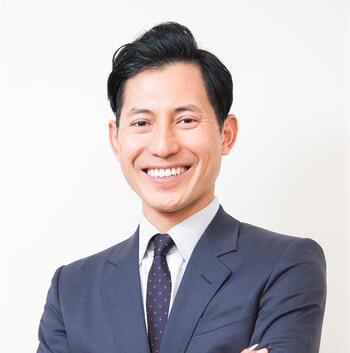
Photo of Phillip Lipscy
Phillip Lipscy is an associate professor of political science at the University of Toronto, the Chair in Japanese Politics and Global Affairs and the Director of the Centre for the Study of Global Japan at the Munk School of Global Affairs & Public Policy.  His research addresses substantive topics such as international cooperation, international organizations, the politics of energy and climate change, international relations of East Asia, and the politics of financial crises.  He has also published extensively on Japanese politics and foreign policy.  Lipscy's book from Cambridge University Press, Renegotiating the World Order: Institutional Change in International Relations, examines how countries seek greater international influence by reforming or creating international organizations.  Before arriving to the University of Toronto, Lipscy was assistant professor of political science and Thomas Rohlen Center Fellow at the Freeman Spogli Institute at Stanford University.  Lipscy obtained his Ph.D. in political science at Harvard University and received his M.A. in international policy studies and B.A. in economics and political science at Stanford University. 


Image
Photo of Mika Ohbayashi
Mika Ohbayashi is the Director at Renewable Energy Institute since its foundation in August 2011.  Before joining the Institute, she worked in Abu Dhabi for the International Renewable Energy Agency (IRENA) as Policy and Project Regional Manager for Asia Oceania. She is one of two founders of the Institute for Sustainable Energy Policies (ISEP) and served as Deputy Director for 8 years following its establishment in 2000. She also worked as Advisor for Climate Change Projects and Policies for UKFCO at the British Embassy to Japan. She started her career in the energy field by joining Citizens' Nuclear Information Center in 1992.  She was awarded the Global Leadership Award in Advancing Solar Energy Policy by the International Sola Energy Society (ISES) in 2017. 


Moderator

Image
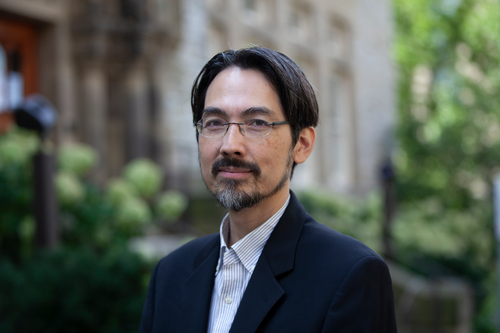
Photo of Kiyo Tsutsui
Kiyoteru Tsutsui is the Henri H. and Tomoye Takahashi Professor, Professor of Sociology, Senior Fellow at the Freeman Spogli Institute for International Studies, and Deputy Director of the Walter H. Shorenstein Asia-Pacific Research Center, where he is also Director of the Japan Program. He is the author of Rights Make Might: Global Human Rights and Minority Social Movements in Japan (Oxford University Press, 2018), co-editor of Corporate Responsibility in a Globalizing World (Oxford University Press, 2016) and co-editor of The Courteous Power: Japan and Southeast Asia in the Indo-Pacific Era (University of Michigan Press, forthcoming 2021). 


Logo of Perfect Storm Fall webinar series


This event is part of the 2021 Fall webinar series, Perfect Storm: Climate Change in Asia, sponsored by the Walter H. Shorenstein Asia-Pacific Research Center.

Via Zoom Webinar
Register:  https://bit.ly/2YayEzo


Phillip Lipscy <br>Associate Professor of Political Science at the University of Toronto<br><br>
Mika Ohbayashi <br>Director of Renewable Energy Institute<br><br>
Kiyoteru Tsutsui <br>Director of the Japan Program and Professor of Sociology, Stanford University
Panel Discussions
Shorenstein APARC Encina Hall Stanford University
1
Visiting Scholar at APARC, 2021-2022
sachiko_masuda.jpg PhD

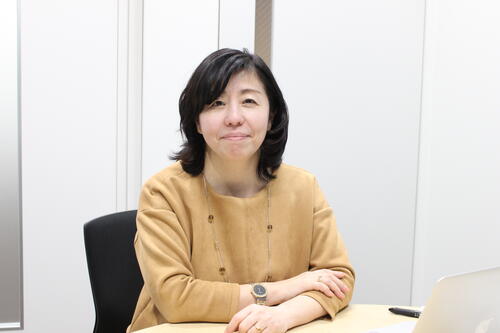
Sachiko Masuda joined the Walter H. Shorenstein Asia-Pacific Research Center (Shorenstein APARC) during the 2021-22 academic year from the University of Tokyo, Research Center for Advanced Science and Technology, where she serves as an associate professor.

Masuda is dedicated to the study of legal systems and regulations, infrastructure, and industrial structures necessary for advances in technology and a safer society, especially in the pharmaceutical and medical fields. During her time at Shorenstein APARC, Masuda conducted a comparative study between the US and Japan regarding “Human genetic information for medical innovation: Examining policy issues related to domestic and cross-border sharing and ensuring control” with Professor Karen Eggleston.

Masuda received a Ph.D. in Arts and Sciences (specializing in intellectual property law) in 2006 and a B.S. in Pharmaceutical Sciences in 1997 from the University of Tokyo. She is a registered patent attorney and pharmacist in Japan.

-

This is a virtual event. Please click here to register and generate a link to the talk. 
The link will be unique to you; please save it and do not share with others.

Co-sponsored by the Stanford Center at Peking University.

In honor of its release, contributors Mary Bullock, Thomas Fingar, and David M. Lampton will join editor Anne Thurston for a panel discussion of their volume Engaging China: Fifty Years of Sino-American Relations (Columbia University Press, 2021).

Recent years have seen the U.S.-China relationship rapidly deteriorate. Engaging China brings together leading China specialists—ranging from academics to NGO leaders to former government officials—to analyze the past, present, and future of U.S.-China relations. Bullock, Fingar, Lampton, and Thurston will reflect upon the complex and multifaceted nature of American engagement with China since the waning days of Mao’s rule. What initially motivated U.S.’ rapprochement with China? Until recent years, what logic and processes have underpinned the U.S. foreign policy posture towards China? What were the gains and the missteps made during five decades of America’s engagement policy toward China? What is the significance of our rapidly deteriorating bilateral relations today? Speakers will tackle these questions and more at this critical time when tensions between the U.S. and China continue to intensify.

For more information about Engaging China or to purchase a copy, please click here.


Image
Portrait of Mary Bullock
Mary Bullock, president emerita of Agnes Scott College, is an educator and scholar of U.S. – China relations. She served as the founding executive vice-chancellor of Duke Kunshan University from 2012-2015. Previous positions include distinguished visiting professor at Emory University, director of the Asia Program of the Woodrow Wilson Center, and director of the Committee on Scholarly Communication with the People’s Republic of China. She is vice-chair of the Asia Foundation, a trustee of the Henry Luce Foundation, and a member of the Schwarzman Academic Advisory Committee and the Council on Foreign Relations. She received her M.A. and Ph.D. in Chinese history from Stanford University. Her most recent publications include The Oil Prince’s Legacy: Rockefeller Philanthropy in China (2011) and, as co-editor, Medical Transitions in Twentieth Century China (2014).
 

Image
Portrait of Tom Fingar
Thomas Fingar is a Shorenstein APARC Fellow in the Freeman Spogli Institute for International Studies at Stanford University. He was the inaugural Oksenberg-Rohlen Distinguished Fellow from 2010 through 2015 and the Payne Distinguished Lecturer at Stanford in 2009. From 2005 through 2008, he served as the first deputy director of national intelligence for analysis and, concurrently, as chairman of the National Intelligence Council. Fingar served previously as assistant secretary of the State Department’s Bureau of Intelligence and Research (2000-01 and 2004-05), principal deputy assistant secretary (2001-03), deputy assistant secretary for analysis (1994-2000), director of the Office of Analysis for East Asia and the Pacific (1989-94), and chief of the China Division (1986-89). Between 1975 and 1986 he held a number of positions at Stanford University, including senior research associate in the Center for International Security and Arms Control.

Fingar's most recent books are The New Great Game: China and South and Central Asia in the Era of Reform, editor (Stanford, 2016), Uneasy Partnerships: China and Japan, the Koreas, and Russia in the Era of Reform (Stanford, 2017), and Fateful Decisions: Choices that will Shape China’s Future, co-edited with Jean Oi (Stanford, 2020).
 

Image
Portrait of David M. Lampton
David M. Lampton is Senior Fellow at the SAIS Foreign Policy Institute and Professor Emeritus at Johns Hopkins--SAIS. Immediately prior to his current post he was Oksenberg-Rohlen Fellow at Stanford University’s Asia-Pacific Research Center from 2019-2020. For more than two decades prior to that he was Hyman Professor and Director of China Studies at the Johns Hopkins University School of Advanced International Studies. Lampton is former Chairman of the The Asia Foundation, former President of the National Committee on United States-China Relations, and former Dean of Faculty at SAIS. Among many written works, academic and popular, his most recent book (with Selina Ho and Cheng-Chwee Kuik) is Rivers of Iron: Railroads and Chinese Power in Southeast Asia (University of California Press, 2020). He received his B.A., M.A., and Ph.D. degrees from Stanford University in political science where, as an undergraduate student, he was a firefighter. Lampton has an honorary doctorate from the Russian Academy of Sciences’ Institute of Far Eastern Studies. He is a Life Trustee on the Board of Trustees of Colorado College and was in the US Army Reserve in the enlisted and commissioned ranks.


Image
Portrait of Anne Thurston
Anne Thurston is the director of the Grassroots China Initiative, where she works with local NGOs in China. Thurston is a former associate professor at Johns Hopkins SAIS, assistant professor at Fordham University, and was a China staff member at the Social Science Research Council. She has been the recipient of fellowships from the Rockefeller Foundation, the John D. and Catherine T. MacArthur Foundation, the United States Institute of Peace, the Woodrow Wilson International Center for Scholars and the National Endowment for the Humanities. Thurston is also a member of the National Committee on US-China Relations. Thurston is the author of numerous publications, including The Noodle Maker of Kalimpong: The Untold Story of My Struggle for Tibet (2015), and Muddling Toward Democracy: Political Change in Grass Roots China (1998). She received her Ph.D. in political science from the University of California, Berkeley.

Via Zoom Webinar. Register at: https://bit.ly/38ME0m3

Mary Bullock <br>President Emerita, Agnes Scott College<br><br>
Thomas Fingar <br>Shorenstein APARC Fellow, Stanford University<br><br>
David M. Lampton <br>Professor Emeritus, Johns Hopkins School of Advanced International Studies (SAIS); Senior Fellow, SAIS Foreign Policy Institute<br><br>
Anne F. Thurston <br>Director, Grassroots China Initiative; China Studies Affiliated Scholar, Johns Hopkins--SAIS
Seminars
-

Fall 2021 Webinar Series Kickoff with Mr. Ban Ki-moon and Prof. Nicole Ardoin

September 28, 5-6 p.m. California time/ September 29, 9-10 a.m. Korea time

This event is held virtually via Zoom. Registration required.


The Asia-Pacific region is the world’s most vulnerable region to climate change risks. With its densely populated low-lying territories and high dependence on natural resources and agriculture sectors, Asia is increasingly susceptible to the impacts of rising sea levels and weather extremes. The impacts of climate change encompass multiple socioeconomic systems across the region, from livability and workability to food systems, physical assets, infrastructure services, and natural capital.

The Shorenstein Asia-Pacific Research Center’s Fall 2021 webinar series, “Perfect Storm: Climate Change in Asia,” explores climate change impacts and risks in the region, adaptation and mitigation strategies, and policy responses.

Join us for the series kickoff event, featuring a keynote address by former UN Secretary-General and former South Korean Foreign Minister Ban Ki-moon, who is known for putting sustainable development and climate change at the top of the UN agenda, and a discussion with Stanford social ecologist Nicole Ardoin, a leading expert in environment, sustainability, and climate change education. Mr. Ban’s keynote will focus on COVID-19 and climate change.


Panelists 

Portrait of Mr. Ban Ki-moonMr. Ban Ki-moon, Chairman of Ban Ki-moon Foundation for a Better Future, 8th Secretary-General of the UN

Ban Ki-moon is a South Korean diplomat who was the 8th Secretary-General of the United Nations and a career diplomat in South Korea’s Ministry of Foreign Affairs and in the UN.

Mr. Ban’s current leadership roles include the Chairman of South Korea’s Presidential National Council on Climate and Air Quality; Chairman of Boao Forum for Asia; Co-Chair of the Ban Ki-moon Centre for Global Citizens, Vienna; Chairman of the International Olympic Committee’s Ethics Committee; Distinguished Chair Professor and Honorary Chairman at the Institute of Global Engagement and Empowerment at Yonsei University in Seoul, Korea; and President of the Assembly and Chair of the Council of Global Green Growth Institute.

Mr. Ban served two consecutive terms as the Secretary General of the UN (2007-2016). Throughout his tenure at the UN, he strove to be a bridge builder, to give voice to the world’s poorest and the most vulnerable people, and to make the organization more transparent and effective. He successfully pressed for action to combat climate change — an effort that culminated in the adoption and rapid entry into the landmark Paris Agreement in 2016. Mr. Ban worked closely with member states of the UN to shape the 2030 Agenda for Sustainable Development and to establish UN Women, which has been advancing the organization’s work for gender equality and women’s empowerment. He also launched major efforts to strengthen UN peace operations, to protect human rights, to improve humanitarian response, and to prevent violent extremism and to revitalize the disarmament agenda.

At the time of his appointment at the UN, Mr. Ban was the Minister of Foreign Affairs and Trade of the Republic of Korea. His 37 years with the Ministry included postings in New Delhi, Washington D.C., and Vienna, and responsibilities for a variety of portfolios, including Foreign Policy Adviser to the President, Chief National Security Adviser to the President, Vice Minister, Deputy Minister for Policy Planning and Director-General for American Affairs. Mr. Ban has also been actively involved in issues relating to inter-Korean relations by serving as Chairman of the Preparatory Commission for the Comprehensive Nuclear Test Ban Treaty Organization.

Mr. Ban earned a master’s degree in public administration from the John F. Kennedy School of Government at Harvard University in 1985 and a bachelor’s degree in international relations from Seoul National University in 1970.
 

Image
Portrait of Nicole Ardoin
Nicole Ardoin, Emmett Family Faculty Scholar, is the Sykes Family Director of the Emmett Interdisciplinary Program in Environment and Resources (E-IPER) in the School of Earth, Energy, and Environmental Sciences at Stanford University. She is a senior fellow with the Stanford Woods Institute for the Environment and an associate professor in the Graduate School of Education.

Founder of the Stanford Social Ecology Lab, Professor Ardoin is an interdisciplinary social scientist who researches individual and collective environmental behavior as influenced by environmental learning and motivated by place-based connections. Professor Ardoin and members of her lab pursue their scholarship with a theoretical grounding and orientation focused on applications for practice. They often work in collaboration with community partners, including public, private, and social sector organizations at a range of scales, to co-design and implement studies that build on a theoretical frame while concurrently addressing questions of interest to the partners. This work occurs primarily in informal settings, such as parks and protected areas, nature-based tourism locales, community gathering spaces, and other everyday-life settings.

Interested in actionable knowledge and notions of co-production, Professor Ardoin and her group collaborate with sustainability, environmental conservation, and philanthropic organizations to study the design, implementation, and effectiveness of a range of social-ecological practices. Through reflective learning, curiosity, and humility, the Social Ecology Lab strives to bring theoretically based insights to sustainability opportunities and challenges.

Professor Ardoin is an associate editor of the journal Environmental Education Research, a trustee of the George B. Storer Foundation, chair of NatureBridge's Education Advisory Council, an advisor to the Student Conservation Association and Teton Science Schools, among other areas of service to the field.


Moderator

Image
Photo of Gi-Wook Shin
Gi-Wook Shin, Director of APARC and the Korea Program

Gi-Wook Shin is the director of the Walter H. Shorenstein Asia-Pacific Research Center; the William J. Perry Professor of Contemporary Korea; the founding director of the Korea Program; a senior fellow of the Freeman Spogli Institute for International Studies; and a professor of sociology, all at Stanford University. As a historical-comparative and political sociologist, his research has concentrated on social movements, nationalism, development, and international relations.

Via Zoom Webinar
Register:  https://bit.ly/3ndgszc


Mr. Ban Ki-moon <br>Chairman of Ban Ki-moon Foundation for a Better Future; 8th Secretary-General of the UN<br><br>
Nicole Ardoin <br>Emmett Family Faculty Scholar and Sykes Family Director of E-IPER, School of Earth, Energy & Environmental Sciences; Associate Professor, Graduate School of Education; Senior Fellow, Woods Institute for the Environment; Stanford University<br><br>
Gi-Wook Shin <br>Director of APARC and the Korea Program
Panel Discussions

Shorenstein APARC
Stanford University
Encina Hall, Room E301
Stanford, CA 94305-6055

(650) 736-0656 (650) 723-6530
0
mike_breger.jpg

Michael (Mike) Breger joined APARC in 2021 and serves as the Center's communications manager. He collaborates with the Center's leadership to share the work and expertise of APARC faculty and researchers with a broad audience of academics, policymakers, and industry leaders across the globe. 

Michael started his career at Stanford working at Green Library, and later at the Center for Russian, East European and Eurasian Studies, serving as the event and communications coordinator. He has also worked in a variety of sales and marketing roles in Silicon Valley.

Michael holds a master's in liberal arts from Stanford University and a bachelor's in history and astronomy from the University of Virginia. A history buff and avid follower of international current events, Michael loves learning about different cultures, languages, and literatures. When he is not at work, Michael enjoys reading, painting, music, and the outdoors.

Communications Manager
Date Label
Authors
Callista Wells
News Type
News
Date
Paragraphs

In collaboration with Global:SF and the State of California Governor’s Office of Business and Economic Development, the China Program at Shorenstein APARC presented session five of the New Economy Conference, "Navigating Chinese Investment, Trade, and Technology," on May 19. The program featured distinguished speakers Ambassador Craig Allen, President of the US-China Business Council; David K. Cheng, Chair and Managing Partner of China & Asia Pacific Practice at Nixon Peabody LLPJames Green, Senior Research Fellow at the Initiative for U.S.-China Dialogue on Global Issues at Georgetown University; and Anja Manuel, Co-Founder and Principal of Rice, Hadley, Gates & Manuel LLC. The session was opened by Darlene Chiu Bryant, Executive Director of GlobalSF, and moderated by Professor Jean Oi, William Haas Professor of Chinese Politics and director of the APARC China Program.

U.S.-China economic relations have grown increasingly fraught and competitive. Even amidst intensifying tensions, however, our two major economies remain intertwined. While keeping alert to national security concerns, the economic strength of the United States will depend on brokering a productive competition with China, the world’s fastest growing economy. Precipitous decoupling of trade, investment, and human talent flows between the two nations will inflict unnecessary harm to U.S. economic interests--and those of California.  

Chinese trade and investments into California have grown exponentially over the last decade. But they have come under increasing pressure following geopolitical and economic tensions between the two nations, particularly in the science and technology sectors. Ambassador Craig Allen, David Cheng, James Green, and Anja Manuel explored the role of Chinese economic activity in California in the context of the greater US-Chinese relationship. Watch now: 

Read More

Paper boats with Chinese and American flags
News

Partner, Competitor, and Challenger: Thoughts on the Future of America’s China Strategy

Ryan Hass, Michael H. Armacost Chair in Foreign Policy Studies at the Brookings Institution, discusses the future of US-China relations. Can we find room for cooperation in this contentious relationship?
Partner, Competitor, and Challenger: Thoughts on the Future of America’s China Strategy
Kurt Campbell and Laura Rosenberger speaking at the 2021 Oksenberg Conference
News

White House Top Asia Policy Officials Discuss U.S. China Strategy at APARC’s Oksenberg Conference

National Security Council’s Coordinator for Indo-Pacific Affairs Kurt Campbell and Senior Director for China and Taiwan Laura Rosenberger describe the shifting U.S. strategic focus on Asia and the Biden administration’s approach to engaging an assertive China.
White House Top Asia Policy Officials Discuss U.S. China Strategy at APARC’s Oksenberg Conference
American and Chinese flags
News

U.S.-China Relations in the Biden Era

Dr. Thomas Wright examines the recent history of US-China relations and what that might mean for the new administration.
U.S.-China Relations in the Biden Era
Hero Image
Blue image with event title, time, and date
All News button
1
Subtitle

Ambassador Craig Allen, David Cheng, James Green, and Anja Manuel explore the role of Chinese economic activity in California in the context of the greater US-Chinese relationship.

Authors
Callista Wells
News Type
News
Date
Paragraphs

On May 5, 2021, the APARC China Program hosted Professor Yuen Yuen Ang, Associate Professor of Political Science at the University of Michigan for her program, "The Role of Corruption in China's Speedy, Risky Boom." Based on her recently published book, China's Gilded Age, Ang explored the impact of corruption on China's economy and how it compares to other countries around the world, including the United States during the late 1800s. Professor Jean Oi, William Haas Professor of Chinese Politics and director of the APARC China Program, moderated the event.

While corrupt countries are usually poor, China appears to be an exception. President Xi Jinping acknowledges that corruption in the country has reached crisis proportions. If this is true, Ang asks, why has China nevertheless sustained 40 years of economic growth and deep transformation?

In fact, Ang argues, China is not as anomalous as it seems; its experience is strikingly similar to America’s Gilded Age during the 19th century. Ang unbundles corruption into four different types that each harms the economy in a different way. Similar to America’s Gilded Age, reform-era China has steadily evolved toward a particular type of corruption: access money (elite exchanges of power and wealth). Simultaneously, beginning in the 2000s, the central government effectively curbed directly growth-damaging types of corruption such as embezzlement and bureaucratic extortion. Access money fueled commerce by rewarding politicians for aggressively promoting growth and connected capitalists for building more and taking on more risky ventures. But such corruption also produced systemic risks, distortions, and inequality—problems that define China's Gilded Age under Xi's leadership. As a result, China today is a high-growth but risky and imbalanced economy.

Despite popular perceptions that China and the United States are two polar opposites, Ang argues, contemporary China and 19th century America share more similarities than we normally think. Their divergent political systems, however, drove contrasting responses to the excesses of capitalism. Watch now:

Read More

National Emblem of the People's Republic of China on the Great Hall of the People
News

What’s ‘Communist’ about the Communist Party of China?

Is the Chinese Communist Party really communist at all? Expert Jude Blanchette, Freeman Chair in China Studies at the Center for Strategic and International Studies, weighs in.
What’s ‘Communist’ about the Communist Party of China?
Paper boats with Chinese and American flags
News

Partner, Competitor, and Challenger: Thoughts on the Future of America’s China Strategy

Ryan Hass, Michael H. Armacost Chair in Foreign Policy Studies at the Brookings Institution, discusses the future of US-China relations. Can we find room for cooperation in this contentious relationship?
Partner, Competitor, and Challenger: Thoughts on the Future of America’s China Strategy
United States Capitol Building from an angle
News

When Beijing Goes to Washington: Autocratic Lobbying Influence in Democracies

Professor Erin Baggot Carter tells us how autocratic lobbying affects political outcomes and media coverage in democracies.
When Beijing Goes to Washington: Autocratic Lobbying Influence in Democracies
Hero Image
Cover of "China's Gilded Age" by Yuen Yuen Ang
All News button
1
Subtitle

How has corruption simultaneously driven China’s economic boom and financial risks? Professor Yuen Yuen Ang explains its role in producing a high-growth but also high-risk economy.

Authors
News Type
News
Date
Paragraphs

Violence against Asians in the United States has come to the forefront of public discourse in the wake of tragedies like the March 16 shooting in Atlanta, Georgia and ongoing attacks on citizens in cities all over the nation. But while the media has made violence and prejudice against Asians more visible, the racialization and discrimination against these communities is nothing new.

The Racial Equity, Diversity, & Inclusion (REDI) Task Force at the Freeman Spogli Institute for International Studies dedicated the recent installment in its discussion series, “Critical Conversations: Race in Global Affairs,” to consider the new wave of anti-Asian racism and violence. The discussion featured UCLA sociologist Min Zhou, IDEAL Provostial Fellow Eujin Park, and REDI Task Force Chair Gabrielle Hecht, and was moderated by Gi-Wook Shin, director of the Shorenstein Asia-Pacific Research Center.

A Long History of Hate


Like many racialized groups, Asians often face a variety of overt and covert attacks. As identified in the 2021 Stop AAPI Hate National report, overt violence and harassment of Asians includes acts such as yelling, bullying, physical attacks, and the use of racial slurs. Physical assaults increased from 10.2% of the total hate incidents reported in 2020 to 16.7% in 2021, while online hate incidents increased from 5.6% in 2020 to 10.2% in 2021.

For Min Zhou, these numbers are the most current evidence of a reoccurring cycle of violence and antagonism against Asians that reaches back to the earliest history of Asian communities in the United States.

“Historically, Asians have been considered an existential danger to the Western world and to American culture,” she explains. “They have been seen as a threat to the American working class and their struggle for labor dignity and rights.”

The first large migration of Asians into America was in the mid-1800s when workers from China joined laborers in the western United States in the booming mining and railroad building sectors. Initially praised as “useful workers” for their work ethic and willingness to endure backbreaking hours, Asian immigrants were quickly scapegoated as sources of vice and division when work became scarcer in the post-boom, contracting economy. Labor movements successfully codified discrimination against Asians in the 1875 Page Laws and 1882 federal Chinese Exclusion Act, and continued codifying systemic discriminatory practices in the Immigration Act of 1917.

Zhou explains that this kind of targeted discrimination against Asians resurfaces whenever Western society has felt cultural or economic competition with Eastern countries, citing the internment of Japanese Americans between 1942 and 1945 and the increase of violence against Asians following rising economic competition between East Asian and American auto manufacturers in the late 1980s and early 1990s.

“Anti-Asian racism today is nothing new,” cautions Zhou. “It is part of a longstanding history of systemic racism in the U.S.”

Understanding the Current Moment


But history is only one context for understanding violence against Asians. As Gabrielle Hecht, the chair of the REDI Task Force reiterates, “[There is] a tremendous variety of racists tropes, practices, and violence that run through American society that need to be addressed specifically as well as systemically.”

In the case of Asian discrimination, this includes dismantling the perceptions of the Asian American community as either a “model minority” or conversely as “perpetual foreigners.” As Eujin Park explains, both of these characterizations circumscribe Asian experiences into a framework of white supremacy and institutional violence.

Being seen as perpetual foreigners creates a narrative in which it is impossible for Asians to be authentically American or fully assimilate. The perception of being a model minority both upholds the myth that the U.S. is a race-neutral meritocracy and often fuels the perception that violence against Asians is limited to discrete personal experiences rather than part of a pattern of systemic and intersectional problems.

This violence is anti-Asian, but it is also anti-poor, anti-women, and anti-immigrant.
Eujin Park
IDEAL Provostial Fellow

Examining how racialization intersects with sexualization, classism, ageism, and the broader Black-white paradigm of American race relations is crucial to understanding the very different experiences and varying types of discrimination within the Asian American experience. As a group, Asians are incredibly diverse, representing over 30 distinct countries of origin and innumerable cultural and ethnic groups. Over 60 and sometimes upwards of 70 percent of Asian communities in the U.S. are immigrants.

Looking to the Future


These overlapping and complicated realities of demographics, experience, and history mean that truly impactful advocacy against anti-Asian American violence will require equally interconnected and thoughtful partnerships and proactivity.

“This current moment is a significant opportunity for Asian Americans and our allies to expand our understanding of the violence that shapes Asian American lives and to turn our attention toward state and institutional violence,” says Eujin Park.

As for the particular responsibilities the Stanford community has in countering rising anti-Asian hate and violence, APARC Director Gi-Wook Shin, the moderator for the discussion counsels:

“It is not easy to participate in rational and constructive conversations, particularly those that are politically sensitive and involve many emotional components. Still, it is our duty as an academic community to confront these uncomfortable realities and engage ourselves in dialogue and discussions.”

Read More

Demonstrators in South Korea sitting on the ground and carrying signs in Korean
Q&As

Gi-Wook Shin on Racism in South Korea

Protections against gender and sexual discrimination are increasing in South Korea, but addressing longstanding racial discriminations based in nationalism and building a multicultural identity still has a long way to go, says Gi-Wook Shin in a new interview with Asia Experts Forum.
Gi-Wook Shin on Racism in South Korea
Protesters hold signs and chant slogans during a Black Lives Matters Peaceful March on June 14, 2020 in Tokyo, Japan.
Commentary

What Japan and the U.S. Can Learn from Each Other

Japan Program Director Kiyoteru Tsutsui explores the cost of racial division versus the cost of homogeneity by comparing the experiences of Japan and the United States.
What Japan and the U.S. Can Learn from Each Other
Hero Image
A man holds a 'Stop Asian Hate' sign during a rally protesting rising violence against Asian Americans. Spencer Platt, Getty Images
All News button
1
Subtitle

The Racial Equity, Diversity, & Inclusion Task Force sheds light on historical roots of anti-Asian racism and considers how our troubling times can present an important opening for Asian Americans to challenge racialization and white supremacy.

Authors
Kiyoteru Tsutsui
News Type
Commentary
Date
Paragraphs

This commentary by Kiyoteru Tsutsui and Charles Crabtree was originally published in The Hill.


The recent White House summit meeting between President Biden and Japanese Prime Minister Yoshihide Suga signaled to the world, and especially to China, that the U.S.-Japan alliance is strong and ready for intensifying competition in Asia.

For the first time in more than 50 years, the Japanese and American leaders mentioned Taiwan in their joint statement. China immediately responded with strong words, as expected, but since has moderated its tone. Furthermore, Chinese leader Xi Jinping participated in the U.S.-organized Leaders Summit on Climate the week after the Biden-Suga meeting and took a collaborative stance, a hopeful sign that competition will not eliminate the possibility of some collaboration and that climate change is an area where Beijing, Tokyo and Washington can work together.

But the U.S. and Japan still have at least three concerns about China: Beijing’s continued posturing on Taiwan and the Senkaku Islands; its significant leverage in economic relations; and its repression of human rights in Xinjiang, Hong Kong and beyond. How should the alliance handle these important issues? 

On the security front, America’s return to multilateralism under Biden is a welcome development for Japan and other like-minded states in the region. The U.S.-Japan alliance is obviously central in the coalition of democratic nations concerned about China’s ambitions. The primary goal of these countries ought to be walking the thin line between demonstrating their resolve to counter any aggressive behavior by China with force and avoiding any unnecessary provocation against China. 

Toward that end, the most promising framework is the Quad that includes India and Australia in addition to Japan and the U.S. The first-ever leader-level meeting in March elevated the Quad’s status significantly. While it still is a long way from becoming a NATO-like security apparatus — and it’s not even clear if that’s the consensus goal — it could help stabilize the region by creating a credible counterweight to check China’s territorial ambitions.

Beyond the Quad, the inclusion of other like-minded stakeholders such as South Korea and ASEAN countries on security matters is important. With South Korean President Moon Jae-in’s visit to Washington planned in late May, a good first step for the Biden administration would be to invest some diplomatic capital in mending fences between Japan and South Korea. A full-scale reconciliation between the two regional powers is unlikely this year; Suga faces elections in the fall, for which he needs to consolidate the conservative base, and Moon is a lame duck with limited political power. But some reconciliation would be welcome for the U.S. as it seeks to resurrect the trilateral alliance with Japan and South Korea to complement the Quad in deterring China’s ambitions and addressing the threat posed by North Korea. 

In the economic domain, China is arguably even more difficult to contain, being the largest trade partner for virtually all the countries in the region. Decoupling from China was a key theme at the Biden-Suga summit, but this is a task that has proven much easier said than done. From semiconductors to rare earth minerals, the battle for key materials for the 21st century economy will only intensify, and China’s grand scheme in the Belt and Road Initiative needs to be countered by a similarly grand long-term strategy that would flesh out the Free and Open Indo-Pacific vision.

In this regard, the U.S.-Japan Competitiveness and Resilience Partnership can be quite consequential. In addition to pledging cooperation on “sensitive supply-chain” issues, it outlines the agenda for technological innovation that cuts across security and economic domains, making it a critical tool in the competition with China. This is because whoever develops an edge in transformational technologies — such as artificial intelligence, 5G infrastructure, and outer space development — will enjoy diplomatic and military advantages as well as economic profits. The combined $4.5 billion investment in the partnership is a good first step to ensuring that the U.S. and Japan retain an innovation advantage. Additional expenditures likely will be necessary, though, considering China’s commitment in these areas.

On human rights, Japan and America take different approaches. While the U.S. has called the situation in Xinjiang a genocide and imposed sanctions there, as well as in Myanmar following the military coup, Japan has taken a more subdued stance. This is a standard approach for Tokyo, which prefers to emphasize engagement with violating governments.

The Biden administration seems to accept Suga’s strategy of engagement, and perhaps the diplomatic channel that this approach provides can be useful in negotiating some kind of settlement. However, the strategy of engagement that has produced some benefits in countries such as Thailand and possibly Myanmar is unlikely to be as effective with China. Furthermore, several Western corporations are facing boycotts in China for taking a stand against forced labor in Xinjiang. If Japanese corporations avoid paying the price and continue business as usual, Tokyo might face greater pressure to take some action. Given the central importance of the Chinese market for Japanese businesses, this could give rise to significant tension between Tokyo and Washington. 

On all these dimensions, for Japan and the U.S. to be effective in countering China, both Biden and Suga would have to consolidate domestic support. Biden’s first 100 days generally were seen as successful, with COVID-19 vaccine distribution going smoothly and Congress passing ambitious spending bills. Besides, Biden has at least until the midterm elections in November 2022 to move things forward.

The timetable is less friendly for Suga, who needs to win the Liberal Democratic Party (LDP) presidential election in September and hold a House of Representatives election by October. His fate will be shaped in large measure by his government’s pandemic response and how that influences economic fortunes, and to a lesser extent the success of the Tokyo Olympics. Most Tokyo insiders predict that he will remain in office past October, citing weak opposition both in and outside of the ruling LDP. If, however, COVID-19 vaccine distribution does not move forward by the fall, as projected by the government, and the economy continues to slide, that could still trip him up.

Only with domestic political stability and economic prosperity can Tokyo and Washington take the next steps in projecting strength vis-à-vis China, and that is the best deterrent against China’s expansionist ambitions and toward ensuring peace and stability in the Indo-Pacific area.

Read More

President Biden and President Suga walk through the Rose Garden colonnade at the White House
Commentary

U.S. and Japan Gear Up for a New Era of Competition with China

The time is near when other Asian nations will have to pick a side in the great power competition between the United States and China, says Japan Program Director Kiyoteru Tsutsui.
U.S. and Japan Gear Up for a New Era of Competition with China
A man wearing a face mask prays for the new year at Meiji Shrine in Tokyo, Japan.
Commentary

Japan's Challenges in the Next Year are Greater than its Opportunities

Surging coronavirus cases and ongoing political scandals have docked Suga's approval ratings, but successfully handling the upcoming Olympics and taking further strides with the United States, ASEAN, and South Korea may help him rebound.
Japan's Challenges in the Next Year are Greater than its Opportunities
A loaded shipping liner sails out of port.
Commentary

Let's Keep it the 'Free and Open' Indo-Pacific

Both Japan's Suga and the incoming Biden administration should maintain the language of the "free and open Indo-Pacific" for consistency and to signal their ongoing commitment to maintaining a firm policy stance on China's ambitions.
Let's Keep it the 'Free and Open' Indo-Pacific
Hero Image
President Biden and President Suga walk through the Rose Garden colonnade at the White House Getty Images
All News button
1
Subtitle

From Taiwan and the Senkaku Islands to economics, trade, and human rights issues in Xinjiang and Hong Kong, the U.S.-Japan alliance has plenty to tackle with its policies towards China.

-

Please note that the event end time has changed to 1 PM (PT) due to a last-minute schedule conflict for our speakers.


This is a virtual event. Please click here to register and generate a link to the talk. 
The link will be unique to you; please save it and do not share it with others.


Kurt Campbell, Deputy Assistant to the President and Coordinator for Indo-Pacific Affairs, United States National Security Council (NSC); and Laura Rosenberger, Special Assistant to the President and Senior Director for China and Taiwan, NSC, will discuss President Biden’s China strategy, how it might differ from that of the Trump administration, and how the US can best pursue its values and interests amidst China’s rise in the Indo-Pacific. 

The Oksenberg Conference, held annually honors the legacy of the late Professor Michel Oksenberg (1938–2001) who was a senior fellow at Shorenstein APARC and the Freeman Spogli Institute for International Studies. Professor Oksenberg also served as a key member of the National Security Council when the United States normalized relations with China, and consistently urged that the United States engage with Asia in a more considered manner. In tribute, the Oksenberg Lecture recognizes distinguished individuals who have helped to advance understanding between the United States and the nations of the Asia-Pacific.


Speakers 
 

Image
Portrait of Kurt Campbell
Kurt M. Campbell serves as Deputy Assistant to the President and Coordinator for Indo-Pacific Affairs on the United States National Security Council. He was previously Chairman and CEO of The Asia Group, LLC, a strategic advisory and capital management group. From 2009 to 2013, he served as the Assistant Secretary of State for East Asian and Pacific Affairs, where he is widely credited as being a key architect of the “pivot to Asia.” For advancing a comprehensive US strategy that took him to every corner of the Asia-Pacific region, Secretary Hillary Clinton awarded him the Secretary of State’s Distinguished Service Award (2013) — the nation’s highest diplomatic honor. Campbell was formerly the CEO and Co-Founder of the Center for a New American Security and concurrently served as the Director of the Aspen Strategy Group and Chairman of the Editorial Board of the Washington Quarterly. He is the author or editor of ten books including Difficult Transitions: Why Presidents Fail in Foreign Policy at the Outset of Power and Hard Power: The New Politics of National Security. He received his BA from UC San Diego and his Doctorate in International Relations from Brasenose College at Oxford University.
 

Image
Portrait of Laura Rosenberger
Laura Rosenberger serves as Special Assistant to the President and Senior Director for China and Taiwan on the United States National Security Council (NSC). Rosenberger was most recently the director of the Alliance for Securing Democracy and a senior fellow at The German Marshall Fund (GMF) of the United States. Before she joined GMF, she was foreign policy advisor for Hillary for America, where she coordinated development of the campaign’s national security policies, messaging, and strategy. Prior to that, she served in a range of positions at the State Department and the NSC. As chief of staff to Deputy Secretary of State Anthony Blinken and later as then-Deputy National Security Advisor Blinken’s senior advisor, she counseled on the full range of national security policy. In her role at the NSC, she also managed the interagency Deputies Committee, the U.S. government’s senior-level interagency decision-making forum on our country’s most pressing national security issues. Rosenberger also has extensive background in the Asia-Pacific region, particularly Northeast Asia. She served as NSC director for China and Korea, managing and coordinating U.S. policy on China and the Korean Peninsula, and in a variety of positions focused on the Asia-Pacific region at the Department of State, including managing U.S.–China relations and addressing North Korea’s nuclear programs. She also served as special assistant to Under Secretary of State for Political Affairs Bill Burns, advising him on Asia-Pacific affairs and on nonproliferation and arms control issues. Rosenberger first joined the State Department as a presidential management fellow.
 

Portrait of Michael McFaulMichael McFaul is Director at the Freeman Spogli Institute for International Studies, the Ken Olivier and Angela Nomellini Professor of International Studies in the Department of Political Science, and the Peter and Helen Bing Senior Fellow at the Hoover Institution. He joined the Stanford faculty in 1995. McFaul also is an International Affairs Analyst for NBC News and a columnist for The Washington Post. He served for five years in the Obama administration, first as Special Assistant to the President and Senior Director for Russian and Eurasian Affairs at the National Security Council at the White House (2009-2012), and then as U.S. Ambassador to the Russian Federation (2012-2014). He has authored several books, most recently the New York Times bestseller From Cold War to Hot Peace: An American Ambassador in Putin’s Russia. Earlier books include Advancing Democracy Abroad: Why We Should, How We Can; Transitions To Democracy: A Comparative Perspective (eds. with Kathryn Stoner); Power and Purpose: American Policy toward Russia after the Cold War (with James Goldgeier); and Russia’s Unfinished Revolution: Political Change from Gorbachev to Putin.

Via Zoom. Register at: https://bit.ly/3vWF2Wa

Kurt M. Campbell <br><i>Deputy Assistant to the President and Coordinator for Indo-Pacific Affairs, National Security Council</i><br><br>
Laura Rosenberger <br><i>Special Assistant to the President and Senior Director for China and Taiwan, National Security Council</i><br><br>
Michael McFaul, moderator <br><i>Director, Freeman Spogli Institute for International Studies; Ken Olivier and Angela Nomellini Professor of International Studies, Department of Political Science, Stanford University</i><br><br>
Conferences
Subscribe to United States