-

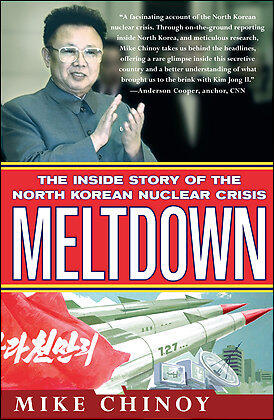
Mike Chinoy, the Pacific Council’s Edgerton Senior Fellow for Asia and author of the just-published and critically-received book, Meltdown: The Inside Story of the North Korean Nuclear Crisis will discuss the main themes in his book, update us on the recent developments in the Bush administration’s policy toward North Korea and assess what other policy options the next U.S. president might pursue.

Image
MELTDOWN The Inside Story of the North Korean Nuclear Crisis
Drawing on over 200 interviews conducted in Washington, Seoul, Tokyo and other Asian capitals – as well as insights gained from Mr. Chinoy’s 14 trips to Pyongyang – Meltdown provides a detailed account of the behind-the-scenes policy debates within the Bush administration and other governments that drove the recent confrontation over North Korea’s nuclear weapons program.  It also offers important new details of the impact the crisis had on U.S. relations with its key regional allies – Japan and South Korea – and on Washington’s fraught relationship with Beijing. 

» Washington Post’s review of the "Meltdown: The Inside Story of the North Korean Nuclear Crisis"

Mike Chinoy is one of America’s keenest observers of Asian affairs, having reported on the most important events in the region for almost thirty years. He previously served as CNN’s senior Asia correspondent (2000-06), its Hong Kong bureau chief (1996-2000), and Beijing bureau chief (1987-95).  Earlier, he spent four years as a reporter with NBC’s Hong Kong Bureau, and from 1975-78 he was a Hong Kong-based freelance reporter, contributing to CBS News as well as Newsday, The Far Eastern Economic Review and other publications.

Mr. Chinoy received an Emmy Award, an ACE Award, a Dupont Award and a Peabody Award for his coverage of the 1989 Tiananmen Square crisis.  His critically-acclaimed reporting during those weeks has been credited with strengthening CNN as an authoritative force in international news coverage. Mr. Chinoy has also covered North Korea extensively, traveling there 14 times since 1989.  In April 1994, he became the first broadcaster to file live TV reports from North Korea, and was the only journalist to travel with former U.S. President Jimmy Carter on his historic trip to Pyongyang in June of that year.

Philippines Conference Room

Mike Chinoy Edgerton Senior Fellow Speaker Pacific Council on International Policy
Seminars
Authors
News Type
News
Date
Paragraphs
Shorenstein APARC director Gi-Wook Shin offered his analysis of the possible scenarios for succession of power in North Korea in an interview with the New York Times. Shin told The Times that he thought the Kim dynasty would continue to play a role, even if symbolic in the structure, of power in North Korea. "My guess is like this: they will keep the Kim family as a social and political institution like the emperor system in Japan, offering symbolic and moral power for North Koreans, but are likely to establish a collective leadership system in which the military will play a key role. We may, then, witness some political instability in the North."
All News button
1

Kim argues anti-Americanism belongs to a category of political opposition which may be divided into orthodox dissent and unorthodox dissent: the former involving "efforts to improve the existing system in keeping with its underlying ideological values," while the latter is mainly concerned with the change in political and socioeconomic structures.

In the South Korean context, orthodox dissent is the conservative-rightist whereas unorthodox dissent the progressive-leftist. While sometimes criticizing the U.S. on selected issues, the conservative-rightist accounts cooperation with the U.S. crucial for keeping North Korea from provoking military actions against the South. On the other hand, the progressive-leftist regards the North Korean regime a partner to live together and unification with the North most valuable, transcending ideologies and systems. The progressive-leftist naturally regards "dependence" on the U.S. being against its national autonomy, and in the extreme, the U.S. an obstacle to its unification with the North.

This talk brings its focus on anti-Americanism derived from the progressive-leftist or unorthodox dissenting argument, and its influence on the ROK-U.S relations.

Hakjoon Kim is a visiting scholar at Center for East Asian Studies at Stanford and is the Chairman of Dong-a Il Bo, South Korean newspaper.  He was the President of Korea Political Science Association and Korean Federation of Teachers' Associations.  Kim was Scholar at the Alexander-von-Humboldt Foundation in Germany, and Guest Scholar at the Woodrow Wilson International Center for Scholars in Washington, D.C.

Philippines Conference Room

Hakjoon Kim Visiting Scholar, CEAS Speaker
Seminars

Shorenstein APARC
Stanford University
Encina Hall E301
Stanford, CA 94305-6055

(650) 723-6530
0
Visiting Scholar, 2008-09
Jong-Seok_Lee.JPG

Dr. Jong Seok Lee was the Minister of Unification, and the Chairman of the Standing Committee of the National Security Council in Korea. He is currently a Senior Fellow at Sejong Institute in Korea. He has published books on North Korea-China relations, contemporary North Korea, and Korea unification.

Authors
News Type
News
Date
Paragraphs
Pyongyang suspends its dismantling plans. Is North Korea hoping to push the Bush administration into reconsidering its verification policies or "playing for time in hopes of winning a better deal from" the next administration? Shorenstein APARC's associate director for research, Daniel C. Sneider, suggests they could be doing both.
All News button
1
Authors
David Straub
News Type
News
Date
Paragraphs

Over more than six decades, the partnership between the United States and the Republic of Korea has been subject to many stresses and strains, from the Korean War to coping with the challenge of North Korea’s nuclear ambitions. More recently, the democratization of South Korea has opened the alliance to much greater public scrutiny and pressures from an active and mobilized Korean public. Managing this strategic alliance in an era of democracy has been a focus of the research work on Korea conducted by FSI’s Walter H. Shorenstein Asia-Pacific Research Center.

With the election in December of Lee Myung-bak as South Korea’s president, ending two terms of progressive rule, Shorenstein APARC decided to launch a nonpartisan group of former senior U.S. government officials, scholars, and other American experts on Korea to explore how to revitalize the U.S. alliance with the Republic of Korea (ROK) after a decade of tensions. In partnership with the New York-based Korea Society, Shorenstein APARC assembled this policy study group at Stanford in early February for in-depth discussion of the challenges facing the alliance and then took the group to Korea for meetings with key figures, from President-elect Lee and his advisors to leaders of the opposition, Korean businessmen, and American diplomats and security officials.

Based on these intensive meetings, the members of this “New Beginnings” policy study group concluded that the United States now has a major opportunity to bolster and broaden its relationship with the ROK. Lee, Korea’s first businessman to be elected president and a self-proclaimed “pragmatist,” has stressed that he gives top priority to the United States in his foreign policy. His fixed five-year tenure will coincide with the entire first term of the next U.S. president, allowing the two new leaders an extended period of cooperation.

Immediately before Lee’s first visit to the United States as president in mid-April, New Beginnings members led by Shorenstein APARC Director Gi-Wook Shin, APARC Distinguished Fellow Michael H. Armacost, and Korea Society President Evans J.R. Revere visited Washington, D.C., and New York City to release their report, New Beginnings in the U.S.-ROK Alliance: Recommendations to U.S. Policymakers. They also addressed a forum in San Francisco co-hosted by the World Affairs Council and the Asia Society of Northern California on June 3 to discuss their recommendations and subsequent developments in U.S.-South Korean relations. The report received extensive coverage in the South Korean news media and was noted in American media as well.

Surrounded by a rising China, a more assertive Russia, a Japan seeking a greater international role, and a nuclear North Korea, the ROK can play a key role in working with the United States to maintain peace and stability in East Asia. No effort to address the nuclear and other challenges posed by North Korea is likely to succeed without the closest U.S.-South Korean cooperation. The ROK, as the world’s 13th-largest economy and one of Asia’s most democratic countries, is a model of the virtues of a market economy, of the values of freedom and human rights, and of alignment with the United States. The two countries are also bound by personal ties: 2 million people of Korean descent live in the United States, and 100,000 Koreans come to the United States each year for study and exchanges, more than from any other country.

President Lee’s election reflects four key changes in South Korea: (1) a shift from the political left back toward the center; (2) greater skepticism about North Korea; (3) increased wariness of China; and (4) enhanced support for the U.S.-ROK alliance. The protests against the United States seen in South Korea in 2002 were the result in part of transitory circumstances and no longer reflect the reality there.

President Lee seeks a global partnership with the United States while maintaining good relations with Korea’s neighbors, Japan, China, and Russia. He favors improved relations with North Korea and has stated his willingness to meet North Korean leader Kim Jong-Il. In major departures from the earlier “sunshine” policy of the South Korean government toward North Korea, however, Lee will not provide large-scale economic assistance to the North until after it abandons its nuclear weapons program. In another major departure from the previous ROK policy, he has also criticized human rights abuses in North Korea. Lee supports continued food and other humanitarian aid to the people of North Korea.

New Beginnings group members believe that the United States cannot afford to lose the opportunity presented by President Lee to build a global partnership with one of the United States’ most important allies. The group identified a number of steps that the United States, in cooperation with the ROK, could take to move the alliance into a new era (see sidebar).

The New Beginnings group has announced that it plans to continue its efforts in support of strengthened U.S.-South Korean relations. Among other projects, the group intends to present recommendations early next year to the South Korean government on how to develop a close relationship and bolster the alliance with the incoming U.S. administration.

Recommendations to United States Policymakers

  • Global Partnership — Building on the cooperation between Presidents Bush and Lee, the new U.S. president next year should issue a vision statement with Lee detailing their partnership and goals for the alliance. To advise them, the two new presidents should establish a bi-national panel of distinguished Koreans and Americans. The United States and the ROK should also give increased emphasis to the foreign ministerial strategic dialogue they initiated in 2006.
  • Security Alliance — We support the ongoing realignment of U.S. forces in the ROK. Congress should increase its budget for the relatively small U.S. portion of the total cost of its implementation. The decision to transfer wartime operational control of Korean forces back to the ROK in 2012 was likewise correct, but the United States should respond positively to any South Korean proposal to discuss conditions related to the transfer. We welcome the Lee administration’s apparent desire to review the main North Korea war plan and to prepare jointly for other contingencies, including that of a North Korean collapse. The United States should conduct regular, joint consultations with South Korea and other allies in East Asia to determine whether security conditions warrant changes in our respective force levels and, if so, in what direction.
  • North Korea — The ROK election has brought the United States and South Korea into essential agreement, for the first time in seven years, on how to deal with North Korea and its nuclear aspirations. To avoid the danger that their North Korea policies will again diverge, they must establish stronger consultative mechanisms, including with Japan.
  • Economy and Trade — Congress should ratify the U.S.-ROK Free Trade Agreement now. U.S. failure to approve the FTA would not only represent foregone business opportunities; it would damage U.S.-ROK relations and be seen by the international community as a weakening of U.S. self-confidence and engagement, in East Asia and around the globe.
  • People-to-People Ties — The U.S. government should set an early target date to include the ROK in the Visa Waiver Program and encourage the Korean government to support a major expansion of the Fulbright Program’s English Teaching Assistant Program. The United States should create a new program to allow U.S. federal employees to intern in Korean ministries and increase the budget for the State Department’s International Visitor Program for young South Korean leaders. U.S. military personnel stationed in Korea should be joined by their families. The United States should, at long last, construct a new U.S. embassy in Seoul.
All News button
1
News Type
News
Date
Paragraphs

As the world’s most dynamic and rapidly advancing region, the Asia-Pacific has commanded global attention. Business and policy leaders alike have been focused on the rise of China, tensions on the Korean peninsula, Japan’s economic recovery and political assertiveness, globalization and the outsourcing of jobs to South Asia, Indonesia’s multiple transitions, competing forces of nationalism vs. regionalism, and the future of U.S.-Asia relations.

What is the near-term outlook for change in the region? How might developments in the economic, political, or security sphere affect Asia’s expected trajectory? And how will a changing Asia impact the United States? These were among the complex and challenging issues addressed by a faculty panel from the Shorenstein Asia-Pacific Research Center (Shorenstein APARC) and the Eurasia Group at the Asia Society in New York on January 23, 2006.

Image
1607 small 4 1
Moderated by director of the Freeman Spogli Institute for International Studies Coit D. Blacker, the Olivier Nomellini Family University Fellow in Undergraduate Education, the panel included Michael H. Armacost, the Shorenstein Distinguished Fellow, former Under Secretary of State for Political Affairs, and former Ambassador to Japan and the Philippines; Donald K. Emmerson, the director of the Southeast Asia Forum at Shorenstein APARC and noted expert on Indonesia; Harry Harding, the director of research and analysis at the Eurasia Group in New York and University Professor of International Affairs at George Washington University; and Gi-Wook Shin, the director of Shorenstein APARC, founding director of the Korean Studies Program, and associate professor of sociology at Stanford.

Q. COIT BLACKER: WHAT IS THE MOST DIFFICULT, CHALLENGING ISSUE YOU SEE?

Image
1607 small 4 2

A. HARRY HARDING:

In China, we are seeing a darker side of the Chinese success story. Millions of people have been lifted out of poverty, China's role in international affairs is on the rise, and China is an increasingly responsible stakeholder in an open, liberal global economy. Yet, the world is now seeing the problems China's reform program has failed to resolve. China's new five-year plan seeks to address a number of these issues, providing a plan for sustainable economic development that is environmentally
responsible and addresses chronic pollution problems, for a harmonious society that
addresses inequalities and inadequacies in the provision of medical care, insurance
and pension systems, and for continuing technological innovation, as part of China's
quest to become an exporter of capital and technology.

Image
1607 small 4 3
A. GI-WOOK SHIN:

The world should be deeply concerned about developments on the Korean peninsula. Two pressing issues are U.S. relations with South Korea and the nuclear crisis with the North. It is not clear when or whether we will see a solution. Time may be against the United States on the issue. China and South Korea are not necessarily willing to follow the U.S. approach; without their cooperation, it is difficult to secure a successful solution. The younger generation emerging in South Korea does not see North Korea as a threat. Our own relations with South Korea are strained and we are viewed as preoccupied with Iraq and Iran, as North Korea continues to develop nuclear weapons.

Image
1607 small 4 4
A. DONALD EMMERSON:

In Southeast Asia, a key problem is uneven development, both in and between the political and economic spheres. Potentially volatile contrasts are seen throughout the region. Vietnam is growing at 8 percent per year, but will it become a democracy? It has not yet. Indonesia has shifted to democracy, but absent faster economic growth, that political gain could erode. Indonesia's media are among the freest in the region;
multiple peaceful elections have been held--a remarkable achievement--and nearly all Islamists shun terrorism. Older Indonesians remember, however, that the economy
performed well without democracy under President Suharto. Nowadays, corruption
scandals break out almost daily, nationalist and Islamist feelings are strong, and the
climate is not especially favorable to foreign investment. While Burma's economy
lags, its repressive polity embarrasses the Association of Southeast Asian Nations
(ASEAN). How long can the generals in Rangoon hold on? Disparities are also
international: dire poverty marks Laos and Cambodia, for example, while the
Malaysian and Thai economies have done well.

Image
1607 small 4 5
A. MICHAEL ARMACOST:

Japan is a "good news/bad news" story. The good news is that Japan has found a new security niche since the end of the Cold War. Previously, when a security problem loomed "over the horizon," they expected us to take care of it while, if prodded, they increased their financial support for U.S. troops stationed in Japan. During the first post-Cold War conflict in the Persian Gulf, Japan had neither the political consensus nor the legal framework to permit a sharing of the risks, as well as the costs, and this cost them politically. Since then, they have passed legislation that permits them to participate in U.N. peacekeeping activities, contribute noncombat, logistic, and other services to "coalition of the willing" operations, and even dispatch troops to join reconstruction activities in Iraq. Clearly, their more ambitious role is helping to make the U.S.-Japan alliance more balanced and more global.The bad news is a reemergence of stronger nationalist sentiment in Japan and more generally in Northeast Asia. In part this is attributable to the collapse of the Left in Japanese politics since the mid-1990s. This has left the Conservatives more dominant, and they are less apologetic about Japanese conduct in the 1930s and 1940s, more inclined to regard North Korea and China as potential threats, more assertive with respect to territorial issues, less sensitive to their neighbors’ reactions to Prime Ministerial visits to Yasukuni Shrine, and more eager to be regarded as a “normal” nation. Many Asians see the United States as pushing Japan to take on a more active security role and, in the context of rising Japanese nationalism, are less inclined to view the U.S.-Japan alliance as a source of reassurance.

Q. COIT BLACKER: WHAT ARE THE COMPETING AND CONFLICTING TENSIONS BETWEEN REGIONALISM AND NATIONALISM?

A. HARRY HARDING:

In China, there has been a resurgence of nationalism over the past 10 to 15 years. Since the end of the Maoist era and the beginning of the reform movement, the leadership has embraced nationalism as a source of legitimacy, but this is a double-edged sword. It places demands on the government to stand up for China’s face, rights, and prestige in international affairs, especially vis-à-vis Japan, the United States, and Taiwan, at times pushing Beijing in directions it does not wish to go.

A. DONALD EMMERSON:

In Indonesia, it is important to distinguish between inward and outward nationalism. Outward nationalism was manifest in Sukarno’s policy of confrontation with Malaysia. ASEAN is predicated on inward nationalism and outward cooperation. Nationalist feelings can be used inwardly to motivate reform and spur development. But there are potential drawbacks. Take the aftermath of the conflict in Aceh. The former rebels want their own political party. Hard-line nationalists in the Indonesian parliament, however, are loath to go along, and that could jeopardize stability in a province already exhausted by civil war and damaged by the 2004 tsunami.

A. GI-WOOK SHIN:

Korea is a nation of some 70 million people, large by European standards, but small in comparison to the giants of Asia, especially China, India, and Russia, making Korea very concerned about what other countries are doing and saying. Korea is currently undergoing an identity crisis. Until the 1980s, the United States was seen as a “savior” from Communism and avid supporter of modernization. Since then, many Koreans have come to challenge this view, arguing that the United States supported Korean dictatorship. Koreans are also rethinking their attitudes toward North Korea, seeing Koreans as belonging to one nation. This shift has contributed to negative attitudes toward both the United States and Japan

Q. COIT BLACKER: GENERATIONAL CHANGE IS ALSO A MAJOR ISSUE IN CHINA, THE DPRK, AND JAPAN. WHAT DOES IT BODE FOR POLITICAL CHANGE?

A. MICHAEL ARMACOST:

Japan has had a “one and a half party system” for more than half a century. Yet the Liberal Democratic Party has proven to be remarkably adaptive, cleverly co-opting many issues that might have been exploited by the opposition parties. It is clearly a democratic country, but its politics have not been as competitive as many other democracies. As for the United States, we have promoted lively democracies throughout the region. But we should not suppose that more democratic regimes will necessarily define their national interests in ways that are invariably compatible with ours. In both Taiwan and South Korea, to the contrary, democratic leaderships have emerged which pursue security policies that display less sensitivity to Washington’s concerns, and certainly exhibit little deference to U.S. leadership.

A. GI-WOOK SHIN:

In both North and South Korea, a marked evolution is under way. In the South, many new members of the parliament have little knowledge of the United States. Promoting mutual understanding is urgently needed on both sides. In the North, the big question is who will succeed Kim Jong Il—an issue with enormous implications for the United States.

A. DONALD EMMERSON:

Indonesians have a noisy, brawling democracy. What they don’t have is the rule of law. Judges can be bought, and laws are inconsistently applied. The Philippines enjoyed democracy for most of the 20th century, but poverty and underdevelopment remain rife, leading many Filipinos to ask just where democracy has taken their nation.

A. HARRY HARDING:

China has seen a significant increase in rural protests. There has been an increase in both the number of incidents and the level of violence. People are being killed, not just in rural areas, but also in major cities like Chengdu. We are seeing a new wave of political participation by professional groups, such as lawyers and journalists, galvanizing public support on such issues as environmental protection, failure to pay pensions, confiscation of land, and corruption. A new generation has been exposed to the Internet, the outside world, and greater choice, but it is not yet clear at what point they will demand greater choice in their own political life.


WHAT WOULD YOU ADVISE THE PRESIDENT ON U.S. POLICY TOWARDS ASIA?

In the lively question-and-answer session, panelists were asked, "Given the chance to talk to the U.S. President about change and improvement in U.S.-Asia policy, what would you say?"

MICHAEL ARMACOST: I am struck by a mismatch between our interests and our strategy in Asia. In some respects our Asia policy has become something of an adjunct of our policy toward the Middle East-where we confront perhaps more urgent, if not more consequential, concerns. Asia is still the most dynamic economic zone in the world; it is the region in which the most significant new powers are emerging; and it is where the interests of the Great Powers intersect most directly. Also, it is an area where profound change is taking place swiftly. We are adapting our policies in Asia to accommodate current preoccupations in the Muslim world, rather than with an eye to preserving our power and relevance in Asia.

HARRY HARDING: It is striking how much Asian nations still want us around- as an offshore balancer and a source of economic growth. Yet they want us to understand the priorities on their agenda as well as our own. We are seen as obsessed with terrorism and China. We should exhibit more support for Asian institution building, as we have with the European Union. We also need to get our own economic act together-promoting education, stimulating scientific research and technological innovation, and reducing our budget deficits-and quit resting on past laurels. Requiring Japan to accept U.S. beef exports and then sending them meat that did not meet the agreed-upon standards has been a setback for our relations, since the Japanese public regards the safety of its food supply as critically important.

DONALD EMMERSON: Most opinion-makers in Southeast Asia are tired of Washington's preoccupation with terrorism. To be effective in the region, we must deal-and appear to be dealing-with a wider array of economic, social, and political issues, and not just bilaterally. The United States is absent at the creation of East Asian regionalism. For various reasons, we were not invited to participate in the recent East Asia Summit. Meanwhile, China's "smile diplomacy" has yielded 27 different frameworks of cooperation between that country and ASEAN. We need to be more, and more broadly, engaged.

MICHAEL ARMACOST:
The establishment of today's European community began with the historic reconciliation between France and Germany. I doubt that a viable Asian community can be created without a comparable accommodation between China and Japan. Some observers believe that current tensions between Tokyo and Beijing are advantageous insofar as they facilitate closer defense cooperation between the United States and Japan. I do not share that view. A drift toward Sino-Japanese strategic rivalry would complicate our choices as well as theirs, and I hope we can find ways of attenuating current tensions.

All News button
1
Authors
News Type
News
Date
Paragraphs

The Stanford Program on International and Cross-cultural Education (SPICE) serves as a bridge between FSI’s research centers and elementary and secondary schools throughout the United States. Over the past year, SPICE curriculum writer Rylan Sekiguchi and Joon Seok Hong (MA, East Asian Studies, 2007) have been developing a curriculum unit for secondary schools called “U.S.–South Korean Relations” in consultation with Professor Gi-Wook Shin, director of the Korean Studies Program (KSP). The KSP was formally established in 2001 at the Shorenstein Asia-Pacific Research Center with the appointment of Professor Shin as the founding director. “U.S.–South Korean Relations” is the result of SPICE’s first formal collaboration with the KSP.

For more than half a century, the United States and South Korea have been close and strong allies, a relationship nurtured under war and the pursuit of common interests. Despite this long and established alliance, U.S.–South Korean relations and Korean history are not adequately taught in American secondary schools. “U.S.–South Korean Relations” seeks to fill the gap by exposing students to the four core pillars of the alliance: democracy, economic prosperity, security, and sociocultural interaction. Each pillar supports the U.S.–South Korean relationship in a different and important way.

Lesson One examines South Korea’s maturing democracy, providing students an overview of South Korean democratization and engaging them on the concept of democracy. Students also study how the U.S.–South Korean relationship affected South Korea’s democratization and vice versa. Ultimately, students consider how common political and social values serve to strengthen relations between two countries and societies.

Lesson Two introduces students to the economic aspect of the U.S.–South Korean relationship and encourages them to recognize how economic interdependence between the two countries has served to draw them closer together. Students examine modern-day trade,such as the recently concluded U.S.–South Korean Free Trade Agreement (KORUS FTA), and also learn about the historical role the United States played in helping South Korea industrialize after the Korean War.

Lesson Three outlines the security concerns that South Korea and the United States have shared since the Korean War and the signing of the Mutual Defense Treaty in 1953 to the recent nuclear weapons issue with North Korea. Students study the history of the U.S.–South Korean security alliance and evaluate why both Seoul and Washington have considered the alliance so important and beneficial.

Lesson Four complements the broad country-tocountry perspective of the first three lessons and encourages students to consider how the U.S.–South Korean relationship has influenced the individual lives of Koreans and Americans. Students contemplate how the cultural interactions between the two countries have influenced both societies and changed the lives of their people.

The U.S.–South Korean relationship is one of the most successful bilateral relationships in the world. SPICE hopes that the curriculum unit, “U.S.–South Korean Relations,” not only offers U.S. secondary students a broad overview of this relationship but also inspires students to enroll in college courses on Korea through programs such as the KSP.

Hero Image
1571 small 9
All News button
1
Subscribe to North Korea