


Support for Tuberculosis Care in the Democratic People's Republic of Korea (North Korea)
-
Heidi Linton has worked with Christian Friends of Korea in a variety of capacities since its founding in 1995, and has served as Executive Director since 2002. She holds a Master’s Degree from New York University, and a Bachelor’s Degree from the University of Washington. Since 1995, CFK has delivered over $34 Million USD in various forms of aid (including food, medicine, medical supplies and equipment, technical upgrades, agricultural supplies and equipment and other goods) to multiple healthcare and other facilities in the DPRK. Heidi regularly leads CFK visits to the DPRK to confirm delivery of all shipments and to engage in technical projects. Together with Andrew Linton, a co-founder of CFK whose parents, grandparents and great-grand parents were all lifelong Presbyterian missionaries to Korea, they have three children.
CISAC Conference Room
Heidi Syren Linton
Executive Director
Speaker
Christian Friends of Korea
Seminars
Obama administration will give diplomacy a chance to deal with the North Korean nuclear problem
News Type
Commentary
Date
Paragraphs
David Straub, the acting director of Korean Studies Program, argues that Obama administration will finally give diplomacy a chance to deal with the North Korean nuclear problem. He stresses that Senator Obama understands the difficulties of dealing with North Korea and will proceed carefully. If North Korea does not respond to this more nuanced American approach, he concludes, the international community is likely to be more supportive of U.S. efforts to constrain North Korean behavior.
Among conservatives in Korea and other American allied countries, there seems to be some anxiety about the election of a relatively unknown, young African-American liberal as the next American president. Typically, when a new U.S. president is elected, American diplomats seek to reassure allies by telling them that the incoming president will pursue fundamentally the same policies as the outgoing president. However, President Obama clearly will adopt a significantly different foreign policy than President Bush, including toward North Korea.
Obama’s soaring rhetoric has led to a widespread (and correct) impression of him as idealistic, but the long presidential campaign also revealed him to be a disciplined politician and a skillful manager. His foreign policy will be much closer to the prudent realpolitik of President Bush’s father than it will be to the “neo-con” approach of President Bush himself.
And while it is true that Obama does not have deep experience in foreign affairs, his youthful years spent in Indonesia and Hawaii, taken together with his successful navigation of American society as a young African-American man, have given him a genuine empathy for different peoples and cultures. He has the self-confidence and intelligence to listen with an open mind to others and then carefully to make his own decisions.
President Obama’s policy toward North Korea will defy stereotypes of the past. In some ways he will be “softer” on North Korea than President Bush; in other ways, he will be “tougher.” Like President Bush and his predecessors, President Obama will take the position that he can never accept a North Korea with nuclear weapons. On the other hand, Obama will not engage in bluster such as “all options are on the table,” which most South Koreans reject and which only plays into the DPRK’s hands.
Instead, Obama will finally give diplomacy a fighting chance. Even during the past couple of years, President Bush remained very reluctant to engage fully in negotiations with North Korea. President Obama will order that a policy review be conducted expeditiously, and he will probably appoint a very senior special envoy to take charge of negotiations with North Korea. While maintaining the framework of the Six-Party Talks and consulting very closely with the Republic of Korea and Japan, he will also authorize meaningful bilateral negotiations with North Korea. If those negotiations bear real fruit, he may even visit Pyongyang himself if he is confident that he will be able to strike a deal completely ending North Korea’s nuclear ambitions.
President Obama will probably offer North Korea a “more for more” deal. In other words, compared to President Bush he will propose a much more detailed and concrete series of steps to be taken by North Korea, the United States, and other members of the Six-Party Talks. The aim will be agreement on an early end to North Korea’s nuclear weapons programs.
The North Koreans should not think that President Obama will be “easier” than President Bush. If, as may well be the case, the North Koreans reject President Obama’s approach or drag their feet in responding to it, he, unlike President Bush, will have the international credibility to work more effectively with other members of the Six-Party Talks and the international community to limit North Korea’s options.
Moreover, as a hardheaded domestic politician, President Obama will be careful to avoid situations in which the Republican opposition could credibly criticize him as being naïve about North Korea. Indeed, Obama’s team recognizes clearly that, having declared itself a nuclear weapons state and tested a nuclear device, North Korea may not be prepared to verifiably give up its nuclear weapons ambitions.
In formulating and conducting his policy toward North Korea, President Obama will have access to many trusted experts on North Korea, beginning with Vice President Biden and his staff. Obama is also advised by a number of experienced officials from the Clinton administration, from former Defense Secretary Bill Perry to former career diplomat Jeffrey Bader.
U.S. relations with the Republic of Korea are key to any successful American policy toward North Korea. Obama and his team fully appreciate the importance of U.S.-ROK relations and the security alliance. They will coordinate very closely with the Lee Myung-bak administration and never sacrifice the interests of the Republic of Korea, which is immeasurably more important to the United States than the DPRK is or ever will be.
President Obama will support the implementation of the agreements President Bush reached with the Republic of Korea on the realignment of U.S. Forces of Korea and the transfer of wartime operational control, as befits the ROK’s military and economic might.
Under President Obama, the United States will also aim to approve, with some adjustments, the U.S.-ROK Free Trade Agreement, although it may take a year or so to do so as he perforce deals first with the global financial and economic crises and wars in Iraq and Afghanistan. President Obama must be cognizant of the viewpoint of leading congressional Democrats and the constituencies they represent. It may be counterproductive if the ROK pushes too hard, too fast for U.S. approval of the FTA.
Obama’s inauguration will also open up new possibilities for U.S.-ROK coordination and cooperation on global issues. Unlike President Bush, whose early unilateralist mindset and specific policies caused dismay among international friends and foes alike, President Obama begins with a vast reservoir of sympathy and respect throughout the world. That will make it easier, and more useful, for the Republic of Korea to cooperate globally more with the United States.
In short, South Koreans should be reassured, not that President Obama’s foreign policy will be like that of President Bush, but that it will be different. Perhaps South Koreans will even begin to feel that their alliance with the United States is not just one that they feel they must have for their country’s long-term interests – but also one of which they can feel proud.
All News button
1
Trilateral relations of U.S. and two Koreas under new Obama administration
News Type
Commentary
Date
Paragraphs
"With the current affairs such as the financial crisis and the Iraq War," Gi-wook Shin says, "the new Obama administration may not have the North Korea issues on its priority list for a while. Lee Myung-bak administration, meanwhile, is urged to revisit the workable policies of the past as well as to initiate the pragmatic diplomacy towards the collaboration between South Korea and the U.S."
All News button
1
Nuke Negotiations with North Korea: Half Full or Half Empty?
Paragraphs
Somewhere on the long list of problems that President Barack Obama will inherit next January will be the ongoing negotiations to roll back North Korea’s nuclear weapons program. The announcement on October 11, removing North Korea from the U.S. list of state sponsors of terrorism in exchange for a verification mechanism, has the virtue of keeping the diplomatic
avenue open. But if we look carefully at what it took even to get to this interim point,
there should be no illusions about the difficulties of finishing the job.
The latest deal merely closes the second phase of an agreement that was originally signed in February 2007. This phase was supposed to be completed in 60 days. Instead it has taken 19 months. This 19-month saga of negotiation over what may be the easiest step in the process—freezing the status quo—should caution against any expectation that the next administration can easily step in and pick up the negotiating reins.
There are three options it can reasonably consider come January. One would be to try to regain what has been given away in these talks—the inclusion of undeclared sites and proliferation activities—by returning to tactics of international sanctions and Chinese pressure. Japan, which is unhappy with the deal, may be ready for this but there is no evidence that Beijing or even the conservative Lee Myung-Bak government in South Korea is interested in returning to confrontation. At the other end of the spectrum would be an effort to leapfrog the drawn-out phases by offering Pyongyang most of what they claim to want—normalization of relations, economic aid, security assurances, a formal peace treaty to end the Korean war—in a "grand bargain."
Finally, there is the least attractive but most likely course: to lock in the gains of plutonium containment and to continue the diplomatic slog into the dismantling phase, albeit with a more rigorous approach. The U.S. could also try to encourage regime transformation in the North through both engagement and pressure. Given the uncertainties over the health of North Korean dictator Kim Jong Il, this may be the only viable path to ending the North Korean nuclear threat.
All Publications button
1
Publication Type
Journal Articles
Publication Date
Journal Publisher
The Oriental Economist
Korea and the Next American Presidency
-
In addition to Iraq, Afghanistan, Pakistan, the financial crisis, and the housing crisis (as if that were not enough!), the next American president will have his hands full with matters on the Korean peninsula. What will be the future of Six Party talks? What is the status of the leadership in Pyongyang? How do changes in leadership in Washington (and potentially in Pyongyang) affect outcomes? What are the prospects for US-ROK relations? And what of the KORUS FTA? Victor Cha, former director of Asian affairs at the White House, will lead a discussion on these issues.
Professor Cha is director of Asian Studies and holds the D.S. Song Chair in the Department of Government and School of Foreign Service at Georgetown University. He left the White House in May 2007 after serving since 2004 as Director for Asian Affairs at the National Security Council. At the White House, he was responsible primarily for Japan, the Korean peninsula, Australia/New Zealand and Pacific Island nation affairs. Dr. Cha was also the Deputy Head of Delegation for the United States at the Six Party Talks in Beijing, and received two Outstanding Service commendations during his tenure at the NSC.
He is the award-winning author of Alignment Despite Antagonism: The United States-Korea-Japan Security Triangle (Stanford University Press) (winner of the 2000 Ohira Book Prize) and co-author of Nuclear North Korea: A Debate on Engagement Strategies (Columbia University Press, 2004). He has written articles on international relations and East Asia in journals including Foreign Affairs, International Security, Political Science Quarterly, Survival, International Studies Quarterly, and Asian Survey. Professor Cha is a former John M. Olin National Security Fellow at Harvard University, two-time Fulbright Scholar, and Hoover National Fellow, CISAC Fellow, and William J. Perry Fellow at Stanford University.
Image
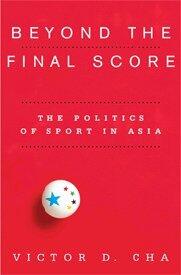
His new book Beyond the Final Score: The Politics of Sport in Asia (Columbia University Press, 2008) looks at the politics of sports and the Beijing Olympics. Cha holds a BA and Ph.D. from Columbia University, MA from University of Oxford.
This event is sponsored by the Pantech Group in Korea.
Philippines Conference Room
Victor D. Cha
Director of Asian Studies
Speaker
Georgetown University
Seminars
U.S. Policy in Korea after the elections
News Type
Commentary
Date
Paragraphs
In the waning days of the Clinton administration, the momentum for engagement with North Korea, building from the earlier agreement to freeze its nuclear program and a moratorium on ballistic missile launches, accelerated to the brink of full-scale normalization of relations. The U.S. presidential election in 2000 brought that diplomatic freight train to an abrupt halt.
Will the 2008 election bring yet another dramatic change in U.S. Korea policy?
The answer, based on the published positions of the two candidates and conversations with his senior Asia policy advisors, seems to be NO. There are important differences of emphasis in the approaches of both candidates, which I will discuss, but the bottom line is that both men are likely to pick up where President George W. Bush leaves off.
There are two fundamental reasons why U.S. policy toward Korea – and more broadly in Northeast Asia --- will not change dramatically. First, Asia will continue to suffer from a deficit of presidential attention. The arc of crisis – Iraq, Iran, Afghanistan and Pakistan -- will necessarily still command, as it has for almost 8 years, the attention of senior American policymakers. Even that will have to fight for space with the growing global financial crisis.
Second, both candidates agree on the broad outlines of an Asia policy, one that does not depart radically from the one pursued by the Bush administration. As a senior McCain advisor put it to me: “There is not a huge difference on Asia between Obama and McCain.” Privately, Obama advisors also stress that there will not be a huge break with current U.S. policy.
Both campaigns are critical of the lack of attention paid to Asia and the need for the U.S. to be more proactive to strengthen existing alliances and to join the discussion about new forms of regional integration. Both candidates support the need to engage, rather than confront, a rising China. Both men call for the U.S. to pay more attention to management of our alliances with South Korea and Japan. And both Obama and McCain support the North Korean nuclear negotiations carried out by President Bush in his second term, although privately both campaigns are critical of the deal that has been struck.
If there are differences, they can be found in two areas – support for the Korea US free trade agreement and the willingness to directly engage North Korea and its regime.
Free Trade and the KORUS Free Trade Agreement
If there is one single issue regarding Korea on which Senators Obama and McCain clearly part company, it is the future of the free trade agreement negotiated with the Bush administration. Senator McCain is an unambiguous supporter of the FTA, not only as a trade pact but also as a symbol of the broader partnership between the U.S. and South Korea.
Senator Obama also supports free trade but is critical of this and other agreements, such as NAFTA, for failing to ensure market access and the protection of labor rights and the environment. Privately, Obama’s advisors understand the symbolic value of the FTA to the alliance, but they plan to ask Seoul to reopen talks on market access, particularly for the automobile industry. Their position reflects the importance of trade unions and the role of some key states – Michigan most of all – in the election outcome. Even if Obama loses, the Democrats are likely to strengthen their control of Congress, making approval of the FTA difficult under any circumstances.
Negotiating with Pyongyang: Back to the Future?
Both the McCain and the Obama camps publicly back the Bush administration’s negotiations with Pyongyang, but both are also privately critical, though for different reasons.
The Obama team is heavily populated by former Clinton administration officials who were involved in the negotiation of the 1994 Agreed Framework with North Korea. They see the current deal as an inevitably flawed bargain, the result of the refusal of the administration to seriously engage the North directly until it had crossed the red line of nuclear weapons testing. With little leverage, not least the credible threat of coercion, we are left with containing the plutonium production of the North, and hoping that a grand bargain down the line can yield full denuclearization.
Obama recognizes the need for “close coordination and consultation with our allies South Korea and Japan,” as one of his advisors put it in a published interview, and supports continuing the Six Party Talks. But the emphasis is clearly on direct talks with North Korea, though conducted with a principled toughness that the Bush administration has not exhibited in its final months in office.
That readiness to conduct direct negotiations, up to conclusion of a peace treaty with Pyongyang and full normalization of relations, is where the two candidates part company. The Republican nominee is clearly uncomfortable with direct dealings with Pyongyang – his position resembles the first term of the Bush administration more than the second in that respect. His advisory team combines realists, mainly veterans of the Powell State Department, and neoconservatives, reproducing the divisions that thwarted coherent policy-making in that first Bush term.
In the end, the views of McCain himself may be decisive. He was an opponent of the Agreed Framework, an agreement he characterized as “appeasement.” He maintained this stance into the Bush administration, vocally opposing any direct negotiations with the North Koreans as long as they maintained the right to develop nuclear weapons. He has been critical as well of the main deal struck by President Bush in his second term – “I didn’t believe in the KEDO agreement that President Clinton made and I don’t believe in this one,” he said in January.
McCain, according to an interview with one of his senior Asia advisors, would “seek a return to the core principles of denuclearization known as CVID, or complete, verifiable, irreversible, dismantlement.” The demand for CVID was the watchword of the Bush administration’s earlier stance, in effect a call for Pyongyang to abandon its nuclear option as a first step. But that demand was dropped after Pyongyang called the Bush administration’s bluff by exploding a nuclear device in October, 2006.
McCain also wants to “broaden our policy goals related to North Korea” beyond nuclear issues, to including human rights, economic and political reform, and reduction of the conventional military threat from North Korea, goals also set out at the outset of the Bush administration. McCain has repeatedly referred to the North Korean regime, and its leader, Kim Jong Il, in harsh terms and embraced a policy of “rogue state rollback.”
Realistically, however, McCain offers no credible, practical means to reach these goals. He reserves, as does Obama, the option to use force. But concretely he comes back to the strategy of pressing China to bring North Korea to heel. Unfortunately the Bush administration also relied on China and found there were clear limits to Beijing’s ability to control or its willingness to press its North Korean client. In the end, McCain may have little option but to follow Bush to Pyongyang’s doorstep.
One Caveat – Events Matter
Despite the powerful impetus to maintain continuity in U.S. policy toward the Korean peninsula, no matter whom is elected in November, there is one important caveat to keep in mind – events matter. Unplanned, and unforeseen, developments could force Korea to the top of the President’s agenda. Already we have seen the reports of Kim Jong Il’s serious illness trigger fresh concerns about a possible collapse of political authority in Pyongyang. A simultaneous rush by China, South Korea and the United States to fill a vacuum of power in the North could upset all calculations. For South Korea, and President Lee Myung-bak, it is always best to prepare for the unexpected.
Hero Image

All News button
1
South Korean Foreign Policy Under the New Lee Myung-bak Government
-
The inauguration of Lee Myung-bak as president in February represented a significant shift in South Korea's foreign policy. After ten years of "progressive" rule in Seoul, Lee's skepticism about North Korean intentions and his unambiguous support for the U.S. alliance stand out in great contrast. Prof. Paik will analyze President Lee's foreign policy and its implications for dealing with North Korea and for relations with the United States, including in view of the upcoming change in U.S. administration.
Jin-Hyun Paik is a professor at the Graduate School of International Studies (GSIS), Seoul National University (SNU). He is also director of its Institute of International Affairs (IIA), which publishes, among others, the Journal of International and Area Studies (formerly Asia Journal). He specializes in Korea’s foreign and security policy, international security and conflict management, and international law and organization. Educated at Seoul National University (LL.B.), Columbia Law School (LL.M.), and Cambridge University (Ph.D.), Prof. Paik has been a research associate at the Hague Academy of International Law; a visiting fellow at the Rand Corporation and the Hoover Institution, Stanford; and a visiting professor at Johns Hopkins University’s School of Advanced International Studies (SAIS). He was a member of the Presidential Commission on Policy Planning, Korea, and of official advisory committees to a number of Korean government agencies, including the Ministry of Foreign Affairs and Trade and the National Security Council. Prof. Paik has edited six books and written over 100 articles in his fields of interest, in both English and Korean. He is also a frequent contributor and commentator on international affairs to major Korean newspapers and international media. Prof. Paik is an attorney-at-law (a member of the New York Bar). He is currently president of the Korean Academic Council on the United Nations System (KACUNS).
Daniel and Nancy Okimoto Conference Room
Jin-Hyun Paik
Professor, Seoul National University
Speaker
Conferences
Journal of Korean Studies, volume 13
Paragraphs
Between 1979 and 1992, the Journal of Korean Studies became a leading academic forum for the publication of innovative in-depth research on Korea. Now under the editorial guidance of Gi-Wook Shin and John Duncan, this journal continues to be dedicated to quality articles, in all disciplines, on a broad range of topics concerning Korea, both historical and contemporary.
This edition's contents are as follows:
Articles
- "Peripheral Influence: The Sinuiju Student Incident of 1945 and the Impact of Soviet Occupation in North Korea" by Adam Cathcart and Charles Kraus
- "The Martyr Syndrome: North Korean Literature in the later 1990s to 2000s" by Tatiana Gabroussenko
- "Pak Ch’anghwa and the Hwarang segi Manuscripts" by Richard D. McBride II
- "The Chinese Ancestors in a Korean Descent Group’s Genealogies" by Kenneth R. Robinson
Book reviews
- Domesticating the Dharma: Buddhist Cults and the Hwaom Synthesis in Silla Korea by Richard D. McBride II. Reviewed by Jörg Plassen
- 20th Century Korean Art by Youngna Kim, and Modern Korean Ink Painting by Chung Hyung-Min Chung. Reviewed by Frank Hoffmann
- Beyond Birth: Social Status in the Emergence of Modern Korea by Kyung Moon Hwang. Reviewed by Gari Ledyard
- The Making of Minjung: Democracy and the Politics of Representation in South Korea by Namhee Lee. Reviewed by Kirk W. Larsen
- Everlasting Flower: A History of Korea by Keith Pratt, and A Concise History of Korea: From the Neolithic Period through the Nineteenth Century by Michael J. Seth. Reviewed by James B. Lewis
All Publications button
1
Publication Type
Books
Publication Date
Journal Publisher
Rowman & Littlefield
Number
9780731161133
North Korea and Identity Politics in South Korea
Paragraphs
At his inauguration, South Korean President Lee Myung Bak proclaimed that his country “must move from the age of ideology into the age of pragmatism.” At a time when South Korean voters were fatigued by outgoing President Roh’s particular brand of politics heavily steeped in ideology, Lee’s image as an effective, non-deological manager had proved appealing. Though during the campaign Lee had vowed to strengthen the alliance with the United States and to insist on greater conditionality in inter-Korean relations, these issues were not the headlines of the 2007 presidential contest—in sharp contrast to the previous one. In fact, they received little traction. Instead, economic issues had top billing and Lee won based on economic promises. In a sense, this zeitgeist represents a departure from the previous 10 years of Korean politics, when the reassessment of the South Korea’s relationships with North Korea and the United States were central and divisive issues.
Yet, it would be imprudent to declare the demise of identity politics in South Korea. As Suh asserts, the country has been “caught between two conflicting identities: the alliance identity that sees the United States as a friendly provider and the nationalist identity that pits Korean identity against the United States.” Sharp division and disputes over the North and the alliance will not disappear in the near future because, for Koreans, these issues are intimately related to the basic and contested question of national identity. In fact, as clearly displayed during his first visit to Washington in April 2008, Lee’s “pragmatic” policy is firmly grounded in the “alliance” identity and has already provoked strong reaction from progressive forces that have promoted the nationalist identity.
Using newly collected data from the South Korean media, this article examines differing South Korean views of the North from 1992 to 2003, the critical time of the post–Cold War era, during which traditional notions of national identity have been challenged. While significant attention has been paid to how diff ering U.S. and South Korean perceptions of the North led to strains in the alliance, less is known about how these issues have been discussed, debated, and contested within the South, as well as why this fractious national debate has been laden with such intensity and emotion. We need to understand how these debates were related to efforts to (re)conceptualize South Korean identity vis-à-vis two principal “significant others”—the North and the United States—and how identity politics will continue to shape alliance relations as well as inter-Korean relations.
All Publications button
1
Publication Type
Journal Articles
Publication Date
Journal Publisher
Brown Journal of World Affairs