-

Abstract

Taiwan’s domestic politics, particularly presidential elections, has been the main driver of the island’s relations with China for two decades. The 2016 elections, in which the Democratic Progressive Party, led by Dr. Tsai Ing-wen, won both the presidency and majority control of the Legislative elections, promises to be no exception. Although PRC intentions under President Xi Jinping are far from certain, some change from the state of play under the current Ma Ying-jeou administration seems fairly certain, with implications for U.S. policy.


Bio

Richard Bush is a Senior Fellow at the Brookings Institution and Director of its Center for Northeast Asian Policy Studies, and the Chen-Fu and Cecilia Yen Koo Chair in Taiwan Studies. He came to Brookings in July 2002 after nineteen years working in the US government, including five years as the Chairman and Managing Director of the American Institute in Taiwan. He is the author of a number of articles on U.S. relations with China and Taiwan, and of At Cross Purposes, a book of essays on the history of America’s relations with Taiwan, published in March 2004 by M. E. Sharpe. In the spring of 2005, Brookings published his study on cross-Strait relations, entitled Untying the Knot: Making Peace in the Taiwan Strait. In 2013, Brookings published his Uncharted Strait: The Future of China-Taiwan Relations.


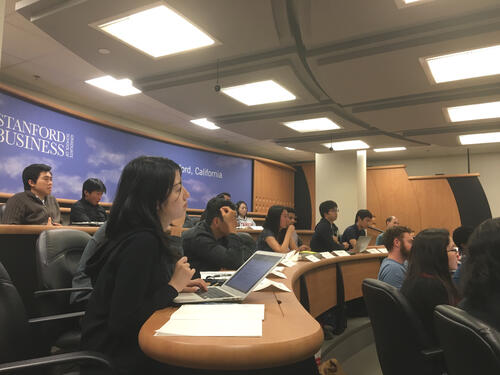
This talk is co-sponsored by the Taiwan Democracy Project in the Center on Democracy, Development, and the Rule of Law and the U.S.-Asia Security Initiative in the Walter H. Shorenstein Asia-Pacific Research Center.

Image
richard bush taiwan talk flyer


Richard C. Bush Senior Fellow and Director, Center for East Asian Policy Studies Brookings Institution
Seminars
Paragraphs

The fifteenth session of the Korea-U.S. West Coast Strategic Forum, held in Korea on November 17, 2015, convened senior South Korean and American policymakers, scholars and regional experts to discuss North Korea policy and recent developments on the Korean Peninsula. Hosted by the Korea Program at the Walter H. Shorenstein Asia-Pacific Research Center at Stanford University, the Forum is also supported by the Sejong Institute.

All Publications button
1
Publication Type
Policy Briefs
Publication Date
Authors
Lisa Griswold
News Type
News
Date
Paragraphs

A conference that honored the life and scholarly contributions of Stanford economist Masahiko Aoki was held at Stanford. Dozens of friends, family and community members paid tribute to Aoki, the Henri and Tomoye Takahashi Professor of Japanese Studies and Professor of Economics, emeritus, who died in July at the age of 77.

Eleven renowned economists and social scientists gave talks on Aoki’s extensive fields of research in economic theory, institutional analysis, corporate governance, and the Japanese and Chinese economies at the Dec. 4 conference, which was followed by a memorial ceremony the next day.

“When we contacted people to speak at this conference, few people turned us down,” said Stanford professor Takeo Hoshi. “The reason for this is Masa. It shows how much Masa was respected and how much his work is valued.”

The events were hosted by the Japan Program at the Walter H. Shorenstein Asia-Pacific Research Center, the Freeman Spogli Institute for International Studies (FSI), Graduate School of Business, Department of Economics and the Stanford Institute for Economic Policy Research (SIEPR).

Image
aoki colleagues

Aoki came to Stanford in 1967 as an assistant professor, held faculty appointments at Kyoto University and Harvard, and returned to Stanford in 1984. He retired to emeritus status at Stanford in 2005.

Throughout the conference, Aoki was described as an astute professor and colleague, valuable mentor and loyal friend by the many speakers and participants who shared works, stories and multimedia featuring their interactions with Aoki.

Aoki pioneered the field of comparative institutional analysis (CIA) with a team of scholars at Stanford: Avner Greif, John Litwack, Paul Milgrom and Yingyi Qian, among others. CIA analyzes and compares different institutions that evolve to regulate different societies.

Masahiko Aoki (far left) is pictured with colleagues on the Stanford campus in the late 1960s.

“Masa had a good background in looking at the economy as a whole, financial institutions as a whole – not just how numbers or actors economically interact – but also the people who interact within a given institutional framework,” said Koichi Hamada, a professor emeritus at Yale University. 

“Masa had a good background in looking at the economy as a whole, financial institutions as a whole – not just how numbers or actors economically interact…”

-Koichi Hamada, Yale University

Aoki applied a systematic lens to everything he studied, a “take society as a total entity” approach, Hamada said.

Aoki grew up in Japan, and developed a deep interest in Japanese politics at an early age. He was actively involved in student movements in the early 1960s, at the heart of which was a campaign against a controversial U.S.-Japan security treaty. China became another great interest of his as the country began to undergo economic transformation and modernization.

Throughout his career, Aoki traveled to Japan and China often, and sought to better inform policy debates by engaging scholars, government leaders and journalists there.

He believed in sharing lessons learned from his own scholarly analyses on what constitute institutions, particularly the “people” aspects – the employees, their cognitive abilities and levels of participation.

[Continues below]


aoki conference spread 700px Caption TBD.

rsd15 090 0063a Caption TBD.

Top left to right: Yingyi Qian of Tsinghau University talks with Avner Greif of Stanford University and Hugh Patrick of Columbia University. / Koichi Hamada of Yale University delivers his remarks titled "Masahiko Aoki: A Social Scientist." Bottom: Reiko Aoki, the wife of Masahiko Aoki, listens in to Kenneth Arrow, a professor emeritus at Stanford University. Credit: Rod Searcey


Aoki was not only a scholar of institutions but also a builder of them.

In 2005, Aoki helped oversee the development of the Center for Industrial Development and Environmental Governance at Tsinghua University in Beijing, which held numerous roundtables in its first decade of existence, and continues to this day.

“Amid a time of diplomatic tensions between China and Japan…Masa was able to bring Japanese, Chinese and American economists together to study and do research,” said Yingyi Qian, dean and professor at the school of economics and management at Tsinghua.

At Stanford, Aoki played a leading role in the creation of the Stanford Japan Center and a multi-day conference that convened annually in Kyoto on issues of mutual concern between Asia-Pacific countries and the United States.

Masa Aoki’s legacy will serve as an integral guidepost for many years to come. May his soul rest in peace.

-Kotaro Suzumura, Hitotsubashi University

Earlier this year, Aoki was hospitalized for lung disease. Even at that stage, he worked tirelessly to revise a paper that examines the institutional development of China and Japan in the late 19th to early 20th centuries.

That paper titled, “Three-person game of institutional resilience versus transition: A model and China-Japan comparative history,” was presented at the conference by Jiahua Che, one of two scholars that Aoki asked to finish and publish the work.

Aoki was also fondly remembered for his mentorship of students at Stanford and other universities he taught at.

“He was an original and unique professor – quite different from others that I’ve met in many respects. He was generous with his time, not hierarchical,” said Miguel Angel Garcia Cestona, who studied for a doctorate at Stanford and now teaches at the Universitat Autonoma de Barcelona.

Garcia Cestona, among other former students, spoke of Aoki as a friend and shared memories of their former professor hosting them at his home.


Image
aoki overlook

Masahiko Aoki in Northern California, 2014.


Related Links:

Conference agenda

Stanford obituary

Hero Image
rsd15 090 0016b
Stanford professor Takeo Hoshi opens a day-long conference at Stanford celebrating the life and scholarly work of Masahiko Aoki, Dec. 4, 2015.
Rod Searcey
All News button
1
Authors
News Type
Q&As
Date
Paragraphs

In the wake of the recent historic meeting of the leaders of China and Taiwan, the Stanford News Service asked two of the university's Asia experts about the aftermath of that meeting and its possible effects on political relations between the two countries, the military situation and Taiwan's Jan. 16 presidential and parliamentary elections.

The first presidential meeting between the leaders of the communist mainland and the democratic island, split by civil war in 1949, was held in early November on neutral territory in Singapore.

Kharis Templeman is the Taiwan Democracy program manager at Stanford's Center on Democracy, Development, and the Rule of Law at the Freeman Spogli Institute for International Studies. He recently wrote about why Taiwan's defense spending has fallen as China's has risen. Thomas Fingar is a distinguished fellow at Stanford's Walter H. Shorenstein Asia-Pacific Research Center. He served as the chairman of the National Intelligence Council and in other key positions in Washington. 

Do you anticipate any lasting effects from the face-to-face meeting of Chinese leader Xi Jinping and Taiwanese President Ma Ying-jeou?

Thomas Fingar: At a minimum, the meeting appears intended by both sides to validate and lock in the much-improved cross-Taiwan Strait relationship that has evolved over the past several years.

Kharis Templeman: I do think the Ma-Xi meeting itself will have one lasting legacy: it has created a precedent for treating the directly elected president of the Republic of China as an equal and as the rightful representative of Taiwanese interests in cross-strait relations. From now on, leaders in Beijing are going to have a hard time arguing that a non-KMT (the Kuomintang, Taiwan's governing party,) president is illegitimate, as they did during the [former Taiwanese president] Chen Shui-Bian era, or to continue to insist on referring to Taiwan’s leaders as provincial-level officials. So, the next president will come into office somewhat strengthened by that precedent.   

Will the meeting have any effect on the January elections in Taiwan?

Templeman: I don’t think it will make much, if any, difference. Taiwanese public opinion is deeply divided about Ma Ying-Jeou’s meeting with Xi. Ma himself remains quite unpopular, the economy is barely growing, and the KMT presidential candidate remains at least 20 points behind in the polls. There’s little indication that this meeting has shaken up what has been a large and steady lead for DPP (Democratic Progressive Party) presidential candidate Tsai Ing-Wen, and I would be shocked if she didn’t win a comfortable victory in January.

Fingar: Probably not. Beijing seems to have learned that its past attempts to influence elections on Taiwan have been ineffectual or counterproductive, and the meeting is unlikely to change minds or votes on the island. 

How might the elections affect military spending on either sides, or China's aggressive island-building for military bases?

Fingar: The meeting will not have any effect on military spending or the building of artificial islands in the South China Sea, but Beijing may have hoped that agreeing to meet with Ma to demonstrate how "good" the relationship is might persuade Washington not to approve another round of arms sales to Taiwan.  Regardless of who wins the election on Taiwan, the next administration is likely to seek another round of U.S. arms sales in order to prove that it has the support of the United States.

Templeman: The meeting will have no impact on the security balance in the region. Ma reportedly raised the issue of PRC (People's Republic of China) missiles within easy range of Taiwan, but Xi claimed, implausibly, that they were not targeted at Taiwan, and that was the end of it. The broader trends are unchanged: the PRC’s military budget is growing annually by double-digit rates while Taiwan’s remains essentially flat. The consequence is that the PRC’s capacity to take coercive measures against Taiwan continues to expand, even as cross-strait cooperation has been improved and institutionalized.

Dan Stober is at the Stanford News Service.

Hero Image
22655287560 9d34c4bd69 o
Taiwanese President Ma Ying-jeou meets with Chinese President Xi Jinping in Singapore on Nov. 7, 2015.
Flickr/Office of the President Republic of China (Taiwan)
All News button
1
Authors
Lisa Griswold
News Type
News
Date
Paragraphs

China announced plans to discontinue its “one-child policy” in October, relaxing over three decades of controversial family planning policies and changing to a universal two-child policy. This new policy is a step forward, but China’s population aging and gender imbalance will create challenges for decades, according to a leading Stanford health researcher.

“China has reached a certain level of social and economic development where low fertility and population aging have become norms,” said Karen Eggleston, a senior fellow in the Freeman Spogli Institute (FSI) and director of the Asia Health Policy Program. “Similar trends are seen in Japan and South Korea, and governments are struggling to catch up.”


[[{"fid":"214529","view_mode":"crop_870xauto","fields":{"format":"crop_870xauto","field_file_image_description[und][0][value]":"","field_file_image_alt_text[und][0][value]":false,"field_file_image_title_text[und][0][value]":false,"field_credit[und][0][value]":"Rod Searcey","field_caption[und][0][value]":"","field_related_image_aspect[und][0][value]":"0","thumbnails":"crop_870xauto"},"type":"media","field_deltas":{"1":{"format":"crop_870xauto","field_file_image_description[und][0][value]":"","field_file_image_alt_text[und][0][value]":false,"field_file_image_title_text[und][0][value]":false,"field_credit[und][0][value]":"Rod Searcey","field_caption[und][0][value]":"","field_related_image_aspect[und][0][value]":"0","thumbnails":"crop_870xauto"}},"link_text":null,"attributes":{"width":"870","style":"margin-bottom: 30px; margin-left: 15px; float: right; width: 250px; height: 285px;","class":"media-element file-crop-870xauto","data-delta":"1"}}]]


The policy change comes amid concerns of potential labor shortages and a burgeoning aging population that could pressure the Chinese economy for years to come. 

The country has had record growth – China’s GDP growth rate averaged 8.6 percent over the past five years – which is now slowing. That trend coupled with China’s rising life expectancy reinforces the need for a healthy, economically productive population to support the elderly, experts say.

“Demographers who study China knew a policy change was coming, but not when,” said Eggleston. “The policy was strategically announced with the Five Year Plan – a sort of developmental roadmap for the country.”

A forthcoming book, Policy Challenges from Demographic Change in China and India, edited by Eggleston examines the policy challenges posed by demographic change in China and India, from family planning to social pensions systems that support the elderly. One chapter looks exclusively at population policy, sex ratio and fertility in China.

A spur to action?

A shift to a consistent, nationwide two-child policy is a step in the right direction, Eggleston said, and it is unlikely to translate to a boom in the birthrate.

Some areas of the country and specific couples already enjoyed a two-child policy due to local policy differences and an earlier national policy easing. In 2013, the Chinese government allowed couples with a husband or wife from a single-child family to have a second child.

Chinese cities that never had a one-child policy to begin with, like Hong Kong and Macau, have very low fertility. A recent article in China Journal noted that, despite the ubiquity of the one-child policy campaign, China’s rapid economic development since 1980 deserves the “lion’s share of credit” for reduced births as the country’s total fertility rate has declined.

“The real question is how responsive the Chinese will be,” Eggleston said. “It’s not clear that there will be a noticeable response in the short or medium-term.”

Implementation of the policy will take time, but China will work “quite expeditiously” to apply such policies so that people’s expectations are met. Alongside legal change of China’s varying local policies, it’s expected that China will employ several public education campaigns and its cadre of family planning staff as conduits for disseminating the new national policy, Eggleston said.


Image
Chinese Family Planning Poster

A 1986 poster highlights China's one-child policy.

Credit: Flickr/Collection Stefan R. Landsberger, International Institute of Social History (Amsterdam).


But other factors are at play, too, such as urbanization and changes in labor force participation.

“Young and middle-aged couples will be thinking twice about having another child because of education expense, job demands and the need to support aging parents,” Eggleston said.

paper published by Eggleston and three other scholars in the Journal of Labor & Development analyzed how employment of females from rural areas affected fertility, using data from a survey of 2,355 married women in China. The survey examined “off-farm” employment, which was defined as travel to another village, town or city for work.

The researchers found that off-farm employment for those women reduced the probability of having more than one child by 54.8 percent and the probability of preferring more than one child by 49.6 percent. An earlier blog piece on VoxEU highlighted those research outcomes.

Another aspect of China’s demographic change is gender imbalance. Male preference has long been a cultural factor in China and, with the pressures of the one-child policy, a cause behind its skewed population.

That reality will not dramatically change soon, Eggleston said. Even if the end to the one-child policy brought the sex ratio at birth back to normal levels, the existing imbalance of the younger population will create millions of “forced bachelors” among poorer men who cannot find brides, as well as a whole set of related issues.

Choice restored

What the policy assuredly does, though, is remove a barrier. Many Chinese women who before did not have the opportunity to give birth to a second child, now have that opportunity.


[[{"fid":"221573","view_mode":"crop_870xauto","fields":{"format":"crop_870xauto","field_file_image_description[und][0][value]":"","field_file_image_alt_text[und][0][value]":false,"field_file_image_title_text[und][0][value]":false,"field_credit[und][0][value]":"","field_caption[und][0][value]":"","field_related_image_aspect[und][0][value]":"","thumbnails":"crop_870xauto"},"type":"media","field_deltas":{"3":{"format":"crop_870xauto","field_file_image_description[und][0][value]":"","field_file_image_alt_text[und][0][value]":false,"field_file_image_title_text[und][0][value]":false,"field_credit[und][0][value]":"","field_caption[und][0][value]":"","field_related_image_aspect[und][0][value]":"","thumbnails":"crop_870xauto"}},"link_text":null,"attributes":{"width":"870","style":"margin-right: 15px; padding: 10px; float: left; height: 321px; width: 230px;","class":"media-element file-crop-870xauto","data-delta":"3"}}]]


“This is a crucial arena of choice restored to the Chinese,” Eggleston wrote of the 2013 policy relaxation in a brief presented at the Federal Reserve Bank of Kansas City.

Previously, the absence of such a freedom led some couples to face substantial fines from the government, depending on the local variation of the one-child policy.

“Regardless of the new policy, demographic trends point to the importance of investing in child education, nutrition and skill development,” Eggleston said.

A similar message is carried in a chapter in Policy Challenges, co-authored by Sanghyop Lee and Qiulin Chen, who suggest that putting resources toward human capital development – education and health – can offset the destabilizing effects of demographic transition.

Research being done by FSI’s Rural Education Action Program led by Stanford professor Scott Rozelle works to directly inform education, health and nutrition policy in China.

Spending more on education – particularly for women and girls – is win-win. It complements pro-employment policies, and boosts productivity for women and the economy as a whole, Eggleston said.

Hero Image
beijing woman ballons
A woman in Beijing, China, holds children's balloons.
Flickr/Michael Abshear
All News button
1
News Type
News
Date
Paragraphs

The leader of U.S. Pacific Command, Adm. Harry B. Harris, Jr., addressed U.S. nautical movements in the South China Sea while also calling for sustained military cooperation between China and the United States in a speech at Stanford Center at Peking University (SCPKU) on Tuesday.

Led by Ambassador Karl Eikenberry, a group of Stanford faculty and scholars from the Walter H. Shorenstein Asia-Pacific Research Center (APARC) listened to the speech from Stanford via an interactive, live videoconference at the Graduate School of Business. The speech was followed by a question and answer session, co-facilitated by Stanford professor Jean Oi in Beijing.

The admiral’s visit to SCPKU was part of a larger trip to China, which included discussions between senior Chinese and American military officials.

News media covered Admiral Harris’ remarks delivered at the SCPKU, which co-sponsored the event with Shorenstein APARC's U.S.-Asia Security Initiative. Articles appeared in the New York Times and Wall Street Journal (subscription may be required to view), among other publications.

Hero Image
image2
A group of faculty and scholars at Stanford participate in a videoconference with the leader of U.S. Pacific Command, Adm. Harry B. Harris, Jr., in Beijing on Nov. 3, 2015.
Ryan Blake
All News button
1
News Type
Commentary
Date
Paragraphs

In a recent interview with Voice of America, David Straub, associate director of the Korea Program at the Shorenstein Asia-Pacific Research Center, said that "Washington and Seoul will press China and Russia harder to use their influence to bring North Korea to genuine denuclearization talks."

The full article is available by clicking here.

 
All News button
1
Paragraphs

Objective: This study focuses on Hangzhou, a Chinese city with a population of nine million urban and rural residents, to examine the successful development and innovation experience of its primary health care service system during the new health reform in China since 2009 and then disseminate the findings through international third parties.

Methods: Measures such as data analysis, study of documents and regulations, fieldwork, and expert discussions were used to systematically investigate primary health care in Hangzhou. The findings will have a profound practical impact on the health reform for nine million rural and urban residents throughout Hangzhou’s municipal boroughs.

Results: Community health services in Hangzhou are characterized as follows: They are government led; they are guaranteed with enough financing, personnel, facilities, and regulation; supported by the unified information platform; general practitioners have been assigned the key role of health ‘gatekeepers’; they provide primary care combined with basic public health services; there are integrated urban and rural health services and insurance coverage; and there is health care‐pension‐nursing integration and general practitioner ‐ contracted ‘smart’ services. Preliminary data collection and analysis indicate that the basic health status of Hangzhou residents is superior to that of residents of China as a whole, and some health indicators in Hangzhou are comparable to those in Western developed countries.

Conclusion: It is reasonable to believe that the primary health care level in China, including Hangzhou, will be further developed and promoted with indexed performance evaluations and more effective implementation of additional measures.

All Publications button
1
Publication Type
Journal Articles
Publication Date
Journal Publisher
Family Medicine and Community Health
Authors
Feng Lin
-

The Shorenstein Asia-Pacific Research Center (APARC) Japan Program with the Freeman Spogli Institute of International Studies (FSI) as well as the Stanford Graduate School of Business, the Stanford Institute for Economic Policy Research (SIEPR), and the Stanford Department of Economics will be hosting a memorial conference and service on December 4th and 5th in honor of the late Masahiko Aoki. December 4th will be a full day conference featuring topics within Masa's extensive field of study and research including theoretical and applied economics, theory of institutions, corporate architecture and governance, and the Japanese and Chinese economies. The day will culminate with a cocktail reception. The Celebration of Life on December 5th will be a gathering for family and friends in remembrance of Masa with a light lunch reception to follow.

December 4, 2015

Memorial Conference

Bechtel Conference Center, 616 Serra Street
Stanford University

Agenda

8:30am - 8:50am            Breakfast & Registration

8:50am - 9:00am            Welcome Remarks: Takeo Hoshi (Stanford University)

9:00am - 9:30am            Kenneth Arrow (Stanford University), “The Role of Organizational Structure in the Economy”

9:30am - 10:00am          Paul Milgrom (Stanford University), "Designing the US Incentive Auction"

10:00am - 10:30am        Break

10:30am - 11:00am        Koichi Hamada, Yale University, “Masahiko Aoki: A Social Scientist"

11:00am - 11:30am        Kotaro Suzumura (Hitotsubashi University), “Masahiko Aoki (1938-2015): Recollections of his Pilgrimage and Legacy in Japan”

11:30am - 12:00pm       Yingyi Qian (Tsinghua University), "Masahiko Aoki and China"

12:00pm - 1:15pm          Lunch

1:15pm - 1:45pm            Jiahua Che (Chinese University of Hong Kong) presenting Masahiko Aoki's

                                            "Three-person game of institutional resilience vc transition: A model and

                                              China-Japan comparative history"

1:45pm - 2:15pm           Miguel Angel Garcia Cestona (Universitat Autonoma de Barcelona), "Corporate Governance and Employee Participation: some lessons from Mondragon"

2:15pm - 2:45pm           Herbert Gintis (Santa Fe Institute), "General Social Equilibrium and its Dynamics"

2:45pm - 3:15pm           Break

3:15pm - 3:45pm           Dale Jorgenson (Harvard University), "

"

3:45pm - 4:15pm           Avner Greif (Stanford University), "Comparative Institutional Analysis: China and Europe Compared"

4:15pm - 4:45pm           Francis Fukuyama (Stanford University), "Asian Kinship, Industrial Structure, and Trust in Government"

4:45pm - 5:00pm           Closing, Takeo Hoshi (Stanford University)

5:00pm - 6:00pm           Cocktail Reception

*Agenda is subject to change and will be updated as speakers are confirmed


December 5, 2015

Celebration of Life

Bechtel Conference Center, 616 Serra Street
Stanford University

Agenda

10:30am - 11:00am          Registration

11:00am - 12:00pm          Celebration of Life

12:00pm - 1:30pm            Lunch Reception


Bechtel Conference Center616 Serra StreetStanford UniversityStanford, CA 94305
Conferences
Authors
Denise Masumoto
News Type
News
Date
Paragraphs

As the new academic year gets underway, the Walter H. Shorenstein Asia-Pacific Research Center’s Corporate Affiliates Program is excited to welcome its new class of fellows to Stanford University:

  • Yuta AikawaMinistry of Economy, Trade & Industry, Japan
  • Wataru FukudaShizuoka Prefectural Government
  • Huang (Catherine) HuangBeijing Shanghe Shiji Investment Company
  • Avni JethwaReliance Life Sciences
  • Satoshi Koyanagi, Ministry of Economy, Trade & Industry, Japan
  • An Ma, PetroChina
  • Huaxiang Ma, Peking University
  • Yuichiro Muramatsu, Mitsubishi Electric
  • Tsuzuri Sakamaki, Ministry of Finance, Japan
  • Tsuneo SasaiThe Asahi Shimbun
  • Ravishankar Shivani, Reliance Life Sciences
  • Aki Takahashi, Nissoken
  • Mariko Takeuchi, Sumitomo Corporation
  • Hideaki Tamori, The Asahi Shimbun
  • Ryo Washizaki, Japan Patent Office
  • Hung-Jen (Fred) Yang, MissionCare

During their stay at Stanford University, the fellows will audit classes, work on English skills, and conduct individual research projects; at the end of the year they will make a formal presentation on the findings from their research. During their stay at the center, they will have the opportunity to consult with Shorenstein APARC's scholars and attend events featuring visiting experts from around the world. The fellows will also participate in special events and site visits to gain a firsthand understanding of business, society and culture in the United States.


Hero Image
rsd15 070 0045a Rod Searcey
All News button
1
Subscribe to China