Authors
Noa Ronkin
News Type
News
Date
Paragraphs

For Pita Limjaroenrat, Thailand’s liberal icon and “almost prime minister,” the experience of being banned from politics following his decisive 2023 general election win has only strengthened the calling to fight for democracy in his country.

Thailand’s distinctive power structure – an entrenched alliance among the monarchy, the military, and economic monopolies – has repeatedly undermined and dismantled democratic forces’ attempts to challenge the dominance of unelected institutions. “This is a systematic issue that if I don't stand up for, then it's going to happen to my daughter's generation and my granddaughter's generation,” Pita says.

Joining APARC Director Kiyoteru Tsutsui on the latest episode of the APARC Briefing video series, Pita reflects on his journey, shares lessons in leadership and resilience, and discusses the forward-looking vision that continues to define his commitment to contribute to the conversation on Thailand’s future.

The APARC Briefing interview followed a fireside chat with Pita, Thailand at a Crossroads, hosted by APARC’s Southeast Asia Program, where he examined Thai politics and Southeast Asian regional dynamics.


Sign up for APARC newsletters to receive expert analysis and insights from our scholars and guests >

A pathway to power is always there as long as you still have that fire in you and people give you the mandate.
Pita Limjaroenrat

The People’s Mandate


In May 2023, Pita led the Move Forward Party (MFP) to win the most seats in Thailand’s general election on a platform of progressive reform. He was poised to lead the country, but a court injunction and parliamentary maneuvering halted his path to the prime ministership. In August 2024, the Thai Constitutional Court disbanded the MFP and banned Pita from politics for ten years. He may still face a lifetime ban. Rather than retreating, however, Pita has reframed his political setback as a summons to a larger mission.

To compartmentalize, find purpose in adversity, and manage anxiety, Pita proactively maps out worst-case scenarios, he revealed. “Once I have that down on paper, I stop worrying,” he said. Having anticipated the possibility of being blocked from power, the event, when it happened, was not a personal shock but the activation of a pre-analyzed outcome. This mindset allows him to see his ban from office as a reversible obstacle in a long-term struggle, citing the comebacks of leaders like Brazil’s President Lula da Silva. 

Politics is a ball that could turn either way, Pita believes. “If there's enough mandate, if there's enough calling from the people that they want me to govern and they want me to run again, whatever legal procedure that is done to me can be reversed. A pathway to power is always there as long as you still have that fire in you and people give you the mandate,” he argues.

Image
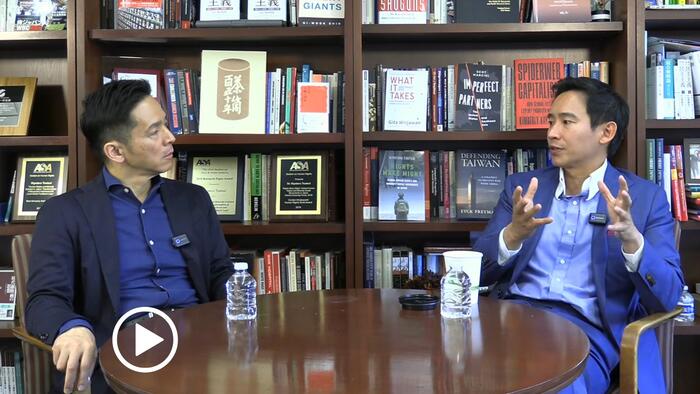
Pita Limjaroenrat and Kiyoteru Tsutsui in conversation.


The Art of the Middle Way


Pita’s leadership philosophy is rooted in a life spent bridging divides. Describing himself as a “jack of all trades,” he recalled how, as a child, he moved easily between being a bookworm and taking on leadership roles in school and basketball. He traces this identity back to his upbringing, which included a middle-class childhood in Bangkok, formative years at an all-boys school in rural New Zealand, and an education and professional experiences in both the public and private sectors, with degrees earned from Harvard’s Kennedy School and MIT’s Sloan School of Management.

“That became who I am,” he stated, outlining his unique proposition to Thai voters. “Someone who understands international markets and rural areas. Someone who's middle class, who understands people who are well off and people who are struggling [...] Someone who understands both the private side and public side because he prepared himself that way.”

This dual expertise, he argued, is crucial for effective governance. He noted the fundamental difference in objectives between the two sectors. “The goal of public service is service. The goal of the private sector is profitability,” he said. “Just because you're a successful businessman doesn't make you a successful politician.”

He recounted how his political calling was ignited in the wake of the 2004 Indian Ocean tsunami, when, as a management consultant, he worked on a tourism recovery strategy for Thailand. The intellectual challenge of balancing complex public needs, like national energy security, sparked a passion that private-sector work couldn't match.

Always follow your heart, but take your brain with you.
Pita Limjaroenrat

From Campaign to Campus


Now a Senior Democracy Fellow at Harvard Kennedy School, Pita channels his experiences into mentoring a new generation of leaders. He teaches a class on running for public office in developing countries, hosts workshops, and holds “private office hours” for students committed to entering public service, helping them craft their first campaign strategies. It is a way of “turning reality into a textbook” for others.

He also remains a keen observer of global affairs, characterizing the current U.S.-China relationship as a “managed rivalry” or “competitive coexistence,” where deep distrust is checked by the understanding that a full-fledged decoupling would be “economic suicide” for both sides. He sees Southeast Asia as a central and crucial bloc of “swing states” that must leverage its position to determine its own future without being forced to choose sides in the competition between the world’s two greatest powers.

When asked for his message to young people, Pita’s advice is a blend of passion and pragmatism. “Always follow your heart, but take your brain with you,” he urged. For those with aspirations to tackle the world’s crises and pressing social challenges, he stressed the importance of pairing that fire with a concrete plan.

“It's up to you whether you find your North Star, improve your skills to have a plan to get there,” he concluded.

Pita clearly articulates what he wants: a more just and democratic Thailand. Even from outside the halls of political power, he is methodically working on his plan to get there. “I can wait for my time, and I will come back stronger, more vigorous, more capable, and more relevant.”

Read More

Pita Limjaroenrat speaks at a fireside chat hosted by APARC's Southeast Asia Program.
News

Pita Limjaroenrat Strategizes a Path Forward for Thailand

Banned from political office but unbowed, the Thai pro-democracy leader revisited Stanford to analyze the recent electoral defeat of his progressive party, weigh in on regional tensions in Southeast Asia and Thailand’s geopolitical balancing act, and consider the prospects for the country’s future and his political comeback.
Pita Limjaroenrat Strategizes a Path Forward for Thailand
Kimberly Hoang and Kiyoteru Tsutsui seated in an office during a recorded podcast conversation.
News

Weaponized Corruption, Extreme Wealth, and Democratic Reordering: Insights from Asia

Speaking on the APARC Briefing video series, University of Chicago sociologist Kimberly Kay Hoang examines the architecture of global capital and how corruption discourse is transforming governance and political order in Asia and the United States.
Weaponized Corruption, Extreme Wealth, and Democratic Reordering: Insights from Asia
Portrait photo of Shibani Mahtan, winner of the 2026 Shorenstein Journalism Award.
News

Singapore-Based Investigative Journalist Shibani Mahtani Wins 2026 Shorenstein Journalism Award for Excellence in Asia-Pacific Coverage

Sponsored by Stanford University’s Shorenstein Asia-Pacific Research Center, the 25th annual Shorenstein Journalism Award honors Mahtani for her exemplary investigations into the erosion of democracy in Hong Kong and China's growing global influence.
Singapore-Based Investigative Journalist Shibani Mahtani Wins 2026 Shorenstein Journalism Award for Excellence in Asia-Pacific Coverage
Hero Image
All News button
1
Subtitle

Speaking on the latest episode of the APARC Briefing series, the Thai democracy champion opens up about his upbringing, offers insights from his newfound role in social activism, and shares why he continues to hold hope for reform in Thailand.

Date Label
Display Hero Image Wide (1320px)
Yes
Paragraphs
Banner for Shorenstein APARC working papers, showing a photo of a woman tending to plants in a terraced rice field in Vietnam.


Across Southeast Asia, millions of young people fall into a group researchers call "NEET," meaning they are neither working, studying, nor in training. Despite rapid growth in mobile internet access, high NEET rates persist across the region. This raises an important question: Is digital connectivity actually helping young people connect with economic opportunities?

This study examines data across 11 ASEAN countries over a decade (2014–2024) to analyze which aspects of mobile connectivity — infrastructure, affordability, digital skills, and available content — are most closely linked to youth NEET rates.

Key Findings:
 

  • Affordability matters. The cost of mobile data and devices is strongly associated with youth NEET rates, particularly for young women. Having access to a network is not enough if young people cannot afford to use it.
  • Digital skills help women enter the workforce. In countries where women have stronger foundational skills, female NEET rates tend to be lower.
  • Owning a phone does not equal opportunity. Mobile phone ownership was actually associated with higher NEET rates among young men. A likely explanation is that phones are primarily used for entertainment rather than for productive purposes.
  • Network coverage and connectivity speed showed no significant relationship with NEET rates. Infrastructure alone is not the answer.


The study concludes that governments and organizations need to move beyond building networks and focus on targeted interventions, like reducing costs, building skills, and developing locally relevant content, tailored where appropriate to gender-specific needs and local conditions.

All Publications button
1
Publication Type
Working Papers
Publication Date
Subtitle

Digital Inclusion as a Pathway for Youth Not in Employment, Education, or Training

Authors
Yasmin Wirjawan
Authors
Noa Ronkin
News Type
News
Date
Paragraphs

In May 2023, Thai pro-democracy reformer and lawmaker Pita Limjaroenrat led Thailand’s Move Forward Party to a stunning victory in the general election on a platform of progressive change. The party won a clear mandate from over 14 million voters, but conservative powers and military-appointed senators blocked Pita’s path to the prime ministership. Fifteen months later, Thailand’s Constitutional Court dissolved the Move Forward Party – the same fate its predecessor, the Future Forward Party, met in 2020. The court also barred Pita from politics for a decade.

It is a story he recounts in his political memoir, The Almost Prime Minister, and one he discussed at a February 2025 fireside chat hosted by APARC’s Southeast Asia Program. In his current role as a Senior Democracy Fellow back at his alma mater, the Harvard Kennedy School, Pita continues to champion transparent and equitable governance, coaches a new generation of political leaders, and strategizes a democratic path forward for Thailand. 

On May 29, 2026, Pita returned to Stanford for a follow-up discussion with APARC Director Kiyoteru Tsutsui, who also serves as co-director of the Southeast Asia Program. Pita examined political developments in Thailand since the contentious 2023 election, the tensions between Thailand and Cambodia, the crisis in Myanmar, ASEAN’s role in the region, and how Thailand and other middle powers should hedge their bets amid the U.S.-China competition and a fragmenting world order. 


Get APARC event invites and guest speakers’ insights delivered to your inbox >


Autocrats want to make sure that politics is dramatized, boring, or irrelevant. And you guys get tired when you talk about politics. And that's what we call 'voter fatigue by design.'
Pita Limjaroenrat

Anatomy of a Defeat


Pita’s opening remarks focused on the outcome of Thailand’s recent general election, in which the People’s Party – the successor to the dissolved Move Forward Party – suffered a decisive defeat. Entering the February 8, 2026, election, the People’s Party had hoped to convert widespread calls for democratic reform into power. Instead, the conservative Bhumjaithai Party secured a clear victory and then joined forces with the third-place populist Pheu Thai Party to form a coalition government.

Pita, who had campaigned for the People’s Party ahead of the election – a political activity he remains eligible to undertake despite being barred from seeking office – offered a candid assessment of the party’s loss.

Lower voter turnout was a key determinant of the February 8 election results, he argued: at 65 percent, it was sharply down from 76 percent in the 2023 general election that he won. Many voters came to believe that the costs of participating in the political process outweighed the potential benefits, Pita said.

That is the calculus of autocrats when they manipulate elections, he argued. Recognizing that electoral participation is the linchpin of a representative democracy's legitimacy and power, and that voter turnout of upward of 70 percent would all but guarantee a People Party victory, "they want to make sure that the cost of going to an election is higher than the benefit."

Pita pointed to his experience as evidence. Despite winning the 2023 election, Thai supporters now see him, three years later, living in Boston rather than governing from Bangkok. The message to voters, he said, is clear: If you keep voting and nothing changes, then why bother?

Pita calls this "voter fatigue by design" – a tactic used by autocrats to make politics seem “dramatized, boring, or irrelevant.”

He labels this Thai establishment's effort to convince voters that political participation is futile as “constituency.” It is one element in a “five C’s framework” that explains the People’s Party’s recent election defeat, he says.

A second factor, which he names “competitive collusion,” was evident in the decision by conservative candidates to coordinate their efforts – whether by merging campaigns or stepping aside – to avoid splitting the vote and present a unified front against the reformist People’s Party.

Third, conflict – by which Pita refers to the recent flare-up of tensions between Thailand and Cambodia – rallied nationalistic sentiment, lending greater legitimacy to the military and thus benefiting the conservative parties associated with it.

The fourth element, according to Pita, is Thailand’s Constitution, under which the Election Commission – the country’s sole election management body – is effectively appointed by the King on the recommendation of the Senate. “So I felt the [February 2026] election was not fair,” Pita said. “There was no linkage to the people, and there were no checks and balances.”

Finally, Pita pointed to the People Party's own missteps, which he categorizes as “candidacy.” He described a “Brahmin left versus merchant right” dynamic, arguing that the party became overly focused on technocratic, urban-centered policies and lost touch with the rural grassroots base that had been crucial to the Move Forward Party’s 2023 electoral success.

We have to aim for a durable peace between Thailand and Cambodia, and I think the only mechanism to do that is to return back to the JBC, the Joint Boundary Commission.
Pita Limjaroenrat

Regional Flashpoints: Cambodia and Myanmar


On the Thailand-Cambodia border dispute, Pita called for a renewed commitment to diplomacy, arguing that lasting peace can only be achieved through dialogue. He pointed to the Joint Boundary Commission, the bilateral body the two countries established in 1997 to oversee the demarcation of their border, as the most viable mechanism for resolving the dispute.

“If we return to the table and try to negotiate that out, I think that could be a path toward durable peace between Thailand and Cambodia.”

Turning to Myanmar, Pita stressed the need for Thailand and the Association of Southeast Asian Nations (ASEAN) to take a more active role in addressing the civil war that has devastated the country since the military coup of February 2021. The conflict’s spillover effects, he noted, extend well beyond Myanmar’s borders, fueling cyber scam operations, human trafficking, and illicit financial activity that directly affect Thailand.

“If the ASEAN core, especially Thailand, with its geographic proximity, doesn't do anything, it's going to keep going in a dangerous drift like that.” 

Pita noted, however, that the crisis in Myanmar has grown more complex in recent years. Beyond the struggle among ethnic armed groups and between the military and pro-democracy forces, it now encompasses resource politics as part of a broader competition over rare earths and China’s expanding strategic interests linked to trade corridors and energy infrastructure.

As China’s involvement in the region deepens through its trade routes and gas pipeline interests, the conflict in Myanmar has become much harder to resolve, he said.

As a way forward, Pita proposed a minilateral coalition comprising key ASEAN states, along with India, China, and possibly Japan and South Korea. The goal, he said, would be to work with Myanmar’s opposition forces to “turn resistance into governance” and lay the groundwork for a viable political transition toward a post-conflict Myanmar.

Once you choose sides, that's the end of everything that you have. So how do you think about neutrality? Not as a position, but as a capability.
Pita Limjaroenrat

The Middle Power Moment and U.S.-China Rivalry


Zooming out to the global stage, Pita spoke of his interest in the prospects of a "middle power moment" taking shape, citing Canadian Prime Minister Mark Carney’s recent diplomatic tour of the Indo-Pacific region to urge middle power nations, including India, Australia, and Japan, to unite in response to the U.S.-China great power rivalry and the transformation of U.S. foreign policy under the Trump administration.

“Thailand is still the second-largest country in ASEAN,” Pita said. “So we have agency and autonomy. Whether we use it or not, that is something that remains to be seen.”

“You realize that if you rely on the Americans for security and the Chinese for the economy, you are going to be forced to choose sides. And once you choose sides, that's the end of everything that you have.” He argued that, if nations are to avoid being forced to choose sides, they must redefine neutrality as an active capability rather than a passive position.

Here, too, he suggested, flexible, issue-based minilaterals could be beneficial. “So I think we'll see a rise of multilaterals on various issues, whether it's AI governance, semiconductors, maritime management, cybersecurity, or critical minerals.”

I think about it every single night, to return to the arena and become a player. But I can wait [...] And when I return, I will change Thailand for good.
Pita Limjaroenrat

From Player to Coach


Forced to the sidelines of Thai politics, Pita has embraced a new role. "My calling now is to groom next-gen leaders. I used to be a player, and I did a good job. And then they stopped me. They forced me to sit down. So I decided to become a coach instead.” At Harvard Kennedy School, he now co-teaches a class on running for public office in developing countries, turning his recent, raw experiences into a textbook for the next generation.

Despite the setbacks, Pita’s message remains one of resilience and determination. When asked if he could still win, he was unequivocal. "I think I can," he stated. “I think about it every single night, to return to the arena and become a player. But I can wait. I could strategize, I could accumulate small victories until I'm strong, vigorous, and capable. And when I return, I will change Thailand for good.”.

In His Own Words: Pita's Column in Matichon Weekly


Pita contributes a regular column to the Thai-language news magazine Matichon Weekly (มติชนสุดสัปดาห์), providing analysis on topics ranging from global economic shifts and international politics to urban development and his experiences engaging with leaders in politics, technology, business, and social activism. In his column of June 12, 2026, he reflects on his May 29 visit to Stanford and APARC.

Below is an English version of the column, generated by Google Translate. It has been mildly edited for accuracy and style.


Palo Alto Annual Event


I'm back at Stanford University and Palo Alto again, after visiting last year. I was so impressed that I've decided I'd like to visit every year if I can, not just because of the good weather and pleasant atmosphere, but because this place is a hub of knowledge, conversation, and unique perspectives on the world that are hard to find elsewhere.

I spent three days as a guest of APARC, or the Walter H. Shorenstein Asia-Pacific Research Center, Stanford University's Asia-Pacific research center, which is part of the Freeman Spogli Institute for International Studies (FSI), one of the world's most influential institutions in international relations and public policy, as well as the Hoover Institution, a public policy institute that brings together thinkers, historians, economists, and former policymakers from around the globe.

These three institutions set Stanford apart from typical universities, creating a space where the academic and policy worlds converge tangibly. The people you pass each day might be Larry Diamond, who has studied democratic transitions and declines for decades; Francis Fukuyama, author of The End of History and the Last Man; Gi-Wook Shin, an expert on East Asia; or Kiyoteru Tsutsui, who studies human rights issues. On the other side of the university is a collection of former top U.S. policymakers, from Condoleezza Rice to Michael McFaul, making conversations here both academic and practical. Importantly, the questions I'm asked at Stanford are always more difficult than anywhere else.

Many conversations this year have revolved around the same question: Is the world entering an era where geopolitics and technology are increasingly intertwined? While in the past, technology companies competed to create superior products, today they face geopolitical questions similar to those governments do. From restrictions on chip exports and access to rare earth minerals to energy security and the restructuring of international supply chains, the names Nvidia, TSMC, and ASML are frequently mentioned alongside those of major powers, as the ability to design, manufacture, and control advanced technology has become an integral part of state power.

In the world of AI, the question has changed significantly this year. At Stanford and Silicon Valley, I hear less talk about frontier models than I expected, but more and more talk about inference, compute, and energy. The excitement isn't about how well the next model will perform, but about who can get these models out of the lab and into real-world economic applications first.

On the other hand, competition is shifting from the digital world to the physical world. Waymo's self-driving cars are becoming commonplace on San Francisco streets, while Amazon's Zoox is beginning to enter the fray as a major player. The development of humanoid robots is also being discussed more seriously than ever before. Many believe that the next decade will be the time when AI begins to develop its own "arms and legs," no longer confined to computer screens.

As technology has advanced to this point, the conversation has once again turned to geopolitics. This includes issues such as controls on the export of advanced chips, competition to attract leading researchers, access to energy for hyperscale data centers, and concerns about the concentration of computing power in the hands of a few companies and countries. If in the 20th century, oil was the strategic resource of superpowers, many are beginning to see that in the 21st century, computing may be heading towards a similar status. The world is therefore not just witnessing a technological competition, but a new restructuring of power through technology.

Another thing I always try to do whenever I come to Stanford and Silicon Valley is to meet Thai students, researchers, entrepreneurs, and Thais working in the technology industry. Because, if you look closely, Thais are already a part of the global competitiveness we talk about.

Over the past two years, since being disqualified from politics, I have dedicated part of my time to traveling, meeting, and systematically building a database of Thai talent abroad. This includes scientists, engineers, economists, artificial intelligence researchers, and executives in global technology companies. This trip was no exception. I had the opportunity to meet Thais working at Google, Meta, Apple, Salesforce, Nvidia, OpenAI, and many other leading technology companies. Some work in semiconductors, some develop AI models, and some manage products with hundreds of millions of users worldwide. Many may not be well-known in Thailand, but they are part of the workforce driving the world's future economy today.

Every time I speak with this group of Thais, I leave feeling hopeful. Hopeful to see that Thais can stand at the forefront of industries that are shaping the future of the world, on par with anyone else. And hopeful that their knowledge, experience, and networks can connect and create even more value for Thailand in the future. I can only hope that one day I will have the opportunity to work with them for the future of our nation.

Read More

Kimberly Hoang and Kiyoteru Tsutsui seated in an office during a recorded podcast conversation.
News

Weaponized Corruption, Extreme Wealth, and Democratic Reordering: Insights from Asia

Speaking on the APARC Briefing video series, University of Chicago sociologist Kimberly Kay Hoang examines the architecture of global capital and how corruption discourse is transforming governance and political order in Asia and the United States.
Weaponized Corruption, Extreme Wealth, and Democratic Reordering: Insights from Asia
Portrait photo of Shibani Mahtan, winner of the 2026 Shorenstein Journalism Award.
News

Singapore-Based Investigative Journalist Shibani Mahtani Wins 2026 Shorenstein Journalism Award for Excellence in Asia-Pacific Coverage

Sponsored by Stanford University’s Shorenstein Asia-Pacific Research Center, the 25th annual Shorenstein Journalism Award honors Mahtani for her exemplary investigations into the erosion of democracy in Hong Kong and China's growing global influence.
Singapore-Based Investigative Journalist Shibani Mahtani Wins 2026 Shorenstein Journalism Award for Excellence in Asia-Pacific Coverage
Portrait photo of Gaea Morales.
Q&As

How Cities Are Rewriting Global Climate Governance

Political scientist Gaea Morales, APARC’s 2025-26 Shorenstein postdoctoral fellow on contemporary Asia, studies questions at the nexus of global policy and local action and how Southeast Asian megacities build climate resilience by drawing on local knowledge and global networks to drive change from the ground up, even in the absence of central government support.
How Cities Are Rewriting Global Climate Governance
Hero Image
All News button
1
Subtitle

Banned from political office but unbowed, the Thai pro-democracy leader revisited Stanford to analyze the recent electoral defeat of his progressive party, weigh in on regional tensions in Southeast Asia and Thailand’s geopolitical balancing act, and consider the prospects for the country’s future and his political comeback.

Image
Pita Limjaroenrat speaks at a fireside chat hosted by APARC's Southeast Asia Program.
Title
Pro-Democracy Leader Pita Limjaroenrat Strategizes a Path Forward for Thailand
Date Label
Display Hero Image Wide (1320px)
Yes
Authors
News Type
Q&As
Date
Paragraphs

Growing up on a Philippine military base, Gaea Morales’ interest in global politics is rooted in questions of what drives successful local peacebuilding and security. Spending summers between Manila and Davao in her youth, she was first exposed to the ways socioeconomic insecurity, especially as a result of disaster-driven resource scarcity, can foment conflict and institutional distrust. At the same time, her exposure to community-led disaster relief efforts highlighted the importance of building rapport and community engagement in effective public service delivery.  

When she first came to the U.S. to pursue a degree in diplomacy, she had hoped to develop expertise in environmental governance and join the foreign service to advance climate security and cooperation. Amid growing state-led backlash against global environmental institutions, however, she started to question the linkages between international and domestic politics and the limits of a state-centric international order in responding to transboundary threats. Inspired by mentors across academia and the public sector working to sustain international commitments at the most local level, she pursued a doctorate anchored on the question of how cities translate global norms within local institutions, especially in climate-vulnerable contexts like her home region of Southeast Asia.

As APARC’s 2025-26 Shorenstein Postdoctoral Fellow on Contemporary Asia, Gaea spent the last academic year developing her dissertation into a book project that illuminates the factors that incentivize and enable local governments to participate in global governance, and more specifically, to implement climate action initiatives even in the absence of central government support. Looking ahead, she is working to dedicate her career to blurring the lines between traditional conceptions of global and local politics while bridging research and policy in the realm of climate resilience and sustainable development.

We spoke with Gaea about her work and fellowship experience at APARC. This interview has been edited lightly for clarity.


Get APARC fellowship announcements and scholars' insights delivered to your inbox >


Could you describe your research briefly?

Broadly, my research centers on the question of what happens between negotiating international agreements and the local delivery of services, or between “thinking globally” and “acting locally.” The climate crisis challenges the status quo of global governance practices: while most of our approaches focus on national mitigation and adaptation commitments, the burdens of the crisis are unevenly distributed across and within countries. I join a growing community of scholars and practitioners who are responding to this empirical reality by studying local and regional governments as global actors in their own right. More narrowly, my book project investigates why and how some of the world’s most climate-vulnerable cities innovate in response to climate challenges, while also operating within their respective sociolegal and financial responsibilities and constraints.

My other projects also lie at the intersection of global and local environmental governance, including studying cross-sectoral local (i.e., public-academic) partnerships in sustainable policy development, local policy implications of the institutionalization of environmental rights in international law and courts, rural-urban inequalities in foreign disaster aid distribution, and the local adoption of anticipatory action frameworks.

What sparked your passion for your academic topic?

My passion for environmental issues is deeply rooted in my own experiences and those of my community. Born and raised in the Philippines, I witnessed firsthand how extreme weather and natural disasters can not only drive conflict, but also shape the way people live their everyday lives: from anticipating school and work suspensions during the monsoon season, price hikes on produce due to droughts, and even nationwide donation drives and fundraisers. Media narratives often highlight Filipino “resilience” amid calamity. Yet such discourse raises questions about who bears responsibility for disaster response and prevention when failing public infrastructure exacerbates climate risks and disproportionately burdens some communities over others.

Early in my academic journey as a student of international relations, I was inspired by the potential of landmark negotiations, such as the Sustainable Development Goals (2015) and the Paris Agreement (2016), to develop environmental standards by which to hold our political leaders accountable. But, ultimately, I was inspired by my mentors in both the academic and policy worlds, from Manila to Los Angeles, who have instilled in me the belief that all global politics is local and that civic engagement with and especially across local governments can catalyze policy, progressive action, and innovation from the bottom up.

Although national governments commit to international agreements, local context and local champions determine which projects get implemented and how.
Gaea Morales

What message do you hope people will take from your research?

A key message of my research is that, although national governments commit to international agreements, local context and local champions determine which projects get implemented and how. The knowledge, capacity, and political will of local leaders are shaped not just by central government mandates or their supporters, but also by a desire to build a reputation within a network of cities, international organizations, and other global actors. As cities across the globe face increasingly similar climate challenges, they can exchange lessons learned and use their credibility to access technical and financial support to then act on these lessons.

On that note, I also want to shed light on the complexity of climate and environmental governance and make a case for stronger multi-level governance standards that integrate international, national, and local perspectives right from the negotiating and planning phases through project implementation.

You conducted field research in three major Southeast Asian capitals: Bangkok, Jakarta, and Metro Manila. What similarities and differences did you find across these cities’ responses to climate vulnerabilities and in their climate politics?

Although Jakarta, Metro Manila, and Bangkok possess unique characteristics and, by extension, have varying environmental priorities, they share many of the same challenges one would expect of rapidly urbanizing coastal capitals in an era of climate change. Governments across all cities had climate change, disaster response and recovery, and/or environmental issues more broadly as a priority issue area. For example, it was unsurprising to learn that Jakarta – the world’s fastest-sinking megacity – was focused on innovating flood management, including digital flood-monitoring systems and mangrove restoration along the northern coast of the capital.

Given the twin challenges of pollution and mobility in the Philippines’ capital region, cities in Metro Manila, such as Quezon City, have focused on developing local infrastructure for air-quality monitoring and electrification of public transit.

Finally, Bangkok is also facing the threats of extreme heat and subsidence, and it is investing heavily in tree-planting initiatives and the accessibility of parks and green spaces for stormwater retention and cooling.

All local governments, to varying degrees, cited limited resources to develop the plans and projects that central governments required to meet their respective country’s international commitments. To meet this governance gap, all cities actively incorporated lessons learned either directly from other cities through bilateral or multilateral forums or directly through partnerships with city network organizations and development agencies that provided both technical and financial support.

My time at APARC was incredibly enriching, thanks in large part to its remarkable diversity spanning nationalities, professional backgrounds, areas of expertise, and epistemological approaches.
Gaea Morales

How has the postdoctoral fellowship at APARC supported your research and your experience at Stanford?

My time at APARC was incredibly enriching, thanks in large part to its remarkable diversity spanning nationalities, professional backgrounds, areas of expertise, and epistemological approaches. I’m humbled to have been a part of this interdisciplinary and supportive community. As an early-career researcher, I’m especially grateful to have had the chance to engage with leading scholars whose legacies continue to shape (Southeast) Asian studies.

Finally, I’m grateful for having the opportunity to participate in APARC’s annual Trans-Pacific Sustainability Dialogue (TPSD), held in Manila in November 2025. This event allowed me to share my research findings with local stakeholders (several of whom I first met while conducting fieldwork as a graduate student) and learn directly from policy experts and scholars with overlapping questions and interests.

What future research areas are you exploring? And what’s on the horizon for you professionally?

There is still so much ground to cover related to global environmental governance, and I’m excited to keep pursuing this topic in both my research and pedagogy. I’ll continue work on my book project as well as ongoing work on urban-rural inequalities in climate resilience, environmental rights, and anticipatory action initiatives in the Philippines, and I look forward to teaching courses on global environmental politics. I’m also eager to explore future projects on the global ecosystem of climate financing mechanisms, including the evolution of the fund for responding to loss and damage (FRLD), the intersection of corruption and climate risks, and ways to mitigate climate-driven internal displacement through a gender equity lens.

This coming Fall 2026, I will be starting as the Helen Houlahan Rigali Assistant Professor of Political Science at Loyola University Chicago. It’s a privilege to be able to continue my research (at another global city, no less) and join such a vibrant community of scholars at Loyola. 

What advice would you give to prospective APARC postdoctoral scholars?

One of the most influential pieces of advice I’ve received, especially while I was on the academic job market, is: Don’t reject yourself for an opportunity. Believe and bet on yourself. I’m so incredibly grateful for my time at Stanford, and I wouldn’t have had this opportunity (and many others leading up to it) if I had let self-doubt keep me from applying in the first place. If you believe in yourself and the value of your contributions, your work will speak for itself.

And once you’re here, don’t forget to explore within and beyond Encina Hall whenever you get the chance. Stanford – and the broader Bay Area - has so much to offer, from seminars showcasing cutting-edge research in progress, hands-on pedagogical and data science training workshops, to global forums addressing a wide range of contemporary issues.

Read More

Portrait photo of Teren Sevea.
Q&As

Insights from the Rich Worlds of Southeast Asian Islam

Teren Sevea, APARC’s Lee Kong Chian NUS-Stanford Fellow on Southeast Asia, reveals how overlooked histories and everyday ethics in Southeast Asia can reshape our understanding of the past and our responsibility for the future.
Insights from the Rich Worlds of Southeast Asian Islam
Kimberly Hoang and Kiyoteru Tsutsui seated in an office during a recorded podcast conversation.
News

Weaponized Corruption, Extreme Wealth, and Democratic Reordering: Insights from Asia

Speaking on the APARC Briefing video series, University of Chicago sociologist Kimberly Kay Hoang examines the architecture of global capital and how corruption discourse is transforming governance and political order in Asia and the United States.
Weaponized Corruption, Extreme Wealth, and Democratic Reordering: Insights from Asia
Participants gather for a group photo at the 2025 Trans-Pacific Sustainability Dialogue.
News

Envisioning Cities as Sites and Actors for Sustainable Development: Lessons from the 2025 Trans-Pacific Sustainability Dialogue

Held in Manila, Philippines, the fourth annual Trans-Pacific Sustainability Dialogue generated cross-sectoral insights on complex issues faced by cities and human settlements across the region, from housing and mobility to disaster resilience.
Envisioning Cities as Sites and Actors for Sustainable Development: Lessons from the 2025 Trans-Pacific Sustainability Dialogue
Hero Image
Portrait photo of Gaea Morales.
All News button
1
Subtitle

Political scientist Gaea Morales, APARC’s 2025-26 Shorenstein postdoctoral fellow on contemporary Asia, studies questions at the nexus of global policy and local action and how Southeast Asian megacities build climate resilience by drawing on local knowledge and global networks to drive change from the ground up, even in the absence of central government support.

Date Label
Display Hero Image Wide (1320px)
Yes
Authors
Noa Ronkin
News Type
Q&As
Date
Paragraphs

What can the history of Islamic Singapore teach us about one of the most important eras of Indian Ocean connectivity? And what do Islamic traditions in Southeast Asia reveal about everyday ethics for living responsibly on a damaged planet and navigating our relationship with the more-than-human world?

These are some of the questions Teren Sevea, the Prince Alwaleed bin Talal Associate Professor of Islamic Studies at Harvard Divinity School, explores in his research. Sevea recently completed his residency as a Lee Kong Chian NUS-Stanford Fellow on Southeast Asia at APARC. A scholar of Islam and Muslim societies in South and Southeast Asia, he investigates the region’s distinctive Islamic practices and intellectual traditions, revealing both its centrality to the study of Islam and the reasons it has often been marginalized within the field, despite its vast Muslim populations.

We spoke with Sevea about his work and fellowship experience at APARC. The following interview has been lightly edited for length and clarity.


Get APARC fellowship announcements and scholars' insights delivered to your inbox >


Could you describe your research briefly?

Very briefly, I’m close to finishing a monograph on Islamic Singapore and the Sufi networks that connected this port city to Muslim and non-Muslim communities across the Indian Ocean world, from its revival as a British port right up to the present. At the same time, I’m developing a second project on land, extraction, and natural resources, where I look at how multispecies religious worlds – which include animals, trees, waters, and spirits – offer different ways of thinking about ethics, vulnerability, and what it means to live through times of climate crisis.

What initially drew you to these topics, and how did you develop your methods?

I’m trained in history and anthropology, and these projects really emerged from a worry that the histories I was reading – and sometimes writing – were too narrow. By focusing on certain texts, elites, and official archives, these histories risked overlooking the working-class believers, community‑based scholars, and the graves, ruins, trees, animals, and waters that sustain devotional life. So my methods have become necessarily interdisciplinary and site‑centered. I read multilingual texts and study official documents and elites, but also sit at shrines, in cemeteries, on coastal edges, and in plantations, listening to oral traditions, dreams, and visions, and paying close attention to the research practices of community‑based scholars and caretakers of the landscapes I study.

In my project on multispecies religious worlds, I’ve tried to extend this approach to track how communities’ accounts of charismatic animals, trees, groves, rocks, and islands help us think about ecological responsibility in an age of rapid development, industrial expansion, climate catastrophe, and faith in technological “fixes.” This has pushed me to learn from interviews, environmental histories, flood narratives, and what I have called interspecies communities.

I am always moving between very local sites across Southeast Asia and global processes [...] Holding these together, while remaining grounded in the voices of community‑based scholars, caretakers of these sites, and devotional communities, is demanding but, I think, necessary.
Teren Sevea

What challenges have you encountered in studying this topic?

One of the challenges is that the histories I study are often deliberately forgotten or actively erased. Graves are relocated or demolished, ruins are converted into “useful” secular spaces, interspecies communities are displaced by development, and the archives of working‑class believers and community‑based scholars are fragile and dispersed. In certain Southeast Asian settings, the practices and sites I study have also been treated as superstitious or as “not really Islam,” which shapes how they are documented – or not documented – both bureaucratically and academically.

Another challenge is a methodological one. Much of my work relies on community‑based scholarship, popular histories, oral traditions, dreams, visions, and other stories that are supposedly not easily translatable into standard scholarly categories. The question for me, though, has not been whether to “believe” them or not, but how to learn from them. How do we, for instance, write histories that take seriously trees that bleed and overturn bulldozers, or animal saints and ancestors who enforce ethical codes, without reducing them to fantastical allegory on the one hand or romanticizing them on the other?

Finally, there is the challenge of working across scales. I am always moving between very local sites across Southeast Asia – graveyards, mangrove forests, crocodile ponds, palm oil estates – and global processes: colonial hunting regimes, plantation capitalism, petrochemical infrastructures, climate departure, and technocratic fantasies of overcoming the climate crisis. Holding these together, while remaining grounded in the voices of community‑based scholars, caretakers of these sites, and devotional communities, is demanding but, I think, necessary.

How has your time at APARC supported your research?

My fellowship at APARC has really allowed me to place Singapore, Malaysia, and Indonesia much more firmly within broader conversations on Asia and the Pacific. It has given me the time and space to finish my monograph on Islamic Singapore, while also thinking seriously about how questions of land, extraction, and resource futures in Southeast Asia resonate with debates across the region. Practically, APARC has given me access to an extraordinary community of scholars working on politics, economics, demography, human rights, political and comparative sociology, social movements, globalization, and political economy, as well as climate, energy, migration, and religion.

Conversations here have sharpened my thinking about technofixes and “green developmentalism” – from Singapore’s petrochemical complexes and reclaimed islands to the shifting of Indonesia’s capital to East Kalimantan – and about how to foreground vulnerability and multispecies responsibility in these discussions. It has also pushed me to reframe my materials for different audiences: not only historians of Islam or Southeast Asia, but scholars of climate, religion, environment, and contemporary Asia more broadly, who are grappling with similar questions from very different sites and through very different approaches.

It has been a real privilege to be in a community where so many people are thinking about overlapping questions of environment, religion, political economy, migration, and social change in Asia.
Terean Sevea

Discussions with APARC colleagues I have learned from have moved across so many themes: the ethics of representing vulnerable communities in climate research, the politics of palm oil and coal, how to think about interspecies responsibility alongside state-led sustainability agendas, but also migration and development, transnationalism and diaspora, labor and governance, care work and health, children and youth, legacies of the 1947 Partition of South Asia, Singapore’s governance, the state of higher education and its pressures, and the precarious lives of migrant and transient workers in Southeast Asia. We also talked a lot about the Bay Area itself as a site in its own right.

Many of these exchanges have unfolded in multilingual conversations that drift very naturally between scholarship and everyday life. That has reminded me how tightly intellectual and everyday life are braided together. It has been a real privilege to be in a community where so many people are thinking about overlapping questions of environment, religion, political economy, migration, and social change in Asia, and to learn from students who bring their own experiences – from Jakarta’s and Karachi’s floods to Singapore’s “garden city” – into the room. In many ways, being here has felt like a truly Asian experience, but one unfolding in the Bay Area.

Have you discovered anything surprising while you were here?

What has surprised me most is how deeply these seemingly “local” stories I work with – about environments in maritime Southeast Asia – have resonated with scholars here who focus on very different places and issues. Colleagues and students have generously responded by sharing their own “tree stories,” “animal stories,” flood memories, or accounts of sacred animals and groves from other parts of Asia and beyond.

I have also been struck by how quickly conversations here turn to technofixes: mechanical trees, negative‑emissions technologies, desalination plants, and “smart” eco‑cities. Encountering these discussions up close, within a community that is rigorously engaged with policy and practice, has sharpened my sense that there is a real need to tell other kinds of stories: stories that foreground vulnerability as situated and context-specific, that ask whose futures are being secured or sacrificed, and that insist on multispecies response‑ability rather than relying only on technological rescue. Those exchanges have been some of the most intellectually and personally rewarding moments of my time at APARC and Stanford.

Living in the Bay Area has also opened up new dimensions of my research. It has enriched my work on anti-colonial, revolutionary, left‑wing connections between Singapore, Java, Burma, and the Bay Area itself. I had not expected, before coming here, to be pursuing research at religious sites in the Bay Area as part of this project. 

What is your advice to young scholars in your field?

I doubt I am one to offer advice – I am mostly in the business of receiving it. But if pressed, I might say a few things.

Firstly, try to listen very carefully to the people and places you work with, including the non-human ones. Let scholars from the communities you study, their caretakers, storytellers, animals, trees, and waters unsettle your concepts and teach you more than you expected to learn. For those working on religion and ecology, it helps to be suspicious of ready‑made binaries – monotheism versus “animism” or “nature worship,” religion versus environment, indigenous versus cosmopolitan – that flatten lifeworlds grounded in multispecies relatedness and kinship.

Secondly, consider taking communities’ histories, oral traditions, dreams, and visions seriously as forms of knowledge and research practice, even when they do not sit easily within disciplinary expectations. At the same time, be reflexive about your own position, your archives, and your responsibilities to the communities you write about, and be rigorous about how you document, interpret, and present those materials.

Thirdly – and this I can say with a bit more certainty – do not be afraid of interdisciplinarity. To understand Islamic Singapore, charismatic animals, or climate vulnerability in Jakarta and Karachi, I have needed history, anthropology, religious studies, environmental humanities, and sometimes hydrology, forestry, and energy politics. Let the questions you ask guide you across disciplinary lines, and be willing to speak to area studies and to broader debates on politics, environment, and society in Asia and beyond.

Read More

Portrait photo of Shibani Mahtan, winner of the 2026 Shorenstein Journalism Award.
News

Singapore-Based Investigative Journalist Shibani Mahtani Wins 2026 Shorenstein Journalism Award for Excellence in Asia-Pacific Coverage

Sponsored by Stanford University’s Shorenstein Asia-Pacific Research Center, the 25th annual Shorenstein Journalism Award honors Mahtani for her exemplary investigations into the erosion of democracy in Hong Kong and China's growing global influence.
Singapore-Based Investigative Journalist Shibani Mahtani Wins 2026 Shorenstein Journalism Award for Excellence in Asia-Pacific Coverage
Kimberly Hoang and Kiyoteru Tsutsui seated in an office during a recorded podcast conversation.
News

Weaponized Corruption, Extreme Wealth, and Democratic Reordering: Insights from Asia

Speaking on the APARC Briefing video series, University of Chicago sociologist Kimberly Kay Hoang examines the architecture of global capital and how corruption discourse is transforming governance and political order in Asia and the United States.
Weaponized Corruption, Extreme Wealth, and Democratic Reordering: Insights from Asia
People walk through the flooded streets at Kampung Pulo on January 18, 2014 in Jakarta, Indonesia.
News

APARC Visiting Scholar Sheds Light on the Cold War Roots of Contemporary Urban Politics in Southeast Asia

Gavin Shatkin, a Lee Kong Chian NUS-Stanford fellow on Southeast Asia at APARC, argues that prevailing urban development challenges in Jakarta, Metro Manila, and Bangkok stem from Cold War-era political and institutional structures imposed by U.S.-backed authoritarian, anti-communist regimes.
APARC Visiting Scholar Sheds Light on the Cold War Roots of Contemporary Urban Politics in Southeast Asia
Hero Image
Portrait photo of Teren Sevea.
All News button
1
Subtitle

Teren Sevea, APARC’s Lee Kong Chian NUS-Stanford Fellow on Southeast Asia, reveals how overlooked histories and everyday ethics in Southeast Asia can reshape our understanding of the past and our responsibility for the future.

Date Label
Display Hero Image Wide (1320px)
Yes
-
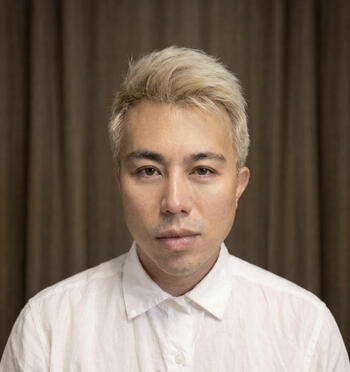
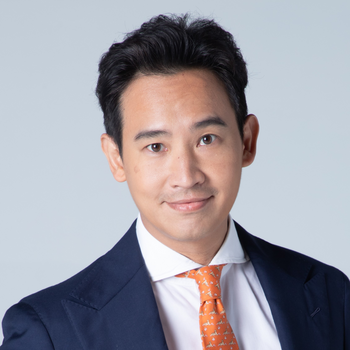
Portrait of Pita Limjaroenrat
Join Pita Limjaroenrat, former leader of Thailand’s dissolved Move Forward Party and a pivotal voice in the nation’s pro-democracy movement, for an urgent and timely discussion on the country’s trajectory ahead. Against the precarious backdrop of escalating political tensions, youth-led protests, and debates over reform, this fireside chat will confront the pressing questions shaping Thailand’s present and future.
 
Pita will unpack critical developments since the contentious 2023 election, including the struggle for constitutional amendments, the military’s enduring influence, the government’s handling of economic recovery amid sluggish growth, and rising inequality in Thai society. He will also address Thailand’s geopolitical tightrope from navigating U.S.-China rivalries to its ambiguous stance on Myanmar’s crisis to the Cambodian-Thai tensions, and what these mean for ASEAN’s regional stability. 

Lunch will be provided on a first-come, first-served basis.
Lunch is generously sponsored by Lotus Thai Bistro and Holy Shred
 
Speaker:
Image
Limjaroenrat, Pita SEAP 20250228
Pita Limjaroenrat formerly led the Move Forward Party (MFP) in Thailand’s May 2023 general elections, where his social democratic platform won the most votes and seats in the Parliament. Despite this mandate, his attempts to form a government were blocked by institutional mechanisms, and the Constitutional Court dissolved the MFP on August 7. Pita’s policy focus centers on addressing grassroots issues, welfare improvements, and human rights, while advocating for the demilitarization of politics and economic de-monopolization. Currently, he is a Senior Democracy Fellow at Harvard Kennedy School. He holds a joint MPA-MBA from Harvard Kennedy School and MIT Sloan and has been named on the TIME 100 Next List. Today, Pita continues to champion transparent and equitable governance on a global scale.
Kiyoteru Tsutsui
Pita Limjaroenrat
Date Label
Authors
Noa Ronkin
News Type
News
Date
Paragraphs

Corruption is typically understood as a sign of weak institutions and failed governance. But what if it is a deliberate political technology used to consolidate power, discipline rivals, and reshape political systems?

This is the argument advanced by University of Chicago sociologist Kimberly Kay Hoang in the latest episode of the APARC Briefing series. Drawing on years of ethnographic research across Southeast Asia, including Vietnam, Myanmar, Hong Kong, and Singapore, as well as offshore tax havens, Hoang uses a comparative Asian lens to show how both democratic and authoritarian governments strategically align with private capital, reinforcing elite power. Hoang joined APARC Director Kiyoteru Tsutsui to share core insights from her work.
 

Image
Kimberly Hoang and Kiyoteru Tsutsui seated in an office during a recorded podcast conversation.

Kimberly Kay Hoang speaks on the APARC Briefing series with host Kiyoteru Tsutsui.


Sign up for APARC newsletters to receive our experts' analysis >


She argues that corruption discourse often operates as a political tool, widely seen across Asian political economies and increasingly evident in the United States during the Trump era. This rhetoric, she says, tends not so much to dismantle institutions but to reshape them, concentrating authority in the executive and weakening checks and balances. According to Hoang, these patterns reflect a broader global shift toward more oligarchic forms of governance, where political power is increasingly concentrated among transnational elites.

"We often think of corruption as a failure of governance – that it's a weak state, and weak states can’t govern," Hoang says. "But in Southeast Asia and in other parts of East Asia, it has become an instrument for governance. It's a way of consolidating political power, weaponizing corruption."

From Vietnam's Hostess Bars to Global Finance


Hoang's research journey began in an unexpected place: working 12-hour shifts in Vietnamese hostess bars in 2009-2010, shortly after the global financial crisis. What started as an ethnographic study of the sex industry and human trafficking in Vietnam evolved into something far larger: a story of Asian ascendancy and Western decline playing out in micro-transactions.

"I started to witness local Vietnamese men turning down deals with Western businessmen and taking extraordinary deals from investors from China, parts of Southeast Asia – Hong Kong and Singapore – and Korea, Taiwan," Hoang recalls. When she examined foreign direct investment data, "the numbers lined up to what I was seeing at a micro level."

But when she presented these findings in the United States, the response was skeptical, even hostile. "People would say, 'Okay, yes, the economy is in decline, but America still has the strongest military,' or 'China is really dependent on the American economy, so if the American economy collapses, so will China's,'" she remembers. "It was a huge oversight of American arrogance to just believe that [Asian ascendancy] was impossible."

Her continued research led her to follow not just the money but "the people who move the money" – from Vietnam and Myanmar to Hong Kong and Singapore, and ultimately to offshore tax havens in the British Virgin Islands, Panama, the Seychelles, and the Cayman Islands.

The Architecture of Global Capital


What Hoang uncovered was what she calls an "architecture of global capital" – an invisible financial infrastructure built by "hidden engineers" including specialized wealth managers, lawyers, and financial advisors who coordinate across borders to move elite wealth beyond the reach of any single nation-state.

The scale is staggering: approximately $7.6 trillion in household wealth is hidden offshore globally, with the top 0.01% avoiding about 25% of their tax obligations through legal structures and shell corporations.

"We have to move beyond national boundaries," Hoang argues, "because global oligarchs choose the sovereigns and choose the jurisdictions that govern their financial transactions and activities."

This system creates what Hoang describes in her book, Spiderweb Capitalism: How Global Elites Exploit Frontier Markets (Princeton University Press), as a web of legal and financial gray zones that allow wealth to compound while evading accountability.

If we think of corruption as a tool of governance in authoritarian states and increasingly in democratic countries, [...] it means that we no longer rely on institutions or law branches of government [...] People who have executive authority can just go after their rivals.
Kimberly Kay Hoang

Corruption as Governance Mechanism


Hoang’s work exposes the connections between the rise of global elites, corruption, and the emergence of oligarchic governance. Across both Asia and the United States, she explains, corruption discourse operates as a mechanism for reshaping democratic governance by means of dissolving the boundary between political authority and economic power.

"What does that mean? It means that we no longer rely on institutions," she says. "People who have executive authority can just go after their rivals."

This creates what Hoang calls "anticipatory compliance," a situation in which political and economic elites preemptively align themselves with power centers. The mechanism works through strategic ambiguity: when corruption charges can be selectively deployed, everyone becomes potentially vulnerable, leading to self-regulation through fear.

While this pattern is well-established in countries like China and Vietnam, Hoang sees similar dynamics emerging in the United States. "Under the Trump administration, we've seen charges of corruption being weaponized as a tool of governance," she notes, while emphasizing that elements of this already appeared under the Biden administration.

Democratic Reordering, Not Collapse


When explaining the impacts of corruption discourse on democratic governance, Hoang is careful to distinguish between democratic collapse and what she terms "democratic reordering." Rather than overtly capturing the state, global oligarchs work through existing institutions, gradually redefining their function through moralized narratives, weakened oversight, selective enforcement, and strategic risk management. The outward forms of democracy remain intact, but the independence of courts, election fairness, and accountability mechanisms are steadily eroded. "They increasingly serve concentrated elite interests."

In comparing the United States to China, Hoang notes a crucial difference: "China has a long view. They're playing a 50-year view [...] If we're in this constant [electoral] cycle, and we've delegitimized oversight and political authority, [...] we need to have stronger independent institutions that outlast whoever is in office."

Finding Hope in Resistance


Despite her sobering analysis, Hoang sees reasons for optimism. "What gives me hope is that, if you look carefully, there are a lot of resistance movements," she says. "I think there's a growing battle between the millionaires and billionaires."

She points to resistance not just from grassroots movements but from millionaires who "don't want to live in a billionaire oligarchy world, who feel economically precarious vis-à-vis the extreme inequality."

The challenge, she argues, is that both mainstream and social media highlight extremes while missing the middle-level discourse and resistance movements that are actively organizing.


Kimberly Kay Hoang is Professor of Sociology and the College, and Director of Global Studies at the University of Chicago. In addition to Spiderweb Capitalism, she is the author of Dealing in Desire: Asian Ascendancy, Western Decline, and the Hidden Currencies of Global Sex Work (University of California Press). Her forthcoming work examines U.S.-China power relations in offshore financial centers.

The full APARC Briefing conversation with Hoang is available on APARC’s YouTube channel.

Read More

Supporters of impeached South Korean President Yoon Suk Yeol gather on April 4, 2025 in Seoul, South Korea, with a foucs on a man holding a sign reading "Stop the Steal" and an American flag.
News

Reactionary Politics in South Korea: Understanding Far-Right Ideas and Practices

University of Hawaiʻi at Mānoa sociologist Myungji Yang offers a historical account of South Korea’s far right, arguing that recent reactionary mobilization reflects long-standing Cold War legacies, anti-communism, and conservative political networks. Although South Korea is often viewed as one of Asia’s democratic success stories, Yang suggests that recent political turmoil has revealed how deeply rooted illiberal forces remain.
Reactionary Politics in South Korea: Understanding Far-Right Ideas and Practices
People walk through the flooded streets at Kampung Pulo on January 18, 2014 in Jakarta, Indonesia.
News

APARC Visiting Scholar Sheds Light on the Cold War Roots of Contemporary Urban Politics in Southeast Asia

Gavin Shatkin, a Lee Kong Chian NUS-Stanford fellow on Southeast Asia at APARC, argues that prevailing urban development challenges in Jakarta, Metro Manila, and Bangkok stem from Cold War-era political and institutional structures imposed by U.S.-backed authoritarian, anti-communist regimes.
APARC Visiting Scholar Sheds Light on the Cold War Roots of Contemporary Urban Politics in Southeast Asia
Japan's Prime Minister Sanae Takaichi speaks to the media in front of a board displaying the names of LDP candidates on general election day on February 8, 2026 in Tokyo, Japan.
Commentary

What's Next for Japan After Prime Minister Sanae Takaichi's Historic Election Victory

In a new APARC Briefing explainer, APARC and Japan Program Director Kiyoteru Tsutsui analyzes how Takaichi secured a landmark supermajority in a landslide election win for her party and what this outcome means for Japan's fiscal policy, constitutional change, its relationship with China, and its alliance with the United States.
What's Next for Japan After Prime Minister Sanae Takaichi's Historic Election Victory
Hero Image
All News button
1
Subtitle

Speaking on the APARC Briefing video series, University of Chicago sociologist Kimberly Kay Hoang examines the architecture of global capital and how corruption discourse is transforming governance and political order in Asia and the United States.

Date Label
Display Hero Image Wide (1320px)
Yes
Authors
Noa Ronkin
News Type
News
Date
Paragraphs

Stanford University’s Walter H. Shorenstein Asia-Pacific Research Center (APARC) is delighted to announce today, ahead of World Press Freedom Day, that Singapore-based investigative journalist Shibani Mahtani is the recipient of the 2026 Shorenstein Journalism Award for excellence in coverage of the Asia-Pacific region. The award recognizes Mahtani for her original, powerful reporting that has brought critical attention to the erosion of democracy and human rights across the region, particularly in Southeast Asia. She will receive the award at a public ceremony in the coming autumn quarter.

Until February 2026, Mahtani was an international investigative correspondent for the Washington Post. Her accountability-driven investigations across the Asia-Pacific have focused on the expanding economic and political influence of an increasingly assertive China and its implications in the region. Her work includes, among others, reports linking powerful criminal networks in Myanmar to the Chinese state and exposing brutal scam compounds in the country; examining Beijing’s influence on Chinese-language media in Singapore and its efforts to wield influence in Indonesia and elsewhere through vocational programs; scrutinizing China’s cross-national repression of Uyghur Muslims, especially in Central and Southeast Asia; and investigating how its promise of prosperity brought Laos debt and distress.

Mahtani joined the Washington Post in 2018 as the Southeast Asia and Hong Kong Bureau Chief. She reported extensively from Myanmar, the Philippines, Laos, and other parts of the region. Most notably, she chronicled China’s subjugation of Hong Kong, from the explosive protests in 2019, triggered by Beijing’s proposal to extradite locals to the mainland, through the systematic crushing of the Hong Kong pro-democracy movement, to the dismantling of the city’s autonomy and the many ways it is changing.

Shibani Mahtani’s journalism is defined by a courageous and relentless pursuit of speaking truth to power. Her work exemplifies the vital role of investigative reporting.
Kiyoteru Tsutsui
Director, Shorenstein APARC

Sign up for APARC newsletters to receive our experts' analysis and commentary >


Her searing coverage of Hong Kong’s struggle includes a multimedia investigative report into Hong Kong police misconduct during the 2019 pro-democracy demonstrations, for which she earned a Human Rights Press Award, and an exclusive on the alleged torture of a key prosecution witness in Hong Kong’s highest-profile trial of pro-democracy media tycoon Jimmy Lai. Mahtani continued to pursue that story, most recently reporting on Lai’s 20-year prison sentence, even after losing her job when the Washington Post sharply reduced its International team as part of mass layoffs.

Mahtani is also the co-author of the 2023 book, Among the Braves: Hope, Struggle, and Exile in the Battle for Hong Kong and the Future of Global Democracy, a narrative history of Hong Kong’s pro-democracy movement that explores it through the eyes of people on the ground, culminating in the 2019 mass protests and Beijing’s crackdown. 

Before joining the Washington Post, she was a correspondent for the Wall Street Journal and reported from Singapore, Myanmar, and Chicago.

“Shibani Mahtani’s journalism is defined by a courageous and relentless pursuit of speaking truth to power,” said APARC Director Kiyoteru Tsutsui. “Her work exemplifies the vital role of investigative reporting: to expose complex systems of repression and give voice to those who have been silenced. We are proud to honor her outstanding journalism with the Shorenstein Award.”

Sponsored and presented annually by APARC, the Shorenstein Award recognizes journalists and news media outlets that leverage a deep knowledge of Asian societies to share crucial insights with a global audience. The award carries a $10,000 cash prize and honors the legacy of APARC’s benefactor, Mr. Walter H. Shorenstein, and his twin passions for promoting excellence in journalism and understanding of Asia. It also demonstrates APARC’s commitment to journalism that persistently and courageously seeks accuracy, deep reporting, and nuanced coverage in an age when attacks are regularly launched against independent news media, fact-based truth, and those who tell it.

The selection committee for the award praised Mahtani’s investigations as groundbreaking and revelatory, noting that, in her coverage of Hong Kong, she has broken stories others would not – or could not – report.

The committee members are William Dobson, co-editor of the Journal of Democracy; Anna Fifield, a journalist and foreign affairs analyst, non-resident fellow at the Center for Strategic and International Studies, and recipient of the 2018 Shorenstein Journalism Award; James Hamilton, vice provost for undergraduate education, the Hearst Professor of Communication, and director of the Stanford Journalism Program, Stanford University; Louisa Lim, associate professor, Audio-Visual Journalism Culture and Communication at the University of Melbourne; and Raju Narisetti, partner and global leader at McKinsey Global Publishing, McKinsey & Company.

Twenty-four winners previously received the Shorenstein Award. Recent honorees include Chris Buckley, the chief China correspondent for the New York Times; Emily Feng, international correspondent for NPR covering China, Taiwan, and more; Netra News, Bangladesh's premier independent media outlet; The Caravan, India's premier magazine of long-form journalism; and Nobel Laureate Maria Ressa, co-founder and CEO of the Philippines-based news organization Rappler.

Information about the 2026 Shorenstein Journalism Award ceremony celebrating Mahtahni will be forthcoming in the autumn quarter.

Read More

Tasneem Khalil delivers remarks at a lectern.
News

Shorenstein Journalism Award Honors Netra News, Spotlights Public Interest Reporting Advancing Democracy and Accountability in Bangladesh

The 2025 Shorenstein Journalism Award recognized Netra News, Bangladesh’s premier independent media outlet, at a celebration featuring Tasneem Khalil, its founding editor-in-chief, who discussed its mission and joined a panel of experts in considering the prospects for democracy in Bangladesh.
Shorenstein Journalism Award Honors Netra News, Spotlights Public Interest Reporting Advancing Democracy and Accountability in Bangladesh
Kimberly Hoang and Kiyoteru Tsutsui seated in an office during a recorded podcast conversation.
News

Weaponized Corruption, Extreme Wealth, and Democratic Reordering: Insights from Asia

Speaking on the APARC Briefing video series, University of Chicago sociologist Kimberly Kay Hoang examines the architecture of global capital and how corruption discourse is transforming governance and political order in Asia and the United States.
Weaponized Corruption, Extreme Wealth, and Democratic Reordering: Insights from Asia
Panelists gather for a group photo at the 2026 Oksenberg Conference.
News

Indo-Pacific Powers Diversify and De-Risk as Multipolar World Takes Shape

At the 2026 Oksenberg Conference, scholars and foreign policy experts assessed how Indo-Pacific powers are coping with a less predictable United States as China pursues selective leadership and Russia exploits Western divisions.
Indo-Pacific Powers Diversify and De-Risk as Multipolar World Takes Shape
Hero Image
Portrait photo of Shibani Mahtan, winner of the 2026 Shorenstein Journalism Award.
All News button
1
Subtitle

Sponsored by Stanford University’s Shorenstein Asia-Pacific Research Center, the 25th annual Shorenstein Journalism Award honors Mahtani for her exemplary investigations into the erosion of democracy in Hong Kong and China's growing global influence.

Date Label
Display Hero Image Wide (1320px)
Yes
-
Portraits of Gaea Morales and Yasmin Wirjawan.

Southeast Asia is one of the most climate change-vulnerable regions in the world. However, compounding the climate crisis are socioeconomic and geopolitical challenges that shape the unequal distribution of ecological burdens across communities. In this seminar, Yasmin Wirjawan and Gaea Morales explore where these intersecting vulnerabilities create opportunities for policy innovation and meaningful change across sectors and levels of governance.

Wirjawan discusses the importance of regional digitalization initiatives in fostering climate resilience, with a focus on addressing gender-based differences in mobile connectivity among youth NEET (not in education, employment, or training). She will also evaluate the strategic implications of the recently published ASEAN Community Vision 2045 within the framework of regional demographic shifts and digital transformation in advancing social inclusion. Meanwhile, Morales provides insights on how local governments in the region are responding to the climate crisis through norm “localization,” drawing on the example of city-level adoption of the United Nation’s Sustainable Development Goals.

By exploring the collaborative nature of these planning practices, the case studies demonstrate how local governments fill resource and technical state capacity gaps, and in doing so develop innovative climate action projects through city-to-city learning and advocacy networks. Together, both presentations highlight the agency of local communities and governments in paving the way for the region’s sustainable future from the bottom up. 
 

Speakers
 

Image
Headshot of visiting scholar Yasmin Wirjawan

Yasmin Wirjawan joins the Walter H. Shorenstein Asia-Pacific Research Center (APARC) as a visiting scholar from 2024 to 2026. Her research focuses on economic participation and climate change resilience among women and youth in Southeast Asia. She has over 20 years of experience serving on corporate and nonprofit boards across diverse industries. She also serves as Independent Commissioner of TBS Energi Utama, Advisor to Ancora Group and Sweef Capital, and leads the Ancora Foundation. Wirjawan holds a Doctor of Education in Leadership and Innovation and a MSc in Management and Systems from New York University. She also earned a MSc in Finance from Brandeis University and BA in International Business from the American University of Paris.

Image
Headshot of Shorenstein postdoctoral fellow Gaea Morales

Gaea Morales is the 2025-26 Shorenstein Postdoctoral Fellow on Contemporary Asia at APARC. Her work studies how global norms translate into local action, with a focus on cities, global environmental governance, and human rights. Her book project explores both the motivations and mechanisms by which cities “localize” (i.e., translate) environmental norms using case studies of Southeast Asia’s coastal capitals. She received her MA and PhD in Political Science and International Relations from the University of Southern California, and her BA in Diplomacy and World Affairs and French Studies from Occidental College. Her work is also informed by past experiences in international and local agencies, including UNDP Philippines and the Los Angeles Mayor’s Office of International Affairs. In Fall 2026, she will join Loyola University Chicago as the Helen Houlahan Rigali Assistant Professor of Political Science.

0
Shorenstein Postdoctoral Fellow on Contemporary Asia, 2025-2026
gaea_morales.jpg PhD

Gaea Morales joins the Walter H. Shorenstein Asia-Pacific Research Center (APARC) as Shorenstein Postdoctoral Fellow on Contemporary Asia for the 2025-2026 academic year. She is a political scientist specializing in global environmental governance, with a focus on the intersection of global and local climate politics in Southeast Asia. Gaea’s dissertation and book project, “Agents of Mass Construction: How Cities Localize through the Sustainable Development Goals,” asks why and how cities choose to translate global agreements to shape local policy, a process known as “localization.”

The project explains both the motivations and mechanisms by which cities localize environmental norms using case studies of three climate-vulnerable coastal capitals: Jakarta, Indonesia; Metro Manila, Philippines; and Bangkok, Thailand. Drawing from a global dataset of SDG localization and a year of fieldwork across Southeast Asia, the project illuminates how cities engage in a dynamic process of policy implementation that is both locally-driven and globally-informed.

At APARC, Gaea will revise her book project and adapt her dissertation into an article manuscript. She will also pursue further projects that cross-cut issues of local and global governance, the political economy of climate and the environment, and human rights. She is especially interested in topics of urban disaster resilience, inclusive climate finance, and environmental migration and security within and beyond the Asia-Pacific region.

Gaea completed her MA and PhD in Political Science and International Relations at the University of Southern California, and holds a BA in Diplomacy and World Affairs and French Studies from Occidental College. 

Date Label
Gaea Morales
0
Visiting Scholar at APARC, 2024-2026
WIRJAWAN Yasmin.jpg EdD
Yasmin Wirjawan joins the Walter H. Shorenstein Asia-Pacific Research Center (APARC) as a visiting scholar from 2024 to 2026. Her research focuses on economic participation and climate change resilience among women and youth in Southeast Asia. She has over 20 years of experience serving on corporate and nonprofit boards across diverse industries. She also serves as Independent Commissioner of TBS Energi Utama, Advisor to Ancora Group and Sweef Capital, and leads the Ancora Foundation. 
 
Wirjawan holds a Doctor of Education in Leadership and Innovation and a Master of Science in Management and Systems from New York University. She also earned a Master of Science in Finance from Brandeis University.
Date Label
Yasmin Wirjawan
Lectures
Date Label
-
Flyer with headshot of Kimberly Kay Hoang for event: Entangled Oligarchies: The Hidden Deals Reshaping US-China Power Relations in Offshore Financial Centers


This talk uncovers the complex dynamics of Spiderweb Capitalism and Entangled Economies—the intricate financial networks that quietly shape global power. Through sovereign wealth funds, offshore financial centers, and cross-border networks, elites use spiderweb capitalism to remake economic and political landscapes. Focusing on the U.S., China, and Southeast Asia, the discussion will expose how sovereign wealth funds function as strategic tools of economic influence, reshaping America’s liberal democratic system and redefining the balance of global influence. Illuminating these opaque financial networks, this lecture provides a deeper understanding of global political economies and the entanglements of power, wealth, and influence across borders. Prof. Hoang will also bring the research process itself into the discussion. Working with a growing database of 236,000 files, this project uses a locally hosted large language model (LLM) to securely parse and analyze the data while ensuring privacy and accuracy. This talk draws our attention to the ethical considerations related to data handling will be discussed, emphasizing the importance of maintaining security when investigating these complex and often clandestine financial systems, analysis that reveals how these entangled economies affect global growth, sovereignty, and the balance of power in today’s interconnected world.


Speaker:

Image
Headshot Photo of Kimberly Hoang

Kimberly Kay Hoang is Professor of Sociology and the College at the University of Chicago. Her research examines deal-making in frontier and emerging economies. Dr. Hoang is the author of two books, Spiderweb Capitalism: How Global Elites Exploit Frontier Markets (Princeton University Press 2022) and Dealing in Desire: Asian Ascendancy, Western Decline, and the Hidden Currencies of Global Sex Work (University of California Press 2015). 


Lectures
News Feed Image
seap_hoang_4_15_2.jpg
Date Label
Subscribe to Southeast Asia