-

This event is part of the Stanford Silicon Valley-New Japan Project Public Forum Series.


Consumption is a major driver of national economies, and scholars often study important differences across consumption patterns across countries, which influence many aspects of their societies and economies. Yet, the underlying business of logistics operations, and how they support countries’ respective retail industries, has as much, if not more impact than simply examining consumer behavior. In this public forum, Ryuichi Kakui, with deep expertise in eCommerce logistics, will explain how logistics are used in retail industries, comparing across the world’s three largest economies: the US, China, and Japan. He will introduce the concept of strategic logistics thinking and the “4C” framework and informs leading strategic logistics thinking. A conversation with Kenji Kushida, who examines how technologies and specific industry dynamics shape varying models of political economies around the world, will then link the area of logistics and retail to important systemic differences and underlying similarities across the world’s leading economies, which are pursuing contrasting models of social, economic, and political organization.


SPEAKERS

Image
kakui headshot

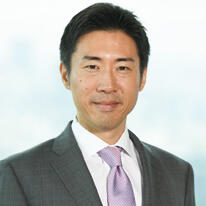
Ryoichi Kakui is the founder of E-Logit, the leading eCommerce logistics company in Japan. He has published 29 books related to logistics, Amazon, and “omnichannel” distribution, which have been published in Japan, the US, China, Taiwan, South Korea, and Vietnam. He is a frequent commentator on television, radio, newspapers, magazines, and other media. Educated in Sophia University in Japan with an MBA from Golden Gate University, he founded UKETORU in 2015, a app addressing the issue of re-delivery, which escalated to a social issue in Japan.

Image
kushida profile 9 2015 cropped

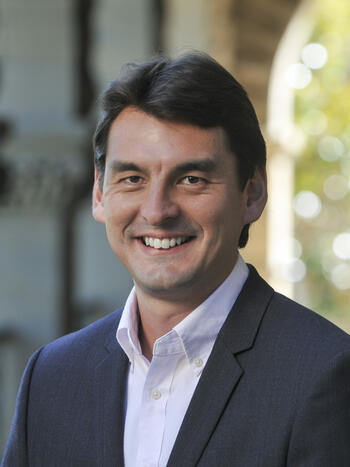
Kenji Kushida is a research scholar at the Japan Program at the Walter H. Shorenstein Asia-Pacific Research Center at Stanford University. One of this research themes examines how IT technologies shape political economies around the world, and how varying national political economic models shape the development trajectories of technologies. He leads the Silicon Valley – New Japan Project, a sustained platform for research and collaboration between Silicon Valley and the new and emerging aspects as Japan transforms itself.


PARKING

Please note there is significant construction taking place on campus, which is greatly affecting parking availability and traffic patterns at the university. Please plan accordingly. Open parking at Stanford University available starting 4:00pm unless otherwise marked. Nearest parking garage is Structure 7, below the Graduate School of Business Knight School of Management.

Seminars
-

THE EVENT IS OPEN TO THE PUBLIC, BUT REGISTRATION IS REQUIRED. SEE BELOW FOR REGISTRATION LINK.

Japan and South Korea enjoyed a period of relatively stable trade and diplomatic relations, with expanding trade, deepening cultural and social ties, and a consistent but relatively managed level of friction. They both remain critical US allies in the region, with North Korea’s security threats and the rising power of China creating uncertainty in the regional security landscape. However, the sudden escalation of diplomatic and trade disputes between South Korea and Japan has alarmed numerous observers, angered people in both countries, and is generally confusing to many around the world to whom the two countries seem to have much to lose and little to gain by this escalation.

This event will shed light into the critical questions surrounding this current conflict. What has been the historical trajectory of the two countries’ diplomatic and trade relations? Is the current escalation part of the historical pattern of cycles of conflict and tension, or an aberration? What are the underlying forces at work that are driving the conflict? Are these new forces, or the same historical forces coming to a head? How much are factors from the international environment, such as the behavior of the United States, influencing the current escalation of trade conflict? What are the domestic political dynamics at work in each of the countries? What has been the historical role of the US in the South Korea-Japan relationship, and is it different this time? This conference brings together experts in the international affairs and trade relations of South Korea, Japan, and the United States. 

This event is sponsored jointly by Japan Program and Korea Program at the Shorenstein APARC, Stanford University.
 

AGENDA

1:00pm-1:05pm         Opening Remarks, Gi-Wook Shin, Director of Shorenstein APARC, Stanford University

1:05pm-2:25pm         Panel 1 – Diplomacy and International Relations

Panelists

Kak-Soo Shin, former Korean Ambassador to Japan

Hitoshi Tanaka, Chairman of the Institute for International Strategy at the Japan Research Institute, ltd.

Joseph Yun, former Deputy Assistant Secretary of the State for Korea and Japan; former Special Representative on North Korea

Kenji Kushida (Moderator), Research Scholar, Shorenstein APARC Japan Program, Stanford University

2:25pm-2:45pm         Panel 1 Audience Q&A

2:45pm-3:00pm         Break

3:00pm-4:20pm         Panel 2 - Trade Issues                   

Panelists

Yukiko Fukagawa, Professor, School of Political Science and Economics at Waseda University

Seokyoung Choi, former Korean Ambassador to WTO and UN in Geneva; former Deputy Minister for Trade

Aiko Lane, Executive Director of the US-Japan Business Council, U.S. Chamber of Commerce

Yong Suk Lee (Moderator), Deputy Director, Shorenstein APARC Korea Program, Stanford University

4:20pm-4:40pm         Panel 2 Audience Q&A

4:40pm-4:45pm         Closing Remarks, Gi-Wook Shin, Director of Shorenstein APARC


PARKING

Pay parking spaces for the event will be available in the Galvez Event Lot and parking instructions including walking directions from the Galvez Lot to Encina Hall will be sent out to all registered attendees the week of the event.

RSVP

Required by 10/17/19. Limited seating available.

Registration link: https://www.eventbrite.com/e/japan-south-korea-on-the-brink-escalating-friction-amidst-an-uncertain-world-tickets-72308158649

MEDIA

If you are part of the media and attending the event, please contact Noa Ronkin at noa.ronkin@stanford.edu

Bechtel Conference Center
Encina Hall, First floor, Central
616 Serra Mall, Stanford, CA 94305

Panel Discussions
Authors
Gi-Wook Shin
News Type
Commentary
Date
Paragraphs

Tension and discord in Japan-South Korea relations are nothing new, but the unfortunate, intensifying conflict between the two countries — a manifestation of right-wing Japanese nationalism and left-wing South Korean nationalism — seems headed toward a collision course. To understand the escalating friction between Tokyo and Seoul one must recognize the unique characteristics of Korean nationalism, and particularly its historical origins, development, and political role in shaping Korean attitudes toward Japan.

This is the focus of my article The Perils of Populist Nationalism, published in the September 2019 issue of the Korean magazine Shindonga (New East Asia). In this piece, which has received much attention in South Korea, I analyze the friction between Seoul and Tokyo and explain the attitude among Koreans toward Japan in contrast to their different attitude toward China. The anti-Japanese sentiment in Korea was forged amidst the rise of modern Japan. Through the experience of Japanese colonial rule, Korean nationalism took on an exclusionary form that emphasized one’s ancestry and the ethnic purity of the Korean people. The current tension between Seoul and Tokyo is rooted in this Korean nationalist sentiment.

It is time South Korea moved beyond its psychological complex toward Japan and recognized that ethnic nationalism is obsolete. Korean intellectuals, I argue, must play a critical role in a sustained effort to cultivate rational liberalism and prevent the excesses of nationalism if South Korea is to become a more open society — one that, in Popperian terms, accepts criticism and rejects a monopoly on truth.

The complete English translation of my article is now available.

Download Now >>

Hero Image
South Koreans hold anti-Japanese rally In Seoul.
South Korean protesters hold a placard reading "No Abe" during a rally against Japan's decision to remove South Korea from a "whitelist" of trusted trade partners, in front of the Japanese embassy in Seoul on August 2, 2019.
Chung Sung-Jun/Getty Images
All News button
1
Authors
News Type
Commentary
Date
Paragraphs

South Korea's decision to end its military agreement with Japan will damage the prospect of continued close security ties among Seoul, Washington and Tokyo because the pact has been a symbol of smooth trilateral military cooperation between them and regarded as a key deterrent against North Korea.

"It is a big mistake," Shin Gi-wook, a Korea studies expert at Stanford University, said in a recent interview adding Seoul's withdrawal from the General Security of Military Information Agreement (GSOMIA) puts the "trilateral security framework at risk."

"The Japan-South Korea relationship may not have hit rock bottom, but it could further deteriorate in the coming months," Shin said. "This is all the more important with the continuing threat of North Korean WMD and the escalating conflict between the U.S. and China in the region. I am concerned that South Korea could be further isolated in the Northeast Asian region—the Moon administration should see the big picture," the professor said…

Read the full article in The Korea Times.

Hero Image
Abe Jae in Getty Logo im Kyung-Hoon - Pool/Getty Images
All News button
1
Paragraphs

In recent years, "innovation" has become increasingly important for Japan. Developing innovative businesses that are separate from the traditional Japanese business sphere is becoming increasingly crucial for sustained economic growth. In this report, Asakura focuses on some emerging companies that have the potential to drive innovation, and provide some reflections on the Japanese entrepreneurial environment.

All Publications button
1
Publication Type
Working Papers
Publication Date
Paragraphs

Kenji Kushida's new book chapter, "Blockchain, a Silicon Valley Vantage on its Potential and Challenges" was published in new book, "The Future of Blockchain: How it will impact finance, industry, and society edited by Yuri Okina, Noriyuki Yanagawa, and Naoyuki Iwashita.

The book is an investigation of the potential and challenges of adopting a disruptive technology such as blockchain. Experts on blockchain applications explain the concept of blockchain, how it is being utilized in a variety of areas, and its wide-range impact on economy, industry, business and society, based on cases in Japan and overseas.


All Publications button
1
Publication Type
Books
Publication Date
Authors
Kenji E. Kushida
Paragraphs

This report provides an overview of the Silicon Valley ecosystem. It draws upon existing scholarship and original insights to derive a picture that is only partially well-known in Japan. Characteristics such as the critical role of large firms for the startup firm ecosystem, the role of Japanese firms in creating the US firms’ “open innovation” paradigm, and the severe lack of local government coordination in providing public transportation creating opportunities for disruptive startups such as Uber, are all aspects of Silicon Valley that are not well-known in Japan. This report also delves into industry-university ties in the crucial research universities of Stanford and University of California Berkeley, highlighting the multifaceted and bidirectional interactions between universities and industry that are often not captured by the common “technology licensing office”-centered view. In the final section, this report briefly reviews a representative set of challenges often cited by large Japanese firms attempting to make use of the Silicon Valley ecosystem, concluding by suggesting areas for further research.

All Publications button
1
Publication Type
Working Papers
Publication Date
Authors
Kenji E. Kushida
News Type
News
Date
Paragraphs

On Thursday, the third Asia-Pacific Geo-Economic Strategy Forum (APGEO) saw discussion on issues of international strategic cooperation in the Asia-Pacific with a particular focus on the U.S.-Japan relationship. Speakers included experts on defense and foreign affairs, including former U.S. National Security Advisor H.R. McMaster and former Japanese Ministers of Defense.

Organized by the Hoover Institution, Nikkei Inc. and the Freeman Spogli Institute of International Studies (FSI), the talks occurred within the context of the United State’s Free and Open Indo-Pacific Strategy (FOIP) and Japan’s Medium Term Defense Program, both recently updated to outline the U.S. and Japan’s respective regional commitments.

The forum’s speakers focused on the rise of China as a common theme underscoring the importance of the U.S.-Japan alliance. Particularly, the speakers shared a general consensus that China’s attempts to increase its economic and political influence and its initiatives to drive progress on technological frontiers such as 5G networks and artificial intelligence pose a threat to the current international order...

Read the full article in The Stanford Daily

Hero Image
Gen H.R. McMaster at podium, delivering speech
Gen. H.R. McMaster, Hoover Institution, addresses the 3rd Asia-Pacific Geo-Economic Strategy Forum
Thom Holme, APARC
All News button
1
0
patricia_robinson.jpg Ph.D.

Patricia (Tish) Robinson joined the Walter H. Shorenstein Asia-Pacific Research Center as a visiting scholar from Hitotsubashi University in Tokyo, Japan from May 2019 - April 2020.

Robinson’s research and teaching focus on managerial mediation and managerial coaching. She has published in Administrative Science Quarterly, Academy of Management Perspectives, and Human Resource Management Review, among others, and her research has received the Academy of International Business Farmer Award and the Academy of Management Richman Award. Other awards include a Fulbright Fellowship, a Fulbright Hayes Fellowship, a Fulbright Faculty Fellowship, a Carnegie Bosch grant, a Japan Foundation Faculty Fellowship, and a Shintaro Abe Fellowship, among others.

Robinson has served on the faculty at UC Berkeley, the NYU Stern School of Business and Harvard University, as well as at the Japan Institute of Labor Policy and Training.  She was appointed a Commissioner on the Fulbright Japan-US Educational Commission by Ambassador Caroline Kennedy, was an outside board director to Eisai Pharmaceuticals, elected an elected Governor to the American Chamber of Commerce Board of Governors, and served as a Founding Director of the Society of Organizational Learning Japan under the auspices of Peter Senge.

Robinson received her MBA and Ph.D. from the MIT Sloan School of Management at the Massachusetts Institute of Technology and her BA from Pomona College.

Visiting Scholar, May 2019-April 2020
Paragraphs

Promotion of inward foreign direct investment (FDI) into Japan has been an important policy in the Abenomics growth strategy. This paper examines if we observe positive impacts of the policy in the data. We first estimate a gravity model of bilateral FDIs using data for 35 OECD countries as destination countries. In estimating the model, we handle zero values for FDI stock explicitly. The model includes (origin and destination) country-specific effects as well as destination-country specific time trends. We take the model prediction as a reasonable counterfactual and compare that to the actual inward FDI stock for Japan. Although the actual inward FDI stock has been growing and is likely to achieve the goal of 35 trillion yen by 2020, the growth under the Abe administration has been comparable to or slightly lower than the counterfactual suggested by the estimated model. We also estimate the model without Japan as a destination country and use the estimated model to calculate the counterfactual level of Japan's inward FDI. Although we expect the gap between the counterfactual and the actual become narrower if Abenomics policy has been successful, we fail to find that. These results cast a doubt on the effectiveness of the Abenomics policies to encourage inward FDI at least as of 2015.

All Publications button
1
Publication Type
Journal Articles
Publication Date
Journal Publisher
Journal of the Japanese and International Economies
Authors
Takeo Hoshi
Number
52
Subscribe to Japan