Many observers, and many investors, believe that young people are especially likely to produce the most successful new firms. Integrating administrative data on firms, workers, and owners, we study startups systematically in the U.S. and find that successfull entrepreneurs are middle-aged, not young. The mean age at founding for the 1-in-1,000 fastest growing new ventures is 45.0. The findings are similar when considering high-technology sectors, entrepreneurial hubs, and successful firm exits. Prior experience in the specific industry predicts much greater rates of entrepreneurial success. These findings strongly reject common hypotheses that emphasize youth as a key trait of successful entrepreneurs.
Speaker:
Image
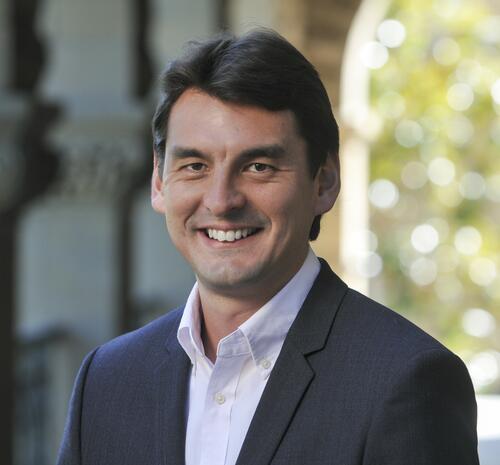
Javier Miranda, Principal Economist, Economy-Wide Statistics Division, US Census Bureau
Bio:
Javier Miranda is Principal Economist at the U.S. Census Bureau where he began his career in 1998. Javier received his Ph.D. in Economics from American University in 2004. Previous to joining the Census Javier was a research consultant at the World Bank and the Urban Institute. Javier has published papers in the areas of industrial organization, technological change, job creation, entrepreneurship and firm financing. Among his publications are articles in the American Economic Review, Journal of Economic Literature, American Economic Journal Macroeconomics, Review of Economic and Statistics, IMF Review, World Bank Economic Review, Journal of Business Valuation and Economic Loss, NBER Macroeconomics Annual, and multiple books and chapters. Javier received the Director's Award for Innovation (2007) and the U.S. Department of Commerce Bronze Medal (2011). His contributions to data infrastructure are notable. Javier Miranda is responsible for the development of the Longitudinal Business Database and the Business Dynamics Statistics and is the Synthetic Longitudinal Business Database v3. Together with the USPTO Javier has led the development the Business Dynamics Statistics of Innovative Firms a longitudinal database of firms, patents, and inventors. Javier Miranda is also President of the Board of SEM an adult education and job readiness program designed to address the root causes of poverty, illiteracy, and violence in Washington DC.
Advisory on Novel Coronavirus (COVID-19)
In accordance with university guidelines, if you (or a spouse/housemate) have returned from travel to mainland China or South Korea in the last 14 days, we ask that you DO NOT come to campus until 14 days have passed since your return date and you remain symptom-free. For more information and updates, please refer to the Stanford Environmental Health & Safety website: https://ehs.stanford.edu/news/novel-coronavirus-covid-19.
Javier Miranda, Principal Economist, Economy-Wide Statistics Division, US Census Bureau
This event is made possible by generous support from the Korea Foundation and other friends of the Korea Program.
Asia has made remarkable progress over the past decades and is now at the forefront of the global economy in growth terms. That said, there are several near-term risks that could derail Asia’s growth momentum, including trade tensions and too-low-for-long global interest rates. In this talk, Changyong Rhee will discuss the Asian economic outlook, focusing on Korea in the context of regional and global challenges.
Image
Rhee is the Director of the Asia and Pacific Department at the International Monetary Fund (IMF), where he oversees the Fund’s work on the region, including its lending operations and bilateral and multilateral surveillance of economies ranging from China, Japan, and India to the Pacific Islands. Prior to joining the IMF in 2014, Rhee was Chief Economist of the Asian Development Bank (ADB); Secretary General and Sherpa of the Presidential Committee for the 2010 G-20 Seoul Summit; Vice Chairman of the Financial Services Commission (FSC) and Chairman of the Securities and Futures Commission of Korea; professor of economics at Seoul National University and the University of Rochester. He has also been a frequent policy advisor to the government of Korea, including in the Office of the President, the Ministry of Finance and Economy, the Bank of Korea, the Korea Securities Depository, and the Korea Development Institute. Rhee has published widely in the fields of macroeconomics, financial economics, and on the Korean economy. He holds a PhD from Harvard University and an undergraduate honors degree from Seoul National University, both in economics.
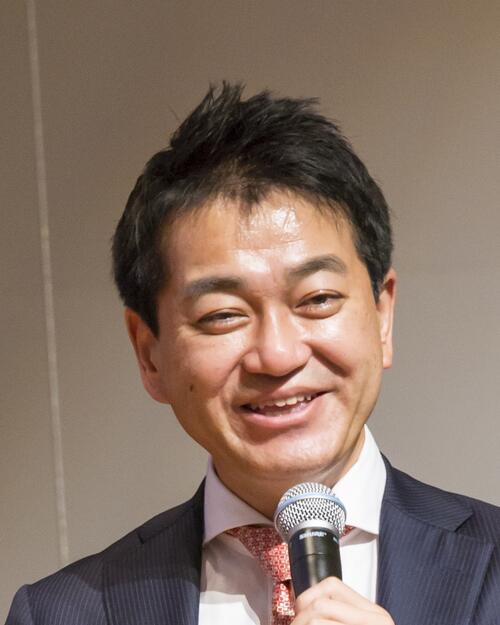
Changyong Rhee
<i>Director, Asia and Pacific Department, IMF</i>
Shorenstein APARC's annual overview for academic year 2018-19 is now available.
Learn about the research, events, and publications produced by the Center's programs over the last twelve months. Feature sections look at U.S.-China relations and the diplomatic impasse with North Korea, and summaries of current Center research on the socioeconomic impact of new technologies, the success of Abenomics, South Korean nationalism, and how Southeast Asian countries are navigating U.S.-China competition. Catch up on the Center's policy work, education initiatives, and outreach/events.
The recent escalation of diplomatic and trade disputes between South Korea and Japan has alarmed numerous observers and is rather confusing to many around the world to whom the two countries seem to have much to lose and little to gain by the deterioration of the bilateral relationship. What underlying forces are driving the conflict? Are these new forces, or the same historical forces coming to a head? How much are factors from the international environment, such as the behavior of the United States, influencing the current escalation?
These were some of the questions that took center stage at a recent conference, “Japan and South Korea on the Brink: Escalating Friction Amidst an Uncertain World,” convened jointly by APARC’s Japan Program and Korea Program. The conference brought together experts in the international affairs and trade relations of South Korea, Japan, and the United States to shed light into the current conflict between the two U.S. allies.
In his welcome remarks, APARC Director and Korea Program Director Gi-Wook Shin reminded the audience that Japan and South Korea have experienced tensions over colonial and wartime history and hence, in that sense, the recent conflict is nothing new. In the past, however, the tensions were mostly kept under control because the two countries well understood that it was in their mutual interest to maintain a cooperative relationship and keep history issues separate from other important economic and security issues. Over the past year, however, tensions over history have permeated economic and security issues amid rising nationalism in both countries.
A Problem of Alliance Management
The conference opened with a panel on diplomacy and international relations. Kak-Soo Shin, former Korean ambassador to Japan, situated the current crisis in the context of the regional strategy environment, noting that the Northern triangle – composed of North Korea, China, and Russia – has been gaining influence, while the Southern triangle – composed of South Korea, Japan, and the United States – has weakened. “The souring Japan-Korea relationship is a big blow to the maintenance of the Southern triangle and its ability to cope with the volatile security environment in Northeast Asia,” Shin cautioned.
Hitoshi Tanaka, chairman of the Institute for International Strategy at the Japan Research Institute, ltd., offered an overview of the reasons underlying the escalation in the bilateral relationship between Japan and South Korea, foremost of which, he said, is the declining mutual importance of the two nations to each other vis-à-vis China’s emergence as their largest trade partner. “Unless we feel that the future relationship is essential to both nations there is no way to address the conflict,” he said.
Joseph Yun, former deputy assistant secretary of state for Korea and Japan and former special representative on North Korea, emphasized that Tokyo and Seoul are “eroding the trilateral security arrangement that the United States has led in Northeast Asia since the end of the Second World War” – an arrangement that has been responsible for prosperity throughout Northeast Asia. The root problem, he argued, is alliance management, from which the United States “has been conspicuously absent.”
Watch the panel:
A Conflict in an Age of Changing Global Trade Order
The second panel turned eyes to the trade issues involved in the conflict between Japan and South Korea. Professor Yukiko Fukagawa of the School of Political Science and Economics at Waseda University, an expert in Korean economic development, observed that the friction between the two countries has escalated since 2000, when Korean global businesses like Hyundai and Samsung rose to fame. Since then, she argued, what has happened in Korea is a process of economic nationalism and “Korea seems to find it or interpret it as a kind of transitional justice against Japan.”
Seokyoung Choi, former Korean ambassador to the WTO and UN and former deputy minister for trade, explained the background for the Japan-Korea trade row and each side’s arguments. As a way forward, he said, both countries must consider several important imperatives, including the needs to cooperate in an era of tectonic changes to the global trade order, to address expanding fault lines in East Asia given the spillover effects of the U.S.-China trade war, and to complement for deficits of leadership and trust in Northeast Asia.
Aiko Lane, executive director of the U.S.-Japan Business Council, discussed the main concerns the Japan-Korea friction poses for U.S. businesses, including regulatory uncertainty, supply chain disruptions, and delays in shipment. Further escalation in the relationship, she argued, could potentially inflict long-term damage to the regional ICT and manufacturing industries. Potential impacts include driving costs up for consumers and making it more lucrative for other countries to supply semiconductor materials to Korea.
Watch the panel:
Hero Image
South Koreans participate in a rally to denounce Japan's new trade restrictions and Japanese Prime Minister Shinzo Abe on August 24, 2019 in Seoul. | Chung Sung-Jun/ Getty Images
The demographics of Japan’s aging society has galvanized a wide range of corporate efforts, supported both directly and indirectly by the government, to aggressively develop artificial intelligence-driven technologies and IT systems to perform work for which labor shortages are accelerating. We are beginning to see concrete corporate offerings to address shortages of specific types of skilled and unskilled labor, as well as numerous efforts underway to develop systems to cope with sparsely populated, elderly geographic regions and the logistics surrounding eldercare more generally.
In this talk, based on a forthcoming book chapter, Kushida examines specific corporate cases and government strategies suggesting how Japan’s population aging and shrinking has led to three primary interrelated drivers of significance to shaping technological trajectories: 1) Demographics as market opportunity of an entirely unprecedented scale to serve the needs of a rapidly aging society; 2) demographic change creating an acute labor shortage; and 3) favorable political and regulatory dynamics for pursuing the development and diffusion of new technological trajectories to solve social and economic challenges caused by demographic change. A critical implication is that if technologies developed or deployed within Japan to solve domestic demographic problems are applicable elsewhere, then Japan’s demographic challenge can be an opportunity to cultivate competitive products and services in global markets.
SPEAKER
Image
Kenji E. Kushida is a Japan Program Research Scholar at the Walter H. Shorenstein Asia-Pacific Research Center and an affiliated researcher at the Berkeley Roundtable on the International Economy. Kushida’s research interests are in the fields of comparative politics, political economy, and information technology. He has four streams of academic research and publication: political economy issues surrounding information technology such as Cloud Computing; institutional and governance structures of Japan’s Fukushima nuclear disaster; political strategies of foreign multinational corporations in Japan; and Japan’s political economic transformation since the 1990s. Kushida has written two general audience books in Japanese, entitled Biculturalism and the Japanese: Beyond English Linguistic Capabilities (Chuko Shinsho, 2006) and International Schools, an Introduction (Fusosha, 2008). Kushida holds a PhD in political science from the University of California, Berkeley. He received his MA in East Asian studies and BAs in economics and East Asian studies, all from Stanford University.
PARKING
Please note there is significant construction taking place on campus, which is greatly affecting parking availability and traffic patterns at the university. Please plan accordingly. Nearest parking garage is Structure 7, below the Graduate School of Business Knight School of Management.
Kenji E. Kushida was a research scholar with the Japan Program at the Walter H. Shorenstein Asia-Pacific Research Center from 2014 through January 2022. Prior to that at APARC, he was a Takahashi Research Associate in Japanese Studies (2011-14) and a Shorenstein Postdoctoral Fellow (2010-11).
Kushida’s research and projects are focused on the following streams: 1) how politics and regulations shape the development and diffusion of Information Technology such as AI; 2) institutional underpinnings of the Silicon Valley ecosystem, 2) Japan's transforming political economy, 3) Japan's startup ecosystem, 4) the role of foreign multinational firms in Japan, 4) Japan's Fukushima nuclear disaster. He spearheaded the Silicon Valley - New Japan project that brought together large Japanese firms and the Silicon Valley ecosystem.
He has published several books and numerous articles in each of these streams, including “The Politics of Commoditization in Global ICT Industries,” “Japan’s Startup Ecosystem,” "How Politics and Market Dynamics Trapped Innovations in Japan’s Domestic 'Galapagos' Telecommunications Sector," “Cloud Computing: From Scarcity to Abundance,” and others. His latest business book in Japanese is “The Algorithmic Revolution’s Disruption: a Silicon Valley Vantage on IoT, Fintech, Cloud, and AI” (Asahi Shimbun Shuppan 2016).
Kushida has appeared in media including The New York Times, Washington Post, Nihon Keizai Shimbun, Nikkei Business, Diamond Harvard Business Review, NHK, PBS NewsHour, and NPR. He is also a trustee of the Japan ICU Foundation, alumni of the Trilateral Commission David Rockefeller Fellows, and a member of the Mansfield Foundation Network for the Future. Kushida has written two general audience books in Japanese, entitled Biculturalism and the Japanese: Beyond English Linguistic Capabilities (Chuko Shinsho, 2006) and International Schools, an Introduction (Fusosha, 2008).
Kushida holds a PhD in political science from the University of California, Berkeley. He received his MA in East Asian Studies and BAs in economics and East Asian Studies with Honors, all from Stanford University.
Shorenstein APARC
Stanford University
Encina Hall E301
Stanford, CA 94305-6055
0
hkim10@stanford.edu
2019-2020 Shorenstein Postdoctoral Fellow in Contemporary Asia
hannah_kim.jpg
Ph.D.
Hannah June Kim joined the Walter H. Shorenstein Asia-Pacific Research Center (Shorenstein APARC) as Shorenstein Postdoctoral Fellow in Contemporary Asia for the 2019-20 academic year. She researches public opinion, political behavior, theories of modernization, economic development, and democratic citizenship, focusing on East Asia.
Dr. Kim completed her doctorate in the Department of Political Science at the University of California, Irvine, in 2019. Her dissertation examined how and why people view democracy in systematically different ways in six countries: China, Japan, Korea, Singapore, Taiwan, and Vietnam. Developing unique categories of democratic citizenship that measure the cognitive, affective, and behavioral patterns of individuals, she found that state-led economic development limited the growth of cultural democratization among middle class groups in all three dimensions. The results implied that the classic causality between modernization and democratization may not be universally applicable to different cultural contexts.
At Shorenstein APARC, Hannah worked on developing her dissertation into a book manuscript and making progress on her next project exploring democratization and gender empowerment in East Asia. Hannah received an MA in International Studies from Korea University and a BA from UCLA. Her work has been published, or is forthcoming, in The Journal of Politics, PS: Political Science & Politics, and the Japanese Journal of Political Science.
The Sino-Japanese competition for influence in Asia is often overlooked by Western observers. While the US-Japan Alliance has been the cornerstone of security in East Asia for over a half-century, under Prime Minister Shinzo Abe, Japan has modernized its military, steadily enhanced it regional activities, and deepened relations with countries around the region. Economically, as well, Tokyo has offered a counterpart to Chinese investment and development aid. The alliance with the United States is a indispensable element in Japan's regional strategy, one which Beijing would like to disrupt. How has China pursued its goal of driving a wedge between Tokyo and Washington? From military buildup, through pressure in the East China Sea, to diplomatic initiatives, Beijing has sought to raise the perceived risk to both Japan and the United States of maintaining their unique relationship. What are the prospects for the future of the US-Japan alliance, especially in the post-Abe era?
SPEAKER
Image
Michael Auslin is the Payson J. Treat Fellow in Contemporary Asia at the Hoover Institution, Stanford University. A historian by training, he specializes in contemporary and historical U.S. policy in Asia and political and security issues in the Indo-Pacific region. A best-selling author, Dr. Auslin’s latest book is The End of the Asian Century: War, Stagnation, and the Risks to the World’s Most Dynamic Region (Yale). He is a longtime contributor to the Wall Street Journal and National Review, and his writing appears in other leading publications, including The Atlantic, Financial Times, Foreign Affairs, and Politico. He comments regularly for U.S. and foreign print and broadcast media. Previously, Dr. Auslin was an associate professor of history at Yale University, a resident scholar at the American Enterprise Institute, and a visiting professor at the University of Tokyo. He is a Fellow of the Royal Historical Society, and has been named a Young Global Leader by the World Economic Forum, a Fulbright Scholar, and a Marshall Memorial Fellow by the German Marshall Fund, among other honors, and serves on the board of the Wilton Park USA Foundation. He received a BSc from Georgetown University’s School of Foreign Service and his PhD in History from the University of Illinois at Urbana-Champaign.
PARKING
Please note there is significant construction taking place on campus, which is greatly affecting parking availability and traffic patterns at the university. Please plan accordingly. Nearest parking garage is Structure 7, below the Graduate School of Business Knight School of Management.
This event is part of the Stanford Silicon Valley-New Japan Project Public Forum Series.
Consumption is a major driver of national economies, and scholars often study important differences across consumption patterns across countries, which influence many aspects of their societies and economies. Yet, the underlying business of logistics operations, and how they support countries’ respective retail industries, has as much, if not more impact than simply examining consumer behavior. In this public forum, Ryuichi Kakui, with deep expertise in eCommerce logistics, will explain how logistics are used in retail industries, comparing across the world’s three largest economies: the US, China, and Japan. He will introduce the concept of strategic logistics thinking and the “4C” framework and informs leading strategic logistics thinking. A conversation with Kenji Kushida, who examines how technologies and specific industry dynamics shape varying models of political economies around the world, will then link the area of logistics and retail to important systemic differences and underlying similarities across the world’s leading economies, which are pursuing contrasting models of social, economic, and political organization.
SPEAKERS
Image
Ryoichi Kakui is the founder of E-Logit, the leading eCommerce logistics company in Japan. He has published 29 books related to logistics, Amazon, and “omnichannel” distribution, which have been published in Japan, the US, China, Taiwan, South Korea, and Vietnam. He is a frequent commentator on television, radio, newspapers, magazines, and other media. Educated in Sophia University in Japan with an MBA from Golden Gate University, he founded UKETORU in 2015, a app addressing the issue of re-delivery, which escalated to a social issue in Japan.
Image
Kenji Kushida is a research scholar at the Japan Program at the Walter H. Shorenstein Asia-Pacific Research Center at Stanford University. One of this research themes examines how IT technologies shape political economies around the world, and how varying national political economic models shape the development trajectories of technologies. He leads the Silicon Valley – New Japan Project, a sustained platform for research and collaboration between Silicon Valley and the new and emerging aspects as Japan transforms itself.
PARKING
Please note there is significant construction taking place on campus, which is greatly affecting parking availability and traffic patterns at the university. Please plan accordingly. Open parking at Stanford University available starting 4:00pm unless otherwise marked. Nearest parking garage is Structure 7, below the Graduate School of Business Knight School of Management.
THE EVENT IS OPEN TO THE PUBLIC, BUT REGISTRATION IS REQUIRED. SEE BELOW FOR REGISTRATION LINK.
Japan and South Korea enjoyed a period of relatively stable trade and diplomatic relations, with expanding trade, deepening cultural and social ties, and a consistent but relatively managed level of friction. They both remain critical US allies in the region, with North Korea’s security threats and the rising power of China creating uncertainty in the regional security landscape. However, the sudden escalation of diplomatic and trade disputes between South Korea and Japan has alarmed numerous observers, angered people in both countries, and is generally confusing to many around the world to whom the two countries seem to have much to lose and little to gain by this escalation.
This event will shed light into the critical questions surrounding this current conflict. What has been the historical trajectory of the two countries’ diplomatic and trade relations? Is the current escalation part of the historical pattern of cycles of conflict and tension, or an aberration? What are the underlying forces at work that are driving the conflict? Are these new forces, or the same historical forces coming to a head? How much are factors from the international environment, such as the behavior of the United States, influencing the current escalation of trade conflict? What are the domestic political dynamics at work in each of the countries? What has been the historical role of the US in the South Korea-Japan relationship, and is it different this time? This conference brings together experts in the international affairs and trade relations of South Korea, Japan, and the United States.
This event is sponsored jointly by Japan Program and Korea Program at the Shorenstein APARC, Stanford University.
AGENDA
1:00pm-1:05pm Opening Remarks, Gi-Wook Shin, Director of Shorenstein APARC, Stanford University
1:05pm-2:25pm Panel 1 – Diplomacy and International Relations
Panelists
Kak-Soo Shin, former Korean Ambassador to Japan
Hitoshi Tanaka, Chairman of the Institute for International Strategy at the Japan Research Institute, ltd.
Joseph Yun, former Deputy Assistant Secretary of the State for Korea and Japan; former Special Representative on North Korea
Kenji Kushida (Moderator), Research Scholar, Shorenstein APARC Japan Program, Stanford University
2:25pm-2:45pm Panel 1 Audience Q&A
2:45pm-3:00pm Break
3:00pm-4:20pm Panel 2 - Trade Issues
Panelists
Yukiko Fukagawa, Professor, School of Political Science and Economics at Waseda University
Seokyoung Choi, former Korean Ambassador to WTO and UN in Geneva; former Deputy Minister for Trade
Aiko Lane, Executive Director of the US-Japan Business Council, U.S. Chamber of Commerce
Yong Suk Lee (Moderator), Deputy Director, Shorenstein APARC Korea Program, Stanford University
4:20pm-4:40pm Panel 2 Audience Q&A
4:40pm-4:45pm Closing Remarks, Gi-Wook Shin, Director of Shorenstein APARC
PARKING
Pay parking spaces for the event will be available in the Galvez Event Lot and parking instructions including walking directions from the Galvez Lot to Encina Hall will be sent out to all registered attendees the week of the event.
Tension and discord in Japan-South Korea relations are nothing new, but the unfortunate, intensifying conflict between the two countries — a manifestation of right-wing Japanese nationalism and left-wing South Korean nationalism — seems headed toward a collision course. To understand the escalating friction between Tokyo and Seoul one must recognize the unique characteristics of Korean nationalism, and particularly its historical origins, development, and political role in shaping Korean attitudes toward Japan.
This is the focus of my article The Perils of Populist Nationalism, published in the September 2019 issue of the Korean magazine Shindonga (New East Asia). In this piece, which has received much attention in South Korea, I analyze the friction between Seoul and Tokyo and explain the attitude among Koreans toward Japan in contrast to their different attitude toward China. The anti-Japanese sentiment in Korea was forged amidst the rise of modern Japan. Through the experience of Japanese colonial rule, Korean nationalism took on an exclusionary form that emphasized one’s ancestry and the ethnic purity of the Korean people. The current tension between Seoul and Tokyo is rooted in this Korean nationalist sentiment.
It is time South Korea moved beyond its psychological complex toward Japan and recognized that ethnic nationalism is obsolete. Korean intellectuals, I argue, must play a critical role in a sustained effort to cultivate rational liberalism and prevent the excesses of nationalism if South Korea is to become a more open society — one that, in Popperian terms, accepts criticism and rejects a monopoly on truth.
The complete English translation of my article is now available.
South Korean protesters hold a placard reading "No Abe" during a rally against Japan's decision to remove South Korea from a "whitelist" of trusted trade partners, in front of the Japanese embassy in Seoul on August 2, 2019. | Chung Sung-Jun/Getty Images