-


Image
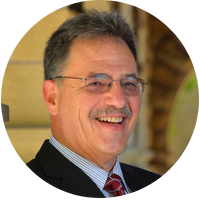
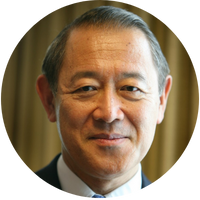
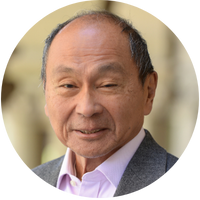
Event Banner card for APARC Japan Program webinar on May 9: "The New Landscape of Economic Security and the U.S. - Japan Alliance, featuring headshot photos (from left to right) of Kazuto Suzuki, Mireya Solís, and Kiyoteru Tsutsui

May 9, 5:00 p.m - 6:30 p.m. PT / May 10, 9:00 a.m. - 10:30 a.m. JT

Economic security has emerged as a key foreign policy issue in Japan in recent years. Arguably one of the most active players in this field, the Japanese government has developed a comprehensive policy on economic security that seeks to protect its economy from the vagaries of geopolitical disruptions. Recent legislative efforts have centered around supply chain risks, critical infrastructure, and sensitive technologies and patents. Prompted by risks associated with business with China and intensified further by Russia’s invasion of Ukraine, concerns about economic security require governments and businesses to adjust their reliance on market mechanisms in international trade and compel them to formulate new policies and frameworks that would address these concerns. Featuring two leading experts on economic security and trade in Japan and the United States, this panel will discuss what those new policies might look like and what roles the US-Japan alliance should play in building resilient economic frameworks that would mitigate the economic damages of geopolitical disruptions.

Panelists


Image
Photo portrait of Kazuto Suzuki

Kazuto Suzuki is a Professor of Science and Technology Policy at the Graduate School of Public Policy at the University of Tokyo, Japan, and senior fellow of Asia Pacific Initiative (API), an independent policy think tank. He graduated from the Department of International Relations at Ritsumeikan University and received a Ph.D. from Sussex European Institute, University of Sussex, England. He has worked in the Fondation pour la recherche stratégique in Paris, France, as an assistant researcher, Associate Professor at the University of Tsukuba from 2000 to 2008, and served as a Professor of International Politics at Hokkaido University until 2020. He served as an expert in the Panel of Experts for the Iranian Sanction Committee under the United Nations Security Council from 2013 to July 2015. 

Suzuki currently serves as the President of the Japan Association of International Security and Trade. His research focuses on the conjunction of science & technology and international relations; subjects including space policy, non-proliferation, export control, and sanctions.  His recent work includes Space and International Politics (2011, in Japanese, awarded Suntory Prize for Social Sciences and Humanities), Policy Logics and Institutions of European Space Collaboration (2003), and many others.


Image
Square photo portrait of Mireya Solís

Mireya Solís is director of the Center for East Asia Policy Studies, Philip Knight Chair in Japan Studies, and a senior fellow in the Foreign Policy program at Brookings. Prior to her arrival at Brookings, Solís was a tenured associate professor at American University’s School of International Service.

Solís is an expert on Japanese foreign economic policy, U.S.-Japan relations, international trade policy, and Asia-Pacific economic integration. She is the author of "Banking on Multinationals: Public Credit and the Export of Japanese Sunset Industries" (Stanford University Press, 2004) and co-editor of "Cross-Regional Trade Agreements: Understanding Permeated Regionalism in East Asia" (Springer, 2008) and "Competitive Regionalism: FTA Diffusion in the Pacific Rim" (Palgrave Macmillan, 2009). Her most recent book, “Dilemmas of a Trading Nation: Japan and the United States in the Evolving Asia-Pacific Order” (Brookings Press, 2017), offers a novel analysis of the complex tradeoffs Japan and the United States face in drafting trade policy that reconciles the goals of economic competitiveness, social legitimacy, and political viability. “Dilemmas of a Trading Nation” received the 2018 Masayoshi Ohira Memorial Award.


Moderator


Image
Square photo portrait of Kiyoteru Tsutsui

Kiyoteru Tsutsui is the Henri H. and Tomoye Takahashi Professor, Professor of Sociology, Senior Fellow at the Freeman Spogli Institute for International Studies, and Deputy Director of the Walter H. Shorenstein Asia-Pacific Research Center, where he is also Director of the Japan Program. He is the author of Rights Make Might: Global Human Rights and Minority Social Movements in Japan (Oxford University Press, 2018), co-editor of Corporate Responsibility in a Globalizing World (Oxford University Press, 2016) and co-editor of The Courteous Power: Japan and Southeast Asia in the Indo-Pacific Era (University of Michigan Press, 2021). 

Kiyoteru Tsutsui
Kiyoteru Tsutsui

via Zoom Webinar

Kazuto Suzuki Professor Graduate School of Public Policy, University of Tokyo
Mireya Solís Director and Senior Fellow – Center for East Asia Policy Studies, Philip Knight Chair in Japan Studies Brookings
-


Image
Shorenstein APARC Japan Program April 18 Webinar information card: Japan's Foreign Policy in the Aftermath of the Russian Invasion of Ukraine, including photo portraits of speakers Hiroyuki Akita, Yoko Iwama, and Kiyoteru Tsutsui

April 18, 5:00 p.m - 6:30 p.m. PT / April 19, 9:00 a.m. - 10:30 a.m. JT

Russia’s invasion in Ukraine has transformed the landscape of international security in a multitude of ways and reshaped foreign policy in many countries. How did it impact Japan’s foreign policy? From nuclear sharing to the Northern Territories, it sparked new debates in Japan about how to cope with Putin’s Russia and the revised international order. With NATO reenergized and the United States having to recommit some resources in Europe, how should Japan counter an expansionist China, an emboldened North Korea, and a potentially hamstrung Russia to realize its vision of Free and Open Indo-Pacific? What might be the endgame in Ukraine and how would it impact the clash of liberal and authoritarian forces in the Indo-Pacific region? Featuring two leading experts on world politics and Japan’s foreign policy, this panel tackles these questions and charts a way forward for Japan.

Square photo portrait of Yoko Iwama

Yoko Iwama is Professor of National Graduate Institute for Policy Studies (GRIPS). She is also the director of Security and Strategy Program and Maritime Safety and Security Program at GRIPS. 

She graduated from Kyoto University in 1986 and earned her PhD in Law. Having served as Research Assistant of Kyoto University (1994–97), Special Assistant of the Japanese Embassy in Germany (1998–2000), and Associate Professor at GRIPS (2000), she was appointed Professor at GRIPS in 2009. She was a student at the Free University of Berlin between 1989-1991, where she witnessed the end the reunification of the two Germanies. 

Her specialty is international security and European diplomatic history centering on NATO, Germany, and nuclear strategy. 

Her publications include John Baylis and Yoko Iwama (ed.) Joining the Non-Proliferation Treaty: Deterrence, Non-Proliferation and the American Alliance, (Routledge 2018); “Unified Germany and NATO,” (in Keiichi Hirose/ Tomonori Yoshizaki (eds.) International Relation of NATO, Minerva Shobo, 2012). 

Her newest book The 1968 Global Nuclear Order and West Germany appeared in August 2021 in Japanese. She is working on a co-authored book on the origins and evolution of the nuclear-sharing in NATO and a co-authored book on the Neutrals, the Non-aligned countries and the NPT.  

Square photo portrait of Hiroyuki Akita

Hiroyuki Akita is a Commentator of Nikkei. He regularly writes commentaries, columns, and analysis focusing on foreign and international security affairs. He joined Nikkei in 1987 and worked at the Political News Department from 1998 to 2002 where he covered Japanese foreign policy, security policy, and domestic politics. Akita served as Senior & Editorial Staff Writer from 2009 to 2017, and also worked at the “Leader Writing Team ” of the Financial Times in London in late 2017. 

 Akita graduated from Jiyu Gakuen College in 1987 and Boston University (M.A.). From 2006 to 2007, he was an associate of the US-Japan Program at Harvard University, where he conducted research on US-China-Japan relations. In March 2019, he won the Vaughn-Ueda International Journalist Award, a prize for outstanding reporting of international affairs. He is an author of two books in Japanese: “Anryu (Power Game of US-China-Japan)”(2008), and “Ranryu (Strategic Competition of US-Japan and China)”(2016). 

Square photo portrait of Kiyoteru Tsutsui

Kiyoteru Tsutsui is the Henri H. and Tomoye Takahashi Professor, Professor of Sociology, Senior Fellow at the Freeman Spogli Institute for International Studies, and Deputy Director of the Walter H. Shorenstein Asia-Pacific Research Center, where he is also Director of the Japan Program. He is the author of Rights Make Might: Global Human Rights and Minority Social Movements in Japan (Oxford University Press, 2018), co-editor of Corporate Responsibility in a Globalizing World (Oxford University Press, 2016) and co-editor of The Courteous Power: Japan and Southeast Asia in the Indo-Pacific Era (University of Michigan Press, 2021).  


Kiyoteru Tsutsui
Kiyoteru Tsutsui

Via Zoom Webinar

Yoko Iwama Professor & Center Director National Graduate Institute for Policy Studies (GRIPS)
Hiroyuki Akita Commentator Nikkei
Authors
Michael Breger
Noa Ronkin
News Type
Q&As
Date
Paragraphs

U.S.-based donors and international organizations have long dominated the development sector, but their Asian peers are increasingly challenging Western hegemony in the field, argues APARC Postdoctoral Fellow in Contemporary Asia Mary-Collier Wilks.

Wilks is currently at work on a book project that examines variation in ‘aid chains,’ or the links through which programs travel from donors to international nongovernmental organizations (INGOs), and finally to implementing partners. Her ethnographic research examines two aid chains focused on the delivery of women’s health services in Cambodia. After completing her residency at APARC this summer, she will head to the University of North Carolina Wilmington to start a tenure track position at the Department of Sociology.

In the following Q&A, Wilks discusses her research and fellowship experience at Stanford. The interview was slightly edited for length and clarity.


Sign up for APARC newsletters to receive research and commentary updates from our scholars


Your research centers on meaning-making and power dynamics in international organizations. What drew you to this topic?

Before going to graduate school, I worked at a Cambodian NGO, Social Services of Cambodia, that implemented social welfare programs for women and children. While there, I observed conversations between the foreign director, local staff, donors, and beneficiaries, and noticed how these interactions shaped SSC’s work. I was particularly struck by how differently donors from various nations defined gender empowerment. These questions evolved into a desire to go to graduate school and study how donor differences impact international development programs in Southeast Asia.

East Asian nations are increasingly vying for influence and offering new, alternative models for development.
Mary-Collier Wilks

You are working on your first book. Can you tell us a bit about what to expect from it?

During my postdoctoral fellowship at APARC, I’m focusing on transforming my dissertation into a book. Learning to write a book is a difficult, unique, and rewarding process in and of itself! It’s still a work in progress, but the book argues that the global development sector is shifting. Donors and international organizations based in the United States, Europe, and Australia have long been dominant actors, producing prevailing global norms around “good development.” However, East Asian nations are increasingly vying for influence and offering new, alternative models for development. As a case study of these transformations, I conduct a multi-sited ethnography of two INGOs, one from the United States and the other from Japan, that implement development programs in Cambodia.

I see Cambodian practitioners render the above geopolitical transformations meaningful in their own lives by discussing two “development imaginaries” or narratives about the best way for society to develop, one “Asian” and the other “Western.” Consequently, I contend Cambodia is a case of a larger phenomenon in which Asian donors and development organizations are playing a more prominent role, challenging Western hegemony in the development sector and producing new development norms. This book is therefore trying to tell a dual story about the macro-level geopolitical transformations taking place in the development space in Cambodia, and Asia more generally, and the micro-level meanings, practices, and contradictions that these changes create in the lives of the people living through them.

Health screening in a Cambodia primary school
A team of health workers screens children in a primary school in Cambodia. | Global Partnership for Education/Natasha Graham via Flickr (CC BY-NC-ND 2).

You have mentioned your interest in how people encounter international development and foreign aid in their everyday lives. What are some aspects of those encounters that you find revealing about the dynamics of global development?

Cambodia is a nation where international donors have a lot of power. But, that’s never the whole story. Development is never just donor-driven. In my work, I try to center the ways Cambodian practitioners make sense of, adapt, or resist donor visions of their nation’s development.

For instance, during my fieldwork, I met an NGO director who I’ll call Rith and whose career trajectory can provide us with some insights. Rith was born in 1979, at the very end of the Khmer Rouge regime. In his twenties, he decided to become a monk to bring merit to his family. In the late 1990s, Rith started noticing the influx of foreign aid funding and the proliferating numbers of international and local NGOs in his country. In 2000, he decided to quit being a monk to open an NGO. He turned out to be a savvy fundraiser, securing funding for his NGO to implement multiple health, education, and economic empowerment projects. However, when I met him in 2019, Rith told me he thought “it might be time to change paths” because NGO funding from Western donors “is not like it was ten years ago.” Two years later, he became the co-CEO of a private construction and sourcing company that takes advantage of the numerous infrastructure development loans China provides to Cambodia.

You can therefore observe how the larger geopolitical changes Cambodia undergoes play out in a micro-way in Rith’s strategic career choices as he shifts from being a monk to an NGO director to a CEO.

I believe that projects that support a strong state and those that encourage the market and nonprofit actors could be synchronized for more effective aid.
Mary-Collier WIlks

What do you see as some of the biggest challenges to delivering aid via INGOs?

There are several answers to this question floating around in my data. One that immediately comes to mind is synchronization. Despite a shared aim of improving women’s health, INGOs from the United States and Japan implement very different kinds of programs in Cambodia. Japanese INGOs focus on strengthening government-provided maternal health services in Cambodia. In contrast, U.S. organizations are more likely to promote a diverse maternal and reproductive healthcare sector, including private providers and civil society advocacy. I’ve also found that INGOs that originate in the United States and Japan are unaware of each other’s distinctive projects. Often, U.S. INGO directors and donors don’t even know Japanese NGOs exist!

While they work with different stakeholders, I believe that projects that support a strong state and those that encourage the market and nonprofit actors could be synchronized for more effective aid. To start with, U.S.-based INGOs sometimes try to upgrade private clinics, provide education, and refer beneficiaries to women’s health services in the same regions where Japanese INGOs support public clinics. On a basic level, if you could just get the INGO directors from Japan and the U.S. organizations that are working in the same areas to sit down together, U.S. INGO health educators might be able to do things like referring to improved private and public clinics if they know which public clinics the Japanese INGO works with, or collaborate on healthcare provision training for private and public clinic doctors.  

Beyond your book project, what are you working on while at APARC? How has your time here advanced your research?

The main thing a postdoctoral fellowship affords is the privilege of time to read and write. Outside of the book project, I have been able to work on two other papers while here at Stanford. One article proposes to theorize the process of “script decoupling” and why INGOs might formally adopt the same global script but enact it very differently in implementation. The second paper investigates how the meanings of aid money in NGOs is shaped by the business cultures of donor and recipient nations. I plan to have both papers under review before I leave APARC at the end of July.

Being at APARC has provided me with numerous opportunities to discover insightful, new perspectives on my research projects and career prospects from my postdoctoral advisor, Kiyoteru Tsutsui, as well as various other faculty, fellows, and associates here. For instance, Kiyo is starting a Japanese studies lunch-and-learning session where fellows get to meet and discuss their research. I’m particularly interested in the policy-oriented lectures and learning how to articulate that side of my research since that’s something I wasn’t taught to do in graduate school. Overall, my time at Stanford has been invigorating for my research and writing process. I’ve enjoyed being part of the learning community at FSI and the university at large, and have greatly benefited from connecting with different scholars and working groups across campus.

Has the Covid-19 pandemic affected your ability to travel and do research? How have you adapted?

I was incredibly lucky because I completed my international fieldwork in the fall of 2019. So I was able to collect all the data I needed for my dissertation before the pandemic hit us hard. But, due to Covid, I was not able to do the follow-up field visits that I wanted to do in order to find out what happened when the two INGOs I studied completed their projects. Also, continuing connections in the field for new ideas and the next research project is important for an ethnographer. I have done what I could to catch up with Cambodian friends and practitioners over Zoom. Now that Cambodia has lifted its quarantine requirements, I may be able to return this summer. 

What is on the horizon for you? What's next?

As I have wanted to be a college professor since I was 19 (after I gave up my dream of being a pop singer), I’m extremely happy to share I was offered a tenure track position in the Department of Sociology at the University of North Carolina Wilmington! I’ll be starting there in the fall and continuing my research on international development and Southeast Asia.

Read More

A health worker checks a patient's blood pressure at a clinic in Pokhara, Nepal.
News

New Cross-Country Study Underscores the Importance of Health Workforce Development and Socioeconomic Factors in Affecting Health Outcomes

Analyzing data from 191 World Health Organization member countries, a new study from APARC’s Karen Eggleston indicates that strengthening the health workforce is an urgent task in the post-COVID era critical to achieving health-related Sustainable Development Goals and long-term improvement in health outcomes, especially for low- and lower-middle-income countries.
New Cross-Country Study Underscores the Importance of Health Workforce Development and Socioeconomic Factors in Affecting Health Outcomes
Encina Commons, Stanford with text about APARC's 2022-23 predoctoral fellowship
News

APARC Invites 2022-23 Predoctoral Fellowship Applications

Up to three fellowships are available to Stanford Ph.D. candidates. Submissions are due by April 15, 2022.
APARC Invites 2022-23 Predoctoral Fellowship Applications
millward
News

Unpacking the Crisis in Xinjiang: James Millward on China's Assimilationist Policies and U.S.-China Engagement

APARC Visiting Scholar James Millward discusses PRC ethnicity policy, China's crackdown on Uyghur Muslims and other minorities in Xinjiang province, and the implications of the Xinjiang crisis for U.S. China strategy and China's international relations.
Unpacking the Crisis in Xinjiang: James Millward on China's Assimilationist Policies and U.S.-China Engagement
Hero Image
Portrait of Mary-Collier Wilks
All News button
1
Subtitle

Ethnographer and APARC Postdoctoral Fellow Mary-Collier Wilks unveils how distinct development narratives shape the dynamics of aid chains and international organizations’ delivery of services in Southeast Asia.

Authors
Michael Breger
News Type
News
Date
Paragraphs

On March 22, 2022, APARC's Japan Program welcomed a delegation from the Embassy of Japan in the United States and the Consulate-General of Japan in San Francisco, including Ambassador Koji Tomita and Consul-General Hiroshi Kawamura, who met with a joint panel of scholars and administrators from Stanford and the University of California, Berkeley for a discussion about fostering a greater understanding of Japan studies in the United States.

APARC Deputy Director and Japan Program Director Kiyoteru Tsutsui presented data on enrollment and employment statistics for Japanese studies in higher education. According to the report, Japanese studies have been in a slow state of decline since the late 1980s, when many in the United States viewed Japan as an economic threat and the country was not as well-understood as it is today. Despite this decline, students today are still very interested in studying Japan and are eager to visit the country.

Naomi Funahashi, Manager of the Reischauer Scholars Program and Teacher Professional Development at the Stanford Program on International and Cross-Cultural Education (SPICE), presented outcomes from SPICE's outreach efforts and promotion of Japanese studies in the K-14 context. Funahashi indicated strong interest in and engagement with SPICE curricular units focused on Japan and with its local student programs in six regions, one university, and two high schools in Japan.


Sign up for APARC newsletters to receive our experts' analysis and commentary. 

Professor Junko Habu, Chair of the Center for Japanese Studies (CJS) and Professor of Anthropology at UC Berkeley, along with Kumi Sawada Hadler, Program Director of CJS, described logistical challenges Japan scholars have faced during the COVID-19 pandemic, including the inability to access the country under lockdown, and indicated that, across the board, universities are not providing as much support for Japanese studies as they used to, especially in terms of endowed faculty positions and departmental "slots" specifically for Japan specialists.

Ambassador Tomita and Consul-General Kawamura agreed that more support was needed to bolster scholarships of Japan. Ambassador Tomita stated that over his long career, he has seen the theoretical focus of Japan studies in the United States shift away from bilateral relations between the two countries toward the region at large. He noted that the public discussion is increasingly directed at Japan as part of a broader complex of nations in East Asia. Consul-General Kawamura indicated that the pandemic has posed a host of challenges for his office but that Japan will continue to open its doors to scholars in the future. 

The meeting concluded with a reaffirmation of the longstanding and crucial relationship between the two nations and of the importance of Japan studies in the United States in fostering fruitful collaboration between the two nations. 

Read More

Protesters hold signs and chant slogans during a Black Lives Matter peaceful march in Tokyo.
Q&As

New Book by Stanford Sociologist Kiyoteru Tsutsui Probes the Decoupling of Policy and Practice in Global Human Rights

In his new book, Shorenstein APARC’s Japan Program Director Kiyoteru Tsutsui explores the paradox underlying the global expansion of human rights and Japan’s engagement with human rights ideas and instruments. Japan, he says, has an opportunity to become a leader in human rights in Asia and in the world.
New Book by Stanford Sociologist Kiyoteru Tsutsui Probes the Decoupling of Policy and Practice in Global Human Rights
A man cycles past a security fence outside the New National Stadium, the main stadium for the Tokyo Olympics, on June 23, 2021 in Tokyo, Japan
Q&As

The Long and Winding Road to the 2020 Tokyo Summer Olympics

While public support in Japan has been lackluster for the 2020 Tokyo Olympic Games, the mood may change once the games start – provided no major public health incidents and other unfortunate accidents occur, says Stanford sociologist Kiyoteru Tsutsui.
The Long and Winding Road to the 2020 Tokyo Summer Olympics
Photo of Charles Crabtree
News

Charles Crabtree Appointed as a Visiting Assistant Professor with the Japan Program at APARC

Crabtree, an assistant professor at Dartmouth College, researches discrimination in politics, particularly in Japan.
Charles Crabtree Appointed as a Visiting Assistant Professor with the Japan Program at APARC
Hero Image
Delegation
Left to right: Kumi Sawada Hadler, Professor Junko Habu, Ambassador Koji Tomita, Professor Kiyoteru Tsutsui, Consul-General Hiroshi Kawamura, Naomi Funahashi
Michael Breger
All News button
1
Subtitle

At an in-person meeting of a joint delegation from Japan's Embassy to the United States and Consulate-General of Japan in San Francisco with a panel of experts from Stanford and UC Berkeley, Japanese Ambassador Koji Tomita stressed the importance of bilateral academic collaboration in the continual development of the U.S.-Japan partnership.

Shorenstein APARC
Stanford University
Encina Hall, E301
Stanford,  CA  94305-6055

1
Visiting Scholar at APARC, 2022-23

Yasumasa Yamamoto joined the Walter H. Shorenstein Asia-Pacific Research Center (APARC) as visiting scholar starting the spring of 2022.  While at APARC, Yamamoto worked with Professor Kiyoteru Tsutsui and conducting research on how to stimulate innovation in Japan, learning from the experiences of Silicon Valley companies, with a focus on sociological views on innovation, business, and social impact.

Authors
Noa Ronkin
News Type
Q&As
Date
Paragraphs

Since World War II, there have been significant advances in the implementation and enforcement of human rights norms. Yet despite the proliferation of human rights law at the international level, the protection of human rights remains one of the most elusive goals of the international community. To what extent does international human rights law affect government human rights practice?

This question, closely related to politics and state compliance, is a source of debates between mainstream international relations scholars and international legal scholars. It is also one of the primary concerns of a new book by Stanford Professor of Sociology Kiyoteru Tsutsui. Titled Human Rights and the State: The Power of Ideas and the Reality of International Politics and available in Japanese from publishing company Iwanami Shoten, the book explores the dynamics of the global diffusion of universal human rights and the establishment of international human rights institutions, assesses the impacts of these ideas and instruments on domestic politics around the world, and examines how Japan has engaged with them.

Here, Tsutsui talks about some of his hypotheses and findings. Tsutsui is a Senior Fellow at the Freeman Spogli Institute for International Studies and the Henri H. and Tomoye Takahashi Professor and Senior Fellow in Japanese Studies at Shorenstein APARC. He also serves as director of the Japan Program at APARC and deputy director of the Center.


Sign up for APARC newsletters to receive our experts' commentary and analysis.


How did you become involved in studying international human rights?

I was originally interested in probing why there are so many ethnic conflicts in the world. As I looked at some of the data, I learned that ethnic conflicts are on the rise regardless of the countries’ wealth, religion, region, political system, and so on. I suspected the cause of this near-universal rise in ethnic conflicts was an element that was spreading globally and theorized it might be human rights principles. Human rights ideas have been expanding globally, and they tell subjugated populations such as ethnic minorities that they deserve more rights and empower them into political mobilization. Governments typically reject these claims, leading to conflict between the states and the minority groups, which are often ethnic groups.

This prompted me to examine how human rights ideas evolved over time, became enshrined in key international human rights treaties, and shaped domestic politics across the world.

States that committed to human rights without thinking about the consequences have to face a world in which their violations can become a real liability for them, a world that they helped create with their empty promises for human rights.
Kiyoteru Tsutsui

Your new book examines the paradox of the global diffusion of universal human rights. Could you explain this paradox and its origins?

The main paradox here is that states have unwittingly promoted universal human rights to a near-sacred status when these principles do nothing but constrain their sovereignty. I should note that throughout the history of human rights, it was civil society that pressed states hard to establish human rights and limit their arbitrary exercise of power. Gradually, civil society actors expanded their vision of rights-holders such that it’s not just Christians, whites, and men but also non-Christians, non-whites, and women who are seen as deserving of rights, and that universe of obligations expanded to include all humanity by the time of the 1948 Universal Declaration of Human Rights. States resisted this process every step of the way but had to make concessions to legitimize their authority and, in the era of World Wars, to mobilize the public toward war efforts. When women contributed to domestic mobilization for World War I in Europe or when Black people contributed to World War II in the United States, the governments’ arguments for discriminatory treatments against them began to lose legitimacy.

Then, as many human rights treaties emerged since the 1960s, states across the globe ratified these treaties in droves, often to deflect criticisms against their domestic human rights practices. The Cold War context gave them a false sense of security, as they thought that these treaties are toothless and if anything happens, either the United States or the Soviet Union would protect them from serious sanctions. This may have been an accurate calculation at the time, but the large number of states parties to these treaties elevated the legitimacy of human rights norms enshrined in these treaties, making human rights a near orthodoxy.

The end of the Cold War enabled the United Nations to engage in human rights activities free from Cold War constraints, and now those states that committed to human rights without thinking about the consequences have to face a world in which their violations can become a real liability for them, a world that they helped create with their empty promises for human rights. All these miscalculations by states constitute this paradox, what I have called in a co-authored paper the paradox of empty promises.

Portrait of Kiyoteru Tsutsui and 3D mockup cover of his book 'Human Rights and the State: the Power of Ideas and the Reality of International Politics' (in Japanese)
International human rights treaties and institutions have been instrumental in making incremental improvements even if these instruments are often ineffective when powerful states are not willing to act, says Kiyoteru Tsutsui.

What is your assessment of the efficacy of international human rights instruments and human rights diplomacy in the 21st century? Have some strategies been more effective than others in improving human rights practices?

If you look at the history of international human rights instruments in the post-World War II era, it is fairly clear that those instruments are often powerless when powerful states — permanent members of the UN Security Council — are not willing to act. The international community has repeatedly failed to stop major human rights violations, even universally condemned crimes like genocide, by these powerful states and their allies and protectorates. The international human rights regime’s track record for large-scale, intense human rights violations is not good.

On the other hand, international human rights instruments have been effective in making incremental improvements when sustained campaigns of naming and shaming can be mounted. These changes take a long time and do not necessarily result in dramatic improvements, but all over the world, indigenous peoples have gained more rights, women have voted in more countries than ever, and extreme poverty has declined. International human rights treaties and institutions have been instrumental in bringing about these changes and their contributions should be acknowledged, although we should be aware that there is always the potential for backlashes against all the progress. 

How has Japan been involved in international human rights? How do human rights diplomacy and education in Japan compare with world standards?

Japan’s first international statement that can be seen as a contribution to human rights may have been the proposal to include a racial equality clause at the 1919 Paris Peace Conference. As the only non-white major power, it was an important proposal, even if it was made for its own strategic calculations, and minority groups all over the world, including Black people in the United States, applauded it. It did not pass, unfortunately, and the disillusionment contributed to Japan’s aggressive behavior in Asia after this period.

In the post-World War II period, Japan had an engagement policy, which meant that it would prioritize communication with rights-violating regimes rather than condemn and impose sanctions on them. This was often criticized by the human rights community, as Japan engaged with apartheid South Africa, Myanmar’s military regime, and post-Tiananmen Square China. Over the last decade or so, more politicians and diplomats have been interested in moving Japan toward values diplomacy, largely in an effort to counter China. Some of them have been vocal in criticizing China and North Korea for their human rights violations, and this momentum might spill over to a fuller commitment to human rights diplomacy that has eluded Japan.

Japan’s human rights diplomacy is still emerging for the most part, but it has been a relatively good listener to criticisms about its human rights violations. Primarily because of pressures from UN human rights instruments, Japan has acknowledged Ainu as an indigenous people and promoted their culture, accorded more rights to resident Koreans in Japan, compensated victims of discrimination against leprosy patients, and addressed inequality in legally marriageable ages between men and women.

The more inwardly oriented United States is creating a vacuum in promotion and protection of liberal values, especially with China’s influence surging, and Japan should carry the torch taking the mantle of human rights, democracy, and rule of law.
Kiyoteru Tsutsui

How do you think Japan will contribute to the future of international human rights? Do you believe that Japan may play a larger role in advancing human rights on a global scale?

Japan has an opportunity to become a leader in human rights in Asia and in the world. The more inwardly oriented United States is creating a vacuum in promotion and protection of liberal values, especially with China’s influence surging, and Japan should carry the torch taking the mantle of human rights, democracy, and rule of law. Japan is the largest contributor to the budget of the International Criminal Court, which prosecutes individuals responsible for major human rights violations, and it is an interesting symbolic example of Japan’s potential contributions to international human rights. That budget is allocated according to national wealth, and the two richer countries, the United States and China, are not members of the ICC, so Japan becomes the largest contributor. This could be a dynamic that plays out in other areas, and Japan should embrace that role of becoming the biggest contributor to international human rights efforts.

What did you find surprising as you were researching your book?

When Japan made the aforementioned proposal for racial equality in 1919 at the Paris Peace Conference, it received majority support and was about to be adopted. It was U.S. President Wilson who nixed this clause, making the argument that such an important resolution requires unanimous support. We tend to think of President Wilson as an architect of the League of Nations at the Conference, and although that might be true, his role in this episode might be indicative of his thinking around the issues of race.

Read More

Photo of Charles Crabtree
News

Charles Crabtree Appointed as a Visiting Assistant Professor with the Japan Program at APARC

Crabtree, an assistant professor at Dartmouth College, researches discrimination in politics, particularly in Japan.
Charles Crabtree Appointed as a Visiting Assistant Professor with the Japan Program at APARC
A man holds a 'Stop Asian Hate' sign during a rally protesting rising violence against Asian Americans.
News

Perspectives on Rising Anti-Asian Violence from REDI

The Racial Equity, Diversity, & Inclusion Task Force sheds light on historical roots of anti-Asian racism and considers how our troubling times can present an important opening for Asian Americans to challenge racialization and white supremacy.
Perspectives on Rising Anti-Asian Violence from REDI
Protesters hold signs and chant slogans during a Black Lives Matters Peaceful March on June 14, 2020 in Tokyo, Japan.
Commentary

What Japan and the U.S. Can Learn from Each Other

Japan Program Director Kiyoteru Tsutsui explores the cost of racial division versus the cost of homogeneity by comparing the experiences of Japan and the United States.
What Japan and the U.S. Can Learn from Each Other
Hero Image
Protesters hold signs and chant slogans during a Black Lives Matter peaceful march in Tokyo.
Black Lives Matter peaceful march in Tokyo, Japan, June 2020. Protesters marched through the Harajuku - Shibuya area, calling for the eradication of racism, especially to end discrimination against Black people all over the world.
Takashi Aoyama/ Getty Images
All News button
1
Subtitle

In his new book, Shorenstein APARC’s Japan Program Director Kiyoteru Tsutsui explores the paradox underlying the global expansion of human rights and Japan’s engagement with human rights ideas and instruments. Japan, he says, has an opportunity to become a leader in human rights in Asia and in the world.

-

This event will offer simultaneous translation between Japanese and English. 
当イベントは日本語と英語の同時通訳がついています。

This is a virtual event. Please click here to register and generate a link to the talk. 
The link will be unique to you; please save it and do not share with others.
当イベントはZoomウェビナーで行われます。ウェビナーに参加するためには、こちらのリンクをクリックし、事前登録をして下さい。

March 1, 5-6:30 p.m. California time/ March 2, 10-11:30 a.m. Japan time

This event is part of the 2022 Japan Program Winter webinar series, The Future of Social Tech: U.S.-Japan Partnership in Advancing Technology and Innovation with Social Impact


The challenges of climate change require solutions on multiple fronts, one of which is technological innovation. Attempts for innovation for new energy sources have been ongoing in many parts of the world, and Japan has produced a number of new technologies. This session will focus on two of the most promising innovations coming out of Japan, biofuel and hydrogen energy, and assess their promises and challenges, highlighting technological, regulatory, and business aspects of developing new technologies. Where do these technologies fit in the energy portfolio that would address the issues of climate change and what can Japan and the United States do to collaboratively solve the key problems in advancing these technologies further? Three leading experts in the field will discuss these questions that would shape the future of climate change. 


Panelists

Image
Headshot photo of Mitsuru Izumo
Mitsuru Izumo is a graduate of the University of Tokyo, having specialised in agricultural structural
management. In 2005, he established Euglena Co., Ltd. to harness the properties of microalgae
Euglena. Euglena Co., Ltd. became the world’s first biotechnology company that succeeded in the
outdoor mass cultivation of Euglena. Currently, Euglena Co., Ltd upholds “Sustainability First” as
their philosophy and has developed the manufacture and sale of foods and cosmetics as the
healthcare domain, the biofuel business, the bioinformatics business, and the social business in
Bangladesh by leveraging Euglena and other advanced technologies.


Image
Headshot photo of Eiji Ohira
Eiji Ohira is the Director General of the New Energy and Industrial Technology Development Organization (NEDO)’s Fuel Cell and Hydrogen Technology Office In this capacity, he is responsible for the overall strategy, execution and coordination of NEDO’s research, development and demonstration project on fuel cell and hydrogen.

He has also coordinated fuel cell and hydrogen activities with international stakeholders, through International Energy Agency’s Technology Collaboration Program (IEA TCP: Advanced Fuel Cell & Hydrogen), and International Partnership for Hydrogen and Fuel Cells in the Economy (IPHE). 

He joined the NEDO in 1992, just after graduation from the Tokyo University of Science. He served as a visiting scholar at the Massachusetts Institute of Technology in 1997-1998.


Moderator

Image
Headshot photo of Kate Hardin
Kate Hardin, Deloitte Executive Director for Energy and Industrials Research, has worked in the energy industry for 25 years.  She currently leads Deloitte research on the impact of the energy transition on the energy and industrial manufacturing sectors. Before that, Kate led integrated coverage of transportation decarbonization and the implications for the oil, gas, and power sectors.  Kate has also developed global energy research for institutional investors and has led analysis of Russian and European energy developments.  Kate recently served as an expert in residence at Yale’s Center for Business and Environment, and she is also a member of the Council on Foreign Relations.  


Image
Shorenstein APARC Winter 2022 Speaker Series Icon with text "New Frontiers: Technology, Politics, and Society in the Asia-Pacific"
This event is part of the 2022 Winter webinar series, New Frontiers: Technology, Politics, and Society in the Asia-Pacific, sponsored by the Walter H. Shorenstein Asia-Pacific Research Center.

Via Zoom Webinar
Register:  https://bit.ly/3LuNa94


Mitsuru Izumo <br>Founder and President, Euglena Co Ltd.<br><br>
Eiji Ohira <br>Director General of Fuel Cell and Hydrogen Technology Office, Japan New Energy and Industrial Technology Development Organization (NEDO) <br><br>
Kate Hardin <br>Executive Director, Deloitte Research Center for Energy & Industrials
Panel Discussions
Paragraphs
Portrait of Kiyoteru Tsutsui and 3D mockup cover of his book 'Human Rights and the State: the Power of Ideas and the Reality of International Politics' (in Japanese)

Winner of the Ishibashi Tanzan Book Award >

Winner of the 44th Suntory Prize for Arts and Sciences >

In this book, Kiyoteru Tsutsui explores the paradox of the global diffusion of universal human rights and the establishment of international human rights institutions against the vested interests of powerful states, and examines how human rights ideas and instruments have changed local politics globally and how Japan has engaged with them.

今や政府・企業・組織・個人のどのレベルでも必要とされるSDGsの要・普遍的人権の理念や制度の誕生と発展をたどり、内政干渉を嫌う国家が自らの権力を制約する人権システムの発展を許した国際政治のパラドックスを解く。冷戦体制崩壊後、今日までの国際人権の実効性を吟味し、日本の人権外交・教育の質を世界標準から問う。

はじめに

第1章 普遍的人権のルーツ(18世紀から20世紀半ばまで)――普遍性原理の発展史
Q.人権理念や制度はいつ生まれたものなのか?
 1 他者への共感と人権運動の広がり
 2 二つの世界大戦と普遍的人権の理念

第2章 国家の計算違い(1940年代から1980年代まで)――内政干渉肯定の原理の確立
Q.なぜ国家は自らの権力を制約する人権システムの発展を許したのか?
 1 国際政治のパラドックス
 2 冷戦下の新しい人権運動

第3章 国際人権の実効性(1990年代以降)――理念と現実の距離
Q.国際人権システムは世界中での人権の実践の向上にどの程度貢献したのか?
 1 冷戦崩壊後の期待と現実
 2 21世紀の国際人権
 3 人権実践の漸進的な向上

第4章 国際人権と日本の歩み――人権運動と人権外交
Q.日本は国際人権とどのように関わり合ってきたのか?
 1 日本国内の人権運動の歩み
 2 同化から覚醒へ
 3 日本の人権外交と試される「人権力」

おわりに

All Publications button
1
Publication Type
Books
Publication Date
Authors
Kiyoteru Tsutsui
Book Publisher
Iwanami Shoten

This event will offer simultaneous translation between Japanese and English. 
当イベントは日本語と英語の同時通訳がついています。

This is a virtual event. Please click here to register and generate a link to the talk. 
The link will be unique to you; please save it and do not share with others.
当イベントはZoomウェビナーで行われます。ウェビナーに参加するためには、
こちらのリンクをクリックし、事前登録をして下さい。


Febuary 14, 4-5:30 p.m. California time/ February 15, 9-10:30 a.m. Japan time

This event is part of the 2022 Japan Program Winter webinar series, The Future of Social Tech: U.S.-Japan Partnership in Advancing Technology and Innovation with Social Impact


COVID-19 has changed the way we work. While remote work has become the norm, the pandemic has also highlighted the inequity in childcare, elderly care, and household work. Japanese workplaces feel a particularly acute need for adjustment, as lack of digitalization and persistent gender inequality continue to limit productivity gains and diversity in the workforce. Social entrepreneurs in Japan have started offering new technologies that address these problems and transform Japanese work environments, using matching algorithms, innovative apps, and other new technologies. How can these social technologies reshape the workplace? What principles do we need in using these technologies in practice, in order to unlock the keys to untapped human resource potentials and realize a more equitable and inclusive work environment in Japan, the United States, and elsewhere?  Fuhito Kojima, a renowned economist specializing in matching theory, will talk about market design from the perspective of regulation design and economics, and Eiko Nakazawa, an influential entrepreneur, will speak about her experiences founding education and childcare startups in the United States and Japan, moderated by Yasumasa Yamamoto, a leading expert on technology and business in Japan and the United States. 


Panelists

Image
Photo of Fuhito Kojima
Fuhito Kojima is a Professor of Economics at the University of Tokyo and Director of the University of Tokyo Market Design Center. He received a B.A. at University of Tokyo (2003) and PhD at Harvard (2008), both in economics and taught at Yale (2008-2009, as postdoc) and then Stanford (2009-2020, as professor) while spending one year at Columbia in his sabbatical year. His research involves game theory, with a particular focus on “market design,” a field where game-theoretic analysis is applied to study the design of various mechanisms and institutions. His recent works include matching mechanism designs with complex constraints, and he is working on improving medical residency match and daycare seat allocation in Japan based on his academic work. Outside of academia, he serves as an advisor for Keizai Doyu Kai as well as several private companies.


Image
Photo of Eiko Nakazawa
Eiko Nakazawa is the Founder and CEO of Dearest, Inc., a VC-Backed startup in the United States that makes high-quality learning, childcare, and parenting support accessible by helping employers subsidize those costs for their working families. She also advises and invests in early-stage startups, and has recently co-founded Ikura, Inc., an education x fintech company in Japan. Prior to founding Dearest, Nakazawa spent 11 years with Sony Corporation, where she led global marketing, turnaround, and new business launch initiatives. Nakazawa earned an M.S. in Management from Stanford Graduate School of Business.


Moderator

Image
Photo of Yasumasa Yamamoto
Yasumasa Yamamoto is a Visiting Professor at Kyoto University graduate school of management and has been a specialist in emerging technology such as fintech, blockchain, and deep learning. He was previously industry analyst at Google, senior specialist in quantitative analysis of secularized products, as well as derivatives at Bank of Tokyo Mitsubishi in New York. Yamamoto holds a M.S. from Harvard University and a masters degree from University of Tokyo.


Via Zoom Webinar
Register:  https://bit.ly/3odkWFT 


Fuhito Kojima <br>Professor of Economics at the University of Tokyo<br><br>
Eiko Nakazawa <br>Founder and CEO, Dearest Inc.<br><br>
Yasumasa Yamamoto <br>Visiting Professor at Kyoto University
Panel Discussions
-

This event will offer simultaneous translation between Japanese and English. 
当イベントは日本語と英語の同時通訳がついています。

This is a virtual event. Please click here to register and generate a link to the talk. 
The link will be unique to you; please save it and do not share with others.
当イベントはZoomウェビナーで行われます。ウェビナーに参加するためには、
こちらのリンクをクリックし、事前登録をして下さい。


February 7, 5-6:30 p.m. California time/ February 8, 10-11:30 a.m. Japan time

This event is part of the 2022 Japan Program Winter webinar series, The Future of Social Tech: U.S.-Japan Partnership in Advancing Technology and Innovation with Social Impact


Japan’s startup scene has become more exciting in recent years, but in the medical field, the failure to develop COVID-19 vaccines highlighted the shortcomings of Japan’s medical industry. What should Japan do to foster more impactful biotechnology entrepreneurship that would leverage vibrant medical research carried out at Japanese universities? The panel features two speakers who founded and grew their medical ventures in Japan's rapidly maturing startup ecosystem, both with deep connections to university research. 

Tadahisa Kagimoto founded his first company right after finishing his medical degree at Kyushu University, pioneering a pathway of commercializing biotechnology from Japanese university research. His second startup, Healios, founded in 2013 with the goal of becoming a pioneer in regenerative medicine utilizing iPS, was successfully listed on the Tokyo Stock Exchange in 2015 and has been growing since.

Shoko Takahashi was a PhD student in molecular bioscience at the University of Tokyo when she founded her company, Genequest, to offer home DNA testing. The firm was purchased by another biotech startup founded by a University of Tokyo graduate, Euglena, in 2017, and the company has partnered with a variety of pharmaceutical, food and beverage companies, and universities in its research. Their entrepreneurial journeys reveal Japan's changing startup ecosystem that has rapidly matured over the past decade and signal a need for further development in regulatory environments, human resource development, and university-industry collaboration in the biotechnology industry.


Panelists

Image
Photo portrait of Tadahisa Kagimoto
Hardy TS Kagimoto, MD is founder, Chairman and CEO of HEALIOS K.K., a Tokyo-based, clinical-stage world leader in regenerative medicine and cell therapy. 

After founding Healios in 2011, Dr. Kagimoto led the company’s listing on the Tokyo Stock Exchange in 2015 and has built the company to its current scale of more than 140 people across its Japan and US offices. Healios leverages the favorable Japanese regulatory framework for regenerative medicine to efficiently deliver results for patients and its stakeholders. It is currently running two pivotal clinical trials for ischemic stroke and acute respiratory distress syndrome using bone marrow-derived allogeneic multipotent adult progenitor cells. At the same time, Healios is developing best-in-class, next generation pipeline assets in immuno-oncology, ophthalmology, and organ buds utilizing its innovative, proprietary universal donor iPS cell platform.


Image
Photo of Shoko Takahashi
Shoko Takahashi founded the Japanese personal genome company Genequest Inc. in 2013 while a graduate student at the University of Tokyo. Genequest provides a web-based personal genetic service for consumers and collaborates with research institutions in a large-scale genome research project to maximize synergistic effects between research and personal genome services. She is filled with ambition to accelerate genetic research and contribute to human health all over the world. She graduated from the University of Tokyo with a Ph.D. in Molecular Bioscience in 2015, and Kyoto University with a Bachelor of Biochemistry Science in 2010. She has been awarded the Japan Venture Award and received the highest rating by the Japan Ministry of Economy. In 2015, she was commended by the Japan Minister of Education, Culture, Sports, Science and Technology as one of the researchers contributing major innovations to science technologies in Japan.

She received the 2018 Young Global Leaders award from the World Economic Forum and was selected for Newsweek's ‘100 respected Japanese in the world’ list.


Moderator

Image
Photo portrait of Kenji Kushida
Kenji E. Kushida is a Senior Fellow, Carnegie Endowment for International Peace. He previously was with the Japan Program at the Walter H. Shorenstein Asia-Pacific Research Center as a research scholar.

Kushida’s research and projects focused on the following streams : 1) how politics and regulations shape the development and diffusion of Information Technology such as AI; 2) institutional underpinnings of the Silicon Valley ecosystem, 2) Japan's transforming political economy, 3) Japan's startup ecosystem, 4) the role of foreign multinational firms in Japan, 4) Japan's Fukushima nuclear disaster. He spearheaded the Silicon Valley - New Japan project that brought together large Japanese firms and the Silicon Valley ecosystem.

He has published several books and numerous articles in each of these streams, including “The Politics of Commoditization in Global ICT Industries,” “Japan’s Startup Ecosystem,” "How Politics and Market Dynamics Trapped Innovations in Japan’s Domestic 'Galapagos' Telecommunications Sector," “Cloud Computing: From Scarcity to Abundance,” and others. His latest business book in Japanese is “The Algorithmic Revolution’s Disruption: a Silicon Valley Vantage on IoT, Fintech, Cloud, and AI” (Asahi Shimbun Shuppan 2016).


Via Zoom Webinar
Register:  https://bit.ly/3u1A10M


Tadahisa Kagimoto, MD. <br>Founder, Chairman, and CEO, Healios K.K.<br><br>
Shoko Takahashi <br>Founder and CEO, Genequest Inc.<br><br>
0
Former Research Scholar, Japan Program
kenji_kushida_2.jpg MA, PhD
Kenji E. Kushida was a research scholar with the Japan Program at the Walter H. Shorenstein Asia-Pacific Research Center from 2014 through January 2022. Prior to that at APARC, he was a Takahashi Research Associate in Japanese Studies (2011-14) and a Shorenstein Postdoctoral Fellow (2010-11).
 
Kushida’s research and projects are focused on the following streams: 1) how politics and regulations shape the development and diffusion of Information Technology such as AI; 2) institutional underpinnings of the Silicon Valley ecosystem, 2) Japan's transforming political economy, 3) Japan's startup ecosystem, 4) the role of foreign multinational firms in Japan, 4) Japan's Fukushima nuclear disaster. He spearheaded the Silicon Valley - New Japan project that brought together large Japanese firms and the Silicon Valley ecosystem.

He has published several books and numerous articles in each of these streams, including “The Politics of Commoditization in Global ICT Industries,” “Japan’s Startup Ecosystem,” "How Politics and Market Dynamics Trapped Innovations in Japan’s Domestic 'Galapagos' Telecommunications Sector," “Cloud Computing: From Scarcity to Abundance,” and others. His latest business book in Japanese is “The Algorithmic Revolution’s Disruption: a Silicon Valley Vantage on IoT, Fintech, Cloud, and AI” (Asahi Shimbun Shuppan 2016).

Kushida has appeared in media including The New York Times, Washington Post, Nihon Keizai Shimbun, Nikkei Business, Diamond Harvard Business Review, NHK, PBS NewsHour, and NPR. He is also a trustee of the Japan ICU Foundation, alumni of the Trilateral Commission David Rockefeller Fellows, and a member of the Mansfield Foundation Network for the Future. Kushida has written two general audience books in Japanese, entitled Biculturalism and the Japanese: Beyond English Linguistic Capabilities (Chuko Shinsho, 2006) and International Schools, an Introduction (Fusosha, 2008).

Kushida holds a PhD in political science from the University of California, Berkeley. He received his MA in East Asian Studies and BAs in economics and East Asian Studies with Honors, all from Stanford University.
Kenji Kushida <br>Senior Fellow, Carnegie Endowment for International Peace
Panel Discussions
Subscribe to Japan