Paragraphs

The substantial social and economic burden attributable to smoking is well‐known, with heavy smokers at higher risk of chronic disease and premature mortality than light smokers and nonsmokers. In aging societies with high rates of male smoking such as in East Asia, smoking is a leading preventable risk factor for extending lives (including work‐lives) and healthy aging. However, little is known about whether smoking interventions targeted at heavy smokers relative to light smokers lead to disproportionately larger improvements in life expectancy and prevalence of chronic diseases and how the effects vary across populations.

Using a microsimulation model, the authors examine the health effects of smoking reduction by simulating an elimination of smoking among subgroups of smokers in South Korea, Singapore, and the United States. They find that life expectancy would increase by 0.2 to 1.5 years among light smokers and 2.5 to 3.7 years among heavy smokers. Whereas both interventions led to an increased life expectancy and decreased the prevalence of chronic diseases in all three countries, the life‐extension benefits were greatest for those who would otherwise have been heavy smokers. The authors' findings illustrate how smoking interventions may have significant economic and social benefits, especially for life extension, that vary across countries.
All Publications button
1
Publication Type
Journal Articles
Publication Date
Journal Publisher
Health Economics
Authors
Karen Eggleston
-

This event is part of the Stanford Silicon Valley-New Japan Project Public Forum Series.


Consumption is a major driver of national economies, and scholars often study important differences across consumption patterns across countries, which influence many aspects of their societies and economies. Yet, the underlying business of logistics operations, and how they support countries’ respective retail industries, has as much, if not more impact than simply examining consumer behavior. In this public forum, Ryuichi Kakui, with deep expertise in eCommerce logistics, will explain how logistics are used in retail industries, comparing across the world’s three largest economies: the US, China, and Japan. He will introduce the concept of strategic logistics thinking and the “4C” framework and informs leading strategic logistics thinking. A conversation with Kenji Kushida, who examines how technologies and specific industry dynamics shape varying models of political economies around the world, will then link the area of logistics and retail to important systemic differences and underlying similarities across the world’s leading economies, which are pursuing contrasting models of social, economic, and political organization.


SPEAKERS

Image
kakui headshot

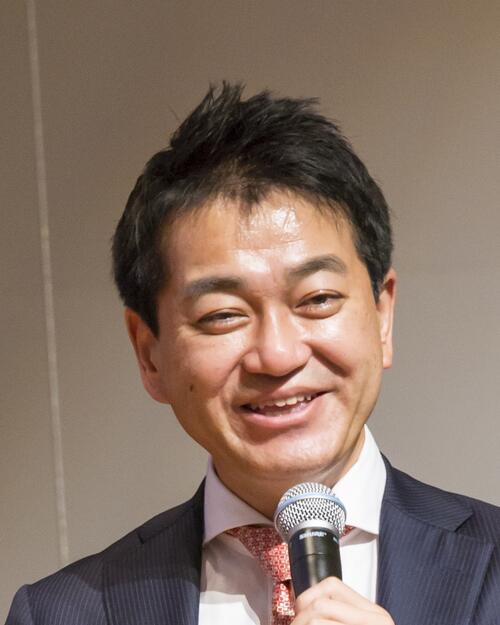
Ryoichi Kakui is the founder of E-Logit, the leading eCommerce logistics company in Japan. He has published 29 books related to logistics, Amazon, and “omnichannel” distribution, which have been published in Japan, the US, China, Taiwan, South Korea, and Vietnam. He is a frequent commentator on television, radio, newspapers, magazines, and other media. Educated in Sophia University in Japan with an MBA from Golden Gate University, he founded UKETORU in 2015, a app addressing the issue of re-delivery, which escalated to a social issue in Japan.

Image
kushida profile 9 2015 cropped

Kenji Kushida is a research scholar at the Japan Program at the Walter H. Shorenstein Asia-Pacific Research Center at Stanford University. One of this research themes examines how IT technologies shape political economies around the world, and how varying national political economic models shape the development trajectories of technologies. He leads the Silicon Valley – New Japan Project, a sustained platform for research and collaboration between Silicon Valley and the new and emerging aspects as Japan transforms itself.


PARKING

Please note there is significant construction taking place on campus, which is greatly affecting parking availability and traffic patterns at the university. Please plan accordingly. Open parking at Stanford University available starting 4:00pm unless otherwise marked. Nearest parking garage is Structure 7, below the Graduate School of Business Knight School of Management.

Seminars
News Type
News
Date
Paragraphs

The Korea Program at the Walter H. Shorenstein Asia-Pacific Research Center is pleased to welcome Robert R. King and Victor Cha as Koret fellows in Korean studies during the 2019-20 academic year. Supported by the Koret Foundation, the Koret Fellowship brings leading professionals to Stanford to conduct research on contemporary Korean affairs with the broad aim of strengthening ties between the United States and Korea.

Image
robert r king 3x2

Robert R. King will join the Korea Program as Koret Fellow during the fall quarter of 2019. King served as special envoy for North Korean human rights Issues, an ambassadorial ranked position at the Department of State (2009-2017). The role was established by Congress in the North Korea Human Rights Act with a mandate to “coordinate and promote efforts to improve respect for the fundamental human rights of the people of North Korea.” Since leaving the Department of State, Ambassador King has been senior advisor to the Korea chair at the Center for Strategic and International Studies (CSIS), a senior fellow at the Korea Economic Institute (KEI), and a board member of the Committee for Human Rights in North Korea (HRNK).

Earlier, Ambassador King served for 25 years (1983-2008) on Capitol Hill as chief of staff to Congressman Tom Lantos (D-California), and as staff director and minority staff director of the House Foreign Affairs Committee (2001-2008). King received a Ph.D. in International Relations from the Fletcher School of Law and Diplomacy, Tufts University and a B.A. from Brigham Young University.

Image
Portrait of Victor Cha

Victor Cha, professor of government and international affairs at Georgetown University, will join the Korea Program as the Koret Fellow through the winter quarter of 2020. He is the author of five books, including The Impossible State: North Korea, Past and Future (Haper Collins, 2012) and Powerplay: Origins of the American Alliance System in Asia (Princeton University Press, 2016). He holds Georgetown's Dean's Award for teaching for 2010, the Distinguished Research Award for 2011, and a Distinguished Principal Investigator Award for 2016.

Professor Cha left the White House in 2007 after serving since 2004 as Director for Asian Affairs at the National Security Council, where he was responsible for Japan, the Korean peninsula, Australia/New Zealand, and Pacific Island affairs. He serves as Senior Advisor at CSIS, and is a non-resident Fellow in Human Freedom at the George W. Bush Institute in Dallas, Texas. He received a Ph.D. from Columbia University, M.A. from the University of Oxford, and MIA and B.A. from Columbia University.

All News button
1
News Type
News
Date
Paragraphs

James Green, former Minister Counselor for Trade Affairs at the U.S. Embassy in Beijing, gave a talk titled “U.S.-China Diplomacy: 40 Years of What’s Worked and What has Not” before a Stanford China Program audience on May 6. Green is currently Senior Research Fellow at Georgetown University and is the creator of the new U.S.-China Dialogue Podcast, which features in-depth interviews with approximately two dozen former U.S. ambassadors, cabinet-level secretaries and other senior officials who were at the forefront of U.S.-China negotiations.

He recounts salient takeaways from these conversations regarding pivotal moments in U.S.-China relations, including normalization of relations, anti-Soviet cooperation in the 1980s, Tiananmen Square crackdown in 1989, Taiwan Strait crisis of 1995-1996, WTO accession in 2001, Belgrade bombing and EP-3 incident in 1999 and 2001, respectively; global financial crisis of 2008, the Beijing Olympics and the current U.S.-China trade tensions.  Among his many motivations for beginning this podcast series include his desire to question the notion circulating among U.S. foreign policy experts today that U.S. policy of engagement towards China had somehow failed. To Green, who has been active in U.S.-China relations since the mid-1990’s, U.S. policy had never been about transforming China from a one-Party, authoritarian system into a liberal democracy. In order to more accurately pinpoint what U.S. goals have been, Green stated, he undertook the project and interviewed those who had played key roles during pivotal moments in U.S.-China bilateral relations.

His interviewees have included, among others, such luminaries as Ambassador J. Stapleton Roy, who in 1978 participated in secret negotiations that led to the establishment of U.S.-P.R.C. diplomatic relations; John Negroponte, first director of national intelligence and deputy secretary of state in the late 2000s during China’s rise; and Ambassador Michael Froman, former U.S. Trade Representative under President Obama. His talk at the Stanford China Program includes key lessons he has derived from these interviews even as we enter into one of the most volatile times in U.S.-China bilateral relations.

The recording and transcript are available below.  

Hero Image
green photo
James Green, Senior Research Fellow at Georgetown University, speaks at the Asia-Pacific Research Center's China Program on May 6th, 2019.
All News button
1
Paragraphs

Truth to Power, the first-ever history of the U.S. National Intelligence Council (NIC), is told through the reflections of its eight Chairs in the period from the end of the Cold War until 2017. Co-editors Robert Hutchings and Gregory Treverton add a substantial introduction placing the NIC in its historical context going all the way back to the Board of National Estimates in the 1940s, as well as a concluding chapter that highlights key themes and judgments.

APARC Fellow Thomas Fingar, who chaired the NIC from 2005 to 2008, is one of the contributors to the book. In his chapter “New Mission, New Challenges”, Fingar discusses some of the challenges during his service with the agency. In particular, he reflects on two specific obstacles he faced during his tenure: executing the intelligence reforms drafted in the wake of 9/11, and repairing damage done to the NIC’s credibility by the failures of the National Intelligence Estimate (NIE) on Iraqi weapons of mass destruction (WMD).


All Publications button
1
Publication Type
Books
Publication Date
Authors
Thomas Fingar
Authors
News Type
News
Date
Paragraphs

Formed in 1979, the National Intelligence Council (NIC) works to provide policymakers with the U.S. intelligence community’s best judgments on crucial international issues. As a locus for coordinated intelligence analysis, the NIC’s work reflects the coordinated judgments of multiple agencies and departments in the broader intelligence community. But while it may be less shrouded in secrecy than many other intelligence offices, in some respects it is less well known.

In Truth to Power, published by Oxford University Press, editors Robert Hitchings and Gregory Treverton shed light on this little-understood intelligence agency. The volume provides the first-ever history of the NIC as recounted through the reflections of its eight chairs in the period from the end of the Cold War until 2017. APARC Fellow Thomas Fingar, who chaired the NIC from 2005 to 2008, is one of the contributors to the book.

In his chapter “New Mission, New Challenges”, Fingar discusses some of the challenges during his service with the agency. In particular, he reflects on two specific obstacles he faced during his tenure: executing the intelligence reforms drafted in the wake of 9/11, and repairing damage done to the NIC’s credibility by the failures of the National Intelligence Estimate (NIE) on Iraqi weapons of mass destruction (WMD).

During his tenure, Fingar wore not one but two hats; along with the NIC chairmanship, he concurrently served as deputy director of national intelligence for analysis (DDNI/A). He describes actions taken not only to restore confidence in the intelligence community, but also to effectively execute its expanded brief. For instance, having national intelligence officers take the DDNI’s seat at meetings afforded senior officials the opportunity to perceive their value and thereby rebuild confidence in the broader intelligence community.

The Council’s reforms would soon be put to the test by way of the production of an NIE on Iranian WMD. Fingar recognized that the estimate would be a strong indicator of whether the NIC had learned its lessons following the flawed 2002 Iraq WMD estimate, and that policymakers were certain to finely examine the end product for flaws (whether made unintentionally or with political purposes in mind). As such, Fingar needed to produce an NIE that was accurate, timely, and non-political, all while handling and incorporating newly received intelligence. Through the Iran NIE, Fingar found an opportunity to redress the often-fraught relationship between Congress and the intelligence community.

Fingar closes with a review of the NIC’s pathbreaking work in the area of climate change. At the behest of a U.S. senator, the NIC took on the task of producing an NIE on the strategic implications of climate change. The resulting study categorized countries according to both their vulnerabilities and ability to manage impacts, as well as the broader implications it had for U.S. national security over the next twenty years. And while policymakers ultimately did not use the report as Fingar had hoped, he takes justified comfort in pointing out how it laid the groundwork for additional reports that followed, such as the National Research Council’s 2013 report Climate Change and Social Stress: Implications for Security Analysis.


Read Fingar's Chapter

Hero Image
untitled design23
All News button
1
Paragraphs

This special issue of The Journal of the Economics of Ageing, edited by Anita Mukherjee and APARC's Asia Health Policy Program Director Karen Eggleston, focuses on a key challenge around the world: financing the many needs that come with longer lives, lower fertility, and older population age structures. The triumph of longevity can pose a challenge to the fiscal integrity of public and private pension systems and other social support programs disproportionately used by older adults. This challenge is a formidable but ultimately happy one, as people around the world today can expect to live longer and healthier lives.

The countries and regions studied in this special issue include many that are leading the world in this longevity transition with relatively old population age structures, especially in Europe and Japan. Other areas such as Latin American countries and especially China are rapidly catching up, or have large total populations of older adults at relatively low per capita income and little formal social security, such as India. 

The two special contributions and eight research papers with their accompanying perspective pieces collected in this issue cover comparative research on over 30 European countries and 17 Latin American countries, as well as studies on Australia, the Netherlands, the United States, India, China and Japan. The contributions analyze a variety of topics within the broad rubric of financing longevity, including the ways in which the elderly cope with caregiving and cognitive decline; how pension structures may exacerbate existing inequalities; and innovative ways to extend old-age financial security to those working outside the formal sector in developing countries. The variety of topics covered in these papers reflects the many angles from which research is needed to inform policies intended to improve the financial well-being for the world’s ageing population.
All Publications button
1
Publication Type
Journal Articles
Publication Date
Journal Publisher
The Journal of the Economics of Ageing
Authors
Karen Eggleston
News Type
Commentary
Date
Paragraphs

Karl Eikenberry, director of the U.S.-Asia Security Initiative, spoke with "Bloomberg Markets: Asia" about the ongoing trade disputes between the U.S. and China. Video of his interview—conducted on the sidelines of the Morgan Stanley China Summit in Beijing—is posted below.


Hero Image
Eikenberry on Bloomberg News
All News button
1
News Type
Commentary
Date
Paragraphs

Does the current trade-talk stalemate between the U.S. and China portend a larger confrontation? Oksenberg-Rohlen Fellow David Lampton says yes, and shared with VOA Asia reasons for why the two countries find themselves so much at odds. Listen below (first 8 minutes):


Hero Image
Trucks line up to enter a shipping berth at the Port of Oakland
OAKLAND, CALIFORNIA - MAY 13: Trucks line up to enter a shipping berth at the Port of Oakland on May 13, 2019 in Oakland, California. China retaliated to U.S. President Donald Trump's 25 percent tariffs on $250 billion of Chinese goods entering the United States with a 25 percent tariff on $60 billion of U.S. goods entering China. The Dow Jones Industrial Average plunged over 700 points on the news in morning trading.
Trucks line up to enter a shipping berth at the Port of Oakland
All News button
1
News Type
News
Date
Paragraphs

“We are now entering not just a post-American but post-Western era.  In many ways the contours of the emerging world order are unclear.  But one aspect of them is certain: China will play a larger and the U.S. a lesser role than before in global and regional governance.” -   Ambassador Freeman

On May 3, the China Program’s colloquia series “A New Cold War?: Sharp Power, Strategic Competition, and the Future of U.S.-China Relations” closed with a seminar by Ambassador Chas W. Freeman. Ambassador Freeman discussed how President Trump’s trade war has impacted Sino-American relations on multiple levels, and how—for better or ill—Washington appears poised to dismantle China’s interdependence with the American economy, limit its role in global governance, counter its investments, and block its technological advances.

Audio from the event, as well as copy of the ambassador’s prepared remarks, is now available:


Ambassador Chas W. Freeman, Jr. is a senior fellow at Brown University's Watson Institute for International and Public Affairs. He is the former assistant secretary of defense for international security affairs (1993–1994), ambassador to Saudi Arabia (1989–1992), principal deputy assistant secretary of state for African affairs (1986–1989), and chargé d'affaires at Bangkok (1984–1986) and Beijing (1981–1984). He served as vice chair of the Atlantic Council (1996-2008); co-chair of the United States China Policy Foundation (1996–2009); and president of the Middle East Policy Council (1997–2009). He was the principal American interpreter during President Nixon's path-breaking 1972 visit to Beijing, the editor of the Encyclopedia Britannica article on diplomacy, and the author of America’s Continuing Misadventures in the Middle East; Interesting Times: China, America, and the Shifting Balance of Prestige; America’s Misadventures in the Middle East; The Diplomat’s Dictionary; and Arts of Power: Statecraft and Diplomacy. A compendium of his speeches is available at chasfreeman.net


Hero Image
Ambassador Chas Freeman at Podium Alexander Quan, APARC
All News button
1
Subscribe to The Americas