-

Please note: the start time for this event has been moved from 3:00 to 3:15pm.

Join FSI Director Michael McFaul in conversation with Richard Stengel, Under Secretary of State for Public Diplomacy and Public Affairs. They will address the role of entrepreneurship in creating stable, prosperous societies around the world.

Richard Stengel Undersecretary of State for Public Diplomacy and Public Affairs Special Guest United States Department of State
Moderator
Panel Discussions
Authors
Noa Ronkin
News Type
News
Date
Paragraphs

Across the world, populations are aging rapidly as people live longer and fertility rates continue to decline. Asia is at the vanguard of this demographic shift. The number of older adults (aged 60 and above) in the region is projected to triple between 2010 and 2050, reaching nearly 1.3 billion people. As Asian economies face this “silver wave,” helping older adults live safely and independently at home – a concept known as aging in place – has become a policy imperative.

At a recent webinar held during Stanford Health AI Week, the Asia Health Policy Program (AHPP) at Shorenstein APARC brought together experts from China, Singapore, and South Korea to share insights into the potential of health AI to allow older adults to enjoy healthy aging and avoid or postpone institutionalization. 

Moderated by Stanford health economist Karen Eggleston, the director of AHPP, the webinar featured Hongsoo Kim, a professor of health policy and aging at Seoul National University’s Graduate School of Public Health and director of its Artificial Intelligence Institute’s Center for AI in Health and Care; Xiaochen Ma, an assistant professor of health economics at Peking University’s China Center for Health Development Studies; and Tien Yin Wong, a physician-scientist-innovator and the senior vice-chancellor of Tsinghua Medicine and vice-provost of Tsinghua University, who has also worked and held senior leadership roles in Singapore and Australia as a practicing retinal specialist with a research portfolio on retinal diseases, ocular imaging, AI, and digital technology.

Get APARC event invitations and guest speakers' insights delivered to your inbox >


Here are six lessons from the front lines of Asia’s efforts to integrate AI into elderly health care and advance aging in place:

1. Adopt a Whole Systems Approach


In South Korea, the world's fastest-ageing society, automated systems like "CLOVA CareCall" – an AI-powered well-being dialer – conduct natural-sounding check-ins with solo-dwelling seniors, boasting a 96% response rate. Yet, Professor Kim emphasizes that checking in with people in need of health care is only half the battle.

If an AI flags an isolated senior at risk of depression, cognitive decline, or a physical abnormality, but the local community lacks the social workers or clinical pathways to intervene, then the health care system has failed.

“The question is not only whether AI can detect something, but how a health and care system acts on it,” she says. “Detection by itself changes nothing. A warning that no one follows up on helps no one. So the gap I care about is not the model’s cleverness itself. It is whether the system delivers.”

2. Solve the Entire "Care Cascade"


In rural China, traditional diabetic screening rates hover below 33%, leaving millions at risk of Diabetic Retinopathy (DR), a leading cause of blindness. Professor Ma shared how deploying an AI screening model successfully pushed screening rates past 85%.

The research team, however, discovered a glaring bottleneck: only 21% of high-risk patients actually followed up to receive sight-saving treatments. To fill in this gap, Ma’s team designed an "AI Plus” model (v2.0) that integrates immediate, local-language counseling at the point of screening. To keep seniors healthy at home, AI solutions must address the entire clinical journey, from initial scan to final treatment.

“Many of the AI tools have been focused on diagnosis accuracy or validation rather than going downstream to the entire cascade of whether improved screening will transfer into improved referral and the ultimate health outcomes,” says Ma.

3. Align with Local Workflows and Incentives


AI and other technology solutions for health often fail because they expect overworked care workers to adopt entirely new habits. Professor Ma noted that digital health interventions in rural China succeeded only when they integrated seamlessly into existing daily routines.

Instead of forcing clinicians to use complex new software, successful pilots utilized WeChat, the ubiquitous messaging app already open on every phone. Furthermore, the technology must align with the financial and professional incentives of frontline health workers. If an AI tool increases their administrative burden without simplifying their day or boosting their clinical efficiency, then it will remain unused.

4. Design Human-Centered AI for Health Equity


Professor Wong highlighted the ethical risk that AI tools will worsen, rather than reduce, health care disparities. This challenge is driven by the dynamics of “Inverse Care Law,” where AI disproportionately benefits the already advantaged, and the “Recursive Care Law,” where this inequality becomes a self-reinforcing cycle embedded in the system.

Because younger, more tech-savvy individuals generate more health data, AI models become better at serving them than the intended users of aging-in-place technologies. This creates a vicious cycle where the very tools designed to support aging populations end up marginalizing them. Governments must devise policies to mandate fair data coverage and usability, ensuring that AI serves society's most vulnerable members equitably, Wong stated.

Professor Kim noted that her team found that only about 38% of community care agencies in Korea have adopted AI and that the adoption rate varied sharply by region. In fact, districts with the greatest need may have the least access to these powerful tools. This challenge is not a technology gap, Professor Kim argues, but a fundamental design gap. To be genuinely equitable, a system must be built from the start to actively track who is missing and automatically route support back to them. This requires two  human-centered design key principles:

I. Universal by Default: The hardest-to-reach should not have to be the most persistent in navigating the technology.

II. Connected Across Sectors: Long-term care, social care, and health care must act as one integrated system rather than disconnected silos, each of which sees only part of the person’s needs.


5. Augment, Do Not Replace, the Human Touch


The panelists rejected the trope of robots replacing human caregivers. Instead, they view AI as an essential force multiplier for an overstretched workforce.

Whether it is South Korea’s deployment of 12,000 AI companion robots to combat senior isolation, or automated triage tools in clinics, the goal should be to offload administrative and routine tasks. This frees up human social workers and clinicians to do what they do best: deliver hands-on, empathetic care.

6. Value Real-World Outcomes Over Technical Novelty


Healthcare systems should prioritize rigorous, real-world case studies that prove actual clinical value, such as reduced mortality, lower rates of blindness, or fewer nursing home admissions, rather than celebrating high validation benchmarks in a laboratory.

To build robust future health AI systems, the experts concluded, the academic and tech sectors must also courageously publish and analyze their failed trials to understand what truly works in the chaotic reality of home-based care.

While AI holds immense promise for helping people grow old at home, “age tech” alone cannot solve the elder care crisis, the panelists agreed.

Read More

Four elderly Chinese people sitting outdoors.
News

Asia's Aging Populations Drive Surging Disease Burden, Although Individual Health Improves

Across five Asian health care systems, rapid population aging drives up disease burden, particularly for chronic conditions, even as medical advancements improve outcomes for individual patients, according to a study co-authored by Stanford health economist Karen Eggleston.
Asia's Aging Populations Drive Surging Disease Burden, Although Individual Health Improves
A teenager is given blood test during a physical examination in Seoul, South Korea.
News

Income-Based Health Inequalities Persist in the US and South Korea, Though Universal Coverage Helps Reduce Disparities

South Korea achieves comparable clinical outcomes at lower per-capita spending than the United States, according to a new study. The co-authors, including Stanford health economist Karen Eggleston, find systemic income-based inequalities in health care access and utilization in both countries, albeit they are less pronounced under South Korea's universal health care system.
Income-Based Health Inequalities Persist in the US and South Korea, Though Universal Coverage Helps Reduce Disparities
Portrait photo of Matthew Kohrman and logo of the New York Times with text "In the Media."
News

Matthew Kohrman Quoted in the New York Times on Rising Cigarette Consumption in China

China’s tobacco monopoly has become so financially vital to the government that even its powerful leader has failed to curb the country’s smoking habit.
Matthew Kohrman Quoted in the New York Times on Rising Cigarette Consumption in China
Hero Image
Elderly woman's hand touching a robot's hand. Photo from a summit on AI's potential for empowering humanity.
All News button
1
Subtitle

Top aging and healthy policy experts from China, Singapore, and South Korea agree that helping older adults age at home requires addressing systemic health care bottlenecks rather than racing to build smarter AI models.

Date Label
Display Hero Image Wide (1320px)
Yes
Authors
News Type
News
Date
Paragraphs

Stanford University’s Walter H. Shorenstein Asia-Pacific Research Center (APARC) is delighted to welcome a new cohort of fellows joining us starting in summer 2026.

APARC offers multiple prestigious fellowship opportunities for Stanford doctoral students, emerging scholars of exceptional promise, and accomplished faculty and mid-career experts researching contemporary Asia topics. Supported by these fellowships, our incoming fellows will complete dissertation research, work on book manuscripts, undertake new research projects, and engage with the center's scholarly community.


Meet the Fellows

Herbert Chang

Herbert Chang

Stanford Next Asia Policy Visiting Fellow, 2026-2027

Herbert Chang is an assistant professor of quantitative social science at Dartmouth College and a Forbes 30 Under 30 honoree in Science for his work on network science and offshore finance. His research examines how emerging technologies reshape democratic behavior, including recent work on AI and misinformation in the 2024 Taiwan and U.S. presidential elections. His work has been featured in the New York Times, the Washington Post, and Scientific American, and has informed both academic and policy debates.

Chang will use his time at APARC to write a monograph on the interdependence of AI infrastructure and information ecosystems, with Taiwan and the United States as central empirical sites. He will also collaborate with SNAPL to quantify its talent-portfolio theory and empirically model how Asian Pacific nations cultivate and retain scientific expertise. 

Alicia R. Chen

Alicia Chen

APARC Predoctoral Fellow, 2026-2027

Alicia R. Chen is a doctoral candidate in the Department of Political Science at Stanford University. She studies international relations and political economy, with a focus on China. Her dissertation examines the domestic political economy of China's international aid and finance, revealing how domestic politics and institutions shape its overseas economic activities.

Her research is published in the British Journal of Political Science and has been generously supported by Stanford’s King Center on Global Development, the Freeman Spogli Institute for International Studies, the Stanford Center on China’s Economy and Institutions, and the Stanford Institute for Economic Policy Research, among others.

Before her doctoral studies, Chen was a research specialist with the Empirical Studies of Conflict project at Princeton University. She holds a master's degree in international policy from Stanford University and a bachelor's degree in political science from the University of Southern California. 

Sheikh Jamal Hossain

Sheikh Jamal Hossain

Asia Health Policy Program Postdoctoral Fellow, 2026-2027

Dr. Sheikh Jamal Hossain is a researcher and academic specializing in child development, maternal mental health, health promotion, and health economics. His professional interests center on advancing evidence-based interventions through rigorous research, teaching, and capacity strengthening, with a commitment to translating scientific evidence into policies and programs that improve the lives of women and children globally.

With over two decades of experience spanning academia, public health research, and international development, Dr. Hossain has led and contributed to large-scale randomized controlled trials, implementation research, and economic evaluations addressing early childhood development, nutrition, maternal mental health, and health system strengthening. He has successfully secured and managed research grants from international donors, including Grand Challenges Canada, UNICEF, FCDO, and Sida.

Dr. Hossain has authored more than 30 peer-reviewed scientific publications, including 13 as first author, in leading international journals such as The Lancet Regional Health, Pediatrics, Social Science & Medicine, The American Journal of Clinical Nutrition, and BMJ Global Health. He currently mentors multidisciplinary research teams and supervises early-career researchers and graduate students.

He earned his doctorate in women’s and children’s health from Uppsala University, with research focused on the effects of parenting interventions integrated with social protection programs on child development and maternal well-being in Bangladesh. He also holds master's degrees in public health and in health economics from the University of Dhaka.  

Angela Ju

Angela Ju

Taiwan Program Visiting Fellow, 2026-2027

Angela Ju is an associate professor of international affairs and political science at St. Edward's University in Austin, Texas. She uses mixed-methods approaches to study race/ethnicity, gender, international migration, social determinants of health, the nonprofit sector, and urban politics in North America, Latin America, Europe, and East Asia. Her first book, Identities Matter: The Politics of Immigration and Incorporation (Oxford University Press), was published last year. 

While at APARC, Angela will be working on her second monograph, Taiwan's Migration Diplomacy Towards Mainland Chinese Migrants and Refugees. In this book, she will examine why Taiwan has not formed consistent immigration policies for migrants from Mainland China.

Using textual analysis of Taiwanese government legislation and publications, the book's primary argument is that Taiwan uses its migration policies to manage its foreign relations with Mainland China. It also argues that one way in which Taiwan pursues international participation, despite lacking international recognition as a state, is through its migration diplomacy.

Headshot of SNAPL postdoctoral fellow Siyu Liang

Siyu Liang

Stanford Next Asia Policy Lab Postdoctoral Fellow, 2026-2028

Siyu Liang is a doctoral candidate in political science at the University of California, Los Angeles (UCLA). Her research lies at the intersection of political communication, public opinion, and computational social science, focusing on how media and information environments shape political attitudes in both democratic and authoritarian contexts.

Her dissertation examines the role of media in shaping perceptions of China in contemporary U.S.-China relations. In particular, she studies foreign influencer propaganda and the downstream effects of U.S.-China competition on public opinion and intergroup relations. As a computational social scientist, she develops and applies natural language processing and machine learning methods to study political communication and international politics, with particular interests in stance detection, transfer learning, and soft-label modeling.

At the Stanford Next Asia Policy Lab, she will expand this research agenda by examining how digital media and geopolitical conflict shape public opinion and social exclusion, with a particular focus on U.S.-Asia relations. She will also pursue projects on nationalism and racism in East Asia. Together, these projects seek to advance a more global understanding of how international politics shapes social inclusion and group relations across the Asia-Pacific region.

Siyu received master's degrees in statistics and political science from UCLA and holds bachelor's degrees in political science and statistics from the University of Wisconsin–Madison.

Deepika Padmanabhan

Deepika Padmanabhan

Shorenstein Postdoctoral Fellow on Contemporary Asia, 2026-2027

Deepika Padmanabhan is a political scientist whose research examines nationalism, language politics, and self-determination, with a regional focus on South Asia. 

Her book project explores how nation-building unfolds not only through grand policies and formal institutions, but also from the ground up, in everyday life. It examines how states promote national languages through routine, informal interactions with citizens, a process she terms the Everyday Imposition of language.

More broadly, her research explores how everyday practices shape political identities and collective belonging. In related projects, she examines the politics of language, food, film, and symbolic rituals as sites through which nationalism is cultivated, contested, and reproduced in daily life.

At APARC, Deepika will revise her book manuscript and develop additional projects on nationalism and political behavior. 

She received her doctorate in political science from Yale University in 2025. She holds a bachelor's degree in political science from St. Xavier’s College, Mumbai, and master’s degrees from the School of Advanced International Studies at Johns Hopkins University and the Department of Politics at New York University.

Grace Zeng

Grace Zeng

Shorenstein Postdoctoral Fellow on Contemporary Asia, 2026-2027

Grace Zeng is a political scientist specializing in international political economy, with a focus on China's use of trade and investment to influence global regulatory governance. Her research examines how states leverage economic tools to shape international rules and institutions. Her work on China's trade practices shows how China uses seemingly technical health and safety regulations to exert pressure on other nations, systematically increasing import restrictions in response to political tensions.

At APARC, she will pursue projects that extend this research agenda by examining China's growing influence in global governance. One project investigates whether China strategically uses infrastructure investment and foreign subsidiaries to shape international environmental standards. Another examines China’s information control system through the lens of its WTO commitments and the global governance of cyberspace.

Before joining Stanford, Grace was a lecturer in the Department of Political Science at the University of California, Berkeley. She received her doctorate in politics from Princeton University. She also holds a master's degree in the social sciences (MAPSS) from the University of Chicago and a bachelor's degree in mathematics from the University of Hong Kong.

Read More

Portrait photo of Gaea Morales.
Q&As

How Cities Are Rewriting Global Climate Governance

Political scientist Gaea Morales, APARC’s 2025-26 Shorenstein postdoctoral fellow on contemporary Asia, studies questions at the nexus of global policy and local action and how Southeast Asian megacities build climate resilience by drawing on local knowledge and global networks to drive change from the ground up, even in the absence of central government support.
How Cities Are Rewriting Global Climate Governance
Portrait photo of Teren Sevea.
Q&As

Insights from the Rich Worlds of Southeast Asian Islam

Teren Sevea, APARC’s Lee Kong Chian NUS-Stanford Fellow on Southeast Asia, reveals how overlooked histories and everyday ethics in Southeast Asia can reshape our understanding of the past and our responsibility for the future.
Insights from the Rich Worlds of Southeast Asian Islam
Women participate in a rally to celebrate International Women's Day in Seoul, South Korea.
News

How Gender Inequality Drives Talent Abroad and Keeps Women Away

Minyoung An, a postdoctoral fellow with the Korea Program and the Stanford Next Asia Policy Lab at APARC, studies how gender inequality shapes migration pathways and return decisions among South Korean highly skilled women, highlighting risks to Korea's long-term future and revealing that gender is a powerful yet often overlooked driver of global talent flows.
How Gender Inequality Drives Talent Abroad and Keeps Women Away
Hero Image
Collage of portrait photos of APARC's 2026-2028 fellows.
All News button
1
Subtitle

Seven scholars researching diverse topics across contemporary Asian studies will join the APARC community starting this summer.

Image
2025 Incoming Fellows
Date Label
Display Hero Image Wide (1320px)
Yes
-
Portrait of Pita Limjaroenrat
Join Pita Limjaroenrat, former leader of Thailand’s dissolved Move Forward Party and a pivotal voice in the nation’s pro-democracy movement, for an urgent and timely discussion on the country’s trajectory ahead. Against the precarious backdrop of escalating political tensions, youth-led protests, and debates over reform, this fireside chat will confront the pressing questions shaping Thailand’s present and future.
 
Pita will unpack critical developments since the contentious 2023 election, including the struggle for constitutional amendments, the military’s enduring influence, the government’s handling of economic recovery amid sluggish growth, and rising inequality in Thai society. He will also address Thailand’s geopolitical tightrope from navigating U.S.-China rivalries to its ambiguous stance on Myanmar’s crisis to the Cambodian-Thai tensions, and what these mean for ASEAN’s regional stability. 

Lunch will be provided on a first-come, first-served basis.
Lunch is generously sponsored by Lotus Thai Bistro and Holy Shred
 
Speaker:
Image
Limjaroenrat, Pita SEAP 20250228
Pita Limjaroenrat formerly led the Move Forward Party (MFP) in Thailand’s May 2023 general elections, where his social democratic platform won the most votes and seats in the Parliament. Despite this mandate, his attempts to form a government were blocked by institutional mechanisms, and the Constitutional Court dissolved the MFP on August 7. Pita’s policy focus centers on addressing grassroots issues, welfare improvements, and human rights, while advocating for the demilitarization of politics and economic de-monopolization. Currently, he is a Senior Democracy Fellow at Harvard Kennedy School. He holds a joint MPA-MBA from Harvard Kennedy School and MIT Sloan and has been named on the TIME 100 Next List. Today, Pita continues to champion transparent and equitable governance on a global scale.
Kiyoteru Tsutsui
Pita Limjaroenrat
Date Label
Authors
Noa Ronkin
News Type
News
Date
Paragraphs

Stanford University’s Walter H. Shorenstein Asia-Pacific Research Center (APARC) is delighted to announce today, ahead of World Press Freedom Day, that Singapore-based investigative journalist Shibani Mahtani is the recipient of the 2026 Shorenstein Journalism Award for excellence in coverage of the Asia-Pacific region. The award recognizes Mahtani for her original, powerful reporting that has brought critical attention to the erosion of democracy and human rights across the region, particularly in Southeast Asia. She will receive the award at a public ceremony in the coming autumn quarter.

Until February 2026, Mahtani was an international investigative correspondent for the Washington Post. Her accountability-driven investigations across the Asia-Pacific have focused on the expanding economic and political influence of an increasingly assertive China and its implications in the region. Her work includes, among others, reports linking powerful criminal networks in Myanmar to the Chinese state and exposing brutal scam compounds in the country; examining Beijing’s influence on Chinese-language media in Singapore and its efforts to wield influence in Indonesia and elsewhere through vocational programs; scrutinizing China’s cross-national repression of Uyghur Muslims, especially in Central and Southeast Asia; and investigating how its promise of prosperity brought Laos debt and distress.

Mahtani joined the Washington Post in 2018 as the Southeast Asia and Hong Kong Bureau Chief. She reported extensively from Myanmar, the Philippines, Laos, and other parts of the region. Most notably, she chronicled China’s subjugation of Hong Kong, from the explosive protests in 2019, triggered by Beijing’s proposal to extradite locals to the mainland, through the systematic crushing of the Hong Kong pro-democracy movement, to the dismantling of the city’s autonomy and the many ways it is changing.

Shibani Mahtani’s journalism is defined by a courageous and relentless pursuit of speaking truth to power. Her work exemplifies the vital role of investigative reporting.
Kiyoteru Tsutsui
Director, Shorenstein APARC

Sign up for APARC newsletters to receive our experts' analysis and commentary >


Her searing coverage of Hong Kong’s struggle includes a multimedia investigative report into Hong Kong police misconduct during the 2019 pro-democracy demonstrations, for which she earned a Human Rights Press Award, and an exclusive on the alleged torture of a key prosecution witness in Hong Kong’s highest-profile trial of pro-democracy media tycoon Jimmy Lai. Mahtani continued to pursue that story, most recently reporting on Lai’s 20-year prison sentence, even after losing her job when the Washington Post sharply reduced its International team as part of mass layoffs.

Mahtani is also the co-author of the 2023 book, Among the Braves: Hope, Struggle, and Exile in the Battle for Hong Kong and the Future of Global Democracy, a narrative history of Hong Kong’s pro-democracy movement that explores it through the eyes of people on the ground, culminating in the 2019 mass protests and Beijing’s crackdown. 

Before joining the Washington Post, she was a correspondent for the Wall Street Journal and reported from Singapore, Myanmar, and Chicago.

“Shibani Mahtani’s journalism is defined by a courageous and relentless pursuit of speaking truth to power,” said APARC Director Kiyoteru Tsutsui. “Her work exemplifies the vital role of investigative reporting: to expose complex systems of repression and give voice to those who have been silenced. We are proud to honor her outstanding journalism with the Shorenstein Award.”

Sponsored and presented annually by APARC, the Shorenstein Award recognizes journalists and news media outlets that leverage a deep knowledge of Asian societies to share crucial insights with a global audience. The award carries a $10,000 cash prize and honors the legacy of APARC’s benefactor, Mr. Walter H. Shorenstein, and his twin passions for promoting excellence in journalism and understanding of Asia. It also demonstrates APARC’s commitment to journalism that persistently and courageously seeks accuracy, deep reporting, and nuanced coverage in an age when attacks are regularly launched against independent news media, fact-based truth, and those who tell it.

The selection committee for the award praised Mahtani’s investigations as groundbreaking and revelatory, noting that, in her coverage of Hong Kong, she has broken stories others would not – or could not – report.

The committee members are William Dobson, co-editor of the Journal of Democracy; Anna Fifield, a journalist and foreign affairs analyst, non-resident fellow at the Center for Strategic and International Studies, and recipient of the 2018 Shorenstein Journalism Award; James Hamilton, vice provost for undergraduate education, the Hearst Professor of Communication, and director of the Stanford Journalism Program, Stanford University; Louisa Lim, associate professor, Audio-Visual Journalism Culture and Communication at the University of Melbourne; and Raju Narisetti, partner and global leader at McKinsey Global Publishing, McKinsey & Company.

Twenty-four winners previously received the Shorenstein Award. Recent honorees include Chris Buckley, the chief China correspondent for the New York Times; Emily Feng, international correspondent for NPR covering China, Taiwan, and more; Netra News, Bangladesh's premier independent media outlet; The Caravan, India's premier magazine of long-form journalism; and Nobel Laureate Maria Ressa, co-founder and CEO of the Philippines-based news organization Rappler.

Information about the 2026 Shorenstein Journalism Award ceremony celebrating Mahtahni will be forthcoming in the autumn quarter.

Read More

Tasneem Khalil delivers remarks at a lectern.
News

Shorenstein Journalism Award Honors Netra News, Spotlights Public Interest Reporting Advancing Democracy and Accountability in Bangladesh

The 2025 Shorenstein Journalism Award recognized Netra News, Bangladesh’s premier independent media outlet, at a celebration featuring Tasneem Khalil, its founding editor-in-chief, who discussed its mission and joined a panel of experts in considering the prospects for democracy in Bangladesh.
Shorenstein Journalism Award Honors Netra News, Spotlights Public Interest Reporting Advancing Democracy and Accountability in Bangladesh
Kimberly Hoang and Kiyoteru Tsutsui seated in an office during a recorded podcast conversation.
News

Weaponized Corruption, Extreme Wealth, and Democratic Reordering: Insights from Asia

Speaking on the APARC Briefing video series, University of Chicago sociologist Kimberly Kay Hoang examines the architecture of global capital and how corruption discourse is transforming governance and political order in Asia and the United States.
Weaponized Corruption, Extreme Wealth, and Democratic Reordering: Insights from Asia
Panelists gather for a group photo at the 2026 Oksenberg Conference.
News

Indo-Pacific Powers Diversify and De-Risk as Multipolar World Takes Shape

At the 2026 Oksenberg Conference, scholars and foreign policy experts assessed how Indo-Pacific powers are coping with a less predictable United States as China pursues selective leadership and Russia exploits Western divisions.
Indo-Pacific Powers Diversify and De-Risk as Multipolar World Takes Shape
Hero Image
Portrait photo of Shibani Mahtan, winner of the 2026 Shorenstein Journalism Award.
All News button
1
Subtitle

Sponsored by Stanford University’s Shorenstein Asia-Pacific Research Center, the 25th annual Shorenstein Journalism Award honors Mahtani for her exemplary investigations into the erosion of democracy in Hong Kong and China's growing global influence.

Date Label
Display Hero Image Wide (1320px)
Yes
-
Portraits of Gaea Morales and Yasmin Wirjawan.

Southeast Asia is one of the most climate change-vulnerable regions in the world. However, compounding the climate crisis are socioeconomic and geopolitical challenges that shape the unequal distribution of ecological burdens across communities. In this seminar, Yasmin Wirjawan and Gaea Morales explore where these intersecting vulnerabilities create opportunities for policy innovation and meaningful change across sectors and levels of governance.

Wirjawan discusses the importance of regional digitalization initiatives in fostering climate resilience, with a focus on addressing gender-based differences in mobile connectivity among youth NEET (not in education, employment, or training). She will also evaluate the strategic implications of the recently published ASEAN Community Vision 2045 within the framework of regional demographic shifts and digital transformation in advancing social inclusion. Meanwhile, Morales provides insights on how local governments in the region are responding to the climate crisis through norm “localization,” drawing on the example of city-level adoption of the United Nation’s Sustainable Development Goals.

By exploring the collaborative nature of these planning practices, the case studies demonstrate how local governments fill resource and technical state capacity gaps, and in doing so develop innovative climate action projects through city-to-city learning and advocacy networks. Together, both presentations highlight the agency of local communities and governments in paving the way for the region’s sustainable future from the bottom up. 
 

Speakers
 

Image
Headshot of visiting scholar Yasmin Wirjawan

Yasmin Wirjawan joins the Walter H. Shorenstein Asia-Pacific Research Center (APARC) as a visiting scholar from 2024 to 2026. Her research focuses on economic participation and climate change resilience among women and youth in Southeast Asia. She has over 20 years of experience serving on corporate and nonprofit boards across diverse industries. She also serves as Independent Commissioner of TBS Energi Utama, Advisor to Ancora Group and Sweef Capital, and leads the Ancora Foundation. Wirjawan holds a Doctor of Education in Leadership and Innovation and a MSc in Management and Systems from New York University. She also earned a MSc in Finance from Brandeis University and BA in International Business from the American University of Paris.

Image
Headshot of Shorenstein postdoctoral fellow Gaea Morales

Gaea Morales is the 2025-26 Shorenstein Postdoctoral Fellow on Contemporary Asia at APARC. Her work studies how global norms translate into local action, with a focus on cities, global environmental governance, and human rights. Her book project explores both the motivations and mechanisms by which cities “localize” (i.e., translate) environmental norms using case studies of Southeast Asia’s coastal capitals. She received her MA and PhD in Political Science and International Relations from the University of Southern California, and her BA in Diplomacy and World Affairs and French Studies from Occidental College. Her work is also informed by past experiences in international and local agencies, including UNDP Philippines and the Los Angeles Mayor’s Office of International Affairs. In Fall 2026, she will join Loyola University Chicago as the Helen Houlahan Rigali Assistant Professor of Political Science.

0
Shorenstein Postdoctoral Fellow on Contemporary Asia, 2025-2026
gaea_morales.jpg PhD

Gaea Morales joins the Walter H. Shorenstein Asia-Pacific Research Center (APARC) as Shorenstein Postdoctoral Fellow on Contemporary Asia for the 2025-2026 academic year. She is a political scientist specializing in global environmental governance, with a focus on the intersection of global and local climate politics in Southeast Asia. Gaea’s dissertation and book project, “Agents of Mass Construction: How Cities Localize through the Sustainable Development Goals,” asks why and how cities choose to translate global agreements to shape local policy, a process known as “localization.”

The project explains both the motivations and mechanisms by which cities localize environmental norms using case studies of three climate-vulnerable coastal capitals: Jakarta, Indonesia; Metro Manila, Philippines; and Bangkok, Thailand. Drawing from a global dataset of SDG localization and a year of fieldwork across Southeast Asia, the project illuminates how cities engage in a dynamic process of policy implementation that is both locally-driven and globally-informed.

At APARC, Gaea will revise her book project and adapt her dissertation into an article manuscript. She will also pursue further projects that cross-cut issues of local and global governance, the political economy of climate and the environment, and human rights. She is especially interested in topics of urban disaster resilience, inclusive climate finance, and environmental migration and security within and beyond the Asia-Pacific region.

Gaea completed her MA and PhD in Political Science and International Relations at the University of Southern California, and holds a BA in Diplomacy and World Affairs and French Studies from Occidental College. 

Date Label
Gaea Morales
0
Visiting Scholar at APARC, 2024-2026
WIRJAWAN Yasmin.jpg EdD
Yasmin Wirjawan joins the Walter H. Shorenstein Asia-Pacific Research Center (APARC) as a visiting scholar from 2024 to 2026. Her research focuses on economic participation and climate change resilience among women and youth in Southeast Asia. She has over 20 years of experience serving on corporate and nonprofit boards across diverse industries. She also serves as Independent Commissioner of TBS Energi Utama, Advisor to Ancora Group and Sweef Capital, and leads the Ancora Foundation. 
 
Wirjawan holds a Doctor of Education in Leadership and Innovation and a Master of Science in Management and Systems from New York University. She also earned a Master of Science in Finance from Brandeis University.
Date Label
Yasmin Wirjawan
Lectures
Date Label
-
Flyer with headshot of Kimberly Kay Hoang for event: Entangled Oligarchies: The Hidden Deals Reshaping US-China Power Relations in Offshore Financial Centers


This talk uncovers the complex dynamics of Spiderweb Capitalism and Entangled Economies—the intricate financial networks that quietly shape global power. Through sovereign wealth funds, offshore financial centers, and cross-border networks, elites use spiderweb capitalism to remake economic and political landscapes. Focusing on the U.S., China, and Southeast Asia, the discussion will expose how sovereign wealth funds function as strategic tools of economic influence, reshaping America’s liberal democratic system and redefining the balance of global influence. Illuminating these opaque financial networks, this lecture provides a deeper understanding of global political economies and the entanglements of power, wealth, and influence across borders. Prof. Hoang will also bring the research process itself into the discussion. Working with a growing database of 236,000 files, this project uses a locally hosted large language model (LLM) to securely parse and analyze the data while ensuring privacy and accuracy. This talk draws our attention to the ethical considerations related to data handling will be discussed, emphasizing the importance of maintaining security when investigating these complex and often clandestine financial systems, analysis that reveals how these entangled economies affect global growth, sovereignty, and the balance of power in today’s interconnected world.


Speaker:

Image
Headshot Photo of Kimberly Hoang

Kimberly Kay Hoang is Professor of Sociology and the College at the University of Chicago. Her research examines deal-making in frontier and emerging economies. Dr. Hoang is the author of two books, Spiderweb Capitalism: How Global Elites Exploit Frontier Markets (Princeton University Press 2022) and Dealing in Desire: Asian Ascendancy, Western Decline, and the Hidden Currencies of Global Sex Work (University of California Press 2015). 


Lectures
News Feed Image
seap_hoang_4_15_2.jpg
Date Label
0
Visiting Scholar at APARC, 2026
Eunjung Lim.JPG PhD

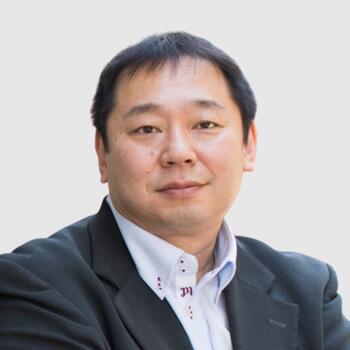
Eunjung Lim joins the Walter H. Shorenstein Asia-Pacific Research Center (APARC) as visiting scholar from April 2026 to February 2027 from Kongju National University (KNU), where she serves as Professor in the Division of International Studies. She previously served as Vice President for International Affairs and as Dean of the Institute of Korean Education and Culture and the Institute of International Language Education at KNU (June 2021–May 2023).

Her research focuses on international cooperation in the Indo-Pacific, comparative and global governance, and energy, nuclear, and climate change policies in East Asia. She previously served as a board member of the Korea Institute of Nuclear Nonproliferation and Control (KINAC) from May 2018 to July 2024 and currently serves on the Policy Advisory Committee for the Ministry of Unification. She is also a member of the governing board of the Asia-Pacific Leadership Network (APLN) and a member of the Subcommittee on Energy and Just Transition of the Presidential Commission on Carbon Neutrality and Green Growth.

Before joining KNU, Dr. Lim was an Assistant Professor at the College of International Relations, Ritsumeikan University in Kyoto, Japan. She has also taught at several universities in the United States and Korea, including Johns Hopkins University, Yonsei University, and Korea University. In addition, she has been a researcher and visiting fellow at various academic institutions, including the Center for Contemporary Korean Studies at the University of Tokyo, the Institute of Japanese Studies at Seoul National University, the Institute of Japan Studies at Kookmin University, and the Institute of Energy Economics, Japan (IEEJ).

She received a BA from the University of Tokyo, an MIA from Columbia University’s School of International and Public Affairs, and a PhD from Johns Hopkins University’s School of Advanced International Studies.

Main Publications:

  • “Multilateral Approach to the Back End of the Nuclear Fuel Cycle in Asia-Pacific?” Energy Policy Vol. 99 (2016): 158-164.
  • “Japan’s Energy Policy under Abe: Liberalization of the Energy Market and Nuclear U-turn,” Seoul Journal of Japanese Studies Vol. 4, No. 1 (2018): 103-131.
  • “Energy and Climate Change Policies of Japan and South Korea,” in Ashley Esarey, Mary Alice Haddad, Joanna I. Lewis and Stevan Harrell Eds. Greening East Asia The Rise of the Eco-developmental State (Seattle: University of Washington Press, 2020).
  • “A Comparative Study of Power Mixes for Green Growth: How South Korea and Japan See Nuclear Energy Differently,” Energies Vol.14, no. 18 (2021): 5681.
  • “Japan’s Energy Security,” in Keiji Nakatsuji Ed. Japan’s Security Policy (Routledge, 2023).
  • “The Emergence of Multipolarity and the Future of Alliances: Thinking about Sustainability of the Korea-US-Japan Strategic Triangle,” Korea Europe Review No. 7. DOIhttps://doi.org/10.48770/ker.2025.no7.52.
Date Label
0
Visiting Scholar at APARC, 2026
photo_park_ki_soon.jpg PhD

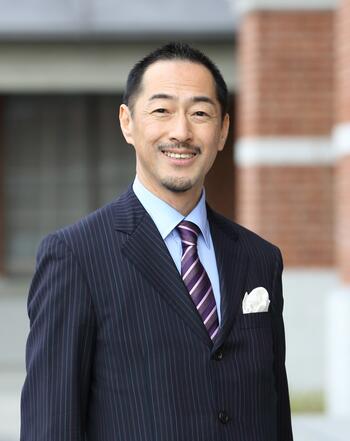
Ki Soon Park joins the Walter H. Shorenstein Asia-Pacific Research Center (APARC) as visiting scholar beginning spring 2026 from Sungkyunkwan University, where he serves as Adjunct Professor in the Graduate School of Chinese Studies. While at APARC, he will be conducting research on economic security and industrial policy, with a focus on the U.S., China, and South Korea.

Date Label
0
Visiting Scholar at APARC, 2026
taro_hamada.jpg

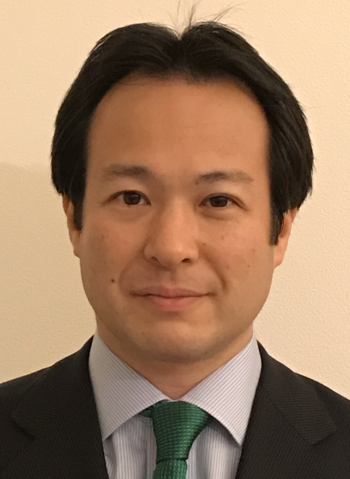
Taro Hamada joins the Walter H. Shorenstein Asia-Pacific Research Center (APARC) as visiting scholar beginning spring 2026. He currently serves as Professor in the Faculty of Law at Senshu University. While at APARC, he will be conducting research on labor and trade policy, focusing on the U.S. and Japan as well as the Asia-Pacific region.

Date Label
Subscribe to Asia-Pacific