Economic Affairs
-

This is a virtual event. Please click here to register and generate a link to the talk. 
The link will be unique to you; please save it and do not share with others.


Once considered incapable of innovation, China’s contribution to technological advancement has become impossible to ignore as it continues its historic rise. Now home to such tech giants as Alibaba, Tencent, and Huawei, China is competing in the global market. But what does this technological success mean in the context of China's internal and international politics, particularly its tense relationship with the United States? Will efforts to decouple help or hinder progress in tech? Can China’s educational system produce the next generation of innovators and propel them to the forefront of technology? What effects, if any, is the recent tightening on tech giants having on the sector at large? In this program, experts Denis Simon, Senior Adviser to the President for China Affairs at Duke, and Dan Wang, technology analyst for Gavekal Dragonomics, will be discussing the status and consequences of decoupling for the US and China and their technological sectors.  


Image
Portrait of Denis Simon
Denis Fred Simon is Senior Adviser to the President for China Affairs at Duke and Professor of China Business and Technology at Duke's Fuqua School of Business.  He also serves as Executive Director of the Center for Innovation Policy at Duke.  Fluent in Mandarin Chinese, Simon has more than four decades of experience studying business, competition, innovation and technology strategy in China. In 2006, he was awarded the China National Friendship Award by Premier Wen Jiabao in Beijing.  Prior to returning to Duke, Dr. Simon served as Executive Vice Chancellor at Duke Kunshan University in China (2015-2020).  Simon’s career included spells as senior adviser on China and global affairs in the Office of the President at Arizona State University; vice-provost for international affairs at the University of Oregon; and professor of international affairs at Penn State University’s School of International Affairs. He also has had extensive leadership experience in management consulting having served as General Manager of Andersen Consulting in Beijing (now Accenture) and the Founding President of Monitor Group China.

Simon is the author of several books including Corporate Strategies Towards the Pacific Rim; Techno-Security in an Age of Globalization; and China’s Emerging Technological Edge: Assessing the Role of High-End Talent.


Image
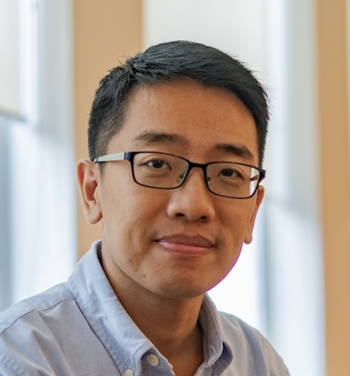
Portrait of Dan Wang
Dan Wang is the Shanghai-based technology analyst for Gavekal Dragonomics, the China economics research firm. He tracks the prospects for China's industrial policy, US regulatory measures and the activities of multinationals in China. He has given keynotes for a variety of organizations and his work is widely cited in the press. Dan previously worked in Silicon Valley and studied philosophy at the University of Rochester. Dan's essays have been published in Foreign Affairs, The Atlantic, New York Magazine, and he is a contributor to Bloomberg Opinion

.


Image
New Frontiers event series promo image

This event is part of the 2022 Winter webinar series, New Frontiers: Technology, Politics, and Society in the Asia-Pacific, sponsored by the Shorenstein Asia-Pacific Research Center.


Image
Chinese 100 yuan bills

This event is part of the 2022 Winter webinar series, The Future of China's Economy, sponsored by the APARC China Program.


Via Zoom Webinar. Register at: https://bit.ly/3IA7MdJ

Denis F. Simon Senior Adviser to the President for China Affairs, Duke University; Professor of China Business and Technology, Duke Fuqua School of Business
Dan Wang Technology Analyst, Gavekal Dragonomics
Seminars
Paragraphs

Image
Logo of The China Journal
China’s rapidly growing local government debt problem has long been recognized by foreign observers as a risk, but inside China, only recentlywas this problem called out as alarming.Why has local government debt been allowed to grow with little direct intervention from central authorities? We argue that it has much to do with a “grand bargain” between the central government and localities during the 1994 fiscal recentralization reform. While much scholarly attention has been paid to the consequences of the 1994 reform that left localities with a tremendous fiscal gap, our findings show that Beijing in fact gave localities the green light to create new backdoor financing institutions that counteracted the impact of fiscal recentralization. In essence, these institutions were the quid pro quo offered to localities to sustain their incentive for local state-led growth after 1994.

The bargain worked, and growth continued. The drawback, however, was that China’s economic growth has been accompanied by the accumulation of local government debt with little transparency and central control. When the global financial crisis slowed growth, and local deficits and debts spiked, Beijing began to shut down backdoor financing and opened front-door options that were transparent and under the control of national authorities—but with limited success. In the wake of COVID-19, the question is whether the pendulum will swing back toward more tolerance of local debt for the sake of economic growth.


All Publications button
1
Publication Type
Journal Articles
Publication Date
Journal Publisher
The China Journal
Authors
Jean C. Oi
Number
1
Authors
Michael Breger
News Type
News
Date
Paragraphs

Over much of the last four decades, China's economy has ballooned, growing to become the world's second-largest economic power behind the United States, when measured by GDP. Yet alongside the rapid growth came mounting local government debt. While foreign observers have long recognized China’s local government debt as a risk, only recently did the Chinese Communist Party call out the problem as alarming. 

Why have central authorities allowed local government debt to grow with such little direct intervention? The answer to this question has much to do with a “grand bargain” between China's central government and localities during the 1994 fiscal recentralization reform, according to a new study, "China’s Local Government Debt: The Grand Bargain," published in the January issue of The China Journal.  The study’s co-authors are Stanford political scientist Jean Oi, a senior fellow at FSI and director of the China Program at APARC, Adam Liu, a former doctoral student of Oi, and Yi Zhang.


Sign up for APARC newsletters to receive our experts' commentary and analysis.


The Origins of China's Massive Local Government Debt

The 1994 reform left localities with a tremendous fiscal gap. But then Beijing in fact gave localities enough autonomy to seek funding independently and the green light to create new backdoor financing institutions that counteracted the impact of fiscal decentralization, show Oi and her colleagues. They call this dynamic a “grand bargain.” The bargain’s purpose was to garner regional cooperation in fiscal and financial recentralization campaigns. The result, as the co-authors document, was far from the intended outcome. The policy resulted in greater decentralization, as local leaders used backdoor financing to meet expenditure responsibilities and bolster local development.

The study offers a fresh interpretation of the political economy surrounding the 1994 fiscal reform and a new understanding of the grand bargain, in which secretive financing was the quid pro quo offered to localities to sustain their incentive for local state-led growth after 1994. Oi and her colleagues draw upon municipal and county data as well as interviews and memoirs of key party leaders, architects of the 1994 fiscal reform, to support their assertions about the dynamics of China's economic rise and the local debt problem. Their findings highlight the "paradoxical political dynamics" of China’s political economy. As the 1994 fiscal reform recentralized tax revenues, "countervailing policies substantially promoted decentralization and fiscal empowerment of localities and decreased the transparency of local financial arrangements."

Granting localities the right to operate local state banks was a necessary but insufficient step for establishing the backdoor financing needed to sustain the grand bargain. Local governments needed a middleman to circumvent the bans on borrowing.
Liu, Oi, and Zhang

The grand bargain led to China's continued growth. The drawback, however, was that this economic growth has been accompanied by the accumulation of local government debt with little transparency and central control. When the global financial crisis impacted growth rates, local deficits and debts spiked. In response, Beijing began to shut down backdoor financing and opened front-door options that were transparent and under the control of national authorities — but with limited success.

Reining in Local Government Financing Vehicles

The researchers posit that "only beginning in 2017 did the Communist Party’s own Central Leading Group on Finance and Economic Affairs and various government-related media begin to label local government debt as a threat to the economy, raising the alarm bells by calling it a 'gray rhino,' a likely high-impact threat that was being ignored." Why, then, didn’t Beijing quickly put a stop to local government debt? Why did central authorities wait until 2015 to put measures in place, and wait even longer to identify local government debt as an economic threat?

Oi and her colleagues explain that studies of policy implementation and regulation in China tell us that the national government faces information asymmetry problems, where localities can subvert upper-level directives because the center has imperfect knowledge of what local agents are doing. Such subversion is most likely when local interests are not aligned with Beijing’s. Now, in the wake of the COVID-19 pandemic, the question is whether the pendulum will swing back toward more tolerance of local debt for the sake of economic growth.

All indications, the authors agree, suggest that during COVID-19 and its aftermath, especially as China also has vowed to win and maintain the fruits of the battle against poverty “at all costs,” localities are going to need extra resources, borrowed or not. The center’s pendulum, at least for now, is swinging further away from fiscal discipline toward local incentives and growth.

[Xi's] anticorruption tactics and exerting tighter control to reduce local government debt have not solved the debt problem because the root causes are institutional.
Liu, Oi, and Zhang

Evading Institutional Reforms

Oi and her colleagues contend that the expansion of local government debt is a feature of China's developmental model, which aims to "circumvent rather than tackle difficult institutional reform, kicking the can down the road, opting for an easier fix to avoid the potentially high political costs.” 

The authors' primary takeaway is therefore that local government debt in China is not a local problem. Similar to other developing nations that depend upon local partners, China faces a dual-commitment problem: "growing the local economy without debt requires the central state to simultaneously commit to respecting its local agents’ access to and control over the fruits of local development (of which local fiscal resources are the most crucial part), while exercising credible fiscal discipline over precisely the same set of local agents that the center seeks to incentivize.”

For nearly three decades, Chinese central authorities have relied on the grand bargain to boost the nation's economic might. Oi and her colleagues reveal that the problem of local government debt reverberates to the highest echelons of the Chinese state decision makers and continues to present strategic challenges for the economic juggernaut.  

Read the article by Oi et al

Read More

Jean Oi
News

Jean Oi Elected Vice President of the Association for Asian Studies

APARC’s Jean Oi, a China expert, will begin her term with the AAS in March 2022, serving on a four-year leadership ladder of vice president, president, and past president. Representing all the regions and countries of Asia and all academic disciplines, the AAS is the largest professional association of its kind.
Jean Oi Elected Vice President of the Association for Asian Studies
(Left) Congratulations Adam Yao Liu, Winner of the 2020 BRICS Economic Research Award; (Right) Portrait of Dr. Adam Liu
News

Stanford Ph.D. Alumnus Wins BRICS Economic Research Award

Dr. Adam Yao Liu, a former doctoral student of APARC China Program Director Jean Oi, has been awarded the 2020 BRICS Economic Research Award for his research on how banking systems in China are developing.
Stanford Ph.D. Alumnus Wins BRICS Economic Research Award
Cover of "China's Gilded Age" by Yuen Yuen Ang
News

The Role of Corruption in China's Speedy, Risky Boom

How has corruption simultaneously driven China’s economic boom and financial risks? Professor Yuen Yuen Ang explains its role in producing a high-growth but also high-risk economy.
The Role of Corruption in China's Speedy, Risky Boom
Hero Image
money
All News button
1
Subtitle

New research in 'The China Journal' by APARC’s Jean Oi and colleagues suggests that the roots of China’s massive local government debt problem lie in secretive financing institutions offered as quid pro quo to localities to sustain their incentive for local state-led growth after 1994

-

This is a virtual event. Please click here to register and generate a link to the talk. 
The link will be unique to you; please save it and do not share with others.


China’s rapidly growing local government debt problem has long been recognized by foreign observers as a risk, but inside China, only recently was this problem called out as alarming.  Why has local government debt been allowed to grow with little direct intervention from central authorities?  Based on a forthcoming paper, Oi will show how a “grand bargain” the central authorities entered into with the localities allowed Beijing to take the lion’s share of tax revenues after 1994, but also allowed localities to gain new resources and power as a quid pro quo.  While the bargain provided an expedient and seemingly successful strategy that worked for more than a decade to fuel rapid local state-led growth, it had significant costs that are now becoming increasingly visible.  Because land finance was the core means by which localities raised revenue, Oi also will help explain why the problems with property developers like Evergrande are so important to China’s future economy.   


Image
Dr. Jean C. Oi
Jean C. Oi is the William Haas Professor of Chinese Politics in the Department of Political Science and a senior fellow in the Freeman Spogli Institute for International Studies at Stanford University. She directs the China Program at the Walter H. Shorenstein Asia-Pacific Research Center and is the Lee Shau Kee Director of the Stanford Center at Peking University. Professor Oi has published extensively on China’s reforms. Recent books include Fateful Decisions: Choices That Will Shape China’s Future, co-edited with Thomas Fingar (Stanford University Press, 2020); Zouping Revisited: Adaptive Governance in a Chinese County, co-edited with Steven Goldstein (Stanford University Press, 2018); and Challenges in the Process of China’s Urbanization, co-edited with Karen Eggleston and Yiming Wang (2017). Current research is on fiscal reform and local government debt, continuing SOE reforms, and the Belt and Road Initiative.


Image
Chinese 100 yuan bills

This event is part of the 2022 Winter webinar series, The Future of China's Economy, sponsored by the APARC China Program.


Via Zoom Webinar. Register at: https://bit.ly/34mnOcc

Jean C. Oi Director of Shorenstein APARC China Program; William Haas Professor of Chinese Politics, Stanford University
Seminars
-

This is a virtual event. Please click here to register and generate a link to the talk. 
The link will be unique to you; please save it and do not share with others.


What is the relationship between internal development and integration into the global economy in developing countries? How and why do state–market relations differ? And do these differences matter in the post-Cold War era of global conflict and cooperation? Drawing on research in China, India, and Russia and examining sectors from textiles to telecommunications, Micro-Institutional Foundations of Capitalism introduces a new theory of sectoral pathways to globalization and development. Adopting a historical and comparative approach, Hsueh's Strategic Value Framework shows how state elites perceive the strategic value of sectors in response to internal and external pressures. Sectoral structures and organization of institutions further determine the role of the state in market coordination and property rights arrangements. The resultant dominant patterns of market governance vary by country and sector within country. These national configurations of sectoral models are the micro-institutional foundations of capitalism, which mediate globalization and development.


Image
Portrait of Roselyn Hsueh
Roselyn Hsueh is an associate professor of political science at Temple University, where she co-directs the Certificate in Political Economy. She is the author of Micro-Institutional Foundations of Capitalism: Sectoral Pathways to Globalization in China, India, and Russia (Cambridge University Press, forthcoming, 2022), China’s Regulatory State: A New Strategy for Globalization (Cornell University Press, 2011), and scholarly articles on states and markets, comparative regulation and governance, and political economy of development. She is a frequent commentator on politics, finance and trade, and economic development in China and beyond. BBC World News, The Economist, Foreign Affairs, National Public Radio, and The Washington Post, among other media outlets, have featured her research. Prestigious fellowships, such as the Fulbright Global Scholar Award, have funded international fieldwork and she has served as a Visiting Scholar at the Institute of World Economics and Politics, Chinese Academy of Social Sciences. She holds a B.A. and Ph.D. in Political Science from the University of California, Berkeley.


Via Zoom Webinar. Register at: https://bit.ly/3zoAafx

Roselyn Hsueh Associate Professor of Political Science, Temple University
Seminars

China’s spectacular growth over the last 40 years has slowed but remains strong, leading the world in economic recovery after the global financial crisis, and even in the current COVID-19 pandemic after a devasting blow early in 2020.  Yet, a number of worrying developments have emerged, most recently the troubles that China’s second largest property development company, the Evergrande Group, have suffered.

Authors
Callista Wells
News Type
News
Date
Paragraphs

On October 6, 2021, the APARC China Program hosted the panel program, "Engaging China: Fifty Years of Sino-American Relations." In honor of her recently released book of the same title, Director of the Grassroots China Initiative Anne Thurston was joined by contributors Mary Bullock, President Emerita of Agnes Scott College; Thomas Fingar, Shorenstein APARC Fellow; and David M. Lampton, Professor Emeritus at Johns Hopkins School of Advanced International Studies (SAIS). Thomas Fingar also moderated the panel.

Recent years have seen the U.S.-China relationship rapidly deteriorate. Engaging China brings together leading China specialists—ranging from academics to NGO leaders to former government officials—to analyze the past, present, and future of U.S.-China relations.

During their panel, Bullock, Fingar, Lampton, and Thurston reflected upon the complex and multifaceted nature of American engagement with China since the waning days of Mao’s rule. What initially motivated U.S.’ rapprochement with China? Until recent years, what logic and processes have underpinned the U.S. foreign policy posture towards China? What were the gains and the missteps made during five decades of America’s engagement policy toward China? What is the significance of our rapidly deteriorating bilateral relations today? Watch now: 

For more information about Engaging China or to purchase a copy, please click here.

Read More

Xi and Biden
Q&As

Biden, Xi Will Want To Diminish Exaggerated Characterizations of Bilateral Friction, Stanford Scholar Says

In this Q&A, Stanford scholar Thomas Fingar discusses what to expect when President Biden meets with Chinese President Xi Jinping.
Biden, Xi Will Want To Diminish Exaggerated Characterizations of Bilateral Friction, Stanford Scholar Says
Taiwan
Commentary

America's Future in Taiwan

Intensifying threats of a military conflict over Taiwan have brought uncertainty to the stability of regional security for Southeast Asia, according to Center Fellow Oriana Skylar Mastro on radio show On Point.
America's Future in Taiwan
USS Key West during during joint Australian-United States military exercises Talisman Sabre 2019 in the Coral Sea.
Commentary

In Defense of AUKUS

This is not only about nuclear-powered submarines; it is about a strengthened US commitment to Australia.
In Defense of AUKUS
Hero Image
"Engaging China: Fifty Years of Sino-American Relations" book cover
All News button
1
Subtitle

Was the strategy of engagement with China worthwhile? Experts Mary Bullock, Thomas Fingar, David M. Lampton, and Anne Thurston discuss their recent release, "Engaging China: Fifty Years of Sino-American Relations."

-

To watch the recording of the event, click here.

This event is co-hosted with the East Asia Institute (EAI) in Korea.

Event Time: November 18, 4:00 - 6:00 PM (PST) / November 19, 9:00 - 11:00 PM (Japan and Korea)
Please register for this event at EAI event page.

The ROK-U.S. and U.S.-Japan joint statements have increased expectations for a possible expansion of security and economic cooperation among South Korea, the U.S. and Japan. However, heightened U.S.-China strategic competition, as well as persistent challenges in the region such as historical tensions and the North Korea threat, have complicated the strategic calculus of U.S., South Korea and Japan. Under these circumstances, the South Korea, the U.S. and Japan must define their economic and security interests and seek ways to maintain friendly relations among the three countries. This seminar will discuss security and economic cooperation among Korea, the United States and Japan in the era of strategic competition between the U.S. and China.

Panel 1 on security:

Park Joon Woo, former Chairman of the Sejong Institute; former South Korean Ambassador to E.U. and to Singapore

Tomiko Ichikawa, Director General of the Japan Institute of International Affairs

Gen. Vincent Brooks, former USFK Commander

Moderated by Young Sun Ha, Chairman of East Asia Institute; Professor Emeritus, Seoul National University

Panel 2 on economic cooperation:

Young Ja Bae, Professor of Political Science and Diplomacy, Konkuk University, Korea

Andrew Grotto, Director of the Program on Geopolitics, Technology and Governance, FSI, Stanford University

Kimura Fukunari, Professor of Economics, Keio University, Japan

Moderated by Thomas Fingar, Shorenstein APARC Fellow, Stanford University


Via Zoom. Register at https://bit.ly/3w7Ak9g

Panel Discussions
Paragraphs
Cover of book "Drivers of Innovation"

Innovation and entrepreneurship rank highly on the strategic agenda of most countries today. As global economic competition intensifies, many national policymakers now recognize the central importance of entrepreneurship education and the building of financial institutions to promote long-term innovation, entrepreneurship, and economic growth. Drivers of Innovation brings together scholars from the United States and Asia to explore those education and finance policies that might be conducive to accelerating innovation and developing a more entrepreneurial workforce in East Asia. 

Some of the questions covered include: How do universities in China and Singapore experiment with new types of learning in their quest to promote innovation and entrepreneurship? Is there a need to transform the traditional university into an “entrepreneurial university”? What are the recent developments in and outstanding challenges to financing innovation in China and Japan? What is the government’s role in promoting innovative entrepreneurship under the shadow of big business in South Korea? What can we learn about the capacity of services to drive innovation-led growth in India? 

Drivers of Innovation will serve as a valuable reference for scholars and policymakers working to develop human capital for innovation in Asia.

Contents

  1. Educating Entrepreneurs and Financing Innovation in Asia 
    Fei Yan, Yong Suk Lee, Lin William Cong, Charles Eesley, and Charles Lee
  2. Fostering Entrepreneurship and Innovation: Education, Human Capital, and the Institutional Environment 
    Charles Eesley, Lijie Zhou, and You (Willow) Wu
  3. Entrepreneurial Scaling Strategy: Managerial and Policy Considerations 
    David H. Hsu
  4. Innovation Policy and Star Scientists in Japan 
    Tatsuo Sasaki, Hiromi S. Nagane, Yuta Fukudome, and Kanetaka Maki
  5. Financing Innovation in Japan: Challenges and Recent Progress 
    Takeo Hoshi and Kenji Kushida
  6. Promoting Entrepreneurship under the Shadow of Big Business in Korea: The Role of the Government 
    Hicheon Kim, Dohyeon Kim, and He Soung Ahn
  7. The Creativity and Labor Market Performance of Korean College Graduates: Implications for Human Capital Policy 
    Jin-Yeong Kim
  8. Financing Innovative Enterprises in China: A Public Policy Perspective 
    Lin William Cong, Charles M. C. Lee, Yuanyu Qu, and Tao She
  9. Forging Entrepreneurship in Asia: A Comparative Study of Tsinghua University and the National University of Singapore 
    Zhou Zhong, Fei Yan, and Chao Zhang
  10. Education and Human Capital for Innovation in India’s Service Sector 
    Rafiq Dossani
  11. In Need of a Big Bang: Toward a Merit-Based System for Government-Sponsored Research in India 
    Dinsha Mistree
  12. The Implications of AI for Business and Education, and Singapore’s Policy Response 
    Mohan Kankanhalli and Bernard Yeung


All Publications button
1
Publication Type
Books
Publication Date
Subtitle

Entrepreneurship, Education, and Finance in Asia

Authors
Yong Suk Lee
Fei Yan
Book Publisher
Shorenstein APARC
Shorenstein APARC Encina Hall Stanford University
1
Shorenstein Postdoctoral Fellow on Contemporary Asia, 2021-22
diana_stanescu_2.jpg PhD

Diana Stanescu joined APARC as Shorenstein Postdoctoral Fellow on Contemporary Asia for the 2021-2022 academic year. Previously, she was a postdoctoral fellow with the Program on U.S.-Japan Relations, Weatherhead Center for International Affairs, at Harvard University. She holds a B.A. in International Relations & Asian Studies from Mount Holyoke College and an M.A. and Ph.D. in Political Science from Princeton University. During 2018-2020 she was a Pre-Doctoral Exchange Scholar in the Department of Government at Harvard.

Her research interests include international trade, regulation, and lobbying with a focus on Japan, using formal and quantitative methods. Her research addresses the overarching question of how bureaucracies shape global economic governance, from a structural and agent-driven perspective. Her dissertation, “The Bureaucratic Politics of Foreign Economic Policymaking,” explains the mechanisms by which stakeholders shape international economic policy through bureaucratic channels of influence.  Additional work looks at the micro-foundations of bureaucratic structure and its consequences for policy; examines the role of individual bureaucrats within domestic and international institutions; and develops micro-level data on bureaucratic careers and appointments.

As a Shorenstein APARC Postdoctoral Fellow, Dr. Stanescu further assessed how politicians and interest group representatives maneuver within bureaucratic channels to have influence over foreign economic policy. In particular, she examinedhow bureaucratic-interest group networks help firms obtain market access abroad, with evidence from trade and foreign direct investment in Japan.

Subscribe to Economic Affairs