Society

FSI researchers work to understand continuity and change in societies as they confront their problems and opportunities. This includes the implications of migration and human trafficking. What happens to a society when young girls exit the sex trade? How do groups moving between locations impact societies, economies, self-identity and citizenship? What are the ethnic challenges faced by an increasingly diverse European Union? From a policy perspective, scholars also work to investigate the consequences of security-related measures for society and its values.

The Europe Center reflects much of FSI’s agenda of investigating societies, serving as a forum for experts to research the cultures, religions and people of Europe. The Center sponsors several seminars and lectures, as well as visiting scholars.

Societal research also addresses issues of demography and aging, such as the social and economic challenges of providing health care for an aging population. How do older adults make decisions, and what societal tools need to be in place to ensure the resulting decisions are well-informed? FSI regularly brings in international scholars to look at these issues. They discuss how adults care for their older parents in rural China as well as the economic aspects of aging populations in China and India.

-
Event flyer with portraits of speakers Jude Blanchette, Emily Feng, Qingguo Jia, Alice L. Miller, and moderator Jean Oi.

The 20th National Congress of the Chinese Communist Party is scheduled to begin on October 16, 2022. Its outcomes will determine the country’s trajectory for years to come. Join APARC’s China Program for an expert panel covering the Congresses’ context, coverage, and policy implications for the future. This panel discussion will provide expert analyses of what was expected, what was unexpected, how the policies announced may play out over the coming years, and some lesser-covered policy changes that may herald implications for China and the world.

Speakers 


Jude Blanchette holds the Freeman Chair in China Studies at the Center for Strategic and International Studies (CSIS). Previously, he was engagement director at The Conference Board’s China Center for Economics and Business in Beijing, where he researched China’s political environment with a focus on the workings of the Communist Party of China and its impact on foreign companies and investors. Prior to working at The Conference Board, Blanchette was the assistant director of the 21st Century China Center at the University of California, San Diego. 


Emily Feng is NPR’s Beijing correspondent. Feng joined NPR in 2019. She roves around China, through its big cities and small villages, reporting on social trends as well as economic and political news coming out of Beijing. Feng contributes to NPR’s news magazines, newscasts, podcasts, and digital platforms. Emily is the recipient of the 2022 Shorenstein Journalism Award for excellence in coverage of the Asia-Pacific region. 


Qingguo Jia is professor of the School of International Studies of Peking University. Currently, he is a Payne Distinguished Fellow at the Freeman Spogli Institute for International Studies at Stanford University. He received his Ph.D. from Cornell University in 1988. He is a member of the Standing Committee of the National Committee of the Chinese People’s Political Consultative Conference. He is vice president of the China American Studies Association,vice president of the China Association for International Studies, and vice president of the China Japanese Studies Association. He has published extensively on US-China relations, relations between the Chinese mainland and Taiwan and Chinese foreign policy.


Alice L. Miller is a historian and a research fellow at the Hoover Institution. From 2001 to 2018, she was editor and contributor to Hoover’s China Leadership Monitor

Jean C. Oi

Virtual event via Zoom

Jude Blanchette
Emily Feng
Qingguo Jia
Alice L. Miller
Panel Discussions
-
CP_Nov2_Bill Kirby

America’s preeminence in higher education is relatively new, and there is no reason to assume that U.S. schools will continue to lead the world a century from now. Will China challenge its position in the twenty-first? The modern university was born in Germany. In the twentieth century, the United States leapfrogged Germany to become the global leader in higher education. Today, American institutions dominate nearly every major ranking of global universities. However, America’s supremacy in higher education is under great stress, particularly at its public universities. At the same time Chinese universities are on the ascent. Thirty years ago, Chinese institutions were reopening after the catastrophe of the Cultural Revolution; today they are some of the most innovative educational centers in the world. Will China threaten American primacy?

Please join us for the China Program’s Author Series.

The book is available for purchase here

Speaker

Image
William Kirby.jpg
William C. Kirby is T. M. Chang Professor of China Studies at Harvard University and Spangler Family Professor of Business Administration at Harvard Business School. He is a University Distinguished Service Professor. Professor Kirby serves as Chairman of the Harvard China Fund and Faculty Chair of the Harvard Center Shanghai. At Harvard he has served as Director of the Fairbank Center for Chinese Studies, Chairman of the History Department, and Dean of the Faculty of Arts and Sciences. His current projects include case studies of trend-setting Chinese businesses and a comparative study of higher education in China, Europe, and the United States. His recent books include Can China Lead? (Harvard Business Review Press) and China and Europe on the New Silk Road (Oxford University Press). His latest book, Empires of Ideas: Creating Modern Universities from Germany to America to China (Harvard University Press), is now available.

Discussant

Image
Andrew G. Walder
Andrew G. Walder is the Denise O'Leary and Kent Thiry Professor at Stanford University, where he is also a senior fellow in the Freeman Spogli Institute for International Studies. Previously, he served as chair of the Department of Sociology, and as director of the Walter H. Shorenstein Asia-Pacific Research Center and of the Division of International, Comparative and Area Studies in the School of Humanities and Sciences.

Jean C. Oi

In-Person at Philippines Room, Encina Hall 3rd Floor

William C. Kirby
Seminars
Authors
Noa Ronkin
News Type
News
Date
Paragraphs

We are pleased to share that Professor of Sociology Kiyoteru Tsutsui, the Henri H. and Tomoye Takahashi Professor and Senior Fellow in Japanese Studies at the Walter H. Shorenstein Asia-Pacific Research Center (APARC), is the recipient of the 2022 Ishibashi Tanzan Award for his book Human Rights and the State: The Power of Ideas and the Realities of International Politics (Iwanami Shinsho, 2022).

Established in 1980 and presented by the Ishibashi Tanzan Memorial Foundation, the annual award recognizes excellence in the fields of politics, economics, international relations, society, and culture. It honors individuals who have contributed to advancing the legacy of former Japanese Prime Minister Ishibashi Tanzan and his ideas on liberalism, democracy, and international peace. Tsutsui’s book explores the paradox underlying the global expansion of human rights, examines Japan’s engagement with human rights ideas and instruments, and assesses their impacts on domestic politics around the world.

“I’m deeply honored to receive this prestigious award, especially in this historical moment in which commitment to the international liberal order is ever more critical,” says Tsutsui, who is also director of APARC’s Japan Program, APARC’s deputy director, a senior fellow at the Freeman Spogli Institute for International Studies, and the co-director of the Center for Human Rights and International Justice. “Among all the Japanese Prime Ministers in history, no one demonstrated a more unwavering commitment to liberalism than Ishibashi Tanzan, and I’m especially pleased that my book on global human rights has received this recognition bearing his name. There’s also a personal connection for me, as my father is the author of the first social science book on Ishibashi Tanzan and I helped with his research as a middle school student, making copies of relevant newspapers.”


Sign up for APARC newsletters to receive our experts' commentary and analysis.


In an APARC interview about the book, Tsutsui explains the tension inherent in the diffusion of global human rights, which is rooted in states’ embracing these universal rights although they are grounded in principles that constrain their sovereignty. “The end of the Cold War enabled the United Nations to engage in human rights activities free from Cold War constraints, and now those states that committed to human rights without thinking about the consequences have to face a world in which their violations can become a real liability for them,” he notes.

Tsutsui believes that Japan has an opportunity to become a global leader in human rights. “The more inwardly oriented United States is creating a vacuum in promotion and protection of liberal values, especially with China’s influence surging, and Japan should carry the torch taking the mantle of human rights, democracy, and rule of law,” he argues.

Tsutsui’s research interests lie in political and comparative sociology, social movements, globalization, human rights, and Japanese society. His current projects examine issues including changing conceptions of nationhood and minority rights in national constitutions and in practice, populism and the future of democracy, the global expansion of corporate social responsibility, and Japan’s public diplomacy and perceptions of Japan in the world.

Read More

Protesters hold signs and chant slogans during a Black Lives Matter peaceful march in Tokyo.
Q&As

New Book by Stanford Sociologist Kiyoteru Tsutsui Probes the Decoupling of Policy and Practice in Global Human Rights

In his new book, Shorenstein APARC’s Japan Program Director Kiyoteru Tsutsui explores the paradox underlying the global expansion of human rights and Japan’s engagement with human rights ideas and instruments. Japan, he says, has an opportunity to become a leader in human rights in Asia and in the world.
New Book by Stanford Sociologist Kiyoteru Tsutsui Probes the Decoupling of Policy and Practice in Global Human Rights
Shinzo Abe speaking from a lectern
Commentary

Reflections on the Assassination of Former Prime Minister of Japan Shinzo Abe

Abe was one of the most transformative political leaders in modern Japanese history, and his passing will change Japanese politics in a number of ways, most immediately shaking up internal politics within the ruling Liberal Democratic Party. To honor Abe’s legacy, we all need to reassert our resolve to protect our democracy in Japan, the United States, and all over the world.
Reflections on the Assassination of Former Prime Minister of Japan Shinzo Abe
Stanford campus archway and text about call for applications for APARC 2023-24 fellowships
News

APARC Invites Fall 2023 Asia Studies Fellowship Applications

The Center offers a suite of fellowships for Asia researchers to begin fall quarter 2023. These include postdoctoral fellowships on contemporary Japan and the Asia-Pacific region, inaugural postdoctoral fellowships and visiting scholar positions with the newly launched Stanford Next Asia Policy Lab, and fellowships for experts on Southeast Asia.
APARC Invites Fall 2023 Asia Studies Fellowship Applications
Hero Image
Kiyoteru Tsutsui and book cover of Human Rights and the State
All News button
1
Subtitle

The Ishibashi Tanzan Memorial Foundation recognizes Tsutsui, the Henri H. and Tomoye Takahashi Professor and Senior Fellow in Japanese Studies at the Shorenstein Asia-Pacific Research Center, for his book 'Human Rights and the State.'

Date Label
-

The Trans-Pacific Sustainability Dialogue convenes social science researchers and scientists from Stanford University and across the Asia-Pacific region, alongside student leaders, policymakers, and practitioners, to accelerate progress on achieving the United Nations-adopted 2030 Agenda for Sustainable Development. The conference aims to generate new research and policy partnerships to expedite the implementation of the Agenda's underlying framework of 17 Sustainable Development Goals.

The two-day event is held in Seoul, South Korea, on October 27 and 28, 2022 Korea Standard Time, and is free and open to the public.

Registration is now open for in-person attendees. The conference is also offered online. Watch the live webcast from this page below (session available in English and Korean) and follow the conversation on Twitter: @StanfordSAPARC #AsiaSDGs2022.

The Dialogue's main hosts and organizers are Stanford's Walter H. Shorenstein Asia-Pacific Research Center (APARC) and the Ban Ki-moon Foundation For a Better Future. The co-hosts are the Korea Environment Institute (KEI) and Ewha Womans University. The co-organizers include the Natural Capital Project (NatCap) of Stanford University, the Ministry of Foreign Affairs of the Republic of Korea, Korea Environmental Industry and Technology Institute (KEITI), Korea Environment Corporation (K-eco), and Korea Water Resources Corporation (K-water).

Day 1 Livestream (English)

Day 1 Livestream (Korean)

Day 2 Livestream: Expert Panel (English)

Day 2 Livestream: Expert Panel (Korean)

Day 2 Livestream: Student Panel (English)

NOTE: The times below are all in Korean Standard Time.

DAY 1: THURSDAY, OCTOBER 27, 2022

Hosted by the Korea Environment Institute

Grand Ballroom​, The Plaza Seoul
119 Sogong-Ro, Jung-gu, Seoul


9:00 – 9:30 AM
Opening Session
Welcome remarks:
Ban Ki-moon, the 8th Secretary-General of the United Nations and Chairman of the Ban Ki-moon Foundation For a Better Future
Gi-Wook Shin, Director of the Shorenstein Asia-Pacific Research Center and Korea Program, Professor of Sociology, William J. Perry Professor of Contemporary Korea, and Senior Fellow at the Freeman Spogli Institute for International Studies, Stanford University

Congratulatory remarks:
Kevin Rudd, former Prime Minister of Australia and Chief Executive Officer and President of the Asia Society (pre-recorded video message)
Han Duck-soo, Prime Minister of the Republic of Korea


Plenary 1
9:45 – 10:45 AM
World Leaders Session

Keynotes:
Ban Ki-moon, the 8th Secretary-General of the United Nations and Chairman of the Ban Ki-moon Foundation For a Better Future
Iván Duque, former President of the Republic of Colombia (live video link)
Gombojav Zandanshatar, Chairman of the State Great Hural (Parliament) of Mongolia

Moderator:
Gi-Wook Shin, Director of the Shorenstein Asia-Pacific Research Center and Korea Program, Professor of Sociology, William J. Perry Professor of Contemporary Korea, and Senior Fellow at the Freeman Spogli Institute for International Studies, Stanford University


Plenary 2
11:00 AM – 12:15 PM
Climate Change Session

Organized by the Climate Change, Energy, Environment and Scientific Affairs Bureau of the Ministry of Foreign Affairs, Republic of Korea

Keynote: 
Henry Gonzalez, Deputy Executive Director of Green Climate Fund

Panelists: 
Nabeel Munir, Ambassador of the Islamic Republic of Pakistan to the Republic of Korea and Chair of the G77 at the United Nations
Hyoeun Jenny Kim, Ambassador and Deputy Minister for Climate Change, Ministry of Foreign Affairs of the Republic of Korea
Oyun Sanjaasuren, Director of External Affairs of Green Climate Fund

Moderator:
Tae Yong Jung, Professor of Sustainable Development at the Graduate School of International Studies, Yonsei University


12:15 – 1:30 PM

Lunch 
Hosted by the Korea Environment Institute

Welcome remarks:
Chang Hoon Lee, President of the Korea Environment Institute

Congratulatory remarks:
Kim Sang-Hyup, Co-Chairperson of the 2050 Carbon Neutrality and Green Growth Commission
Eun Mee Kim, President of Ewha Womans University, Professor at the Graduate School of International Studies, and Director of the Ewha Global Health Institute for Girls and Women, Ewha Womans University


Plenary 3
1:30 – 2:45 PM
Multilateralism for a Resilient and Inclusive Recovery Towards the Achievement of the SDGs

Organized by the Development Cooperation Bureau of the Ministry of Foreign Affairs, Republic of Korea

Keynote: 
Hidehiko Yuzaki, Governor of Hiroshima Prefectural Government, Japan

Panelists:
Kaveh Zahedi, Deputy Executive Secretary, United Nations Economic and Social Commission for Asia and the Pacific (UN ESCAP) (live video link)
Kim Sook, Executive Director of the Ban Ki-moon Foundation For a Better Future and former Ambassador and Permanent Representative of the Republic of Korea to the United Nations
Won Doyeon, Director-General of the Development Cooperation Bureau, Ministry of Foreign Affairs of the Republic of Korea 

Moderator:
Eun Mee Kim, President of Ewha Womans University, Professor at the Graduate School of International Studies, and Director of the Ewha Global Health Institute for Girls and Women, Ewha Womans University


Plenary 4
3:00 – 4:15 PM
KEI Green Korea: SDGs in North Korea

Organized by the Korea Environment Institute

Keynote: 
Sung Jin Kang, Professor of the Department of Economics and the Graduate School of Energy and Environment, Korea University

Panelists:
Habil Bernhard Seliger, Representative of Hanns Seidel Stiftung - Seoul Office, Republic of Korea (pre-recorded video message)
Ganbold Baasanjav, Head of Subregional Office for East and North-East Asia, United Nations Economic and Social Commission for Asia and the Pacific (UN ESCAP)
Haiwon Lee, Emeritus Professor of Hanyang University and President of Asian Research Network for Global Partnership

Moderator:
Chang Hoon Lee, President of the Korea Environment Institute


Plenary 5
4:30 – 5:30 PM
Valuing Nature to Achieve the SDGs

Organized by the Natural Capital Project of Stanford University

Keynote:
Gretchen Daily, Bing Professor of Environmental Science in the Department of Biology, Faculty Director of the Natural Capital Project, Director of the Center for Conservation Biology, and Senior Fellow at the Woods Institute for the Environment, Stanford University

Panelists:
Juan Pablo Bonilla, Manager of the Climate Change and Sustainable Development Sector, Inter-American Development Bank
Choong Ki Kim, Senior Research Fellow, Korea Environment Institute

Moderator:
Nicole Ardoin, Emmett Faculty Scholar and Associate Professor in the Stanford Doerr School of Sustainability, Sykes Family Director of the Emmett Interdisciplinary Program in Environment and Resources, and Senior Fellow at the Woods Institute for the Environment, Stanford University


DAY 2: FRIDAY, OCTOBER 28, 2022

Hosted by Ewha Womans University 
52 Ewhayeodae-gil, Seodaemun-gu, Seoul


Expert panels are held in Room B412
Student panels (see below) are held in Room B143
ECC, Ewha Womans University


9:00 – 9:15 AM
Opening Session for Expert Panels

Welcome remarks:
Eun Mee Kim, President of Ewha Womans University, Professor at the Graduate School of International Studies, and Director of the Ewha Global Health Institute for Girls and Women, Ewha Womans University
Gretchen Daily, Bing Professor of Environmental Science in the Department of Biology, Faculty Director of the Natural Capital Project, Director of the Center for Conservation Biology, and Senior Fellow at the Woods Institute for the Environment, Stanford University


Expert Panel 1
9:15 – 10:30 AM
Livable, Sustainable Cities

Organized by the Walter H. Shorenstein Asia-Pacific Research Center of Stanford University

Keynotes:
Park Heong-joon, Mayor of Busan Metropolitan City, Republic of Korea
Khurelbaatar Bulgantuya, Member of the State Great Hural (Parliament) of Mongolia and Chair of Sustainable Development Goals Sub-Committee of Parliament

Panelists:
Anne Guerry, Chief Strategy Officer and Lead Scientist at the Natural Capital Project, Stanford University
Perrine Hamel, Assistant Professor at the Asian School of the Environment, Nanyang Technological University

Moderator:
Kiyoteru Tsutsui, Deputy Director of the Shorenstein Asia-Pacific Research Center and Director of the Japan Program, Professor of Sociology, Henri H. and Tomoye Takahashi Professor of Japanese Studies, Senior Fellow at the Freeman Spogli Institute for International Studies, and Director of the Center for Human Rights and International Justice, Stanford University


Expert Panel 2
11: 00 AM – 12:15 PM
Climate Change, Disaster Risks, and Human Security in Asia

Organized by Ewha Womans University

Panelists:
Juan M. Pulhin, Professor, Scientist, and former Dean of the College of Forestry and Natural Resources, University of the Philippines, Los Baños (live video link)
Rajib Shaw, Professor in the Graduate School of Media and Governance, Keio University
Brendan M. Howe, Professor and Dean of the Graduate School of International Studies, Ewha Womans University
Rafael Schmitt, Lead Scientist at the Natural Capital Project, Stanford University

Moderator:
Jaehyun Jung, Assistant Professor at the Graduate School of International Studies, Ewha Womans University


12:15 – 1:30 PM
Lunch 

Hosted by Ewha Womans University

Welcome remarks:
Eun Mee Kim, President of Ewha Womans University, Professor at the Graduate School of International Studies, and Director of the Ewha Global Health Institute for Girls and Women, Ewha Womans University


Expert Panel 3
1:30 – 2:45 PM
Valuing Nature in Finance for Systems Transformation


Organized by the Natural Capital Project of Stanford University

Keynote:
Elías Albagli, Director of the Monetary Policy Division of the Central Bank of Chile

Panelists:
Qingfeng Zhang, Chief of Rural Development and Food Security (Agriculture) Thematic Group and Chief of Environment Thematic Group of the Sustainable Development and Climate Change Department, Asian Development Bank (live video link)
Tong Wu, Senior Scientist and Associate Director of the China Program at the Natural Capital Project, Stanford University

Moderator:
Chung Suh-Yong, Professor at the Division of International Studies of Korea University and Director of the Center for Climate and Sustainable Development Law and Policy of Seoul International Law Academy


Expert Panel 4
3:15 – 4:30 PM
Valuing Nature to Achieve Sustainable Development


Organized by the Natural Capital Project of Stanford University

Keynote:
Mary Ruckelshaus
, Director at the Natural Capital Project, Stanford University

Panelists:
James Salzman, Donald Bren Distinguished Professor of Environmental Law at the Bren School of Environmental Science & Management at the University of California, Santa Barbara and the School of Law at the University of California, Los Angeles
Yong-Deok Cho, General Director at K-water and Secretary General of the Asia Water Council

Moderator:
Alejandra Echeverri, Senior Scientist at the Natural Capital Project, Stanford University


9:00 – 9:15 AM
Opening Session for Student Panels

Welcome remarks:
Brendan M. Howe, Professor and Dean of the Graduate School of International Studies, Ewha Womans University
Nicole Ardoin, Emmett Faculty Scholar and Associate Professor in the Stanford Doerr School of Sustainability, Sykes Family Director of the Emmett Interdisciplinary Program in Environment and Resources, and Senior Fellow at the Woods Institute for the Environment, Stanford University


Student Panel 1
9:15 – 10:30 AM
Green Financing and Sustainable Investments

Organized by Ewha Womans University

Panelists:
Assia Baric, PhD student, Graduate School of International Studies, Ewha Womans University
Siddharth Sachdeva, PhD student, Emmett Interdisciplinary Program in Environment and Resources, Stanford University
Sevde Arpaci Ayhan, PhD candidate, Graduate School of International Studies, Seoul National University 
Mae Luky Iriani, Master’s student, Department of International Relations, Universitas Katolik Parahyangan
Wu Qichun, PhD candidate, Asia-Europe Institute, University of Malaya

Moderator:
Hannah Jun
, Assistant Professor at the Graduate School of International Studies, Ewha Womans University


Student Panel 2
11:00 AM – 12:15 PM
Gender Mainstreaming and Climate Governance

Organized by Ewha Womans University

Panelists:
Vimala Asty Fitra Tunggal Jaya, PhD student, Graduate School of International Studies, Ewha Womans University 
Liza Goldberg, Undergraduate student, Computer Science Department and Earth Systems Program of the Doerr School of Sustainability, Stanford University
Gahyung Kim, PhD candidate, Global Education Cooperation Program, Seoul National University
Maria Golda Hilario, Master’s student, College of Liberal Arts, De La Salle University 
Putri Ananda, Master’s student, Osaka School of International Public Policy, Osaka University

Moderator:
Minah Kang, Professor at the Department of Public Administration, Bioethics Policy Studies, and Department of International Studies, Ewha Womans University


Student Panel 3
1:30 – 2:45 PM
Development Cooperation for Sustainable Governance

Organized by Ewha Womans University

Panelists:
Elham Bokhari, PhD student, Graduate School of International Studies, Ewha Womans University 
Suzanne Xianran Ou, PhD candidate, Department of Biology, Stanford University
So Yeon Park, PhD student, Global Education Cooperation Program, Seoul National University 
Emmanuel O. Balogun, PhD candidate, Department of Mechanical Engineering, Stanford University
Darren Mangado, PhD student, Osaka School of International Public Policy, Osaka University
 
Moderator:
Jinhwan Oh, Professor of the Graduate School of International Studies, Ewha Womans University


Student Panel 4
3:15 – 4:45 PM
Bringing Environmental Solutions to Scale Through a Business and Social Justice Lens

Organized by the Walter H. Shorenstein Asia-Pacific Research Center of Stanford University

Panelists:
Patricia Aguado Gamero, PhD candidate, Graduate School of International Studies, Ewha Womans University
Sergio Sánchez López, PhD student, Emmett Interdisciplinary Program in Environment and Resources, Stanford University
Felicia Istad, PhD candidate in Public Policy, Department of Public Administration, Korea University 
Sardar Ahmed Shah, PhD student, Osaka School of International Public Policy, Osaka University 
Ma. Ella Calaor Oplas, PhD student in Development Studies and Faculty Member, School of Economics, De La Salle University
Shiina Tsuyuki, Undergraduate student, Keio University

Moderator:
Cheryll Alipio, Associate Director for Program and Policy of the Shorenstein Asia-Pacific Research Center, Stanford University


Closing Session 
5:00 – 5:30 PM
Readying Human Capital for Sustainable Development

Organized by the Walter H. Shorenstein Asia-Pacific Research Center of Stanford University

Closing remarks:
Nicole Ardoin, Emmett Faculty Scholar and Associate Professor in the Stanford Doerr School of Sustainability, Sykes Family Director of the Emmett Interdisciplinary Program in Environment and Resources, and Senior Fellow at the Woods Institute for the Environment, Stanford University
Gi-Wook Shin, Director of the Shorenstein Asia-Pacific Research Center and Korea Program, Professor of Sociology, William J. Perry Professor of Contemporary Korea, and Senior Fellow at the Freeman Spogli Institute for International Studies, Stanford University
Brendan M. Howe, Professor and Dean of the Graduate School of International Studies, Ewha Womans University
Kim Bong-hyun, former Ambassador of the Republic of Korea to Australia, former President of Jeju Peace Institute, and Advisor to Mr. Ban Ki-moon, the 8th Secretary General of the United Nations at the Ban Ki-moon Foundation for a Better Future

Offered online via live webcast and in-person in Seoul, South Korea.

Day 1: October 27, 9 AM - 5:30 PM KST | Grand Ballroom, The Plaza Hotel, Seoul
Day 2: October 28, 9 AM - 5:30 PM KST | Room B412 (Expert Panels), Room B143 (Student Panels), ECC, Ewha Womans University

SCROLL DOWN TO WATCH THE LIVE WEBCAST

Conferences
-

Register: bit.ly/3UHwDTF

Co-sponsored by Peking University and the Asia Health Policy Program

Time cost of healthcare is important but is largely overlooked in the literature. This paper investigates how time cost affects the healthcare usage in both China and the US. Using the retirement age policy in both countries, we first employ a Regression Discontinuity Design (RDD) and show that the hospitalization rate persistently increases by 20-30 percent just after retirement age. The effects are larger and more significant among the people with higher time costs prior to retirement. Then, we use the school starting date and provide further significant evidence of the impact of time cost on hospitalization among the age-eligible children. These results underline the remarkable impact of time cost on healthcare usage and provide a more comprehensive picture of moral hazard in health insurance.

Image
Wei Huang 102022
Dr HUANG Wei is an Associate Professor at the National School of Development (NSD), Peking University. Previously, he was an assistant professor at Emory University and National University of Singapore. He received his Ph.D. in economics from Harvard in 2016. His research fields include public economics, labor economics, and health economics. His research work has been published in journals such as Review of Economic and Statistics, American Economic Journal: Applied Economics, Nature, Journal of Economic Perspectives, Journal of Development Economics, Journal of Labor Economics, etc. He is a co-editor for Economics of Transition.

Jianan Yang

Via Zoom Webinar.

Wei Huang Associate Professor, the National School of Development (NSD), Peking University
Seminars
-
Flyer for Hyunjoon Park's talk with his portrait

In this talk, Hyunjoon Park will give a brief overview of how Korean families have changed over the last three decades in various family behaviors. Although the trends of falling marriage rates and rising divorce rates, along with the increase in the population living alone, are well known, less known is divergence in those family behaviors between the more and less educated. Tracing family changes differently for those at higher and lower ends of the educational hierarchy highlights growing educational differentials in family life. Compared to their college-educated counterparts, it is increasingly difficult for those without a college degree to form and maintain a family in Korea, making the Korean family a 'luxury good.'

Image
Hyun Joon Park headshot

Hyunjoon Park is Korea Foundation Professor of Sociology and director of the James Joo-Jin Kim Center for Korean Studies at the University of Pennsylvania. Park is interested in education, inequality and family in cross-national comparative perspective, focusing on South Korea and other East Asian societies. In recent years, he has studied changes in marriage, divorce, and living arrangements as well as consequences of demographic and economic trends for education, well-being, and socioeconomic outcomes of children, adolescents, and young adults in Korea. Park has published more than 70 peer-reviewed papers in leading journals. He is the author of the book, Re-Evaluating Education in Japan and Korea: De-mystifying Stereotypes (2013 Routledge) and a Korean-language book, Changes in Intergenerational Social Mobility: Has Korean Society Become More Open? (2021, Pakyoungstory). A new book, Diversity and the Transition to Adulthood in America, coauthored with Phoebe Ho and Grace Kao, has been published this summer from the University of California Press.

This event is made possible by generous support from the Korea Foundation and other friends of the Korea Program.

Gi-Wook Shin

Via Zoom. Register at https://bit.ly/3y5ZbfS

Hyunjoon Park Professor of Sociology, University of Pennsylvania
Seminars
Authors
Michael Breger
News Type
Q&As
Date
Paragraphs

Each summer, Stanford students assist APARC faculty on a variety of projects as research assistants (RAs). For Master’s in East Asian Studies candidate Kerstin Norris, working with Center and Korea Program Director Gi-Wook Shin provided the opportunity to conduct literature reviews of the field of race studies and build her skills in a collaborative research environment.

Norris, who intends to pursue a doctoral degree in Sociology with a research emphasis on Korean Studies, described the experience of working closely with Stanford faculty and peer researchers as particularly valuable in designing her own research projects and giving her direction for her future dissertation.

In the following Q&A, Norris discusses her research assistantship experience this summer. The interview was slightly edited for length and clarity.


Sign up for APARC newsletters to receive research and commentary updates from our scholars


First, tell us a bit about yourself and your academic interests and extracurriculars. 
I am currently a master’s student within the Center for East Asian Studies and primarily focus on South Korea, militarism, labor, and migration. I am originally from Xenia, Ohio where not much happens. So, when I told my family I was interested in international studies as an undergraduate and later East Asia as a graduate student, I was always the odd man out. I knew that I was meant to leave my small town but was unsure what I was destined to do. At the Ohio State University, I found a love for international relations, political theory, and research with an interest in East Asia (I have Korean and Japanese pop and rock music to thank for that). I decided to apply to Stanford’s East Asian Studies master’s as a bridge for a PhD in Sociology in order to gain more knowledge.  

Why did you choose to work with Dr. Shin? 
I actually chose to attend Stanford in order to work with Dr. Shin. His work is globally renowned in East Asian studies and especially Korean studies. Before committing to Stanford, I had a Zoom call with Dr. Shin about the CEAS program and the university’s opportunities. I knew I wanted to become an academic, but the incredible competitiveness in the job market always made me apprehensive to go forward with that career route. The uncertainty about job prospects after graduation felt daunting, although I could not imagine doing anything else, given my love for teaching and research. However, after my call with Dr. Shin, I knew I had to give it a shot. He told me that it was possible for me to become a scholar if I wanted to and had the grit. He really inspired me, so it was natural for me to want to work under Dr. Shin as an RA. 

Can you describe the research assistantship?
Because we were in the beginning stages of a project, the job consisted primarily of conducting literature reviews of the field of race studies and searching for case studies for the job. After completing the literature reviews, my teammates and I had biweekly meetings in which we discussed the content we read and attempted to theorize our own understanding of race and racism within the Asian context. The next team will be doing far more empirical work and working closely with case studies. To those unfamiliar with academia, I might describe this research as an attempt to gain a greater understanding of how racism operates in an Asian context. A lot of scholarship concerning what race is and how it operates within the world is very Western-centric or applies a Black-White lens, so it is important to understand how it potentially manifests across the Asian continent.  

What did you learn over the course of your research assistantship and how do you think it will help you in your career? 
Given that I want to be a professor in Sociology and Korean studies, this research directly correlated to my future career. I had been an RA in the past, largely doing archival research and general literature reviews. However, this RA-ship was different in that it really challenged me to work within a team, become more familiar with a field I hadn’t studied, and build a project from ground zero. Because of the RA-ship, I will be better prepared to design my own research projects, most importantly my future dissertation.

What's next for you? 
In the fall, I will be doing an exchange quarter at Sungkyunkwan University where I will be taking Korean studies courses taught in Korean. I will then return to Stanford to write my master’s thesis and graduate. Hopefully, I will then apply to PhD programs!   

Any advice for Stanford students considering a summer RA position? 
For those considering a summer RA position, I would make sure that the research interests you and somewhat aligns with something you’d like to do in the future, even if it isn’t academia. I would also highly recommend working in an RA position with a team. Having done research alone and in a team setting, I recognize how much I gained from hearing others’ thoughts and debating concepts and theories. That was the most fruitful part of my summer experience.

Learn more about APARC’s summer research assistant internships and other training opportunities for Stanford undergraduate and graduate students >

Read More

 South Korean President Yoon Suk Yeol waves a national flag during the celebration of the 77th National Liberation Day at Presidential House on August 15, 2022 in Seoul, South Korea.
Commentary

The Path Ahead for Yoon

How Korea’s New President Can Recover from His First 100 Days of Struggles.
The Path Ahead for Yoon
Jerome He
Q&As

Research Assistant Spotlight: Jerome He Examines Great Power Competition with Oriana Skylar Mastro

Political Science major Jerome He ‘24, spent the summer assisting APARC Center Fellow Oriana Skylar Mastro. He leveraged the opportunity to expand his knowledge of Chinese security issues and refine his research acumen. We spoke with He about his experience as a research assistant and his time working for Dr. Mastro.
Research Assistant Spotlight: Jerome He Examines Great Power Competition with Oriana Skylar Mastro
Tongtong Zhang
Q&As

Predoctoral Fellow Spotlight: Tongtong Zhang Examines Channels for Public Deliberation in China

Political Scientist and APARC Predoctoral Fellow Tongtong Zhang explores how the Chinese Communist Party maintains control through various forms of political communication.
Predoctoral Fellow Spotlight: Tongtong Zhang Examines Channels for Public Deliberation in China
Hero Image
Kerstin Norris
All News button
1
Subtitle

MA in East Asian Studies candidate Kerstin Norris spent the summer assisting APARC and Korea Program Director Gi-Wook Shin with his research on racial tensions in Asia. Looking to pursue a PhD in Sociology, Norris found tremendous value in a collaborative academic environment. We spoke with Norris about her experience as a research assistant and her time working with Dr. Shin.

News Type
News
Date
Paragraphs

APARC is pleased to announce the appointment of Jacques Bertrand, an associate professor of political science at the University of Toronto, and Reza Idria, an assistant professor in social anthropology at Ar-Raniry State Islamic University Banda Aceh, as our 2022-23 Lee Kong Chian National University of Singapore (NUS)-Stanford Fellows on Southeast Asia. Bertrand will begin his appointment at Stanford this coming fall quarter, Idria on February 1, 2023.

The Lee Kong Chian Fellowship is the core of the Lee Kong Chian NUS-Stanford Initiative on Southeast Asia, a joint effort established in 2007 by the National University of Singapore and Stanford University to raise the visibility, extent, and quality of scholarship on contemporary Southeast Asia. The infrastructure for research pursued through the fellowship is provided by the Faculty of Arts and Social Sciences at NUS and APARC’s Southeast Asia Program at Stanford.

Lee Kong Chian NUS-Stanford fellows spend three to four months at Stanford and two to four months at NUS, writing and conducting research on, or related to, contemporary Southeast Asia. Fellows have opportunities to present their research and participate in seminars and workshops organized by relevant campus units. Exposure to the two universities and their scholars and resources enriches and diversifies collegial feedback on the fellows’ research projects and facilitates intellectual exchange and networking on both sides of the Pacific.

Meet our new fellows:

Jacques Bertrand smiling

Jacques Bertrand is Professor of Political Science at the University of Toronto, as well as director of the Collaborative Master’s Specialization in Contemporary East and Southeast Asian Studies at the Asian Institute within the Munk School of Global Affairs and Public Affairs. He was the founding director of the Centre for Southeast Asian Studies at the Asian Institute. He is also the co-founder of the Postcor Lab at the University of Toronto, a research hub for the study of civil wars and war-to-peace transitions. 

Professor Bertrand has worked for many years on issues of ethnic conflict, nationalism, and secessionism in Southeast Asia. His research has been funded by the Social Sciences and Humanities Research Council of Canada, the United States Institute of Peace, as well as the International Development Research Centre. His most recent book, Winning by Process: The State and Neutralization of Ethnic Minorities in Myanmar, was published in July 2022 by Cornell University Press. Professor Bertrand is also the author of Democracy and Nationalist Struggles in Southeast Asia: From Secessionist Mobilization to Conflict Resolution (Cambridge University Press, 2021), Political Change in Southeast Asia (Cambridge, 2013), and Nationalism and Ethnic Conflict in Indonesia (Cambridge, 2004).

He is also the author of numerous articles and book chapters and co-editor of two volumes: Multination States in Asia: Accommodation or Resistance (Cambridge University Press, 2010) and Democratization and Ethnic Minorities: Conflict or Compromise? (Routledge, 2014).

Professor Bertrand is leading a new research team on a project entitled “Return to Civil War: Insurgent Groups and the Decision to Abandon Peace.” Funded by the Social Science and Humanities Research Council of Canada and the United States Institute of Peace, this project aims at understanding why rebel groups return to war after periods of relative peace. While the focus of civil war recurrence has often been on failures of peace agreements, this project will analyze rebel groups themselves and their strategic decisions to return to war or invest in peace. More specifically, it aims at better understanding how different legacies of war lead to varying trajectories in the post-war context. The bulk of the research involves a qualitative analysis of several cases in Southeast Asia. Bertrand builds on his vast experience of studying ethnic armed groups in Myanmar to lead new fieldwork focused on understanding variance among these groups.  
 

Reza Idria

Reza Idria is an Assistant Professor in Social Anthropology at the Universitas Islam Negeri (UIN) Ar-Raniry (Ar-Raniry State Islamic University) in Banda Aceh, Indonesia. He holds an MA and Ph.D. in Social Anthropology from Harvard University as well as an MA in Islamic Studies from Leiden University, The Netherlands. Born and raised in Aceh, the only province adopting Sharia Law in Indonesia, Reza’s research interests are at the intersection of legal anthropology and Islamic law.

During his LKC NUS-Stanford fellowship, he will turn his doctoral dissertation, “Tales of the Unexpected: Contesting Syari’ah Law in Aceh, Indonesia,” into a book manuscript. This work is an anthropological study that examines a wide range of social and political responses that have emerged with the state implementation of Sharia (Islamic law). The empirical data for this research project has been gathered in Aceh, the only Indonesian province that has adopted Sharia. Dr. Idria is also embarking on a new research project that focuses on the legal and socio-economic consequences of the local regulation on Islamic banking.  

Idria is a reviewer for the journals American Ethnologist, Asian Medicine, and Asia Pacific Studies. He publishes in national and international journals, edits and writes book chapters in scholarly publications, gives talks, and facilitates training on issues of his interests and expertise. Besides teaching and researching, Reza is renowned for his contributions as a human rights defender and a facilitator of several cultural communities and critical study groups in Aceh. He is the Chair of the Aceh Association of Oral Tradition, and a member of the Indonesian Young Academy of Science (ALMI).

Read More

Stanford campus archway and text about call for applications for APARC 2023-24 fellowships
News

APARC Invites Fall 2023 Asia Studies Fellowship Applications

The Center offers a suite of fellowships for Asia researchers to begin fall quarter 2023. These include postdoctoral fellowships on contemporary Japan and the Asia-Pacific region, inaugural postdoctoral fellowships and visiting scholar positions with the newly launched Stanford Next Asia Policy Lab, and fellowships for experts on Southeast Asia.
APARC Invites Fall 2023 Asia Studies Fellowship Applications
Portrait of Scot Marciel on background of Encina Hall with text "Oksenberg-Rohlen Fellow"
News

Scot Marciel Appointed Oksenberg-Rohlen Fellow at the Freeman Spogli Institute for International Studies

Marciel, a former senior U.S. diplomat, brings extensive experience in public policy focused on Southeast Asia. His appointment is based at FSI’s Walter H. Shorenstein Asia-Pacific Research Center.
Scot Marciel Appointed Oksenberg-Rohlen Fellow at the Freeman Spogli Institute for International Studies
Enze Han with background of Encina hall colonade
News

Rethinking China’s Influence in Southeast Asia: The Role of Non-State Actors and Unintended Consequences

Departing from international relations scholarship and popular media accounts that tend to portray China as a great power intent on establishing a sphere of influence in Southeast Asia, Lee Kong Chian NUS-Stanford Fellow on Southeast Asia Enze Han argues for conceptualizing China as an unconventional great power whose diverse actors, particularly non-state ones, impact its influence in the region.
Rethinking China’s Influence in Southeast Asia: The Role of Non-State Actors and Unintended Consequences
Hero Image
Stanford Arcade
All News button
1
Subtitle

Political scientist Jacques Bertrand and social anthropologist Reza Idria will join APARC as Lee Kong Chian NUS-Stanford Fellows on Southeast Asia for the 2022-23 academic year.

-

2022 Shorenstein Journalism Award Recipient Emily Feng, NPR's Beijing Correspondent, to Headline Award Panel Discussion

Journalists expelled, local staff harassed, reporting trips heavily surveilled, and a country locked down by Covid controls: all this means correspondents have far less access to information in China, at the very moment understanding China has become so crucial to our economy and geopolitics. Fewer correspondents are left in China — and fewer want to go. Reporting on China will have to change — leveraging remote reporting, digital journalism, and multimedia — but such changes may also distort how we view China.

Join APARC as we honor journalist Emily Feng, NPR’s Beijing Correspondent and winner of the 2022 Shorenstein Journalism Award. In her award keynote address, Feng will address the challenges reporting from and on China and how international media can respond to them.

The keynote will be followed by a conversation with Feng and two experts: Louisa Lim, an award-winning journalist, Senior Lecturer at the University of Melbourne teaching audio journalism and podcasting, and a member of the selection committee for the Shorenstein Journalism Award, and Jennifer Pan, professor of communication and a senior fellow at the Freeman Spogli Institute at Stanford University.

The event will conclude with an audience Q&A session moderated by Stanford sociologist and China expert Xueguang Zhou.

Follow us on Twitter and use the hashtag #SJA22 to join the conversation.

Questions about this event? Contact Sallie Lin.


Speakers

Image
Emily Feng
Emily Feng is NPR's Beijing correspondent. Feng joined NPR in 2019. She roves around China, through its big cities and small villages, reporting on social trends as well as economic and political news coming out of Beijing. Feng contributes to NPR's news magazines, newscasts, podcasts, and digital platforms.

Previously, Feng served as a foreign correspondent for the Financial Times. Based in Beijing, she covered a broad range of topics, including human rights and technology. She also began extensively reporting on the region of Xinjiang during this period, becoming the first foreign reporter to uncover that China was separating Uyghur children from their parents and sending them to state-run orphanages, and discovering that China was introducing forced labor in Xinjiang's detention camps.

Feng's reporting has also let her nerd out over semiconductors and drones, travel to environmental wastelands, and write about girl bands and art. She's filed stories from the bottom of a coal mine; the top of a mosque in Qinghai; and from inside a cave Chairman Mao once lived in. Prior to her recognition by the 2022 Shorenstein Journalism Award, her human rights coverage was shortlisted by the British Journalism Awards in 2018 and won two Human Rights Press awards. Her radio coverage of    the coronavirus epidemic in China was recognized by the National Headliners Award. She spearheaded coverage that has won two Gracie Awards. She was also named a Livingston Award finalist in 2021.

Feng graduated cum laude from Duke University with a dual B.A. degree from Duke's Sanford School in Asian and Middle Eastern studies and in public policy.

Image
Louisa Lim
Louisa Lim is an award-winning journalist who reported from China for a decade for NPR and the BBC. Her first book, The People's Republic of Amnesia: Tiananmen Revisited, was shortlisted for the Orwell Prize for Political Writing and the Helen Bernstein Prize for Excellence in Journalism. She co-hosts The Little Red Podcast, an award-winning podcast on China. She works as a senior lecturer at the University of Melbourne, teaching audio journalism and podcasting, and has a PhD in journalism studies. Her latest book, Indelible City: Dispossession and Defiance in Hong Kong, was released in April 2022 from Penguin Random House. 

Image
Jennifer Pan
Jennifer Pan is a professor of communication and a senior fellow at the Freeman Spogli Institute at Stanford University. Her research focuses on political communication and authoritarian politics. Pan uses experimental and computational methods with large-scale datasets on political activity in China and other authoritarian regimes to answer questions about how autocrats perpetuate their rule, how political censorship, propaganda, and information manipulation work in the digital age, and how preferences and behaviors are shaped as a result.

Her book, Welfare for Autocrats: How Social Assistance in China Cares for its Rulers (Oxford, 2020) shows how China's pursuit of political order transformed the country’s main social assistance program, Dibao, for repressive purposes. Her work has appeared in peer-reviewed publications such as the American Political Science Review, American Journal of Political Science, Comparative Political Studies, Journal of Politics, and Science. 

She graduated from Princeton University, summa cum laude, and received her Ph.D. from Harvard University’s Department of Government.

Moderator


Image
Photo of Xueguang Zhou

Xueguang Zhou is the Kwoh-Ting Li Professor in Economic Development, a professor of sociology, and a Freeman Spogli Institute for International Studies senior fellow. His main area of research is on institutional changes in contemporary Chinese society, focusing on Chinese organizations and management, social inequality, and state-society relationships. 

One of Zhou's current research projects is a study of the rise of the bureaucratic state in China. He works with students and colleagues to conduct participatory observations of government behaviors in the areas of environmental regulation enforcement, in policy implementation, in bureaucratic bargaining, and in incentive designs. He also studies patterns of career mobility and personnel flow among different government offices to understand intra-organizational relationships in the Chinese bureaucracy. Drawing on more than a decade of fieldwork, Zhou’s new book, The Logic of Governance in China (Cambridge University Press, 2022) develops a unified theoretical framework to explain how China's centralized political system maintains governance and how this process produces recognizable policy cycles that are obstacles to bureaucratic rationalization, professionalism, and rule of law. 

Before joining Stanford in 2006, Zhou taught at Cornell University, Duke University, and Hong Kong University of Science and Technology. He is a guest professor at Peking University, Tsinghua University, and the People's University of China. Zhou received his Ph.D. in sociology from Stanford University in 1991.

Xueguang Zhou

Virtual event via Zoom. 

Emily Feng
Louisa Lim
Jennifer Pan
Panel Discussions
0
IreneKyoung_2023_Headshot

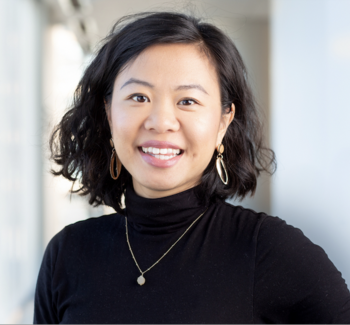
Irene Kyoung was a Research Associate for the Korea Program and Stanford Next Asia Policy Lab (SNAPL) at Shorenstein APARC, where she supported research projects regarding Korean politics and society and US-China relations. Irene received her MA in Political Science from Columbia University and graduated with honors in Government and Legal Studies from Bowdoin College. 

Former Research Associate, Korea Program
Date Label
Subscribe to Society