Society

FSI researchers work to understand continuity and change in societies as they confront their problems and opportunities. This includes the implications of migration and human trafficking. What happens to a society when young girls exit the sex trade? How do groups moving between locations impact societies, economies, self-identity and citizenship? What are the ethnic challenges faced by an increasingly diverse European Union? From a policy perspective, scholars also work to investigate the consequences of security-related measures for society and its values.

The Europe Center reflects much of FSI’s agenda of investigating societies, serving as a forum for experts to research the cultures, religions and people of Europe. The Center sponsors several seminars and lectures, as well as visiting scholars.

Societal research also addresses issues of demography and aging, such as the social and economic challenges of providing health care for an aging population. How do older adults make decisions, and what societal tools need to be in place to ensure the resulting decisions are well-informed? FSI regularly brings in international scholars to look at these issues. They discuss how adults care for their older parents in rural China as well as the economic aspects of aging populations in China and India.

1
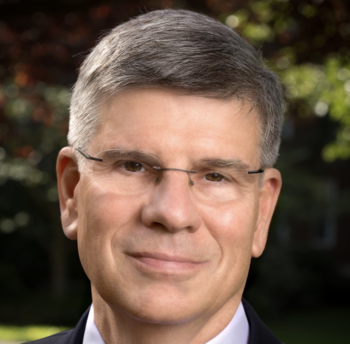
Shorenstein Postdoctoral Fellow on Contemporary Asia, 2022-23
Aidan_Milliff.jpg Ph.D.

Aidan Milliff joined the Walter H. Shorenstein Asia-Pacific Research Center (Shorenstein APARC) as the 2022-2023 Shorenstein Postdoctoral Fellow on Contemporary Asia. 

Milliff obtained his Ph.D. in Political Science at the Massachusetts Institute of Technology, where he was a predoctoral fellow at the Institute for Security and Conflict Studies at George Washington University, and a 2021-2022 USIP/Minerva Peace and Security Scholar. Aidan’s research combines computational social science and qualitative tools to answer questions about the cognitive, emotional, and social forces that shape political violence, migration, post-violence politics, and the politics of South Asia. His work appears or is forthcoming in journals and proceedings including AAAI, Journal of Peace Research, Political Behavior, as well as popular outlets including the Washington Post Monkey Cage Blog, War on the Rocks, and India’s Hindustan Times. Before MIT, Aidan was a James C. Gaither Junior Fellow in the South Asia Program at the Carnegie Endowment for International Peace. He holds a BA in political science and MA in international relations from the University of Chicago. He was born and raised in Colorado.

Aidan’s dissertation asks: in complex political violence scenarios, like inter-communal conflict in South Asia, what determines the strategies that people pursue to keep themselves safe? Aidan develops a political psychology theory, situational appraisal theory, which focuses on variation in individual interpretations of violent environments to explain civilian behavior. The dissertation first uses situational appraisal theory to explain the behavior of Indian Sikhs who encountered violence in rural insurgency and urban pogroms during the 1980s. Pairing original interviews with a novel method for applying multilingual text classification algorithms and automated video-analysis tools to analyze an archive of hundreds of oral history videos, the project shows that situational appraisals of control and predictability explain substantial variation in individuals’ choice of survival strategies when confronting violence.  The dissertation then demonstrates the generalizability of situational appraisal theory to international security domains, using a large survey experiment to show that control and predictability framing influences foreign policy preferences about hypothetical U.S.–China military confrontation.

At APARC, Aidan transformed his dissertation project into a book manuscript, and extend his ongoing research on decision-making, political violence, and Indian politics.


Date Label
0
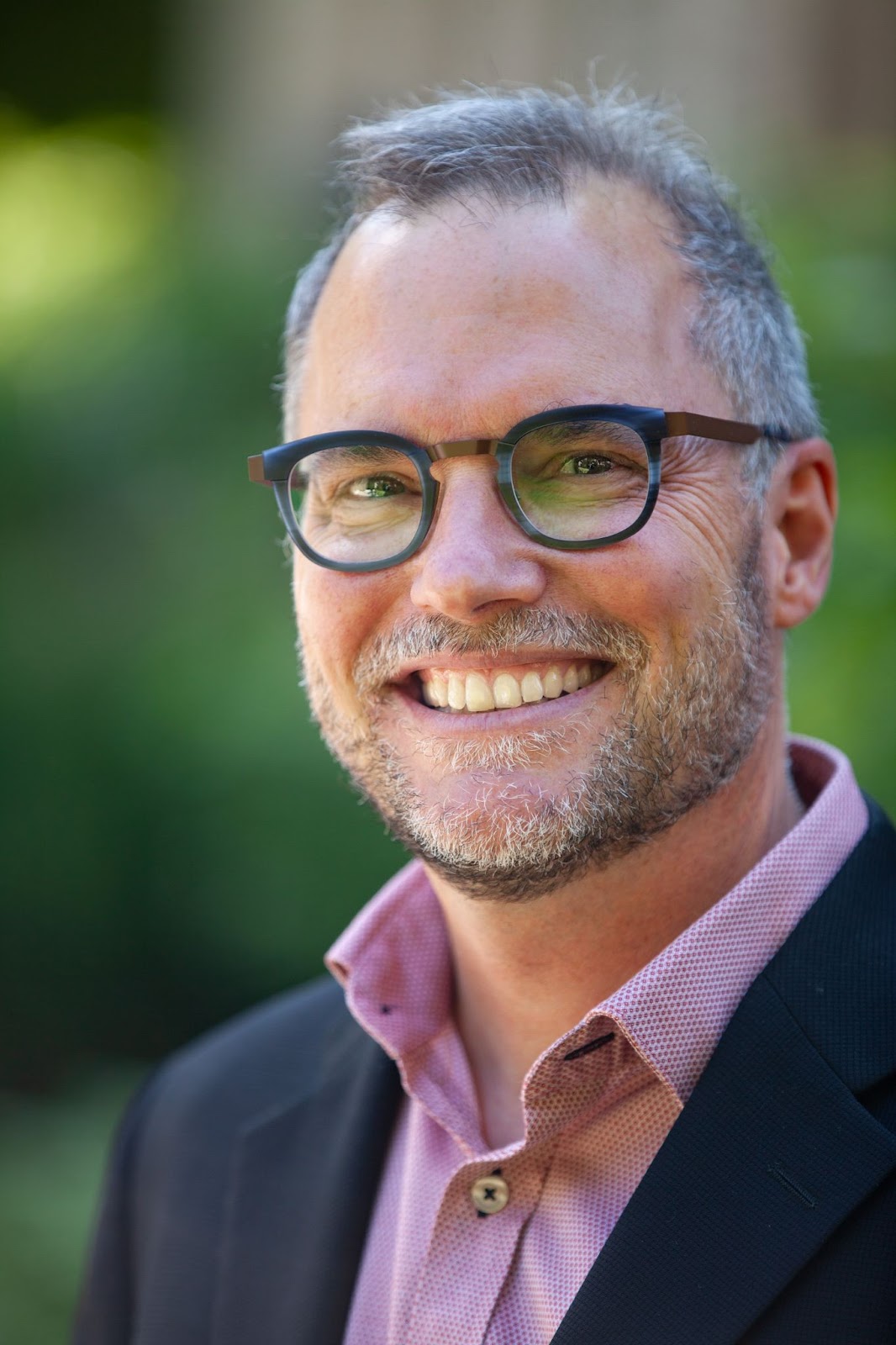
Visiting Scholar at APARC, 2022-23
Hongmei_Yu.jpg Ph.D.

Hongmei Yu joined the Walter H. Shorenstein Asia-Pacific Research Center (Shorenstein APARC) as visiting scholar for the 2022-2023 academic year. She currently serves as Associate Professor at the Shanghai University of Political Science and Law, Department of Shanghai Documentary Academy. While at APARC, she conducted research on the logic of governance and community building in mediated urban life, focusing on China as well as comparing to experiences of the West.

Date Label
0
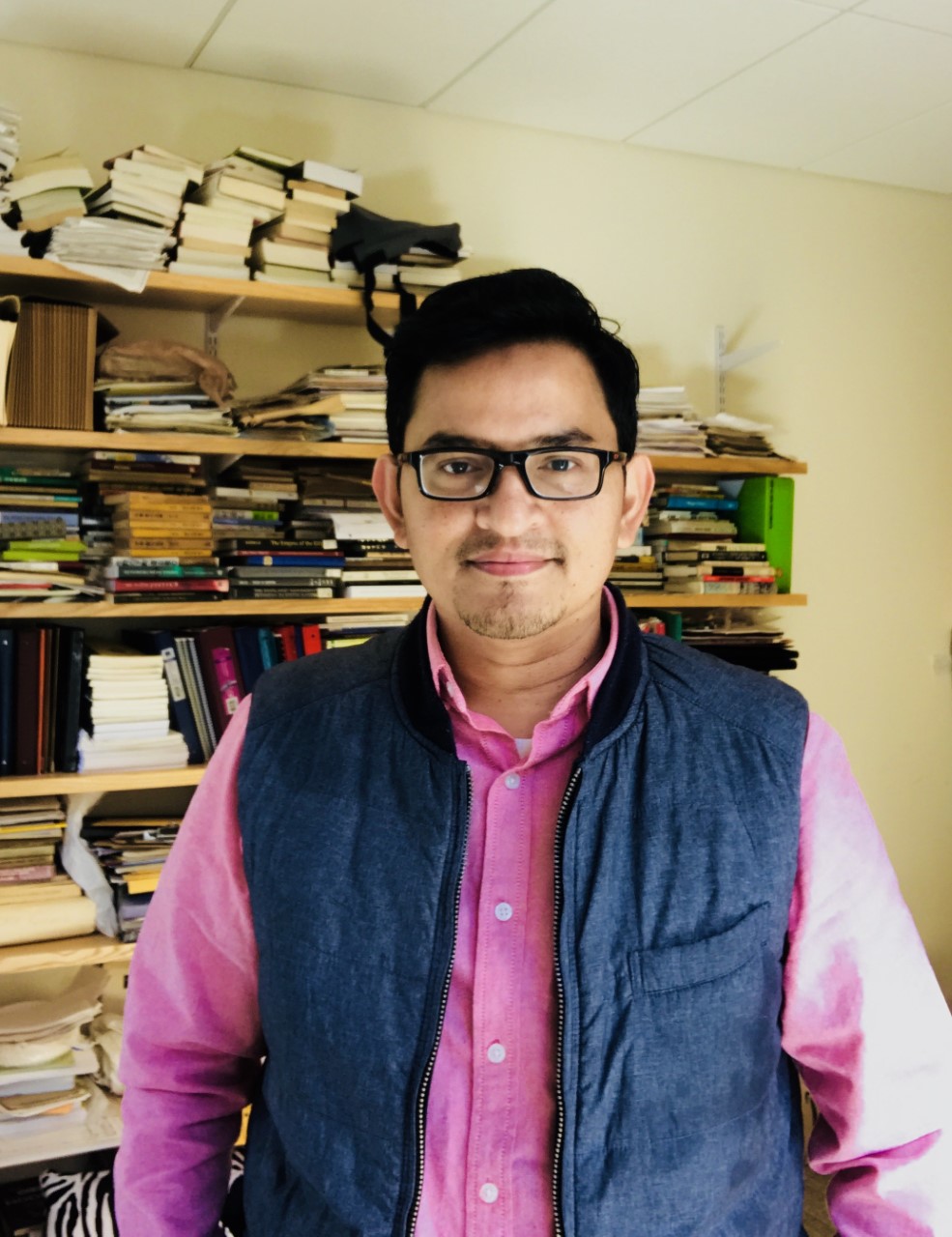
Visiting Scholar at APARC, 2022-24
Gita_Wirjawan.jpg

Gita Wirjawan joined the Walter H. Shorenstein Asia-Pacific Research Center (Shorenstein APARC) as a visiting scholar for the 2022-23 and 2023-2024 academic years. In the 2024-25 year, he is a visiting scholar with Stanford's Precourt Institute for Energy. Wirjawan is the chairman and founder of Ancora Group and Ancora Foundation, as well as the host of the podcast "Endgame." While at APARC, he researched the directionality of nation-building in Southeast Asia and sustainability and sustainable development in the U.S. and Southeast Asia.

Date Label

Shorenstein APARC
Stanford University
Encina Hall, E301
Stanford,  CA  94305-6055

0
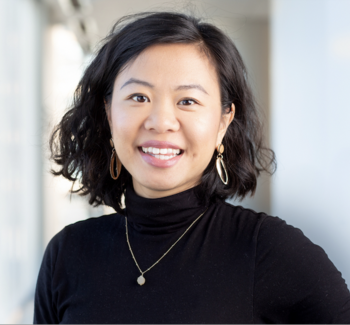
Visiting Scholar at APARC, 2022-23
Ankhbayar_Begz.jpg

Dr. Ankhbayar Begz joined the Walter H. Shorenstein Asia-Pacific Research Center (APARC) as visiting scholar for the fall and winter quarter of the 2022-2023 academic year. Dr. Begz currently serves as researcher at Mongolian University of Science and Technology's Open Education Center. While at APARC, he conducted research regarding democracy, women’s political participation, higher education, and gender equality issues in Mongolia and Asia.

Paragraphs
Portrait of Xueguang Zhou and a 3D mockup cover of his book, 'The Logic of Governance in China'

Drawing on more than a decade of fieldwork, The Logic of Governance in China develops a unified theoretical framework to explain how China's centralized political system maintains governance and how this process produces recognizable policy cycles that are obstacles to bureaucratic rationalization, professionalism, and rule of law. Read our news story and watch our book conversation with Zhou here:

The book is unique for the overarching framework it develops; one that sheds light on the interconnectedness among apparently disparate phenomena such as the mobilizational state, bureaucratic muddling through, collusive behaviors, variable coupling between policymaking and implementation, inverted soft budget constraints, and collective action based on unorganized interests. An exemplary combination of theory-motivated fieldwork and empirically-informed theory development, this book offers an in-depth analysis of the institutions and mechanisms in the governance of China.

All Publications button
1
Publication Type
Books
Publication Date
Subtitle

An Organizational Approach

Authors
Xueguang Zhou
Book Publisher
Cambridge University Press
Authors
Kiyoteru Tsutsui
News Type
Commentary
Date
Paragraphs

At the APARC Japan Program, we are deeply saddened by the news of the assassination of Shinzo Abe, former prime minister of Japan and still an influential political figure domestically and globally. We strongly condemn this senseless act of violence. We also sincerely hope that we will all strive to stop the 21st-century world from conjuring the memories of a pre-World War II days, bringing back the invasion of a sovereign nation for no reason (Russia’s invasion of Ukraine), violent attack on democracy based on disinformation (the January 6 uprising in the United States), and assassination of an influential leader of a stable democracy (the death of Abe). Having served longer than any other prime minister in Japanese history, Abe had his admirers and detractors. Regardless of one’s evaluation of his legacy, however, this act of violence needs to be condemned in no uncertain terms, and every effort should be made to prevent similar acts of terror.

Abe was one of the most transformative political leaders in modern Japanese history, whose foreign policy accomplishments made him a leading protector of the liberal international order at a time when China’s authoritarian model and the U.S.’s isolationist tendencies began to threaten the rules-based international order. He consolidated U.S.-Japan relations by deftly handling the polar opposite personalities of Presidents Obama and Trump during his second term. He made lasting contributions to international politics, having invented new influential concepts such as Free and Open Indo-Pacific and Data Free Flow with Trust, which were later embraced by many democratic allies in the region, most notably by the United States.

Abe's passing will change Japanese politics in a number of ways. Most immediately, internal politics within the ruling Liberal Democratic Party will be shaken up.

Sign up for APARC newsletters to receive our experts' commentary and analysis.


Abe's diplomatic prowess was predicated on his domestic power base, evidenced by six straight victories in national elections during his second term. Even after stepping down as Prime Minister, he wielded powerful influence in national politics, particularly in defense and foreign affairs. His passing will change Japanese politics in a number of ways.

Most immediately, internal politics within the ruling Liberal Democratic Party (LDP) will be shaken up. The LDP was poised to win the Upper House election held on Sunday, July 10, but the margin of victory likely grew because of national sympathy for Abe’s death. With this victory, Prime Minister Kishida now has “the Golden Three Years” in which he does not need to hold any national election. This puts him in a position to execute his policy agenda.

In the economic realm, Prime Minister Kishida no longer has to go out of his way to defend Abenomics and emphasize that his economic policy is an extension of Abe’s. He also does not face the same level of internal pressure to increase the defense budget, take a strong stance against China, and work toward a constitutional revision. At the same time, with Abe no longer uniting the conservative constituencies for Kishida, they might become more critical of Kishida, pushing him to pursue Abe’s policy agenda such as constitutional revision.

Prime Minister Kishida will likely be emboldened to shake up the cabinet and bring in people he finds useful. He no longer needs to consider Abe’s preferences, which he did to a certain extent in forming his first cabinet.

Abe’s faction is the largest in the LDP, and it will have to find a successor who can keep it together and exert influence within the LDP. Prime Minister Kishida will likely be emboldened to shake up the cabinet and bring in people he finds useful. He no longer needs to consider Abe’s preferences, which he did to a certain extent in forming his first cabinet. This will likely lead to surprising appointments in the next cabinet shuffle such as a long-term partner of Abe’s becoming Kishida’s close ally.

The U.S.-Japan alliance will remain strong, and Americans should not expect any major changes that would impact them directly in the short term. A stable leadership in an important ally is always welcome, and somebody like Kishida who is sensible and careful, if not dynamic, makes for a reliable partner. Abe’s interpersonal skills are hard to replicate but the geopolitical environments will continue to push American and Japanese leaders to work closely and remain friendly.

One concern for Japan is that a copycat event is common after a violent incident like this. The fact that the gun used in the assassination was made by the perpetrator speaks to the efficacy of gun control measures in Japan but it also serves as a warning that others with similar skills and intentions could use hand-made guns for other acts of violence. Japan experienced a wave of political violence in the period leading up to World War II, and the political instability provided fertile ground for the destructive military expansion that resulted in the devastating defeat in 1945. It might seem too early to worry about such dire outcomes, but we can never be too careful in working to preserve our precious democracy. The United States is learning this lesson the hard way, as it has had to deal with all the demagogies and disinformation that seem to persist with no end in sight.

Shinzo Abe was killed while on a campaign trail in the last few days of the Upper House election period. While the assassin’s motivation was more personal than political, it is still alarming that election campaigns were the site of this violent attack. If this can happen in Japan, widely viewed as the least likely place for violence in general and gun violence in particular, then it could happen anywhere to undermine democracy. To honor Abe’s legacy, we all need to reassert our resolve to protect our democracy in Japan, the United States, and all over the world.

Photo of Kiyo Tsutsui

Kiyoteru Tsutsui

Henri H. and Tomoye Takahashi Professor of Japanese Studies, Professor of Sociology, Director of the Japan Program and Deputy Director at APARC, Senior Fellow at the Freeman Spogli Institute for International Studies, Stanford University
Full Biography

Read More

Flanked by Sultan of Brunei Haji Hassanal Bolkiah (L) and President of Indonesia Joko Widodo (R), U.S. President Joe Biden points towards the camera.
Commentary

In Southeast Asia, the United States Needs to Up its Economic Game

The harsh reality is that, even with still-strong security partnerships, it is hard to imagine the US being able to sustain its overall influence in the region if it continues to lose ground economically.
In Southeast Asia, the United States Needs to Up its Economic Game
Ukrainian President Volodymyr Zelensky addresses the South Korean parliament via video link.
Commentary

In the Wake of Russia’s Invasion of Ukraine, Korea Should Join Its Peers in Defending the Liberal International Order

It is difficult to anticipate how the geopolitical storm set off by Russia’s invasion of Ukraine may develop. What is certain is that the international order will not be the same, and this change will have significant repercussions for South Korea.
In the Wake of Russia’s Invasion of Ukraine, Korea Should Join Its Peers in Defending the Liberal International Order
Honor guards prepare to raise the Taiwan flag in the Chiang Kai-shek Memorial Hall square.
Commentary

Biden Says We’ve Got Taiwan’s Back. But Do We?

Many will applaud Mr. Biden for standing up for democratic Taiwan in the face of Chinese threats. But he could be putting the island in greater danger, and the United States may not be able to come to the rescue.
Biden Says We’ve Got Taiwan’s Back. But Do We?
Hero Image
Shinzo Abe speaking from a lectern
Shinzo Abe speaking at Stanford University in 2015.
Linda A. Cicero/ Stanford News
All News button
1
Subtitle

Abe was one of the most transformative political leaders in modern Japanese history, and his passing will change Japanese politics in a number of ways, most immediately shaking up internal politics within the ruling Liberal Democratic Party. To honor Abe’s legacy, we all need to reassert our resolve to protect our democracy in Japan, the United States, and all over the world.

-

Image
NKDB Korean translated version of North Korean Conundrum


The North Korean Conundrum: Balancing Human Rights and Nuclear Security 
북한의 난제: 인권과 핵안보의 균형
한국어 번역판 발간 행사 북토크

In association with the Database Center for North Korean Human Rights (NKDB), a book talk on the Korean translated version of The North Korean Conundrum: Balancing Human Rights and Nuclear Security is held in Seoul, Korea. 

For more information about the book, please visit the publication webpage.

<Consecutive Korean-English interpretation is provided at the book talk event>

Presenters:

Gi-Wook Shin, Director of Shorenstein Asia-Pacific Research Center, Stanford University

Robert R. King, former Special Envoy for North Korean Human Rights Issues

Joon Oh, former South Korean Ambassador to the UN

Minjung Kim, Associate Executive Director, Save North Korea

Discussants:

Yeosang Yoon, Chief Director, Database Center for North Korean Human Rights

Haley Gordon, Research Associate, Shorenstein Asia-Pacific Research Center, Stanford University

Sookyoung Kim, Assistant Professor, Hanshin University

In-Person event in Korea
June 8, 2PM-5PM, Korea Time
Schubert Hall, Hotel President, Seoul

Seminars
Authors
News Type
Commentary
Date
Paragraphs

This Q&A first appeared in The Diplomatmagazine.


The Gwangju Uprising of May 18-27, 1980, was a pivotal step in South Korea’s march toward democratization. After protesting students were brutally attacked by soldiers, the people of Gwangju joined in armed resistance against the martial regime of Chun Doo-hwa, who had seized power in a coup. The uprising was put down by government troops; the final death tally remains hotly debated, but most academic estimates place it at over 1,000 dead.

The public outrage sparked by the incident sowed the seeds of Chun’s downfall, though it would take another seven-plus years for South Korea to hold its first democratic presidential election.

The Diplomat interviewed Gi-Wook Shin – the director of the Walter H. Shorenstein Asia-Pacific Research Center and the founding director of the Korea Program, both at Stanford University – about the legacy of the Gwangju Uprising in South Korea, and how it resonates today. Shin is also the William J. Perry Professor of Contemporary Korea; a senior fellow of the Freeman Spogli Institute for International Studies; and a professor of sociology, all at Stanford University.

The Gwangju Uprising was in 1980; South Korea would finally hold democratic elections in 1987. What role did the Gwangju Uprising — and the resulting massacre — play in South Korea’s democratization process?

The tragic outcome was a brutal wakeup call to Korean democratic movements. Their failure in 1980 called for a new movement strategy to build an alliance between students/intellectuals and grassroots citizens. This alliance became instrumental in successfully organizing and mobilizing the masses in the summer of 1987, when millions of people marched together for democracy. Gwangju also became a symbol of the struggle for freedom and human rights throughout Korea’s democratization.

The massacre also created serious legitimacy problems for the Chun regime throughout its tenure. Chun was widely portrayed as the only ruler in Korean history who mobilized government troops to kill their own innocent citizens. It was almost impossible to justify extending autocratic rule beyond his regime, and Chun and his military colleagues had to accept democratic reform and elections in 1987.

Finally, the massacre provoked anti-American sentiments and movements in the 1980s during pro-democracy movements. Largely pro-American until then, Koreans expected the U.S. to support their fight for democracy – in fact, the Carter administration pressed the Park Chung-hee regime to improve human rights and political freedom. However, Koreans were disappointed and angry that the U.S. did not stop the Korean military, which was under the U.S. commandership, from killing innocent citizens. While there existed controversies over the extent to which the U.S. was complicit in the tragic incident, the U.S. was no longer deemed an ally in their fight for democracy but just another neocolonial power supporting dictatorship.

Gwangju became the most important issue of transitional justice in the democratic era and victims were compensated through a special law, while perpetuators such as Chun and Roh were punished.
Gi-Wook Shin

Both Chun Doo-hwan and Roh Tae-woo were sentenced to prison for their roles in the Gwangju massacre, among other charges. Both former presidents, however, were pardoned in 1997. Chun and Roh passed away in 2021, eliminating any possibility of an apology. Is there still a sense of “unfinished business” or a lack of closure after the massacre of May 1980? 

Gwangju became the most important issue of transitional justice in the democratic era and victims were compensated through a special law, while perpetuators such as Chun and Roh were punished. The uprising was officially recognized as “Gwangju Democratization Movement,” and May 18 is celebrated as an unofficial memorial day in Korea.

However, there remains a sense of lack of closure. Besides the two former presidents passing without making an apology, there has been little progress on efforts to recognize the “May 18 Democratization Movement” in the preamble of South Korea’s constitution. President Yoon made campaign promises to support such recognition, and if/when this happens, it will be an important step toward a final closure.

Gwangju’s legacy remains contested. The far-right claims (as Chun did until his death) that North Korea was behind the unrest and that death counts were overblown. Is this a fringe view, or does it resonate more broadly with South Korea’s conservatives?

Gwangju’s legacy is now much less contested, and such a view is held only by the far-right minority. Presidents of conservative administrations such as Lee Myung-bak and Park Geun-hye attended the May 18th Memorial Services held in the city and the main conservative party apologized for its past members (far rightists) who “defamed” and “insulted” the Gwangju movement a few years ago.

President Yoon visited the city to pay a tribute to the victims during his presidential campaign and attended this year’s memorial services on May 18. Furthermore, his cabinet members and presidential advisers, as well as National Assembly members of his party, all accompanied him to the service. This shows a broad consensus about the meaning and legacy of Gwangju in Korean society, regardless of political or ideological orientation.

How does the legacy of the Gwangju Uprising reflect a broader disagreement in framing the legacy of South Korea’s past dictators? For example, after Chun’s death Yoon Suk-yeol – then a candidate, now South Korea’s president – praised the former dictator for being “good at politics.” 

There certainly exists a nostalgia among some conservatives in South Korea who believe that leaders like Park Chung-hee and Chun Doo-hwan did well in improving the nation’s economy, while being authoritarian. Yet even those people would not contest the tragic nature of the uprisings and their aftermath.

Yoon’s comment was made as an attempt to explain that even though he does not have much experience in politics, he could do well by relying on able technocrats, as did Chun. I don’t think he meant by it that he supports dictatorship, and he immediately made an apology for his remark.

How does South Korea’s struggle for democracy factor into modern day politics, especially as the generation directly involved are aging out of the political sphere? Does the legacy of the Gwangju Uprising resonate with young South Koreans? 

Democratic activism has become a valuable type of political capital since democratization, and former activists have become the ruling elite of the progressive governments, especially in the Moon Jae-in administration. As these so called “386 generation” activists (those who were born in 1960s, entered college in the 1980s, and were in their 30s at the time of their activism) became the power elite, however, they acted no differently than their conservative counterparts. After all, they were accused of simply becoming another new establishment.

As a result, after the Moon administration, past activism lost moral ground and is no longer valued as political capital. As I pointed out elsewhere, the former activists played a crucial role in bringing in democracy but have since stopped short of advancing liberal democracy in Korea.

As far as I know, the legacy of the Gwangju Uprising does not resonate much with young South Koreans – it is just part of Korean history.

What is the relevance of the U.S. approach to the Gwangju Uprising for the modern-day relationship? Does past U.S. support for South Korea’s dictators, despite the bloodshed at Gwangju, still rankle? 

Charges of U.S. complicity in the Gwangju massacre and the subsequent rise of anti-Americanism in Korea undoubtedly concerned American policymakers. When millions of people filled the streets again demanding democratic reform in the summer of 1987 with such anti-American slogans as “Yankees, Go Home,” the U.S. was deeply concerned. This time the Reagan administration moved decisively by sending Gaston Sigur, an assistant secretary of state, to Seoul to meet with Chun, who was considering mobilizing armed forces once again to resolve the crisis. The U.S. seemed to learn lessons from what had happened in Gwangju seven years prior. Pressured by the Americans, Chun cancelled plans to crush the opposition by using military force and granted political concessions that paved the way for a democratic transition in Korea.

Still, anti-Americanism continued to rankle U.S.-ROK relations for many more years that followed. In 2002 when two Korean school girls were killed by U.S. military vehicles during the military exercises, for instance, another wave of anti-Americanism swept the country and the progressive candidate Roh Moo-hyun, who took a tough stance toward the U.S., won the 2002 presidential election.

Since then, however, anti-American sentiments gradually declined, and now the majority of South Koreans do not any longer hold resentment against the U.S. On the contrary, an increasing number of South Koreans support a stronger alliance with the U.S. in the face of rising China. The new Yoon government is expected to join the U.S. in defending a liberal international order that is threatened by autocratic leaders like Putin and Xi.

Read More

South Korea's President Yoon holds a champagne glass
Commentary

Which Yoon Should Biden Expect at the Upcoming South Korea-U.S. Summit?

Yoon has been compared to Biden’s own nemesis, Donald Trump, but he is far from a political iconoclast.
Which Yoon Should Biden Expect at the Upcoming South Korea-U.S. Summit?
Yoon Suk-yeol speaks during a press conference
Commentary

In Troubled Waters: South Korea’s Democracy in Crisis

Just as the United States experienced a crisis of democracy under the Trump administration, South Korea underwent a democratic recession during President Moon Jae-in’s time in office. The consequences of this decline have been evident throughout the election and the subsequent presidential transition.
In Troubled Waters: South Korea’s Democracy in Crisis
South Korean President-elect Yoon Suk-Yeol
Commentary

South Korean Democracy Under Stress: Yoon Suk-yeol’s Victory Likely to Increase Domestic Polarization

On CNBC's "Squawk Box Asia," APARC Director Gi-wook Shin shares insights about the potential for democratic backsliding and further domestic tension after Yoon Suk-yeol’s victory in the contentious presidential election in South Korea.
South Korean Democracy Under Stress: Yoon Suk-yeol’s Victory Likely to Increase Domestic Polarization
Hero Image
The Gwangju Uprising
A parade of buses, trucks, and cars, "drivers of democracy," gathered to support Chonnam University students demonstrating against the martial law government in May of 1980.
Mar del Este
All News button
1
Subtitle

“The tragic outcome was a brutal wakeup call to Korean democratic movements.”

Authors
Noa Ronkin
News Type
News
Date
Paragraphs

South Korea’s cultural wave has swept across the world. Known as Hallyu, the Korean Wave spans music, film, TV, fashion, and food, expressing soft power that engages global audiences and transforms the ways in which they view and consume pop culture. North Korea, by contrast, is a systemic abuser of human rights and remains fixed on the pursuit of military might that poses regional and international threats. These two divergent aspects of Korea that intrigue scholars and the public alike were the focus of a conference that marked the 20th anniversary of the Korea Program at Stanford’s Walter H. Shorenstein Asia-Pacific Research Center (APARC).

The two-day event, held on May 19 and May 20, convened leaders from academia, government, and the entertainment industry to explore how to translate the wide fascination with South Korea’s pop culture wave and North Korea’s geopolitics into an increased academic interest in Korea and to envision new horizons for the field of Korean studies. The conference featured keynote addresses by Ban Ki-moon, former United Nations secretary-general, and Soo-Man Lee, founder and chief producer of SM Entertainment, and a presentation by SUHO, leader of K-pop group EXO.

They joined long-time Korea Program supporters and members of the general public and Stanford community, who came together to celebrate the accomplishments of the Korea Program in its first two decades and consider its future. The event drew robust audiences both in person and online, including a large number of enthusiastic Stanford students and tens of thousands of viewers who watched the event livestream

To understand contemporary Korea and further Korean studies, it is critical to couple the traditional focus on the Peninsula’s security dilemma with a broader examination of Korean society and culture.
Gi-Wook Shin

Expanding the Field of Korean Studies

As he welcomed conference attendees, Stanford sociologist Gi-Wook Shin, the William J. Perry Professor of Contemporary Korea and founding director of the Korea Program, explained that the goal in gathering participants and presenters who represent deep and varied interests in Korea is to highlight the importance of Korean studies programs and build bridges between the United States and Korea, creating a lasting impact well beyond campus.

Shin, who also serves as APARC director, reflected on the efforts made to build a thriving Stanford research hub on contemporary Korea. These include establishing a Korean collection at the East Asia Library, recruiting faculty with expertise in both the social sciences and the humanities, academic publishing, offering training and fellowship opportunities, and events programming.

The conference’s dual focus on North Korea’s geopolitics and South Korea’s Hallyu reflects Shin’s commitment to expanding the range of inquiry about Korea. “To understand contemporary Korea and further Korean studies, it is critical to couple the traditional focus on the Peninsula’s security dilemma with a broader examination of Korean society and culture,” he said.

Professor of International Studies Michael McFaul, director of the Freeman Spogli Institute for International Studies, the parent organization of APARC and the Korea Program, and Professor of Jewish Studies Gabriella Safran, the senior associate dean for humanities and arts, contributed additional welcome remarks, symbolizing the Korea Program’s bridging of both the social science and humanities fields. Safran observed that Korean studies instruction at Stanford has been designed to engage the university community broadly and highlighted the evolution of Stanford students’ understanding of popular culture, thanks in part to the rising popularity of the Korean Wave.

North Korea’s Geopolitics and Society

The morning session of the conference opened with a panel on North Korea. Attendees heard from Siegfried Hecker, professor emeritus in management science and engineering, about the prospects for a renewed diplomacy policy with North Korea; from Kim Sook, former ROK ambassador to the United Nations, about the status of inter-Korean relations and North Korea’s efforts to stave off a COVID-19 crisis; and from Joohee Cho, Seoul bureau chief at ABC News, about the challenges of reporting from and on North Korea and the need to better understand North Korean society beyond the trope of the diplomacy of denuclearization.

Reflecting Back, Looking Ahead

Ambassador Kim, who is also a former fellow with the Korea Program, is one of many Program alumni from the academic, policy, and industry sectors. Speakers on the following panel represented the scope of expertise of the Program’s alumni community and the wide-ranging training and fellowship opportunities the Program facilitates.

The panel brought together Paul Chang, associate professor of sociology at Harvard University, Joon-woo Park, former ROK ambassador to the EU and Singapore, Jong Chun Woo, former president of Stanford APARC-Seoul Forum, and Megan Faircloth, a Stanford Senior in the Department of East Asian Languages and Cultures, to consider the Korea Program’s past, present, and vision for the future.

Hard, Soft, and Smart Power

Delivering the keynote address on the first day of the conference, former UN Secretary-General Ban Ki-moon focused on the paradox of the two Koreas. On the one hand, the Republic of Korea has followed a remarkable national development trajectory to become a powerhouse of cultural and artistic creativity – “a global soft power pace-setter,” said Mr. Ban. On the other hand, North Korea, with its stunted development, is seen as a global pariah, and its fixation on hard power suffocates the creativity, innovation, and culture of its own people through systemic repression, state control, and censorship.

But hard power and soft power are not the only two paths, Mr. Ban stated. He went on to explain that a truly advanced country should embrace a forward-thinking national identity of smart power, combining and ultimately transcending hard power- and soft power-related attributes and characteristics. “In an uncertain future, I am certain that Korea’s ascension into a smart power can advance a common destiny for all, one rooted in peace, sustainability, and prosperity,” said Mr. Ban. The best way to achieve this vision, he concluded, is to educate new generations to embody the principles of global citizenship and help them live in harmony and peace with other human beings, irrespective of their nationality.

The soft and hard power strategies of the two Koreas are also the focus of two new documentaries commissioned by the Korea Program. Focused on K-pop and the North Korean human rights crisis, the films are intended to help scholars in teaching students about these two topics. The conference included the unveiling of the documentaries’ trailers and a discussion with film director Hark Joon Lee. The complete documentaries will be released later this year.

Hallyu Has No Borders

There is no doubt that the speaker who most charmed conference attendees and the multitudes of global viewers who watched the event livestream was SUHO, leader of K-pop group EXO. “Today, I am here as the guardian of EXO and K-pop,” SUHO said at the start of his speech, referring to the meaning of his stage name.

He went on to talk about his decade-long experience as a K-pop artist and the hard work and level of detail that go into the complex choreography of the K-pop dances, emphasizing the special, social media-driven emotional bond K-pop artists share with their global fanbase and noting how many fans take a deeper interest in Korean culture because they follow EXO.

Hallyu has no borders and no longer stops at one specific art form, concluded SUHO. “We are witnessing its expansion into our society from every angle: music, dramas, movies, food, education, and more. K-culture is more than a passing trend. It’s a global phenomenon that will continue to grow and evolve,” he said.

Joining SUHO for a discussion of the Korean Wave were Stanford’s Marci Kwon, assistant professor of art and art history, and Angela Killoren, CEO of CJ ENM America, Inc., who oversees U.S. operations for the South Korean entertainment conglomerate that is known for its multiple Academy Award-winning movie “Parasite” and popular K-dramas such as “Crash Landing on You.”

Killoren described the evolution of the global adoption of K-dramas, largely made possible by their distribution through Netflix, and offered insights into the drivers and shapers of the rise of Korean entertainment. According to Killoren, unlike the predominantly male gaze-driven entertainment forms in other cultures, Korean entertainment content caters to the female gaze, as befitting the consumer side of the Korean economy that has been driven by the purchasing power of women

From Immediate Interest to Long-Term Commitment

The second day of the conference convened leading academics to examine how to translate the wide interest in North Korea and K-pop into Korean studies. Panelists included Michelle Cho, assistant professor of East Asian studies at the University of Toronto, David Kang, professor of international relations and business at USC, and Stanford’s own Yumi Moon, associate professor of history, and Dafna Zur, associate professor of East Asian languages and cultures and director of the Center for East Asian Studies.

The panelists agreed on the importance of funding and supporting the study of Korean language in higher education, providing students with tools to articulate their knowledge and experience and help them arrive at insights that are personal, meaningful, and constructive; and fostering and supporting junior faculty. The discussion was followed by a lively Q&A session that engaged many student attendees.

Future Visions of K-pop

The conference concluded with a keynote speech by Soo-Man Lee, founder and chief producer of SM Entertainment. SM is one of South Korea's largest entertainment companies and is famous for fostering and popularizing the careers of a myriad of K-pop groups and stars — including the likes of aespa, NCT, Red Velvet, SUPER JUNIOR, and EXO — and for leading the worldwide K-pop phenomenon and the musical side of Hallyu

Lee recounted his roots as “K-pop’s first mover,” explaining how K-pop music expanded globally and how it demonstrates the power of content amid exponential technological revolution. “It connects the hearts of people around the world beyond generations and ideologies,” he said.

Lee described SM’s systematic production and management system, which he coined “Culture Technology (CT)” and which includes casting, training, content production, and marketing. This so-called CT system is the “growth engine of K-pop,” he noted.

He elaborated on his vision for a future of K-pop that centers on the “Play2Create” (P2C) ecosystem and combines metaverse technology. Within this blockchain-based ecosystem, which Lee says forms part of a new creator economy, fans, or “prosumers” can proactively use the original SM intellectual property to enjoy and create new content through recreation. The ultimate vision of K-pop and Hallyu is to contribute to human creativity, concluded Lee.

The conference made headlines in Korean media and elsewhere. Explore selected media coverage, the event press release, conference agenda, and YouTube playlist including the full livestream recordings via the links below

Read More

Dafna Zur with K-pop group aespa.
News

K-pop’s “Next Level”: Notes from the Field

Prof. Dafna Zur shares impressions from her visit with Soo-Man Lee, founder and chief producer of SM Entertainment, and the rare opportunity to tour the Seoul-based company and see the K-pop megastars-in-training. The preliminary results of this fieldwork, part of a documentary on K-pop, will be aired during the Korea Program's 20th Anniversary conference.
K-pop’s “Next Level”: Notes from the Field
Xion, Seoho, Ravn, Keonhee, Leedo, and Hwanwoong of OneUs visit the Empire State Building
Commentary

It’s Time for K-pop Stars to Speak Out on Human Rights

With few exceptions, South Korea’s K-pop idols have been conspicuously silent on controversial subjects – including the Russian invasion of Ukraine.
It’s Time for K-pop Stars to Speak Out on Human Rights
The Gwangju Uprising
Commentary

Gi-Wook Shin on Gwangju and South Korea’s Democracy

“The tragic outcome was a brutal wakeup call to Korean democratic movements.”
Gi-Wook Shin on Gwangju and South Korea’s Democracy
Hero Image
Collage of Soo-Man Lee, SUHO, and Ban Ki-moon speaking at a podium
From left to right: Soo-Man Lee, SUHO, and Ban Ki-moon.
Photos by Rod Searcey
All News button
1
Subtitle

The Korea Program at Stanford’s Walter H. Shorenstein Asia-Pacific Research Center marked its 20-year anniversary with a two-day conference that gathered eminent leaders from academia, government, and the K-pop industry, including former United Nations Secretary-General Ban Ki-moon and global star SUHO, leader of K-pop group EXO.

-

Register: bit.ly/3xZIp2S

The Philippines is but one of eleven countries in Southeast Asia and Prof.  Ferrer is not the only woman in the region whose ascent has shattered the glass ceiling.  But rather than offer a broad but necessarily shallow overview of the gains and frustrations of female professionals across the region, this webinar features an in-depth conversation with one Southeast Asian woman who has risen to prominence and influence in national security and the resolution of violent conflicts between insurgents and governments—visceral policymaking fields that have long been dominated by men.

Image
Miriam Coronel Ferrer 051022
Miriam Coronel Ferrer is unique among high-achieving women worldwide.  She is the first female in any country to have led successful negotiations with a rebel group.  In 2014, on behalf of the Philippine government, she co-signed with the Moro Islamic Liberation Front a Comprehensive Agreement on the Bangsamoro (CAB).  The agreement led to a further step toward conflict resolution when a Bangsamoro Autonomous Region in Muslim Mindanao was finally established in 2019.  In 2020 she co-founded the Southeast Asian Network of Peace Negotiators and Mediators.  Professor Ferrer also advises the Global Network of Women Peacebuilders. As a member of the UN Standby Team of Senior Mediators from 2018-2021, she helped fashion mediation initiatives not only in Southeast Asia but in Afghanistan, Georgia, Kosovo, and other countries as well.  Her latest book, Region, Nation and Homeland (2020), examines discourses of resistance in Mindanao and Luzon.  Her degrees are from the University of Kent and UP Diliman.

Image
Spring 2022 Series - AHPP 051022
This event is part of the 2022 Spring webinar series, Negotiating Women's Rights and Gender Equality in Asia, sponsored by the Walter H. Shorenstein Asia-Pacific Research Center.

Donald K. Emmerson

Via Zoom Webinar.

Miriam Coronel Ferrer Professor of Political Science, University of the Philippines (UP) Diliman
Seminars
Subscribe to Society