Society

FSI researchers work to understand continuity and change in societies as they confront their problems and opportunities. This includes the implications of migration and human trafficking. What happens to a society when young girls exit the sex trade? How do groups moving between locations impact societies, economies, self-identity and citizenship? What are the ethnic challenges faced by an increasingly diverse European Union? From a policy perspective, scholars also work to investigate the consequences of security-related measures for society and its values.

The Europe Center reflects much of FSI’s agenda of investigating societies, serving as a forum for experts to research the cultures, religions and people of Europe. The Center sponsors several seminars and lectures, as well as visiting scholars.

Societal research also addresses issues of demography and aging, such as the social and economic challenges of providing health care for an aging population. How do older adults make decisions, and what societal tools need to be in place to ensure the resulting decisions are well-informed? FSI regularly brings in international scholars to look at these issues. They discuss how adults care for their older parents in rural China as well as the economic aspects of aging populations in China and India.

-

Image
vincent brooks 2x3
About the speaker: Vincent K. Brooks is a career Army officer who recently retired from active duty as the four-star general in command of all U.S. Forces in Korea, where he concurrently commanded United Nations Command – continuously serving since 1950 and initially commanded by General of the Army Douglas MacArthur; and the Republic of Korea-U.S. Combined  Forces Command comprising over 625,000 Koreans and Americans under arms.

General Brooks, who goes by “Vince,” is a 1980 graduate of the United States Military Academy at West Point, the first class to include women, and he led the 4,000 cadets as the cadet brigade commander or “First Captain.”  He is the first African American to have been chosen for this position, and he was also the first cadet to lead the student body when women were in all four classes (freshman or “plebe” to senior or “first classman”).

General Brooks is from a career military family and claims Alexandria, Virginia as home given the long roots in maternal and paternal branches of the family tree. His areas of expertise are national security, policy, strategy, international relations, military operations, combating terrorism and countering the proliferation of weapons of mass destruction, diversity and inclusion, leadership in complex organizations, crisis leadership, and building cohesive trust-based teams. He is a combat veteran and a member of the Council on Foreign Relations.

Image
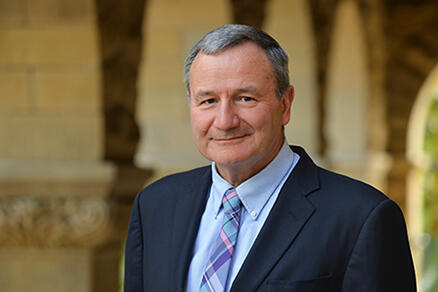
karl eikenberry 3x2 crop
Ambassador Karl Eikenberry, currently director of U.S.-Asia Security Initiative at Stanford's Shorenstein Asia-Pacific Research Center, will moderate the discussion. He served as the U.S. Ambassador to Afghanistan from 2009 until 2011. Before appointment as Chief of Mission on Kabul, Ambassador Eikenberry had a thirty-five year career in the United States Army, retiring in April 2009 with the rank of Lieutenant General.
 

This keynote event is part of the 11th annual Koret Workshop, "North Korea and the World in Flux," and open to the general public with registration.

The event is made possible through the generous support of the Koret Foundation


Oksenberg Conference Room
Encina Hall, 3rd floor
616 Serra Mall, Stanford University
 

General Vincent Brooks <i>former Commander of U.S. Forces Korea</i>
Moderated by Ambassador Karl Eikenberry
Seminars
-

The event is jointly sponsored by the Japan Program at the Shorenstein Asia-Pacific Research Center and the Japan Foundation Center for Global Partnership.

The Heisei era started in 1989, with high hopes for Japan to contribute to the international order. As the Heisei era draws to an end, Japan is once again expected to “step up” with increased urgency, given the current US administration’s withdrawal from, and challenge to the international order.  In this talk, I will first look back at the thirty years of Heisei, and discuss why Japan did not take the “internationalist” path in a way that some had expected. Looking forward, I discuss how the domestic institutional changes, together with the geopolitical challenges in Asia, have prompted Japan to seek active leadership in the region and beyond. I will elaborate on the evolution of the “Free and Open Indo-Pacific Vision,” with focus on how exactly Japan seeks to achieve “free and open” in the region, and challenges and limitations going forward.

Image
hikotaniphoto2017
Takako Hikotani is Gerald L. Curtis Associate Professor of Modern Japanese Politics and Foreign Policy. She previously taught at the National Defense Academy of Japan, where she was Associate Professor, and lectured at the Ground Self Defense Force and Air Self Defense Force Staff Colleges, and the National Institute for Defense Studies. Her research focus on civil-military relations and Japanese domestic politics, Japanese foreign policy, and comparative civil-military relations. Her publications (in English) include, “The Japanese Diet and defense policy-making.” International Affairs, 94:1, July, 2018; “Trump’s Gift to Japan: Time for Tokyo to Invest in the Liberal Order,” Foreign Affairs, September/October 2017; and “Japan’s New Executive Leadership: How Electoral Rules "Japan’s New Executive Leadership: How Electoral Rules Make Japanese Security Policy" (with Margarita Estevez-Abe and Toshio Nagahisa), in Frances Rosenbluth and Masaru Kohno eds, Japan in the World (Yale University Press, 2009). She was a Visiting Professional Specialist at Princeton University as Social Science Research Council/Abe Fellow (2010-2011) and Fellow of the US-Japan Leadership Program, US-Japan Foundation (2000- ). Professor Hikotani received her BA from Keio University, MAs from Keio University and Stanford University, and PhD in Political Science from Columbia University, where she was a President’s Fellow.

Takako Hikotani Associate Professor, Modern Japanese Politics and Foreign Policy, Columbia University
Seminars
Authors
Noa Ronkin
News Type
News
Date
Paragraphs
In her acclaimed book The Third Revolution: Xi Jinping and the New Chinese State, Chinese domestic and foreign policy expert Elizabeth Economy argues that Xi Jinping’s dual-reform trajectories—a more authoritarian system at home and a more ambitious foreign policy abroad—provide Beijing with new levers of influence that the United States must learn to use to protect its own interests.
 
Economy, the C. V. Starr senior fellow and director for Asia studies at the Council on Foreign Relations and a distinguished visiting fellow at Stanford University's Hoover Institution, kicked off the China Program’s 2019 winter colloquia with a discussion of the transformations underway in China today and the future of U.S.-China relations.
 
Speaking to a packed audience, Economy described how, in the process of pursuing his vision of the rejuvenation of the Chinese dream, Xi Jinping has upended much of Deng Xiaoping’s "second revolution" and has put in motion four significant strategic shifts in Chinese domestic and foreign policy.
 
The first shift is a move away from Deng’s consensus- and collective-based decision-making process back toward a more single-man, authoritarian role. The second is a reassertion of the Chinese Communist Party more deeply into the everyday political and economic lives of the Chinese people. The third is a creation of a virtual wall of restrictions and regulations that allows Xi and the rest of the Chinese leadership to control more closely what comes into the country and what goes out. The fourth shift, the most visible one to people outside China, is the move from Deng’s low-profile foreign policy to a far more ambitious foreign policy.
 
This foreign policy shift, said Economy, is especially noteworthy in three areas: first, in Xi’s move from staking claims around Chinese sovereignty to realizing them; second, in his Belt and Road Initiative; and third, in his effort to reform institutions of global governance so that they reflect Chinese values and norms.
 
How should the United States address these changes in China’s domestic and foreign policy? Economy listed four ways of response: first, cooperation, namely, collaborating with China on global problems such as those concerning public health or the environment; second, coordination with U.S. allies; third, countering China by pushing back on, for example, its South China Sea claims and incidents of intellectual property infringement; and finally, competing with China by investing domestically in areas including education and research and technological development.
 
Listen to Economy’s discussion. A transcript is also available below.
 

Hero Image
Elizabeth Economy speaking at a podium Thom Holme
All News button
1
-

The event is sponsored by the Japan Society for Promotion of Science and
the Japan Foundation Center for Global Partnership.


abe 6364 Japanese Prime Minister Shinzo Abe speaks at Stanford about innovation in Japan and Silicon Valley. He was also joined on stage by Stanford President John Hennessy and George Shultz, the former U.S. Secretary of State and a distinguished fellow at the Hoover Institution (below).
When the Liberal Democratic Party in Japan regained the power led by Prime Minister Shinzo Abe in December 2012, Japan’s government embarked on a set of economic policies dubbed “Abenomics.” Abenomics aimed at bringing Japan back from stagnation and restoring its growth potential.  The Abe administration entered its 7th year and Prime Minister Abe looks most likely to become the prime minister with the longest reign in the post war era.  Abenomics looks seemingly successful as well.  Japan’s economy has been in the longest expansion phase in the post war era.  The unemployment rate is so low that many employers claim they cannot find workers.  Yet, the major goals of Abenomics set at the beginning, such as 2% inflation rate and 2% real economic growth, have not been achieved.  Has Abenomics really succeeded?

This panel features four experts who have been closely watching Abenomics’s impacts on the Japanese economy.  They evaluate what Abenomics has accomplished so far in various areas.


Panelists:

Joshua Hausman, Assistant Professor of Public Policy; Assistant Professor of Economics, University of Michigan

Takatoshi Ito, Professor of International and Public Affairs, Columbia University

Nobuko Nagase, Professor of Labor Economics and Social Policy, Ochanomizu University, Japan

Steven Vogel, Professor of Asian Studies; Professor of Political Science; Chair of the Political Economy Program, University of California, Berkeley

Takeo Hoshi (moderator), Director of the Japan Program at the Shorenstein Asia Pacific Research Center, Stanford University


Koret-Taube Conference Center
Gunn-SIEPR Building
366 Galvez Street, Stanford University

Panel Discussions
-

Plese note: we're no longer accepting RSVPs for this event.


Eight years have passed since the Great East Japan Earthquake and subsequent Fukushima Daiichi Nuclear Power Plant accident. Steady progress has been made towards the reconstruction of Fukushima, repopulation of surrounding areas, and the decommissioning of the plant, of which Tokyo Electric Power Company Holdings (TEPCO) must shoulder 16 trillion yen of the 22 trillion yen, the total estimated cost of the accident. Meanwhile, with Japan having fully liberalized its electricity and gas retail market, the business environment surrounding TEPCO is undergoing a major change. In the long term, TEPCO foresees a decrease in demand for their power service and increased competition among utility companies. In this program, Naomi Hirose, who endeavored to manage the Fukushima incident spearhead reforming the company as President of TEPCO from 2012 to 2017, shares his insights on the current situation in Fukushima, lessons learned and implications from the accident.


Image
naomi hirose photo
Naomi Hirose is senior executive whose service at the Tokyo Electric Power Company (TEPCO) spans four decades.  He joined the company in 1976, having gained an appreciation for the energy industry following the 1973 Oil Shock, and worked in a number of management positions from 1992 to 2005, including corporate planning, sales, marketing, and customer relations.  Mr. Hirose became an executive officer in 2006, and in 2008, conceived and spearheaded a campaign promoting the economic and environmental benefits of electrification, called “Switch” that was a Japan-first. In 2010, he re-energized the company vision for global expansion.  Immediately after the 3.11 Fukushima Accident, Mr. Hirose dedicated himself to create the system for Nuclear Damage Compensation. After becoming President and CEO in 2012, he led the company in addressing a number of highly complex issues such as water management and decommissioning plans for the Fukushima Daiichi Nuclear Power Station, compensation for the accident and Fukushima revitalization, and keeping TEPCO competitive while facing the deregulation of Japan’s electricity market.  He currently serves as Executive Vice Chairman, Fukushima Affairs, overseeing the utility’s passionate and steadfast efforts to reconstruct and revitalize Fukushima Prefecture.  Mr. Hirose received his B.A. in Sociology from Hitotsubashi University in 1976,and his MBA from Yale School of Management in 1983.

Naomi Hirose, Vice Chairman, Tokyo Electric Power Company Holdings, Inc. (TEPCO)
Seminars
-

Please note venue change to Bechtel Conference Room (Encina Hall, 1st Floor)


This panel aims to bring together a diverse spectrum of speakers to generate discussion and debate regarding Chinese Influence and American Interests: Promoting Constructive Vigilance, a report jointly issued on November 29, 2018 by the Hoover Institution at Stanford University and the Center on U.S.-China Relations at Asia Society.

Chinese Influence and American Interests: Promoting Constructive Vigilance has sparked sharp reactions as it urges American governments, organizations and individuals to engage in “constructive vigilance” to counter China’s illicit, influence-seeking operations across a broad spectrum of American political and civic life, including U.S. federal and state governments; university campuses; and the technology sector.  What is the evidence behind these claims? What are the implications of these claims? Is the Chinese threat real or speculative? How can we responsibly assess the difference? 

Link to report found


Image
chang headshot

Gordon H. Chang is the Olive H. Palmer Professor in Humanities and professor in the Department of History at Stanford University. With degrees from Princeton and Stanford, Chang specializes in the history of U.S.-China relations and Asian American history. He has written and edited many books and essays on these topics. Among these are Friends and   Enemies: The United States, China, and the Soviet Union, 1948-1972 (Stanford University Press, 1990); Morning Glory, Evening Shadow: Yamato Ichihashi and His Internment Writing, 1942-1945 (Stanford University Press, 1997); Asian Americans and Politics: Perspectives, Experiences, Prospects (Woodrow Wilson Center Press, 2001); Chinese American Voices From the Gold Rush to the Present (University of California Press, 2006); Asian American Art: A History, 1850-1970 (Stanford University Press, 2008); and Fateful Ties: A History of America’s Preoccupation with China (Harvard University Press, 2015). At Stanford, he is co-directing the Chinese Railroad Workers in North America Project that is   recovering and interpreting the history of Chinese workers who toiled on the first transcontinental rail line and other lines in the 19th century.


Image
diamond headshot

Larry Diamond is a senior fellow at the Hoover Institution and at the Freeman Spogli Institute (FSI) for International Studies. For more than six years, he directed FSI’s Center on Democracy, Development, and the Rule of Law, where he now leads its Program on Arab Reform and Democracy and its Global Digital Policy Incubator. He is the founding co-   editor of the Journal of Democracy and also serves as Senior Consultant at the International Forum for Democratic Studies of the National Endowment for Democracy. His research focuses on democratic trends and conditions around in the world, and on policies and reforms to defend and advance democracy.  His 2016 book, In Search of Democracy,  explores the challenges confronting democracy and democracy promotion, gathering together three decades of his writing and research, particularly on Africa and Asia.  He has just completed a new book on the global crisis of democracy, which will be published in 2019, and is now writing a textbook on democratic development.


Image
economy headshot

Elizabeth C. Economy is the C.V. Starr senior fellow and director for Asia studies at the Council on Foreign Relations and a distinguished visiting fellow at Stanford University’s Hoover Institution. Her most recent book, The Third Revolution: Xi Jinping and the New Chinese State,   (Oxford University Press, 2018) analyzes the contradictory nature of reform under President Xi Jinping. She is also author of By All Means Necessary: How China's Resource Quest is Changing the World(Oxford University Press, 2014) with Michael Levi, and The River Runs   Black: The Environmental Challenge to China's Future (Cornell University Press, 2004; 2nd edition, 2010; Japanese edition, 2005; Chinese edition, 2011). She has published articles in policy and scholarly journals including Foreign Affairs, Foreign Policy, and the Harvard   Business Review; and op-eds in the New York Times and Washington Post, among others. In June 2018, she was named one of the "10 Names That Matter on China Policy" by Politico Magazine.


Image
lampton headshot

David M. Lampton is Oksenberg-Rohlen Fellow and Research Scholar at Stanford University’s Shorenstein Asia-Pacific Research Center. He also is Hyman Professor and Director of China Studies Emeritus at the Johns Hopkins School of Advanced International Studies. Having started his academic career at The Ohio State University, Lampton has been   Chairman of the The Asia Foundation (2015-2018), president of the National Committee on United States-China Relations (1988-1997), and former Dean of Faculty at SAIS (2004-2012). He is the author of: Same Bed, Different Dreams: Managing U.S.-China Relations, 1989-2000 (2001); The Three Faces of Chinese Power: Might, Money, and   Minds (2008); and, The Making of Chinese Foreign and Security Policy (editor, Stanford University Press, 2001). He received his B.A., M.A., and Ph.D. degrees from Stanford University where, as an undergraduate student, he was a fireman. Lampton has an honorary doctorate from the Russian Academy of Sciences’ Institute of Far Eastern Studies. His   newest book, Following the Leader: Ruling China, from Deng Xiaoping to Xi Jinping, was first published in January 2014 and will be reissued in paperback with a new Preface early in 2019 by the University of California Press. His current field research and book-length project focuses on Beijing’s effort to build high-speed and other rail lines to Singapore from southern China.


Image
oi headshot

Jean C. Oi is the William Haas Professor of Chinese Politics in the department of political science and a Senior Fellow of FSI at Stanford University. She is the founding director of the Stanford China Program at Shorenstein APARC. Professor Oi also is the founding Lee Shau Kee Director of the Stanford Center at Peking University. Her work focuses on comparative politics, with special expertise on political economy and the process of reform in transitional systems.  Oi has written extensively on China’s political economy. Her most recent works include, Zouping Revisited: Adaptive Governance in a Chinese County, with Steven Goldstein (2018); Challenges in the Process of China’s Urbanization, with Karen Eggleston and Yiming Wang (2017); Going Private in China: The Politics of Corporate Restructuring and System Reform (2011); and Growing Pains: Tensions and Opportunity in China’s Transformation, with Scott Rozelle and Xueguang Zhou (2010).


This event is part of the China Program’s Colloquia Series entitled "A New Cold War?: Sharp Power, Strategic Competition, and the Future of U.S.-China Relations " sponsored by Shorenstein APARC's China Program.

A New Cold War?: Sharp Power, Strategic Competition, and the Future of U.S.-China Relations

Image
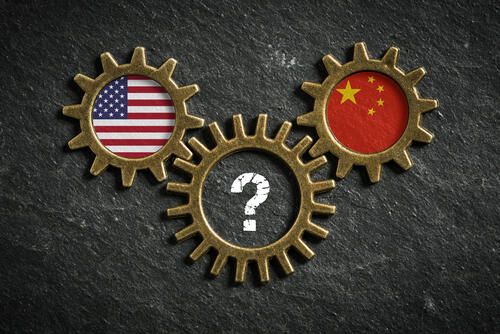
gears

Trade conflict has exploded. The media is rife with stories of China’s unfair trade practices, cyber theft, IP theft and forced technology transfers. Who will first scale the commanding heights of technological supremacy? Who will be the first mover in AI, robotics and biotechnology? What are the implications of Beijing’s ambitious infrastructure projects, including its Belt and Road Initiative? How is China’s “sharp power” deployed, and what are its implications for political and civic life in the U.S.? Can the Trump administration and Beijing’s leadership reach agreement on our trade disputes? Are these just the beginning salvos of an increasingly turbulent future? As U.S. policy towards China sharply veers away from “constructive engagement” to “strategic competition,” the Stanford China Program will host a series of talks by leading experts to explore the current state of our bilateral relations, its potential future, and their implications for the world order.

https://aparc.fsi.stanford.edu/china/research/new-cold-war-sharp-power-strategic-competition-and-future-us-china-relations


For a recap, audio, transcript and pictures of the event, please see the following link.

https://aparc.fsi.stanford.edu/china/multimedia/transcripts-chinese-influence-real-or-perceived

p.p1 {margin: 0.0px 0.0px 0.0px 0.0px; font: 12.0px Garamond} span.s1 {font-kerning: none; background-color: #fffb01} span.s2 {font-kerning: none}

Oksenberg Conference Room Encina Hall, 3rd Floor 616 Serra Mall, Stanford, CA 94305
Gordon H. Chang Professor, Department of History, Stanford University
Larry Diamond Senior Fellow, Hoover Institution, Stanford University
Elizabeth C. Economy Distinguished Visiting Fellow, Hoover Institution, Stanford University
David M. Lampton Oksenberg-Rohlen Fellow, FSI, Stanford University
Jean C. Oi Director, Stanford China Program; William Haas Professor of Chinese Studies, Stanford University
Seminars
-

The event is jointly sponsored by the Japan Program at the Shorenstein Asia-Pacific Research Center and the Japan Foundation Center for Global Partnership.

In this talk, David Leheny (Waseda University) discusses his new book Empire of Hope (Cornell University Press, 2018), which challenges current trends in debates about emotion and politics, arguing that we should instead look at the role of narrative in shaping emotional representation. In the book, Leheny draws from debates about status in international relations theory and from debates about affect and narrative in literary and historical studies to analyze cases from Japan’s Bubble and post-Bubble eras. This talk will focus especially on a 2001 crisis in US-Japan relations over a collision between a US Navy nuclear submarine and a fisheries training boat that resulted in the deaths of nine Japanese, including four high-school students. By presenting grief as both a national emotion and as one that could be narrated through the lens of timeless cultural difference, the US and Japanese governments crafted a crisis resolution that ostensibly rested on “mutual understanding” but that also hid the messier realities of power and of loss in the collision’s aftermath.

Image
lehenyphoto
David Leheny is Professor in the Graduate School of Asia-Pacific Studies at Waseda University. He previously was an assistant and associate professor of political science at the University of Wisconsin-Madison (1998-2007) and the Henry Wendt III ’55 Professor of East Asian Studies at Princeton University (2007-2017). He is the author of, in addition to Empire of Hope, The Rules of Play: National Identity and the Shaping of Japanese Leisure (Cornell University Press, 2003) and Think Global, Fear Local: Sex, Violence, and Anxiety in Contemporary Japan (Cornell University Press, 2006).

Philippines Conference Room Encina Hall, 3rd Floor 616 Serra Mall, Stanford, CA 94305
David Leheny Professor in the Graduate School of Asia-Pacific Studies Waseda University
Seminars
-

The 11th Annual Koret Workshop

A dramatic opening created by the unique strategic outlooks and personalities of Moon Jae-in, Kim Jong Un and Donald Trump instigated a series of highly symbolic summits in the early months of 2018. The process kicked off by those summits has bogged down, however, as the necessary compromises for an agreement between the United States and North Korea have proved elusive. This year's Koret Workshop will therefore invite experts from a variety of areas in order to reflect on what the stumbling blocks have been as well as prospects for overcoming them. Conference participants will work towards better understanding and supporting potential emerging solutions to the persistent conflict on the Korean Peninsula.

The workshop will consist of three sessions:

Session I: Assessments of Summit Diplomacy

Session II: Challenges and Opportunities in Media Coverage

Session III: Prospects and Pitfalls in the Near-Term

NOTE: During the conference, a keynote address is open to the general public. Please click here to register for the public event on March 15.
 
The annual Koret Workshop is made possible through the generous support of the Koret Foundation.

Bechtel Conference Center
Encina Hall, 616 Serra Street
Stanford University

Conferences

Launched in 2016, this series of public lectures features academics, government practitioners, and business experts who explore contemporary issues focused on the countries of South Asia—their potential and problems, their economies, their place in the region and in the global arena, the agendas of their administrations, and their relations with the United States.

-

The event is jointly sponsored by the Japan Program at the Shorenstein Asia-Pacific Research Center and the Japan Foundation Center for Global Partnership.

Image
urata shujiro1
Japan and the US were involved in fierce trade frictions beginning with textiles in the 1950s to semi-conductors in the 1990s. Bilateral trade problems between Japan and the US have resurged recently after Donald Trump became US President. Analysis of Japan-US trade frictions can provide useful implications for ongoing trade war between the US and China.

Shujiro Urata is a Professor at the Graduate School of Asia-Pacific Studies, Waseda Univeristy.  His focus of research is in international and development economics.  He received his PhD in Economics from Standford University in 1978.

Philippines Conference Room Encina Hall, 3rd Floor 616 Serra Mall, Stanford, CA 94305
Shujiro Urata Professor Waseda University
Seminars
Subscribe to Society