Society

FSI researchers work to understand continuity and change in societies as they confront their problems and opportunities. This includes the implications of migration and human trafficking. What happens to a society when young girls exit the sex trade? How do groups moving between locations impact societies, economies, self-identity and citizenship? What are the ethnic challenges faced by an increasingly diverse European Union? From a policy perspective, scholars also work to investigate the consequences of security-related measures for society and its values.

The Europe Center reflects much of FSI’s agenda of investigating societies, serving as a forum for experts to research the cultures, religions and people of Europe. The Center sponsors several seminars and lectures, as well as visiting scholars.

Societal research also addresses issues of demography and aging, such as the social and economic challenges of providing health care for an aging population. How do older adults make decisions, and what societal tools need to be in place to ensure the resulting decisions are well-informed? FSI regularly brings in international scholars to look at these issues. They discuss how adults care for their older parents in rural China as well as the economic aspects of aging populations in China and India.

-

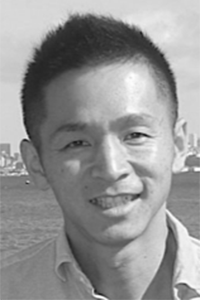
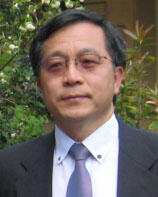
China possesses a large amount of historical demographic data showing that it has been a population giant in the world for at least two thousand years. Partly for this reason, a number of conclusions or suggestions about China’s past fertility regime have been widely accepted. Recent historical demographic investigations, however, have shown that many of these conclusions or suggestions are incorrect and need further consideration. This presentation reports these research findings and briefly examines China’s recent fertility changes. On the basis of that it makes some comments on major characteristics of China’s current fertility patterns and factors affecting fertility changes in the near future.

Image
zhongwei
Zhongwei Zhao graduated from University of Cambridge with a PhD in 1993. Since then he has worked at the East-West Center, Hawaii, University of New South Wales, Australian National University, and University of Cambridge. Since 2008, he has been a professor at the School of Demography at the ANU. Zhao has been doing research in the following research areas: Historical demography, Computer microsimulation, Fertility, Mortality, Changes in kinship structure and household composition, Famine demography, Inequality in population health, Environmental impacts on mortality changes, and Population changes in Asia. He has co-edited three books (including recent Routledge Handbook of Asian Demography) and published many articles and book chapters by leading demography journals and academic publishers.  

Zhao, Zhongwei Professor, The School of Demography at the Australian National University
Seminars
-

RSVPs for this event are now closed. This event is open only to the Stanford community; a valid Stanford ID will be required to enter. 

NOTE: THIS EVENT IS CLOSED TO THE MEDIA

Image
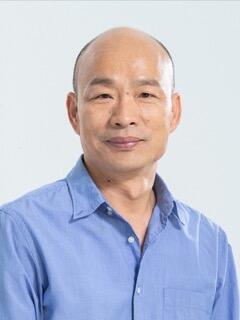
Kaohsiung Mayor Han Kuo-yu

Han Kuo-yu was elected Mayor of Kaohsiung, Taiwan, in November 2018, becoming the first member of the Kuomintang (KMT) to hold that office since 1998. He served as a member of the Legislative Yuan from Taipei County from 1993-2002, and later became the general manager of the Taipei Agricultural Products Marketing Corporation. 

Mr. Han graduated from Soochow University (Taipei) with a degree in English literature, and earned a master’s degree in law from National Chengchi University’s Graduate Institute of East Asian Studies.
 
This event is co-sponsored by the Hoover Institution and the Taiwan Democracy and Security Project, part of the U.S.-Asia Security Initiative
 

Philippines Room
616 Serra Mall
Encina Hall, 3rd Floor, Central (C330)
Stanford, CA 94305

Han Kuo-yu Mayor of Kaohsiung, Taiwan
-

Image
sagan 3x2 copy
The volatile relationship between the United States and North Korea has left the American public questioning whether North Korea is a threat or not. Existing polls suffer from poor design and, thus, provide a confusing and often contradictory narrative of U.S. public opinion on North Korea. As a result, a number of critical questions remain unanswered: Are Americans willing to live with the North Korean nuclear threat? Under what conditions would the public support using military force to accomplish what sanctions and diplomacy have not? What are the characteristics of the individuals willing to risk war against North Korea today? Professor Scott D. Sagan will discuss the findings of a recent survey experiment and offer a unique perspective to the ongoing public debate.

Scott D. Sagan is the Caroline S.G. Munro Professor of Political Science, the Mimi and Peter Haas University Fellow in Undergraduate Education, and Senior Fellow at the Center for International Security and Cooperation and the Freeman Spogli Institute at Stanford University. Before joining the Stanford faculty, Sagan was a lecturer in the Department of Government at Harvard University. From 1984 to 1985, he served as special assistant to the director of the Organization of the Joint Chiefs of Staff in the Pentagon. Sagan has also served as a consultant to the office of the Secretary of Defense and at the Sandia National Laboratory and the Los Alamos National Laboratory. In 2017, he received the International Studies Association’s Susan Strange Award which recognizes the scholar whose “singular intellect, assertiveness, and insight most challenge conventional wisdom and intellectual and organizational complacency" in the international studies community. Sagan was also the recipient of the National Academy of Sciences William and Katherine Estes Award in 2015, for his pioneering work addressing the risks of nuclear weapons accidents and the causes of nuclear proliferation.     


Okimoto Conference Room
Encina Hall, 3rd Floor
616 Serra Street, Stanford

Scott D. Sagan <i>Caroline S.G. Munro Professor of Political Science, Stanford University</i>
Seminars
Authors
Noa Ronkin
News Type
News
Date
Paragraphs

We are happy to share that FSI’s SK Center Fellow and APARC's Korea Program Deputy Director Yong Suk Lee is the recipient of the 2018 Urban Land Institute United Kingdom Academic Prize for his paper “Entrepreneurship, small business and economic growth in cities.”

The winner of the Urban Land Institute Prize is selected by The Journal of Economic Geography (JoEG) Editors, Oxford University Press, and the Urban Land Institute. The prize is awarded annually to the author(s) of the best JoEG paper published online in the previous calendar year. Papers are evaluated on the basis of their creativity, quality of scholarship, and contribution to advancing understanding of the geographic nature of economic systems and global economic change.

Lee’s paper investigates whether entrepreneurship causes local employment and wage growth, and if so, how large the impact is. Empirical analysis of this question is difficult due to the joint determination of entrepreneurship and economic growth. Lee’s article uses two different sets of variables—the homestead exemption levels in state bankruptcy laws from 1975 and the share of metropolitan statistical area (MSA) overlaying aquifers—to instrument for entrepreneurship and examine urban employment and wage growth between 1993 and 2002. Lee’s research shows that the creation of small businesses indeed causes substantial employment and payroll growth in cities.

Download Lee’s paper >>

Hero Image
Portrait of Yong Suk Lee
All News button
1
News Type
News
Date
Paragraphs

On the heels of the abrupt ending of the Hanoi summit between President Trump and North Korean leader Kim Jong Un, with the future of the diplomacy of denuclearization in question, the Korea Program at Shorenstein APARC convened the 11th Koret Workshop, appropriately titled this year “North Korea and the World in Flux.”

The workshop, an annual gathering made possible through generous funding from the Koret Foundation, brought together international experts in Korean affairs for a full day of panel discussions. Participants assessed the U.S.-DPRK summit diplomacy, examined the challenges and opportunities in media coverage related to the negotiations between the two countries, and considered the prospects and pitfalls for summitry with North Korea in the near term. A report on the workshop proceedings is forthcoming.

At a midday public keynote, General Vincent Brooks, U.S. Army (Ret.), spoke before a packed audience about the challenges and opportunities in Korea. Brooks, who recently retired from active duty as the four-star general in command of all U.S. Forces in Korea, provided his unique and very-timely assessment of the situation on the Korean peninsula, and offered his insights on where the diplomacy of denuclearization may go next.

Gen. Brooks’ public address was followed by a conversation with Karl Eikenberry, director of APARC’s U.S.-Asia Security Initative.

Watch the video recording of Gen. Brooks’ remarks:


Hero Image
U.S.-Asia Security Initiative Director Karl Eikenberry, left, questions General Vincent Brooks during 2019 Koret Workshop
Thom Holme, APARC
All News button
1
-

This seminar features two scholars discussing their research on health, retirement, and long-term care in China and Singapore. First Dr. Zhou discusses her co-authored study “Health Care Utilization at Retirement: Evidence from Urban China,” which explores the causal effect of retirement on health care utilization among urban workers using medical claims data and employing a regression discontinuity design based on mandatory retirement ages. The results show that retirement significantly increases outpatient care utilization, in part because of lower patient cost sharing and reduced opportunity cost of time after retirement.

Professor Chia will then discuss innovative policy responses in Singapore to finance the retirement and healthcare needs of its aging population. One component of her research uses actuarial modelling and simulations to explore the adequacy of the long-term care (LTC) insurance program in Singapore, also known as ElderShield, for reducing LTC cost. Dr. Chia will also discuss retirement adequacy, taking into consideration the unique housing finance mechanisms in Singapore and other social measures. Singapore also introduced healthcare policies targeted at specific cohorts and trust funds to enhance social protection.  The Pioneer Generation Fund of S$8 billion was earmarked to subsidize healthcare costs for the pioneer generation (cohorts aged 65 and above in 2014).  Simulation studies show that the adequacy of the pioneer generation fund depends on healthcare cost inflation and market performance of funds.  Most recently, a trust fund of S$6.1bn will be set up to prefund healthcare subsidies for the Merdeka Generation (those born in the 1950s).  Besides, a total of S$5.1 billion will go to a new LTC Support Fund that will help fund subsidies for long term care support measures.  This measure will improve the adequacy of the LTC Insurance.   Financing healthcare needs by setting aside funds, while innovative, is sustainable.  However, pre-funding social protection for subsequent cohorts can be challenging amidst an ageing populace and economic challenges.

Image
cnc pic 4x4
Dr Ngee-Choon Chia is an Associate Professor in the Department of Economics at the National University of Singapore (NUS).  She is concurrently Director of the Singapore Centre of Applied and Policy Research (SCAPE) and Co-director of the Next Age Institute at NUS.  She is the Co-editor of the Singapore Economic Review. Her research interests include pension economics, health economics and the fiscal impacts of ageing.  She has consulted for major international agencies such ADB, ADBI, IDRC and the World Bank.  She has also conducted collaborative research on social security with government agencies in Singapore.


Image
photo qin zhou 4x4
Dr. Qin Zhou is currently a visiting scholar in Stanford University. She serves as an Associate Professor in the University of International Business and Economics in Peking, China. Her research interests include Health Economics, Public Health, and Applied Econometrics. She is mainly focused on the study of Chinese health insurance and policy evaluation. She was awarded the "Australia-APEC Women in Research" fellowship and conducted a project entitled "Social Security Systems in Relation to Healthcare Utilization and Health Behaviors in Australia" in 2017. Her work at Stanford is to collaborate with Prof. Karen Eggleston to study the integration of urban-rural health insurance systems in China and other relative topics.

Philippines Conference Room
Encina Hall, 3rd Floor
616 Serra Mall, Stanford, CA 94305

Ngee-Choon Chia Associate Professor, National University of Singapore Department of Economics
Qin Zhou Associate Professor, University of International Business and Economics, PRC
Seminars
Authors
News Type
News
Date
Paragraphs

In September 2018, Shinzo Abe won a party election, thereby securing his third consecutive term as president of Japan’s Liberal Democratic Party and getting closer to becoming the longest-serving prime minister in the country’s postwar history. With his current administration now in its seventh year, Abe looks likely to continue implementing the economic policies he started in 2012, dubbed "Abenomics” and based upon “three arrows” of bold monetary policy, flexible fiscal policy, and structural reform to promote private investment.

Seven years in, with growth visible in many measures of the Japanese economy, has Abenomics truly succeeded? Are there, in fact, shortcomings that the administration needs to address before taking the proverbial victory lap, as Abe is considering the legacy he will leave behind? What are the most important challenges facing the Japanese economy in the near future?

These questions were the focus of an expert panel that APARC’s Japan Program recently hosted at Stanford. The event gathered five experts to go beyond the readily apparent successes of Abenomics in order to examine some of its potential shortfalls.

Takeo Hoshi, director of the Japan Program and moderator for the panel, opened the session by recounting many of the acheivements made by Abenomics: the country’s economy was experiencing its longest expansion in the postwar period—73 months and counting; real GDP was increasing; and the unmployment rate had fallen below 2.5%, with significant growth in female workforce participation.

And yet by other measures, Abenomics could be viewed as having missed several of its major goals. Inflation remains around 0.5%, and even after extending the target date from 2020 to 2025, it appears unlikely that the Japanese government can achieve primary balance. Additionally, and even though the government changed the way it calculated nominal GDP (leading to a possibly-inflated bump), the economy was still unlikely to reach the target goals of 600 trillion yen GDP along with 3% nominal growth and 2% real growth as set by Abenomics.

Joshua Hausman, assistant professor of public policy and of economics at the University of Michigan, discussed Abenomics targets for inflation. Hausman explained to the audience that Abenomics expressed goal of raising inflation was meant to achieve three benefits. First, GDP would see growth due to increased domestic spending ahead of inflation. Second, by raising nominal interest rates above 0%, the Bank of Japan would have more leeway to lower rates during a recession. And third, raising the rate of inflation would help erode Japan’s substantial government debt.

However, argued Hausman, while the Bank of Japan was hopeful that their actions would encourage businesses to raise prices, there has yet to be a significant change in the inflation figure. And while there has been growth in the GDP, the amount of change mirrors that of the period between 1993 and 2007, well before Abenomics. The Bank of Japan, concluded Hausman, desserves credit for what it has achieved, but should consider alternative courses of action.

Takatoshi Ito, professor of international and public affairs at Columbia University, noted that the Abe administration was also unlikely to achieve its goal of a primary balance in the next six years. Even after raising the consumption tax in 2014 (and with indications that another tax hike would occur in October of this year), the mark was unlikely to be achieved, because even as tax revenue were increasing, so too were expenditures made by the Abe government.

Another impact area of Abenomics, and focus of previous events by the Japan Program, is “womenomics,” or the economic policies’s influence on women’s presence and roles in the workforce. Nobuko Nagase, professor of labor economics and social policy at Ochanomizu University, Japan, shared several of the ways in which the administration appeared to be successfully addressing gender inequality in the economy. One big achievement has been the increase in the number of female university graduates who have children and are able to obtain better-paying jobs. Previously, as little as 30% of the female workforce in Japan remained employed following either marrage or a first child; the present figure has risen to 48%. And while across all management levels the growth of women has been relatively flat, among the middle and lowest tier management positions, there have been modest improvements in female representation.

Nagase noted, however, that there was still much to be done. Abenomics has not been successful in increasing the participation of fathers in childcare. Additionally, while both men and women had seen reductions in the long work hours for which Japan is notorious, improvement in narrowing the gender pay gap has been slow, especially in large-size firms. The most important challenges, said Nagase, are reforming the japanese labor practice of long-term employment and the seniority-based pay system, changing household models from full-time working husband and dependent housewives to double income households with children, and re-regulating labor rules to protect non-standard employees.

Panelist Steven Vogel, professor of Asian studies and of political science at the University of California, Berkeley, considered the extent to which the third arrow of Abenomics has hit the mark. He suggested that the Japanese government had succumbed to the ideological trap that regulations were a hindrance to the markets. Before Abe, explained Vogel, deregulation models had led to increases in non-regular work, expansion in inequality, and lower overall consumption. And while under Abe there was a continuation of appetite for deregulation—for example, the establishment of 10 dereguation zones over several cities—there is some evidence, albeit mixed, of it having a positive impact: profits are up, but capital investment and labor’s share of income are both down.

“Don’t expect huge economic impact from deregulation per se,” noted Vogel. Japan needs to improve its model of corporate governance, and it needs labor market reform, he concluded.

The panel was cohosted by the Japan Society for the Promotion of Science and the Japan Foundation Center for Global Partnership. For related information, as well as published reports, see the Japan Program’s research project The Political Economy of Japan under the Abe Government.

Hero Image
 Japan's Prime Minister Shinzo Abe (R) celebrates with Shigeru Ishiba, the former defence minister who ran against him, after winning the Liberal Democratic Party leadership contest on September 20, 2018 in Tokyo, Japan.
Japan's Prime Minister Shinzo Abe (R) celebrates with Shigeru Ishiba, the former defence minister who ran against him, after winning the Liberal Democratic Party leadership contest on September 20, 2018 in Tokyo, Japan.
Carl Court/Getty Images
All News button
1
-

WE HAVE REACHED VENUE CAPACITY AND ARE NO LONGER ACCEPTING RSVPS


Rising US-China economic tensions are normal and were to be expected as China modernized. The current discussion of possible “disengagement” between the two was not foreordained, and results from relatively recent divergence in Chinese policy-making from the 40 year trend. The trend is not inevitable, but it will strengthen unless Beijing reverts to market liberalization: nations built on fundamentally different economic systems cannot be as linked as those with like-minded approaches. But China is far from locked-in to a non-market future, and any talk of US disengagement should be rigorously tested against three principles: provisional, partial and peaceful.   

Image
drosen press

Daniel H. Rosen is a founding partner of Rhodium Group and leads the firm’s work on China, India and Asia.  Dan has twenty-six years of professional experience analyzing China’s economy, commercial sector and external interactions. He is widely recognized for his contributions on the US-China economic relationship. He is affiliated with a number of American think tanks focused on international economics, and is an Adjunct Associate Professor at Columbia University. From 2000-2001, Dan was Senior Adviser for International Economic Policy at the White House National Economic Council and National Security Council. He is a member of the Council on Foreign Relations, and board member of the National Committee on US-China Relations. A native of New York City, Dan graduated with distinction from the graduate School of Foreign Service of Georgetown University (MSFS) and with honors in Asian Studies and Economics from the University of Texas, Austin (BA).

This event is part of the China Program’s Colloquia Series entitled "A New Cold War?: Sharp Power, Strategic Competition, and the Future of U.S.-China Relations " sponsored by Shorenstein APARC's China Program.

A New Cold War?: Sharp Power, Strategic Competition, and the Future of U.S.-China Relations

Image

Trade conflict has exploded. The media is rife with stories of China’s unfair trade practices, cyber theft, IP theft and forced technology transfers. Who will first scale the commanding heights of technological supremacy? Who will be the first mover in AI, robotics and biotechnology? What are the implications of Beijing’s ambitious infrastructure projects, including its Belt and Road Initiative? How is China’s “sharp power” deployed, and what are its implications for political and civic life in the U.S.? Can the Trump administration and Beijing’s leadership reach agreement on our trade disputes? Are these just the beginning salvos of an increasingly turbulent future? As U.S. policy towards China sharply veers away from “constructive engagement” to “strategic competition,” the Stanford China Program will host a series of talks by leading experts to explore the current state of our bilateral relations, its potential future, and their implications for the world order.

p.p1 {margin: 0.0px 0.0px 0.0px 0.0px; font: 12.0px Calibri} span.s1 {font: 11.0px Calibri; font-kerning: none} span.s2 {font-kerning: none}

https://aparc.fsi.stanford.edu/china/research/new-cold-war-sharp-power-strategic-competition-and-future-us-china-relations

Philippines Conference Room Encina Hall, 3rd Floor 616 Serra Mall, Stanford, CA 94305
Daniel Rosen <i>Rhodium Group</i><br><br>
Seminars
News Type
News
Date
Paragraphs
STANFORD, CA, March 11, 2019 — The Walter H. Shorenstein Asia-Pacific Research Center (APARC), Stanford University’s hub for interdisciplinary research, education, and engagement on contemporary Asia and the sponsor of the Shorenstein Journalism Award for excellence in coverage of the Asia-Pacific, is pleased to introduce an all-new selection committee for the award, comprising diverse journalistic and Asia expertise. APARC now welcomes nominations for the 2019 award. The deadline for nomination submissions is 5pm Pacific time on Friday, March 29, 2019.
 
An annual tradition since 2002, the Shorenstein Journalism Award carries a cash prize of US $10,000 and recognizes outstanding veteran journalists who have spent their careers helping audiences around the world interpret the complexities of the Asia-Pacific region. It honors the legacy of APARC’s benefactor, Mr. Walter H. Shorenstein, and his twin passions for promoting excellence in journalism and understanding of Asia. “With this award we are committed to advancing journalism that persistently and courageously seeks accuracy, deep reporting, and nuanced U.S.-Asia dialogue,” said APARC Director Gi-Wook Shin.
 
Over the course of its history, the award has recognized world-class journalists who push the boundaries of coverage of the Asia-Pacific region and help advance mutual understanding between audiences in the United States and their Asian counterparts. Recent honorees include Anna Fifield, Caixin Media, Ian Johnson, Jacob Schlesinger, Siddharth Varadarajan, and Aung Zaw. The award alternates between recipients whose work has mostly been published through American news media and recipients whose work has mostly been conveyed through news media in one or more parts of the Asia-Pacific region. The 2019 award will recognize a recipient from the latter category, which oftentimes includes candidates who work at the forefront of the battle for press freedom.    
 
APARC has recently assembled a new selection committee for the award that presides over the judging of nominees and is responsible for the selection of honorees. “I am delighted to welcome our new committee members who have all distinguished themselves in their careers and bring expertise across journalism, policy, and Asia research and reporting,” noted Director Shin.
 
The selection committee for the Shorenstein Journalism Award includes Wendy Cutler, Vice President and Managing Director, Washington, D.C. Office, Asia Society Policy Institute; James Hamilton, Hearst Professor of Communication, Chair of the Department of Communication, and Director of the Stanford Journalism Program, Stanford University; Raju Narisetti, Director of the Knight-Bagehot Fellowship in Economics and Business Journalism and Professor of Professional Practice at Columbia Journalism School; Philip Pan, Asia Editor, The New York Times; and Prashanth Parameswaran, Senior Editor, The Diplomat.
 
For the Shorenstein award, the Asia-Pacific region is defined broadly to include Northeast, Southeast, South, and Central Asia and Australasia. Both individual journalists with considerable body of work and journalism organizations are eligible for the award. Nominees’ work may be in traditional forms of print or broadcast journalism and/or in new forms of multimedia journalism. APARC is seeking 2019 award nomination submissions from editors, publishers, scholars, journalism-related associations, and entities focused on researching and interpreting the Asia-Pacific region. The award will be presented by APARC at Stanford in the Autumn quarter of 2019.
 
For complete details about the award, nominations and procedures, and past winners, please visit the Shorenstein Journalism Award page. Submissions are accepted electronically through 5pm Pacific time on Friday, March 29, 2019, via an online form.
 
Please direct all inquiries to aparc-communications@stanford.edu.
 
###
 
About the Walter H. Shorenstein Asia-Pacific Research Center
The Walter H. Shorenstein Asia-Pacific Research Center (Shorenstein APARC) addresses critical issues affecting the countries of Asia, their regional and global affairs, and U.S.-Asia relations. As Stanford University’s hub for the interdisciplinary study of contemporary Asia, APARC produces policy-relevant research, provides education and training to students, scholars, and practitioners, and strengthens dialogue and cooperation between counterparts in the Asia-Pacific and the United States. Founded in 1983, APARC today is home to a scholar community of distinguished academics and practitioners in government, business, and civil society, who specialize in trends that cut across the entire Asia-Pacific region. For more information, visit https://aparc.fsi.stanford.edu.&nbsp;
 
Hero Image
2019 Shorenstein Journalism Award call for nominations on the background of Encina Hall front.
All News button
1
Subscribe to Society