Society

FSI researchers work to understand continuity and change in societies as they confront their problems and opportunities. This includes the implications of migration and human trafficking. What happens to a society when young girls exit the sex trade? How do groups moving between locations impact societies, economies, self-identity and citizenship? What are the ethnic challenges faced by an increasingly diverse European Union? From a policy perspective, scholars also work to investigate the consequences of security-related measures for society and its values.

The Europe Center reflects much of FSI’s agenda of investigating societies, serving as a forum for experts to research the cultures, religions and people of Europe. The Center sponsors several seminars and lectures, as well as visiting scholars.

Societal research also addresses issues of demography and aging, such as the social and economic challenges of providing health care for an aging population. How do older adults make decisions, and what societal tools need to be in place to ensure the resulting decisions are well-informed? FSI regularly brings in international scholars to look at these issues. They discuss how adults care for their older parents in rural China as well as the economic aspects of aging populations in China and India.

Authors
News Type
Q&As
Date
Paragraphs

This interview was first published by the Stanford News Service.


The 2020 Summer Olympics have begun this week but public support among the Japanese public for the games has been generally low and their mood can be articulated through the succinct question: “Why are we doing this now?” says Stanford sociologist and Japan Program Director Kiyoteru Tsutsui.

 
Here, Tsutsui discusses how the various challenges posed by the COVID-19 pandemic and other national scandals related to the games have led to a general dissatisfaction among the Japanese public towards their government and the International Olympic Committee. Despite low morale, the country’s mood may change once the Summer Games commence – barring any further complications or disruptions. But given that the games are pared down this year, it still may be hard to generate the same levels of excitement as in previous years, Tsutsui said.
 
Tsutsui is the Henri H. and Tomoye Takahashi Professor and director of the Japan Program at the Walter H. Shorenstein Asia-Pacific Research Center, which is part of the Freeman Spogli Institute for International Studies. Tsutsui is also a professor of sociology and his research focuses on social movements, globalization, human rights and Japanese society. He is the author of Rights Make Might: Global Human Rights and Minority Social Movements in Japan (Oxford University Press, 2018).
 

Polls among the Japanese public show mixed support for the games and meanwhile, major advertisers in the country are pulling out. As a sociologist, how do you see this mixed public sentiment affecting overall mood and morale?

There is no question that there is a strong headwind against the Olympics in the lead-up to the opening ceremony. Opinion polls are still against the games, although the numbers improved a little in recent weeks. The general public sentiment can be summed up as “Why are we doing this now?”

The road to the Tokyo Olympics has been a long and winding one complicated by COVID-19, first and foremost, and various scandals. The Japanese public has been fed up with the COVID-19-related emergency declarations and other restrictions as well as the slower pace of vaccination compared to other developed countries. The perception, right or wrong, is that the government is making decisions based on whether they help in hosting the Olympics successfully, when the focus should be on public health and economic rescue in the COVID environment.

Morale is low, but many are hoping that things will change quickly once the games begin. Whether that happens or not depends on a whole host of factors, most importantly whether major public health incidents and other unfortunate accidents happen or not, how Japanese athletes fare, who might emerge as global stars, and so on.

To what extent has the International Olympic Committee (IOC) helped or hindered support for the games among the Japanese public?

The Japanese public sees the IOC as simply pushing its economic interest without the proper regard for their safety and health. Many people do not understand that the Japanese government does not have the authority to cancel the Olympics and could have faced a lawsuit with a huge compensation at stake if it tried to do so. The IOC looks like the IMF/World Bank during the Asian economic crisis in affected countries or the EU in some European countries – an international entity that pushes its agenda without accountability to the citizens. The frustration has nowhere to go but to the Japanese government, which combined with overall COVID-19-related dissatisfaction, has led to the most recent polls showing the lowest approval rating for the government under Prime Minister Yoshihide Suga.

For Japan, hosting the 2020 Olympic Games initially symbolized the country’s rebound from the devastating Tōhoku earthquake, tsunami and Fukushima Daiichi nuclear accident in 2011 and was poised to boost their economy. Then COVID hit, and meanwhile, Olympic expenses ballooned. Are there any opportunities for the Olympic Games to help the country bounce back? 

The 2020 Olympics was initially framed as a symbol of recovery from the triple disaster in 2011, but that slogan is no longer central. The expenses were justified as a way to develop infrastructure for foreign visitors and increase inbound tourists, and the government’s goals for the number of visitors from abroad have been met already. With no spectators allowed, Japan will lose money on hosting the Olympics, but the economic damage is not irrecoverable. Once the world gets out of COVID-19, the Japanese economy will likely rebound and tourists will come back.

It will be interesting to follow how socially, in terms of the national psyche and its unity, Japan will respond to the Tokyo Olympics. Even when the games take place in other countries, the Olympics often serve as a moment of national unity, especially in Japan. With Japan being the host, many thought that it would serve as an enormous booster towards national confidence and unity. We have yet to see how the games will turn out, but these psychological impacts will likely be lessened as the games are scaled down and may not get as much global attention as typical Olympics do.

There’s still a chance for a better outcome though if the games go smoothly and offer many compelling moments. People in many countries are still more homebound than usual and the contents that the games offer could be attractive. And the Japanese public is known to swing from one side to the other very quickly and on a massive scale, so once the games begin, TV personalities who were questioning whether the games should happen will likely quickly turn around and support Japanese athletes and tout their accomplishments. That is, if no serious outbreak incidents occur.

The Olympics are often celebrated as a nonpolitical event that can unite the world. In a globally turbulent world, what do you make of that assessment? Can the Olympics be nonpolitical?

The Beijing Winter Olympics in 2022 is a case in point. Boycott of the games seems unlikely, but House Speaker Nancy Pelosi has already floated an idea of diplomatic boycott. There’s a lot at stake for the host country, and the Olympics will likely be politicized when countries like China, Russia or even the U.S. host it.

Another problem is that not many democracies would be eager to host the games anymore. Public support is needed for democracies to host the Olympics, but the growing cost of the games, combined with increasingly less clear benefits of hosting, has made it difficult to find democracies that are eager to be the host country. Meanwhile, non-democracies like China and Russia, and even smaller countries like Kazakhstan or Azerbaijan campaign to become host nations. The pattern of dictatorships hosting the Olympics and the world demanding a change in their human rights practices and, threatening a boycott, might be a recurring pattern in the coming decades.

 
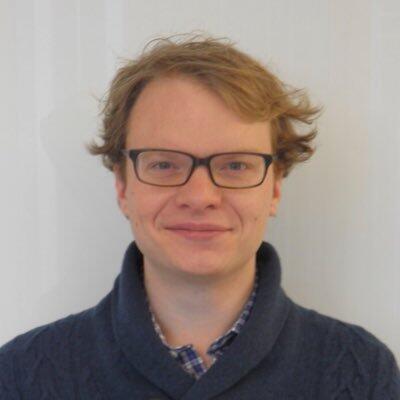
Photo of Kiyoteru Tsutsui

Kiyoteru Tsutsui

Senior Fellow at FSI, Professor of Sociology, Director of the Japan Program
Full Biography

Read More

President Biden and President Suga walk through the Rose Garden colonnade at the White House
Commentary

China Looms Large, Despite a Strong US-Japan Alliance

From Taiwan and the Senkaku Islands to economics, trade, and human rights issues in Xinjiang and Hong Kong, the U.S.-Japan alliance has plenty to tackle with its policies towards China.
China Looms Large, Despite a Strong US-Japan Alliance
Logo of the New South Wales Ministry of Health's podcast Future Health
News

Robotics and the Future of Work: Lessons from Nursing Homes in Japan

On the Future Health podcast, Karen Eggleston discusses the findings and implications of her collaborative research into the effects of robot adoption on staffing in Japanese nursing homes.
Robotics and the Future of Work: Lessons from Nursing Homes in Japan
An Island that lies inside Taiwan's territory is seen with the Chinese city of Xiamen in the background.
Commentary

The Taiwan Temptation

Why Beijing Might Resort to Force
The Taiwan Temptation
Hero Image
A man cycles past a security fence outside the New National Stadium, the main stadium for the Tokyo Olympics, on June 23, 2021 in Tokyo, Japan
A man cycles past a security fence outside the New National Stadium, the main stadium for the Tokyo Olympics, on June 23, 2021 in Tokyo, Japan.
Yuichi Yamazaki/ Getty Images
All News button
1
Subtitle

While public support in Japan has been lackluster for the 2020 Tokyo Olympic Games, the mood may change once the games start – provided no major public health incidents and other unfortunate accidents occur, says Stanford sociologist Kiyoteru Tsutsui.

Authors
Noa Ronkin
News Type
News
Date
Paragraphs

Does the new wave of digital technologies portend a future in which robots and automation increasingly replace workers and destroy livelihoods? In one of the first studies of service sector robots, APARC experts find evidence to offset dystopian predictions of robot job replacement.

The researchers — Asia Health Policy Program Director Karen Eggleston, SK Center Fellow Yong Suk Lee, and University of Tokyo health economist Toshiaki Iizuka, our former visiting scholar — set out to examine how robots affect labor, productivity, and quality of care in Japan’s nursing homes. Their findings indicate that robot adoption may not be detrimental to labor and may help address the challenges of rapidly aging societies.

Eggleston recently joined the Future Health podcast, an initiative of the New South Wales Ministry of Health, to discuss the study and its implications. The program is available both as a video and audio podcast. Watch and listen below:

Sign up for APARC newsletters to receive the latest updates from our scholars.


Published by the National Bureau of Economic Research, the study suggests that robot adoption has increased employment opportunities for non-regular care workers, helped mitigate the turnover problem that plagues nursing homes, and provided greater flexibility for workers. It is also published in AHPP's working paper series and is part of a broader research project by Eggleston, Lee, and Iizuka, that explores the impact of robots on nursing home care in Japan and the implications of robotic technologies adoption in aging societies.

The study has attracted media attention. The Financial Times Magazine, in a feature story and podcast, called it “groundbreaking in several ways but perhaps most clearly for setting its sights not on manufacturing but on the services sector, where robots are only just beginning to make their mark.” The Freakonomics Radio podcast also hosted Eggleston and Lee for a conversation about their research as part of an episode on collaborative robots and the future of work.

Read More

Autonomous caregiver robot is holding a insulin syringe, giving it to an senior adult woman, concept ambient assisted living
News

The Unfolding Relationship Between Human Workers and Robots in an Aging World

On the Freakonomics Radio podcast, Karen Eggleston and Yong Suk Lee discuss their research into the effects of robots on staffing in Japanese nursing homes.
The Unfolding Relationship Between Human Workers and Robots in an Aging World
A Japanese robot prototype lifts a dummy patient
News

Robot Adoption Brings Benefits to Japan’s Aging Society

In one of the first studies of service sector robotics, APARC scholars examine the impacts of robots on nursing homes in Japan. They find that robot adoption may not be detrimental to labor and may help address the challenges of rapidly aging societies.
Robot Adoption Brings Benefits to Japan’s Aging Society
A woman walks past a mural referring to the Covid-19 coronavirus painted on a wall on December 10, 2020 in New Delhi, India.
News

How COVID-19 Disproportionately Impacts People with Chronic Conditions in India

A collaborative study by a group of researchers including APARC’s Karen Eggleston documents the adverse effects of COVID-19 on people with chronic conditions in India, particularly among poor, rural, and marginalized populations. The pandemic’s impacts extend beyond health disparities to encompass psychosocial and economic consequences, the study shows.
How COVID-19 Disproportionately Impacts People with Chronic Conditions in India
Hero Image
Logo of the New South Wales Ministry of Health's podcast Future Health
All News button
1
Subtitle

On the Future Health podcast, Karen Eggleston discusses the findings and implications of her collaborative research into the effects of robot adoption on staffing in Japanese nursing homes.

Authors
News Type
Q&As
Date
Paragraphs

Vietnam and China are frequently referred to as 'authoritarian regimes,' but in history, political practice, and social governance these two countries are starkly different. This is particularly true of how each government responds to social pressure and civil unrest. Nhu Truong, one of APARC's 2020-21 Shorenstein Postdoctoral Fellows, is researching the root causes of these differences, what they reveal about the specific contexts of each nation's political trajectory, and how they can inform academic discussions of authoritarianism.

Nhu Truong’s dissertation explains how and why the two most similar communist, authoritarian regimes of China and Vietnam differ in their responsiveness to mounting unrest caused by government land seizures. Despite their many similarities, Vietnam has exhibited greater institutionalized responsiveness, whereas China has been relatively more reactive. While at APARC, Nhu has been refining 16 months of fieldwork into a book manuscript. Following her tenure as a Shorenstein Fellow at APARC, she will join the Council for Southeast Asian Studies and the Council for East Asian Studies at Yale University as a postdoctoral associate and has accepted a position as an assistant professor at Denison University starting in 2022.

Nhu sat down to talk more about her research and how the ongoing pandemic has heightened the need to better understand the ways in which different governments implement policy and address social issues. She also shares how she's stayed grounded and positive during an unusual year of change and being a long-distance fellow.

1. Can you give us an overview of your research and the topics you’re investigating?

My research addresses the following question: Why are some authoritarian regimes more responsive to social unrest than others? While it might seem counterintuitive to think of authoritarian regimes in this light, repression and responsiveness often occur in tandem under authoritarian rule. Centered on a comparison between Vietnam and China, I document the steps that each has taken to address social discontent fueled by pervasive government seizures of rural land. In response to societal input between 2003 and 2017, Vietnam enacted comprehensive and programmatic reforms to reduce the permissible scope for government land expropriation whereas those enacted by China were relatively marginal and piecemeal. At the subnational level, this difference has had important implications for land rights and the security of villagers in both countries. In summary, despite their many similarities, the manner and degree of their responsiveness have varied. My research then traces the historical origins that undergird the political development and institutional character of Vietnam and China’s divergent responsiveness to social unrest. 

2. How did you first become interested in these topics?

My interest in the repressive-responsive character of authoritarian regimes stems from my preoccupation with questions of political legitimacy, societal resistance, and institutional dynamics in authoritarian contexts. One particular experience that stoked my interest was my visit to Wukan, Guangdong in 2016. Wukan was once hailed as an emblematic case of grassroots democracy and accommodation by the Chinese state, when villagers’ outcries against the local government’s seizure of their land resulted in the re-election of the village committee in 2012. Yet, when I visited in 2016, villagers expressed that nothing had changed, and that “everything that could be done has already been done.” This experience led me to question what responsiveness means in authoritarian contexts.

3. During the last year, the world has changed significantly because of the pandemic and fluctuating politics in many nations. Have these changing global situations given you any new insights into your research?

The pandemic has underscored the need for a nuanced and contextual understanding of democracies and non-democracies. For instance, the variation in state responses to COVID-19 suggests that there is no clear correlation between responsiveness or the effectiveness of government responses to COVID-19 and regime types. Consider Vietnam’s proactive approach and success at containing the pandemic as opposed to the US. Other recent developments such as the crackdowns on pro-democracy protests in Thailand and mass protests against the recent military coup in Myanmar showcase how quickly state responsiveness to social demands can erode, even in multi-party states.

4. What has your experience as one of our Shorenstein Fellows been like during this unusual period of time when we haven’t physically been together at APARC?

My fellowship has been remote, and I have therefore needed to be much more proactive to stay as engaged as possible. I have consulted with my mentor often over Zoom, and reached out to other scholars for their feedback and advice on my research. I have also especially appreciated the chance to participate in the China Social Science Workshop, where I've shared my work and learned from other presenters. Other postdoctoral fellows at APARC and I have also gotten together virtually to exchange stories and to share our experiences from this unusual year.  

5. What are some of the things you've done during this past year to give yourself a break from work and have some fun?

Due to the pandemic, I have been living back home to Austin, Texas, since March of last year. The last time that I was home for this long must have been after I graduated from college. So, for the first time in a long time, I've planted tomatoes, eggplants, and sunflowers in our garden, and I've really enjoyed watching them bloom and ripen. With everything growing, it feels like I've spent most of my break in our backyard defending our flowers, fruits, and vegetables from squirrels and bunnies! But luckily I also have our two dogs, Wishie and Sushi, to help me!

6. As the state of the pandemic changes and things in academia and our communities, what are some things you are looking forward to both professionally and personally?

I'm certainly looking forward to having conferences in person again! I'm also still not sure when it will be possible and safe for me to visit Asia again, especially Vietnam and China, but I have missed these places. I'm also learning Khmer this summer, and I'm excited to eventually visit Cambodia to pursue my research there.

Read More

[Left] Hong Kong skyline; [Right] Encina Hall, Stanford
Q&As

Predoctoral Spotlight: Shan Huang on Development and Urban Politics in Hong Kong

Meet Shan Huang, a Stanford doctoral candidate in anthropology and a 2020-21 APARC predoctoral fellow, whose dissertation provides an ethnographic account of Hong Kong’s political culture in the post-Handover era.
Predoctoral Spotlight: Shan Huang on Development and Urban Politics in Hong Kong
[Left] Postdoc Spotlight, Jeffrey Weng, Shorenstein Postdoctoral Fellow in Contemporary Asia, [Right] Jeffrey Weng
Q&As

Postdoc Spotlight: Jeffrey Weng on Language and Society

Shorenstein Postdoctoral Fellow in Contemporary Asia Jeffrey Weng shares insights from his research into how language and society shape one another, particularly how the historical use of Mandarin affects contemporary Chinese society and linguistics.
Postdoc Spotlight: Jeffrey Weng on Language and Society
Hero Image
Postdoc Spotlight on Nhu Truong, 2020-21 Shorenstein Fellow
All News button
1
Subtitle

2020-21 Shorenstein Postdoctoral Fellow Nhu Truong, who studies how authoritarian regimes like China and Vietnam respond to social pressure, explains why understanding differences in governance is crucial in an era of fluctuating politics and pandemic.

Authors
News Type
News
Date
Paragraphs

“How can we engage with North Korea on human rights?” That is the question Robert R. King, former U.S. special envoy for North Korean human rights issues at the U.S. Department of State, has long been focused on. King, a visiting scholar and Koret Fellow at APARC in fall 2019, rejoined the Korea Program to discuss his new book, Patterns of Impunity.

In this volume, he provides an inside look into his time as special envoy, traces U.S. involvement and interest in North Korean human rights, offers insights into the United Nations’ role in addressing the North Korean human rights crisis, and discusses the challenges of providing humanitarian assistance to a country with no formal relations with the United States and where separating human rights from politics is virtually impossible.

King was joined by his longtime colleague Jung-Hoon Lee, South Korea's former Ambassador for Human Rights and the ROK’s inaugural Ambassador-at-Large for North Korean Human Rights. Watch their conversation:

[Subscribe to APARC’s newsletters to receive our experts' latest updates.]

The Role of the Special Envoy

As the Biden administration begins to review policy towards North Korea in earnest, King’s book and perspectives are particularly timely. Drawing on over a decade of experience, King explains how the role of the special envoy provides a unique opportunity to influence the policy agenda on human rights. As a senior member within the U.S. State Department, the envoy is in a position to both elevate the importance of rights violations to policymakers in Washington and provide feedback on how policy decisions impact the situation on the ground.     

King outlines several avenues where U.S. policymakers can increase pressure on North Korea to address the ongoing human rights crisis in the country. Predominantly among them is the recommendation to support the work on human rights already done by the UN and UN agencies, such as the reporting of Special Rapporteur Tomás Quintana.

“North Korea is very sensitive about its international legitimacy,” King notes. “Working through the UN and with UN agencies gives greater validity and acceptability to the human rights issues and puts greater pressure on North Korea to follow international norms.”

King’s other recommendations center more directly on the people of North Korea. He urges ongoing support for initiatives and agreements that foster access to information and proper distribution of resources and aid for North Koreans within the country along with freedom of movement for those who are attempting to leave and face crossing hostile borders into China. 

Responsibilities in Seoul

Speaking as King’s counterpart and colleague in South Korea, Jung-Hoon Lee echoed the need for visibility and accountability — both globally and in South Korea — for the DPRK's human rights crisis. “In the public eye and the global context, the human rights condition in North Korea is not very familiar. Why? There’s no access. The North Korean society is completely cocooned. There are terrible human rights conditions in other parts of the world, but there is access in those cases to see what is going on. In North Korea, there are only testimonials. There are no pictures or documentaries of the gulags and atrocities. That’s why it is so important that we keep raising this issue.”

For Lee, this means working with and through many of the same channels that King points to, such as the UN, and recognizing as a global community the scale of the crimes against humanity being committed.

But it also means accepting responsibilities closer to home. Lee firmly rejects the opinion raised by the South Korean Foreign Minister that refocusing on North Korean human rights and reappointing an ambassador to fill Lee’s now-vacant position is “useless.” Such indifference towards human rights issues in North Korea is damaging, warns Lee, citing the scrutiny South Korea suffered during the recent Tom Lantos Human Rights Commission hearings before the U.S. Congress.

The Road Towards Accountability

Human rights are only one facet of U.S. policy toward North Korea, but we undermine the overall relationship with the North if the United States abandons human rights in pursuit of security or economic goals, writes King in his book. "Policy toward North Korea involves interrelated issues that we frequently separate for analytical purposes or because they are dealt with in different ways or by different means. But these issues are interconnected, and they are not really separable."

Ultimately, any meaningful action to address North Korea's human rights violations will require coordinated efforts from international organizations, national governments, and civic organizations. In the third and final part of the Korea Program’s spring 2021 series on human rights in North Korea, forthcoming on May 20, leaders from the private sector will discuss the challenges of bringing together independent actors and organizations to raise awareness and call for accountability in North Korea. Registration for the event is open to the public.  

Read More

[Top left] Gi-Wook Shin; [top right] Roberta Cohen; [bottom left] Tomás Ojea Quintana; [bottom right] Joon Oh
News

Using the UN to Create Accountability for Human Rights Crimes in North Korea

Experts on human rights agree that the UN needs to work through multiple channels to support ongoing investigations and build evidence for future litigations in order to create accountability and pressure the DPRK to desist in committing human rights crimes.
Using the UN to Create Accountability for Human Rights Crimes in North Korea
Small flags of North Korea and China for sale near the China-North Korea border
Commentary

China’s Dangerous Double Game in North Korea

Biden must force Beijing to cooperate fully with Washington or pivot to obvious obstruction writes FSI Center Fellow Oriana Skylar Mastro in her latest op-ed for Foreign Affairs.
China’s Dangerous Double Game in North Korea
Brightly colored ribbons tied to fences around Imjingak Village in the DMZ on the North Korean Border.
News

Koret Conference Convenes Virtually to Discuss Human Rights Crisis in North Korea

Amid escalating inter-Korean tension and increasing economic and social strain on North Koreans in the era of COVID-19, the importance of keeping international attention on the DRPK’s human rights violations is more urgent than ever.
Koret Conference Convenes Virtually to Discuss Human Rights Crisis in North Korea
Hero Image
"Patterns of Impunity" by Robert King on a backgorund showing the flags of North Korea, South Korea, and the United States.
All News button
1
Subtitle

In his new book, "Patterns of Impunity," Ambassador King, the U.S. special envoy for North Korean human rights from 2009 to 2017, shines a spotlight on the North Korean human rights crisis and argues that improving human rights in the country is an integral part of U.S. policy on the Korean peninsula.

Authors
News Type
Q&As
Date
Paragraphs

Hong Kong is a geographically, culturally, and historically unique city. Shan Huang, a Stanford doctoral candidate in anthropology, is fascinated by how the history and culture of “Asia’s World City” continue to affect its social and political development.

predoctoral fellow at APARC during the 2020-21 academic year, Shan researches urban studies and contemporary social movements with a focus on Hong Kong and mainland China. His dissertation examines how the Hong Kong government’s developmental schemes are confronted by grassroots actions aimed at democratizing urban planning and promoting alternative urban futures.

APARC introduced the predoctoral fellowship in January 2021 as part of our expanded funding and training offerings in response to the harsh impacts of the COVID-19 pandemic on students' academic careers and their access to future jobs and valuable work experience, and in recognition of the critical need to make the field of Asian Studies more diverse and inclusive.

We chatted with Shan to learn more about how his study of anthropology informs his research interests, how's he has spent his time away from Stanford during the pandemic closures, and how he's planning for the future in unpredictable times.

[Subscribe to APARC's newsletters to hear about other opportunities at APARC.]


Tell us about your dissertation and research interests. What initially drew you to these topics?

My current research broadly concerns the contested field of urban politics in which established regimes of “development” meet various sociopolitical demands and cultural aspirations that call these regimes into question. My dissertation, Land, Democracy, and the Urban Future: An Ethnography of Political Culture in Late Colonial Hong Kong, examines how Hong Kong government’s developmental schemes are confronted by grassroots actions that aim at democratizing land-use planning and promoting alternative urban futures. A full-length ethnography of Hong Kong's political culture, it also seeks to reflect on urbanism of our times.

With characteristic images filled with skyscrapers and dense residential buildings, Hong Kong is typically portrayed as an urban miracle. In contrast, my main fieldwork was conducted in the massive countryside of the metropolis. There, I followed the path of a network of advocate groups, local residents, and activists who are invested in reviving agriculture, studying local history, and strengthening community ties through experimental social projects. In revitalizing the villages that many of them used not to be familiar with, they are also exploring how to make new environmental, social, and political visions tangible and participatory for ordinary citizens. It is these methodologies of envisioning that interest me the most.

I was initially drawn to this research on a field trip to Hong Kong’s countryside during the Inter-Asia Cultural Studies Summer School at Lingnan University in 2016. Thanks to the wonderful tours led by local activists and researchers, I came to be fascinated by the anti-displacement campaigns there and the question of how the urban-rural connections shape what we know as “Hong Kong.”

What’s something unexpected that you’ve learned through the course of your research?

The most unexpected experience during the course of my research in Hong Kong was certainly my witness of the 2019-2020 protest movements triggered by the Extradition Law Amendment Bill. As an anthropologist trying to understand Hong Kong’s political culture, I learned from this game-changing event about the limit of my field. As I wrote elsewhere, it means the government’s exhaustion of strategies of control, which, read in the longer trajectory of the city’s social and political transformation, suggests the furthest extent to which the post-Handover arrangement can win consensus among citizens. I also think that the failed politics of land-use planning, which is another field of civil participation, may also serve as a concrete example that explains how this grand limit has eventually arrived, though in a less eventful manner.

When you’re not working on your dissertation, what kinds of things have you done to stay grounded during this year of quarantine?

In the first few months of quarantine, I couldn’t do much on my dissertation, so I started learning more cooking skills by watching videos by vloggers who specialize in Chinese cuisines. After I relocated to China in the past summer, I had the chance to cook for my extended family a few times with all I had learned and they seemed to really like it!

How have the unusual circumstances of this past year and your time as a remote predoctoral fellow at APARC affected your research goals?

I was fortunate to complete the main part of my fieldwork before the COVID-19 pandemic, so I’m very lucky in that. The main challenge regarding my predoctoral fellowship is that I couldn’t join as many APARC/FSI talks as I wish due to the awkward time difference!

Where are you hoping your interests take you after you receive your degree from Stanford?

One practical thing I’ve learned during the pandemic is the need to be prepared for sudden changes in plans. This is particularly true and challenging for the community of floating, “international” scholars to which I belong. My hope is to still find an academic home where I can teach and polish my work, but I am also trying to be more poised for other possibilities. In the end, perhaps learning how to relax about some planning and expectations is not a bad thing either.

Read More

Spring blooms in the courtyard near History Corner, Stanford University.
News

APARC Names 2021-22 Shorenstein Postdoctoral Fellows

Political scientist Dr. Diana Stanescu and sociologist Mary-Collier Wilks will join APARC as Shorenstein postdoctoral fellows on contemporary Asia for the 2021-22 academic year.
APARC Names 2021-22 Shorenstein Postdoctoral Fellows
[Left] Postdoc Spotlight, Jeffrey Weng, Shorenstein Postdoctoral Fellow in Contemporary Asia, [Right] Jeffrey Weng
Q&As

Postdoc Spotlight: Jeffrey Weng on Language and Society

Shorenstein Postdoctoral Fellow in Contemporary Asia Jeffrey Weng shares insights from his research into how language and society shape one another, particularly how the historical use of Mandarin affects contemporary Chinese society and linguistics.
Postdoc Spotlight: Jeffrey Weng on Language and Society
Stanford campus, main quad with cloudy sky
News

APARC Offers Fellowship and Funding Opportunities to Support, Diversify Stanford Student Participation in Contemporary Asia Research

The Center has launched a suite of offerings including a predoctoral fellowship, a diversity grant, and research assistant internships to support Stanford students interested in the area of contemporary Asia.
APARC Offers Fellowship and Funding Opportunities to Support, Diversify Stanford Student Participation in Contemporary Asia Research
Hero Image
[Left] Hong Kong skyline; [Right] Encina Hall, Stanford Florian Wehde, Unsplash
All News button
1
Subtitle

Meet Shan Huang, a Stanford doctoral candidate in anthropology and a 2020-21 APARC predoctoral fellow, whose dissertation provides an ethnographic account of Hong Kong’s political culture in the post-Handover era.

Authors
News Type
News
Date
Paragraphs

Political attention is turning once again to the Korean Peninsula and the United States’ policy towards both the Democratic People's Republic of Korea. On April 15, 2021, the Human Rights Commission of the United States Congress convened a hearing on “Civil and Political Rights in the Republic of Korea: Implications for Human Rights on the Peninsula.” This follows on the announcement of the first face-to-face White House visit between President Biden and President Moon Jae-In where “North Korea is likely to be high on the agenda.”

In the first of three public events on North Korea Human Rights, APARC’s Korea Program hosted Tomás Ojea Quintana, United Nations Special Rapporteur on the situation of human rights in DPRK; Roberta Cohen, co-chair emeritus of the Committee for Human Rights in North Korea; and former South Korean Ambassador to the United Nations Joon Oh for a discussion of what role the United Nations plays in creating accountability for the ongoing human rights violations and crimes against humanity being enacted by the North Korean government against its people.

The full discussion is available to watch below.

[Subscribe to APARC’s newsletters for updates on our scholars’ research.]

Exploring Means of Enforcing Accountability

Speaking as an independently acting investigator, Special Rapporteur Tomás Ojea Quintana echoed the findings of his predecessors in warning that the activity within North Korea has escalated from human rights violations to international crimes against humanity, including extermination, enslavement, torture, sexual violence, and knowingly inflicting prolonged starvation.

What governing body has the ability to hold national leadership at the highest level accountable for such crimes? Quintana outlines several options. One is the International Criminal Court, the international tribunal seated in The Hauge. However, superpower nations such as the United States, China, and Russia are historically recalcitrant to the jurisdiction of this legal body and could feasibly veto a case against the DPRK sent to the ICC.

Another option is for the UN Security Council to create a hybrid tribunal through which international prosecution could litigate. This option is more ad hoc, but would circumvent some of the potential veto pitfalls to using the ICC.

The Secretary General of the United Nations could also use the pejoratives given under Article 99 of the United Nations Charter to force action and accountability forward. This would be a difficult and even unprecedented means of jurisdiction, but it is supported by an already existing, if rarely enacted, legal framework.

Moving Forward

Each of the avenues proposed by Special Rapporteur Quintana has varying levels of efficacy and shortcomings, particularly in the immediate context of the ongoing COVID-19 pandemic and the further hindrance it has created to gathering evidence and intelligence directly from North Korea. As Roberta Cohen notes,

“No possibility exists right now for International Criminal Court referral, or establishing an ad hoc tribunal, but progress is nonetheless being made in laying the groundwork for eventual criminal prosecution and other aspects of transitional justice.”

Former Ambassador Joon Oh echoes the importance of keeping the issue of human rights and international crimes in North Korea in the spotlight even if immediate legal options stall.

“The issue of accountability is extremely important. These alternative ways [of creating accountability] should be explored. Exploring these avenues adds pressure on North Korea. Even remote possibilities add pressure, which might help change their behavior.”

On April 26, 2021, Ambassador Robert King, former U.S. Special Envoy for North Korean human rights issues will continue the dialogue on accountability in North Korea with a discussion of his forthcoming book, Patterns of Impunity: Human Rights in North Korea and the Role of the U.S. Special Envoy, and the role the South Korean and U.S. governments play in promoting human rights in North Korea. Registration for the book launch is open through the day of the event.  

Read More

Brightly colored ribbons tied to fences around Imjingak Village in the DMZ on the North Korean Border.
News

Koret Conference Convenes Virtually to Discuss Human Rights Crisis in North Korea

Amid escalating inter-Korean tension and increasing economic and social strain on North Koreans in the era of COVID-19, the importance of keeping international attention on the DRPK’s human rights violations is more urgent than ever.
Koret Conference Convenes Virtually to Discuss Human Rights Crisis in North Korea
Small flags of North Korea and China for sale near the China-North Korea border
Commentary

China’s Dangerous Double Game in North Korea

Biden must force Beijing to cooperate fully with Washington or pivot to obvious obstruction writes FSI Center Fellow Oriana Skylar Mastro in her latest op-ed for Foreign Affairs.
China’s Dangerous Double Game in North Korea
(From left to right) Siegfried Hecker, Victor Cha, Oriana Mastro, Gi-Wook Shin, Robert Carlin
News

Experts Discuss Future U.S. Relations with North Korea Amid Escalations

Led by APARC, a panel of scholars hosted by the Freeman Spogli Institute weighs in on the implications of recent events on the Korean peninsula and the ongoing uncertainties in charting a future course with the DPRK.
Experts Discuss Future U.S. Relations with North Korea Amid Escalations
Hero Image
[Top left] Gi-Wook Shin; [top right] Roberta Cohen; [bottom left] Tomás Ojea Quintana; [bottom right] Joon Oh
All News button
1
Subtitle

Experts on human rights agree that the UN needs to work through multiple channels to support ongoing investigations and build evidence for future litigations in order to create accountability and pressure the DPRK to desist in committing human rights crimes.

-

This event is part of Shorenstein APARC's spring webinar series "The United States in the Biden Era: Views from Asia."

American politics, especially presidential elections, have always drawn significant attention from Japanese policy makers and the public, because of their enormous impact on Japanese politics. The recent developments in the U.S. – from the Trump presidency to the contested election and the unconventional transition of power that included a riot at the Capitol – have engendered an elevated level of curiosity and concern about the state of American politics in Japan. This webinar will examine how Japanese leaders and citizens have processed what unfolded in the U.S. and how it may have shaped their current views on US-Japan relations, featuring two leading experts on the topic, Keiko Iizuka (Yomiuri Shimbun) and Toshihiro Nakayama (Keio University). Moderated by Kiyoteru Tsutsui, Director of the Japan Program at APARC, the webinar will have a Q&A session, and the participants are welcome to submit their questions in advance using the registration form and at the event using the Q&A function of Zoom.

SPEAKERS

Image
Keiko Iizuka
Keiko Iizuka is Senior Political Writer/Editorial Writer at The Yomiuri Shimbun and lead commentator for the nightly news program “News in Depth (Shinso News)” on the BS4 channel. Her expertise is international relations specially focusing on Indo-Pacific, Japan-U.S. relations, and European affairs. Her U.S. experience includes working at the Brookings Institution as a visiting fellow (2008-2009) and a role of Washington Bureau Chief with Yomiuri (2013-2015). She has held several other positions at the paper including chief editor for international news department (2015-2017) and chief political correspondent at the Prime Minister’s office of Japan (2006-2007). She was posted twice in London as correspondent (2003-2006, 2017-2019).

Image
Toshihiro Nakayama
Toshihiro Nakayama, Ph.D, is a Professor of American Politics and Foreign Policy at the Faculty of Policy Management at Keio University. He is also a Senior Adjunct Fellow at the Japan Institute of International Affairs (JIIA). He was a Special Correspondent for the Washington Post at the Far Eastern Bureau (1993-94), Special Assistant at the Permanent Mission of Japan to the United Nations in New York (1996-98), Senior Research Fellow at The Japan Institute of International Affairs (2004-06), Associate Professor at Tsuda College (2006-10), and Professor at Aoyama Gakuin University (2010-14). He was also a CNAPS Visiting Fellow at the Brookings Institution (2005-06), Sir Howard Kippenberger Chair Visiting Professor at the Center for Strategic Studies, Victoria University in Wellington (2017) , Japan Scholar at the Woodrow Wilson Center (2018-2019), and an Advisor to the Ministry of Defense (2019-2020). He received his M.A.(1993) and Ph.D.(2001) from Aoyama Gakuin University. He has written two books and numerous articles on American politics, foreign policy and international relations. Recipient of Nakasone Yasuhiro Award (Incentive Award) in 2014.

MODERATOR 

Image
Kiyoteru Tsutsui
Kiyoteru Tsutsui is Henri H. and Tomoye Takahashi Professor and Senior Fellow in Japanese Studies at the Walter H. Shorenstein Asia-Pacific Research Center at Stanford University, where he is also Director of the Japan Program, a Senior Fellow of the Freeman Spogli Institute for International Studies, and a Professor of Sociology. He is the author of Rights Make Might: Global Human Rights and Minority Social Movements in Japan (Oxford University Press, 2018), co-editor of Corporate Responsibility in a Globalizing World (Oxford University Press, 2016) and co-editor of The Courteous Power: Japan and Southeast Asia in the Indo-Pacific Era (University of Michigan Press, forthcoming 2021). 

This event is being held virtually via Zoom. Please register for the webinar via the following link: https://bit.ly/3sfxcVs

Keiko Iizuka <br><i>Senior Political Writer/Editorial Writer at The Yomiuri Shimbun</i><br><br>
Toshihiro Nakayama <br><i>Professor of American Politics and Foreign Policy at the Faculty of Policy Management at Keio University</i><br><br>
Seminars
-

The Tokyo Olympics-Paralympics Games are scheduled to open in late July with various adjustments to address concerns about COVID-19 such as no foreign visitors to watch the game. The unusual Olympics has sparked heated debates in Japan and elsewhere, but what will it look like when it opens and what should the organizers seek to accomplish? In the process of planning for the Olympics, a number of issues around governance and gender in Japanese sports associations got exposed. How should we go about resolving these issues and create an environment that is most desirable for athletes? Our seminar features two prominent former Olympians who continue to wield significant influence in Japanese sports scenes, Yuko Arimori and Dai Tamesue, to discuss these issues and the future of the Japanese sports world beyond the Tokyo Olympics. Moderated by our program director Kiyoteru Tsutsui, the seminar includes a Q&A session featuring questions from the audience. Simultaneous interpretation will be provided. 

コロナ禍の東京五輪と日本スポーツ界におけるガバナンスとジェンダー

東京オリンピック・パラリンピックの開幕を7月下旬に控え、コロナ対策のために外国人観戦客を受け入れないなど、通常の五輪とは異なる大会へ向けた準備が進んでいる。日本国内でも世界でも様々な意見が交錯する今回の五輪はどのような大会になるのか、どのような大会を目指すべきなのか。また、東京五輪への準備の中で、様々な日本スポーツ界の問題点、特にそのガバナンスとジェンダー・バランスの問題が浮き彫りになってきた。頻発するこのような問題を解決し、アスリートにとって理想的な環境を提供するにはどうすれば良いのか。今回のセミナーでは、高名なオリンピアンで、日本スポーツ界で大きな影響力を持つ、有森裕子氏と為末大氏に御登壇いただき、これらの問題について考え、五輪後も見据えた日本のスポーツ界の将来を語っていただく。当プログラム所長の筒井清輝をモデレーターとして、両氏に参加者からの質問に答えてもらう質疑応答の時間も予定されている。

このイベントは日本語で行われます。同時通訳がついています。

This event will be held in Japanese. Simultaneous translation will be offered. 

SPEAKERS 

Image
Yuko Arimori
Yuko Arimori was born in 1966 in Okayama prefecture. After graduating from Nippon Sport Science University, she joined Recruit. She won silver and bronze medals in the women's marathon event at the Barcelona Olympics and the Atlanta Olympics, which marked the beginning of the “Golden era of the Marathon” for Japanese female athletes. She became the first professional marathon runner in the country after the Atlanta Olympics. After her retirement, in addition to her running and marathon activities, she has served as a member of the International Olympic Committee (IOC), Sports and Active Social Committee, Director of the Japan Association of Athletics Federations, a Representative Director of the Heart of Gold, a president of Special Olympics Nippon, and Vice President of the University Sports Association (UNIVAS). In June 2010, she was the first Japanese to win the (IOC) Women and Sports Award.

有森裕子は1966年岡山県生まれ。日本体育大学卒業後、リクルート入社。バルセロナオリンピック、アトランタオリンピックの女子マラソンでは銀メダル、銅メダルを獲得し、その後に続く日本女子マラソン黄金期の幕開けを切った。アトランタオリンピック後、国内のプロマラソンランナー第1号に。現役引退後は、ランニングやマラソンに関わる活動以外にも、国際オリンピック委員会(IOC)スポーツと活動的社会委員会委員、日本陸上競技連盟理事、ハート・オブ・ゴールド代表理事、スペシャルオリンピックス日本理事長、大学スポーツ協会(UNIVAS)副会長などを務めている。2010年6月、国際オリンピック委員会(IOC)女性スポーツ賞を日本人として初めて受賞


Image
Dai Tamesue
Dai Tamesue, born in 1978 in Hiroshima, is the first Japanese medalist in a world competition for a sprint event.  He also participated in three Olympics and holds the Japanese record for men's 400m hurdles (as of April 2021). Dai currently serves as CEO of Deportare Partners. He is also the Director of Shin-toyosu Brillia Running Stadium, and the author of “Winning Alone” "The Philosophy of Running" "The Strength to Give Up," among other titles.

1978年広島県生まれ。スプリント種目の世界大会で日本人として初のメダル獲得者。男子400メートルハードルの日本記録保持者(2021年4月現在)。現在は執筆活動、会社経営を行う。Deportare Partners代表。新豊洲Brilliaランニングスタジアム館長。Youtube為末大学(Tamesue Academy)を運営。主な著作に『Winning Alone』『走る哲学』『諦める力』など。


MODERATOR 

Image
Kiyoteru Tsutsui
Kiyoteru Tsutsui is Henri H. and Tomoye Takahashi Professor and Senior Fellow in Japanese Studies at the Walter H. Shorenstein Asia-Pacific Research Center at Stanford University, where he is also Director of the Japan Program, a Senior Fellow of the Freeman Spogli Institute for International Studies, and a Professor of Sociology. He is the author of Rights Make Might: Global Human Rights and Minority Social Movements in Japan (Oxford University Press, 2018), co-editor of Corporate Responsibility in a Globalizing World (Oxford University Press, 2016) and co-editor of The Courteous Power: Japan and Southeast Asia in the Indo-Pacific Era (University of Michigan Press, forthcoming 2021). 

This event is being held virtually via Zoom. Please register for the webinar via the following link: https://bit.ly/3sfNNs2

Yuko Arimori <br><i>Two Time Olympic Marathon Medalist/バルセロナ・アトランタ オリンピック女子マラソンメダリスト</i><br><br>
Dai Tamesue <br><i>Three Time Olympian and CEO, Deporte Partners/ 元陸上選手・Deportare Partners代表</i><br><br>
Seminars
-

This is a virtual event. Please click here to register and generate a link to the talk. 
The link will be unique to you; please save it and do not share with others.


Corrupt countries are usually poor, yet China is an exception. President Xi Jinping acknowledges that corruption in the country has reached crisis proportions. If this is true, why has China nevertheless sustained 40 years of economic growth and deep transformation?

In this talk, Professor Yuen Yuen Ang will analyze how different types of corruption exert different effects on the economy.  Reminiscent of America’s Gilded Age during the 19th century, reform-era China has steadily evolved toward a particular type of corruption: access money (elite exchanges of power and wealth).  Starting in the 2000s, the central government effectively curbed directly growth-damaging types of corruption such as embezzlement and bureaucratic extortion. But access money fueled commerce by rewarding politicians for aggressively promoting growth and connected capitalists for taking on increasingly risky ventures. Such corruption has also produced systemic risks, distortions, and inequality, however—problems that define China's Gilded Age under Xi Jinping’s leadership. As a result, China today is a high-growth but risky and imbalanced economy. 

Despite popular perceptions that China and the United States are two polar opposites, therefore, contemporary China and 19th century America share some striking commonalities.


Image
Portrait of Yuen Yuen Ang
Yuen Yuen Ang is a PhD graduate of Stanford University, where she studied comparative political economy with a focus on China. She is the inaugural recipient of the Theda Skocpol Prize, awarded by the American Political Science Association for “impactful empirical, theoretical and/or methodological contributions to the study of comparative politics.” She was also named an Andrew Carnegie Fellow for “high-caliber scholarship that applies fresh perspectives to the most pressing issues of our times.” Her first, award-winning book, How China Escaped the Poverty Trap (2016), is acclaimed as “game changing” and “field shifting.” It received the Peter Katzenstein Prize in Political Economy, the Viviana Zelizer Prize in Economic Sociology, and was named “Best of Books 2017″ by Foreign Affairs. The sequel to this book, China’s Gilded Age: the Paradox of Economic Boom & Vast Corruption, is released in 2020. It was featured in The DiplomatThe Economist, and The Wire China. She is an associate professor in political science at the University of Michigan and previously a faculty member at Columbia University SIPA.

Image
Cover of "China's Gilded Age" by Yuen Yuen Ang


Image
American and Chinese flags
This event is part of the 2021 Winter/Spring Colloquia series, Biden’s America, Xi’s China: What’s Now & What’s Next?, sponsored by APARC's China Program.


Via Zoom Webinar. Register at: https://bit.ly/3cEtX5f

Yuen Yuen Ang Associate Professor of Political Science, University of Michigan
Seminars
-

Prime Minister Suga becomes the first foreign leader to visit President Biden in the White House on April 16th. The visit symbolizes the importance of the US-Japan alliance for both countries as they seek to stave off China’s ambitions in the region and in the world. What has the summit meeting accomplished, where is the Free and Open Indo-Pacific vision headed, and how will the US-Japan alliance intersect with other emerging frameworks such as the Quad and the CPTPP to shape the regional and global geopolitics in the coming years and decades? Featuring two leading foreign policy experts from Japan and the US, Yuichi Hosoya (Keio University) and Sheila Smith (Council on Foreign Relations), this panel examines these questions on the heels of the Biden-Suga meeting. Moderated by Kiyoteru Tsutsui (Stanford University), the webinar will have a Q&A session, and the participants are welcome to submit their questions in advance using the registration form and at the event using the Q&A function of Zoom.

SPEAKERS 

Image
Yuichi Hosoya
Yuichi Hosoya, Ph.D., is professor of international politics at Keio University, Tokyo. Professor Hosoya is Managing Director & Research Director at the Asia-Pacific Initiative, Tokyo.  He is also Senior Researcher at the Nakasone Peace Institute (NPI), Senior Fellow at The Tokyo Foundation for Policy Research, and also Senior Adjunct Fellow at the Japan Institute of International Affairs (JIIA). Professor Hosoya was a member of Prime Minister’s Advisory Panel on Reconstruction of the Legal Basis for Security (2013-14), and Prime Minister’s Advisory Panel on National Security and Defense Capabilities (2013). Professor Hosoya studied international politics at Rikkyo (BA), Birmingham (MIS), and Keio (Ph.D.).  He was a visiting professor and Japan Chair (2009–2010) at Sciences-Po in Paris (Institut d’Études Politiques) and a visiting fellow (Fulbright Fellow, 2008–2009) at Princeton University. His research interests include the postwar international history, British diplomatic history, Japanese foreign and security policy, and contemporary East Asian international politics. His most recent publications include, Security Politics: Legislation for a New Security Environment (Tokyo: JPIC, 2019) ; History, Memory & Politics in Postwar Japan (Co-editor, Lynne Rienner: Boulder, 2020); and “Japan’s Security Policy in East Asia”, in Yul Sohn and T.J. Pempel (eds.), Japan and Asia’s Contested Order: The Interplay of Security, Economics, and Identity (Palgrave, 2018). His comments appeared at New York Times, Washington Post, Financial Times, USA Today, Die Welt and Le Monde, as well as at major Japanese media.

Image
Sheila Smith
Sheila A. Smith is senior fellow for Japan studies at the Council on Foreign Relations (CFR). An expert on Japanese politics and foreign policy, she is the author of Japan Rearmed: The Politics of Military PowerIntimate Rivals: Japanese Domestic Politics and a Rising China (released in Japanese as 日中 親愛なる宿敵: 変容する日本政治と対中政策), and Japan's New Politics and the U.S.-Japan Alliance. She is also the author of the CFR interactive guide Constitutional Change in Japan. Smith is a regular contributor to the CFR blog Asia Unbound and a frequent contributor to major media outlets in the United States and Asia. Smith joined CFR from the East-West Center in 2007, where she directed a multinational research team in a cross-national study of the domestic politics of the U.S. military presence in Japan, South Korea, and the Philippines. She was a visiting scholar at Keio University in 2007-08, where she researched Japan’s foreign policy towards China, supported by the Abe Fellowship. Smith has been a visiting researcher at two leading Japanese foreign and security policy think tanks, the Japan Institute of International Affairs and the Research Institute for Peace and Security, and at the University of Tokyo and the University of the Ryukyus. Smith is chair of the Japan-U.S. Friendship Commission (JUSFC) and the U.S. advisors to the U.S.-Japan Conference on Cultural and Educational Interchange (CULCON), a binational advisory panel of government officials and private-sector members. She teaches as an adjunct professor at the Asian studies department of Georgetown University and serves on the board of its Journal of Asian Affairs. She also serves on the advisory committee for the U.S.-Japan Network for the Future program of the Maureen and Mike Mansfield Foundation. Smith earned her MA and PhD from the political science department at Columbia University.

MODERATOR 

Image
Kiyoteru Tsutsui
Kiyoteru Tsutsui is Henri H. and Tomoye Takahashi Professor and Senior Fellow in Japanese Studies at the Walter H. Shorenstein Asia-Pacific Research Center at Stanford University, where he is also Director of the Japan Program, a Senior Fellow of the Freeman Spogli Institute for International Studies, and a Professor of Sociology. He is the author of Rights Make Might: Global Human Rights and Minority Social Movements in Japan (Oxford University Press, 2018), co-editor of Corporate Responsibility in a Globalizing World (Oxford University Press, 2016) and co-editor of The Courteous Power: Japan and Southeast Asia in the Indo-Pacific Era (University of Michigan Press, forthcoming 2021). 

This event is being held virtually via Zoom. Please register for the webinar via the following link: https://bit.ly/3u0U1xp

Yuichi Hosoya <br><i>Professor of International Politics at Keio University</i><br><br>
Sheila Smith <br><i>Senior Fellow for Japan studies at the Council on Foreign Relations</i><br><br>
Panel Discussions
Subscribe to Society