
Assignment: China -- The Week that Changed the World
Richard Nixon’s visit to China in Feb. 1972 reshaped the global balance of power and opened the door to the establishment of relations between China and the United States.
It was also a milestone in the history of journalism. Since the communist revolution of 1949, Beijing had barred virtually all U.S. reporters from China. For the Nixon trip, however, it agreed to accept nearly 100 journalists, and to allow the most dramatic events—Nixon’s arrival in Beijing, Zhou Enlai’s welcoming banquet, and visits to the Great Wall and the Forbidden City—to be televised live.
The coverage was arguably as important as the details of the diplomacy. It profoundly transformed American and international perceptions of a long-isolated China, generated the public support Nixon needed to change U.S. policy, and laid the groundwork for Beijing’s gradual move to open China to greater international media coverage.
While the outlines of the Nixon trip are familiar, the behind-the-scenes story of how that momentous event was covered is much less well known. The U.S.-China Institute at the University of Southern California has produced a new documentary film: Assignment: China—The Week that Changed the World.
The Walter H. Shorenstein Asia-Pacific Research Center will present a special screening of Assignment: China, followed by commentary from the film’s reporter and narrator Mike Chinoy, who is currently a senior fellow at the U.S.-China Institute and formerly CNN’s senior Asia correspondent and Beijing bureau chief. Shorenstein Distinguished Fellow Michael Armacost will provide insight into the historical significance of Nixon’s 1972 visit.
About the Film
Assignment: China—The Week that Changed the World contains remarkable and previously unreleased footage of the Nixon visit, interviews with Chinese officials, people who worked for Nixon, as well as many of the journalistic luminaries who accompanied the president. These include Dan Rather and Bernard Kalb of CBS, Ted Koppel and Tom Jarriel of ABC, Barbara Walters of NBC, Max Frankel of the New York Times, Stanley Karnow of the Washington Post, photographer Dirck Halstead of UPI, and many others.
Reported and narrated by Mike Chinoy, the film offers a fascinating and previously untold perspective on one of the most important historical moments of the 20th century.
Speakers
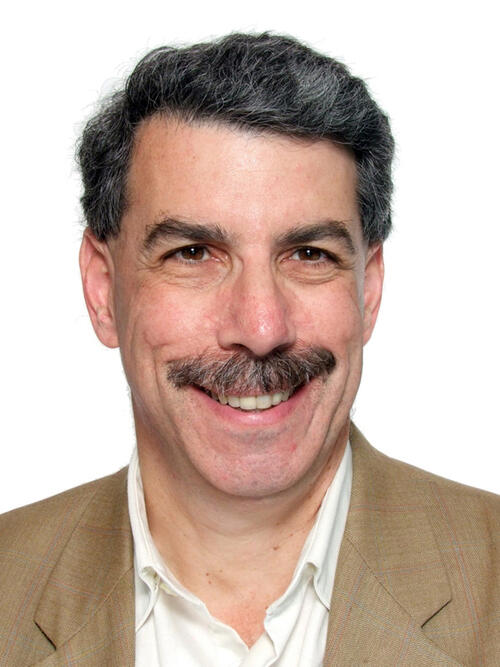 Mike Chinoy
Mike Chinoy
Senior Fellow, U.S.-China Institute, University of Southern California
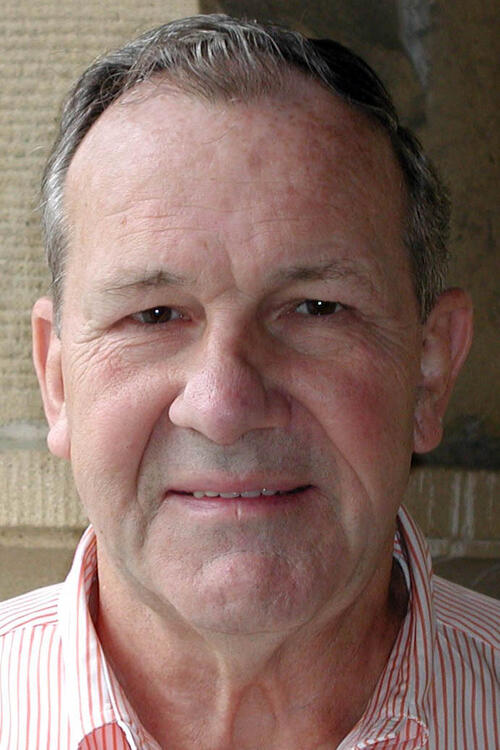
Michael H. Armacost
Shorenstein Distinguished Fellow, Shorenstein Asia-Pacific Research Center, Stanford University
Philippines Conference Room
Michael H. Armacost
Michael Armacost (April 15, 1937 – March 8, 2025) was a Shorenstein APARC Fellow at the Walter H. Shorenstein Asia-Pacific Research Center (Shorenstein APARC) from 2002 through 2021. In the interval between 1995 and 2002, Armacost served as president of Washington, D.C.'s Brookings Institution, the nation's oldest think tank and a leader in research on politics, government, international affairs, economics, and public policy. Previously, during his twenty-four-year government career, Armacost served, among other positions, as undersecretary of state for political affairs and as ambassador to Japan and the Philippines.
Armacost began his career in academia, as a professor of government at Pomona College. In 1969, he was awarded a White House Fellowship and was assigned to the Secretary and Deputy Secretary of State. Following a stint on the State Department's policy planning and coordination staff, he became a special assistant to the U.S. ambassador in Tokyo from 1972 to 74, his first foreign diplomatic post. Thereafter, he held senior Asian affairs and international security posts in the State Department, the Defense Department, and the National Security Council. From 1982 to 1984, he served as U.S. ambassador to the Philippines and was a key force in helping the country undergo a nonviolent transition to democracy. In 1989, President George Bush tapped him to become ambassador to Japan, considered one of the most important and sensitive U.S. diplomatic posts abroad.
Armacost authored four books, including, Friends or Rivals? The Insider's Account of U.S.–Japan Relations (1996), which draws on his tenure as ambassador, and Ballots, Bullets, and Bargains: American Foreign Policy and Presidential Elections (2015). He also co-edited, with Daniel Okimoto, the Future of America's Alliances in Northeast Asia, published in 2004 by Shorenstein APARC. Armacost served on numerous corporate and nonprofit boards, including TRW, AFLAC, Applied Materials, USEC, Inc., Cargill, Inc., and Carleton College, and he currently chairs the board of The Asia Foundation.
A native of Ohio, Armacost graduated from Carleton College and earned his master's and doctorate degrees in public law and government from Columbia University. He received the President's Distinguished Service Award, the Defense Department's Distinguished Civilian Service Award, the Secretary of State's Distinguished Services Award, and the Japanese government’s Grand Cordon of the Order of the Rising Sun.


