Diplomacy
News Type
News
Date
Paragraphs

"Moon's proposal of a trilateral summit between the two Koreas and the United States, undermining China's influence, turned out to be nothing more than a pipe dream," said researchers at the Shorenstein Asia-Pacific Research Center in a recently published article. "The series of summits that began with Kim's visit to Beijing should lead to Four Party Talks involving the two Koreas, the United States, and China."

The full article in The Diplomat is available here.

Hero Image
kim yong nam
President Moon of South Korea meeting at Cheong Wa Dae with Mr. Kim Yong-nam of the Presidium of the Supreme People's Assembly of North Korea
Cheong Wa Dae
All News button
1
Paragraphs
Book cover of "Peace on a Knife's Edge" showing South Korean president Roh Moo-hyun alongside George W. Bush and Kim Jong-il

Lee Jong-Seok served as vice-secretary of South Korea’s National Security Council and as its unification minister under the Roh Moo-Hyun administration (2003–08). After Roh’s tragic death in 2009, Lee resolved to present a record of the so-called participatory government’s achievements and failures in the realm of unification, foreign affairs, and national security.

Peace on a Knife’s Edge is the translation of Lee’s 2014 account of Roh’s efforts to bring peace to the Korean Peninsula in the face of opposition at home from conservative forces and abroad from the Bush administration’s hard stances of “tailored containment” and its declaration of the North as part of the “axis of evil.” Lee’s narrative will give American readers rare insights into critical moments of Roh’s incumbency, including the tumultuous Six-Party Talks; the delicate process of negotiating the relocation and reduction of United States Forces Korea; Roh’s pursuit of South Korea’s “autonomous defense”; conflicts with Japan over history issues; and the North’s first nuclear weapons test.

Desk, examination, or review copies can be requested through Stanford University Press.

All Publications button
1
Publication Type
Books
Publication Date
Subtitle

The Inside Story of Roh Moo-hyun's North Korea Policy

Book Publisher
Shorenstein APARC
News Type
News
Date
Paragraphs

Former U.S. ambassador to South Korea Kathleen Stephens spoke on the "PBS News Hour" about the first high-level talks between North Korea and South Korea in more than two years. The two nations agreed to hold future military talks aimed at easing border tensions and the North pledged to send a delegation to the Olympic Games next month.

Stephens called it a good first step and an “all-too-rare positive development” on the peninsula. The decrease in potential for disruptions to next month’s games could—according to Stephens-be seen as the first deliverable by South Korea’s new president, Moon Jae-In, on a promise to reengage with the North.

Ambassador Stephens said it was not surprising that denuclearization did not come up during Tuesday’s talks, noting North Korea’s position that the issue is one to be dealt with the United States. Ambassador Stephens speculated that once the Olympics closed, the peninsula might experience a period of reduced tensions along with confidence building. However, she believes that come the spring there would still remain important questions about military exercises as well as nuclear weapons.

Asked about news reports of discussions within the Trump administration on the possibility of targeted strikes against North Korean military sites, Ambassador Stephens described it as a very risky strategy, adding that the discussions alone could prove unnerving in South Korea as well as North Korea.

The full interview is available on PBS.

Hero Image
Former Ambassador Stephens discusses talks between North and South Korea on PBS News Hour
All News button
1
News Type
News
Date
Paragraphs

Commenting on President Trump's twelve-day trip to Asia, FSI senior fellow and director of the Southeast Asia Program at Shorenstein Asia-Pacific Research Center Donald K. Emmerson noted that Trump "failed . . . to significantly alter the calculus brings to bear on North Korea."

Trump's approach to foreign policy, one based on forming personal relationships, might have caused him to get the mistaken idea "that he had made a real impact and everybody was getting along," Emmerson suggested.

Emmerson likewise questioned any substantial trade-related results coming out of the trip, saying that many touted achievements were either "already on the table" or were non-binding memoranda of understanding.

That said, Emmerson stressed that if in time President Trump were to realize the dearth of interest in bilateral trade deals, and that the "U.S. is making China great again," he could shift U.S. policy.

The full article is available from the Sinclair Broadcast Group.

Hero Image
xi and trump
Presidents Trump and Xi take part in a business event in Beijing during Trump's twelve-day Asia tour.
WhiteHouse.gov
All News button
1
-

In this eighteenth session of the Strategic Forum, former senior American and South Korean government officials and other leading experts will discuss current developments in the Korean Peninsula and North Korea policy, the future of the U.S.-South Korean alliance, and a strategic vision for Northeast Asia. The session is hosted by the Korea Program in association with The Sejong Institute, a top South Korean think tank.


Conferences
-

In this seventeenth session of the Strategic Forum, former senior American and South Korean government officials and other leading experts will discuss current developments in the Korean Peninsula and North Korea policy, the future of the U.S.-South Korean alliance, and a strategic vision for Northeast Asia. The session is hosted by the Korea Program in association with The Sejong Institute, a top South Korean think tank.

The report from this session is avaiable here to download.

Seoul, Repulic of Korea

Conferences
News Type
News
Date
Paragraphs

Former U.S. ambassador to South Korea Kathleen Stephens spoke on "Bloomberg Daybreak: Asia" about President Trump's Asia trip on the eve of his arrival in China.

Stephens noted that in canceling a trip to the DMZ--more or less a presidential tradition on visits to Korea--Trump did the "right thing" by instead focusing on the "must-do" on this first trip of reassuring South Koreans on the U.S. commitment to its alliance with the Republic of Korea.

Both North Korean and Trump administration rhetoric seems to have cooled off in recent days; Stephens noted that Trump seems to have "gotten the message" about the importance of the relationship with South Korea and the level of nervousness in the country. 

Ambassador Stephens commented on the feasibility of beginning talks with North Korea and what additional pressure might be required to get the North to the table. She noted that if denuclearizing were a precondition for talks, they wouldn't happen.

She speculated on what President Trump might ask the Chinese to do to up the pressure on North Korea, for example, cutting off oil exports. She also suggested that when it comes to talking about trade, the emphasis might be on announcing deals and Trump might act as "salesman-in-chief."

The full interview is available on Bloomberg TV.

All News button
1
-

Image
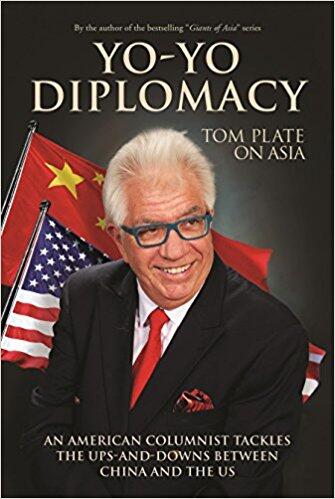
The third of the “Tom Plate on Asia” series, Yo-Yo Diplomacy compiles the compelling and insightful columns on Asia by award-winning journalist Tom Plate over the past two years. From tensions in the South China Sea to China’s stock market turbulence and Hong Kong’s bookseller saga, the veteran columnist continues to examine the rise of Asia and the role of America in this dynamic and diverse region.

The collection is enlivened with thoughtful retrospectives and personal comments providing vivid backstories. The result is an informative and readable anthology that would prove valuable not only political and current affairs commentators, but also to the layperson wishing to learn more about pivotal developments in the Asia-Pacific region.

Tom Plate is a university professor, a veteran columnist focused on Asia and America, and an educational innovator. A Los Angeles resident, this full-time Clinical Professor and Distinguished Scholar of Asian and Pacific Studies at Loyola Marymount University has orchestrated live interactive seminars with major universities across Asia, as part of LMU’s path-finding Asia Media International Center. He teaches courses on the United Nations, and on Asia and on its media, and is the author of 13 books, including the bestsellers Confessions of an American Media Man (2007) and four volumes in the ‘Giants of Asia’ series; and The Fine Art of the Political Interview (2015), all published by Marshall Cavendish Editions. 


Born in New York, he was educated at Amherst College, where he was Phi Beta Kappa, and Princeton University, where he was awarded his professional degree in public and international affairs. He has received a number of major journalistic recognitions, including from the American Society of Newspaper Editors its annual Deadline Writing Award.


Books will be available for sale at the event


Philippines Conference Room

Encina Hall, 3rd Floor, Central

Professor Tom Plate <i>Asian and Pacific Studies, Loyola Marymount University</i>
Seminars
Date Label
-

- To RSVP please click here -

Please note that this event will take place in Beijing, P.R.C. at the Stanford Center at Peking University.


Some of the world’s most critical flashpoints are concentrated in the Asia-Pacific today. The 2017 Lee Shau Kee World Leaders Forum will examine East Asia’s geopolitical volatilities in the context of China’s rapid rise while assessing the evolving role of the United States in the region. The Forum will first include remarks by the Director of FSI and former U.S. Ambassador to the Russian Federation, Michael A. McFaul, on the historical origins and contemporary consequences of President Trump’s worldview. A panel discussion will follow with leading policy experts, including the Director of the U.S.-Asia Security Initiative, Shorenstein APARC, and former U.S. Ambassador to Afghanistan, Karl Eikenberry; Associate Professor and Vice President of the Institute of International and Strategic Studies at Peking University, Yu Tiejun; William J. Perry Fellow in the Korea Program at Shorenstein APARC and former U.S. Ambassador to South Korea, Kathleen Stephens; Executive Director of the China Center for Collaborative Studies of the South China Sea and Dean of the School of International Relations at Nanjing University, Zhu Feng; and Shorenstein APARC Fellow at FSI and former chairman of the National Intelligence Council and Assistant Secretary of State of Intelligence and Research, Thomas Fingar.  The expert panel will examine the current state of U.S.-China relations in this increasingly turbulent region.


The Lee Shau Kee World Leaders Forum is an annual event established to raise public understanding of the complex issues China and other countries face in the course of rapid development. The purpose of the Lee Shau Kee World Leaders Forum is to foster engagement among government, academic, private sector and civil society leaders on pressing challenges of global importance that demand creative and innovative solutions.

This year’s event also marks the Tenth Anniversary of the China Program and the Fifth Anniversary of the Stanford Center at Peking University.


Agenda


2:00-2:15 PM                     Welcome remarks

2:15-3:15 PM                     Keynote Address: The Historical Origins and Contemporary Consequences of

                                               President Trump's Worldview, Ambassador Michael A. McFaul

3:15-3:30 PM                     Break

3:30-5:30 PM                     Panel Discussion: The United States, China, and the Asia-Pacific Region

                                                Amb. Karl Eikenberry

                                                Dr. Yu Tiejun

                                                Amb. Kathleen Stephens

                                                Dr. Zhu Feng

                                                Dr. Thomas Fingar


Please note that this event will take place in Beijing, P.R.C. at the Stanford Center at Peking University.

Stanford Center at Peking University (SCPKU),

The Lee Jung Sen Building,

Langrun Yuan, Peking University, Beijing, P.R.C.

<br><a href="https://fsi.stanford.edu/people/karl_eikenberry">Karl Eikenberry</a> <br><i>Former U.S. Ambassador to Afghanistan (2009-2011); Lt. Gen. of U.S. Army (retired); Director, U.S.-Asia Security Initiative, Shorenstein APARC</i>
<br><a href="https://aparc.fsi.stanford.edu/people/kathleen_stephens">Kathleen Stephens</a> <br><i>Former U.S. Ambassador to the Republic of Korea (2008-2011); William J. Perry Fellow, Shorenstein APARC</i>
<br>Yu Tiejun <br><i>Associate Professor and Vice President of the Institute of International and Strategic Studies, Peking University</i>
<br><a href="https://aparc.fsi.stanford.edu/people/thomas_fingar">Thomas Fingar</a> <br><i>Former chairman, National Intelligence Council; Former Assistant Secretary of State for Intelligence and Research; Shorenstein APARC Fellow</i>
<br>Zhu Feng <br><i>Executive Director, China Center for Collaborative Studies of the South China Sea; Director, Institute of International Studies, Nanjing University</i>
<br><a href="http://cddrl.fsi.stanford.edu/people/michael_a_mcfaul">Michael McFaul</a> <br><i>Former U.S. Ambassador to the Russian Federation (2012-2014); Director of FSI</i>
Panel Discussions
-

Abstract

Speculation about the course of cross-Strait relations after the upcoming 19th Chinese Communist Party Congress ranges from greater PRC flexibility to substantially increased pressure on Taiwan. The Mainland’s persistent suspicion about President Tsai Ing-wen’s motives has only deepened with her appointment of avowed independence supporter Lai Ching-te as premier, especially because of the prospect that Lai could eventually become president. As a result, once the internal tugging and hauling leading up to the Party Congress has been settled, some people predict that Beijing will resort to military intimidation or even actual use of force to bring Tsai to heel. What are the PRC’s goals? What are Taipei’s? What role can and should the United States play in seeking not only to avoid conflict but to reestablish a reliable level of stability in cross-Strait relations and to prevent Taiwan from once more becoming a highly divisive issue in U.S.-PRC relations? Alan Romberg will address these issues in his talk on October 30th.


Bio

Image
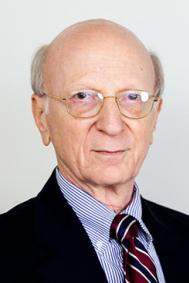
Alan Romberg

Alan Romberg is a Distinguished Fellow and the Director of the East Asia program at Stimson. Before joining Stimson in September 2000, he enjoyed a distinguished career working on Asian issues including 27 years in the State Department, with over 20 years as a U.S. Foreign Service Officer. Romberg was the Principal Deputy Director of the State Department's Policy Planning staff, Principal Deputy Assistant Secretary of State for Public Affairs and Deputy Spokesman of the department. He served in various capacities dealing with East Asia, including director of the Office of Japanese Affairs, member of the Policy Planning staff for East Asia, and staff member at the National Security Council for China. He served overseas in Hong Kong and Taiwan.

Additionally, Romberg spent almost 10 years as the CV Starr Senior Fellow for Asian Studies at the Council on Foreign Relations, and was special assistant to the secretary of the navy.

Romberg holds an M.A. from Harvard University, and a B.A. from the Woodrow Wilson School of Public and International Affairs at Princeton University.

This event is co-sponsored by the Taiwan Democracy Project in the Center on Democracy, Development, and the Rule of Law (CDDRL) and the U.S.-Asia Security Initiative in the Shorenstein Asia-Pacific Research Center (APARC), both part of the Freeman Spogli Institute for International Studies.

Alan Romberg Distinguished Fellow Stimson Center
Lectures
Subscribe to Diplomacy