Health and Medicine

FSI’s researchers assess health and medicine through the lenses of economics, nutrition and politics. They’re studying and influencing public health policies of local and national governments and the roles that corporations and nongovernmental organizations play in providing health care around the world. Scholars look at how governance affects citizens’ health, how children’s health care access affects the aging process and how to improve children’s health in Guatemala and rural China. They want to know what it will take for people to cook more safely and breathe more easily in developing countries.

FSI professors investigate how lifestyles affect health. What good does gardening do for older Americans? What are the benefits of eating organic food or growing genetically modified rice in China? They study cost-effectiveness by examining programs like those aimed at preventing the spread of tuberculosis in Russian prisons. Policies that impact obesity and undernutrition are examined; as are the public health implications of limiting salt in processed foods and the role of smoking among men who work in Chinese factories. FSI health research looks at sweeping domestic policies like the Affordable Care Act and the role of foreign aid in affecting the price of HIV drugs in Africa.

-
Co-sponsored by the Asia Health Policy Program & the Southeast Asia Program
 
This paper analyzes the effects of an early-life shock in Indonesia on children’s human capital formation and parental responses to these shocks. We exploit the geographical variation of Indonesia’s forest fires during the El Nino phenomenon in 1997, as well as cohort variation in exposure. Children affected by these shocks in utero and in early years have worse health outcomes relative to children not exposed to these shocks. We find that the health effects persist, but other factors mitigate the initial effect on cognitive skills.
 
My main research interest lies at the intersection of development and health economics. I am particularly interested in how social policies affect health outcomes for the poor, early health investments, and health-seeking behavior in limited resource settings, focusing on the evaluation of different strategies that seek to promote health investments and the effects of these interventions. Specifically, I have analyzed the effects of Indonesia’s household conditional cash transfer program on health outcomes, local health care price, and quality of care. I have also analyzed the long-term effects of a large-scale midwifery program in Indonesia. Current projects study the effects of early life shocks on children’s human capital outcomes in Indonesia and the Philippines.
 
Image
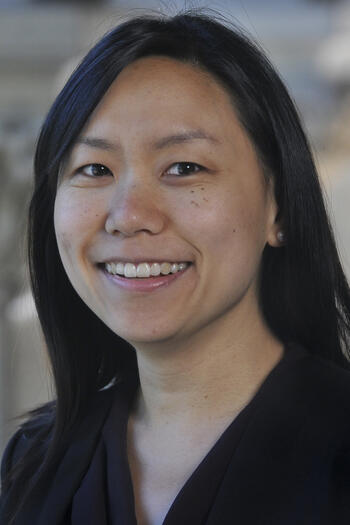
triyana margaret crop 113015a 4x6
Margaret Triyana is currently Assistant Professor of Economics at Nanyang Technological University, Singapore. Triyana graduated from the Harris School of Public Policy at the University of Chicago. She was previously the Asia Health Policy Postdoctoral Fellow at the Shorenstein Asia Pacific Research Center in 2013-14.
Margaret Triyana Assistant Professor of Economics, Nanyang Technological University, Singapore
Seminars
News Type
News
Date
Paragraphs

As we look toward year 2016, the Walter H. Shorenstein Asia-Pacific Research Center documents highlights from the 2014-15 academic year. The latest edition of the Center Overview, entitled "Asia in Flux," includes special research, people, events and outreach features, and is now available for download online.

Hero Image
annual report cover 14 15
All News button
1
Authors
Denise Masumoto
News Type
News
Date
Paragraphs

As the new academic year gets underway, the Walter H. Shorenstein Asia-Pacific Research Center’s Corporate Affiliates Program is excited to welcome its new class of fellows to Stanford University:

  • Yuta AikawaMinistry of Economy, Trade & Industry, Japan
  • Wataru FukudaShizuoka Prefectural Government
  • Huang (Catherine) HuangBeijing Shanghe Shiji Investment Company
  • Avni JethwaReliance Life Sciences
  • Satoshi Koyanagi, Ministry of Economy, Trade & Industry, Japan
  • An Ma, PetroChina
  • Huaxiang Ma, Peking University
  • Yuichiro Muramatsu, Mitsubishi Electric
  • Tsuzuri Sakamaki, Ministry of Finance, Japan
  • Tsuneo SasaiThe Asahi Shimbun
  • Ravishankar Shivani, Reliance Life Sciences
  • Aki Takahashi, Nissoken
  • Mariko Takeuchi, Sumitomo Corporation
  • Hideaki Tamori, The Asahi Shimbun
  • Ryo Washizaki, Japan Patent Office
  • Hung-Jen (Fred) Yang, MissionCare

During their stay at Stanford University, the fellows will audit classes, work on English skills, and conduct individual research projects; at the end of the year they will make a formal presentation on the findings from their research. During their stay at the center, they will have the opportunity to consult with Shorenstein APARC's scholars and attend events featuring visiting experts from around the world. The fellows will also participate in special events and site visits to gain a firsthand understanding of business, society and culture in the United States.


Hero Image
rsd15 070 0045a Rod Searcey
All News button
1
-

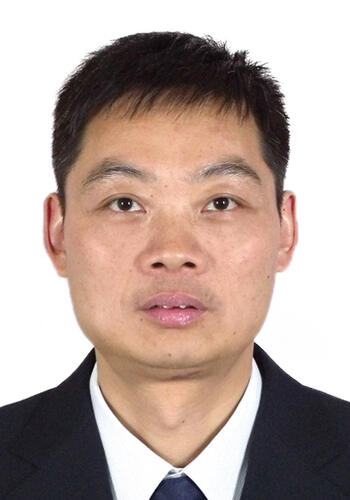
Professor MENG Qingyue, Dean of the Peking University School of Public Health and Director of the China Center for Health Development Studies at Peking University, will share his deep experience with research and policy advising about health and healthcare in the PRC. In the colloquium, Professor Meng will summarize the achievements of China’s health system reforms as well as the formidable challenges remaining -- strengthening primary care, reforming payment incentives, and multiple other reform priorities.

Professor Meng is lead author of the first-ever comprehensive overview of the PRC health system [http://www.wpro.who.int/asia_pacific_observatory/hits/series/chn/en/], which documents that the PRC has made great strides in raising health status and improving access to medical care, in large part thanks to emphasis on cost- effective public health programs, renewed commitments of government financing, expansion of social health insurance and other forms of financial protection, and investments in the healthcare delivery system. However, challenges remain in the form of large and in some cases growing inequalities in health and healthcare – across regions, urban-rural areas, or involving migrants and other vulnerable groups– as well as in improving the quality of healthcare, reforming public hospitals, and making expenditure growth sustainable through payment reforms and improved strategic purchasing.

Image
meng qing yue
Professor Meng Qingyue (MD, PhD), is Professor in Health Economics and Policy, Dean of Peking University School of Public Health, and Executive Director of Peking University China Center for Health Development Studies.

He obtained his Bachelor degree in medicine from Shandong Medical University (now Shandong University), Masters in public health from Shanghai Medical University (now Fudan University), Masters in economics from University of the Philippines, and PhD in health economics and policy from Karolinska Institutet in Sweden.

Before taking the current position, he was the Dean of Shandong University School of Public Health and Director of Shandong University Center for Health Management and Policy. His research interests include health financing policy and health provider payment systems.

He has led a team doing dozens of research projects supported by both domestic and international funding sources. He has been Member of the Expert Committee on Health Policy and Management to China Ministry of Health over the past decade. He is the Board Member of Health Systems Global elected from the Asia and Pacific Region.


China's health system
Download pdf
Meng Qingyue Professor in Health Economics and Policy, Dean of Peking University School of Public Health, and Executive Director of Peking University China Center for Health Development Studies
Seminars
-

This event has moved from the 4:30pm talk to a noon talk.

Nonprofit organizations are engaged in public sector management as service deliverers, and more recently, as governance partners. Such a role shift of nonprofits can be explained by a couple of spontaneous mechanisms that link service contracting to collaborative governance. The evolving elderly service contracting in Shanghai discloses that contracting may induce power sharing, consolidate mutual trust, reshape community governance networks, and spur nonprofit development. Contracting nonprofits thus may make decisions, enforce regulatory functions, set rules, and influence community governance. An evolutionary perspective provides a new angle on the changing government-nonprofit relations in China.

Image
dr jing yijia4x6
Dr. Yijia Jing is a professor in Public Administration and associate director of foreign affairs at Fudan University. He is the editor-in-chief of Fudan Public Administration Review, and serves as the vice president of International Research Society for Public Management. He is associate editor of Public Administration Review and Co-editor of International Public Management Journal. He is also the founding co-editor of a Palgrave book series---Governing China in the 21 Century.

Yijia Jing Professor in Public Administration and Associate Director of Foreign Affairs, Fudan University
Seminars
News Type
News
Date
Paragraphs

Stanford health policy expert Karen Eggleston has been appointed as a senior fellow at the Freeman Spogli Institute for International Studies (FSI), effective Sept. 1, 2015, on a continuing term.

Eggleston, who leads the Asia Health Policy Program at Stanford’s Walter H. Shorenstein Asia Pacific Research Center (APARC), is a recognized authority on comparative health policy and the economics of the demographic transition in Asia, especially China.

“FSI is delighted that Karen’s impressive scholarship and strong program leadership has earned her a promotion to the position of senior fellow,” FSI director Michael McFaul said. “It’s a well-deserved honor and the institute looks forward to working with her for many years to come.”

Trained as an economist, Eggleston first came to Stanford as a center fellow in 2007 to lead a program on Asian health policy in comparative perspective. Since then, the program has grown into an innovative hub of research, training and policy outreach.

Eggleston’s new appointment also carries membership in the University’s Academic Council and status as a principal investigator for research projects. Her research areas include population aging, healthcare productivity (“value for money”), insurance and payment incentives, and health system governance. Currently, she is leading a comparative study of “value for money” in diabetes care, with patient-level data from Japan, Hong Kong, Taiwan and China.

“Karen has been a pioneering force at our center, and in the area of Asia health policy,” said Gi-Wook Shin, director of Shorenstein APARC. “Her strong record of scholarly accomplishment has enriched the intellectual life at Stanford, and we look forward to continuing to support her research and teaching endeavors.”

Eggleston has led many crosscutting initiatives at Stanford including the organization of multiple international conferences in the United States and abroad. This past year, she co-organized a conference on China’s health reforms and primary care, held at the Stanford Center at Peking University.

She has testified on China’s health system before a U.S. congressional commission, and in 2014, spoke at the Jackson Hole Symposium of the Federal Reserve Bank.

Eggleston teaches students through Stanford’s East Asian Studies program and is an active author/editor of books and publications, including a special issue of the Journal of the Economics of Ageing (2014) focused on the economic implications of population aging in China and India. She expects to release two edited volumes through Shorenstein APARC’s publishing program shortly.

Eggleston is also a faculty research fellow at the National Bureau of Economic Research as well as affiliated with Stanford’s Center for Health Policy / Center for Primary Care and Outcomes Research.

Hero Image
Portrait of Karen Eggleston Rod Searcey
All News button
1
Encina Hall E301616 Serra StreetStanford, CA94305-6055
(650) 724-5321 (650) 723-6530
0
darika_saingam.jpg Ph.D.

Darika Saingam joins the Walter H. Shorenstein Asia-Pacific Research Center as the Developing Asia Health Policy Postdoctoral Fellow for the 2015-16 year.  Saingam’s research interests are public health, substance abuse, drug policy and Southeast Asia. While at Shorenstein APARC, she will research the evolution of substance-abuse control measures and related policy in Thailand.  Saingam seeks to identify potentially effective policy directions suitable for Thailand, and other developing countries in Southeast and East Asia.

Saingam completed her doctorate in epidemiology at the Prince of Songkla University in 2012, and has served as a researcher at the University’s epidemiology unit since, as well as a researcher at the Thailand Substance Abuse Academic Network since 2014.

2015-16 Developing Asia Health Policy Postdoctoral Fellow
-

Co-sponsored by the Health Economics Seminar

We present the first direct evidence on the relative quality of public and private healthcare in a low-income setting, using a unique set of audit studies. We sent standardized (fake) patients to rural primary care providers in the Indian state of Madhya Pradesh, and recorded the quality of care provided and prices charged in each interaction. We report three main findings. First, most private providers lacked formal medical training, but they spent more time with patients and completed more essential checklist items than public providers and were equally likely to provide a correct treatment. Second, we compare the performance of qualified public doctors across their public and private practices and find that the same doctors exerted higher effort and were more likely to provide a correct treatment in their private practices. Third, in the private sector, we find that prices charged are positively correlated with provider effort and correct treatment, but also with unnecessary treatments. In the public sector, we find no correlation between provider salaries and any measure of quality. We develop a simple theoretical framework to interpret our results and show that in settings with low levels of effort in the public sector, the benefits of higher diagnostic effort in the private sector may outweigh the costs of market incentives to over treat. These differences in provider effort may partly explain the dominant market share of fee-charging private providers even in the presence of a system of free public healthcare.

Image
karthik portrait4x6
Karthik Muralidharan is an associate professor of economics at the University of California, San Diego where he joined the faculty as an assistant professor in 2008.

Born and raised in India, he earned an A.B. in economics (summa cum laude) from Harvard, an M.Phil. in economics from Cambridge (UK), and a Ph.D. in economics from Harvard. He is a Research Associate of the National Bureau of Economic Research (NBER), an Affiliate at the Bureau for Research and Economic Analysis of Development (BREAD), a Member of the Jameel Poverty Action Lab (J-PAL) network, an Affiliate at the Center for Effective Global Action (CEGA), and a Research Affiliate with Innovations for Poverty Action (IPA).

Prof. Muralidharan's primary research interests include development, public, and labor economics. Specific topics of interest include education, health, and social protection; measuring quality of public service delivery; program evaluation; and improving the effectiveness of public spending (with a focus on developing countries). Courses taught include undergraduate and graduate classes in development economics, program evaluation, and the economics of education.


Quality and Accountability in Healthcare Delivery: Audit-Study Evidence from Primary Care in India
Download pdf
Quality and Accountability in Healthcare Delivery: Audit-Study Evidence from Primary Care in India
Download pdf
Karthik Muralidharan Associate Professor of Economics at the University of California, San Diego
Seminars
-

Publicly provided long-term care (LTC) insurance with means-tested benefits is suspected to crowd out either private LTC insurance (Brown and Finkelstein, 2008), private saving (Gruber and Yelowitz, 1999; Sloan and Norton, 1997), or informal care (Pauly, 1990; Zweifel and Strüwe, 1997). This contribution predicts crowding-out effects for both private LTC insurance and informal care on the one hand and private saving and informal care on the other. These effects result from the interaction of a parent who decides about private LTC insurance before retirement and the amount of saving in retirement and a caregiver who decides about effort devoted to informal care. Some of the predictions are tested using a recent survey from China.

Image
photo
Peter Zweifel is an Emeritus of the University of Zurich. After a postdoc position with  the University of Wisconsin-Madison in 1974-75, he received tenure with the University of Zurich in 1984. Publications include more than 100 articles in refereed journals (AER, EnJ, EurJHE, JHE, JRI, JRU, PubCh) as well as Health Economics (with F. Breyer und M. Kifmann) and Insurance Economics (with R. Eisen); Energy Economics (with G. Erdmann and A. Praktiknjo) will be available by the end of 2015.

Long-term care: Is there crowding out of informal care, private insurance as well as saving?
Download pdf
Peter Zweifel Emeritus, University of Zurich, Switzerland
Seminars
Subscribe to Health and Medicine