Health and Medicine

FSI’s researchers assess health and medicine through the lenses of economics, nutrition and politics. They’re studying and influencing public health policies of local and national governments and the roles that corporations and nongovernmental organizations play in providing health care around the world. Scholars look at how governance affects citizens’ health, how children’s health care access affects the aging process and how to improve children’s health in Guatemala and rural China. They want to know what it will take for people to cook more safely and breathe more easily in developing countries.

FSI professors investigate how lifestyles affect health. What good does gardening do for older Americans? What are the benefits of eating organic food or growing genetically modified rice in China? They study cost-effectiveness by examining programs like those aimed at preventing the spread of tuberculosis in Russian prisons. Policies that impact obesity and undernutrition are examined; as are the public health implications of limiting salt in processed foods and the role of smoking among men who work in Chinese factories. FSI health research looks at sweeping domestic policies like the Affordable Care Act and the role of foreign aid in affecting the price of HIV drugs in Africa.

0
Corporate Affiliate Visiting Fellow, 2015-17
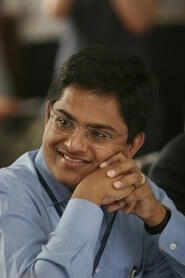
fred_yang.jpg MD

Hung-Jen (Fred) Yang is a corporate affiliate visiting fellow at the Walter H. Shorenstein Asia-Pacific Research Center (Shorenstein APARC) for 2015-17.  Dr. Yang is a physician executive and is currently Chairman of MissionCare Inc., and President of Healthcare Corporation of Asia, a company that owns and operates four community hospitals and seven long-term care facilities in northern Taiwan.  After graduating from National Taiwan University Medical School with an MD degree in 1994, Yang pursued a career in healthcare management.  He earned a Master of Public Health (PH) degree from Harvard in 1995 and an MBA from the Drucker School of Management at Claremont Graduate University, CA in 1997.  Before going back to Taiwan in 1998, he worked as a financial analyst for Tenet Healthcare System, the second largest hospital chain in the U.S. Since 1998, Yang has been actively serving the MissionCare Group in many capacities, such as Chief Financial Officer, Chief Operation Officer and Chief Executive Officer.   Over the past ten years. Yang has made significant contributions not only to his company but also to the healthcare industry in Taiwan.  Under his leadership, MissionCare became Taiwan's first JCI accredited hospital, hence helping to elevate Taiwan's healthcare quality to a higher level.  In addition to hospital management, Yang also excels at health economics, financial engineering and strategic management.  In 2010, he received  an Ernst & Young Taiwan Entrepreneur Award for conducting the successful listing of his company on the Taipei OTC, making it the only hospital group listed in Taiwan.

Date Label
Shorenstein APARCStanford UniversityEncina Hall, Room E301Stanford,  CA  94305-6055
650-723-6530
0
Corporate Affiliate Visiting Fellow, 2015-16
MD

Qi-Hong Sun is a corporate affiliate visiting fellow at the Walter H. Shorenstein Asia-Pacific Research Center (Shorenstein APARC) for 2015-16.

0
Corporate Affiliate Visiting Fellow, 2015-16
ravi_shivani.jpg MS

Ravishankar Shivani is a corporate affiliate visiting fellow at the Walter H. Shorenstein Asia-Pacific Research Center (Shorenstein APARC) for 2015-16.  Shivani has more than 16 years of experience in handling pharmaceuticals quality management systems and has been with Reliance Life Sciences Pvt. Ltd., India since 2007.  Currently, Shivani is Deputy General Manager in the Quality Management group and is accountable for pharmaceutical quality control and validation functions including laboratory controls, change control, deviation/OOS handling, process and cleaning validation, facility and equipment qualification, stability programs, technology transfer, investigations, documnetation control and supporting regulatory filing.  Prior to joining Reliance Life Sciences Pvt. Ltd., he worked in different capacities involving quality management with AstraZeneca Pharma India Limited, Wintac Limited and MicroLabs Limited at Bangalor.  Shivani received his post graduate degree in microbiology from Kuvempu University, Karnataka, India in 1998.


Date Label
0
Corporate Affiliate Visiting Fellow, 2015-16
avni_jethwa.jpg MS

Avni Jethwa is a corporate affiliate visiting fellow at the Walter H. Shorenstein Asia-Pacific Research Center (Shorenstein APARC) for 2015-16.  Jethwa has eight years of experience in handling pharmaceutical manufacturing & quality management systems and has been with Reliance Life Sciences Pvt. Ltd., India since 2007.  Currently, Jethwa is a Manager in the Quality Assurance group and is accountable for quality assurance function handling in-process quality checks for the entire manufacturing process - drug substance & drug product, batch release, handling of deviations, out of specifications, investigations, corrective & preventative actions, change controls, technology transfer, process validation, cleaning validation, internal & external audits, vendor & contract testing laboratory audits, annual produce quality reviews, product stability studies, document & data control and supporting for regulatory filing.  Jethwa received her post graduate degree in microbiology from the University of Mysore, India in 2007.

Date Label
Paragraphs

Introduction

The decreasing effectiveness of antimicrobial agents is a growing global public health concern. Low-income and middle-income countries are vulnerable to the loss of antimicrobial efficacy because of their high burden of infectious disease and the cost of treating resistant organisms. We aimed to assess if copayments in the public sector promoted the development of antibiotic resistance by inducing patients to purchase treatment from less well regulated private providers.

Methods

We analysed data from the WHO 2014 Antibacterial Resistance Global Surveillance report. We assessed the importance of out-of-pocket spending and copayment requirements for public sector drugs on the level of bacterial resistance in low-income and middle-income countries, using linear regression to adjust for environmental factors purported to be predictors of resistance, such as sanitation, animal husbandry, and poverty, and other structural components of the health sector. Our outcome variable of interest was the proportion of bacterial isolates tested that showed resistance to a class of antimicrobial agents. In particular, we computed the average proportion of isolates that showed antibiotic resistance for a given bacteria-antibacterial combination in a given country.

Findings

Our sample included 47 countries (23 in Africa, eight in the Americas, three in Europe, eight in the Middle East, three in southeast Asia, and two in the western Pacific). Out-of-pocket health expenditures were the only factor significantly associated with antimicrobial resistance. A ten point increase in the percentage of health expenditures that were out-of-pocket was associated with a 3·2 percentage point increase in resistant isolates (95% CI 1·17–5·15; p=0·002). This association was driven by countries requiring copayments for drugs in the public health sector. Of these countries, moving from the 20th to 80th percentile of out-of-pocket health expenditures was associated with an increase in resistant bacterial isolates from 17·76% (95% CI 12·54–22·97) to 36·27% (31·16–41·38).

Interpretation

Out-of-pocket health expenditures were strongly correlated with antimicrobial resistance in low-income and middle-income countries. This relation was driven by countries that require copayments on drugs in the public sector. Our data suggest cost-sharing of antimicrobials in the public sector might drive demand to the private sector in which supply-side incentives to overprescribe are probably heightened and quality assurance less standardised.

Funding

National Institutes of Health.

All Publications button
1
Publication Type
Journal Articles
Publication Date
Journal Publisher
Lancet Infectious Diseases
Authors
Karen Eggleston
Number
10
News Type
Q&As
Date
Paragraphs

Demographic change is fast becoming one of the most globally significant trends of the 21st century. Declining fertility rates and rising life expectancy -- two of the patterns triggering demographic change -- will cause vast socioeconomic strains, especially in the Asia-Pacific region, which has some of the world's most populous countries. Stanford health researcher Karen Eggleston says comparison and cross-collaboration are needed to induce creative solutions.

In an interview with the Office of International Affairs, Eggleston discusses her research approaches and partnerships in the study of healthcare systems and health policy in the Asia-Pacific region. She leads a multiyear research initative that examines comparative policy responses to demographic change in East Asia. Eggleston says the goal is to help move global health policy to a place where everyone has an "equal opportunity for a healthier and longer life."

The Q&A may be viewed in full by clicking here.

Analyzing demographic change in China, Japan and South Korea is the focus of the book Aging Asiaan outcome of a conference between the Walter H. Shorenstein Asia-Pacific Research Center and the Stanford Center on Longevity.

Eggleston also coedited a special issue of the Journal of the Economics of Ageing with David Bloom, a professor at Harvard University, looking at a range of economic issues related to population change in China and India.

Hero Image
dsc 4402 online
Karen Eggleston (left) confers with a healthcare worker at a primary care clinic in Hangzhou, China.
Robin Yao
All News button
1
Authors
News Type
News
Date
Paragraphs

For Matthew Kohrman and his students, the war against tobacco needs a new communications strategy.

After all, he noted, three times as many cigarettes are currently manufactured and sold worldwide than were in the 1960s. And the global cigarette industry is the greatest cause of preventable death on the planet today.

That’s why the Stanford associate professor of anthropology decided to teach an introductory seminar this spring, Anthro 182N, titled Smoke and Mirrors in Global Health. Kohrman led his 10 students on a journey into the “strange optics” that the global tobacco industry uses – and what to do about them.

As noted in the syllabus, “entrenched challenges” to global health require society to develop “new methods” to communicate the real truth about tobacco.

Just what are those “new methods?” At the culmination of the class, the students presented some variations on that theme. Their end-of-the-quarter projects were web-based efforts profiling various features of global tobacco. They included exposés on how academicians in China assist the industry in that country, humorous parodies and critiques of Philip Morris, and flawed approaches to tobacco control in South Korea.

They tackled big-picture questions, Kohrman said. For example, they asked what exactly constitutes cigarette manufacturing and how new strategies could help slow the spread of tobacco-related diseases worldwide.

Kohrman, the director of Stanford’s Cigarette Citadels project, envisioned his class as a way for students to offer some thought-provoking and original ideas grounded in solid data. After viewing the student projects, he was astounded – and proud.

“My overall impression has been a feeling of awe,” he said. “Mostly freshmen and sophomores, the students who enrolled in this new course quickly synthesized complex intellectual concepts introduced early in the quarter, conceived their own innovative project ideas, collected relevant data, generously worked with each other, designed apt strategies for evocatively visualizing their messages, and chose and implemented strong interactive media tools – most of which were utterly new to me.”

One of those students was Minkee Sohn, a communication major, who created a video, “Fresh Recruits,” to highlight what he believes is the hypocrisy in the language of some cigarette manufacturers’ recruitment efforts.

“While cigarette manufacturers,” Sohn said, “often frame smoking as an act of free choice, that choice is just an illusion. Free choice is denied to people in all stages of cigarette manufacturing and consumption.”

For example, he explained that children in the African country of Malawi are coerced to work with their families in tobacco fields. “It’s deeply disturbing to hear companies associate freedom with high-paying jobs in cigarette manufacturing.”

For biology major Annabel Chen, the most important thing she learned was to analyze information skeptically. “Industries like big tobacco have influences in unexpected places, so you always need to do sleuthing to find out the truth,” she said.

She chose to examine the links between tobacco and academic research in China. “Seeing as China is the biggest tobacco market in the world, this was a problem we needed to address.”

Kohrman appreciates how students like Sohn and Chen were willing to try an experimental course, never taught before, and which for many was outside of their comfort zone. He said the course will be taught again in 2015-16.

“Looking back, it was the perfect-size group for all the work and one-on-one teaching we did,” he said.

The course was a classic collaboration, according to Kohrman, who also credits Claudia Engel, a lecturer in the Anthropology Department who helped with the technology and his own experiences mentoring undergraduate research, all of which proved instrumental to designing Smoke and Mirrors in Global Health.

“It was a great success today,” he said after seeing the student projects on the last day of class. Tom Glynn, a top adviser to the American Cancer Society, was on hand to see the presentations.

Kohrman added, “Students got tremendous feedback, and there was lots of enthusiasm about how this experimental course unfolded.”

Clifton Parker is a writer for the Stanford News Service.

Hero Image
flickr shizhao smokingarea
Smoking area sign.
Flickr/Shizhao
All News button
1
News Type
News
Date
Paragraphs

Just as they were marking the end of their undergraduate careers, 33 graduating seniors had something else to celebrate. They were recipients of the 2015 Firestone and Robert M. Golden medals and the David M. Kennedy Honors Thesis Prize.

Four of the Firestone winners had FSI scholars as their advisers, and one of those students was also awarded the Kennedy honor.

The Firestone Medal for Excellence in Undergraduate Research recognizes theses written in the social sciences, natural sciences, and engineering and applied sciences. The medalists each received an engraved bronze medal, citation and a monetary award at a ceremony in June, hosted by Harry J. Elam Jr., vice provost for undergraduate education.

The Kennedy Thesis Prize is awarded annually to the single best thesis in each of the four divisions of humanities, social sciences, natural sciences, and engineering and applied sciences. Recipients of this award have accomplished significantly advanced research in the field and have shown strong potential for publication in peer-reviewed scholarly works.

The prize was established in 2008 in recognition of David M. Kennedy, professor emeritus of history, well known for mentoring undergraduate writers. Each Kennedy winner received an engraved plaque and a monetary award, and the historian was on hand to present the prizes.

Jeremy Majerovitz was advised by Pascaline Dupas, an FSI senior fellow, for "Does Ethnic Fractionalization Matter for Development?"

Taylor Grossman was advised by Amy Zegart, an FSI senior fellow and co-director of CISAC, for "The Problem of Warning: Homeland Security and the Evolution of Terrorism Advisory Systems."

Stefan Norgaard, was advised by Larry Diamond and Francis Fukuyama for "Rainbow Junction: South Africa's Born Free Generation and the Future of Democracy." Both are FSI senior fellows, and Fukuyama is soon to take Diamond’s place as director of CDDRL. James Campbell, a history professor, also advised Norgaard.

Sanjana Parikh was advised by Phillip Lipscy, a center fellow at APARC, for "Constitutional Promises and Environmental Protection: An Assessment of National Legal Rights to Nature," international relations; advised by Phillip Lipscy, assistant professor of political science.

Laurie Rumker was advised by David Relman, an FSI senior fellow and co-director of CISAC for "Before and After the Flood: Stability and Resilience of the Human Gut Microbiota." Rumker was also advised by Stanley Falkow, professor emeritus of microbiology and immunology; and Les Dethlefsen, research associate in microbiology and immunology.

All News button
1
Authors
News Type
News
Date
Paragraphs

The United Nations has thus far fulfilled its charter to prevent a third world war, but with 60 million refugees, continued bloodshed with unresolved civil conflicts and terrorism spreading like cancer, the world's leading peacekeeping organization must spearhead global action, U.N. Secretary-General Ban Ki-moon said Friday at Stanford on the 70th anniversary of the international organization.

Ban, the U.N.'s eighth secretary-general, did not rest on any laurels during his speech at a public event sponsored by the Walter H. Shorenstein Asia-Pacific Research Center (APARC). "I humbly accept criticism that the U.N. is not doing enough," he said. 

However, the situation could have been worse if not for the United Nations, he continued. "Without peacekeepers, or without the U.N.'s continued humanitarian assistance and advocacy of human rights, I'm afraid to tell you that this world would have been poorer, more dangerous and even bloodier without the United Nations."

Ban's visit to Stanford – his second to the university in less than three years – was part of a trip to the Bay Area to commemorate the signing of the U.N. charter. In 1945, representatives from 50 nations gathered in San Francisco to create the United Nations – an international organization aimed at saving future generations from the "scourge of war."

Today, the United Nations has grown to 193 member nations. Its challenges – from climate change and poverty to civil wars and terrorism – have never been greater, Ban said.

"This is a critical year; 2015 is a year of global action," he said. "The U.N. cannot do it alone. We need strong solidarity among government, business communities and civil societies, from each and every citizen."

The fact that so many young people around the globe are drawn to violent narratives is worrisome, Ban said. "Violent terrorism is spreading like cancer around the world."

The rise in terrorist activities stems from "a failure of leadership," he said. That's why the United Nations needs to develop a comprehensive plan of action to address extremism, he maintained.

The U.N.'s 70th anniversary coincidentally fell on a momentous day of tragedy and celebration around the world. Dozens were killed when terrorists launched horrific attacks across three continents – in France, Tunisia and Kuwait – fueling anger, sadness and fear of more violence.

But in the United States, celebrations rang out in response to a landmark U.S. Supreme Court ruling that legalizes same-sex marriages nationwide.

Ban, who has long advocated for equality and last year pushed the United Nations to recognize same-sex marriages of its staff, drew a round of applause when he heralded the court ruling as "a great step forward for human rights."

The June 26 event was co-sponsored by Shorenstein APARC and the Freeman Spogli Institute for International Studies at Stanford University, with promotional co-sponsors Asia Society, Asia Foundation and the World Affairs Council of Northern California

May Wong is a freelance writer for the Stanford News Service.
Coverage and related multimedia links:

Remarks at Stanford University by Ban Ki-moon (U.N. News Centre, 6/26/15)

Photos of Ban Ki-moon at Stanford University (U.N. Photo, 6/26/15)

At Stanford University, Ban says U.N. ready to build a better future for all (U.N. News Centre, 6/27/2015)

U.N. Secretary-General Ban Ki-moon welcomes growing engagement of India, China (NDTV, 6/27/2015)

U.N. Secretary-General Ban Ki-moon speaks at Stanford, celebrates U.N.'s 70th anniversary (Stanford Daily, 6/29/15)

Hoover archival photographs featured at lecture delivered by U.N. Secretary-General Ban Ki-moon (Hoover Institution, 6/29/2015)

Hero Image
636086
Ban Ki-moon, the eighth secretary-general of the United Nations, urged the audience to see 2015 as a year of global action.
UN/Mark Garten
All News button
1
Subscribe to Health and Medicine