Governance

FSI's research on the origins, character and consequences of government institutions spans continents and academic disciplines. The institute’s senior fellows and their colleagues across Stanford examine the principles of public administration and implementation. Their work focuses on how maternal health care is delivered in rural China, how public action can create wealth and eliminate poverty, and why U.S. immigration reform keeps stalling. 

FSI’s work includes comparative studies of how institutions help resolve policy and societal issues. Scholars aim to clearly define and make sense of the rule of law, examining how it is invoked and applied around the world. 

FSI researchers also investigate government services – trying to understand and measure how they work, whom they serve and how good they are. They assess energy services aimed at helping the poorest people around the world and explore public opinion on torture policies. The Children in Crisis project addresses how child health interventions interact with political reform. Specific research on governance, organizations and security capitalizes on FSI's longstanding interests and looks at how governance and organizational issues affect a nation’s ability to address security and international cooperation.

News Type
News
Date
Paragraphs
Engineering education in Brazil, Russia, India, and China -- the "BRIC countries" -- is the subject of a groundbreaking recent study and a forthcoming book co-authored by Rafiq Dossani. He has written a working paper focusing on India, and took part in a related conference at FSI on Apr. 28.
Hero Image
EngineeringStudents NEWSFEED
Students listen to a lecture at the Engineering College of Bikaner in Rajasthan, India, Oct. 2009.
Flickr/Niyam Bhushan
All News button
1
-

The Pearl River Delta (PRD) in southern China is a major world-manufacturing hub populated by small- to medium-sized firms; many are family-owned and run by entrepreneurs based in Hong Kong, Macau, and Taiwan. With a population of 56 million and a land area about one tenth the size of the State of California, the region produces over 10 percent of China’s GDP.

In April 2009, the local party chief announced that Beijing had set the goal for “the PRD’s economy to surpass that of South Korea in the next decade.” He also wanted the region “to reduce its dependence on resource-intensive industries, and increase the number of high-tech manufacturing and service industries.” More recently, in light of the worldwide declining asset values resulting from the 2008 global financial crisis, Beijing has been urging mainland firms, including those in the PRD region, to “go abroad” to invest and compete in overseas markets.

This call for firms’ international expansion, together with the mandate to move the PRD up the value-chain, makes the region an excellent research site to study China’s industrial policy and its impact on local economic and social development. Additionally, because of the changes mentioned above, the PRD also provides a natural quasi-experimental setting for investigating organizational learning and adaption to shifting environmental conditions, particularly those requiring the development of new capabilities for firm survival.

Professor Joseph L. C. Cheng will present preliminary findings from his research on the PRD region, with a focus on the entrepreneurial firms and how they acquire new internationalization knowledge and corporate governance practices to help enhance their competitiveness in the global marketplace. He will also discuss the findings’ implications for designing public policies and corporate programs to facilitate economic reform and enterprise development.

Philippines Conference Room

Walter H. Shorenstein
Asia-Pacific Research Center
616 Serra St., Encina Hall C302-23
Stanford University
Stanford, CA 94305-6055

(650) 723-3368 (650) 723-6530
0
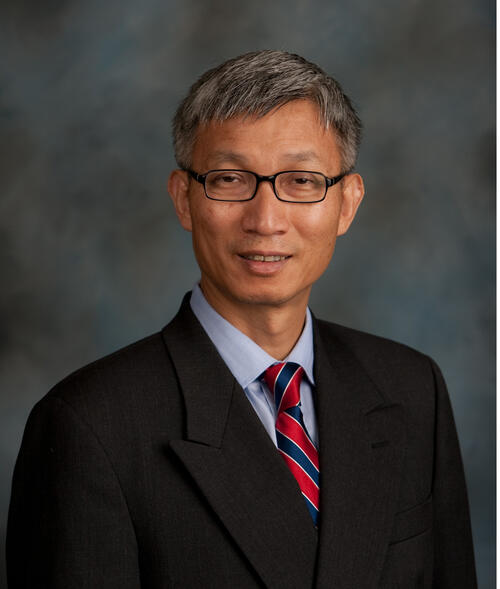
Visiting Professor
ChengJosephWEB.jpg PhD

Research Interests

Asia-Pacific and global competitiveness; national innovation and technology policies; foreign R&D investment; strategy and organization design for transnational firms.

Professional Biography

Joseph L. C. Cheng joins the Walter H. Shorenstein Asia-Pacific Research Center (Shorenstein APARC) in 2012 from the University of Illinois at Urbana-Champaign where he is currently professor of international business and director of the CIC Center for Advanced Study in International Competitiveness. CIC (Committee on Institutional Cooperation) is the nation’s primer consortium of top-tier research universities in the Midwest, including the Big Ten Conference members and the University of Chicago. 

During his time at Shorenstein APARC, Cheng will conduct research on the international competitiveness of multinational firms from the Asia-Pacific, with a focus on the JACKS countries (Japan, Australia, China, Korea, and Singapore). The project has two main objectives:  (1) to identify the key competitive advantages of the JACKS countries both individually and collectively as a cluster of economies; and (2) to investigate how indigenous firms from the JACKS countries internationalize and leverage home-based advantages to enhance their competitiveness overseas. The research findings will be reported in a forthcoming book that Cheng is currently writing: Asia-Pacific and the JACKS Multinationals: Economics, Culture, and International Competitiveness.

Cheng is a consulting editor for the Journal of International Business Studies and senior editorial consultant to the European Journal of International Management. He is also a guest editor for an upcoming special issue of Long Range Planning on “China Business and International Competitiveness: Economics, Politics, and Technology.” Additionally, he currently serves or has served on the editorial boards of several other journals, including Management International Review, Journal of World Business, Organizational Dynamics, and Journal of Engineering and Technology Management.

Cheng holds a PhD in business administration from the University of Michigan and a BS (with honors) in industrial engineering from the University of Wisconsin-Madison.

Joseph L. C. Cheng Visiting Professor, Shorenstein Asia-Pacific Research Center Speaker Stanford University
Seminars
Date Label
-

***PLEASE NOTE DATE CHANGE***

Maritime issues are increasingly at the heart of security issues between the United States and China. Historically, the Taiwan issue had dominated the relationship, but increasingly issues such as close in reconnaissance, the South China Sea, and different views on exclusive economic zone rights are shaping the security agenda. In each of these areas, the two sides are far apart. U.S. routine practices of air and sea-based reconnaissance well outside territorial waters is met with indignation by Chinese leaders. Chinese assertive policy regarding its claims of the Spratly islands has provoked several Southeast Asian nations and drawn U.S. diplomatic attentions to the region. Chinese claims on EEZ rights are outliers internationally, however the United States stands outside the key international treaty that governs such rights.

Overlaying these potentially conflicting national interests, both sides have engaged in military shifts. China has maintained double-digit growth in its military budget for nearly 20 years, with substantial attention to the naval realm. Chinese diesel submarines and advanced combat aircraft have brought the People’s Liberation Army to modern levels. New types of systems such as ballistic missile launching submarines and anti-ship ballistic missiles are changing the vary nature of China’s maritime capabilities. As the United States winds down two wars in the Middle East, its military remains attentive to these changes and includes doctrinal and force posture changes. New deployments in Singapore, Guam, and Australia supplement enhanced partnerships with the Philippines and Vietnam, and a reinvigoration of traditional alliances.

The interaction between potentially conflictual national interests and a dynamic military situation raises concerns about the future between the two giants astride the Pacific.

About the panelists

Image
Adm. Gary Roughead
Admiral Gary Roughead is a 1973 graduate of the U.S. Naval Academy. Among his six operational commands, Admiral Roughead was the first officer to command both classes of Aegis ships, having commanded USS Barry (DDG 52) and USS Port Royal (CG 73). As a flag officer, he commanded Cruiser Destroyer Group 2, the George Washington Battle Group; and U.S. 2nd Fleet/NATO Striking Fleet Atlantic and Naval Forces North Fleet East. Ashore, he served as Commandant, United States Naval Academy, the Department of the Navy’s Chief of Legislative Affairs, and as Deputy Commander, U.S. Pacific Command. He is one of only two officers to have commanded the fleets in the Pacific and Atlantic, commanding the U.S. Pacific Fleet and Joint Task Force 519, as well as U.S. Fleet Forces Command, where he was responsible for ensuring Navy forces were trained, ready, equipped and prepared to operate around the world, where and when needed.

Roughead’s awards include the Defense Distinguished Service Medal, Navy Distinguished Service Medal, Defense Superior Service Medal, Legion of Merit, Meritorious Service Medal, Navy and Marine Corps Commendation Medal, Navy and Marine Corps Achievement Medal, and various unit and service awards.

Roughead became the 29th Chief of Naval Operations Sep. 29, 2007. He retired from active duty, Sept. 23, 2011.

Image
Christopher Twomey
Christopher P. Twomey is an associate professor of national security affairs (with tenure) at the U.S. Naval Postgraduate School (NPS) in Monterey, Calif. In 2004, he received his PhD in politcal science from MIT and joined the NPS faculty, later serving as associate chair for research and as director of the Center for Contemporary Conflict from 2007 to 2009. Today, he works closely with the Departments of Defense and State on a range of diplomatic engagements across Asia and regularly advises PACOM, STRATCOM, and the Office of Net Assessment. His book—The Military Lens: Doctrinal Differences and Deterrence Failure in Sino-American Relations (Cornell, 2010)—explains how differing military doctrines complicate diplomatic signaling, interpretations of those signals, and assessments of the balance of power. He edited Perspectives on Sino-American Strategic Nuclear Issues (2008), and his work has appeared in journals such as Asian Survey, Security Studies, Arms Control Today, Contemporary Security Policy, Asia Policy, Current History, and Journal of Contemporary China. He has previously taught or researched at Harvard, Boston College, RAND, the Chinese Academy of Social Sciences, and IGCC, and is currently a research fellow at the National Bureau of Asian Research. He has lived in China several times, speaks and reads Chinese, and regularly travels to Asia.

His research interests center on security studies, Chinese foreign policy, general nuclear strategy, strategic culture, statecraft, and East Asian security in theory and practice.

Additional information about his research and teaching can be found here.


Philippines Conference Room

Freeman Spogli Institute for International Studies
Stanford University
Encina Hall, C-327
Stanford, CA 94305-6055

(650) 723-9149 (650) 723-6530
0
Shorenstein APARC Fellow
Affiliated Scholar at the Stanford Center on China's Economy and Institutions
tom_fingar_vert.jpg PhD

Thomas Fingar is a Shorenstein APARC Fellow in the Freeman Spogli Institute for International Studies at Stanford University. He was the inaugural Oksenberg-Rohlen Distinguished Fellow from 2010 through 2015 and the Payne Distinguished Lecturer at Stanford in 2009.

From 2005 through 2008, he served as the first deputy director of national intelligence for analysis and, concurrently, as chairman of the National Intelligence Council. Fingar served previously as assistant secretary of the State Department’s Bureau of Intelligence and Research (2000-01 and 2004-05), principal deputy assistant secretary (2001-03), deputy assistant secretary for analysis (1994-2000), director of the Office of Analysis for East Asia and the Pacific (1989-94), and chief of the China Division (1986-89). Between 1975 and 1986 he held a number of positions at Stanford University, including senior research associate in the Center for International Security and Arms Control.

Fingar is a graduate of Cornell University (A.B. in Government and History, 1968), and Stanford University (M.A., 1969 and Ph.D., 1977 both in political science). His most recent books are From Mandate to Blueprint: Lessons from Intelligence Reform (Stanford University Press, 2021), Reducing Uncertainty: Intelligence Analysis and National Security (Stanford University Press, 2011), The New Great Game: China and South and Central Asia in the Era of Reform, editor (Stanford University Press, 2016), Uneasy Partnerships: China and Japan, the Koreas, and Russia in the Era of Reform (Stanford, 2017), and Fateful Decisions: Choices that will Shape China’s Future, co-edited with Jean Oi (Stanford, 2020). His most recent article is, "The Role of Intelligence in Countering Illicit Nuclear-Related Procurement,” in Matthew Bunn, Martin B. Malin, William C. Potter, and Leonard S Spector, eds., Preventing Black Market Trade in Nuclear Technology (Cambridge, 2018)."

Selected Multimedia

CV
Date Label
Thomas Fingar Oksenberg-Rohlen Distinguished Fellow, Freeman Spogli Institute for International Studies Moderator Stanford University
Gary Roughead Admiral, 29th Chief of Naval Operations, (Retired) Panelist United States Navy
Christopher Twomey Associate Professor of National Security Affairs Panelist Naval Postgraduate School
Seminars
Date Label
-

In this session of the Shorenstein APARC Corporate Affiliate Visiting Fellows Research Presentations, the following will be presented:


Yasunori Kakemizu, "Strategy of CATV in the Competitive TV Market: Open vs. Closed Models"

After prospering for more than a half-century in the United States, the cable industry is taking on a new competitor, Over-The-Top providers (OTT). OTT providers are a product of the information technology revolution that emerged from the invention of Internet protocol of the late 20th century. In his research presentation, Kakemizu tries to answer the question: What is the strategy of the cable industry in the United States and what will happen to it in the near future? Kakemizu analyzes the current threat and opportunity facing cable television companies, focusing on the strategies against OTT, such as Netflix and Hulu.


Hideaki Koda, "Driving the Electric Vehicle Forward: Reshaping Car Sharing with EV and ICT"

Should the all-electric vehicle challenge the traditional car head-on in the mainstream market? The answer may be "no" if you look back on the history of disruptive innovations. An innovative technology at its dawn often succeeds first in a smaller, untapped market where its strengths shine and its weaknesses are shadowed (or even turned into strengths). It then enters the mainstream market over time by achieving more maturity, as typically shown in the computer market. Then where is the market for the electric vehicle? It might be car sharing, which is thought to be a potentially large market. Koda discusses how to combine electric vehicles and car sharing with information and communications technology (e.g. Big Data processing) to achieve a win-win solution for all by taking advantage of the unique characteristics of the electric vehicle.  


Haiming Li, "Competing Strategies for China's Large Commercial Banks"

Competing strategies are critical to China's large commercial banks, as they determine future direction of development for these banks. Research shows that following five strategies, namely a strategy for lead changes, a strategy for globalization, a strategy for diversification, a strategy for systematic risk management, as well as a strategy for establishing a decision-making support system, need to be adapted. Coordinated implementation of these strategies will enhance the competitiveness of China's large commercial banks both home and abroad.


Yoshimasa Waseda, "Nantotechnolgoy for Fuel Cells: The Impact and Analysis of the Status Using Patent Information"

Judging from the need to reduce increasing dangers of future global climate change, clean energy has become more important and is a key issue for future development. Fuel cells are a candidate for achieving clean energy in the future although they currently have some disadvantages. Many researchers study the application of nanotechnology for fuel cells to solve these disadvantages using the unique phenomena of nanomaterials. In this presentation, Waseda discusses the impact of nanotechnology for fuel cells and analyzes the status of each region using patent information.


Philippines Conference Room

0
Corporate Affiliate Visiting Fellow
Yasunori_Kakemizu_2.jpg MS

Yasunori Kakemizu is a corporate affiliate visiting fellow at the Walter H. Shorenstein Asia-Pacific Research Center for 2011–12. Kakemizu has more than 12 years of experience in media markets working for Sumitomo Corporation, one of Japan's major trading and investment conglomerates. Most recently, Kakemizu worked for Jupiter Telecommunications Co., Ltd. (one of Sumitomo Corporation's affiliated companies), and was responsible for service and business development.

Kakemizu received his bachelor's and master's degree in engineering science from Osaka University. 

Date Label
Yasunori Kakemizu Speaker Sumitomo Corporation
0
Corporate Affiliate Visiting Fellow
Hideaki_Koda.jpg MS

Hideaki Koda is a corporate affiliate visiting fellow at Shorenstein APARC for 2011-12.  Prior to joining Shorenstein APARC, he had been working at Mitsubishi Electric Corporation for 15 years.  Following the national policy called e-Japan Strategy, he had been engaged in designing, developing and deploying information systems for the Japanese Government and the Supreme Court of Japan, as well as coordinating with clients, engineers and vendors as a project manager.  He obtained his bachelor's and master's degrees in Electric Engineering from Waseda University.

Date Label
Hideaki Koda Speaker Mitsubishi Electric
0
Corporate Affiliate Visiting Fellow
Haiming_Li.jpg MS

Haiming Li is a corporate affiliate visiting fellow at the Walter H. Shorenstein Asia-Pacific Research Center for 2011–12.

Date Label
Haiming Li Speaker Industrial and Commercial Bank of China
0
Corporate Affiliate Visiting Fellow
Yoshimasa_Waseda_2.jpg MS

Yoshimasa Waseda is a corporate affiliate visiting fellow at Shorenstein APARC for 2011-12.  Prior to joining Shorenstein APARC, he has worked for the Japan Patent Office (JPO) since 1999.  He has worked as a patent examiner, handling patent applications in the field of semiconductor device manufacturing.  In 2010, he was in charge of policy planning of information searching.  He obtained his BS and MS in Metallurgy and Ceramics Science from Tokyo Institute of Technology.

Date Label
Yoshimasa Waseda Speaker Japan Patent Office
Seminars
-

In this session of the Shorenstein APARC Corporate Affiliate Visiting Fellows Research Presentations, the following will be presented:


Minoru Aosaki, "Banking System and Sovereign Risk in Japan"

After the financial crisis of 2008, European financial markets have experienced sharp increases of sovereign risk. This adversely affected the solvency of banking institutions as they suffered losses from their sovereign holdings and deterioration in their funding conditions. Meanwhile, Japan's sovereign market remained stable, but market participants were cautious as the country’s debt-to-GDP ratio is the highest in the world, and its banking sector holds as much as 44% of domestic sovereign debt. The question is how Japanese policy makers should address the sovereign risk in the banking system. In pursuit of this question, Aosaki compares the market environment in Japan and the Euro Area, examining the reasons banks hold sovereign bonds and the channels that connect sovereign risk with the banking system.

Prashant Pandya, "Cell-based Therapies -- Current Trends and Future Prospects"

Stem cells have been the subject of considerable excitement and debate over the last decade. Stem cell therapy is emerging as a potentially revolutionary new way to treat disease and injury, with wide-ranging medical benefits. Stem cell research provides the opportunity to advance our understanding of human biology and treatment of various diseases. In Pandya’s research, he shares his experience about major challenges related to the commercial development of stem cell therapies and key technology drivers. This research is based on consultations with several prestigious regulatory agencies—including the U.S. Food and Drug Administration, European Medicines Agency, and Therapeutic Goods Administration of Australia—as well as interviews with 45 CEOs and senior scientists of large and small biotech companies and professors from leading universities across five countries. Pandya’s research reveals that there are many intriguing aspects of stem cells still remaining to be elucidated. Stem cells have the potential to treat an enormous range of diseases and conditions that plague millions of people and offer exciting promise for future therapies. But significant technical hurdles remain that will only be overcome through years of intensive research, and successful commercialization of cell-based therapies requires more than proving safety and efficacy to regulators. Ultimately the therapy must be commercially viable.

Ramnath Ramanathan, "Designing Toxicology Studies for Small Interfering Ribo Nucleic Acid"

The field of medicine has improved drastically over the period of time. Medical treatment has evolved from using plant extracts to chemical drugs to stem cell and gene therapies. Discovery of small interfering Ribo Nucleic Acid (siRNA) was one of the most important recent breakthroughs in the field of medicine. This was due to siRNA’s capability of posttranscriptional gene silencing by destruction of mRNA and thereby reducing the protein synthesis. Though the efficacy studies conducted in vitro and in animal models are promising, there have also been circumstances where there were adverse effects including mortality of animals treated with siRNA. Since RNA interference is a relatively new technique, it is very important to understand the toxicity involved before using it as a therapy. For this purpose, toxicology studies have to be designed in order to address all questions on the safety aspects of siRNA. In addition to the traditional toxicity studies, several other tests will have to be conducted. These additional studies will have to address issues specific to siRNA therapy such as immune activation, formation of tetraplex DNA, down regulation of non-target mRNA, interaction with cellular proteins, etc. Through Ramanathan’s work, he has designed a battery of toxicology studies to understand the side effects so that only relatively safe therapy is tried on humans during clinical trials. Ramanathan will present his findings.


Philippines Conference Room

0
Corporate Affiliate Visiting Fellow
Minoru_Aosaki_2.jpg MA

Minoru Aosaki is a corporate affiliate visiting fellow at the Walter H. Shorenstein Asia-Pacific Research Center (Shorenstein APARC) for 2010–11 and 2011–12. Prior to joining Shorenstein APARC, he was deputy director for international banking regulations at the Government of Japan's Financial Services Agency, where he was responsible for developing bank regulatory standards as a member of groups of the Basel Committee on Banking Supervision. Before 2008, he worked for Japan's Ministry of Finance and drafted the ministry's policy-position papers on the International Monetary Fund and also participated in the communiqué drafting processes at the G7 and G20 meetings.

During his time at Shorenstein APARC, Aosaki researches policy responses to the recent financial crisis with the support of Dr. Michael Armacost, and discussed at seminars and conferences at Stanford University, Cornell University, and Harvard University.  He received a bachelor of law degree (LL.B.) from Hitotsubashi University in 2001, a master of public administration degree (MPA) from Syracuse University in 2004, and a master of law degree (LL.M.) from Cornell Law School in 2005.
 

Date Label
Minoru Aosaki Speaker Ministry of Finance, Japan
0
Corporate Affiliate Visiting Fellow
Prashant_Pandya.jpg PhD

Prashant Pandya is a corporate affiliate visiting fellow at Shorenstein APARC for 2011-12.  Prior to joining Shorenstein APARC, he has worked for Reliance Life Sciences at Navi Mumbai (India) as a Deputy General Manager.

He has over 12 years of experience in various fields such as first in human studies, stem cell research, phase-II-IV, bioequivalence and QTC studies. He has monitored and conducted more then 100 national and global studies and has hands-on experience in the complete drug development process. He is a qualified Pharmacist, certified Project Manager & clinical research professional with post-graduate work in pharmaceutical & business management. Prior to joining Reliance Life Sciences, he was associated with India’s leading pharmaceutical and Contract Research Organizations such as Ranbaxy & Cadila.

Date Label
Prashant Pandya Speaker Reliance Life Sciences
0
Corporate Affiliate Visiting Fellow
Ramnath_Ramanathan.jpg MS

Ramnath Ramanathan is a corporate affiliate visiting fellow at Shorenstein APARC for 2011-12. He works for Reliance Life Sciences Pvt. Ltd. (India). For more than 6 years with Reliance, he has been working on various branches of laboratory animal research. He started his carrier with monitoring quality of laboratory animals. Currently, his major field of work is toxicology. His interests include creation and research on animal models of human diseases.  

Ramanathan received his Masters degree in biotechnology from the Univeristy of Madras and is currently pursuing his Ph.D. in biochemistry at Mumbai University.


Date Label
Ramnath Ramanathan Speaker Reliance Life Sciences
Seminars
-

On April 11, South Koreans go to the polls to select all 299 members of their unicameral National Assembly. Politicians, journalists, and scholars are closely observing the election for what it may say about the direction of the country, one of Asia's most dynamic democracies. A coalition of progressive parties is hoping for a major win, which would greatly increase the left's influence after four years of conservative party domination and also boost its chances in the December 19 presidential election. Progressives are calling for increased social welfare spending at home and a new sunshine policy toward North Korea; meanwhile, conservatives are stressing fiscal responsibility and insisting that North Korea must move toward denuclearization before receiving aid from the South.

Daniel C. Sneider, associate director for research at Stanford's Walter H. Shorenstein Asia-Pacific Research Center (Shorenstein APARC), will lead a conversation with Professor Gi-Wook Shin to analyze the effect of regional, generational, and economic divides on the election outcome, and the implications for the presidential campaign and South Korea's future domestic and external policies, including relations with the United States.

Sneider currently directs the Center's project on Nationalism and Regionalism and the Divided Memories and Reconciliation project, a three-year comparative study of the formation of historical memory in East Asia. His own research is focused on current U.S. foreign and national security policy in Asia, and on the foreign policy of Japan and Korea. Sneider was named a National Asia Research Fellow by the Woodrow Wilson International Center for Scholars and the National Bureau of Asian Research in 2010. He is the co-editor, with Shin, of History Textbooks and the Wars in Asia: Divided Memories, from Routledge, 2011. In addition, he is the co-editor of Cross Currents: Regionalism and Nationalism in Northeast Asia, Shorenstein APARC, distributed by Brookings Institution Press, 2007; of First Drafts of Korea: The U.S. Media and Perceptions of the Last Cold War Frontier, 2009; as well as of Does South Asia Exist?: Prospects for Regional Integration, 2010. Prior to coming to Stanford, Sneider was a long-time foreign correspondent. His twice-weekly column for the San Jose Mercury News looking at international issues and national security from a West Coast perspective was syndicated nationally on the Knight Ridder Tribune wire service. Previously, Sneider served as national/foreign editor of the Mercury News. From 1990 to 1994, he was the Moscow bureau chief of the Christian Science Monitor, covering the end of Soviet Communism and the collapse of the Soviet Union. From 1985 to 1990, he was Tokyo correspondent for the Monitor, covering Japan and Korea. Prior to that he was a correspondent in India, covering South and Southeast Asia. He also wrote widely on defense issues, including as a contributor and correspondent for Defense News, the national defense weekly.

Shin is the director of Shorenstein APARC; the Tong Yang, Korea Foundation, and Korea Stanford Alumni Chair of Korean Studies; the founding director of the Korean Studies Program; a senior fellow of the Freeman Spogli Institute for International Studies; and a professor of sociology, all at Stanford University. As a historical-comparative and political sociologist, Shin's research has concentrated on areas of social movements, nationalism, development, and international relations.

He is the author/editor of numerous books and articles. His books include Beyond North Korea: Future Challenges to South Korea's Security (2011); U.S.-DPRK Educational Exchanges: Assessment and Future Strategy (2011); History Textbooks and the Wars in Asia: Divided Memories (2011); South Korean Social Movements: From Democracy to Civil Society (2011); One Alliance, Two Lenses: U.S.-Korea Relations in a New Era (2010); First Drafts of Korea: The U.S. Media and Perceptions of the Last Cold War Frontier (2009); Cross Currents: Regionalism and Nationalism in Northeast Asia (2007); Rethinking Historical Injustice and Reconciliation in Northeast Asia (2006); Ethnic Nationalism in Korea: Genealogy, Politics, and Legacy (2006); North Korea: 2005 and Beyond (2006); Contentious Kwangju (2004); Colonial Modernity in Korea (1999); and Peasant Protest and Social Change in Colonial Korea (1996), for which he received an Honorable Mention from the American Sociological Association. Due to the wide popularity of his publications, many of them have been translated and distributed to Korean audiences. His articles have appeared in academic journals including the American Sociological Review, the American Journal of SociologyNations and NationalismComparative Studies in Society and HistoryInternational SociologyPacific AffairsAsian Survey, and Asian Perspectives.

Philippines Conference Room

Shorenstein APARC
Encina Hall E301
616 Jane Stanford Way
Stanford, CA 94305-6055
(650) 724-8480 (650) 723-6530
0
Senior Fellow at the Freeman Spogli Institute for International Studies
Professor of Sociology
William J. Perry Professor of Contemporary Korea
Professor, by Courtesy, of East Asian Languages & Cultures
Gi-Wook Shin_0.jpg PhD

Gi-Wook Shin is the William J. Perry Professor of Contemporary Korea in the Department of Sociology, senior fellow at the Freeman Spogli Institute for International Studies, and the founding director of the Korea Program at the Walter H. Shorenstein Asia-Pacific Research Center (APARC) since 2001, all at Stanford University. In May 2024, Shin also launched the Taiwan Program at APARC. He served as director of APARC for two decades (2005-2025). As a historical-comparative and political sociologist, his research has concentrated on social movements, nationalism, development, democracy, migration, and international relations.

In Summer 2023, Shin launched the Stanford Next Asia Policy Lab (SNAPL), which is a new research initiative committed to addressing emergent social, cultural, economic, and political challenges in Asia. Across four research themes– “Talent Flows and Development,” “Nationalism and Racism,” “U.S.-Asia Relations,” and “Democratic Crisis and Reform”–the lab brings scholars and students to produce interdisciplinary, problem-oriented, policy-relevant, and comparative studies and publications. Shin’s latest book, The Four Talent Giants, a comparative study of talent strategies of Japan, Australia, China, and India to be published by Stanford University Press in the summer of 2025, is an outcome of SNAPL.

Shin is also the author/editor of twenty-seven books and numerous articles. His books include The Four Talent Giants: National Strategies for Human Resource Development Across Japan, Australia, China, and India (2025)Korean Democracy in Crisis: The Threat of Illiberalism, Populism, and Polarization (2022); The North Korean Conundrum: Balancing Human Rights and Nuclear Security (2021); Superficial Korea (2017); Divergent Memories: Opinion Leaders and the Asia-Pacific War (2016); Global Talent: Skilled Labor as Social Capital in Korea (2015); Criminality, Collaboration, and Reconciliation: Europe and Asia Confronts the Memory of World War II (2014); New Challenges for Maturing Democracies in Korea and Taiwan (2014); History Textbooks and the Wars in Asia: Divided Memories (2011); South Korean Social Movements: From Democracy to Civil Society (2011); One Alliance, Two Lenses: U.S.-Korea Relations in a New Era (2010); Cross Currents: Regionalism and Nationalism in Northeast Asia (2007);  and Ethnic Nationalism in Korea: Genealogy, Politics, and Legacy (2006). Due to the wide popularity of his publications, many have been translated and distributed to Korean audiences. His articles have appeared in academic and policy journals, including American Journal of SociologyWorld DevelopmentComparative Studies in Society and HistoryPolitical Science QuarterlyJournal of Asian StudiesComparative EducationInternational SociologyNations and NationalismPacific AffairsAsian SurveyJournal of Democracy, and Foreign Affairs.

Shin is not only the recipient of numerous grants and fellowships, but also continues to actively raise funds for Korean/Asian studies at Stanford. He gives frequent lectures and seminars on topics ranging from Korean nationalism and politics to Korea's foreign relations, historical reconciliation in Northeast Asia, and talent strategies. He serves on councils and advisory boards in the United States and South Korea and promotes policy dialogue between the two allies. He regularly writes op-eds and gives interviews to the media in both Korean and English.

Before joining Stanford in 2001, Shin taught at the University of Iowa (1991-94) and the University of California, Los Angeles (1994-2001). After receiving his BA from Yonsei University in Korea, he was awarded his MA and PhD from the University of Washington in 1991.

Selected Multimedia

Director of the Korea Program and the Taiwan Program, Shorenstein Asia-Pacific Research Center
Director of Stanford Next Asia Policy Lab, APARC
Date Label
Gi-Wook Shin Director, Shorenstein APARC; Director, Korean Studies Program; Professor of Sociology Speaker Stanford University
Daniel C. Sneider Associate Director for Research, Shorenstein APARC Host Stanford University
Conferences
Authors
News Type
News
Date
Paragraphs

Imagine you are on the staff of the National Security Council (NSC) and a naval dispute breaks out on the Korean Peninsula while you are at home celebrating Thanksgiving. You have just three hours to prepare a detailed memorandum summarizing the situation and offering recommendations for how the United States should respond.

This is a major responsibility with a large number of interrelated issues that must be taken into account—how would you proceed?

Stanford students in the winter quarter course U.S. Policy toward Northeast Asia (IPS 244) had the opportunity to step into the challenging role of the NSC senior director for Asia and consider such a security situation. They wrote and presented memoranda on this and an East Asia trade crisis scenario in class, as well as a final memorandum to the president proposing a China policy for his second term. The assignments required students to consider a wide range of global, regional, and domestic factors—many pulled directly from current global events.

Each member of the team of Shorenstein Asia-Pacific Research Center (Shorenstein APARC) Asia experts teaching the course drew on decades of related expertise to write the scenarios.

  • Michael H. Armacost, the Center’s Shorenstein Distinguished Fellow, previously served on the NSC, in the Defense Department, as U.S. ambassador to the Philippines and Japan, and as undersecretary of state for political affairs.
  • Shorenstein APARC associate director for research Daniel C. Sneider, an Asia history expert, spent over 30 years as a journalist reporting on international affairs and security issues, including working as a foreign correspondent in Japan, Korea, India, and Russia.
  • David Straub, associate director of Stanford’s Korean Studies Program, is a former State Department official with long-time expertise in U.S.-Korea relations and North Korea, including participation in the Six-Party Talks on North Korea’s nuclear program.
  • Thomas Fingar, FSI’s Oksenberg-Rohlen Distinguished Fellow, is a China expert and has previously held numerous key U.S. intelligence posts, most recently as the first deputy director of national intelligence for analysis and, concurrently, as chairman of the National Intelligence Council. He also served as assistant secretary of the State Department’s Bureau of Intelligence and Research.

In the first assignment, students read about a proposed China-Japan-South Korea free trade agreement (FTA). Navigating through a web of regional and domestic issues, they advised on how the United States should respond to an appeal from Japan for certain trade concessions in exchange for its backing out of the FTA. The assignment described complex economic and political conditions in May 2013 after elections in the United States, South Korea, and Japan, and a leadership transition in China. The U.S.-Japan alliance was one of many key factors students took into account.

“It was my great pleasure to participate in this class—it truly broadened my views of U.S. foreign policy toward Northeast Asia. The substantive knowledge presented by both instructors and students during the class will undoubtedly contribute to a much safer, more peaceful, and unified world.”
-Heeyoung Kwon, Visiting Scholar, Korea Foundation


The next memorandum assignment described an inter-Korean naval dispute falling in the crucial weeks between the 2012 U.S. and South Korean presidential elections. It narrated the economic and political situation of each country in precise detail, and set the stage for the dispute with real-life events like the 2010 sinking of the South Korean navy ship the Cheonan. Students were asked to consider the possible role China could play in mediating with North Korea, and how U.S. tensions with Iran could limit its involvement in negotiations.

“In IPS 244…no conversation is irrelevant to current events in Northeast Asia…The memo assignments…are so detailed, so current, and so realistic, that even a seasoned diplomat would be challenged by them—I know this because there are seasoned diplomats taking the class.”
-Jeffrey Stern, MA Student, International Studies Program


Shorenstein APARC offers U.S. Policy toward Northeast Asia each winter quarter. The diverse mix of students, combined with the “in-the-field” expertise of the instructors, creates a lively and challenging class environment. IPS 244 goes beyond a traditional academic course to create assignments based on real-life events and global conditions, and place students in the position of thinking like a government official. For the many of them that will go on to pursue government careers, the course serves as an important first-step in training for “scenarios” very similar to those they address in class.

Hero Image
Trilateral2009 NEWSFEED
South Korean President Lee Myung-bak (left), Chinese Premier Wen Jiabao, and Japanese former Prime Minister Yukio Hatoyama at the 2009 East Asia Trilateral Summit.
Flickr/Korea.net
All News button
1
Subscribe to Governance