
FSI's research on the origins, character and consequences of government institutions spans continents and academic disciplines. The institute’s senior fellows and their colleagues across Stanford examine the principles of public administration and implementation. Their work focuses on how maternal health care is delivered in rural China, how public action can create wealth and eliminate poverty, and why U.S. immigration reform keeps stalling.
FSI’s work includes comparative studies of how institutions help resolve policy and societal issues. Scholars aim to clearly define and make sense of the rule of law, examining how it is invoked and applied around the world.
FSI researchers also investigate government services – trying to understand and measure how they work, whom they serve and how good they are. They assess energy services aimed at helping the poorest people around the world and explore public opinion on torture policies. The Children in Crisis project addresses how child health interventions interact with political reform. Specific research on governance, organizations and security capitalizes on FSI's longstanding interests and looks at how governance and organizational issues affect a nation’s ability to address security and international cooperation.


Sunnylands or Rancho Mirage? ASEAN and the South China Sea
Paragraphs
Writing for YaleGlobal Online, Donald Emmerson examines outcomes of the U.S.-Association for Southeast Asian Nations (ASEAN) Summit that took place at Sunnylands in Rancho Mirage, California, between Feb. 15-16, 2016. He says that ASEAN, with its timid stance on the South China Sea, risks irrelevance and Chinese dominance in that area.
All Publications button
1
Publication Type
Commentary
Publication Date
Journal Publisher
YaleGlobal Online
From Weibo to Weixin: Social Media and China’s “New Normal”
-
Please note the new time: 5:30 p.m. - 7:00 p.m.
The new social media—especially Weibo and Weixin—has profoundly changed the landscape of Chinese society in recent years. Drawing on personal observations and a sociological perspective, I highlight the key features of the new social media, the public space they have created and altered, the huge social divides they have revealed, and the challenges and implications they present for China’s political future. These issues are illustrated through a series of episodes in Weibo and Weixin in recent years.

Xueguang ZHOU is the Kwoh-Ting Li Professor in Economic Development, a professor of sociology and a senior fellow at Freeman Spogli Institute for International Studies at Stanford University. His main area of research is institutional changes in contemporary Chinese society, Chinese organizations and management, the Chinese bureaucracy, and governance in China.
Professor Zhou currently conducts research on the rise of the bureaucratic state in China. He works with students and colleagues to conduct participatory observations of government behaviors in policy implementation, bureaucratic bargaining, and incentive designs. He examines patterns of personnel flow among government offices to understand intra-organizational relationships in the Chinese bureaucracy. He also studies the historical origins of the Chinese bureaucracy.
This event is off the record.
Xueguang Zhou
Stanford University
Seminars
ASEAN and the South China Sea
News Type
Commentary
Date
Paragraphs
It was meant to be a sunny summit. Welcoming ASEAN’s leaders at the Sunnylands estate, President Obama said he had invited them to southern California, not cold and snowy Washington, to reciprocate the warm welcomes he had received in their own countries on his seven presidential trips to Southeast Asia. Appreciative laughter ensued.
Naturally Obama ignored the futility implied by the name of the city where Sunnylands sits: Rancho Mirage. But as a metaphor for ASEAN’s hopes of moderating China’s behavior in the South China Sea, and the summit’s efficacy in that regard, the name of the city is more apt than that of the estate. Rancho Mirage lies in the northern tip of the Sonoran Desert. In the driver’s seat on a desert road in the shimmering heat, ASEAN might be fooled into seeing a geopolitical oasis – a meaningful agreement with China on the South China Sea – finally near and achievable with continuing patience and faith in the “ASEAN Way” of regional diplomacy by consensus and declaration.
The Sunnylands Declaration, released on 16 February at the end of the two-day summit, lays out 17 principles to guide US-ASEAN cooperation going forward. The fifth of these reaffirms “respect and support for ASEAN Centrality and ASEAN-led mechanisms in the evolving regional architecture of the Asia-Pacific.”
On the day the declaration was announced, news broke that China had just deployed surface-to-air missile batteries on a land feature in the South China Sea controlled by China but also claimed by Vietnam and Taiwan – Woody Island in the Paracels. So much for the efficacy of the declaration’s eighth principle of “shared commitment” to “non-militarization and self-restraint in the conduct of activities.”
After “activities,” the Sunnyland drafters could not even agree to add “in the South China Sea,” let alone mention China, its encompassing “nine-dash line,” or the dredging, up-building, and runway-laying that Beijing has being doing at a breakneck, unilateral, mind-your-own-business pace on the contested features that it controls. Missile launchers on Woody? Score another point for the “PRC Way” of creating lethal facts while the “ASEAN Way” drafts wishful norms.
To its credit, the summit did convey “shared commitment” to “freedom of navigation and overflight” in and above the South China Sea, and twice endorsed the UN Convention on the Law of the Sea. But those phrases will not soften China’s refusal to allow international rules to restrain its maritime ambitions.
A mirage that gained false credibility at the summit: a notion that announcing principles will change behavior. |
The notion that announcing principles will change behavior is the main mirage that gained false credibility in Rancho Mirage, at least among Southeast Asians who are disposed to value lowest-common-denominator diplomacy. They hope that China will be influenced by ASEAN-propagated norms to moderate its maritime ambition and behavior.
More than a few of Obama’s guests at Sunnylands retain faith in a single should-be, will-be solution: a Code of Conduct, or COC, in the South China Sea. The declaration does not refer to this illusion. But allegiance to such a code was evident in conversations among participants at the summit and in interviews afterwards.
For well over a decade in Southeast Asia and beyond, diplomats have been discussing the need for a – still non-existent – COC. In 2002 China and the ASEAN governments did sign a Document on Conduct of Parties in the South China Sea, or DOC But its hortatory spirit and provisions were violated almost from the outset by nearly all six claimants – Brunei, China, Malaysia, the Philippines, Taiwan, and Vietnam. China’s placement of missile launchers on Woody Island, cheekily on the eve of the Sunnylands summit, was but the latest nail in the DOC’s coffin.
China and ASEAN signed a Document on Conduct for the South China Sea. Provisions were soon violated. |
China and the ASEAN states undertook in the DOC “to exercise self-restraint in the conduct of activities that would complicate or escalate disputes and affect peace and stability” in the South China Sea. China’s leaders could have observed this principle. Instead they chose to bully Manila and Hanoi, respectively, by seizing Scarborough Shoal and stationing a huge oil rig in waters claimed by Vietnam. They chose to harass and expel Southeast Asians from a vast nine-sided fishing zone unilaterally drawn and appropriated for China’s own priority use. They chose to complicate and escalate disputes, damage peace, and cause instability by unilaterally enlarging, outfitting, and militarizing land features under Beijing’s contested control in a manner that dwarfs in scale and lethality the up-building efforts of other claimants.
It is not in China’s expansionist interest to implement a mere declaration, the DOC. Still less attractive in Beijing’s eyes is a code with teeth – a COC whose enforcing mechanism might actually punish violations. To encourage delay, Beijing insists that the DOC must be implemented first, before a COC can be drawn up and signed. To avoid commitment and to maximize the divide et impera asymmetry of separate bilateral talks between China and each Southeast Asian claimant, Beijing calls the discussions with ASEAN “consultations,” not “negotiations.”
In 2004 China did agree with the ASEAN states to establish a Joint Working Group on the Implementation of the DOC. In October 2015 in Chengdu, China, the group met for the 15th time. Afterwards, a Chinese foreign ministry spokeswoman assured listeners that the participants had reaffirmed “their commitment to fully and effectively implementing the DOC” and their readiness “to “work toward the early conclusion of a COC on the basis of consensus” [emphasis added].
Dissensus helps China ensure that the mirage of a code of conduct remains in sight, motivating ASEAN. |
In Southeast Asia, views of China’s behavior range from acquiescence (Cambodia, Laos) to antipathy (the Philippines, Vietnam). Manipulating this dissensus helps China ensure that the mirage of a COC remains in sight, motivating ASEAN, but continues to recede, protecting China.
ASEAN’s faith in its own centrality and the validation of that credence in Rancho Mirage reinforce passivity and complacence in Southeast Asia, including the idea that because ASEAN is indispensable, it need not be united, proactive, or original.
Southeast Asian officials and analysts who excuse ASEAN’s inertia argue that the grouping isn’t a government; China’s not that much of a threat; and geography has, after all, put China permanently next door. Coaxing the four Southeast Asian claimants to settle their own overlapping claims, some say, is just too hard to do. Brainstorming alleviations and ameliorations, let alone solutions, for the South China Sea? That’s too daunting as well. Isn’t the problem really a Sino-American struggle for power? Why get involved? Why not prolong the happy combination of American ships for deterrence and Chinese markets for profit? China’s leaders at least say that they want an eventual COC. Why not keep believing in that and them and avoid rocking the boat?
By its actions, China is signaling its intent to dominate some, most, or all of the South China Sea – the heartwater of Southeast Asia. If and when China manages to coopt and cow the ASEAN states into deference and resignation, Beijing will likely “disinvite” the US Navy from accessing what China controls. If this happens, the “Centrality” of ASEAN that was lauded in Rancho Mirage will have merited that city’s name, and China’s centrality will be all too real.
Donald Emmerson is director of the Southeast Asia Program at the Shorenstein Asia-Pacific Research Center and a senior fellow emeritus at the Freeman Spogli Institute for International Studies.
This article was originally carried by YaleGlobal Online on Feb. 23, 2016, and reposted with permission.
Hero Image

All News button
1
FSI scholars visit US Pacific Command Headquarters
News Type
News
Date
Paragraphs
Seventeen faculty members and researchers from Stanford’s Freeman Spogli Institute for International Studies were hosted at U.S. Pacific Command (USPACOM) Headquarters in Hawaii for an intensive orientation on Feb. 4-5. The visit aimed to advance collaboration and to offer a deeper understanding of USPACOM’s operations to Stanford scholars who study international security and Asia.
Admiral Harry B. Harris, Jr., Commander of USPACOM, together with his commanders and staff, welcomed the delegation. Harris’s meeting with Stanford faculty is the second in recent months. The USPACOM visit and earlier speech at Stanford Center at Peking University are part of a series of activities driven by the U.S.-Asia Security Initiative. Led by Ambassador Karl Eikenberry, the Initiative seeks to provide constructive interaction between academic and governmental experts on the many and diverse security challenges facing the Asia-Pacific region.
“Engaging deeply in conversations with those who are on the frontlines is incredibly valuable,” said trip participant Coit Blacker, FSI senior fellow and professor of international studies. “This is especially true for academics who focus much of their attention thinking about the prospects for international peace and security but not necessarily considering their direct application on a military-level.”
[[{"fid":"222122","view_mode":"crop_870xauto","fields":{"format":"crop_870xauto","field_file_image_description[und][0][value]":"","field_file_image_alt_text[und][0][value]":"","field_file_image_title_text[und][0][value]":"","field_credit[und][0][value]":"","field_caption[und][0][value]":"","field_related_image_aspect[und][0][value]":"","thumbnails":"crop_870xauto"},"type":"media","attributes":{"width":"870","style":"line-height: 1.538em;","class":"media-element file-crop-870xauto"}}]]
Image

Top: (Left) The Stanford delegation watches a demonstration of a 2-minute drill. / (Right) Karen Eggleston boards a UH-60 Blackhawk helpcopter enroute to the Lightning Academy with her colleagues. Bottom: The delegation takes a group photo on-site.
On the first day, FSI scholars spoke with military officers about the command’s strategies and challenges it faces, such as population aging and sovereignty disputes over the South China Sea. Discussions were followed with a tour of USS Michael Murphy, a guided missile destroyer which routinely conducts operations in the Western Pacific including the South China Sea.
Karen Eggleston, FSI senior fellow and director of the Asia Health Policy Program, was one of the discussants on the USPACOM trip. Her research focuses on health policy in Asia, specifically the effects of demographic change and urbanization.
“As a health economist, the visit yielded for me a behind-the-scenes sense of how members of the military respond to pandemics and humanitarian situations, and of the ongoing dialogue with their counterparts in Asian nations,” Eggleston said. “I think that kind of military-to-military engagement provides an area rich with questions and best practices that could in some ways be shared as a model among other nations.”
Other activities on the first day included a briefing by the U.S. Pacific Fleet command, informal presentations and dialogue between the Stanford participants and the USPACOM staff, and working with senior leaders of the U.S. Pacific Air Forces command.
On the second day, the group visited the U.S. Army’s installation at Schofield Barracks. There, they observed a command post simulation and field exercise including units of the 25th Infantry Division. Graduates from the U.S. Army’s jungle survival training school also shared their impressions of applying lessons in the field. Researchers from the Asia-Pacific Center for Strategic Studies (APCSS) joined the Stanford delegation later in the day. Both sides discussed research outcomes and avenues for future exchanges. The day concluded with an extensive tour of USS Mississippi, a Virginia-class attack submarine. FSI has long engaged military officers through a senior military fellows program. Started in 2009 by the Center for International Security and Cooperation, the program remains active today with five fellows conducting research at Stanford.
Lt. Col. Jose Sumangil, a 2015-16 U.S. Air Force Senior Military Fellow, participated in the Stanford delegation at USPACOM.
“The trip was an excellent opportunity to showcase how the U.S. ‘rebalance to Asia’ strategy is implemented on a day-to-day basis – for example, providing a look into the decision-making process that could occur should a situation arise in the South China Sea,” Sumangil said. “It’s incredibly important to build this kind of understanding among experts studying Asia, and I think we helped do that here.”
USPACOM is one of the largest U.S. military commands with four major service components (U.S. Pacific Fleet, U.S. Pacific Air Forces, U.S. Army Pacific, U.S. Marine Forces); it is tasked with protecting U.S. people and interests, and enhancing stability in the Asia-Pacific Region.
Hero Image

All News button
1
The US, China and the Balance of Influence in and around Southeast Asia
-
The recent US-ASEAN summit at Sunnylands in California is just the latest high-profile instance of Washington's efforts to strengthen its relations with Asia. Through a MacArthur Foundation-supported project he is leading, Bates Gill has explored a range of old and new security ties between the US and its partners in the Asia-Pacific region, including Indonesia, Myanmar, Vietnam, and Australia. Each of these governments seeks to strike the right balance between Washington and Beijing, but the domestic and foreign policies they employ for that purpose differ greatly. Basing his findings and analysis on extensive field research in these countries, Prof. Gill will offer recommendations for Washington and its regional partners as they look to engage with and hedge against a rising China.
Bates Gill has a 30-year international career as a China watcher, having held teaching, research, and executive leadership positions in the United States, China, Europe, and Australia. He is currently a board director of China Matters, a not-for-profit advisory based in Sydney, Australia. In 2012-15 he was CEO of the United States Studies Centre at the University of Sydney. He directed the Stockholm International Peace Research Institute from 2007 to 2012 and previously held the Freeman Chair in China Studies at the Center for Strategic and International Studies and served as the inaugural director of the Center for Northeast Asian Policy Studies at the Brookings Institution. Image

Prof. Gill has authored or edited seven books including Rising Star: China's New Security Diplomacy and Asia's New Multilateralism: Cooperation, Conflict and the Search for Community (co-edited with Michael Green). His professional affiliations include service on the editorial boards of China Quarterly and the Journal of Contemporary China, the international advisory board of the Shanghai Institutes of International Studies, and the board of governors of the Rajaratnam School of International Studies (Singapore). His PhD is from the Woodrow Wilson Department of Government and Foreign Affairs at the University of Virginia.
The US, China and the Balance of Influence in and around Southeast Asia
Download pdf
Bates Gill
Professor of Asia Pacific Strategic Studies, Australia National University
Seminars
US trade chief discusses TPP, unveils report on digital economy
News Type
News
Date
Paragraphs
Globalization has lifted more than one billion people out of extreme poverty, but as inequality and barriers to trade remain worldwide, improved trade standards are needed and the Trans-Pacific Partnership promises to be a primary conduit of those standards, America’s top trade official told a Stanford audience on Tuesday.
Ambassador Michael Froman, the U.S. Trade Representative, spoke of the merits of the multilateral trade agreement, known as the ‘TPP,’ in a speech given at the Freeman Spogli Institute for International Studies (FSI).
The TPP seeks to liberalize trade and investment between 12 Pacific Rim countries. Signed earlier this month, the document now faces the path to ratification through its members.
“In today’s rapidly globalizing world, the alternative to the TPP is not the status quo,” Froman told nearly one hundred affiliates and guests at the Bechtel Conference Center.
Froman cited efforts by various countries to build up alternative frameworks that promote free trade, but said they miss some components of stability and longevity that the TPP offers. For example, China’s 'one belt, one road' initiative and the Regional Comprehensive Economic Partnership, a negotiation between 16 Asian countries.
The TPP would serve as an important benchmark for countries seeking to expand economic gains from trade and to level up on common “rules of the road.” He said increase in exports to the United States alone is estimated at $350 billion a year.
“Smart trade agreements like the TPP are how we shape globalization the right way,” Froman said with a call for continued U.S. leadership on the matter.
President Obama has been a strong advocate of the agreement, in line with the administration’s ‘rebalance to Asia’ strategy. The rebalance is a regional strategy that aims to recognize the growing importance of the Asia-Pacific region to U.S. national interests.
Successful passage of the TPP will reassure allies in the region of American staying power, he said.
Countries outside of the TPP have begun to express interest in becoming a party to the agreement. South Korea, Taiwan, the Philippines and Indonesia are among them. Application to join the TPP is now closed, but we can “expect over time” that its membership would grow, he said.
At a 2013 conference, FSI scholars examined the potential impact on Taiwan should it seek membership. Outcomes from the conference are published in this report.
Froman said the TPP supports “commerce without borders” among key sectors in the United States, in particular, those found in and around Silicon Valley.
“No state stands to benefit more from the TPP than California,” he said.
Froman announced the release of a report that details TPP provisions focused exclusively on technology and intellectual property.
The event was hosted by the U.S.-Asia Security Initiative in association with FSI, the Shorenstein Asia-Pacific Research Center and the Stanford Institute for Economic Policy Research. The Initiative aims to facilitate constructive interaction between academic and governmental experts on security challenges facing the Asia-Pacific region.
Video from the event including Froman’s speech and the Q&A is available here.
Hero Image

All News button
1
U.S. Trade Representative Michael Froman on the Trans-Pacific Partnership
-
U.S. Trade Representative Michael Froman, America’s top trade official and a member of the President’s cabinet, will discuss the Trans-Pacific Partnership (TPP), a groundbreaking new trade agreement with countries throughout the Asia-Pacific Region. During his final State of the Union address last month, President Obama urged Congress to pass this legislation during the current session. Winning congressional approval of the TPP is one of the Obama Administration’s leading priorities for 2016.
Ambassador Froman will highlight both how exporting Made-in-America products benefits the California economy as well as how the TPP will strengthen America’s economy and its relationships with key partners in the Asia-Pacific region.
Image

Ambassador Michael Froman is President Barack Obama’s principal advisor, negotiator and spokesperson on international trade and investment issues. He leads the Office of the United States Trade Representative in its work to open global markets for America’s exports, enforce U.S. rights in the global trading system, and foster development through trade.
Key initiatives under Ambassador Froman’s leadership include the Trans-Pacific Partnership agreement in the Asia-Pacific Region; the Transatlantic Trade and Investment Partnership with the European Union; the negotiation of agreements on services, information technology and trade facilitation at the World Trade Organization; and monitoring and enforcement of U.S. trade rights, including through the Interagency Trade and Enforcement Center (ITEC).
Prior to becoming USTR, Ambassador Froman served at the White House as Assistant to the President and Deputy National Security Advisor for International Economic Affairs, responsible for coordinating policy on international trade and finance, energy security and climate change, and development and democracy issues.
Before joining the Obama Administration, Ambassador Froman served in a number of roles at Citigroup, as a Senior Fellow at the Council of Foreign Relations, and a Resident Fellow at the German Marshall Fund.
He received a bachelor’s degree in Public and International Affairs from Princeton University, a doctorate in International Relations from Oxford University and a law degree from Harvard Law School.
For Ambassador Froman’s complete biography, click here.
Conditions for Entry:
- Current Stanford student or valid photo ID required
- All bags, backpacks and purses subject to search
- No signs are allowed
- No noisemakers are allowed
This event is co-sponsored by the Freeman Spogli Institute for International Studies, the U.S.-Asia Security Initiative, the Walter H. Shorenstein Asia-Pacific Research Center and the Stanford Institute for Economic Policy Research.
Please direct media inquires to Ms. Lisa Griswold, lisagris@stanford.edu
Seminars
Nudging Good People into Public Service: Evidence from a Field Experiment in the Philippines
-
Incompetent and dishonest politicians are common in developing countries. Scholars who write about corruption and poor governance tend to take the existence of bad politicians as a given and focus on the damage that they do. Few study the ways in which politicians are recruited in order to improve that process. Some scholars acknowledge the need to encourage the creation of a political class that is competent and honest. But none have gone further by conducting real-world experiments to evaluate the efficacy of screening and incentivizing competent and virtuous citizens to stand for public office, that is, how to nudge good people to become politicians in the first place.
Dr. Ravanilla will describe a policy intervention designed to attract able and ethical candidates to public service. Can a leadership-training workshop and non-monetary status rewards be used to screen and motivate good people to serve the public good? His answer is yes. The results of a randomized field experiment among youth running for an elective post in the Philippines show that such an intervention is indeed feasible and can be effective in motivating able and moral individuals to seek public office while at the same time discouraging candidates who do not meet these criteria.
Nico Ravanilla will begin an assistant professorship in the School of Global Policy and Strategy at the University of California, San Diego, in September 2016. The Southeast Asia Research Group named him a Young Southeast Asia Fellow for 2015-16. He earned his PhD in political science and public policy at the University of Michigan in 2015.Image
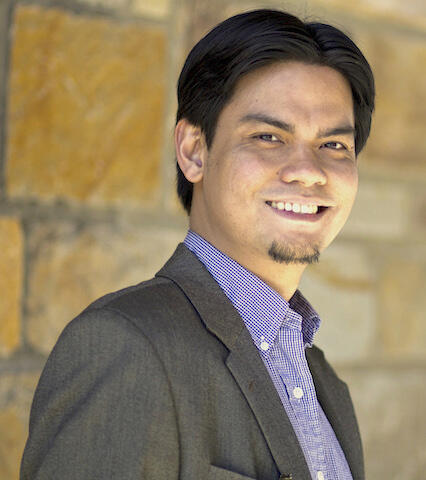
Nico Ravanilla
2015-16 Shorenstein APARC Postdoctoral Fellow, Stanford University
Seminars