Governance

FSI's research on the origins, character and consequences of government institutions spans continents and academic disciplines. The institute’s senior fellows and their colleagues across Stanford examine the principles of public administration and implementation. Their work focuses on how maternal health care is delivered in rural China, how public action can create wealth and eliminate poverty, and why U.S. immigration reform keeps stalling. 

FSI’s work includes comparative studies of how institutions help resolve policy and societal issues. Scholars aim to clearly define and make sense of the rule of law, examining how it is invoked and applied around the world. 

FSI researchers also investigate government services – trying to understand and measure how they work, whom they serve and how good they are. They assess energy services aimed at helping the poorest people around the world and explore public opinion on torture policies. The Children in Crisis project addresses how child health interventions interact with political reform. Specific research on governance, organizations and security capitalizes on FSI's longstanding interests and looks at how governance and organizational issues affect a nation’s ability to address security and international cooperation.

-

Japan is commonly regarded as a country that is closed against migrants. It does not allow their entries in a large size, granting restricted rights. As an attempt to understand this tendency, this research claims that Japan’s citizenship law, jus sanguinis (by ancestry) principle, sets a fundamental frame for its migration policymaking. To test this claim, it examines how the citizenship law influences attitudes of the general public as well as those of politicians. Specifically, Japan under a strong emphasis on blood ties is more likely to impose a restrictive migration policy, because (1) the general public tends to reveal a greater distance toward migrants (societal nature); and (2) migrant groups are excluded from electorate, and thus, politicians are less inclined to impose generous policies for them (electoral nature).  In order to demonstrate these mechanisms, this research traces Japanese public attitude and political incentives, which have governed its migration policy until today.


Image
rsd17 080 0067a
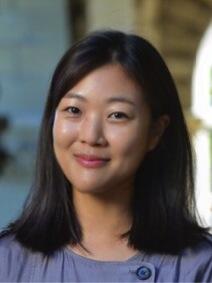
Yu Jin Woo is a Japan Program Research Scholar at the Shorenstein Asia-Pacific Research Center (APARC). Woo’s research interests are in the fields of international and comparative political economy, particularly migration policies and citizenship laws.  Woo holds a doctorate in political science from the University of Virginia. She received her first master’s degree in international cooperation at Seoul National University and her second master’s degree in political economy at New York University. She obtained her Bachelor of Arts in East Asian Studies at Smith College.


Research Scholar, Shorenstein APARC, Stanford University
Seminars
-

Japan grew explosively and consistently for more than a century, from the Meiji Restoration until the collapse of the economic bubble in the early 1990s. Since then, it has been unable to restart its economic engine and respond to globalization. How could the same political–economic system produce such strongly contrasting outcomes?

This book identifies the crucial variables as classic Japanese forms of socio-political organization: the "circles of compensation." These cooperative groupings of economic, political, and bureaucratic interests dictate corporate and individual responses to such critical issues as investment and innovation; at the micro level, they explain why individuals can be decidedly cautious on their own, yet prone to risk-taking as a collective. Kent E. Calder examines how these circles operate in seven concrete areas, from food supply to consumer electronics, and deals in special detail with the influence of Japan's changing financial system. The result is a comprehensive overview of Japan's circles of compensation as they stand today, and a road map for broadening them in the future.


Image
cid ii 14c4f3071f2412c6
Kent Calder is currently Director of the Reischauer Center for East Asian Studies at SAIS/Johns Hopkins University in Washington, D.C. Before arriving at SAIS in 2003, he taught for twenty years at Princeton University, and has also been Distinguished Visiting Professor at Seoul National University, Visiting Professor at Yangon University, and Lecturer on Government at Harvard University. Calder, a member of the Council on Foreign Relations since 1990, served as Special Advisor to the U.S. Ambassador to Japan (1997-2001), Japan Chair at the Center for Strategic and International Studies (1989-1993 and 1996); and as the first Executive Director of Harvard University’s Program on U.S.-Japan Relations (1979-1980). Calder received his Ph.D. from Harvard University in 1979, where he worked under the director of Edwin O. Reischauer. He is the author of ten books on East Asian political economy, energy geopolitics, Japanese politics, and US-Japan relations, including most recently Singapore: Smart City, Smart State (Brookings, 2016) Asia in Washington (Brookings, 2014), The New Continentalism (Yale, 2012); Ten of these books have been translated into Japanese. Calder was recently awarded the Order of the Rising Sun, Gold Rays with Neck Ribbon, for his contribution to Japan-US relations, and to the academic study of Japan.


Kent Calder Director, Edwin O. Reischauer Center for East Asian Studies; and Director of Japan Studies at the Johns Hopkins School of Advanced International Studies (SAIS)
Seminars
-

While much of the existing literature examines vote buying in the context of party systems, including both competitive and hegemonic party systems, this talk, based on a study coauthored by Professor Susan Whiting, addresses vote buying in a context in which no political party effectively structures electoral competition—village elections in China. This study argues that the lure of non-competitive rents explains variation over time and space in the phenomenon of vote buying. It tests this hypothesis, derived from an in-depth case study, in a separate sample of 1200 households in 62 villages in five provinces, using villagers’ reports of vote buying in elections and survey data on land takings as an indicator of available rents. While the literature views the introduction of elections as increasing accountability of village leaders to voters, vote buying likely undermines accountability. This study suggests that the regime has tolerated vote buying as a means of identifying and coopting influential economic elites in rural communities.


Image
susan whiting
Susan Whiting is Associate Professor of Political Science and Adjunct Associate Professor of Law and International Studies at the University of Washington in Seattle.  She specializes in Chinese and comparative politics, with particular emphasis on the political economy of development.  Her first book, Power and Wealth in Rural China: The Political Economy of Institutional Change, was published by Cambridge University Press in 2001.  She has contributed chapters and articles on property rights, fiscal reform, governance, contract enforcement and dispute resolution to numerous publications. She has done extensive research in China and has contributed to studies of governance, fiscal reform, and non-governmental organizations under the auspices of the World Bank, the Asian Development Bank, and the Ford Foundation, respectively.  She, along with colleagues in the law school, is participating in a project on access to justice and legal aid provision in rural China.  Professor Whiting’s current research interests include property rights in land, the role of the courts in economic transition, as well as the politics of fiscal reform in transition economies. Among her courses, she teaches Comparative Politics, Chinese Politics, Qualitative Research Methods, and Law, Development, & Transition, a course offered jointly in the Department of Political Science, the Jackson School of International Studies, and the Law, Societies and Justice Program.


Image
China Toolkit
This event is part of the 2018 Winter Colloquia; An Expanding Toolkit: The Evolution of Governance in China

China has undergone historic economic, social and cultural transformations since its Opening and Reform. Leading scholars explore expanding repertoires of control that this authoritarian regime – both central and local – are using to manage social fissures, dislocation and demands. What new strategies of governance has the Chinese state devised to manage its increasingly fractious and dynamic society? What novel mechanisms has the state innovated to pre-empt, control and de-escalate contention? China Program’s 2018 Winter Colloquia Series highlights cutting-edge research on contemporary means that various levels of the Chinese state are deploying to manage both current and potential discontent from below.

Susan Whiting <i>Associate Professor of Political Science, Adjunct Associate Professor of Law and International Studies, University of Washington</i>
Lectures
-

This talk will be conducted off the record.

This paper introduces the concept of "Thugs-For-Hire" (TFH) as a form of third-party state coercion. Violence or threat of violence, which is essential to the thugs' actions, helps to push through unpopular policies and subjugate recalcitrant population. Third-party violence as a form of privatized covert repression also allows the state to evade responsibility. Weak states are more likely to deploy TFH than strong states do, mostly for the purpose of bolstering their coercive capacity. Yet, state-TFH relationship is functional only in so far as the state is able to maintain an upper hand in exerting control over the violent agents. Third-party violent coercion is also detrimental to state legitimacy. Focusing on China, a seemingly paradoxical case as it is traditionally seen as a strong state, I examine how local states frequently deploy TFH to evict homeowners, enforce one-child policy, collect exorbitant exactions, and to deal with petitioners and protestors.


Image
Lynette Ong
Lynette H. Ong is an associate professor of political science at the University of Toronto, with a joint appointment at the Munk School of Global Affairs. She writes about authoritarian politics, contentious politics and the political economy of development. She is the author of Prosper or Perish: Credit and Fiscal Systems in Rural China (Cornell University Press, 2012). Her publications have appeared or are forthcoming in Perspectives on Politics, Comparative Politics, International Political Science Review, China Quarterly, China Journal, among others. Her writings have also appeared in the Washington Post, Foreign Affairs and New Mandala.


Image
China Toolkit
This event is part of the 2018 Winter Colloquia; An Expanding Toolkit: The Evolution of Governance in China

China has undergone historic economic, social and cultural transformations since its Opening and Reform. Leading scholars explore expanding repertoires of control that this authoritarian regime – both central and local – are using to manage social fissures, dislocation and demands. What new strategies of governance has the Chinese state devised to manage its increasingly fractious and dynamic society? What novel mechanisms has the state innovated to pre-empt, control and de-escalate contention? China Program’s 2018 Winter Colloquia Series highlights cutting-edge research on contemporary means that various levels of the Chinese state are deploying to manage both current and potential discontent from below.

Lynette Ong <i>Associate Professor, Department of Political Science and Asian Institute, Munk School of Global Affairs, University of Toronto</i>
Seminars
-

China has pivoted away from export-oriented development towards a strategy of domestic urban and infrastructural construction.  This pivot is especially visible in rural China, where migrant laborers withstand uniquely low wages by relying on subsistence farming practices.  Yet, at the same time, this low-waged labor system is disrupted by an ongoing urbanization boom which terminates rural land-use rights.  I argue that two political institutions prop up contradictory developmental dynamics.  First, China’s localized welfare policies strip rural workers of social rights in cities, which compel them to maintain rural households to supplement their low urban wages.  China’s decentralized fiscal system, however, simultaneously requires rural governments to fund social expenditures for a labor force employed elsewhere, which they do by commoditizing and acquiring financing through rural land sales.  Such land commoditization disrupts rural-urban labor migration, however, because it removes the rural wage supplement that enables migrants to withstand low wages.


[[{"fid":"229452","view_mode":"crop_870xauto","fields":{"format":"crop_870xauto","field_file_image_description[und][0][value]":"","field_file_image_alt_text[und][0][value]":false,"field_file_image_title_text[und][0][value]":false,"field_credit[und][0][value]":"","field_caption[und][0][value]":"","thumbnails":"crop_870xauto","alt":"","title":""},"type":"media","field_deltas":{"3":{"format":"crop_870xauto","field_file_image_description[und][0][value]":"","field_file_image_alt_text[und][0][value]":false,"field_file_image_title_text[und][0][value]":false,"field_credit[und][0][value]":"","field_caption[und][0][value]":"","thumbnails":"crop_870xauto","alt":"","title":""}},"link_text":null,"attributes":{"style":"margin-left: 0px; margin-right: 15px; padding: 0px; float: left; width: 300px; height: 281px;","class":"media-element file-crop-870xauto","data-delta":"3"}}]]Julia Chuang is Assistant Professor in the Department of Sociology at Boston College. Her research uses ethnography to show how the movement of people shapes global economic processes. Her book manuscript, The Changing Foundations of Chinese Development, applies this method to the Chinese economy. It follows labor brokers and migrant workers as they move between the villages where they live and the cities where they work. Her book shows how their migrations reflect ongoing tensions and changes in the way Chinese markets – and their reliance on labor and land in particular – operate today. Publications from this project have appeared in Gender & Society, Journal of Peasant Studies and The China Quarterly.

Professor Chuang received a PhD in 2014 from the Department of Sociology at the University of California, Berkeley. From 2014 to 2016 she was a Postdoctoral Fellow at the Watson Institute for International and Public Affairs at Brown University.


Image
China Toolkit
This event is part of the 2018 Winter Colloquia; An Expanding Toolkit: The Evolution of Governance in China

China has undergone historic economic, social and cultural transformations since its Opening and Reform. Leading scholars explore expanding repertoires of control that this authoritarian regime – both central and local – are using to manage social fissures, dislocation and demands. What new strategies of governance has the Chinese state devised to manage its increasingly fractious and dynamic society? What novel mechanisms has the state innovated to pre-empt, control and de-escalate contention? China Program’s 2018 Winter Colloquia Series highlights cutting-edge research on contemporary means that various levels of the Chinese state are deploying to manage both current and potential discontent from below.

Julia Chuang <i>Assistant Professor, Department of Sociology, Boston College, Morrissey College of Arts and Sciences</i>
Seminars
-

This talk focuses on the fundamental tensions inherent in governing China. Using examples from bureaucratic personnel management and social media controls, Prof. Zhou Xueguang will explore institutional responses and practices in state policymaking and implementation as governing entities in China have encountered changes and challenges of recent years. The talk will draw from Prof. Zhou’s recent book of the same title (published in Chinese, 中国国家治理的制度逻辑).


Image
XueguangZhou Headshot Logo
Xueguang Zhou is the Kwoh-Ting Li Professor in Economic Development, a professor of Sociology and a Senior Fellow at FSI, all at Stanford University. His main area of research is institutional changes in contemporary Chinese society, focusing on Chinese organizations and management, social inequality, and state-society relationships.

One of Zhou Xueguang's current research projects is a study of the rise of the bureaucratic state in China. He studies patterns of career mobility and personnel flow among different government offices to understand intra-organizational relationships in the Chinese bureaucracy.

His recent publications examine the role of bureaucracy in public goods provision in rural China (Modern China, 2011), interactions among peasants, markets and capital (China Quarterly, 2011), multiple logics in village elections (Chinese Social Science 2010, with Ai Yun), and collusion among local governments in policy implementation (Research in the Sociology of Organizations 2011, with Ai Yun and Lian Hong; Modern China, 2010).


Image
China Toolkit
This event is part of the 2018 Winter Colloquia; An Expanding Toolkit: The Evolution of Governance in China

China has undergone historic economic, social and cultural transformations since its Opening and Reform. Leading scholars explore expanding repertoires of control that this authoritarian regime – both central and local – are using to manage social fissures, dislocation and demands. What new strategies of governance has the Chinese state devised to manage its increasingly fractious and dynamic society? What novel mechanisms has the state innovated to pre-empt, control and de-escalate contention? China Program’s 2018 Winter Colloquia Series highlights cutting-edge research on contemporary means that various levels of the Chinese state are deploying to manage both current and potential discontent from below.

Shorenstein APARC
Stanford University
Encina Hall, E301
Stanford, CA 94305-6055

(650) 725-6392 (650) 723-6530
0
Senior Fellow at the Freeman Spogli Institute for International Studies
Kwoh-Ting Li Professor in Economic Development
Professor of Sociology
Graduate Seminar Professor at the Stanford Center at Peking University, June and July of 2014
Faculty Affiliate at the Stanford Center on China's Economy and Institutions
Xueguang Zhou_0.jpg PhD

Xueguang Zhou is the Kwoh-Ting Li Professor in Economic Development, a professor of sociology, and a Freeman Spogli Institute for International Studies senior fellow. His main area of research is on institutional changes in contemporary Chinese society, focusing on Chinese organizations and management, social inequality, and state-society relationships.

One of Zhou's current research projects is a study of the rise of the bureaucratic state in China. He works with students and colleagues to conduct participatory observations of government behaviors in the areas of environmental regulation enforcement, in policy implementation, in bureaucratic bargaining, and in incentive designs. He also studies patterns of career mobility and personnel flow among different government offices to understand intra-organizational relationships in the Chinese bureaucracy.

Another ongoing project is an ethnographic study of rural governance in China. Zhou adopts a microscopic approach to understand how peasants, village cadres, and local governments encounter and search for solutions to emerging problems and challenges in their everyday lives, and how institutions are created, reinforced, altered, and recombined in response to these problems. Research topics are related to the making of markets, village elections, and local government behaviors.

His recent publications examine the role of bureaucracy in public goods provision in rural China (Modern China, 2011); interactions among peasants, markets, and capital (China Quarterly, 2011); access to financial resources in Chinese enterprises (Chinese Sociological Review, 2011, with Lulu Li); multiple logics in village elections (Social Sciences in China, 2010, with Ai Yun); and collusion among local governments in policy implementation (Research in the Sociology of Organizations, 2011, with Ai Yun and Lian Hong; and Modern China, 2010).

Before joining Stanford in 2006, Zhou taught at Cornell University, Duke University, and Hong Kong University of Science and Technology. He is a guest professor at Peking University, Tsinghua University, and the People's University of China. Zhou received his Ph.D. in sociology from Stanford University in 1991.

CV
Date Label
<i>Kwoh-Ting Li Professor in Economic Development, Professor of Sociology, FSI Senior Fellow, Stanford University</i>
Seminars
News Type
News
Date
Paragraphs

The Japan Program hosted the Abe Fellows Global Forum, “Confronting Climate Change: What Can the U.S. and Japan Contribute to Creating Sustainable Societies?” at Bechtel Conference Center at Stanford University on October 20, 2017. The event was co-organized with the Social Science Research Council, in collaboration with the Center for Global Partnership of the Japan Foundation, which funds the Abe Fellowship Program.

The conference opened with a remark by George P. Shultz, Thomas W. and Susan B. Ford Distinguished Fellow, Hoover Institution at Stanford University and former US Secretary of State and US Secretary of Treasury followed by a keynote by Michael Armacost, Shorenstein APARC Fellow at Stanford University and former ambassador to Japan and the Philippines, who addressed questions on strategies for reducing energy consumption and possibilities for future international cooperation between Japan and the United States on climate change.

Following the keynote speech, experts from Japan and the United States engaged in a panel discussion and shared some of the lessons that have been learned from Asia’s experience.  Toshi Arimura, Professor, Faculty of Political Science and Economics, Waseda University, presented the experience of carbon pricing in the U.S. and Japan and the successful experience in both countries.  Janelle Knox-Hayes, Lister Brothers Associate Professor of Economic Geography and Planning, Massachusetts Institute of Technology, pointed out the importance of the socio-political context in various countries for creating well-functioning markets for carbon emission.  Philip Lipscy, Assistant Professor of Political Science and Thomas Rohlen Center Fellow at FSI, Stanford University, discussed how the political context has been influencing Japan’s energy policies.  Dana Buntrock, Chair, Center for Japanese Studies and Professor of Architecture, UC Berkeley, presented how specific contexts in Japan and the U.s. have shaped the energy policies in two countries.

The conference was followed by a reception in the Oksenberg Conference Room.

Hero Image
dsc 5770 Dillon Saw
All News button
1
-

[[{"fid":"228881","view_mode":"crop_870xauto","fields":{"format":"crop_870xauto","field_file_image_description[und][0][value]":"","field_file_image_alt_text[und][0][value]":false,"field_file_image_title_text[und][0][value]":false,"field_credit[und][0][value]":"","field_caption[und][0][value]":"","thumbnails":"crop_870xauto","alt":"","title":""},"type":"media","field_deltas":{"1":{"format":"crop_870xauto","field_file_image_description[und][0][value]":"","field_file_image_alt_text[und][0][value]":false,"field_file_image_title_text[und][0][value]":false,"field_credit[und][0][value]":"","field_caption[und][0][value]":"","thumbnails":"crop_870xauto","alt":"","title":""}},"link_text":null,"attributes":{"style":"margin-left: 0px; margin-right: 15px; padding: 0px; float: left; width: 140px; height: 187px;","class":"media-element file-crop-870xauto","data-delta":"1"}}]]Hak-kyu Sohn, a career politician and the former chairman of the South Korea's Democratic Party, will share his insights into Korean democracy based on his decades of experience in politics.

As a student activist, Sohn participated in Korea's democratization movement, which rose up against the nation's military dictatorship, and he also led labor and human rights movements. As a result of his activities under South Korea's oppresive military rule, Sohn was imprisoned. Later, he went on to be appointed minister of health and welfare, became governor of Gyonggi Province, and served four terms as a member of the National Assembly.

Sohn received a PhD in politics from University of Oxford, England, and BA in political science from Seoul National University.

Philippines Conference Room
Encina Hall, 3rd floor
616 Serra Street
Stanford University
Directions

Hak-kyu Sohn <i>Visiting Scholar, Shorenstein APARC; former Chairman of Democratic Party, South Korea</i>
Seminars
-

Co-sponsored by the Center on Democracy, Development, and the Rule of Law, Center for East Asian Studies, and the Southeast Asia Program

Who is Rodrigo Duterte?  How did he become president of the Philippines?  How has his rule impacted Philippine democracy and society?  Is his ascent part of a broader “Duterte wave” of strongman leadership in Russia, Turkey, India, China, and Southeast Asia?  What is his foreign policy?  How has it affected Sino-US rivalry in Asia including the situation in the South China Sea?  Richard Heydarian will address these and other questions drawing on field research for his latest book, The Rise of Duterte.  Regarding China, he will argue that Duterte’s willingness to realign Manila with Beijing at Washington’s expense offers a glimpse of what China’s rise could imply for nations around the world.  The book will be available for sale at his talk. 

Image
javad richard heydarian
Richard Javad Heydarian is the most prolific and interviewed geopolitical analyst currently writing and speaking not only in the Philippines but arguably in Southeast Asia as well. Outlets for his articles and remarks have included Aljazeera English, The Atlantic, BBC, Bloomberg, The Economist, The Financial Times, Foreign Affairs, The Guardian, The New York Times, Nikkei Asian Review, South China Morning Post, The Straits Times, The Wall Street Journal, and The Washington Post. In addition to the 2017 book that entitles his talk, he has written two others: Asia's New Battlefield: US, China, and the Struggle for Western Pacific (2015) and How Capitalism Failed the Arab World (2014). He lectures widely; has taught political science at Ateneo de Manila University and De La Salle University in the Philippines; has published in leading scholarly journals on Asian politics and security; and is a regular contributor to the Center for Strategic and International Studies and the Council on Foreign Relations. 


Richard Javad Heydarian Resident Political Analyst, GMA Network, and Non-resident Fellow, Stratbase-ADR Institute, Manila
Seminars
Subscribe to Governance