Governance

FSI's research on the origins, character and consequences of government institutions spans continents and academic disciplines. The institute’s senior fellows and their colleagues across Stanford examine the principles of public administration and implementation. Their work focuses on how maternal health care is delivered in rural China, how public action can create wealth and eliminate poverty, and why U.S. immigration reform keeps stalling. 

FSI’s work includes comparative studies of how institutions help resolve policy and societal issues. Scholars aim to clearly define and make sense of the rule of law, examining how it is invoked and applied around the world. 

FSI researchers also investigate government services – trying to understand and measure how they work, whom they serve and how good they are. They assess energy services aimed at helping the poorest people around the world and explore public opinion on torture policies. The Children in Crisis project addresses how child health interventions interact with political reform. Specific research on governance, organizations and security capitalizes on FSI's longstanding interests and looks at how governance and organizational issues affect a nation’s ability to address security and international cooperation.

-

Image
pekida 440

In Malaysia, criminality is a highly political question, and that is mainly why local scholarship on the topic is rare. Yet political participation by outlaws and criminalized groups is not new. Begun in 2008, Dr. Lemière’s research explores uncharted territory: how criminality related to politics in semi-authoritarian Malaysia, with a focus on the ruling party (UMNO) from 2008 to 2018.  She shows how gangs have created umbrella (Malay) NGOs, like Pekida (shown here in caricature), to formalize their ties to political parties. For gangs, political militancy has become a business; political parties (mostly UMNO) have sub-contracted political actions and violence to such groups. Dr. Lemière’s research raises question regarding the nature of civil society and democratization, and offers a new perspective of ethno-religious controversies and clashes in the 20th and 21st centuries.

Sophie Lemière is a political anthropologist at Harvard’s Ash Center for Democracy in its program on Democracy in Hard Places. Her research examines the nexus between religion, politics, and criminality in a comparative perspective. She will be at Stanford in the fall before transferring to the National University of Singapore in the spring.

Dr. Lemière has held research positions in Singapore at the Asia Research Institute (NUS) and the S. Rajaratnam School of International Studies (NTU).  She has been a visiting fellow at the University of Sydney, Cornell, UC Berkeley, and Columbia. She received her PhD from Sciences-Po in Paris. Her dissertation was the first study on the political links between gangs and umbrella NGOs in Malaysia.  Her master’s research on apostasy controversies and Islamic civil society was awarded second prize for young scholars by the International Institute for the Study of Islam in the Modern World (1998-2008) in Leiden.

Dr. Lemière believes it is essential for academics to disseminate their research findings widely, especially in the countries they study. Accordingly, her publications have been written both general and academic readers within and beyond Malaysia. She is the editor of a series of books on “Malaysian Politics and People.” Misplaced Democracy was released in 2014.  Illusions of Democracy (2017) will be re-published in 2018, and a third volume is expected in 2019, when her monograph “Gangsters and Masters: Complicit Militancy and Authoritarian Politics” will also appear. She is currently working on a political biography of Malaysia’s current prime minister during his recent campaign: “The Last Game: Malaysian Politics through Mahathir’s Eyes.”

Dr. Lemière maintains a blog on Mediapart and contributes regularly to New Mandala, The Conversation, Le Monde, and Libération among other outlets.  She has also begun to develop several documentary film projects with French production companies, including a series on arts and politics. Her first film “9/43” featuring the Malaysian cartoonist Zunar was chosen one of the 25 best movies at the French short-film festival Infracourt in 2016.

Sophie Lemière 2018-19 Lee Kong Chian NUS-Stanford Fellow on Contemporary Southeast Asia
Seminars
-

Asia has achieved remarkable progress on economic development and poverty reduction over the past decades. It is now considered as the main driver of global economic growth and we are witnessing the shift of economic center of gravity toward Asia. Continued success is, however, not preordained or guaranteed. More specifically, the region has to manage several mega-challenges to realize the "Asian Century." These include remaining poverty incidence and increasing inequality, demographic changes, growing environmental pressure, climate change and disaster risk, rapid urbanization, and governance and institutional capacity concern. These increasingly complex challenges pressure Asian countries to take a more sustainable development path, moving away from more traditional development patterns. 

The world is experiencing various technological advancement —including digital and cloud technologies, big data, robotics, artificial intelligence, the internet of things, 3-D printing, blockchain, energy storage, and autonomous vehicles. These technologies will significantly change the way people live and also bring very broad and deep impact on economic and social development landscape. The progress and impacts of technological advancement may be different between developed and developing countries. Will disruptive technologies help developing countries in Asia and the Pacific to solve development challenges or harm their catch-up momentum? What are opportunities and risks posed by emerging technological changes to developing countries in that region? How will developing countries and the international development community prepare to fully harness technological advancements for sustainable development? These are some of the areas to be explored in this seminar.

Image
gilhong kim
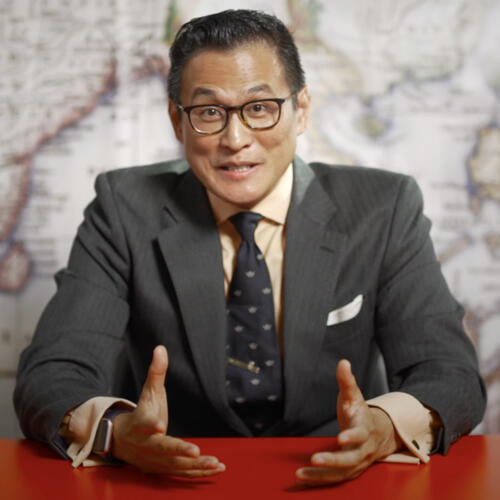
Gilhong Kim is currently a visiting scholar in the Korea Program at Shorenstein APARC for the 2018 calendar year. Previously, he was Senior Director concurrently Chief Sector Officer of the Sustainable Development and Climate Change Department in Asian Development Bank (ADB). His research interests encompass technological development and impact on developing countries in Asia and the Pacific. Dr. Kim has more than 33 years of research and operational experience in country and regional development, sectoral strategies and operations covering clean energy, transport, water supply and sanitation, urban development, education, health and finance. Since 1996, Dr. Kim has worked for ADB in the areas of country economic assessment and country operational program development, corporate strategy and policy development, country field office head (in Lao PDR), sector operational strategy development, operational knowledge management, and promoted technology application and innovative approach.  Before joining ADB, he worked for Ministry of Finance in Korea for about 12 years in the areas of economic cooperation and international finance. He holds a PhD in economics from the University of Texas, Austin, and a BA in economics from Korea University in Korea. 

Philippines Conference Room Encina Hall, 3rd Floor 616 Serra Mall, Stanford, CA 94305


616 Serra StreetEncina Hall E301Stanford, CA94305-6055
0
gilhong_kim.jpg Ph.D.

Dr. Gilhong Kim joins the Walter H. Shorenstein Asia-Pacific Research Center for the 2018 year as visiting scholar.  He currently serves as the Senior Director and Chief Sector Officer of the Sustainable Development and Climate Change Department at the Asian Development Bank.  He will be conducting research on technological development and impact in the Asia-Pacific.

Visiting Scholar at APARC
<i>Visiting Scholar, Shorenstein APARC, Stanford University</i>
Seminars
-

On November 24, 2018, Taiwan's electorate will go to the polls to select thousands of ward chiefs, hundreds of council members, and dozens of mayors and county executives. This talk will cover the results of the election and discuss the implications for Taiwan's future, including party politics and cross-Strait relations.

Image
Kharis Templeman
Kharis Templeman is the Project Manager of the Taiwan Democracy and Security Project in the U.S.-Asia Security Initiative, and a social science research scholar at the Shorenstein Asia-Pacific Research Center (APARC) at Stanford University. His current research includes projects on party system institutionalization and partisan realignments, electoral integrity and manipulation in East Asia, the politics of defense spending in Taiwan, and the representation of Taiwan’s indigenous minorities.
 
His most recent publication is “When Do Electoral Quotas Advance Indigenous Representation?: Evidence from the Taiwanese Legislature,” in Ethnopolitics. He is also the editor (with Larry Diamond and Yun-han Chu) of Taiwan’s Democracy Challenged: The Chen Shui-bian Years (2016, Lynne Rienner Publishing). Other work has appeared in the Taiwan Journal of Democracy, Comparative Political Studies and APSA Annals of Comparative Democratization.
 

Philippines Conference Room
Encina Hall, 3rd Floor
616 Serra Mall, Stanford, CA 94305

Kharis Templeman <i>Project Manager, Taiwan Democracy & Security Project, U.S.-Asia Security Initiative, Stanford University</i>
Lectures
-
The Taiwan Relations Act (TRA) was enacted by Congress on April 10, 1979, and has served as the formal basis for U.S.-Taiwan relations ever since. In this talk, Professor Goldstein will provide an assessment of the TRA’s influence on America’s foreign policy in Asia as we approach the 40th anniversary of its adoption.
 
SPEAKER:
Image
Photograph of Steven M. Goldstein
Steven M. Goldstein was the Sophia Smith Professor of Government at Smith College from 1968 to 2016. He is now an Associate of the Fairbank Center and the director of the Taiwan Studies Workshop at Harvard University. He has been a visiting faculty member at the Fletcher School of Law and Diplomacy, Columbia University and United States Naval War College. Goldstein's research interest has been largely related to issues of Chinese domestic and foreign policy. He has published studies of Sino-American relations; Sino-Soviet relations; and the emergence of a Chinese Communist view of world affairs. His current research focus is on the relations between the mainland and Taiwan as well as the evolution of U.S.-Taiwan relations.

Philippines Conference Room
Encina Hall, 3rd Floor
616 Serra Mall, Stanford, CA 94305

Steven M. Goldstein <i>Director of the Taiwan Workshop at the Fairbank Center, Harvard University</i>
Lectures
Paragraphs

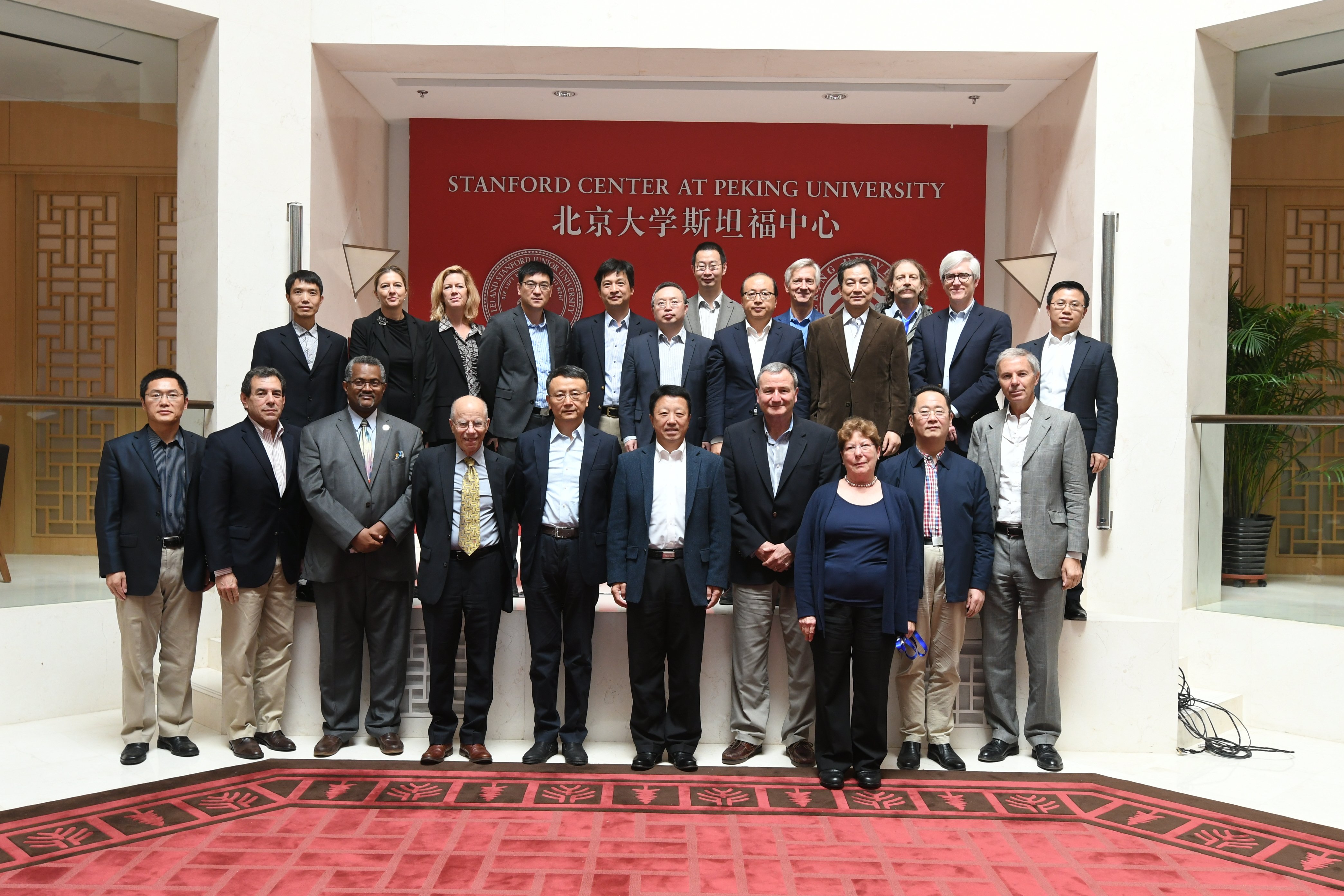
In March 2018 the Taiwan Democracy and Security Project, a part of the U.S.-Asia Security Initiative at Stanford University’s Shorenstein Asia- Pacific Research Center, convened a workshop that examined Taiwan’s place in the evolving security environment of East Asia. Participants from the United States, Taiwan, and elsewhere in Asia were experts on a wide array of economic, diplomatic, and security topics. The discussions at the workshop were intended to place Taiwan’s security challenges in a broader regional context, to consider possible obstacles to and opportunities for greater multilateral cooperation on security issues, and to devise a set of recommendations for steps that Taiwan and its friends and partners could take to enhance regional security relationships.

This workshop report provides an executive summary, policy recommendations for both the United States and Taiwan, and a summary of workshop sessions.

All Publications button
1
Publication Type
Policy Briefs
Publication Date
Authors
Kharis Templeman, Ph.D.
0
Global Affiliate Visiting Scholar, 2018-19
Japan Air Self Defense Force
masa_shizu.jpg

Col. Masahiro Shizu is a global affiliate visiting scholar at the Walter H. Shorenstein Asia-Pacific Research Center (Shorenstein APARC) for 2018-19. Shizu has almost 20 years of experience at the Japanese Ministry of Defense and the Ministry of Foreign Affairs.  In his experience, he has been a member of the Joint Staff Office and the Air Staff Office as well as commanded units of the Japan Air Self Defense Force.  Most recently, Shizu was part of the Defense Planning and Policy Department where he was responsible for acquisition of defense equipment and creating future military strategy, operational plans and capabilities.

0
Global Affiliate Visiting Scholar, 2018-19
Development Bank of Japan
tetsuji_ito.jpg

Tetsuji Ito is a global affiliate visiting scholar at the Walter H. Shorenstein Asia-Pacific Research Center (Shorenstein APARC) for 2018-19.  Ito joined the Development Bank of Japan in 1995, and has been in charge of financing various fields, such as railway companies, urban development projects, and airline industries, etc.  Prior to joining APARC, he was Deputy General Manager and was responsible for planning corporate strategy and financing energy sectors, including the nuclear power related industry after the Great East Japan Earthquake.  Ito received his bachelor's degree of law from Tokyo University in 1995. 

0
Global Affiliate Visiting Scholar, 2018-20
Shizuoka Prefectural Government
yosuke_hatano.jpeg MA

Yosuke Hatano is a global affiliate visiting scholar at the Walter H. Shorenstein Asia-Pacific Research Center (Shorenstein APARC) for 2018-19 and 2019-20.  Hatano has over seven years experience in the global energy trading business and energy infrastructure development projects at both private companies and in the private sector, including time as a branch office representative in Indonesia.  He joined the local government of the Shizuoka prefecture in 2014 and has experience in tourism promotion and destination marketing.  He has also engaged in the policies for small- and medium-sized enterprises promoting and developing the regional economy and industry.  Most recently, Hatano worked on international general affairs between the Shizuoka and the world.  He received his masters degree in international relations from Waseda University in 2007.

News Type
News
Date
Paragraphs

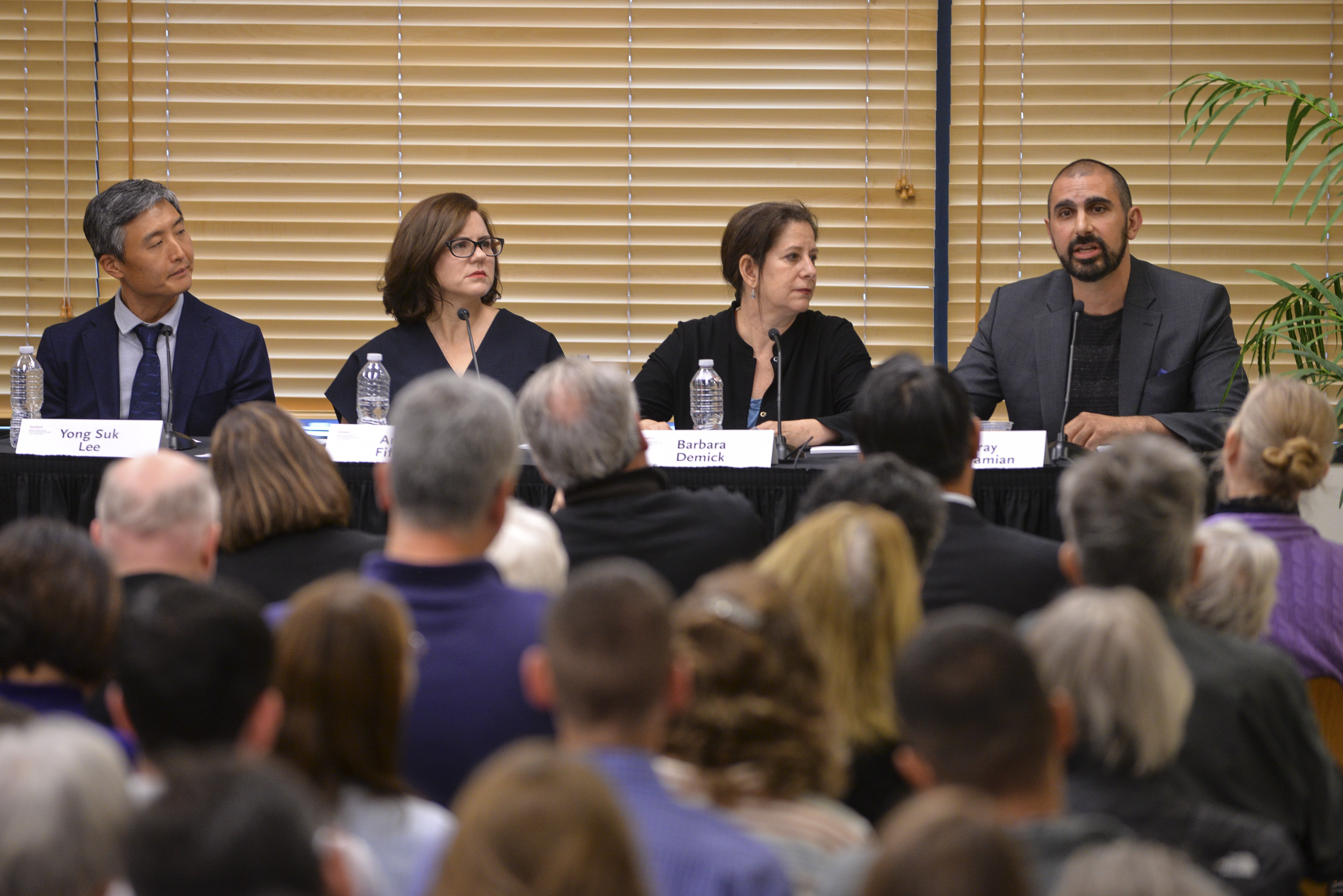
Andray Abrahamian will be the 2018-19 Koret Fellow in the Korea Program at Stanford’s Walter H. Shorenstein Asia-Pacific Research Center (APARC). Abrahamian has been Executive Director and Director of Research for Choson Exchange, a non-profit that has trained over 2000 North Koreans in entrepreneurship and economic policy since 2010. His work for Choson Exchange and other projects has taken him to North Korea 30 times. He has also lived in Myanmar, allowing him the ability to conduct field research for his new book, North Korea and Myanmar: Divergent Paths (2018, McFarland). Divergent Paths asks how Myanmar came to end its isolation, while North Korea has yet not. 

“When it comes to North Korea, Dr. Abrahamian has been very active both as an academic and on the ground. He has genuine hands-on experience of working with North Koreans from his numerous trips to the country. In this important period of flux for North Korea’s place on the world stage, we welcome Dr. Abrahamian as 2018-19 Koret Fellow, and look forward to his meaningful contributions to our activities.” “His experience and understanding of North Korea will be a great asset to our program,” Gi-Wook Shin, director of APARC said.

Image
andray abrahamian koret fellow pic
As the 2018-19 Koret Fellow, Abrahamian will research the economic relations of North Korea during changing geopolitical conditions as well as entrepreneurship in North Korea as it relates to communities of Koreans abroad. He also plans to write a general readership book that explains contemporary North Korean society. While at Stanford, he will teach a course on contemporary North Korean society and engage in public talks and conferences on Korea issues. During his fellowship, Abrahamian will also help organize the Koret Workshop, an international conference held annually at Stanford University.

Abrahamian is an Honorary Fellow at Macquarie University, Sydney, and an Adjunct Fellow at the Griffith Asia Institute. He is a frequent contributor to 38North.org, a website focused on North Korea analysis, and is a member of the US National Committee on North Korea. Andray holds a PhD from the University of Ulsan and an MA from the University of Sussex in International Relations. He has taught courses at Yangon University and Ulsan University. 

Supported by the Koret Foundation, the fellowship brings leading professionals to Stanford to conduct research on contemporary Korean affairs with the broad aim of strengthening ties between the United States and Korea.

Hero Image
andray abrahamian koret fellow pic
All News button
1
Subscribe to Governance