FSI's research on the origins, character and consequences of government institutions spans continents and academic disciplines. The institute’s senior fellows and their colleagues across Stanford examine the principles of public administration and implementation. Their work focuses on how maternal health care is delivered in rural China, how public action can create wealth and eliminate poverty, and why U.S. immigration reform keeps stalling.
FSI’s work includes comparative studies of how institutions help resolve policy and societal issues. Scholars aim to clearly define and make sense of the rule of law, examining how it is invoked and applied around the world.
FSI researchers also investigate government services – trying to understand and measure how they work, whom they serve and how good they are. They assess energy services aimed at helping the poorest people around the world and explore public opinion on torture policies. The Children in Crisis project addresses how child health interventions interact with political reform. Specific research on governance, organizations and security capitalizes on FSI's longstanding interests and looks at how governance and organizational issues affect a nation’s ability to address security and international cooperation.
We are sorry that the registration is now closed. It has reached the limit of the room capacity.
A conversation about Taiwan’s economic future, moderated by Larry Diamond, Senior Fellow, Hoover Institution and the Freeman Spogli Institute for International Studies.
Image
Eric Chu was the first Mayor of the newly-created Special Municipality of New Taipei, a position he held from 2010-2018. He has also served in several other elected offices and government posts in Taiwan during his career, including as a member of the Legislative Yuan (1999-2001), Magistrate of Taoyuan County (2001-2009), and Vice Premier of the Republic of China (2009-2010). In 2015, he became the chairman of the Chinese Nationalist Party (Kuomintang), and he was the party’s nominee in the January 2016 presidential election.
Dr. Chu holds a bachelor’s degree in management from National Taiwan University, and a master’s degree in finance and a Ph.D. in accounting from New York University. He taught as an assistant professor at City University of New York before returning to Taiwan and joining the faculty of National Taiwan University, where he was promoted with tenure in 1997.
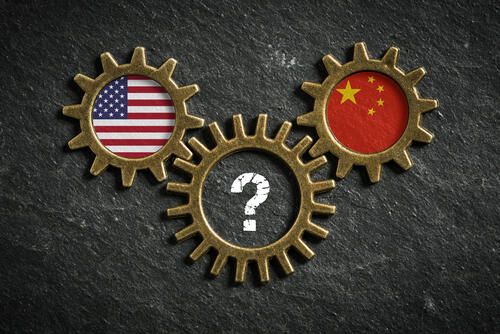
Please join Stanford's Center on Democracy, Development, and the Rule of Law (CDDRL) on Tuesday, February 19, 2019 for a conversation with Larry Summers on US-China relations. Summers will be joined in coversation with Francis Fukuyama, the Mosbacher Director of CDDRL.
Speaker Bio
Image
Former Treasury Secretary Lawrence H. Summers is one of America’s leading economists. In addition to serving as 71st Secretary of the Treasury in the Clinton Administration, Dr. Summers served as Director of the White House National Economic Council in the Obama Administration, as President of Harvard University, and as the Chief Economist of the World Bank.Currently, Dr. Summers is the President Emeritus and the Charles W. Eliot University Professor at Harvard University, where he became a full professor at age 28, one of the youngest in Harvard’s recent history. He directs the University’s Mossavar-Rahmani Center for Business and Government. Summers was the first social scientist to receive the National Science Foundation’s Alan Waterman Award for scientific achievement and, in 1993, he was awarded the John Bates Clark Medal, given to the most outstanding economist under 40 in the United States. He was elected to the National Academy of Sciences in 2002. He has published more than 150 papers in scholarly journals.
Stanford Institute for Economic Policy Research 366 Galvez Street Stanford, CA 94305
Lawrence H. Summers
Charles W. Eliot University Professor and President Emeritus at Harvard University
Olivier Nomellini Senior Fellow at the Freeman Spogli Institute for International Studies (FSI), and Mosbacher Director of FSI's Center on Democracy, Development, and the Rule of Law.
The event is jointly sponsored by the Japan Program at the Shorenstein Asia-Pacific Research Center and the Japan Foundation Center for Global Partnership.
The Heisei era started in 1989, with high hopes for Japan to contribute to the international order. As the Heisei era draws to an end, Japan is once again expected to “step up” with increased urgency, given the current US administration’s withdrawal from, and challenge to the international order. In this talk, I will first look back at the thirty years of Heisei, and discuss why Japan did not take the “internationalist” path in a way that some had expected. Looking forward, I discuss how the domestic institutional changes, together with the geopolitical challenges in Asia, have prompted Japan to seek active leadership in the region and beyond. I will elaborate on the evolution of the “Free and Open Indo-Pacific Vision,” with focus on how exactly Japan seeks to achieve “free and open” in the region, and challenges and limitations going forward.
Image
Takako Hikotani is Gerald L. Curtis Associate Professor of Modern Japanese Politics and Foreign Policy. She previously taught at the National Defense Academy of Japan, where she was Associate Professor, and lectured at the Ground Self Defense Force and Air Self Defense Force Staff Colleges, and the National Institute for Defense Studies. Her research focus on civil-military relations and Japanese domestic politics, Japanese foreign policy, and comparative civil-military relations. Her publications (in English) include, “The Japanese Diet and defense policy-making.” International Affairs, 94:1, July, 2018; “Trump’s Gift to Japan: Time for Tokyo to Invest in the Liberal Order,” Foreign Affairs, September/October 2017; and “Japan’s New Executive Leadership: How Electoral Rules "Japan’s New Executive Leadership: How Electoral Rules Make Japanese Security Policy" (with Margarita Estevez-Abe and Toshio Nagahisa), in Frances Rosenbluth and Masaru Kohno eds, Japan in the World (Yale University Press, 2009). She was a Visiting Professional Specialist at Princeton University as Social Science Research Council/Abe Fellow (2010-2011) and Fellow of the US-Japan Leadership Program, US-Japan Foundation (2000- ). Professor Hikotani received her BA from Keio University, MAs from Keio University and Stanford University, and PhD in Political Science from Columbia University, where she was a President’s Fellow.
Takako Hikotani
Associate Professor, Modern Japanese Politics and Foreign Policy, Columbia University
The event is sponsored by the Japan Society for Promotion of Science and the Japan Foundation Center for Global Partnership.
Japanese Prime Minister Shinzo Abe speaks at Stanford about innovation in Japan and Silicon Valley. He was also joined on stage by Stanford President John Hennessy and George Shultz, the former U.S. Secretary of State and a distinguished fellow at the Hoover Institution (below).
When the Liberal Democratic Party in Japan regained the power led by Prime Minister Shinzo Abe in December 2012, Japan’s government embarked on a set of economic policies dubbed “Abenomics.” Abenomics aimed at bringing Japan back from stagnation and restoring its growth potential. The Abe administration entered its 7th year and Prime Minister Abe looks most likely to become the prime minister with the longest reign in the post war era. Abenomics looks seemingly successful as well. Japan’s economy has been in the longest expansion phase in the post war era. The unemployment rate is so low that many employers claim they cannot find workers. Yet, the major goals of Abenomics set at the beginning, such as 2% inflation rate and 2% real economic growth, have not been achieved. Has Abenomics really succeeded?
This panel features four experts who have been closely watching Abenomics’s impacts on the Japanese economy. They evaluate what Abenomics has accomplished so far in various areas.
Panelists:
Joshua Hausman, Assistant Professor of Public Policy; Assistant Professor of Economics, University of Michigan
Takatoshi Ito, Professor of International and Public Affairs, Columbia University
Nobuko Nagase, Professor of Labor Economics and Social Policy, Ochanomizu University, Japan
Steven Vogel, Professor of Asian Studies; Professor of Political Science; Chair of the Political Economy Program, University of California, Berkeley
Takeo Hoshi (moderator), Director of the Japan Program at the Shorenstein Asia Pacific Research Center, Stanford University
Koret-Taube Conference Center Gunn-SIEPR Building 366 Galvez Street, Stanford University
In the nearly seven years since assuming the role of General Secretary of the Communist Party of China, Xi Jinping has had far-ranging impact on the country’s policies at home and abroad. From his anti-corruption campaign and tightening restrictions on civil society to championing the Belt and Road initiative and abolishing China’s presidential term limits, Xi is transforming the Chinese state and its place on the global stage.
Among the cutting-edge topics that China scholars are beginning to explore is Xi’s impact on Chinese politics and its concomitant influence on what and how scholars study Chinese politics. Last December, the China Program at Shorenstein APARC hosted a conference that drew preeminent scholars of Chinese politics and comparative politics primarily from across the United States and Canada, where they gathered to assess the state of the discipline, and where the field might go next.
Too Big for One Room
The conference traces its origins to a prior gathering at the American Political Science Association (APSA). The number of attendees at that meeting outpaced any room upgrade APSA could provide. “We were impressed by the number of people studying Chinese politics,” said the China Program Director Jean Oi . “It was apparent to many of us who attended that meeting that it was time we convened a separate event with leaders in the field.”
The need to bring together the multiple generations of scholars of Chinese politics was also clear. “Younger scholars today are so much more well-equipped with various sophisticated methodologies such as machine learning and web scraping,” noted Oi. “We decided it would be useful to gather those doing various types of research, quantitative and qualitative, to think about what we don’t know about Chinese politics but would like to know; and how possibly we might go about doing that research. Our goal for this conference was to try to identify collectively some of those questions for the study of Chinese politics and how our research might contribute to the broader field of comparative politics.” The first gathering of Chinese politics scholars took place at Harvard in December 2017.
‘Burning Questions’ Light Up Second Gathering
(From left to right): Stanford Professors Jean Oi (chair), Lisa Blaydes, Beatriz Magaloni (partially hidden), Michael McFaul, and Barry Weingast during the conference plenary session with comparative politics scholars
That first conference at Harvard reinforced the utility of inter-dialog and helped organizers secure a grant from APSA, which along with support from from FSI and Shorenstein APARC facilitated the second gathering, this time at Stanford. To ensure that the sessions allowed for maximum participant engagement, attendees were assigned into seven working groups. In the months preceding the conference, each group prepared a memo identifying the key questions in the field of Chinese politics, the ways to addressing these questions, and the synergies between Chinese politics and comparative politics .
“The State of the Field in Chinese Politics” conference opened with presentations by the seven small group leaders to a plenary session, followed by discussion of the various burning questions identified by the participants. Unsurprisingly, one prominent item across many of the memos was the oversized impact of Xi on China. Other areas of interest included “elite politics,” the relationship between newfound billionaires and the party, the renewed role of state-owned enterprises in the economy, and the current status of relationships between the private sector, the Party, and the state
Several groups also expressed their desire to learn more about the internal workings of the Party, specifically the adaptation of political institutions over time. While observers often point out that China’s political institutions have changed little compared to its economic institutions, scholars have also found that, in fact, the changes within China’s governmental organizations have been subtle yet profound. But how can we determine when an organizational structure changes the ways in which it operates, and who decides? The field of Chinese politics remains uncertain about these questions.
On the second day, conference attendees were joined by several Stanford scholars of comparative politics, including FSI Director Mike McFaul and FSI Senior Fellows Lisa Blaydes, Beatriz Magaloni and Barry Weingast, who responded to the group memos. Breakout discussions of methodology followed.
Keeping the Fire Going
(From left to right): Professors Kellee Tsai, Hong Kong University of Science and Technology; Jean Oi, Stanford University; Mary Gallagher, University of Michigan; and Margaret Pearson, University of Maryland confer with one another
The conference concluded with a plenary session that focused on the questions "Where are we now?” and “Where do we go next?" One conclusion from the closing was an acknowledgment of the need to more fully consider China in the context of its interactions with other countries in the region as well as globally. “I think that ‘China in the Global Context’ may very well be the theme of our next conference,” said Oi.
A third conference is tentatively scheduled for December 2019. The five partners behind the series—Stanford University, Harvard University, Duke University, MIT, and the University of Michigan—are currently seeking outside funding to keep this effort going. The hope is that the next meeting will be at Duke University.
Hero Image
(From left to right): Three of the presenters during the first plenary session: Professors Mary Gallagher, University of Michigan; Melanie Manion, Duke University; and Jean Oi, Stanford University
VALID STANFORD ID CARD MUST BE PRESENTED UPON ARRIVAL
ABSTRACT: The United States has been the world’s dominant power for more than a century. Now many analysts believe China is taking its place. Is China an emerging superpower? Should the United States gear up for a new cold war in Asia? In this seminar, I show that China actually lags far behind the United States by the most important measures of national wealth and power—and will probably fall further behind in the coming decades. The most likely threat to American security, therefore, is not a confident Chinese peer competitor, but a deeply insecure China that lashes out after failing to live up to the global hype about its rise. I will discuss how the United States can contain this threat without starting a cold or hot war with Beijing.
Image
PROFILE: Michael Beckley is an assistant professor of political science at Tufts University and a fellow at Harvard's Kennedy School of Government. His research focuses on the rise of China and has received “best article” awards from the American Political Science Association and the International Studies Association and has been featured by numerous media, including CNN, Fox News, the Financial Times, the New York Times, NPR, and the Washington Post. Previously, Professor Beckley worked at the U.S. Department of Defense, the RAND Corporation, and the Carnegie Endowment for International Peace. He currently consults for the Pentagon’s Office of Net Assessment, the Joint Staff, and the National Intelligence Council. He holds a PhD in political science from Columbia University and his first book, Unrivaled: Why America Will Remain the World’s Sole Superpower, was published last fall by Cornell University Press. Part of his talk is based on a Foreign Affairs web article that was named one of the ten “best of 2018.”
Michael Beckley
Assistant Professor of Political Science Tufts University
VALID STANFORD ID CARD MUST BE PRESENTED UPON ARRIVAL
ABSTRACT: Diplomacy plays a critical role in the management and resolution of armed conflict in the international system. After a war breaks out, decision makers see the opening of talks as a constructive step in the conflict’s resolution — dialogue allows for belligerents to broker deals and coordinate the logistics of war termination. However, in modern warfare, states almost always fight initially for period of time without engaging in talks. What factors explain whether states are willing to talk to their enemy while fighting and when might their diplomatic postures change? “Talking to the Enemy” presents a framework to explain variation in countries’ approaches to wartime diplomacy, focusing on the costs of talks and how states mitigate these costs to get to the negotiating table. I test this framework with respect to Chinese decision making in the Korean and Sino-Indian Wars — one in which China was against talks for nine months before opening up and the latter in which China actively pursued talks throughout the whole conflict. The findings have significant implications for crisis management and conflict resolution in U.S.-China relations.
Image
PROFILE: Oriana Skylar Mastro is an assistant professor of security studies at the Edmund A. Walsh School of Foreign Service at Georgetown University where her research focuses on Chinese military and security policy, Asia-Pacific security issues, war termination, and coercive diplomacy. Dr. Mastro is also a 2017-2019 Jeane Kirkpatrick Scholar at the American Enterprise Institute (AEI) where she is working on a book about China’s challenge to U.S. primacy. Mastro continues to serve in the United States Air Force Reserve for which she works as a Senior China Analyst at the Pentagon. For her contributions to U.S. strategy in Asia, she won the Individual Reservist of the Year Award in 2016. She has published widely, including in Foreign Affairs, International Security, International Studies Review, Journal of Strategic Studies, The Washington Quarterly, The National Interest, Survival, and Asian Security, and is the author of The Costs of Conversation: Obstacles to Peace Talks in Wartime, (Cornell University Press, 2019). She holds a BA in East Asian Studies from Stanford University and an MA.and PhD in Politics from Princeton University. Her publications and other commentary can be found on twitter @osmastro and www.orianaskylarmastro.com.
Oriana Mastro
Assistant Professor of Security Studies Edmund A. Walsh School of Foreign Service, Georgetown University
Shorenstein APARC
Stanford University
Encina Hall
Stanford, CA 94305-6055
650.724.6404
0
kate222@stanford.edu
Oksenberg-Rohlen Fellow
_ksa3419_lampton_2018_photo.jpg
David M. (“Mike”) Lampton is the Oksenberg-Rohlen Fellow at FSI and affiliated with Shorenstein APARC. Lampton (BA ’68, MA ’71, PhD ’74), an expert in Chinese politics and U.S.-China relations, is the Hyman Professor of China Studies and Director of the China Studies Program at the Johns Hopkins School of Advanced International Studies Emeritus.
Lampton's current book project is focused on the development of high-speed railways from southern China to Singapore. He is the author of a dozen books and monographs, including Following the Leader: Ruling China, from Deng Xiaoping to Xi Jinping (University of California Press, 2014, and second edition 2019) and The Three Faces of Chinese Power: Might, Money, and Minds (University of California Press, 2008). He has testified at multiple congressional and commission sessions and published numerous articles, essays, book reviews, and opinion pieces in many venues popular and academic in both the western world and in Chinese-speaking societies, including Foreign Affairs, Foreign Policy, The American Political Science Review, The China Quarterly, The New York Times, The Washington Post, and many others.
Over the course of his career, Lampton accompanied American public and private sector leaders to China, and Chinese leaders to the United States. Formerly President of the National Committee on United States-China Relations, Lampton consults with government, business, and social sector organizations, and has served on the boards of several non-governmental and educational organizations, including the Asia Foundation for which he served as chairman. The recipient of many academic awards, he is an Honorary Senior Fellow of the American Studies Institute of the Chinese Academy of Social Sciences, former Gilman Scholar at Johns Hopkins, and the inaugural winner of the Scalapino Prize in 2010, awarded by the National Bureau of Asian Research and the Woodrow Wilson International Center for Scholars in recognition of his exceptional contributions to America’s understanding of the vast changes underway in Asia.
VALID STANFORD ID CARD MUST BE PRESENTED UPON ARRIVAL
ABSTRACT: Most North Korean refugees and defectors live in South Korea, but in the past decade a growing number have moved beyond the Korean peninsula to create exile communities in North America, Europe, and other locations around the world. These movements have contributed to the emergence of a new and more globally distributed North Korean diaspora. What factors have shaped the emergence of this diaspora, and what effect is it likely to have? I find that contestation over conceptions of citizenship, at both the level of the individual and the level of government policy, have combined to shape the migration and resettlement of North Korean defectors and refugees over time and across geographic space. I then draw on a comparison with other authoritarian diasporas and extra-territorial opposition movements to show how changing North Korean resettlement patterns are likely to have significant geopolitical implications--not just for the individuals and families that migrate out of North Korea, but for American and international security and human rights policies toward North Korea.
Image
PROFILE: Sheena Chestnut Greitens is an Assistant Professor of Political Science at the University of Missouri, and co-director of the university’s Institute for Korean Studies. She is also a non-resident senior fellow at the Brookings Institution and an adjunct fellow with the Korea Chair at Center for Strategic and International Studies. Dr. Greitens holds a Ph.D. from Harvard University, M.Phil. from Oxford University, where she studied as a Marshall Scholar, and a B.A. from Stanford University. Greitens’ research focuses on security, East Asia, and the politics of democracy and dictatorship. Her work on China and North Korea has appeared in academic journals and edited volumes in English, Chinese, and Korean, and in major media outlets, and she has previously testified to Congress on security issues in the Asia-Pacific. Her first book, Dictators & Their Secret Police (Cambridge, 2016) received the 2017 Best Book Award from both the International Studies Association and the Comparative Democratization section of the American Political Science Association, and an honorable mention from APSA’s Politics and History section. She is currently working on a book manuscript on the geopolitical implications of North Korean defector and refugee resettlement.
Sheena Greitens
Assistant Professor of Political Science at the University of Missouri and co-director of the university’s Institute for Korean Studies
Plese note: we're no longer accepting RSVPs for this event.
Eight years have passed since the Great East Japan Earthquake and subsequent Fukushima Daiichi Nuclear Power Plant accident. Steady progress has been made towards the reconstruction of Fukushima, repopulation of surrounding areas, and the decommissioning of the plant, of which Tokyo Electric Power Company Holdings (TEPCO) must shoulder 16 trillion yen of the 22 trillion yen, the total estimated cost of the accident. Meanwhile, with Japan having fully liberalized its electricity and gas retail market, the business environment surrounding TEPCO is undergoing a major change. In the long term, TEPCO foresees a decrease in demand for their power service and increased competition among utility companies. In this program, Naomi Hirose, who endeavored to manage the Fukushima incident spearhead reforming the company as President of TEPCO from 2012 to 2017, shares his insights on the current situation in Fukushima, lessons learned and implications from the accident.
Image
Naomi Hirose is senior executive whose service at the Tokyo Electric Power Company (TEPCO) spans four decades. He joined the company in 1976, having gained an appreciation for the energy industry following the 1973 Oil Shock, and worked in a number of management positions from 1992 to 2005, including corporate planning, sales, marketing, and customer relations. Mr. Hirose became an executive officer in 2006, and in 2008, conceived and spearheaded a campaign promoting the economic and environmental benefits of electrification, called “Switch” that was a Japan-first. In 2010, he re-energized the company vision for global expansion. Immediately after the 3.11 Fukushima Accident, Mr. Hirose dedicated himself to create the system for Nuclear Damage Compensation. After becoming President and CEO in 2012, he led the company in addressing a number of highly complex issues such as water management and decommissioning plans for the Fukushima Daiichi Nuclear Power Station, compensation for the accident and Fukushima revitalization, and keeping TEPCO competitive while facing the deregulation of Japan’s electricity market. He currently serves as Executive Vice Chairman, Fukushima Affairs, overseeing the utility’s passionate and steadfast efforts to reconstruct and revitalize Fukushima Prefecture. Mr. Hirose received his B.A. in Sociology from Hitotsubashi University in 1976,and his MBA from Yale School of Management in 1983.
Naomi Hirose, Vice Chairman, Tokyo Electric Power Company Holdings, Inc. (TEPCO)