


Joseph L. C. Cheng
Walter H. Shorenstein
Asia-Pacific Research Center
616 Serra St., Encina Hall C302-23
Stanford University
Stanford, CA 94305-6055
0
joecheng@stanford.edu
Visiting Professor
Research Interests
Asia-Pacific and global competitiveness; national innovation and technology policies; foreign R&D investment; strategy and organization design for transnational firms.
Professional Biography
Joseph L. C. Cheng joins the Walter H. Shorenstein Asia-Pacific Research Center (Shorenstein APARC) in 2012 from the University of Illinois at Urbana-Champaign where he is currently professor of international business and director of the CIC Center for Advanced Study in International Competitiveness. CIC (Committee on Institutional Cooperation) is the nation’s primer consortium of top-tier research universities in the Midwest, including the Big Ten Conference members and the University of Chicago.
During his time at Shorenstein APARC, Cheng will conduct research on the international competitiveness of multinational firms from the Asia-Pacific, with a focus on the JACKS countries (Japan, Australia, China, Korea, and Singapore). The project has two main objectives: (1) to identify the key competitive advantages of the JACKS countries both individually and collectively as a cluster of economies; and (2) to investigate how indigenous firms from the JACKS countries internationalize and leverage home-based advantages to enhance their competitiveness overseas. The research findings will be reported in a forthcoming book that Cheng is currently writing: Asia-Pacific and the JACKS Multinationals: Economics, Culture, and International Competitiveness.
Cheng is a consulting editor for the Journal of International Business Studies and senior editorial consultant to the European Journal of International Management. He is also a guest editor for an upcoming special issue of Long Range Planning on “China Business and International Competitiveness: Economics, Politics, and Technology.” Additionally, he currently serves or has served on the editorial boards of several other journals, including Management International Review, Journal of World Business, Organizational Dynamics, and Journal of Engineering and Technology Management.
Cheng holds a PhD in business administration from the University of Michigan and a BS (with honors) in industrial engineering from the University of Wisconsin-Madison.
Corporate Affiliates alumnus' research in China's energy sector
News Type
News
Date
Paragraphs
China possesses vast coal reserves, and coal accounts for 70 percent of the country’s total energy consumption—3 billion tons per year. But China also consumes oil, natural gas, and an increasing amount of renewable energy.
 Xuteng Hu, a Corporate Affiliates Visiting Fellow Program alumnus (2007–08), manages energy and materials development projects at PetroChina’s Petrochemical Research Institute in Beijing, where he serves as vice president.
Hu received his master’s and doctorate degrees in chemical engineering from Tsinghua University.
PetroChina, one of China’s largest energy companies, has recently developed its own biojet fuel. The company is also researching other renewable energy technologies, including biofuel made from plant fiber.
During his year at Stanford University, Hu conducted research on the governance of China’s state-owned enterprises, focusing on energy companies like PetroChina, Sinopec, and China National Offshore Oil Corporation. He also studied strategies for the development and promotion of different forms of energy, ranging from coal to chemicals and oil to natural gas. Jean C. Oi, a political science professor and director of the Stanford China Program, served as Hu’s research advisor.
Since returning to China three years ago, Hu has managed the research and development of synthetic petroleum-based materials, and the construction of major pilot petrochemical plants. Perhaps most exciting of all, the biojet fuel project he led conducted a successful demonstration flight in October.
Of his time at Stanford, Hu says: “My experiences helped me think about corporate governance structure, energy development, and other issues related closely to my work from different perspectives, such as culture and society. It also enhanced my understanding of cultural and business exchanges between China and the West.”
Hero Image

All News button
1
Cigarette Citadels, Remapping Theory and Policy, Cigarette Factories in and Outside of China
-
At present, the tobacco industry produces some six trillion cigarettes worldwide every year. Six trillion cigarettes per annum, each ready to release smoke filled with highly addictive nicotine and powerful carcinogens. A third of all these sticks were produced in China last year. In 2011, the world’s largest cigarette maker by volume, the China National Tobacco Corporation, contributed an all-time high of U.S. $214 billion in profits and taxes to the Chinese government, up 22 percent year-on-year. Currently the greatest cause of preventable death in the world, the cigarette is likely to kill ten times as many people in the 21st century as it did in the 20th century, epidemiologists tell us, with China bearing the largest burden. Until now, much global health research and intervention has focused with limited success on the cigarette consumer—addressing how one or another variable prompts people to take up or quit smoking, whether the cue for the consumer is biological, psychological, spatial, financial or symbolic. What though of the industrial sources of tobacco-related diseases? Where are the six trillion cigarettes that are released into circulation each year manufactured? Where are they rolled, wrapped, and boxed for shipment? This presentation will introduce the Cigarette Citadels Project, an innovative application of participatory GIS. With special attention given to China’s network of cigarette factories, Matthew Kohrman will explain how the Cigarette Citadels Project not only reveals conceptual roadblocks in public health policy but also lacuna in social theory pertaining to the state and the politics of life.
Matthew Kohrman joined Stanford’s faculty in 1999. His research and writing bring multiple methods to bear on the ways health, culture, and politics are interrelated. Focusing on the People's Republic of China, he engages various intellectual terrains such as governmentality, gender theory, political economy, critical science studies, and embodiment. His first monograph, Bodies of Difference: Experiences of Disability and Institutional Advocacy in the Making of Modern China, examines links between the emergence of a state-sponsored disability-advocacy organization and the lives of Chinese men who have trouble walking. In recent years, Kohrman has been conducting research projects aimed at analyzing and intervening in the biopolitics of cigarette smoking and production. These projects expand upon analytical themes of Kohrman’s disability research and engage in novel ways techniques of public health.
This event is part of the China's Looming Challenges series.
Philippines Conference Room
Matthew Kohrman
Stanford University
Department of Anthropology
Building 50, Central Quad
Stanford, California 94305-2034
0
kohrman@stanford.edu
Associate Professor of Anthropology
Senior Fellow, by courtesy, at the Freeman Spogli Institute for International Studies
Faculty Affiliate at the Walter H. Shorenstein Asia-Pacific Research Center
Faculty Affiliate at the Stanford Center on China's Economy and Institutions
Matthew Kohrman joined Stanford’s faculty in 1999. His research and writing bring multiple methods to bear on the ways health, culture, and politics are interrelated. Focusing on the People's Republic of China, he engages various intellectual terrains such as governmentality, gender theory, political economy, critical science studies, and embodiment. His first monograph, Bodies of Difference: Experiences of Disability and Institutional Advocacy in the Making of Modern China, examines links between the emergence of a state-sponsored disability-advocacy organization and the lives of Chinese men who have trouble walking. In recent years, Kohrman has been conducting research projects aimed at analyzing and intervening in the biopolitics of cigarette smoking and production. These projects expand upon analytical themes of Kohrman’s disability research and engage in novel ways techniques of public health.
Hide publication sections
Off
Seminars
Business as Usual: Fukushima in Light of the Great Cold War Plutonium Disasters
-
While Chernobyl, and now Fukushima, are household words, far fewer people have heard of Maiak in the southern Urals and Hanford in eastern Washington State where Soviet and American engineers built plutonium plants to fuel the Cold War nuclear arsenal. Within nuclear "buffer zones," plant managers, who were pushed to produce as much plutonium as quickly as possible, polluted freely, liberally and disastrously. During the plutonium disasters that ensued, each plant issued over 200 million curies of radioactive isotopes into the surrounding environment, at least twice the amount released at Chernobyl. Under cover of nuclear security and powered by generous corporate welfare, plant managers employed influential public relations campaigns, restricted medical research, deployed temporary, migrant workers as ‘"jumpers" for the dirtiest work, and generally denied the existence and hazards of radioactive contamination. This was the house plutonium built. Kate Brown argues these histories are important because they supplied models, staff, blueprints and subsequent ready-made disasters for Chernobyl and Fukushima.
Kate Brown is an associate professor of history at the University of Maryland, Baltimore County. She is the author of a Biography of No Place: From Ethnic Borderland to Soviet Heartland (Harvard 2004), which won the American Historical Association’s George Louis Beer Prize for the Best Book in International European History. Brown is a 2009 Guggenheim Fellow and is working on a book called Plutopolia, a tandem history of the world’s first plutonium cities, to be published by Oxford University Press in 2012.
---------
Special Japan Studies Program and CEAS Series: Winter-Spring 2011-12
Looking Back, Looking Forward: Japan's March 11 Disasters One Year Later
The earthquake, tsunami, and nuclear disaster that hit Japan in March 2011 had both immediate catastrophic consequences and long term repercussions. Fundamental areas of Japan’s environment, economy, society, and collective national psyche were deeply affected, giving rise to a broad range of urgent issues. These include economic debates about how to meet the country’s energy demands with nuclear power plants offline, and what path to take for the country’s energy future; political crises, including criticism of the government’s disaster response; the psychological challenges of coping with trauma and grief; a daunting environmental clean-up; and social developments, including a new wave of civil society activism. This series brings together scholars and activists from a wide range of specialties to take stock of how the Japanese have been affected by the disasters, and to assess the efforts of residents, volunteers, and policy makers to recover and move forward.
Philippines Conference Room
Kate Brown
Associate Professor of History
Speaker
University of Maryland, Baltimore County (UMBC)
Seminars
Entrepreneurship in Japan’s ICT Sector: Opportunities and Protection from Japan’s Telecommunications Regulatory Regime Shift
Paragraphs
Entrepreneurs and entrepreneurship played a critical role in transforming Japan’s telecommunications sector. Between the mid-1990s and mid-2000s, in a sector long dominated by a stable set of large actors with well-established patterns of interaction, entrepreneurs introduced new technologies, new business models, and new norms of interaction. The subsequent transformation of Japan’s telecommunications sector was dramatic, providing consumers with not only fast and sophisticated services but also low prices and an entire new ecosystem of mobile content—a considerable departure from Japan’s long track record of being known as producer- rather than consumer-oriented, with consumers enjoying high-end services and products, but at high prices. Yet, these transformative entrepreneurs were not acting in a vacuum. Regulatory shifts in telecommunications were critical in providing opportunities for entrepreneurs, while simultaneously protecting them from large incumbent firms. These regulatory shifts were driven by the political dynamics of the 1990s as Japan struggled through its post-bubble economic malaise and political changes.
All Publications button
1
Publication Type
Journal Articles
Publication Date
Journal Publisher
Social Science Japan Journal
Going Private in China
Paragraphs
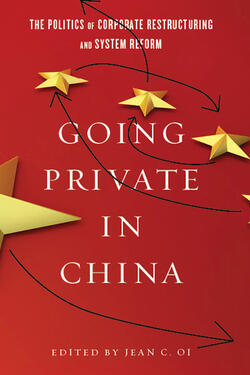
As the Chinese Communist Party (CCP) set about reforming its centrally planned economy, it faced the thorny policy question of how to reform its state-owned enterprises (SOEs). Should it support a shift from public to private ownership of the means of production? Such a shift would challenge not only the CCP's socialist ideology but also its very legitimacy. Mixing the business of corporate restructuring with the politics of socialism presented nothing short of a policy nightmare.
With policy-relevant acuity, the contributors to this wide-ranging volume address the questions about reform programs that have plagued China—and East Asia more broadly—since the 1990s. While China, Japan, and South Korea have all been criticized for implementing reform too slowly or too selectively, this volume delves into the broader contexts underlying certain institutional decisions. The book seeks to show that seemingly different political economies actually share surprising similarities, and problems. While Going Private in China sheds new light on China's corporate restructuring, it also offers new perspectives on how we think about the process of institutional change.
Desk, examination, or review copies can be requested through Stanford University Press.
All Publications button
1
Publication Type
Books
Publication Date
Subtitle
The Politics of Corporate Restructuring and System Reform
Book Publisher
Shorenstein APARC
Book Publisher External URL
Engineering education, finance, and policy in BRIC countries
News Type
Q&As
Date
Paragraphs
Between 2008 and 2009, approximately 25 new private engineering colleges opened in India every week—adding 2500 schools in only two years. Engineering education is also on the rise in the other so-called BRIC countries (Brazil, Russia, and China). But does quantity guarantee quality? And what should government policymakers keep in mind to ensure that their higher education investments pay off?

Rafiq Dossani, a senior research scholar at the Shorenstein Asia-Pacific Research Center, recently collaborated with Stanford professor of education Martin Carnoy and a team of scholars in Russia, China, and India on a leading-edge comparative study of higher education systems in BRIC countries. Carnoy led the project, which focused on engineering education, and he, Dossani, and other researchers are currently writing a book coming out in 2012. Dossani speaks here about the project.
What is unique to the approach that you have taken with this study compared to anything similar previously conducted?
This is the first systematic study based on a large data collection. Over 7,000 students were surveyed in China and India respectively, and 2,300 students were surveyed in Russia. Brazil regularly collects detailed data on a very large nationwide sample of university students, and we have used this in our study. We also surveyed over 100 educational institutions, including several dozen face-to-face interviews with trustees, heads of institutions, heads of departments, faculty, administrators, and students.
We focus on engineering education in our study because it is the field that attracts the largest number of students. For example, in China, about 63% of students in 2009, or about 1.8 million students, entered through the science track, which is the route to an engineering degree. In India, 1.4 million freshmen engineering students were enrolled in 2011, which is over 40% of the total number of freshmen.
In our study, we ask how governance and finance affect outcomes in higher education. Every country’s educational system shares certain objectives: quality, access, and equity. What has not been studied for the BRIC countries is whether the governance and finance of higher education is consistent with some of these objectives but not others, and how this impacts the shape and effectiveness of the higher education system. The choice of governance and finance are themselves outcomes of the institutional settings in each country. For example, in India, the dramatic transfer of political power in the last two decades from the national government to the provinces has been the key driver of change.
As a result of this shift in political power, the states took charge of higher education and focused on increasing access and equity as their political goals. Given the extreme shortage of funds, they contracted out the actual provision of education to the private sector on attractive terms. The private sector responded briskly. Of the 1.4 million freshmen enrollees in engineering studies in 2011, 98% were enrolled in private institutions, compared with less than 5% in 1990. The rate of growth was so high that in just two years, 2008 and 2009, 2500 new engineering colleges opened their doors. That works out to about five new colleges for each working day!
There were upsides and downsides to this growth. On the positive side, the state offered attractive financial terms for new institutions located in underprivileged areas and mandated that about 50% of seats be reserved for underprivileged students (mostly identified by caste). It also kept tuition fees for the reserved seats very low at about $500 per student per year and allowed the colleges to recover costs and margins by charging a higher fee for the rest. The result was that growth has been geographically spread and access by underprivileged students is high—in our study, 55% of the students came from underprivileged categories.
The downside is that quality remains elusive. Although this does not show up in job placement rates due to pent-up demand, comparisons with the other BRIC countries suggest that the quality is low. The reason is that private providers, for the moment, find it more profitable to provide minimal infrastructure and employ inadequate faculty than to invest in building up quality for the long-term. In fact, given that the investment in long-term quality is likely to be unaffordable, one of our conclusions is that we question the sustainability of the Indian governance and finance model vis-à-vis the other countries in our study, particularly China, where the central government is taking an activist approach in trying to increase quality, at least in the elite universities.
How do your findings in India’s higher education system for engineering compare to the other BRIC countries, especially China as the study’s other Asian country?
In terms of sheer growth and the number of engineering freshmen, China exceeds India. The cost of education is lower in India. In terms of quality, China, Brazil, and Russia, do better. Part of the reason is a superior entering cohort in the case of China and Russia. But the main reason appears to be that governance in the other BRIC countries is more faculty-driven than driven by profit-oriented trustees. We found that the former model is more likely to deliver quality. In the case of China, for example, academic departments determine courses, course content, and the types of disciplines available, whereas in India, trustees make such choices, with poorer quality outcomes.
You have previously said that India’s higher education system is very politicized—how did it come to be this way?
The politicization began at the country’s independence in 1947. Prior to independence, higher education was managed by provinces to produce graduates from the upper classes who would join the colonial civil service. After independence, the state governments faced new demands for higher education from the middle classes. Since these were also important voting classes, the state responded by setting up a large number of public universities. The state controlled all aspects of the university to ensure that their priorities were met, in terms of location, fees, and personnel hired. For example, the state government was represented in the senate of every university and public college. Every senior-level hire needed to be approved by the state government. State government nominees on the senate also reviewed textbook selections and disciplinary choices.
As may be imagined, educational quality suffered and continues to do so in the public colleges. In the mid-1990s, the states faced demands from new voter categories, particularly lower-caste groups. These were earlier excluded from political power but acquired power in the federalization of politics that took place from 1990 onwards. This time around, though, the states decided to subcontract the work to the private sector rather than set up public colleges. This was largely a matter of cost management—the state thought that the private sector would respond to the incentive of providing technical education to those willing to pay full-cost, and invest the needed capital. This would free up the state’s capital for other demands, including for education, such as for primary and secondary education. To ensure that the lower-caste groups were part of the expansion, the state mandated quotas and subsidized fees. In the name of preserving quality—although, in fact, it preserves quality only at low levels—the state continued to exercise other controls. For example, it imposes common curricula and assessment, and, in most cases, certifies a private college only if it is part of a publicly owned university system.
The state’s policies also led to a shift in the profile of the graduates towards technical and professional education, since these were the fields in which the private sector was willing to establish new institutions. This was greatly stimulated by rising income payoffs to higher education engineering and business training. Private colleges account for 60% of the growth in educational provision between 1995 and 2011, and almost all of that growth is in engineering, management, and other professional fields. The value of this is debatable: it reflects the “market” but, deprived of state support, some fields that may be considered to be socially valuable, such as the liberal arts, are in steep decline.
Has the state of higher education in BRIC countries, such as India, led students to seek education opportunities abroad?
In China and India, these are important reasons for student migration to the West. For example, 500,000 students enroll as freshmen overseas from India alone every year. They come mostly from elite families, since the costs of an overseas education are very high.
What long-term policy changes are you hoping to influence through this study and your forthcoming book?
First, we show that the evolution of higher education in the BRICs can be explained by the role of the state (the government sector) and the policy choices it makes in governance and finance.
Second, we show that private provision can substitute for public provision, but with certain disadvantages in terms of quality and educational diversity. In this context, we show that state policy can still influence some outcomes positively, such as access, equity, and cost-control. However, the long-term implications for quality are much more negative through such a model.
Third, we show that the provincial governance of education offers certain advantages and disadvantages over national regulation. This is a hotly debated topic in China and India. In India, the national regulators seek greater control out of concern about the implications of too politicized an environment created by the states and the poor quality emerging from private colleges. However, we argue that there may be downsides to centralized control, as was witnessed in an earlier period (during the tenure of Indira Gandhi).
Finally, we make the case that the current ”trend” among governments in developing countries of focusing on the creation of a few world-class universities can succeed in the limited sense of creating a few high-quality teaching and research institutions. However, it comes at a very high cost and in no sense guarantees a trickle-down of quality to the remaining institutions. This is particularly the case in the current model in China and Russia, where the emphasis on world-class universities is greatest and these high-cost elite institutions are given increasing funding per student. At the same time, mass universities absorb increasing numbers of students at low and possibly declining per-student funding.
Hero Image

All News button
1
U.S. visit to Myanmar a major step
News Type
News
Date
Paragraphs
Southeast Asia is home to half a billion people, and the United States has significant political and economic interest in the region. In response to U.S. Secretary of State Hillary Clinton's Myanmar -- the first major U.S. visit in more than 50 years -- Donald K. Emmerson spoke with the International Business Times and LinkAsia about what the trip potentially means for the United States, for Southeast Asia, and for China.
Hero Image

All News button
1
The Autumn Harvest: Peasants and Markets in Post-Collective Rural China
Paragraphs
For the peasants in rural China, the harvest season is the occasion when several different worlds—the business world of large companies, the entrepreneurial world of middlemen, local elites and peasant households—are compressed into the same social space, thereby inducing intensive economic and social interactions and crystallizing social relations among villagers, local elites and markets. Based on ethnographic research on the autumn harvest in a township in northern China, this study sheds light on distinctive modes of market transactions across produces, and diverse interactions between markets and local institutions involving different co-ordination mechanisms, rhythms and social relationships. A more nuanced image of market transactions emerges from these observations, calling for a more refined conceptualization of markets and further research on their implications for institutional changes.
All Publications button
1
Publication Type
Journal Articles
Publication Date
Journal Publisher
The China Quarterly