
 FSI researchers consider international development from a variety of angles. They analyze ideas such as how public action and good governance are cornerstones of economic prosperity in Mexico and how investments in high school education will improve China’s economy.
Postdoc Fellow Spotlight: Mary-Collier Wilks Explores Power Dynamics and Development Imaginaries in International Organizations
U.S.-based donors and international organizations have long dominated the development sector, but their Asian peers are increasingly challenging Western hegemony in the field, argues APARC Postdoctoral Fellow in Contemporary Asia Mary-Collier Wilks.
Wilks is currently at work on a book project that examines variation in ‘aid chains,’ or the links through which programs travel from donors to international nongovernmental organizations (INGOs), and finally to implementing partners. Her ethnographic research examines two aid chains focused on the delivery of women’s health services in Cambodia. After completing her residency at APARC this summer, she will head to the University of North Carolina Wilmington to start a tenure track position at the Department of Sociology.
In the following Q&A, Wilks discusses her research and fellowship experience at Stanford. The interview was slightly edited for length and clarity.
Sign up for APARC newsletters to receive research and commentary updates from our scholars
Your research centers on meaning-making and power dynamics in international organizations. What drew you to this topic?
Before going to graduate school, I worked at a Cambodian NGO, Social Services of Cambodia, that implemented social welfare programs for women and children. While there, I observed conversations between the foreign director, local staff, donors, and beneficiaries, and noticed how these interactions shaped SSC’s work. I was particularly struck by how differently donors from various nations defined gender empowerment. These questions evolved into a desire to go to graduate school and study how donor differences impact international development programs in Southeast Asia.
You are working on your first book. Can you tell us a bit about what to expect from it?
During my postdoctoral fellowship at APARC, I’m focusing on transforming my dissertation into a book. Learning to write a book is a difficult, unique, and rewarding process in and of itself! It’s still a work in progress, but the book argues that the global development sector is shifting. Donors and international organizations based in the United States, Europe, and Australia have long been dominant actors, producing prevailing global norms around “good development.” However, East Asian nations are increasingly vying for influence and offering new, alternative models for development. As a case study of these transformations, I conduct a multi-sited ethnography of two INGOs, one from the United States and the other from Japan, that implement development programs in Cambodia.
I see Cambodian practitioners render the above geopolitical transformations meaningful in their own lives by discussing two “development imaginaries” or narratives about the best way for society to develop, one “Asian” and the other “Western.” Consequently, I contend Cambodia is a case of a larger phenomenon in which Asian donors and development organizations are playing a more prominent role, challenging Western hegemony in the development sector and producing new development norms. This book is therefore trying to tell a dual story about the macro-level geopolitical transformations taking place in the development space in Cambodia, and Asia more generally, and the micro-level meanings, practices, and contradictions that these changes create in the lives of the people living through them.

You have mentioned your interest in how people encounter international development and foreign aid in their everyday lives. What are some aspects of those encounters that you find revealing about the dynamics of global development?
Cambodia is a nation where international donors have a lot of power. But, that’s never the whole story. Development is never just donor-driven. In my work, I try to center the ways Cambodian practitioners make sense of, adapt, or resist donor visions of their nation’s development.
For instance, during my fieldwork, I met an NGO director who I’ll call Rith and whose career trajectory can provide us with some insights. Rith was born in 1979, at the very end of the Khmer Rouge regime. In his twenties, he decided to become a monk to bring merit to his family. In the late 1990s, Rith started noticing the influx of foreign aid funding and the proliferating numbers of international and local NGOs in his country. In 2000, he decided to quit being a monk to open an NGO. He turned out to be a savvy fundraiser, securing funding for his NGO to implement multiple health, education, and economic empowerment projects. However, when I met him in 2019, Rith told me he thought “it might be time to change paths” because NGO funding from Western donors “is not like it was ten years ago.” Two years later, he became the co-CEO of a private construction and sourcing company that takes advantage of the numerous infrastructure development loans China provides to Cambodia.
You can therefore observe how the larger geopolitical changes Cambodia undergoes play out in a micro-way in Rith’s strategic career choices as he shifts from being a monk to an NGO director to a CEO.
What do you see as some of the biggest challenges to delivering aid via INGOs?
There are several answers to this question floating around in my data. One that immediately comes to mind is synchronization. Despite a shared aim of improving women’s health, INGOs from the United States and Japan implement very different kinds of programs in Cambodia. Japanese INGOs focus on strengthening government-provided maternal health services in Cambodia. In contrast, U.S. organizations are more likely to promote a diverse maternal and reproductive healthcare sector, including private providers and civil society advocacy. I’ve also found that INGOs that originate in the United States and Japan are unaware of each other’s distinctive projects. Often, U.S. INGO directors and donors don’t even know Japanese NGOs exist!
While they work with different stakeholders, I believe that projects that support a strong state and those that encourage the market and nonprofit actors could be synchronized for more effective aid. To start with, U.S.-based INGOs sometimes try to upgrade private clinics, provide education, and refer beneficiaries to women’s health services in the same regions where Japanese INGOs support public clinics. On a basic level, if you could just get the INGO directors from Japan and the U.S. organizations that are working in the same areas to sit down together, U.S. INGO health educators might be able to do things like referring to improved private and public clinics if they know which public clinics the Japanese INGO works with, or collaborate on healthcare provision training for private and public clinic doctors.
Beyond your book project, what are you working on while at APARC? How has your time here advanced your research?
The main thing a postdoctoral fellowship affords is the privilege of time to read and write. Outside of the book project, I have been able to work on two other papers while here at Stanford. One article proposes to theorize the process of “script decoupling” and why INGOs might formally adopt the same global script but enact it very differently in implementation. The second paper investigates how the meanings of aid money in NGOs is shaped by the business cultures of donor and recipient nations. I plan to have both papers under review before I leave APARC at the end of July.
Being at APARC has provided me with numerous opportunities to discover insightful, new perspectives on my research projects and career prospects from my postdoctoral advisor, Kiyoteru Tsutsui, as well as various other faculty, fellows, and associates here. For instance, Kiyo is starting a Japanese studies lunch-and-learning session where fellows get to meet and discuss their research. I’m particularly interested in the policy-oriented lectures and learning how to articulate that side of my research since that’s something I wasn’t taught to do in graduate school. Overall, my time at Stanford has been invigorating for my research and writing process. I’ve enjoyed being part of the learning community at FSI and the university at large, and have greatly benefited from connecting with different scholars and working groups across campus.
Has the Covid-19 pandemic affected your ability to travel and do research? How have you adapted?
I was incredibly lucky because I completed my international fieldwork in the fall of 2019. So I was able to collect all the data I needed for my dissertation before the pandemic hit us hard. But, due to Covid, I was not able to do the follow-up field visits that I wanted to do in order to find out what happened when the two INGOs I studied completed their projects. Also, continuing connections in the field for new ideas and the next research project is important for an ethnographer. I have done what I could to catch up with Cambodian friends and practitioners over Zoom. Now that Cambodia has lifted its quarantine requirements, I may be able to return this summer.
What is on the horizon for you? What's next?
As I have wanted to be a college professor since I was 19 (after I gave up my dream of being a pop singer), I’m extremely happy to share I was offered a tenure track position in the Department of Sociology at the University of North Carolina Wilmington! I’ll be starting there in the fall and continuing my research on international development and Southeast Asia.
Read More


Ethnographer and APARC Postdoctoral Fellow Mary-Collier Wilks unveils how distinct development narratives shape the dynamics of aid chains and international organizations’ delivery of services in Southeast Asia.

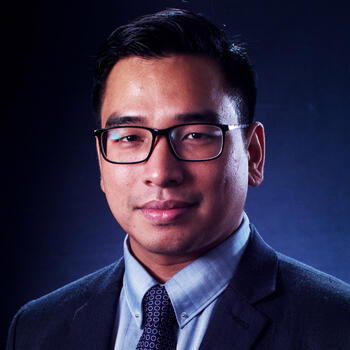




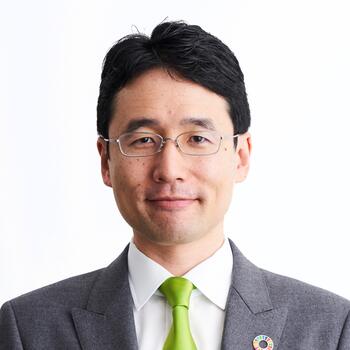
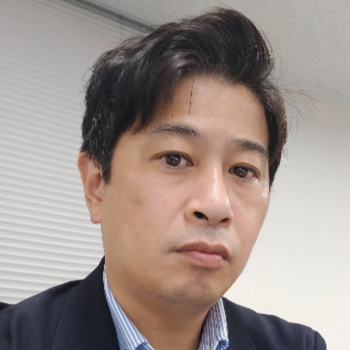
 Arun Mohan Sukumar is a PhD candidate at The Fletcher School, Tufts University, and a pre-doctoral research fellow at Fletcher’s Centre for International Law and Governance. He previously headed the Cyber Initiative at the Observer Research Foundation, one of India’s biggest think-tanks. His first book, Midnight’s Machines: A Political History of Technology in India, won the Ramnath Goenka Award for Non-Fiction (2019) and was shortlisted for several other awards. Arun was previously a member of World Economic Forum’s Global Future Council on the Digital Economy and Society, and appointed by India’s National Security Advisor to a 'Study Group on Cyber Norms' that advised the Indian government on a national strategy towards the development and negotiation of global cybersecurity norms.
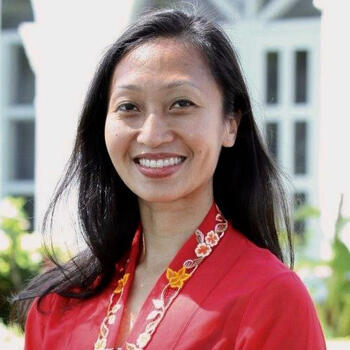
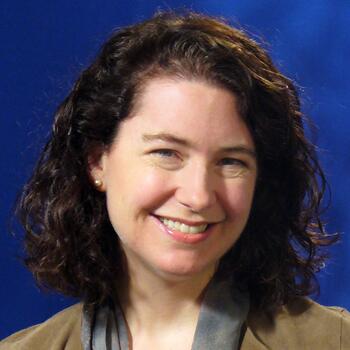
 Julie Owono is the Executive Director of the Content Policy & Society Lab (CPSL) and a fellow of the Program on Democracy and the Internet (PDI) at Stanford University. She is also the Executive Director of digital rights organization Internet Sans Frontières, one of the inaugural members of the Facebook Oversight Board, and an affiliate at the Berkman Klein Center at Harvard University. She holds a Master’s degree in International Law from la Sorbonne University in Paris, and practiced as a lawyer at the Paris Bar. Julie is a member of the Global Partnership on AI (GPAI) created by France and Canada, as well as a member of the World Economic Forum’s Global Future Council on AI for Humanity, and of the WEF Council on the Connected World.


