International Development

FSI researchers consider international development from a variety of angles. They analyze ideas such as how public action and good governance are cornerstones of economic prosperity in Mexico and how investments in high school education will improve China’s economy.

They are looking at novel technological interventions to improve rural livelihoods, like the development implications of solar power-generated crop growing in Northern Benin.

FSI academics also assess which political processes yield better access to public services, particularly in developing countries. With a focus on health care, researchers have studied the political incentives to embrace UNICEF’s child survival efforts and how a well-run anti-alcohol policy in Russia affected mortality rates.

FSI’s work on international development also includes training the next generation of leaders through pre- and post-doctoral fellowships as well as the Draper Hills Summer Fellows Program.

-

This is a virtual event. Please click here to register and generate a link to the talk. 
The link will be unique to you; please save it and do not share with others.

How well is India postured to become a world leader in high technology, especially information and communications technology? India – like the United States – is engaged in an increasingly intense strategic competition with China, and recognizes that mastery of key technologies is a key dimension of that competition. As it seeks to selectively decouple from and reduce its reliance on China, does it have the wherewithal to develop its own high-technology ecosystem, and emerge as a key technology partner to the U.S.? This webinar will examine the key factors that would posture the country for technology competition, including national policy settings, education and research infrastructure, and international partnerships.

Speakers:

Image
edlyn_levine_copy.png
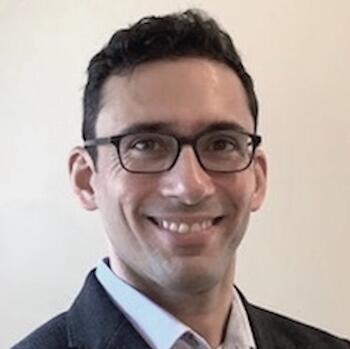
Edlyn V. Levine is the Chief Technologist for the MITRE Accelerator. She is responsible for accelerating technologies in partnership with the private sector and for promoting technologies for the public good. Dr. Levine is a research associate in the Physics Department at Harvard, faculty for executive education at the Harvard Kennedy School of Government, a visiting research scientist at the University of Maryland. Dr. Levine's scientific accomplishments have been recognized by the AFCEA 40 under 40 Award, the NDSEG Fellowship, and the NSF Graduate Research Fellowship. Dr. Levine received her M.S. and Ph.D. in Applied Physics from Harvard University.

Image
a_paulraj_2x2.jpg
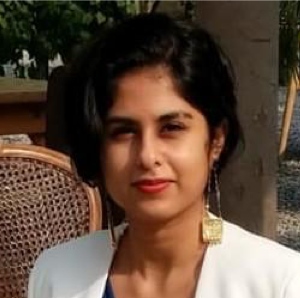
Arogyaswami Paulraj is an Emeritus Professor at Stanford University. He is the inventor of MIMO (Multiple Input Multiple Output), which is the core technology in all modern wireless systems including 5G, 4G and WiFi. His recognitions include the USPTO - National Inventors Hall of Fame, Marconi Prize, IEEE Alexander G Bell Medal, and National Awards from the Govt. of India and PR China.  He is a member of several national academies including the US National Academy of Engineering and American Academy of Arts and Sciences. Paulraj founded three wireless tech companies that were later acquired by Intel, Broadcom, and Hewlett Packard Enterprises.

Image
Trisha Ray
Trisha Ray is an Associate Fellow at the Center for Security, Strategy and Technology at the Observer Research Foundation in India. Her research focuses on geopolitical and security trends in relation to emerging technologies, including AI, 5G and critical minerals. Trisha is a member of UNESCO’s Information Accessibility Working Group, as well as a Pacific Forum Young Leader. Trisha completed her MA in Security Studies from the Walsh School of Foreign Service at Georgetown University.


Moderator:

Image
arzan_tarapore_86kb
Arzan Tarapore is the South Asia research scholar at the Shorenstein Asia-Pacific Research Center at Stanford University, where he leads the newly-restarted South Asia research initiative. He is also a senior nonresident fellow at the National Bureau of Asian Research. His research focuses on Indian military strategy and contemporary Indo-Pacific security issues. Prior to his scholarly career, he served as an analyst in the Australian Defence Department. Arzan holds a PhD in war studies from King’s College London. 


This event is co-sponsored by Center for South Asia

via Zoom 
Register at:  https://bit.ly/3mZyfth

Edlyn V. Levine Chief Technologist, MITRE Accelerator
Arogyaswami Paulraj Emeritus Professor, Stanford University
Trisha Ray Associate Fellow, Center for Security, Strategy and Technology at the Observer Research Foundation in India
Authors
Michael Breger
News Type
News
Date
Paragraphs

North Korea remains one of the worst human rights catastrophes in the modern era. Yet in recent years, the momentum to bring human dignity to the citizens of North Korea has ground to a halt. The predominant focus has been on nuclear security issues to the exclusion of the human rights crisis in the country. But human rights ought to play a key role in any comprehensive policy toward the DPRK. This is the premise of APARC’s new volume, The North Korea Conundrum: Balancing Human Rights and International Security.

Edited by APARC Director Gi-Wook Shin and Ambassador Robert R. King, a senior adviser at the Center for Strategic and International Studies (CSIS) Korea Chair and former special envoy for North Korean human rights issues at the U.S. Department of State, the book draws on the work of scholars and practitioners presented and discussed at a conference on North Korean human rights held by APARC’s Korea Program. On October 28, 2021, APARC and CSIS gathered contributors to the volume for a book launch discussion of the intertwining relationship between the North Korean denuclearization and human rights agendas.

[Explore more APARC events on our YouTube channel and subscribe to receive our video updates.


Studies of human rights in North Korea are even more important now, in light of North Korea’s response to COVID-19, said Shin at the opening of the discussion. The DPRK has kept its borders closed for nearly two years, resulting in reduced trade and worsening the economic and social situation of its population.

Ambassador King, who was also a 2019-20 Koret Fellow and Visiting Scholar at APARC, identified the guiding questions of the volume, indicating that “This conundrum that we talk about in the title is an interaction between security and human rights. Is there a tradeoff? If we focus on human rights, does that make it more difficult for us to deal with security issues? If we focus on security issues do we have to ignore human rights?” 

The first principle we must accept is that integrating human rights into our strategy is not a choice, but a necessity. Moreover, mainstreaming human rights in the U.S.–North Korea agenda strengthens U.S. leverage in negotiations and is politically smart.
Victor Cha
Senior Vice President and Korea Chair, CSIS

An Error of Zero-Sum Thinking

While North Korea’s nuclear weapons and the security threat it poses have occupied the center stage and eclipsed other issues in recent years, the book’s contributors posit that human rights promotion remains an integral part of U.S. policy on the Korean peninsula. In his chapter, Victor Cha, Senior Vice President and Korea Chair at CSIS and former Koret Fellow and Visiting Scholar at APARC, analyzes the error in the zero-sum logic of North Korean human rights. "The United States sees a zero-sum relationship between pressing for human rights and denuclearization negotiations, while South Korea sees a zero-sum relationship between pressing for human rights and inter-Korean engagement," explains Cha. But the denuclearization and human rights agendas are inextricably intertwined.

The lost ground on addressing the North Korean human rights crisis is still recoverable, the contributors to The North Korean Conundrum believe. How could North Korea engage on human rights? The chapters in the volume lay out a number of ways. One opportunity to address human rights issues is through health and humanitarian assistance. Another way is to promote the economic and consumer rights of North Korean citizens to improve their quality of life and help foster a nascent civil society. And yet another way is to support information flow to the North. 

Interwoven Challenges

Nat Kretchun, Vice President for Programs at the Open Technology Fund, examines in his chapter the changing information environment in North Korea, observing how the information control system North Korean authorities are constructing is broadly characterized by an effort to move communications and media consumption onto state-controlled networks via state-sanctioned devices. The central aim is to create a “clean” information environment in which North Korean citizens use approved networked devices that technologically prevent the consumption and spread of unsanctioned content. At the same time, North Korean authorities have come to terms with a more marketized economic future. "Mobile phones have the ability to facilitate market-based economic transactions, the primary driver of much of what (limited) internal economic growth the country is seeing," notes Kretchun.

The contributors all agree that the challenge of human rights in North Korea is a complex one. It is intertwined with a host of issues, including life in the North Korean police state, inter-Korean relations, denuclearization, access to information, and international cooperation—all topics the volume addresses. We frequently separate these issues for analytical purposes or because they are dealt with in different ways or by different entities. But in fact, they are inseparable. Recognizing this interrelationship is the first step toward moving forward in a way that addresses the very serious North Korean security concerns while at the same time bringing human rights and humanitarian concerns into the equation.

Read More

"Patterns of Impunity" by Robert King on a backgorund showing the flags of North Korea, South Korea, and the United States.
News

Why North Korean Human Rights Matter: Book Talk with Robert R. King

In his new book, "Patterns of Impunity," Ambassador King, the U.S. special envoy for North Korean human rights from 2009 to 2017, shines a spotlight on the North Korean human rights crisis and argues that improving human rights in the country is an integral part of U.S. policy on the Korean peninsula.
Why North Korean Human Rights Matter: Book Talk with Robert R. King
[Top left] Gi-Wook Shin; [top right] Roberta Cohen; [bottom left] Tomás Ojea Quintana; [bottom right] Joon Oh
News

Using the UN to Create Accountability for Human Rights Crimes in North Korea

Experts on human rights agree that the UN needs to work through multiple channels to support ongoing investigations and build evidence for future litigations in order to create accountability and pressure the DPRK to desist in committing human rights crimes.
Using the UN to Create Accountability for Human Rights Crimes in North Korea
Flags of Asian states and text "Symposium: The Stakes in Asia"
Commentary

Talking Democracy: A Symposium on Asia

On a panel discussion hosted by the political quarterly 'Democracy,' Donald K. Emmerson joins experts to assess how the Biden administration is navigating the U.S. relationships in Asia.
Talking Democracy: A Symposium on Asia
Hero Image
North Korea Conundrum Book cover
All News button
1
Subtitle

APARC's new edited volume, 'The North Korean Conundrum,' shines a spotlight on the North Korean human rights crisis and its connection to nuclear security. In the book launch discussion, contributors to the volume explain why improving human rights in the country ought to play an integral part of any comprehensive U.S. engagement strategy with the DPRK.

-
This is a virtual event. Please click here to register and generate a link to the event.
The link will be unique to you, please save it and do not share with others.
 

The Taliban’s shock takeover of Kabul in August 2021 has implications for South Asia far beyond Afghanistan’s borders. The Taliban does not have transnational political ambitions, but it is closely tied to the Pakistan security establishment, and its victory will resonate among other networks of terrorists. This webinar will explore the regional geopolitical consequences of the Taliban takeover. It will examine the Taliban victory’s impact on Pakistan’s regional strategy, on security in disputed Kashmir, on the role of China in the region, and on the trajectory of Islamist groups across the region.

Image
Javid Ahmad
Javid Ahmad is a senior fellow with the Atlantic Council and was, until recently, Afghanistan’s ambassador to the UAE. He was previously a nonresident fellow with the Modern War Institute at West Point and worked with U.S. defense contractors, where he provided counterterrorism/economic analysis to U.S. government and business clients on South Asia/Central Asia. He has worked for the Pentagon’s AfPak Hands, the German Marshall Fund in Washington, and NATO in Brussels. He has written for Wall Street Journal, Washington Post, Foreign Affairs, New York Times, Foreign Policy, The National Interest, The Hill, and CNN. He studied at Beloit College and Yale University.

Image
C Christine Fair
C. Christine Fair is a Professor in the Security Studies Program within Georgetown University’s Edmund A. Walsh School of Foreign Service. Her most recent book is In Their Own Words: Understanding Lashkar-e-Tayyaba (OUP, 2019).  She has authored or co-edited several books, inter aliaFighting to the End: The Pakistan Army’s Way of War (OUP, 2014); Pakistan’s Enduring Challenges (UPenn, 2015), Policing Insurgencies (OUP, 2014); Political Islam and Governance in Bangladesh (Routledge, 2010); Treading on Hallowed Ground: (OUP, 2008); The Cuisines of the Axis of Evil and Other Irritating States (GlobePequot, 2008).  She has a PhD from the University of Chicago, Department of South Asian Languages and Civilization. She causes trouble in Hindi, Urdu and Punjabi.

Image
Avinash Paliwal
Avinash Paliwal is Senior Lecturer in International Relations and Deputy Director of the SOAS South Asia Institute. He specialises in South Asian strategic affairs. He is author of the much-acclaimed book My Enemy’s Enemy - India in Afghanistan from the Soviet Invasion to the US Withdrawal (2017), and is currently authoring a strategic history of India's near east. Avinash holds an MA and PhD in International Relations from King’s College London, and a BA (Hons) in Economics from the University of Delhi.

Moderator:

Image
Arzan Tarapore
Arzan Tarapore is the South Asia research scholar at the Shorenstein Asia-Pacific Research Center at Stanford University, where he leads the newly-restarted South Asia research initiative. He is also a senior nonresident fellow at the National Bureau of Asian Research. His research focuses on Indian military strategy and contemporary Indo-Pacific security issues. He previously held research positions at the RAND Corporation, the Observer Research Foundation, and the East-West Center in Washington. Prior to his scholarly career, he served as an analyst in the Australian Defence Department, which included an operational deployment to Afghanistan. Arzan holds a PhD in war studies from King’s College London.


via Zoom webinar

Register:  https://bit.ly/2ZveaS8


Javid Ahmad Senior Fellow Atlantic Council
C. Christine Fair Professor, Security Studies Program Georgetown University
Avinash Paliwal Senior Lecturer in Int'l Relations & Deputy Director SOAS South Asia Institute
Moderator: Arzan Tarapore South Asia Research Scholar, APARC Stanford University
Seminars
-

 All CISAC events are scheduled using the Pacific Time Zone. 

SEMINAR RECORDING


About the Event: How do rising powers like China manage to build power in international systems dominated by one or more established great powers? International relations theory provides some answers, but most assume emulation of successful approaches. This paper leverages the established business literature on how new companies gain market share in markets dominated by established companies to develop a new theory of power accumulation. I argue that only under very narrow circumstances can rising powers build power and influence through emulation. Instead, China has built enough power over the past 25 years to be considered a great power competitor by doing things differently. Specifically, it exploits US blind spots, maneuvers in areas of strategic uncertainty and engages in entrepreneurial actions. I demonstrate that Chinese military strategy exhibits these components in its responses to key pillars of US foreign policy strategy like global power projection, foreign military intervention, and in conventional and nuclear posture decisions. The findings have significant implications for great power competition as well as for power transition theory.


About the Speaker: Oriana Skylar Mastro is a Center Fellow at the Freeman Spogli Institute for International Studies at Stanford University where her research focuses on Chinese military and security policy, Asia-Pacific security issues, war termination, and coercive diplomacy. She is also Non-Resident Senior Fellow at the American Enterprise Institute and an inaugural Wilson Center China Fellow. She continues to serve in the United States Air Force Reserve for which she works as a strategic planner at INDOPACOM. For her contributions to U.S. strategy in Asia, she won the Individual Reservist of the Year Award in 2016. She has published widely, including in Foreign Affairs, International Security, International Studies Review, Journal of Strategic Studies, The Washington Quarterly, The National Interest, Survival, and Asian Security. Her book, The Costs of Conversation: Obstacles to Peace Talks in Wartime, (Cornell University Press, 2019) won the 2020 American Political Science Association International Security Section Best Book by an Untenured Faculty Member. She holds a B.A. in East Asian Studies from Stanford University and an M.A. and Ph.D. in Politics from Princeton University. Her publications and other commentary can be found on twitter @osmastro and www.orianaskylarmastro.com.

Virtual only.

Stanford CISAC
Stanford University
Encina Hall
Stanford,  CA  94305-6055

0
Center Fellow at the Freeman Spogli Institute for International Studies
Courtesy Assistant Professor of Political Science
Faculty Affiliate at the Walter H. Shorenstein Asia-Pacific Research Center
OrianaSkylarMastro_2023_Headshot.jpg PhD

Oriana Skylar Mastro is a Center Fellow at the Freeman Spogli Institute for International Studies and Courtesy Assistant Professor of Political Science at Stanford University, where her research focuses on Chinese military and security policy, Asia-Pacific security issues, war termination, and coercive diplomacy. She is also a nonresident scholar at the Carnegie Endowment for International Peace and a member of the Council on Foreign Relations. She was previously an assistant professor of security studies at Georgetown University. Mastro continues to serve in the United States Air Force Reserve, for which she currently works at the Pentagon as Deputy Director of Reserve Global China Strategy. For her contributions to U.S. strategy in Asia, she won the Individual Reservist of the Year Award in 2016 and 2022 (FGO).

She has published widely, including in International Security, Security Studies, Foreign Affairs, the Journal of Strategic Studies, The Washington Quarterly, the Economist, and the New York Times. Her most recent book, Upstart: How China Became a Great Power (Oxford University Press, 2024), evaluates China’s approach to competition. Her book, The Costs of Conversation: Obstacles to Peace Talks in Wartime (Cornell University Press, 2019), won the 2020 American Political Science Association International Security Section Best Book by an Untenured Faculty Member.

She holds a B.A. in East Asian Studies from Stanford University and an M.A. and Ph.D. in Politics from Princeton University.

Her publications and commentary can be found at orianaskylarmastro.com and on Twitter @osmastro.

Selected Multimedia

CV
Date Label
Seminars
-

This is a virtual event. Please click here to register and generate a link to the talk. 
The link will be unique to you; please save it and do not share with others.


In September 2020, President Xi Jinping declared that China would achieve carbon neutrality by 2060.  This climate pledge is widely considered the most ambitious of all made to date, especially since the world’s largest carbon-emitting nation is still at a developing stage and has not yet achieved its emissions peak.  With the 26th UN Climate Change Conference of the Parties (COP26) on the horizon, the world is eager to learn about any potential new pledges from the Chinese leadership.  This talk will provide an overview of climate governance under President Xi Jinping and draw on the presenter’s work on local implementation of air pollution policies in China to discuss potential lessons for its ongoing efforts to curb carbon emissions.


Image
Portrait of Shiran Victoria Shen
Shiran Victoria Shen’s research primarily examines the organizational causes of and responses to environmental crises, with particular understanding of how local politics shape air pollution and climate management in China.  Professor Shen graduated Phi Beta Kappa and with high honors from Swarthmore College and holds an M.S. in civil and environmental engineering and a Ph.D. in political science, both from Stanford University.


Image
Perfect Storm: Climate Change in Asia series promo image

This event is part of the 2021 Fall webinar series, Perfect Storm: Climate Change in Asia, sponsored by the Walter H. Shorenstein Asia-Pacific Research Center.


Via Zoom Webinar. Register at: https://bit.ly/2XtnSDE

Shiran Victoria Shen Assistant Professor of Environmental Politics at the University of Virginia and W. Glenn Campbell and Rita Ricardo-Campbell National Fellow at the Hoover Institution
Seminars
Authors
Noa Ronkin
News Type
News
Date
Paragraphs

The Walter H. Shorenstein Asia-Pacific Research Center (APARC) is pleased to invite applications for four types of fellowship in contemporary Asia studies for the 2022-23 academic year.

The Center offers postdoctoral fellowships that promote multidisciplinary research on contemporary Japan, contemporary Asia broadly defined, health or healthcare policy in the Asia-Pacific region, and a fellowship for experts on Southeast Asia. Learn more about each fellowship and its eligibility and specific application requirements:

Postdoctoral Fellowship on Contemporary Japan

Hosted by the Japan Program at APARC, the fellowship supports research on contemporary Japan in a broad range of disciplines including political science, economics, sociology, law, policy studies, and international relations. Appointments are for one year beginning in fall quarter 2022. The application deadline is January 3, 2022.
 

Shorenstein Postdoctoral Fellowship on Contemporary Asia

APARC offers two postdoctoral fellowship positions to junior scholars for research and writing on contemporary Asia. The primary research areas focus on political, economic, or social change in the Asia-Pacific region (including Northeast, Southeast, and South Asia), or international relations and international political economy in the region. Appointments are for one year beginning in fall quarter 2022. The application deadline is January 3, 2022.
 

Read More

Photo of Charles Crabtree
News

Charles Crabtree Appointed as a Visiting Assistant Professor with the Japan Program at APARC

Crabtree, an assistant professor at Dartmouth College, researches discrimination in politics, particularly in Japan.
Charles Crabtree Appointed as a Visiting Assistant Professor with the Japan Program at APARC
Portrait of Radhika Jain with text congratulating her on winning the inaugural Adam Wagstaff award
News

Asia Health Policy Postdoctoral Fellow Radhika Jain Wins Prestigious Health Economics Award

Jain is the recipient of the inaugural Adam Wagstaff Award for Outstanding Research on the Economics of Healthcare Financing and Delivery in Low- and middle-Income Countries. Her award-winning paper provides the first large-scale evidence on the behavior of private hospitals within public health insurance in India.
Asia Health Policy Postdoctoral Fellow Radhika Jain Wins Prestigious Health Economics Award
[Left] Postdoc Spotlight, Jeffrey Weng, Shorenstein Postdoctoral Fellow in Contemporary Asia, [Right] Jeffrey Weng
Q&As

Postdoc Spotlight: Jeffrey Weng on Language and Society

Shorenstein Postdoctoral Fellow in Contemporary Asia Jeffrey Weng shares insights from his research into how language and society shape one another, particularly how the historical use of Mandarin affects contemporary Chinese society and linguistics.
Postdoc Spotlight: Jeffrey Weng on Language and Society
Hero Image
Autumn scene on the Stanford campus with a call to apply for APARC's 2022-23 fellowships for Asia schoalrs
All News button
1
Subtitle

The Center offers fellowships for postdoctoral scholars specializing in contemporary Asia, Japan, and Asia health policy and for experts on Southeast Asia.

0
Shorenstein Postdoctoral Fellow on Contemporary Asia, 2021-22
mary-collier_wilks.jpg PhD

Mary-Collier Wilks joined the Walter H. Shorenstein Asia-Pacific Research Center (APARC) as Shorenstein Postdoctoral Fellow on Contemporary Asia for the 2021-2022 year. Her research interests include globalization, gender, and the politics of international development. Wilks' interests arose due to her work as a grant writer at a local NGO, Social Services of Cambodia. At that time, she began to think about the complicated process of foreign aid and international development, seeing how resources and ideas from all over the world flow through NGOs to affect the lives of people in Cambodia. Following from this experience, her research agenda centers meaning-making and power dynamics in international organizations. She is particularly interested in how development is encountered in people’s everyday lives, and the gendered meanings, divisions, and struggles that arise from such encounters.

Wilks recently obtained her Ph.D. in Sociology from the University of Virginia. For her dissertation, funded by the National Science Foundation and the Fulbright IIE, she conducted a multi-sited ethnography comparing INGOs from the U.S. and Japan implementing women's health programs in Cambodia. Her dissertation contributes to scholarly theories of global civil society and international development, contending that in order to adequately analyze and improve development outcomes, we must attend to national variation in INGO programs and practices. She has also worked as a consultant in the development sector, working as a researcher for a local NGO in Cambodia, conducting a gender analysis for a USAID health project, and served as a trainer for a USAID Women’s Leadership Conference.

At APARC, she worked on transforming her dissertation manuscript into a book and extending her comparative research agenda to investigate how NGO practices are shaped by the business cultures in which their donors are embedded.

Date Label
Shorenstein APARC Encina Hall Stanford University
1
Shorenstein Postdoctoral Fellow on Contemporary Asia, 2021-22
diana_stanescu_2.jpg PhD

Diana Stanescu joined APARC as Shorenstein Postdoctoral Fellow on Contemporary Asia for the 2021-2022 academic year. Previously, she was a postdoctoral fellow with the Program on U.S.-Japan Relations, Weatherhead Center for International Affairs, at Harvard University. She holds a B.A. in International Relations & Asian Studies from Mount Holyoke College and an M.A. and Ph.D. in Political Science from Princeton University. During 2018-2020 she was a Pre-Doctoral Exchange Scholar in the Department of Government at Harvard.

Her research interests include international trade, regulation, and lobbying with a focus on Japan, using formal and quantitative methods. Her research addresses the overarching question of how bureaucracies shape global economic governance, from a structural and agent-driven perspective. Her dissertation, “The Bureaucratic Politics of Foreign Economic Policymaking,” explains the mechanisms by which stakeholders shape international economic policy through bureaucratic channels of influence.  Additional work looks at the micro-foundations of bureaucratic structure and its consequences for policy; examines the role of individual bureaucrats within domestic and international institutions; and develops micro-level data on bureaucratic careers and appointments.

As a Shorenstein APARC Postdoctoral Fellow, Dr. Stanescu further assessed how politicians and interest group representatives maneuver within bureaucratic channels to have influence over foreign economic policy. In particular, she examinedhow bureaucratic-interest group networks help firms obtain market access abroad, with evidence from trade and foreign direct investment in Japan.

Authors
News Type
Q&As
Date
Paragraphs

This interview was first published by the Stanford News Service.


The 2020 Summer Olympics have begun this week but public support among the Japanese public for the games has been generally low and their mood can be articulated through the succinct question: “Why are we doing this now?” says Stanford sociologist and Japan Program Director Kiyoteru Tsutsui.

 
Here, Tsutsui discusses how the various challenges posed by the COVID-19 pandemic and other national scandals related to the games have led to a general dissatisfaction among the Japanese public towards their government and the International Olympic Committee. Despite low morale, the country’s mood may change once the Summer Games commence – barring any further complications or disruptions. But given that the games are pared down this year, it still may be hard to generate the same levels of excitement as in previous years, Tsutsui said.
 
Tsutsui is the Henri H. and Tomoye Takahashi Professor and director of the Japan Program at the Walter H. Shorenstein Asia-Pacific Research Center, which is part of the Freeman Spogli Institute for International Studies. Tsutsui is also a professor of sociology and his research focuses on social movements, globalization, human rights and Japanese society. He is the author of Rights Make Might: Global Human Rights and Minority Social Movements in Japan (Oxford University Press, 2018).
 

Polls among the Japanese public show mixed support for the games and meanwhile, major advertisers in the country are pulling out. As a sociologist, how do you see this mixed public sentiment affecting overall mood and morale?

There is no question that there is a strong headwind against the Olympics in the lead-up to the opening ceremony. Opinion polls are still against the games, although the numbers improved a little in recent weeks. The general public sentiment can be summed up as “Why are we doing this now?”

The road to the Tokyo Olympics has been a long and winding one complicated by COVID-19, first and foremost, and various scandals. The Japanese public has been fed up with the COVID-19-related emergency declarations and other restrictions as well as the slower pace of vaccination compared to other developed countries. The perception, right or wrong, is that the government is making decisions based on whether they help in hosting the Olympics successfully, when the focus should be on public health and economic rescue in the COVID environment.

Morale is low, but many are hoping that things will change quickly once the games begin. Whether that happens or not depends on a whole host of factors, most importantly whether major public health incidents and other unfortunate accidents happen or not, how Japanese athletes fare, who might emerge as global stars, and so on.

To what extent has the International Olympic Committee (IOC) helped or hindered support for the games among the Japanese public?

The Japanese public sees the IOC as simply pushing its economic interest without the proper regard for their safety and health. Many people do not understand that the Japanese government does not have the authority to cancel the Olympics and could have faced a lawsuit with a huge compensation at stake if it tried to do so. The IOC looks like the IMF/World Bank during the Asian economic crisis in affected countries or the EU in some European countries – an international entity that pushes its agenda without accountability to the citizens. The frustration has nowhere to go but to the Japanese government, which combined with overall COVID-19-related dissatisfaction, has led to the most recent polls showing the lowest approval rating for the government under Prime Minister Yoshihide Suga.

For Japan, hosting the 2020 Olympic Games initially symbolized the country’s rebound from the devastating Tōhoku earthquake, tsunami and Fukushima Daiichi nuclear accident in 2011 and was poised to boost their economy. Then COVID hit, and meanwhile, Olympic expenses ballooned. Are there any opportunities for the Olympic Games to help the country bounce back? 

The 2020 Olympics was initially framed as a symbol of recovery from the triple disaster in 2011, but that slogan is no longer central. The expenses were justified as a way to develop infrastructure for foreign visitors and increase inbound tourists, and the government’s goals for the number of visitors from abroad have been met already. With no spectators allowed, Japan will lose money on hosting the Olympics, but the economic damage is not irrecoverable. Once the world gets out of COVID-19, the Japanese economy will likely rebound and tourists will come back.

It will be interesting to follow how socially, in terms of the national psyche and its unity, Japan will respond to the Tokyo Olympics. Even when the games take place in other countries, the Olympics often serve as a moment of national unity, especially in Japan. With Japan being the host, many thought that it would serve as an enormous booster towards national confidence and unity. We have yet to see how the games will turn out, but these psychological impacts will likely be lessened as the games are scaled down and may not get as much global attention as typical Olympics do.

There’s still a chance for a better outcome though if the games go smoothly and offer many compelling moments. People in many countries are still more homebound than usual and the contents that the games offer could be attractive. And the Japanese public is known to swing from one side to the other very quickly and on a massive scale, so once the games begin, TV personalities who were questioning whether the games should happen will likely quickly turn around and support Japanese athletes and tout their accomplishments. That is, if no serious outbreak incidents occur.

The Olympics are often celebrated as a nonpolitical event that can unite the world. In a globally turbulent world, what do you make of that assessment? Can the Olympics be nonpolitical?

The Beijing Winter Olympics in 2022 is a case in point. Boycott of the games seems unlikely, but House Speaker Nancy Pelosi has already floated an idea of diplomatic boycott. There’s a lot at stake for the host country, and the Olympics will likely be politicized when countries like China, Russia or even the U.S. host it.

Another problem is that not many democracies would be eager to host the games anymore. Public support is needed for democracies to host the Olympics, but the growing cost of the games, combined with increasingly less clear benefits of hosting, has made it difficult to find democracies that are eager to be the host country. Meanwhile, non-democracies like China and Russia, and even smaller countries like Kazakhstan or Azerbaijan campaign to become host nations. The pattern of dictatorships hosting the Olympics and the world demanding a change in their human rights practices and, threatening a boycott, might be a recurring pattern in the coming decades.

 
Photo of Kiyoteru Tsutsui

Kiyoteru Tsutsui

Senior Fellow at FSI, Professor of Sociology, Director of the Japan Program
Full Biography

Read More

President Biden and President Suga walk through the Rose Garden colonnade at the White House
Commentary

China Looms Large, Despite a Strong US-Japan Alliance

From Taiwan and the Senkaku Islands to economics, trade, and human rights issues in Xinjiang and Hong Kong, the U.S.-Japan alliance has plenty to tackle with its policies towards China.
China Looms Large, Despite a Strong US-Japan Alliance
Logo of the New South Wales Ministry of Health's podcast Future Health
News

Robotics and the Future of Work: Lessons from Nursing Homes in Japan

On the Future Health podcast, Karen Eggleston discusses the findings and implications of her collaborative research into the effects of robot adoption on staffing in Japanese nursing homes.
Robotics and the Future of Work: Lessons from Nursing Homes in Japan
An Island that lies inside Taiwan's territory is seen with the Chinese city of Xiamen in the background.
Commentary

The Taiwan Temptation

Why Beijing Might Resort to Force
The Taiwan Temptation
Hero Image
A man cycles past a security fence outside the New National Stadium, the main stadium for the Tokyo Olympics, on June 23, 2021 in Tokyo, Japan
A man cycles past a security fence outside the New National Stadium, the main stadium for the Tokyo Olympics, on June 23, 2021 in Tokyo, Japan.
Yuichi Yamazaki/ Getty Images
All News button
1
Subtitle

While public support in Japan has been lackluster for the 2020 Tokyo Olympic Games, the mood may change once the games start – provided no major public health incidents and other unfortunate accidents occur, says Stanford sociologist Kiyoteru Tsutsui.

Authors
Callista Wells
News Type
News
Date
Paragraphs

On May 5, 2021, the APARC China Program hosted Professor Yuen Yuen Ang, Associate Professor of Political Science at the University of Michigan for her program, "The Role of Corruption in China's Speedy, Risky Boom." Based on her recently published book, China's Gilded Age, Ang explored the impact of corruption on China's economy and how it compares to other countries around the world, including the United States during the late 1800s. Professor Jean Oi, William Haas Professor of Chinese Politics and director of the APARC China Program, moderated the event.

While corrupt countries are usually poor, China appears to be an exception. President Xi Jinping acknowledges that corruption in the country has reached crisis proportions. If this is true, Ang asks, why has China nevertheless sustained 40 years of economic growth and deep transformation?

In fact, Ang argues, China is not as anomalous as it seems; its experience is strikingly similar to America’s Gilded Age during the 19th century. Ang unbundles corruption into four different types that each harms the economy in a different way. Similar to America’s Gilded Age, reform-era China has steadily evolved toward a particular type of corruption: access money (elite exchanges of power and wealth). Simultaneously, beginning in the 2000s, the central government effectively curbed directly growth-damaging types of corruption such as embezzlement and bureaucratic extortion. Access money fueled commerce by rewarding politicians for aggressively promoting growth and connected capitalists for building more and taking on more risky ventures. But such corruption also produced systemic risks, distortions, and inequality—problems that define China's Gilded Age under Xi's leadership. As a result, China today is a high-growth but risky and imbalanced economy.

Despite popular perceptions that China and the United States are two polar opposites, Ang argues, contemporary China and 19th century America share more similarities than we normally think. Their divergent political systems, however, drove contrasting responses to the excesses of capitalism. Watch now:

Read More

National Emblem of the People's Republic of China on the Great Hall of the People
News

What’s ‘Communist’ about the Communist Party of China?

Is the Chinese Communist Party really communist at all? Expert Jude Blanchette, Freeman Chair in China Studies at the Center for Strategic and International Studies, weighs in.
What’s ‘Communist’ about the Communist Party of China?
Paper boats with Chinese and American flags
News

Partner, Competitor, and Challenger: Thoughts on the Future of America’s China Strategy

Ryan Hass, Michael H. Armacost Chair in Foreign Policy Studies at the Brookings Institution, discusses the future of US-China relations. Can we find room for cooperation in this contentious relationship?
Partner, Competitor, and Challenger: Thoughts on the Future of America’s China Strategy
United States Capitol Building from an angle
News

When Beijing Goes to Washington: Autocratic Lobbying Influence in Democracies

Professor Erin Baggot Carter tells us how autocratic lobbying affects political outcomes and media coverage in democracies.
When Beijing Goes to Washington: Autocratic Lobbying Influence in Democracies
Hero Image
Cover of "China's Gilded Age" by Yuen Yuen Ang
All News button
1
Subtitle

How has corruption simultaneously driven China’s economic boom and financial risks? Professor Yuen Yuen Ang explains its role in producing a high-growth but also high-risk economy.

Subscribe to International Development