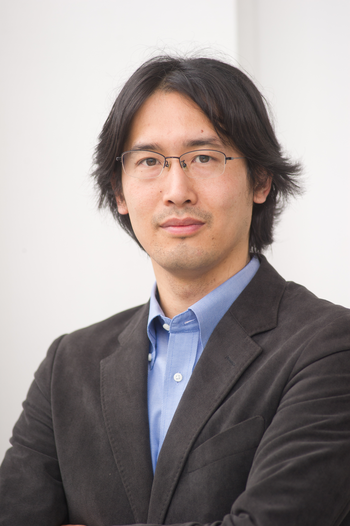
As the U.S.-China competition heats up, other countries in the Asia-Pacific region are watching closely. But despite rhetoric about third parties “being forced to choose sides,” the countries of Southeast Asia have more agency than outside analysts often give them credit for. A new collection of essays on Southeast Asia’s approach to China, The Deer and the Dragon, highlights just that. Donald K. Emmerson, head of the Southeast Asia Program in the Walter H. Shorenstein Asia-Pacific Research Center at Stanford University, is the editor of and contributor to the book. He talks with The Diplomat about the China-Southeast Asia-U.S. triangle, including the South China Sea question, and the fallout from COVID-19.
This interview was conducted by Shannon Tiezzi for The Diplomat. The original article is available here.
[Sign up for our newsletters to receive updates like this directly in your inbox]
Many commentators (in the region and without) have raised questions recently on the future of the “ASEAN Way” amid China’s efforts to use its allies within ASEAN to cast “proxy vetoes on Beijing’s behalf” (as you put it in the opening chapter). Do you see ASEAN’s modus operandi evolving in the face of such challenges? Is serious consideration being given to calls for “ASEAN Minus” formulations or minilateral groupings?
A way is a path or a principle, not a codified rule. Beijing’s ability to stop an ASEAN member from saying or doing something that China doesn’t like is a function of what the would-be proxy expects to gain from compliance and suffer from defiance. The purpose of the “ASEAN Way” is intramural, harmonic, and cosmetic — to ensure that the members’ fealty to public consensus limits their discord and veils their friction. ASEAN’s inability to evolve from an intergovernmental to a supranational body is in part a consequence of its success in keeping itself intact at an anodyne level of least disagreement. Significant “ASEAN minus” innovations on matters of security such as the South China Sea are almost certainly not being considered.
The book rejects the idea that the states of Southeast Asia are passive objects of the U.S.-China tug of war. In what way can regional states shape the outcome of that contest – and their own destinies?
“Don’t force us to choose between China and the United States,” or words to that effect, have become an entrenched mantra in statements by more than a few Southeast Asian leaders. In its most damaging form, the plea falsely assigns equivalence to the two big powers and assigns to Southeast Asia a purely reactive position equidistant between them. Next-door China is an entirely plausible future regional hegemon. The threat from far-off America lies not in its presence but in what could happen in its absence. Emphasizing what you want others not to do begs the question of what you yourself should be doing to ensure, increase, maintain, or restore your own strategic autonomy and the independent creativity and proactivity that it allows.
Relevant in this regard are developments in the South China Sea. Beijing’s former fluctuation between “smile” and “frown” diplomacy has given way to expansionary Chinese anger not only along the PRC’s southern coasts, from Hainan through Hong Kong to Taiwan, but in acts of harassment and intimidation in the EEZs [exclusive economic zones] of some ASEAN states as well. Rhetorical pushback by some of those states has helped to revive a dormant 2016 ruling by an international arbitral court, convened at Manila’s request, against Beijing’s claims and behavior in the South China Sea.
As if to follow the Philippine example, Vietnam might possibly decide to pursue legal redress against Beijing under international maritime law. If Vietnam does muster a case, China will punish it for its temerity, and years will elapse before a judgment is made. Merely having strategic autonomy does not assure its successful use. But recent evidence of agency by some governments in Southeast Asia does at least suggest that they have not yet succumbed to fatalist passivity in the face of Chinese coercion.
With that in mind, how have Southeast Asian states reacted to the United States’ new rejection of China’s “historic rights” in the South China Sea?
The question deserves context. Omitted on lists of China’s exports to the world is a vital if hard to measure item: self-censorship. Southeast Asia’s leaders have learned to avoid publicly criticizing China for reasons of practicality and fear. Why endanger actually or potentially beneficial economic relations? Why risk retaliation?
A recent case in point: On July 14, 2020 U.S. Secretary of State Mike Pompeo issued a blistering rejection of China’s efforts. “The world,” he said, “will not allow Beijing to treat the South China Sea as its maritime empire.” Most of the governments in Southeast Asia probably hoped Pompeo was right, and officials in Hanoi, Manila, and Jakarta did make relevant remarks. They were circumspect, however, so as not to anger Beijing. Vietnam’s foreign ministry “welcome[d]” the “positions” taken by “countries” on the South China Sea “issues” as “consistent with international law.” The Philippine defense secretary “strongly agree[d]” with “the international community” that there should be “a rules-based order” in the South China Sea.” Indonesia’s foreign minister reiterated her country’s defense of its EEZ as consonant with international law and the 2016 court ruling. Understandably, however, most Southeast Asian governments, even as they agreed with Washington’s position, preferred not to align themselves explicitly with the United States.
In your chapter on the South China Sea, you suggest that Southeast Asian claimants could push back against growing Chinese control in the South China Sea if regional states (for example, the Philippines and Vietnam) negotiate a resolution to their own maritime disputes. Has there been any movement toward this goal in Southeast Asian capitals? What obstacles stand in the way?
Little to nothing has been done. Nationalisms are the obstacle. The disputes over sovereignty are many and complex. They may never be resolved. Without having to agree on the ownership of land features, however, the locations and extents of particular maritime zones and the rights of access to and usage in them are in principle more amenable to agreement. With claimant-specific conflicts over sovereignty set aside to the extent possible, three approaches do come to mind: negotiation, arbitration, and application.
ASEAN countries whose claimed zones are superimposed could acknowledge and try to negotiate or arbitrate the claims’ locations. An example: Although the coastal EEZs claimed by Vietnam and the Philippines do not overlap with each other, they both overlap with the coastal EEZ claimed by Malaysia. The three countries could seek a compromise with regard to these zones while applying the 2016 arbitral decision and leaving open the possibility of further alterations, contingent upon feedback from other littoral states and possible future court rulings. Another possibility: One or more ASEAN states, in cooperation with each other or with nonpartisan outside bodies, could draw up, apply, and publicize new navigational and other maps of the South China Sea — representations of the 2016 arbitral decision on computer screens and paper charts usable at sea. The most promising aspect of the latest pushback against China is the resuscitation of the court’s ruling as a prospective guide to conduct. Last but not least, legality aside, a coalition of the willing could agree to, and seek broad international support for, a brief statement that no single country should control the South China Sea.
What is the state of China’s soft power (and, as you evocatively call it, the opposite of “repellent power”) in Southeast Asia?
At the end of each year, the ISEAS-Yusof Ishak Institute surveys the opinions of foreign policy elites in Southeast Asia. Confidence in China to “do the right thing” for “global peace security, prosperity and governance” was low in 2018 and still lower a year later. Among those who answered the question, the proportion who were “confident” or “very confident” that China would “do the right thing” shrank from 29 percent in 2018 to 16 percent in 2019. Those expressing such confidence in the United States actually grew a little, from 27 to 30 percent. And 60 percent in 2019 surely had Trump in mind when they agreed that a change of leadership in Washington would improve their confidence in the U.S. as a “strategic partner.” Also striking was the large proportion of respondents — 73 percent — who saw China as a “revisionist” power bent on turning their region into its “sphere of influence” (38 percent) or as “gradually” replacing America as “a regional leader” (35 percent). If there is an asset for Beijing in these results, it may not be enthusiasm for China’s soft power so much as resignation in light of its hard power.
What impact is the COVID-19 pandemic – which some analysts theorize could be a pivotal moment in the future of the world order – having on Southeast Asian countries’ relationships with China, the U.S., and each other?
Beijing has seized upon the pandemic as a chance to exercise soft power by donating or selling personal and protective equipment (PPE) to countries and organizations around the world. All 11 Southeast Asian countries have received gifts of Chinese PPE. These are humanitarian acts. But “mask-donor” diplomacy also serves to compensate for the damage done to China’s reputation by the coronavirus’ apparent origin in Wuhan. Intentionally or not, gifts of Chinese PPE may also attenuate the bad press Beijing has received for its repressive-aggressive moves in Xinjiang, Hong Kong, and the South China Sea, and for the bluntly disparaging comments leveled by some of its “wolf-warrior” diplomats against criticisms of China. Chinese fans borrowed the lupine label from “Wolf Warrior 2,” a popular action film starring the People’s Liberation Army. Its tagline runs: “Even though a thousand miles away, anyone who affronts China will pay.”
Washington has provided some pandemic-related help to Southeast Asian states, but on a scale insufficient to compete with China’s vigorous self-promotion across the region. By comparison, America, largely preoccupied with its crisis-wracked self, has gone missing in Southeast Asia. And available data show that, ranked by its ability to overcome the virus at home, the United States is the worst-performing country in the world. How could one expect it to be able to lead that world? Three-fifths of the Southeast Asian influentials surveyed by ISEAS were right to agree in 2019 that replacing Trump would improve America’s standing as a would-be strategic partner — and that was before the pandemic got underway.
As for the virus’s impact on relations among Southeast Asian states, Singapore and Vietnam have been helping some of their fellow ASEAN members, and Indonesia has donated equipment to Timor-Leste. But ASEAN has not launched its own collective campaign against the pandemic.
Finally: If COVID-19 does not abate and disappear reasonably soon, habits acquired during shutdowns could become a new normal. In-person consultations and negotiations could remain less common than they were before the virus struck and Zoom took over. A lasting reduction in physical travel will save time and energy. But it will sacrifice direct awareness of the ideas, demeanors, and local involvements of counterparts and partners in their home environments. That loss of context could impede the diplomacy that will be needed to recover, repair, and rethink the multilateral arrangements that will be called upon to sustain a future international order — redux or revamped — and protect it from wolf warriors and animus-driven cold warriors alike.
<< Pre-order The Deer and Dragon here >>

 FSI researchers consider international development from a variety of angles. They analyze ideas such as how public action and good governance are cornerstones of economic prosperity in Mexico and how investments in high school education will improve China’s economy.
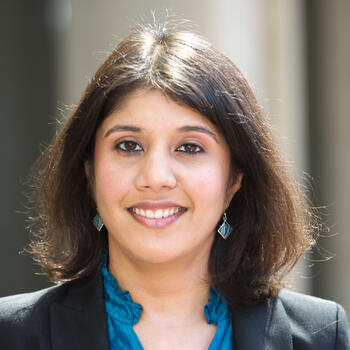


 Stephen Stedman is a Freeman Spogli senior fellow at the Center on Democracy, Development, and the Rule of Law and FSI, an affiliated faculty member at CISAC, and professor of political science (by courtesy) at Stanford University.


 Alvin Shiqi Wang (王世琪) has served as CEO and President of 21Vianet Group, Inc. since February 2018. Currently, Mr. Wang serves as Vice President of TUS Digital Group, a subsidiary of TUS Holdings, and serves on the board of directors of Beijing CIC Technology Co., Ltd. and Guangzhou Tuwei Technology Co., Ltd. . Mr. Wang has nearly 20 years of experience in the telecommunications industry, working at various renowned international companies, including 11 years with Ericsson, focusing primarily on strategy development and execution, corporate management, and equity investments. Mr. Wang received a bachelor's degree from Tsinghua University and an MBA from Peking University-Vlerick MBA Programme (BiMBA).
 Xiang Wang (王翔) is President and Acting CFO of Xiaomi Corporation, responsible for platform functions and for assisting the CEO with Group operations. Mr. Wang joined Xiaomi Corporation in July 2015 served as its Senior Vice President and President for International Business, responsible for global expansion, IP strategy, and strategic partner relationship management. Mr. Wang has more than 20 years of experience in the semiconductor and communications fields, with great vision and comprehensive understanding of next-generation wireless communications. He has played an integral role in shaping Xiaomi’s international business operations including with respect to its intellectual property compliance, management and strategy throughout the world. In 2016, Mr. Wang put together an international team of sales and marketing teams to expand into more markets outside of China. Within just 3 years, he led his teams into over 90 markets. As of Q3 2019, Xiaomi’s international revenue accounted for 48.7% of its total revenue. Today, Xiaomi is ranked among top 5 smartphone brands in over 40 markets. Mr. Wang previously served as the Senior Vice President of Qualcomm and President of Qualcomm Greater China, leading the company’s business and operations in Greater China. Prior to that role, he was Vice President of Qualcomm CDMA Technology, responsible for Qualcomm chipset business and customer service in China. Under his leadership, Qualcomm rapidly extended and strengthened its partnerships with increasing numbers of Chinese manufacturing customers. Before joining Qualcomm, Mr. Wang held key positions in sales and marketing at internationally leading companies, including Motorola and Lucent/Agere. Mr. Wang earned his BSEE from Beijing Polytechnic University.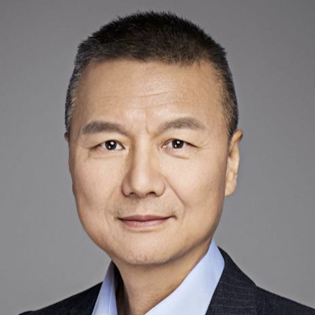
 Zhiqiang (ZZ) Zhang (张志强) is President of ABB in China since October 2018. He has extensive management experience and a deep understanding of the Chinese market, developed during his career at several large global companies over the past three decades. He joined ABB from Sandvik where he was Asia- Pacific Regional Holding Officer and President of Sandvik China, and Member of Sandvik Group Executive Committee. Prior to that, he held leadership positions at several other companies, including Nokia Siemens Networks, where he was President of the Greater China Region, and Siemens VDO Automotive, China, where he was President and CEO. Mr. Zhang is Non-Executive Board member of Georg Fischer AG (Switzerland) and Daetwyler Holding AG (Switzerland). He holds a bachelor’s degree in electronic engineering from Beijing Jiaotong University, China, and a master’s degree in business administration from the Smith School of Business at Queen’s University in Canada.
 Jean C. Oi is the William Haas Professor of Chinese Politics in the Department of Political Science and a senior fellow in the Freeman Spogli Institute for International Studies at Stanford University. She directs the China Program at the Walter H. Shorenstein Asia-Pacific Research Center and is the Lee Shau Kee Director of the Stanford Center at Peking University. Professor Oi has published extensively on China’s reforms. Recent books include Zouping Revisited: Adaptive Governance in a Chinese County, coedited with Steven Goldstein (Stanford University Press, 2018), and Challenges in the Process of China’s Urbanization, coedited with Karen Eggleston and Yiming Wang (2017). Current research is on fiscal reform and local government debt, continuing SOE reforms, and the Belt and Road Initiative.
 Christopher Thomas was most recently a partner with McKinsey & Company. He served as co-Managing Partner for the Firm’s Global Digital Strategy service line as well as its Global IoT service line; and as the leader of its Asia Semiconductor Practice. Prior to McKinsey, Mr. Thomas spent ten years at Intel. He was the General Manager of Intel China, with joint ownership for the region’s $5 billion-plus P&L. In this role, he grew revenues by more than 50% and oversaw China’s successful elevation from a sales unit to an independent regional P&L business reporting directly into headquarters. Mr. Thomas began his career as a private equity investor at The Blackstone Group in New York City. He is currently a Visiting Professor at Tsinghua University, China’s leading educational institution. He received an MBA from Stanford Business School, where he was an Arjay Miller scholar; a Master of Arts in Political Science from Stanford University; and a Bachelor of Science in Economics, summa cum laude, from the Wharton School.