Institutions and Organizations
Paragraphs

Although there are no formal diplomatic relations between the United States and the Democratic People's Republic of Korea (DPRK), nonetheless there have been constant attempts by U.S. academia, friendship organizations, and NGOs to develop and promote educational interaction and exchanges between the citizens of these two countries. Have these attempts found success? What lessons can be learned from these experiences?

The essays in this volume originated from a conference held in November 2010 at the Walter H. Shorenstein Asia-Pacific Research Center (APARC) at Stanford University. The conference papers and case studies evaluated past educational exchanges between the United States and the DPRK, in the hope that through such discussions and self-assessments, effective strategies for future international educational exchanges can be developed.

This book is being distributed as a free PDF downloadable from the Shorenstein APARC website.

All Publications button
1
Publication Type
Books
Publication Date
Journal Publisher
Shorenstein APARC
Authors
Gi-Wook Shin
Number
978-1-931368-24-7
Paragraphs
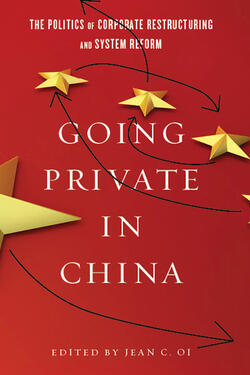
GoingPrivateinNEWSFEED1 0

As the Chinese Communist Party (CCP) set about reforming its centrally planned economy, it faced the thorny policy question of how to reform its state-owned enterprises (SOEs). Should it support a shift from public to private ownership of the means of production? Such a shift would challenge not only the CCP's socialist ideology but also its very legitimacy. Mixing the business of corporate restructuring with the politics of socialism presented nothing short of a policy nightmare.

With policy-relevant acuity, the contributors to this wide-ranging volume address the questions about reform programs that have plagued China—and East Asia more broadly—since the 1990s. While China, Japan, and South Korea have all been criticized for implementing reform too slowly or too selectively, this volume delves into the broader contexts underlying certain institutional decisions. The book seeks to show that seemingly different political economies actually share surprising similarities, and problems. While Going Private in China sheds new light on China's corporate restructuring, it also offers new perspectives on how we think about the process of institutional change.

Desk, examination, or review copies can be requested through Stanford University Press.

All Publications button
1
Publication Type
Books
Publication Date
Subtitle

The Politics of Corporate Restructuring and System Reform

Authors
Jean C. Oi
Book Publisher
Shorenstein APARC
Authors
News Type
News
Date
Paragraphs

Newsstands dot the street corners of China’s major cities, and each day the country’s netizens cram into Internet cafés to surf the web and connect with friends online. Last year alone, Chinese readers purchased 50 billion newspapers and the government reported 163 million regular Internet café users—roughly one-third of China’s total Internet population.

According to panelists at the Dec. 7 China's Changing Media Landscape event, organized by Stanford’s Shorenstein Asia-Pacific Research Center (Shorenstein APARC), now is both an exciting and a challenging time to be a journalist in China.

Changes in China’s media landscape go hand in hand with today’s rapid economic, social, and political reforms, said Shorenstein APARC associate director for research Daniel C. Sneider as he opened the event. He described Caixin Media, recipient of the 2011 Shorenstein Journalism Award, as the “first truly independent media company in China.”

“We need to try harder to get a scoop, but I think it’s a nice problem to have.”
-Hu Shuli, Editor-in-Chief, Caixin Media

Hu Shuli, editor-in-chief of Caixin Media and a former Stanford Knight Journalism Fellow, said that China’s number of quality investigative and independent media outlets keeps growing. “We need to try harder to get a scoop,” she said. “But I think it’s a nice problem to have.”

Hu called technology a “double-edged sword” in that it can be manipulated in order to spread rumors and incite unproductive debates. She said, however, that the popularity of the Internet and mobile devices offers Chinese journalists the opportunity to publish news faster and reach the public through social media platforms like the country’s most popular micro-blog service Sina Weibo, which has approximately 230 million user accounts.

Caixin managing editor Wang Shuo spoke of the efforts by Caixin and other independent Chinese media outlets to gain an international audience. “China presents one of the most exciting stories of our time,” he said.

Caixin and the Asian edition of the Wall Street Journal publish one another’s news stories on a monthly basis. Wang said that the modest amount of “bartered” content is not the point. “It means that a major U.S. newspaper recognizes that Caixin is up to international standards,” he said.

Ben Hu, a reporter with Southern Weekend and a current Stanford Knight Fellow, said that China’s tough licensing system makes it difficult for publications to grow. Without a license, he said, online publications cannot attract banner advertising—their real source of income. Hu spoke of a computer-coder-turned-online-news-publisher who draws half-a-million visitors to his website daily, but still cannot make a profit from it.

China’s weak copyright protection system is another major issue facing journalists today, he said. Start-up publications often plunder “real” articles and rehash the content to avoid paying a fee to license it.

Orville Schell, the director of the Asia Society Center on U.S.-China Relations and the recipient of the 2003 Shorenstein Journalism Award, said that as the traditional U.S. media industry declines, China’s continues to grow more vibrant. On the flip side, however, he said that aggressive industry competition and the state’s system of licensing and censorship challenges journalists.

But China’s system of media control may also have an inadvertent upside, Schell suggested. It may slow the spread of a dumbing down of content in television and other areas of the media, following the commerce-driven model of the U.S. media industry.

The panel discussion concluded with a lively question-and-answer session from the standing-room-only audience of members from the Stanford community and general public. Questions ranged from the role of technology in the media to China’s system of censorship.

Hu Shuli and Wang accepted the Shorenstein Journalism Award on behalf of Caixin Media at a dinner ceremony held later that day at Stanford. The event marked the first time that an Asian media outlet or journalist has won the award.

Hero Image
TurpanCafe NEWSFEED
A rare lone figure early in the day in an Internet cafe, Turpan, China. Internet- and mobile-based technologies are increasingly relevant to Chinese journalists.
Flickr/Tom Thai
All News button
1
-

Despite the many benefits of democracy, some scholars believe that introducing elections in ethnically divided states can lead to the politicization of identity and to ethnic conflict. Yet few scholars have explored what compels politicians to mobilize around identity in the first place. In search of an answer, Jeremy Menchik and George Washington University doctoral student Colm Fox compiled the only known dataset of campaign advertisements—over 5,000 political banners, posters, and stickers—across hundreds of electoral districts in the world’s largest Muslim-majority democracy, Indonesia. They coded these advertisements for the use of religious, ethnic, nationalist, party, and regional symbols in order to then explain their variation. Their findings shed light on how “politics works” in a new Muslim democracy and suggest that parties, including Islamists, are strategic about their use of identity appeals. Menchik will illustrate this and other findings with ample recourse to visual images.

Dr. Jeremy Menchik is a 2011–12 Shorenstein Fellow. His PhD from the University of Wisconsin-Madison drew on two years of field research to explain variations in religious and political tolerance in Indonesia during the twentieth century. He has been a Luce Scholar at Columbia University and a visiting fellow at the State Islamic University Syarif Hidayatullah, Jakarta. He is working on a book manuscript based on his dissertation: Tolerance Without Liberalism: Islamic Institutions in Twentieth Century Indonesia.

Co-sponsored with the Abbasi Program in Islamic Studies, Stanford University.

Philippines Conference Room

Walter H. Shorenstein
Asia-Pacific Research Center
616 Serra St C331
Stanford University
Stanford, CA 94305-6055

(650) 724-5656 (650) 723-9741
0
Shorenstein Fellow (2011-2012)
MenchikJeremy.jpg PhD

Jeremy Menchik joins the Walter H. Shorenstein Asia-Pacific Research Center (Shorenstein APARC) from the Department of Political Science at the University of Wisconsin-Madison. His research is in the area of comparative politics and international relations with a focus on religion and politics in the Muslim world, especially Indonesia. At Shorenstein APARC, he is preparing his dissertation for publication as a book titled, Tolerance Without Liberalism: Islamic Institutions in Twentieth Century Indonesia, and developing related projects on the origins of intolerance, the relationship between religion and nationalism, and political symbolism in democratic elections.

Menchik holds an MA and a PhD in political science from UW-Madison and a BA, also in political science, from the University of Michigan. He will be an assistant professor in international relations at Boston University beginning in 2013.

Jeremy Menchik 2011-2012 Shorenstein Fellow, Shorenstein APARC Speaker Stanford University
Seminars
News Type
News
Date
Paragraphs

Asia’s demographic landscape is changing in a big way. Japan’s population is shrinking, as people are living longer, marrying later, and choosing to have fewer or no children. Korea is moving in the same direction, while China and the countries of South and Southeast Asia face similar issues in the coming decades. As this takes place, more people are moving to, from, and across Asia for job, education, and marriage opportunities.

These demographic changes present policymakers with new challenges and questions, including: What are the interrelationships between population aging and key macroeconomic variables such as economic growth? How will it impact security? What are the effects on employment policy and other national institutions? How have patterns of migration affected society and culture? What lessons can Asia, the United States, and Europe learn from one another to improve the policy response to population aging?

The Walter H. Shorenstein Asia-Pacific Research Center (Shorenstein APARC) focused its third annual Stanford Kyoto Trans-Asian Dialogue on addressing the possible economic, social, and security implications of Asia’s unprecedented demographic transition. Thirty scholars, government figures, journalists, and other opinion leaders from Stanford, the United States, and countries across the Asia-Pacific region gathered September 8–9, 2011, in Kyoto, Japan, to discuss key issues related to the question of demographic change.

Comparative Demographics and Policy Responses

Japan’s shrinking workforce calls for labor policy changes, stressed presenters during the opening Dialogue session. Stanford Center for Population Research director Shripad Tuljapurkar stated that Japan’s population could decrease by as much as 25 percent and that its government has a window of approximately 40 years in which to act. In describing Japan’s demographic shift, Ogawa Naohiro, director of the Nihon University Population Research Institute, also emphasized the importance of good financial education for individuals as life expectancy increases.

Macroeconomic Implications

Economists Masahiko Aoki and Cai Fang addressed changes to East Asia’s economic landscape. Aoki, an FSI senior fellow, spoke of the transition from agriculture to industry that has occurred at different stages in Japan, Korea, and China and of the increasing cost of human capital that has followed. Cai, a Chinese Academy of Social Sciences labor and population expert, stated that after several decades of industrial growth China is now at a turning point in terms of its global competitiveness.

Labor and Migration

Scott Rozelle, codirector of Stanford’s Rural Education Action Program (REAP), opened the next day with a discussion of China’s rural human capital investment. Offering Mexico’s situation after the mid-1990s peso crisis as a comparison, he emphasized the immediate need for allocating more health and education resources to China’s rural areas. Ton-Nu-Thi Ninh, president of Tri Viet University, discussed the socioeconomic and cultural aspects of labor migration—a growing trend in Asia—and advocated that governments factor it more into their foreign policy development.

Security

The security impact of Asia’s demographic transition will take several decades to understand, but it will eventually lead to the need for significant policy re-strategization, stated Yu Myung Hwan, Korea’s former minister of foreign affairs and trade, during the closing Dialogue session. He suggested focusing on impacts that could result from the major changes taking place in fertility, urbanization, and migration. Concurring with many of Yu’s views, Stanford’s Shorenstein Distinguished Fellow Michael H. Armacost also noted the current lack of literature on the link between security and demography. In addition, he emphasized the need for the United States to continue pursuing good relations with China and Russia during this time of transition.

“Low fertility rates are not because women are all out there working. In fact, a number of countries have lots of females in the labor force and have achieved a resurgence of fertility. Achieving work-life balance is important, not just for women, but for men as well, and might play a role in lessening the gap in life expectancy between men and women.”

-Karen Eggleston, Director, Asia Health Policy Program

Throughout the event, Dialogue participants unanimously acknowledged the serious challenges facing policymakers as they look for ways to meet the evolving needs of individuals, families, and organizations. The demographic outlook is not entirely gloomy, however. Numerous participants also pointed to the potential for exciting advances and innovations in technology and international cooperation.

As in previous years, the event concluded with a lively public symposium and reception attended by students from Stanford and local universities, Shorenstein APARC guests and affiliates, and members of the general public. Speaking during the reception, Kadokawa Daisaku, mayor of Kyoto, and Kim Hyong-O, member and former speaker of the Korean National Assembly, acknowledged the significance of the Stanford Kyoto Trans-Asian Dialogue as a forum for addressing issues of mutual importance to the United States and Asia.

The Dialogue is made possible through the generosity of the City of Kyoto, FSI, and Yumi and Yasunori Kaneko. To read the final report from this and previous Dialogues, visit the event series page below.

Hero Image
JakartaConstruction NEWSFEED
A worker stands on steel rods at a superblock construction site in Jakarta in February 2010. Increasing urbanization is one of many aspects of Asia's demographic change.
REUTERS/Beawiharta
All News button
1
Paragraphs

The global balance of power is undergoing a gradual but dramatic shift. While the United States will likely remain a preeminent economic and geopolitical power, the long era of American hegemony is coming to an end. In particular, managing the rise of Asia will likely prove to be the central challenge of international politics in the 21st century. In the face of such striking change, rigidity threatens to make international organizations relics of a bygone era. A substantial update of the international organizational architecture is needed. As two of the world’s leading democracies and economic powers, there is much that the United States and Japan can contribute toward such an effort. This paper will examine how U.S.-Japan cooperation can reinvigorate and update international organizations to meet contemporary challenges.

The first section discusses distributional imbalance as a serious shortcoming of several major international organizations, most prominently the United Nations Security Council and the International Monetary Fund (IMF). Uneven representation can lead to needless tension and undermine the ability of international organizations to facilitate interstate cooperation. The major international organizations must be updated to reflect 21st century realities. The next section examines the economic and geopolitical rise of Asia and potential implications for institutionalized cooperation. Asia is a region with comparatively weak international organizations and inferior representation in universalistic institutions. Without deeper regional institutionalization and commensurate representation in global institutions, Asia’s rise may prove destabilizing for international cooperation. Accordingly, the paper then presents several policy prescriptions for how the United States and Japan can cooperate to update and reform the international organizational architecture.

All Publications button
1
Publication Type
Working Papers
Publication Date
Journal Publisher
Japan Center for International Exchange
Authors
Phillip Lipscy
Paragraphs

For the peasants in rural China, the harvest season is the occasion when several different worlds—the business world of large companies, the entrepreneurial world of middlemen, local elites and peasant households—are compressed into the same social space, thereby inducing intensive economic and social interactions and crystallizing social relations among villagers, local elites and markets. Based on ethnographic research on the autumn harvest in a township in northern China, this study sheds light on distinctive modes of market transactions across produces, and diverse interactions between markets and local institutions involving different co-ordination mechanisms, rhythms and social relationships. A more nuanced image of market transactions emerges from these observations, calling for a more refined conceptualization of markets and further research on their implications for institutional changes.

All Publications button
1
Publication Type
Journal Articles
Publication Date
Journal Publisher
The China Quarterly
Authors
Xueguang Zhou
Paragraphs

Health systems provide a rich field for testing hypotheses of institutional economics. The incentive structure of current healthcare delivery systems have deep historical and cultural roots, yet must cope with rapid technological change as well as market and government failures. This paper applies the economic approach of comparative and historical institutional analysis (Aoki, 2001; Greif, 2006) to health care systems by conceptualizing physician control over dispensing revenues as a social institution. The theory developed—emphasizing the interplay between cultural beliefs, interest groups, technological change, insurance expansion and government financing—offers a plausible explanation of reforms since the 1960s separating prescribing from dispensing in societies such as Japan, South Korea, Taiwan and China. Technological change and adoption of universal coverage trigger reforms by greatly increasing the social opportunity costs of physician over-prescribing and reshaping the political economy of forces impinging on the doctor–patient relationship.

All Publications button
1
Publication Type
Journal Articles
Publication Date
Journal Publisher
Journal of Institutional Economics, FirstView Article
Authors
Karen Eggleston
Paragraphs

Big changes are ahead for China, probably abrupt ones. The economy has grown so rapidly for many years, over 30 years at an average of 9 percent a year, that its size makes it a major player in trade and finance and increasingly in political and military matters. This growth is not only of great importance internationally, it is already having profound domestic social effects and it is bound to have internal political ones — sooner or later.

Two kinds of changes are in store: political and economic. The order in which they occur will affect their impacts, and that order is very uncertain. In any case, big discontinuities are likely before 2020.

All Publications button
1
Publication Type
Journal Articles
Publication Date
Journal Publisher
Policy Review, No. 170
Authors
Henry S. Rowen
Subscribe to Institutions and Organizations