Security

FSI scholars produce research aimed at creating a safer world and examing the consequences of security policies on institutions and society. They look at longstanding issues including nuclear nonproliferation and the conflicts between countries like North and South Korea. But their research also examines new and emerging areas that transcend traditional borders – the drug war in Mexico and expanding terrorism networks. FSI researchers look at the changing methods of warfare with a focus on biosecurity and nuclear risk. They tackle cybersecurity with an eye toward privacy concerns and explore the implications of new actors like hackers.

Along with the changing face of conflict, terrorism and crime, FSI researchers study food security. They tackle the global problems of hunger, poverty and environmental degradation by generating knowledge and policy-relevant solutions. 

Authors
News Type
News
Date
Paragraphs

All things Korean – economics, culture, politics – are the subject of an educational conference on campus this week.

The fifth annual Hana-Stanford Conference on Korea for U.S. Secondary School Teachers takes place July 25 to 27 in Paul Brest Hall. The meeting brings together American teachers and educators from Korea for discussions on how Korean history, economics, North Korea, foreign policy and culture are covered in American schools.

From lectures to curriculum workshops and classroom resources, the attendees will deep-dive into conversations, information and resources made available by the Stanford Program on International and Cross-Cultural Education (SPICE) and the Korea Program, which hosts the event.

Gi-Wook Shin, director of Stanford’s Walter Shorenstein Asia-Pacific Research Center, said that Korea is a country often overlooked or understudied in U.S. secondary schools.

“The Hana-Stanford Conference provides an excellent opportunity for U.S. secondary school teachers to learn about Korea and return to their classrooms better equipped with teaching materials and knowledge about Korea, as well as with the confidence and motivation to incorporate what they have learned from the conference into their curricula,” he said.

Shin said that exposing more American students to Korea “nurtures in students more balanced and complete perspectives on the world.” Korea, after all, he noted, is an important U.S. ally.

Discussions will cover an array of topics, including Korea’s major historical themes; World War II memories in northeast Asia; English education in Korea; Korea’s relationship with the U.S.; Korean literature; and the lives of Korean teenagers and young people. Scheduled speakers include Yong Suk Lee, the SK Center Fellow at Stanford’s Freeman Spogli Institute for International Studies, and Kathleen Stephens, a former U.S. ambassador to South Korea.

Such conversations are important, as how one teaches history shapes contemporary society. Gary Mukai, director of SPICE, said that one of the curriculum units demonstrated at the conference each year is “Divided Memories: Examining History Textbooks.”

“The unit introduces the notion that school textbooks provide an opportunity for a society to record or endorse the ‘correct’ version of history and to build a shared memory of history among its populace,” Mukai said.

He noted that American and Korean teachers’ examination of textbook entries about the Korean War from U.S., Japanese, Korean, Taiwanese and Chinese textbooks challenged their assumptions and perspectives about the war.

Also, during the conference, the Sejong Korean Scholars Program, a distance-learning program on Korea sponsored by SPICE, will honor American high school students and give them the opportunity to present research essays.

Clifton Parker is a writer for the Stanford News Service. This article has been updated to reflect a different speaker and additional program sponsor.

Hero Image
hana stanford conference 2014 headline
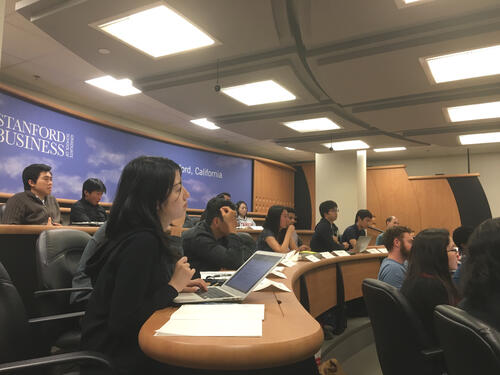
Students in conversation at the Hana-Stanford Conference on Korea for U.S. Secondary School Teachers. The conference, now in its fifth year, brings together an international group of teachers and students in cross-cultural exchange.
Rod Searcey
All News button
1
Paragraphs

In this three-part NBR Special Report, experts from the United States, South Korea, and Japan offer critical insights into both the past and future of trilateral cooperation and provide recommendations for leaders in all three nations to move the relationship forward.

All Publications button
1
Publication Type
Policy Briefs
Publication Date
Journal Publisher
National Bureau of Asian Research (NBR)
Authors
Authors
Lisa Griswold
News Type
News
Date
Paragraphs

A new course jointly taught by Stanford and Peking University brought together students and scholars in China and the United States in dialogue using videoconferencing.

Each week during the past spring quarter, students at Stanford and Peking University (PKU) gathered in a classroom to learn, just as they would for any other course. The only difference was these students were neither in the same classroom nor on the same continent.

Despite being separated by nearly 6,000 miles, 18 students in Palo Alto and 28 students in Beijing held ‘face-to-face’ conversations via high definition videoconference in a course taught by American and Chinese scholars. On each side, they sat in a three-rowed amphitheater and looked directly ahead – not at a whiteboard – but at a screen that projects a video ‘wall’ of their colleagues at the other campus. The venue, known as a ‘Highly Immersive Classroom,’ enabled the distance learning experience between the two universities, using advanced software to create a cross-Pacific virtual classroom. The course titled The United States, China, & Global Security, led by former U.S. Ambassador to Afghanistan Karl Eikenberry and PKU professor Fan Shiming, was organized under the auspices of the U.S.-Asia Security Initiative whose research focuses on security challenges in Asia with teaching as one of its core activities.

“We set out to host a course that addressed topics critical to China and the United States in a new type of classroom format,” said Eikenberry, the Oksenberg-Rohlen Distinguished Fellow in the Shorenstein Asia-Pacific Research Center and director of the Initiative. “What resulted was a truly unique academic exchange that considered topics even beyond the bilateral relationship and carried a certain ‘Silicon Valley spirit’ being divided by an ocean yet connected through technology.”

“I loved the cybersecurity class because there was a lot of candor on both sides.”

-Shan Jee Chua, PKU graduate student

Over eight weeks, a select group of graduate students from the two universities explored a wide array of subjects related to international security, ranging from terrorism to trade and energy and the environment. The course aimed to provide students with a forum to discuss current issues in U.S.-China relations and to analyze areas that could be applied to other case studies. 

“Because each week was a different topic, it didn’t feel like I was just thinking about the United States and China again every Wednesday night,” said Sam Ide, a Stanford graduate student who studies China’s relations with Central Asia. “Each session was very interesting to me in a different way.”

Guest-taught by prominent scholars and former senior government officials from the United States and China, the course sessions allocated thirty minutes for each lecturer to present, followed by a thirty minute question-and-answer period in which students were given the opportunity to interact with the lecturers and their peers on the other campus. Lecturers from Stanford included nuclear scientist Siegfried Hecker, former U.S. Secretary of Energy Steven Chu, and Thomas Fingar, a former deputy director at the U.S. Office of the Director of National Intelligence; and from PKU, Dean of the School of International Studies Jia Qingguo, and arms control and disarmament expert Han Hua. All discussions were off-the-record to encourage candid exchange of ideas. 


Image
course 3

At Stanford's Highly Immersive Classroom in Palo Alto, students look ahead at their counterparts in Beijing.


One course session in particular resonated with students. The session, taught by Zha Daojiong, a professor of political economy at PKU and Herbert Lin, a senior research scholar at Stanford’s Freeman Spogli Institute for International Studies, focused on the changing nature and future of cybersecurity relations between China and the United States.

“I loved the cybersecurity class because there was a lot of candor on both sides,” PKU student Shan Jee Chua recalled.

Kimberly Chang, a second year Stanford graduate student in management science and engineering, noted that it was beneficial to hear the Chinese view on cyber “because most of the talk within the United States has been from an American perspective.”

“Hopefully, I'll be able to meet some of these people in real life who I've met on the 'wall.'”

-Sam Ide, Stanford graduate student

The course revealed a broader range of perspectives and provided a chance to interact first-hand with international colleagues while remaining at their home campus. Discussion amongst peers uncovered the “behind the scenes stories” and added context to media reports found online or in print, said Seung Kim, a student in Stanford’s East Asian studies program.

Besides the technology, a unique aspect of the course was its diversity. More than half of the course participants were international, representing 15 countries beyond China and the United States. That setting encouraged debate and reinforced the notion that “neither the United States nor China is the center of the universe,” said Zhu Jun Zhao, a PKU international relations student.

When students were asked what could bring about better understanding between China and the United States, continued dialogue was a common answer. The future of U.S.-China relations rests in the hands of people talking to one another: “I think we need more honest conversations,” Chang said.

And for some students, an opportunity to hold those conversations in-person may be close. Ide said he anticipates traveling to Beijing over the summer and plans to try and meet with a few of his counterparts whom he met through the course.

“Hopefully, I’ll be able to meet some of these people in real life who I’ve met on the ‘wall.’”

Related Links:

Video showcases SCPKU's Highly Immersive Classroom enabling co-teaching across the Pacific

Hero Image
course 2
At the Stanford Center at Peking University in Beijing, Peking University professor Fan Shiming presents his remarks during a session of "The United States, China, & Global Security," a joint course taught by Stanford and Peking University via videoconference; Palo Alto, May 2016.
All News button
1
Authors
Lisa Griswold
News Type
News
Date
Paragraphs

As the inaugural meeting of the Asian Infrastructure Investment Bank sets to convene, Stanford researcher Thomas Fingar discusses findings from his new book that seeks to study China’s objectives and methods of engagement with other countries. Much of China’s behavior is determined by its own cost-benefit analysis of the perceived effect engagement would have on its security and development.

As China has pursued modernization over the past 35 years, patterns have emerged that shed light on the government’s foreign policy decision-making, according to new research by Thomas Fingar, a Stanford distinguished fellow at the Shorenstein Asia-Pacific Research Center (APARC).

Since 1979, China’s foreign policy has been underscored by two priorities – security and development. Knowing those priorities, analysts can attempt to better study and anticipate China’s relations with other countries even in the wake of unforeseen events in the global system.

“China’s increased activity around the world has elicited both anxiety and admiration in neighboring countries eager to capitalize on opportunities but worried about Beijing’s growing capabilities. Yet as is the case with all countries, what China can do is shaped by global and regional developments beyond its control,” said Fingar, the editor of The New Great Game: China and South and Central Asia in the Era of Reform.

The book, which has a total of 13 authors, is the first in a series published by Stanford University Press that examines China’s changing relationships in Asia and with other portions of the world. It is also an outcome of the research project “China and the World.” Fingar, who heads the project, draws upon his experience from five decades working on Asia and more than 25 years in U.S. government, including as chairman of the National Intelligence Council.

Framework to analyze China’s foreign policy

One dimension of the research project examines how China’s policies and priorities are shaped by China’s perceptions about how much a country threatens or addresses China’s security concerns; a second dimension examines China’s perceptions about how much a country can contribute to China’s pursuit of sustained economic growth and modernization.

To explore these relationships, Fingar developed a framework for analysis using a matrix that displays, on one axis, China’s perceptions about the threat to China’s security posed by a country or region, and on the other axis, China’s perceptions about a country or region’s capacity to contribute to China’s development.

By comparing the position of a given country or region from one period to another, the matrix both predicts the character of China’s policies and reveals a pattern over time. The figure below illustrates China’s views in 1979 and 2016.


[[{"fid":"223290","view_mode":"crop_870xauto","fields":{"format":"crop_870xauto","field_file_image_description[und][0][value]":"","field_file_image_alt_text[und][0][value]":false,"field_file_image_title_text[und][0][value]":false,"field_credit[und][0][value]":"","field_caption[und][0][value]":"","field_related_image_aspect[und][0][value]":"","thumbnails":"crop_870xauto"},"type":"media","field_deltas":{"1":{"format":"crop_870xauto","field_file_image_description[und][0][value]":"","field_file_image_alt_text[und][0][value]":false,"field_file_image_title_text[und][0][value]":false,"field_credit[und][0][value]":"","field_caption[und][0][value]":"","field_related_image_aspect[und][0][value]":"","thumbnails":"crop_870xauto"}},"link_text":null,"attributes":{"width":"870","class":"media-element file-crop-870xauto","data-delta":"1"}}]]


In 1979, India and countries in Central Asia figured high on the threat axis because of their relationship with the Soviet Union and low on capacity to provide the resources China needed to jumpstart its economy, Fingar said.

At that time, China sought to address both its priority security concerns and developmental goals by improving ties with Europe, Japan and the United States. South and Central Asia were afforded lower priority, he said.

In the 1990s, however, China’s perceptions shifted as a result of the demise of the Soviet Union and a decade of economic success in China, Fingar explained. Shown in the matrix, China’s policies toward Central Asia changed as the region transitioned to a more favorable security position by 2000 and as China required additional resources (energy, technology, training, etc.) to fuel its growing economy.

Fingar said China’s increased engagement with South Asia was buttressed by a need for markets and investment opportunities, and furthered along by a reduction in the threat environment as India altered its relationship with Russia and Pakistan became a less valuable security partner.

Calculating who China will engage with and how has become much clearer, yet in some ways it has also become more complicated, according to Fingar.

“The countries that can do the most for China today often pose the greatest perceived long-term threat, namely the United States and its allies,” he said. “Conversely, China’s proclaimed closest friends—North Korea and Pakistan—can do little to assist China’s development and pose increasing danger to its security.”

Current policy applications

Over the past three years, Chinese President Xi Jinping has embarked on numerous projects with neighbors and other countries around the world, such as the “new Silk Road,” a trans-continental trade route that will link countries together, and the Asian Infrastructure Investment Bank (AIIB), a multilateral development bank that plans to lend money to poorer parts of Asia for building infrastructure.

The objectives of both initiatives are consistent with the China’s prioritization of security and development, Fingar said. The AIIB and Silk Road initiative indicate that China assumes there are gains from economic integration, and this is largely due to the fact that China has already benefited from past projects.

In 2001, the Chinese government launched concerted efforts to improve its relationships with Central Asian countries because of China’s concern that the United States was seeking to “contain” China, he said. Outcomes have included newfound markets for China’s manufactured goods and increased stability in separatist areas near or on its borders.

“By taking such a big stake in building infrastructure, China has changed the dynamic of the region,” he said. “Anybody can use a road, railroad or bridge. China has helped stitch together the economies of different countries in ways they have never been before.”

For China, the AIIB and the Silk Road initiative are also a form of “soft power,” said Fingar. The approach by the Chinese government evokes memories of U.S. “dollar diplomacy” early in the last century and Japanese “yen diplomacy” when financial assistance was extended to developing countries.

But Fingar doubts that “buying friends by building infrastructure” will be a major contributor to China’s quest for security and development. Going forward, the Chinese government must face the growing paradox between its foreign infrastructure projects and its principle of respect for sovereignty and territorial integrity, he said.

“When working in other countries, China cannot afford to dismiss internal stability, governance, rule of law,” he said. “Those facets are the baseline for building infrastructure.”

Related links:

The Diplomat - Q&A on Chinese diplomacy in the 21st century

Hero Image
chinese worker sri lanka port
A Chinese laborer works at a construction site in Colombo, Sri Lanka, Oct. 2015.
Getty Images / Buddhika Weerasinghe
All News button
1
Authors
News Type
News
Date
Paragraphs

In 2013, China’s president, Xi Jinping, launched a massive reclamation and construction campaign on seven reefs in the Spratly Islands in the South China Sea. Beijing insisted that its actions were responsible and in accord with international law, but foreign critics questioned Xi’s real intentions. Recently available internal documents involving China’s leader reveal his views about war, the importance of oceans in protecting and rejuvenating the nation, and the motives underlying his moves in the South China Sea. Central to those motives is China’s rivalry with the United States and the grand strategy needed to determine its outcome. To this end, Xi created five externally oriented and proactive military theater commands, one of which would protect newly built assets in the South China Sea and the sea lanes – sometimes referred to as the Maritime Silk Road – that pass through this sea to Eurasia and beyond. Simultaneously, China’s actions in the Spratlys complicated and worsened the US-China rivalry, and security communities in both countries recognized that these actions could erupt into armed crises – despite decades of engagement to prevent them. A permanent problem-solving mechanism may allow the two countries to move toward a positive shared future.

You can read the full article from CISAC co-founder John Lewis and Xue Litai on the Bulletin of the Atomic Scientists Web site.

Hero Image
View from a C-130 transport plane towards Taiping island during a visit by journalists to the island in the Spratlys chain in the South China Sea on March 23, 2016.
SAM YEH/AFP/Getty Images
All News button
1
Paragraphs

The history of human civilization has been about managing information, from hunting and gathering through contemporary times. In modern societies, information flows are central to how individuals and societies interact with governments, economies, and other countries. Despite this centrality of information, information governance—how information flows are managed—has not been a central concern of scholarship. We argue that it should be, especially now that digitization has dramatically altered the amount of information generated, how it can be transmitted, and how it can be used.

This book examines various aspects of information governance in Japan, utilizing comparative and historical perspectives. The aim is threefold: 1) to explore Japan’s society, politics, and economy through a critical but hitherto underexamined vantage that we believe cuts to the core of what modern societies are built with—information; 2) articulate a set of components which can be used to analyze other countries from the vantage of information governance; and 3) provide frameworks of reference to analyze each component.

This book is the product of a multidisciplinary, multinational collaboration between scholars based in the US and Japan. Each are experts in their own fields (economics, political science, information science, law, library science), and were brought together in two workshops to develop, explore, and analyze the conception and various of facets of information governance. This book is frontier research by proposing and taking this conception of information governance as a framework of analysis.

The introduction sets up the analysis by providing background and a framework for understanding the conception of information governance. Part I focuses on the management of government-held information. Part II examines information central to economic activity. Part III explores information flows crucial to politics and social life.

All Publications button
1
Publication Type
Books
Publication Date
Authors
Kenji E. Kushida
News Type
Commentary
Date
Paragraphs

Fifty years have passed since the beginning of China’s Cultural Revolution, a mass political movement led by Mao Zedong that lasted a decade and provoked widespread violence and social upheaval. Stanford sociologist Andrew Walder, a noted expert on contemporary Chinese society, offered his commentary and analysis to various media outlets, cited below.

In the years just following Mao’s death in 1976, the Communist Party showed an “incredible openness” toward addressing the horrors caused by the Cultural Revolution, he told The Guardian. The Communist Party denounced the Cultural Revolution and some within the Party led efforts to document the chaos and bloodshed under Mao’s tenure, Walder recounted on CNN International.

In the 1980s, however, young Chinese activists began to shift their attention from the legacy of the Cultural Revolution to the lack of government reform in China. The Tiananmen Square protests of 1989, despite being short-lived, disquieted the regime more than the Cultural Revolution did, he told The Guardian.

The Chinese government today, compared to the 1970s and early 80s, is much less inclined to discuss Mao’s historical record. Yet, when compared to other socialist regimes that experienced rebellion such as the Soviet Union, China has been much more open to confronting its dark historical past, Walder said in an interview with The Globe and Mail.

Walder is the author of China Under Mao: A Revolution Derailed and Fractured Rebellion: The Beijing Red Guard Movement (Harvard University Press, 2015 and 2009, respectively). He leads a research project focused on political movements in authoritarian regimes and recently published a journal article on transitions from state socialism and its economic impact.

Hero Image
mao soldier
A Chinese soldier stands near the portrait of Mao Zedong outside the gate of heavenly peace, Tiananmen Square, Beijing.
Flickr/Suivez-Nous.Asia
All News button
1
Authors
Lisa Griswold
News Type
News
Date
Paragraphs

A “radical uncertainty” now lies at the heart of the U.S.-China relationship, making it essential that the two countries find ways to rebuild the confidence they once shared or face a future with potentially catastrophic events, said Maxwell School Dean James Steinberg during a speech at Stanford’s Shorenstein Asia-Pacific Research Center (APARC) on Wednesday.

“There is an urgent need for both sides to step back beyond the day to day back and forth to try to steer a different course,” he said. “We need to deal concretely – and in very pragmatic ways – with taking steps to give each other confidence that our paths are not necessarily in conflict.”

Steinberg’s call to action came as senior leaders of China and the United States set to meet for a dialogue on economics and strategy in Beijing. His speech was part of the Oksenberg Lecture series, an annual dialogue on U.S. policy toward China and Asia, named in honor of the late Stanford professor and Freeman Spogli Institute senior fellow Michel Oksenberg.

Oksenberg was a role model who “consistently urged the United States to engage with Asia in a more considerate manner,” China Program Director Jean Oi said in her welcome remarks. A reknowned China scholar, he served on the National Security Council under President Jimmy Carter and was a driving force behind normalization of relations between China and the United States in the late 1970s.

A panel of experts from Shorenstein APARC including Michael Armacost, Thomas Fingar and Kathleen Stephens, all distinguished fellows at Shorenstein APARC, offered comments following the keynote speech. Steinberg worked with each of them in Washington at various points in his career that ranged from the State Department, where he served as deputy secretary of state in the Obama administration, to the Brookings Institution, where he served as vice president.

Consensus approach to engagement

Oksenberg advocated a vision of engaging China based on pursing the goal of a creating a stable, secure and effectively governed China, Steinberg recounted. That vision became known as the consensus approach wherein the two countries agreed to work together by building trust and letting their priorities be known to each other.

That consensus held steady, weathering stressful events such as the missile crisis in the Taiwan Straits in 1996 and the Tiananmen Square protests in 1989, Steinberg told the audience.

The mutual understanding that shaped the U.S.-China relationship remained relatively unscathed until the early twenty-first century. China pursued growth “without directly challenging the United States, our allies, or the post-World War II international order,” he said, but as 2010 came to a close, agreement began to wane as an “emerging security dilemma” took its place.

Part of the divergence in the U.S.-China relationship was caused by the 2008 global financial crisis, Steinberg argued. The crisis encouraged some in China to believe that the financial crisis foreshadowed an era of decline for the United States. Meanwhile, China began to increasingly assert sovereignty claims in the East and South China Seas, despite objections from many of its neighbors and from the United States.

Toward strategic reassurance

While uncertainty is an inherent part of major power relations, China and the United States now each hold concerns about the other that are broader and more extreme compared to three decades ago, when the consensus approach was first shaped.

Armacost, a former U.S. ambassador to Japan, later noted that some ambiguity is to be expected. “In dealing with foreign policy issues of any consequence, there is an irreducible element of conjecture,” he said. “One doesn’t know the intensions of other countries – especially big complex societies like China.”

However, the level of uncertainty held by the United States and China is problematic because they are so deeply embedded in each other’s success, Steinberg said. The path to reducing uncertainty could be first addressed through “humble acknowledgement” of the unknown. Recognizing that neither side has an exact understanding of the other, he said, creates space for both sides to broach concerns and foster “strategic reassurance.”

But strategic reassurance by itself is not enough, the former senior State Department official said, and must be coupled with hedging. Steinberg described the United States’ pursuit of multiple strands of engagement with China as “hope for the best, prepare for the worst,” but also cautioned that too much emphasis on hedging could undermine progress.

Rebuilding confidence in the U.S.-China relationship will not be immediate or simple and requires sustained engagement and cooperation with other countries. Stephens, a former U.S. ambassador to South Korea, underscored the necessity of dialogue. She said the United States and its allies in the region must “talk more frankly and more often with each other, as well as managing that with China.”

The academy and policy community

Steinberg said an important role exists for academics and policy analysts in rebuilding lost confidence between the United States and China. Scholarship can give policymakers the tools to untangle some of the uncertainties and “help us not get the answers, but at least get the questions right,” he said.

Fingar, a former director of the National Intelligence Council, agreed with Steinberg and urged those communities to “do a better job of analyzing, explaining and perhaps buttressing confidence that the engagement with hedging strategy is actually still working.”

Steinberg lauded the example set by Oksenberg in his ability to bridge the academic and government sectors and of encouraging students to consider those career paths. “Our challenge…is to train the next generation of scholars – just as Michel Oksenberg trained his – to be able to talk and operate in both worlds,” he said.

Related links:

Video and transcript from the 2016 Oksenberg Lecture

Hero Image
oksenberg 4
James Steinberg (far left), dean of the Maxwell School of Citizenship and Public Affairs, speaks on U.S.-China relations with Thomas Fingar, Michael Armacost and Kathleen Stephens at Stanford on June 1.
All News button
1
Date Label
News Type
Commentary
Date
Paragraphs

In a recent interview with Business InsiderDavid Straub, associate director of the Korea Program, says South Koreans are "confused" and "deeply concerned" about Trump's statements about U.S. policy toward the Korean Peninsula.

All News button
1
Subscribe to Security