Security

FSI scholars produce research aimed at creating a safer world and examing the consequences of security policies on institutions and society. They look at longstanding issues including nuclear nonproliferation and the conflicts between countries like North and South Korea. But their research also examines new and emerging areas that transcend traditional borders – the drug war in Mexico and expanding terrorism networks. FSI researchers look at the changing methods of warfare with a focus on biosecurity and nuclear risk. They tackle cybersecurity with an eye toward privacy concerns and explore the implications of new actors like hackers.

Along with the changing face of conflict, terrorism and crime, FSI researchers study food security. They tackle the global problems of hunger, poverty and environmental degradation by generating knowledge and policy-relevant solutions. 

News Type
News
Date
Paragraphs

Last month, Admiral Scott H. Swift, the commander of U.S. Pacific Fleet, spoke to an audience at the Stanford Center at Peking University (SCPKU) and at Stanford via their linked Highly Immersive Classrooms (HIC). Against the backdrop of increasing tensions and hostility in the South China Sea, Swift stressed the importance of building a trust-based relationship between China and the United States. Stanford professor Jean Oi opened the roundtable by introducing Swift at SCPKU while Karl Eikenberry, director of the U.S.-Asia Security Initiative and former U.S. ambassador to Afghanistan, chaired the session at Stanford’s Graduate School of Business.

After his formal remarks, Swift engaged in a roundtable discussion with Chinese and American scholars on both sides of the Pacific. The participants at SCPKU included experts from Peking University and Chinese think tanks. Participants at Stanford included a diverse group of scholars from across campus with a number from the Shorenstein Asia-Pacific Research Center. The HIC allowed a lively interactive session where Swift fielded questions from SCPKU and Stanford.


Image
dsc 1361


Hero Image
dsc 1386
All News button
1
-

RSVPS ARE NO LONGER BEING ACCEPTED AS WE HAVE REACHED VENUE CAPACITY. PRESS FILMING IS PROHIBITED.

Seating is first come, first served.


Image
amb  he cropped
A Panel Discussion Featuring

Ambassador HE Yafei

Former China Ambassador

to the United Nations


Panelists:

Ambassador Michael H. Armacost

Shorenstein APARC Distinguished Fellow, former U.S. Ambassador to Japan and the Philippines

Ambassador Karl W. Eikenberry

Director, U.S.-Asia Security Initiative; former U.S. Ambassador to Afghanistan

Professor Jean C. Oi (Moderator)

Director Shorenstein APARC China Program; William Haas Professor of Chinese Politics


Ambassador HE Yafei served as Vice Minister of the Overseas Chinese Affairs Office of the State Council of the People’s Republic of China.; Counselor of the Chinese Permanent Mission to the United Nations; Deputy Director General of the Arms Control Department of the Ministry of Foreign Affairs; Minister Counselor and Minister of the Embassy of China in the United States; Director General of the America and Pacific Department; Assistant Minister and Vice Minister of the Ministry of Foreign Affairs; and Representative and Ambassador of the Permanent Mission of China to the United Nations Office at Geneva and other international organizations in Switzerland.


Co-sponsored by the Shorenstein Asia-Pacific Research Center’s U.S.–Asia Security Initiative and the China Program

Seminars
-

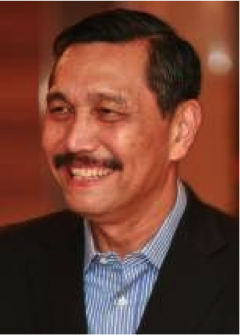
Since its formation in 2014, the administration of Indonesian President Joko Widodo (“Jokowi”) has faced opportunities and challenges in many sectors and on many issues: security and economy, terrorism and radicalism, maritime resources and incursions, not to mention foreign-policy dynamics with the US, China, and the rest of Southeast Asia. How has Indonesia responded to these chances and concerns? How will it manage them going forward? Few Indonesians are better equipped to address these questions than retired Brig. Gen. Pandjaitan, who has dealt with them daily since joining Jokowi’s administration in 2014 as the president’s chief of staff and in subsequent cabinet positions.

Image
luhut panjaitan
Luhut Binsar Pandjaitan began his current ministership in July 2016 after serving as Coordinating Minister for Political, Legal, and Security Affairs in 2015-16. Earlier civilian positions include vice-chair of the Golkar Party’s advisory council (2008-2014); founding president of a resources company (2004-2014); trade and industry minister (2000-01); and ambassador to Singapore (1999-2000). His Indonesian army service dates back in time from an assignment as training and education commander (1997-99) through a series of leadership positions to his award as the best graduate of the army academy (1970). Other honors include Ernst & Young Entrepreneur of the Year (2011) and a national best coaching award related to his work on behalf of karate in Indonesia (2001-2010). In 1990-91 he studied in Washington DC at the National Defense University and George Washington University, earning an MPA from GWU (1991), and he is an alumnus of the Indonesia Army Staff College (1983).


Presentation slides
Luhut B. Pandjaitan Coordinating Minister for Maritime Affairs, Republic of Indonesia
Seminars
-

Korea Society president Thomas Byrne, retired General Walter "Skip" Sharp, former U.S. commander in Korea, and Kathleen Stephens, former U.S. ambassador to Korea and William J. Perry Distinguished Fellow in the Korea Program at Stanford's Shorenstein APARCengage in discussion about the new U.S. president and political, economic and security options on Korea and East Asia.

Panelists:

Thomas J. Byrne joined The Korea Society as its president in 2015. He came to the Society from Moody's Investor Services, where he was Senior Vice President, Regional Manager, Spokesperson, and Director of Analysis for the Sovereign Risk Group in the Asia-Pacific and Middle East regions. Before moving to Moody's in 1996, he was the Senior Economist of the Asia Department at the Institute of International Finance in Washington, D.C. Byrne holds a master’s degree in international relations with an emphasis on economics from the Johns Hopkins’ School of Advanced International Studies. Before his graduate work, he served in South Korea for three years as a U.S. Peace Corps volunteer. He teaches a graduate-level course, Sovereign Risk, at Columbia University’s School of International and Public Affairs in Fall 2016.

General Walter “Skip” Sharp was commander of the United Nations Command, ROK-U.S. Combined Forces Command and U.S. Forces in Korea from 2008 to 2011. He also commanded troops in Operations Desert Shield and Desert Storm, Operation Uphold Democracy in Haiti and the Multinational Division (North) of the NATO-led Stabilization Force in Bosnia. He previously had four assignments at the Pentagon on the Joint Staff. He was the deputy director, J5 for Western Hemisphere/Global Transnational Issues; vice director, J8 for Force Structure, Resources, and Assessment; director for Strategic Plans and Policy, J5; and the director of the Joint Staff.

Born in Morgantown, West Virginia, while his father was fighting in the Korean War, General Sharp graduated from West Point in 1974 and was commissioned as an armor officer.  He earned a master’s degree in operations research and system analysis from Rensselaer Polytechnic Institute and is a graduate of the Army War College. He is consulting for and on the board of directors of several U.S. and Korean companies and The Korea Society. He is involved in Northeast Asia and especially Korea strategy and policy discussions at several think tanks in the Washington, D.C. area.

Kathleen Stephens, a former U.S. ambassador to the Republic of Korea, is the William J. Perry Distinguished Fellow in the Korea Program at Stanford’s Shorenstein Asia-Pacific Research Center. She has four decades of experience in Korean affairs, first as a Peace Corps volunteer in rural Korea in the 1970s, and in ensuing decades as a diplomat and as U.S. ambassador in Seoul. She came to Stanford previously as the 2013-14 Koret Fellow after 35 years as a foreign service officer in the U.S. Department of State.

Stephens' diplomatic career includes chargé d’affaires to India in 2014; acting under secretary of state for public diplomacy and public affairs in 2012; U.S. ambassador to the Republic of Korea from 2008 to 2011; principal deputy assistant secretary of state for East Asian and Pacific affairs from 2005 to 2007; and deputy assistant secretary of state for European and Eurasian affairs from 2003 to 2005.

Philippines Conference Room
Encina Hall, 3rd Floor
616 Serra St.
Stanford, CA 94305

Authors
Gi-Wook Shin
News Type
Commentary
Date
Paragraphs

Seventy-one years ago today, Japan formally surrendered in World War II. Though the end of war may seem part of the distant past, the cultural and political legacy of that conflict still looms large over the international stage, particularly in Asia. U.S. President Barack Obama’s visit this past May to Hiroshima did more than pay homage to the victims of the atomic bombing carried out by the United States more than seven decades ago. The President also stepped into the complex and often treacherous realm of wartime historical memory, Daniel Sneider and Stanford professor Gi-Wook Shin write in a piece for the Stanford University Press blog.

Shin and Sneider, director and associate director for research of the Shorenstein Asia-Pacific Research Center, respectively, are co-authors of the book Divergent Memories and lead a multiyear research project that examines historical reconciliation in Asia.

Hero Image
abe obama hiroshima
U.S. President Barack Obama and Japanese Prime Minister Shinzo Abe shake hands at Hiroshima Peace Memorial Park, Japan, May 27, 2016.
Wikimedia Commons (crop applied)
All News button
1
Paragraphs

The sixteenth session of the Korea-U.S. West Coast Strategic Forum, held at Stanford University on June 28, 2016, convened senior South Korean and American policymakers, scholars and regional experts to discuss North Korea policy and recent developments on the Korean Peninsula. Hosted by the Korea Program at the Walter H. Shorenstein Asia-Pacific Research Center at Stanford University, the Forum is also supported by the Sejong Institute.

All Publications button
1
Publication Type
Policy Briefs
Publication Date
Journal Publisher
Shorenstein APARC
-

In this sixteenth session of the Strategic Forum, former senior American and South Korean government officials and other leading experts will discuss current developments in the Korean Peninsula and North Korea policy, the future of the U.S.-South Korean alliance, and a strategic vision for Northeast Asia. The session is hosted by the Korea Program in association with The Sejong Institute, a top South Korean think tank.

Workshops

The already serious situation on the Korean Peninsula is worsening. North Korea is on a path to credibly threaten South Korea, Japan, U.S. forces in Northeast Asia, and eventually the United States with nuclear attack. Inter-Korean relations have become dangerously unstable, with the risk of renewed military conflict. U.S. relations with China and Russia are deteriorating and China is gradually incorporating North Korea’s economy, deepening the geopolitical divide between North and South Korea.

0
Corporate Affiliate Visiting Fellow, 2016-17
daisuke_nakaya.jpg

Colonel Daisuke Nakaya is a corporate affiliate visiting fellow at the Walter H. Shorenstein Asia-Pacific Research Center (Shorenstein APARC) for 2016-17.  He is a member of the Japan Air Self Defense Force (JASDF), Ministry of Defense (MOD).  Prior to joining Shorenstein APARC, he worked in the Japan-U.S. Defense Cooperation Division, Bureau of Defense Policy (Internal Bureau).  His career includes varioius assignments in the Air Defense Command (e.g. Commander of PATRIOT Missile Squadron) and the Air Staff Office in addition to the Internal Bureau (e.g. the Aide-de-Camp to the Defense Minister, Minister's Secretariat).  Nakaya received his bachelor's degree of social science from the National Defense Academy in 1997. 

Date Label
Subscribe to Security