International Relations

FSI researchers strive to understand how countries relate to one another, and what policies are needed to achieve global stability and prosperity. International relations experts focus on the challenging U.S.-Russian relationship, the alliance between the U.S. and Japan and the limitations of America’s counterinsurgency strategy in Afghanistan.

Foreign aid is also examined by scholars trying to understand whether money earmarked for health improvements reaches those who need it most. And FSI’s Walter H. Shorenstein Asia-Pacific Research Center has published on the need for strong South Korean leadership in dealing with its northern neighbor.

FSI researchers also look at the citizens who drive international relations, studying the effects of migration and how borders shape people’s lives. Meanwhile FSI students are very much involved in this area, working with the United Nations in Ethiopia to rethink refugee communities.

Trade is also a key component of international relations, with FSI approaching the topic from a slew of angles and states. The economy of trade is rife for study, with an APARC event on the implications of more open trade policies in Japan, and FSI researchers making sense of who would benefit from a free trade zone between the European Union and the United States.

-

- This event is jointly sponsored by the China Program and the Japan Program at the Walter H. Shorenstein Asia-Pacific Research Center (APARC) -


Since September 2012, frictions between Beijing and Tokyo over uninhabited islands in the East China Sea have become unprecedentedly unstable. Both China's military and paramilitary activity in the surrounding waters and airspace and Japan's fighter jet scrambles have reached all­-time highs. Recent public opinion polls in both countries record mutual antipathy at the highest level since leaders normalized bilateral diplomatic ties in the 1970s.

Especially under these volatile conditions, risk has surged. Even an accident stemming from a low­-level encounter could quickly escalate into a major crisis between the world's second­- and third­-largest economies (and would entrap the first-largest: the United States). This seminar examines the strengths and weaknesses of China's and Japan's crisis management mechanisms and the implications of nascent national security councils (established in late 2013) in both countries for crisis (in)stability in the East China Sea. It will also examine the prospects for, and obstacles to, more effective crisis management.

Beyond its contemporary policy relevance, the discussion will also engage issues with important implications for Chinese and Japanese foreign policy decision­making, political reforms, civil­ military relations, and U.S. relations with both countries.


Image
liff headshot uva 2013
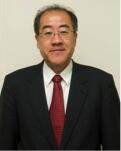
Adam P. LIFF is Assistant Professor of East Asian International Relations in Indiana University’s new School of Global and International Studies (SGIS/EALC Dept). At SGIS, Adam is also the founding director of the “East Asia and the World” speaker series, faculty affiliate at the Center on American and Global Security, and senior associate at the China Policy Research Institute. He holds a Ph.D. and M.A. in Politics from Princeton University, and a B.A. from Stanford University. Since 2014, Adam has been an associate-in-research at Harvard University’s Reischauer Institute of Japanese Studies and Fairbank Center for Chinese Studies. His research website is www.adampliff.com.

Professor Liff’s research and teaching focus on international relations and security studies—with a particular emphasis on contemporary security affairs in the Asia-Pacific region; the foreign relations of Japan and China; U.S. policy toward the Asia-Pacific (esp. U.S. security alliances); the continuing evolution of Japan’s postwar security policy profile; and the rise of China and its impact on its region and the world. His scholarship has been published or is forthcoming in The China Quarterly, International Security, Journal of Contemporary China, Journal of Strategic Studies, Security Studies, and The Washington Quarterly, and has been cited widely in global media, including in The Wall Street Journal, New York Times, Financial Times, and The Economist. Other recent publications include several book chapters in edited volumes and articles in policy journals and online, including in Foreign Affairs, Foreign Policy, and The National Interest.

Professor Liff’s past academic research affiliations include the Princeton-Harvard China and the World Program, the Harvard Kennedy School of Government's Belfer Center for Science and International Affairs, the University of Virginia's Miller Center, the University of Tokyo's Institute of Social Science, Peking University's School of International Studies, the Stanford Center at PKU, and the University of Tokyo's Graduate School of Law and Politics.

Adam P. Liff Assistant Professor of East Asian International Relations, Indiana University's new School of Global and International Studies
Seminars
Paragraphs
China's rise has elicited envy, admiration, and fear among its neighbors. Although much has been written about this, previous coverage portrays events as determined almost entirely by Beijing. Such accounts minimize or ignore the other side of the equation: namely, what individuals, corporate actors, and governments in other countries do to attract, shape, exploit, or deflect Chinese involvement. The New Great Game analyzes and explains how Chinese policies and priorities interact with the goals and actions of other countries in the region.
 
To explore the reciprocal nature of relations between China and countries in South and Central Asia, The New Great Game employs numerous policy-relevant lenses: geography, culture, history, resource endowments, and levels of development. This volume seeks to discover what has happened during the three decades of China's rise and why it happened as it did, with the goal of deeper understanding of Chinese and other national priorities and policies and of discerning patterns among countries and issues.
All Publications button
1
Publication Type
Books
Publication Date
Journal Publisher
Stanford University Press
Authors
Thomas Fingar
-

American innovation has helped power economic growth and rising living standards at home and abroad for nearly two centuries.  Today, many government officials, corporate executives, and researchers worry that the American innovation machine is losing its dynamism.  Others worry that the United States is about to be overtaken by rising Asian technological superpowers, like China, and that this will constrain the living standards of future generations of Americans.  Lee Branstetter draws upon the most recent data and economic scholarship to argue that neither fear is consistent with the evidence.  Instead, the evidence points to the emergence of an increasingly integrated global R&D system in which the emerging innovative strengths of nations like China reinforce American technological progress and productivity growth far more than they threaten it.  Branstetter concludes with a set of policy recommendations that can help ensure robust technological progress and economic growth in the 21st century.       
 

Image
branstetter lee
Lee Branstetter is Professor of Economics and Public Policy at Carnegie Mellon University, and he is a Nonresident Senior Fellow at the Peterson Institute for International Economics in Washington, DC.  From 2011-2012, he served as the senior economist for international trade and investment on the staff of President Obama’s Council of Economic Advisers.

Lee Branstetter Professor, Economics and Public Policy, Carnegie Mellon University
Seminars
-

Although Japan had largely resolved the problem of banks’ non-performing loans and firms’ damaged balance sheets by the early 2000s, productivity growth hardly accelerated, resulting in what now are “two lost decades.” This presentation examines the underlying reasons of Japan’s low TFP growth from a long-term and structural perspective using an industry-level database and micro-level data. The data seem to show that, since the 1990s, some core characteristics of Japanese firms, such as tight customer-supplier relationships and the life-time employment system, have become obstacles to their TFP growth in an environment shaped by globalization and slow/negative growth in the working age population.


Image
untitled
Kyoji Fukao is Professor at the Institute of Economic Research, Hitotsubashi University, as well as a Program Director and Faculty Fellow at the Research Institute of Economy, Trade and Industry (RIETI). Other positions include: Vice-Chairperson of the Working Party on Industry Analysis (WPIA), OECD; Member of the Executive Committee of the Asian Historical Economics Society (AHES); External Research Associate at the Centre on Competitive Advantage in the Global Economy (CAGE), Warwick University. He has published widely on productivity, international economics, economic history, and related topics in journals such as the Journal of Political Economy, Quarterly Journal of Economics, Review of Income and Wealth, Explorations in Economic History, and Economica. In addition, he is the author of Japan’s Economy and the Two Lost Decades (Nikkei Publishing Inc., in Japanese) and, with Tsutomu Miyagawa, the editor of Productivity and Japan’s Economic Growth: Industry-Level and Firm-Level Studies Based on the JIP Database (University of Tokyo Press, in Japanese).


Kyoji Fukao Professor, Institute of Economic Research, Hitotsubashi University
Seminars
-

In this presentation Professor Takenaka will demonstrate how the House of Councillors has restrained Japanese prime ministers in formulating the Japanese security policy since the 1990s.

Japan has drastically changed its security policy since the 1990s. This is symbolized by the dispatch of the SDF to PKO in Cambodia in 1992 as well as deployment of the SDF in Iraq after the Iraq War in 2004. There have been three fundamental changes. First, Japan has become more positive in making use of SDF in UN peace keeping operations. Second, it has allowed the SDF to play more active roles in supporting US military operations worldwide. Third, it has decided to permit the exercise of the rights of collective defense, which had been completely restricted, under some conditions.

Such changes have gathered much academic attention. Many have pointed to reforms of political institutions from the 1990s as important factors in bringing shifts in security policy. They argue that reforms have provided Japanese prime ministers with enough political clout to make more profound changes in security policy.

Such arguments contribute greatly to enhancing understanding of the process in which the Japanese security policy is formulated. Yet, it is necessary to take into account the role of the House of Councillors to obtain a full picture of security policy formulation process. This is because the House of Councillors has imposed constraints over prime ministers in designing security policy. By examining security policy formulation process since the 1990s until now from the legislation of PKO bill in 1992 to the most recent legislation of security related bills in 2015, I show how prime ministers often had to compromise the substance of several policies, giving up some of his original ideas. Further, prime ministers often had to become delayed in implementing various policies because of the second chamber.


Image
speaker harukata takenaka
Harukata Takenaka is a professor of political science at the National Graduate Institute for Policy Studies in Tokyo.  He specializes in comparative politics and international political economy, with a particular focus on Japanese political economy. His research interests include democracy in Japan, and Japan's political and economic stagnation since the 1990s. 

He received a B.A. from the Faculty of Law of the University of Tokyo and an M.A. and Ph.D. in political science from Stanford University.  He is the author of Failed Democratization in Prewar Japan: Breakdown of a Hybrid Regime, (Stanford University Press, 2014), and Sangiin to ha [What is House of Councillors], (Chuokoron Shinsha, 2010).

Harukata Takenaka Professor, the National Graduate Institute for Policy Studies
Seminars
-

Image
thedivinegod

The New York Times has described The Divine Grace of Islam Nusantara as “a 90-minute film that amounts to a relentless, religious repudiation of the [self-styled] Islamic State and the opening salvo in a global campaign by the world’s largest Muslim group [Nahdlatul Ulama] to challenge [IS’s] ideology head-on.” The film documents the enthusiasm with which Indonesian Muslims have commemorated the historic role of the 15th-16th century Walisongo (“Nine Saints”) movement—a movement that precipitated the development in the East Indies (now Indonesia) of a great Islamic civilization rooted in the principle of universal love and compassion (rahmah).

The film and a panel discussion the following day will unpack a perspective that has been historically central to Muslim cultures stretching from North Africa to Southeast Asia. The essence and mission of Islam Nusantara is to build civilization, not to destroy it. Yahya Staquf has described the film as an invitation to Muslims everywhere to reject radicalism and theological straight-jackets and stand up for their own cultural adaptation of Islam.

Kyai Haji Yahya Cholil Staquf is a leader of what is widely regarded as the largest Muslim organization in the world. Located in Indonesia, Nahdlatul Ulama adheres to the traditions of Sunni Islam. Yahya has primary responsibility for the expansion of NU’s activities to include North America, Europe, and the Middle East. Earlier positions included service as spokesperson for Indonesia’s 1999-2001 president Abdurrahman Wahid, the country’s first democratically elected head of state.

C. Holland Taylor’s leadership of the LibForAll Foundation dates from its co-founding in 2003 by Taylor and former Indonesian president Wahid. The Wall Street Journal has called LibForAll “a model of what a competent public diplomacy effort in the Muslim world should look like.” An expert on Islam and Islamization in Southeast Asia, Taylor has lived, studied, and worked in Muslim societies from Iran to Indonesia. He was educated at the University of North Carolina at Chapel Hill and Princeton University.

Note:  Although the panel will reference the film, the panelists will range beyond the film to present and discuss the role and relevance of the concept of Islam Nusantara in Indonesia and the larger Muslim world. Viewing the film is thus not a prerequisite to understanding the panel.

Film screening and brief discussion:  Wednesday, April 6, 2016 (screening: 4:00 – 5:30 pm; discussion: 5:30 – 6:00 pm)

RSVP: http://aparc.fsi.stanford.edu/southeastasia/events/registration/220800

Philippines Conference Room

Encina Hall, Third Floor, Central

616 Serra Street, Stanford University


Panel:  Thursday, April 7, 2016, noon – 1:30 pm

RSVP:  http://aparc.fsi.stanford.edu/southeastasia/events/registration/220799

Philippines Conference Room

Encina Hall, Third Floor, Central

616 Serra Street, Stanford University

Free and open to the public

Lunch will be served.

This event is co-sponsored by the Southeast Asia Program, the Abbasi Program in Islamic Studies and the Department of Religious Studies.

Yahya Cholil Staquf Secretary General, Supreme Council, Nahdlatul Ulama, Indonesia
C. Holland Taylor Chairman and CEO, LibForAll Foundation
Moderated by Donald K. Emmerson Southeast Asia Program, Shorenstein APARC Stanford University
Film Screenings
-

Image
thedivinegod

The New York Times has described The Divine Grace of Islam Nusantara as “a 90-minute film that amounts to a relentless, religious repudiation of the [self-styled] Islamic State and the opening salvo in a global campaign by the world’s largest Muslim group [Nahdlatul Ulama] to challenge [IS’s] ideology head-on.” The film documents the enthusiasm with which Indonesian Muslims have commemorated the historic role of the 15th-16th century Walisongo (“Nine Saints”) movement—a movement that precipitated the development in the East Indies (now Indonesia) of a great Islamic civilization rooted in the principle of universal love and compassion (rahmah).

The film and a panel discussion the following day will unpack a perspective that has been historically central to Muslim cultures stretching from North Africa to Southeast Asia. The essence and mission of Islam Nusantara is to build civilization, not to destroy it. Yahya Staquf has described the film as an invitation to Muslims everywhere to reject radicalism and theological straight-jackets and stand up for their own cultural adaptation of Islam.

Kyai Haji Yahya Cholil Staquf is a leader of what is widely regarded as the largest Muslim organization in the world. Located in Indonesia, Nahdlatul Ulama adheres to the traditions of Sunni Islam. Yahya has primary responsibility for the expansion of NU’s activities to include North America, Europe, and the Middle East. Earlier positions included service as spokesperson for Indonesia’s 1999-2001 president Abdurrahman Wahid, the country’s first democratically elected head of state.

C. Holland Taylor’s leadership of the LibForAll Foundation dates from its co-founding in 2003 by Taylor and former Indonesian president Wahid. The Wall Street Journal has called LibForAll “a model of what a competent public diplomacy effort in the Muslim world should look like.” An expert on Islam and Islamization in Southeast Asia, Taylor has lived, studied, and worked in Muslim societies from Iran to Indonesia. He was educated at the University of North Carolina at Chapel Hill and Princeton University.

Note:  Although the panel will reference the film, the panelists will range beyond the film to present and discuss the role and relevance of the concept of Islam Nusantara in Indonesia and the larger Muslim world. Viewing the film is thus not a prerequisite to understanding the panel.

Film screening and brief discussion:  Wednesday, April 6, 2016 (screening: 4:00 – 5:30 pm; discussion: 5:30 – 6:00 pm)

RSVP: http://aparc.fsi.stanford.edu/southeastasia/events/registration/220800

Philippines Conference Room

Encina Hall, Third Floor, Central

616 Serra Street, Stanford University


Panel:  Thursday, April 7, 2016, noon – 1:30 pm

RSVP: http://aparc.fsi.stanford.edu/southeastasia/events/registration/220799

Philippines Conference Room

Encina Hall, Third Floor, Central

616 Serra Street, Stanford University

Free and open to the public

This event is co-sponsored by the Southeast Asia Program, the Abbasi Program in Islamic Studies and the Department of Religious Studies.

Yahya Cholil Staquf Secretary General, Supreme Council, Nahdlatul Ulama, Indonesia
C. Holland Taylor Chairman and CEO, LibForAll Foundation
Moderated by Donald K. Emmerson Southeast Asia Program, Shorenstein APARC Stanford University
Panel Discussions
News Type
News
Date
Paragraphs

The Walter H. Shorenstein Asia-Pacific Research Center (APARC), in pursuit of training the next generation of scholars on contemporary Asia, has selected three postdoctoral fellows for the 2016-17 academic year. The cohort includes two Shorenstein Postdoctoral Fellows and one Developing Asia Health Policy Fellow; they carry a broad range of interests from hospital reform to the economic consequences of elite politics in Asia.

The fellows will begin their year of academic study and research at Stanford this fall.

Shorenstein APARC has for more than a decade sponsored numerous junior scholars who come to the university to work closely with Stanford faculty, develop their dissertations for publication, participate in workshops and seminars, and present their research to the broader community. In 2007, the Asia Health Policy Program began its fellowship program to specifically support scholars undertaking comparative research on Asia health and healthcare policy.

The 2016-17 fellows’ bios and their research plans are listed below:


Shorenstein Postdoctoral Fellows


Image
aditya dasgupta   photo
Aditya "Adi" Dasgupta is completing his doctorate in the Department of Government at Harvard University. At Stanford, he will work on converting his dissertation on the historical decline of single-party dominance and transformation of distributive politics in India into a book manuscript. More broadly, his research interests include the comparative economic history of democratization and distributive politics in emerging welfare states, which he studies utilizing formal models and natural experiments. He received a Bachelor of Arts from Cambridge University and a Master of Science from Oxford University and has worked at the Public Defender Service in Washington D.C., his hometown.


Image
dong zhang photo2
Dong Zhang is a political scientist whose research interests include political economy of development, with focus on the economic consequences of elite politics, and on the historical origins of long-run economic development. His dissertation examines the political logic of sustaining state capitalism model in weakly institutionalized countries with a primary focus on China. At Stanford, Zhang will develop his dissertation into a book manuscript and pursue other research projects on comparative political economy and authoritarian politics. He will receive his doctorate in political science from Northwestern University in 2016. Zhang holds bachelor’s degrees in public policy and economics, and a master’s degree in public policy from Peking University, Beijing.


Developing Asia Health Policy Postdoctoral Fellow


Image
ngando pic
Ngan Do is strongly interested in health system related issues, especially health financing, human resources for health, and health care service delivery. Do implemented comparison studies at regional level as well as participated in fieldwork in Cambodia, Lao, the Philippines, Korea and Vietnam. At Stanford, she will work on the public hospital reforms in Asia, focusing on dual practice of public hospital physicians and provider payment reforms. Do achieved her doctorate in health policy and management at the College of Medicine, Seoul National University. She earned her master’s degree in public policy at the KDI School of Public Policy and Management in Seoul, and her bachelor’s degree in international relations at the Diplomacy Academy of Vietnam (previously the Institute for International Relations).


Hero Image
160105 3244
All News button
1
Subscribe to International Relations