
 FSI researchers strive to understand how countries relate to one another, and what policies are needed to achieve global stability and prosperity. International relations experts focus on the challenging U.S.-Russian relationship, the alliance between the U.S. and Japan and the limitations of America’s counterinsurgency strategy in Afghanistan.
Foreign aid is also examined by scholars trying to understand whether money earmarked for health improvements reaches those who need it most. And FSI’s Walter H. Shorenstein Asia-Pacific Research Center has published on the need for strong South Korean leadership in dealing with its northern neighbor.
FSI researchers also look at the citizens who drive international relations, studying the effects of migration and how borders shape people’s lives. Meanwhile FSI students are very much involved in this area, working with the United Nations in Ethiopia to rethink refugee communities.
Trade is also a key component of international relations, with FSI approaching the topic from a slew of angles and states. The economy of trade is rife for study, with an APARC event on the implications of more open trade policies in Japan, and FSI researchers making sense of who would benefit from a free trade zone between the European Union and the United States.


Ideas for ASEAN going forward
News Type
News
Date
Paragraphs
The Association for Southeast Asian Nations (ASEAN), a coalition of 10 Southeast Asian countries formed to promote regional development and security, will mark its 50th anniversary this year. While ASEAN’s longevity is a cause for celebration, it also calls for creative introspection regarding what it can and should do, according to Southeast Asia Program Director Donald K. Emmerson.
“There is a lot that ASEAN cannot do in its present form, under its present leaders, and in presently China-challenged conditions. Yet no one could objectively scan ASEAN’s first fifty years and conclude that the organization has remained the same – once a cow, always a cow.
“Whatever ASEAN does become, its alternative futures should be considered now, carefully and creatively, while there is still time to prefer one scenario over the others and to follow up with steps that make it more likely,” he writes in a paper featured in the February edition of TRaNS: Trans-Regional and -National Studies of Southeast Asia.
ASEAN, he says, needs to reexamine its goals and consider new means to achieve them, to brainstorm better ways of protecting its region from external control, and to reevaluate the nature and efficacy of the “ASEAN Way,” including its self-paralyzing commitment to unanimity as a precondition for collective action.
That commitment has already been breached for economic policy arrangements that allow a “two-speed ASEAN” to exist, where for less developed members, deadlines for economic reform are postponed, while for all other members, the deadlines remain unchanged. So, why not adapt that idea to regional security initiatives as well?
According to Emmerson, the Southeast Asia region is being threatened by China’s efforts to control land features in the South China Sea for the purposes of projecting coercive power. China uses the ASEAN Way’s requirement of consensus by promising economic support to specific ASEAN members in hopes of coopting them into vetoing any move by ASEAN to counter China’s campaign in the South China Sea.
Abetting China’s expansion, he says, are the rival claims to maritime sovereignty by some of ASEAN’s own members. Their failure to settle their own disagreements precludes the bargaining power that a unified ASEAN might bring to the table in talks with China.
Emmerson, who addressed these matters at Stanford in March, argues that a more innovative ASEAN will lead to a more secure region.
Regarding the South China Sea, for example, ASEAN could encourage an effort by its four claimant members to settle their own differences first by drafting an ASEAN agreement, signing it and presenting it to China to sign as well. Even if China refuses, at least ASEAN would have established a common position among the ASEAN countries most directly concerned.
In the paper, he discusses several ways of restructuring ASEAN. They include:
- ASEAN minus X: A subset of ASEAN members would move ahead on economic or security arrangements with the understanding that the remaining subset would join later.
- ASEAN Pacific Alliance: ASEAN would work with Chile, Colombia, Mexico and Peru to create a coalition that would strengthen ASEAN’s trans-Pacific ties.
- East Asia Summit (EAS): ASEAN would try to elevate this annual gathering of leaders, including China and the United States, into a capstone venue for cooperation on regional security.
Emmerson also urges outside observers to generate innovative policy proposals related to ASEAN and present them for discussion informally or in Track II dialogue formats.
“It’s time for ASEAN watchers to generate ideas for the grouping to consider, including initiatives that could be pursued by one, two or more member countries,” he said in a later interview. “The creative involvement of scholars, journalists, businesspeople and other analysts inside member states could socialize such proposals in local policy circles to make them better known and more feasible.”
In line with this vision, Emmerson is co-organizing a trilateral workshop on ASEAN reform, regional security, infrastructure building and economic regionalism. Hosted by the Shorenstein Asia-Pacific Research Center (APARC) and planned for this fall, it will evaluate proposals on these topics generated or compiled by Shorenstein APARC’s Southeast Asia Program and U.S.-Asia Security Initiative; the S. Rajaratnam School of International Studies in Singapore; and the Strategic and Defense Studies Centre in Canberra. Details about the conference will be posted in the coming months.
Hero Image

All News button
1
PBS NewsHour interviews Kathleen Stephens about North Korea
News Type
Commentary
Date
Paragraphs
U.S. Secretary of State Rex Tillerson announced in Seoul “the policy of strategic patience has ended” and “all options were on the table” regarding the United States’ efforts to address the North Korean nuclear threat. Kathleen Stephens, the William J. Perry Fellow in Shorenstein APARC’s Korea Program, spoke on PBS NewsHour about Tillerson’s remarks, the viability of tougher sanctions against North Korea, and deployment of the U.S. ballistic missile defense system (THAAD) to South Korea.
Watch and read about the interview here.
Hero Image

All News button
1
End of the U.S.-led Postwar Order? Allies' Reactions to Trump Diplomacy
-
Expected dramatic shifts of foreign policy by leading democracies, including the U.S. and U.K., would shake a future of liberal international order, which has underpinned the stability even after the end of the Cold War. Since Mr. Donald Trump was elected as the 45th President of the U.S., abovementioned discourse is heard everywhere in Europe and Asia today.
It is not clear, if American leadership and military presence would in fact retreat, how American allies behave and whether they can work together to sustain the order. Among others, Japan has been the exceptionally strong believer of such postwar American leadership. It is doubtful that all American allies and friends share same views, having their own historical context with the U.S. and own ideas on order and principles. Hence, naturally they shall differ in losing the confidence on the durability of American leadership.
A new order will be shaped by many factors, but American allies’ perspectives should not be overlooked. Hegemon’s own reluctance for ruling is surely significant. So is other great power’s revisionism, making use of such strategic opportunities. However, American allies has the potential to shape the fate of the order: if they succeed in acting collectively, it shall underpin the global governance for a while, and ensue the order transformation process in rather slow and peaceful pace.
Image

If they fail, it shall not only accelerate the U.S. retrenchment, but invite an emergence of divisive and competitive order. Sahashi shares the findings from the international study project which he leads, and argues the difficulty for US allies to unite themselves and the potential order transformation in the long term.
Ryo Sahashi is Associate Professor of International Politics and Director, Faculty of Law, Kanagawa University, Yokohama, and is leading the newly-launched international joint study “Worldviews on the United States.” From 2014-2015, he served as Visiting Associate Professor, Shorenstein APARC, Stanford University.
Ryo Sahashi
Associate Professor, Kanagawa University
Seminars
Empowering progress: Reformism and State-Building in the Philippines
-
Co-sponsored by the Center on Democracy, Development, and the Rule of Law and the Southeast Asia Program
The Philippines is typically characterized as a weak, even patrimonial, state in which powerful oligarchs and political families dominate politics and policymaking. By implication, the elite should be able to easily suppress reform and the state should be unwilling or incapable of carrying out reforms. Yet some efforts to achieve socioeconomic and governance reform have succeeded. How and why is this the case? And what does this suggest about the changing nature of the Philippine state?
This presentation will examine the dynamics and outcomes of three extended efforts at social, economic and governance reform in the Philippines: 1) agrarian reform; 2) liberalization of the telecommunications sector and 3) fiscal and budget reforms.
Theory and practice will be bridged in an examination of interlinked factors including the autonomy and capacity of the state, the limits on reform imposed by elite-dominated democracy, and the conditions and strategies that have enabled some reforms to succeed.
Particular questions to be addressed will include:
· What are the political and institutional barriers to reform in the Philippines? How have these changed over time?
· How have these barriers been overcome in the cases of “successful” reform? What does “successful” mean?
· How have attempts at reform strengthened or weakened the state?
· Looking forward, will the typically partial or incremental character of reform result in transformational change, or deflect it?
 David Timberman is a political analyst and development practitioner with 30 years of experience analyzing and addressing political, governance and conflict-related challenges, principally in Southeast and South Asia. As a Visiting Scholar at Stanford/APARC he is working on a book on the contemporary Philippine political economy. During 2015-2016 he was a Visiting Professor of Political Science at De La Salle University in Manila. He has lived and worked in the Philippines, Indonesia and Singapore, including experiencing first-hand the democratic transitions in the Philippines (1986-1988) and Indonesia (1998-2001). He has written extensively on political and governance issues in the Philippines and has edited or co-edited multi-author volumes on the Philippines, Cambodia, and economic policy reform in Southeast Asia.
David G. Timberman
2016-2017 Lee Kong Chian NUS-Stanford Fellow on Contemporary Southeast Asia
Seminars
Unconventional Monetary Policy in Japan: Comparison with Europe and Implications on Asia
-
Image

She is the author of numerous books on a variety of subjects including the People’s Republic of China’s exchange rate system, Japan’s macroeconomic policy, IMF policy, and the European debt crisis. Her most recent book (translated title: Unwinding Super-Easy Monetary Policy), published in August 2016, is about the monetary policies of the BOJ, the European Central Bank, and the Federal Reserve System. She regularly appears on CNBC, Bloomberg, Reuters, BBC, and features in many Japanese TV programs and newspapers, commenting on the Japanese economy and monetary policy. URL: http://www.sayurishirai.jp
Her most recent book in English is Mission Incomplete: Reflating Japan’s Economy published by the Asian Development Bank Institute in February 2017. It is a complete analysis of BOJ’s unconventional monetary easing from the late 1990s to the present. Free Download is available at https://www.adb.org/publications/mission-incomplete-reflating-japan-economy.
Sayuri Shirai
Professor at Keio University and Visiting Scholar at Asian Development Bank Institute
Seminars
Reflections on Journalism Across Asia
News Type
News
Date
Paragraphs
Emerging technologies, stemming from the heart of Silicon Valley and extending to Asia and beyond, have pushed the bounds of how stories are told by journalists and the way in which readers interact with them. The Shorenstein Journalism Award, an annual prize given by the Shorenstein Asia-Pacific Research Center (APARC), celebrates 15 years of recognizing distinguished journalists for their innovative and responsible journalism amid social and technological change.
The prize began with “the idea of a media award for a person who has the most significant impact on the relationship with Asia-Pacific nations in the United States,” according to Walter H. Shorenstein, who spoke about his twin interests of Asia and the press in a 2010 oral history project interview and was the benefactor after whom the center is named.
Shorenstein APARC and Harvard’s Shorenstein Center on Media, Politics and Public Policy jointly presented the award for six years. Shorenstein APARC has continued the initiative, and each year, brings the award winner to Stanford to talk with the broader campus community, and since 2011, has alternated between a recipient from the West, who has mainly addressed an American audience, and a recipient from Asia.
The prize seeks to inspire the next generation of U.S. journalists focused on Asia, as well as Asian journalists, who pave the way for press freedom in their countries.
Award winners have explored a multitude of topics over the years, from human rights in North Korea to the rise of democracy in Indonesia and from the U.S.-Japan alliance to gender equality in India. And this year adds an additional view on China; veteran journalist Ian Johnson will address religion and value systems in a panel discussion on May 1 with Xueguang Zhou, Stanford professor of sociology, and Orville Schell, director of the Asia Society's Center on U.S.-China Relations, moderated by Daniel C. Sneider, Shorenstein APARC associate director for research.
To mark the award’s tenure, Shorenstein APARC asked award alumni to answer the question, “What do you think the future holds for journalism in/about Asia?” Their responses are below.
Image

Barbara Crossette is the U.N. correspondent for The Nation and a columnist for India Abroad. She received the Shorenstein Journalism Award in 2010.
Image
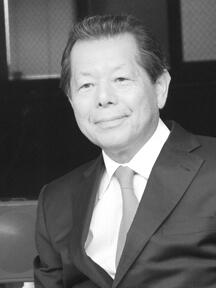
Journalism in Asia has had a long history of covering revolutions and wars. However, peace has reigned over Asia for near on 40 years. Yet, the peace and stability in Asia looks increasingly precarious. Asia too is not immune to populist nationalism. In this climate, Asia could yet again become the battleground for dislocation, revolution and war. Journalism, on top of reacting to potential crises, will be critical for proactively finding ways to prevent and defuse crises in the region.
Yoichi Funabashi is the chairman of the Rebuild Japan Initiative Foundation. He received the Shorenstein Journalism Award in 2015.
Image

Ian Buruma is a writer and the Paul W. Williams Professor of Democracy, Human Rights, and Journalism at Bard College. He received the Shorenstein Journalism Award in 2008.
Image
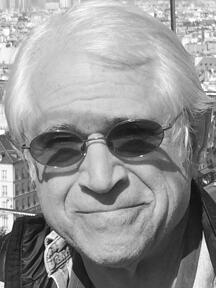
Seth Mydans is a contributing writer for the New York Times. He received the Shorenstein Journalism Award in 2009.
Image

Barbara Demick is the Los Angeles Times’ bureau chief in New York and was formerly bureau chief in Beijing and in Seoul. She is the author of Nothing to Envy: Ordinary Lives in North Korea and Logavina Street: Life and death in a Sarajevo Neighborhood. She received the Shorenstein Journalism Award in 2012.
Image

Aung Zaw is the founder and editor-in-chief of The Irrawaddy. He received the Shorenstein Journalism Award in 2013.
Image

Jacob Schlesinger is a senior Washington correspondent for the Wall Street Journal. He received the Shorenstein Journalism Award in 2014.
Image

Orville Schell is the Arthur Ross Director of the Center on U.S.-China Relations at the Asia Society in New York, and former dean of the School of Journalism at the University of California, Berkeley. He received the Shorenstein Journalism Award in 2003.
Image

John Pomfret was a foreign correspondent with the Washington Post for many years. He is the author of The Beautiful Country and the Middle Kingdom: America and China from 1776 to the Present. He received the Shorenstein Journalism Award in 2007.
Hero Image

All News button
1
15th Annual Shorenstein Journalism Award Panel Discussion: Religion After Mao
-
Following a century of violent anti-religious campaigns, China is now filled with new temples, churches and mosques--as well as cults, sects and politicians trying to harness religion for their own ends. Driving this explosion of faith is uncertainty--over what it means to be Chinese, and how to live an ethical life in a country that discarded traditional morality a century ago and is still searching for new guideposts. Ian Johnson lived for extended periods with underground church members, rural Daoists and Buddhist pilgrims. Throughout his career in journalism and in his new book Souls of China: The Return of Religion After Mao (Pantheon/Knopf in the United States and Penguin in the U.K., both April 2017), Johnson has distilled these experiences into a cycle of festivals, births, deaths, detentions and struggle—a great awakening of faith that is shaping the soul of the world’s newest superpower. This panel discussion, featuring a keynote speech delivered by Johnson, will explore the resurgence of religion and value systems in China.
Souls of China: The Return of Religion After Mao will be available for sale.
Panelists:
Image
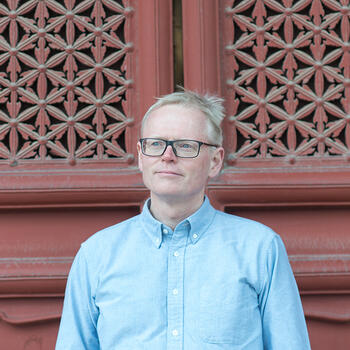
Johnson has spent over half of the past thirty years in the Greater China region, first as a student in Beijing from 1984 to 1985, and then in Taipei from 1986 to 1988. He later worked as a newspaper correspondent in China, from 1994 to 1996 with Baltimore's The Sun, and from 1997 to 2001 with The Wall Street Journal, where he covered macro-economics, China's WTO accession and social issues. In 2009, Johnson returned to China, where he writes features and essays for The New York Times, The New York Review of Books, The New Yorker, National Geographic, and other publications. He teaches undergraduates at The Beijing Center for Chinese Studies, and also runs a fellowship program there. In addition, he formally advises a variety of academic journals and think tanks on China, such as the Journal of Asian Studies, the Berlin-based think tank Merics, and New York University's Center for Religion and Media.
Image

Schell is the author of fifteen books, ten of them about China, and a contributor to numerous edited volumes. His most recent books are: Wealth and Power, China’s Long March to the 21st Century; Virtual Tibet; The China Reader: The Reform Years; and Mandate of Heaven: The Legacy of Tiananmen Square and the Next Generation of China’s Leaders. He has written widely for many magazine and newspapers, including The Atlantic Monthly, The New Yorker, Time, The New Republic, Harpers, The Nation, The New York Review of Books, Wired, Foreign Affairs, the China Quarterly, and The New York Times, the Washington Post, and the Los Angeles Times.
Image
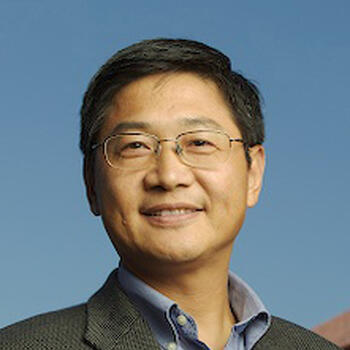
One of Zhou's current research projects is a study of the rise of the bureaucratic state in China. He works with students and colleagues to conduct participatory observations of government behaviors in the areas of environmental regulation enforcement, in policy implementation, in bureaucratic bargaining, and in incentive designs. He also studies patterns of career mobility and personnel flow among different government offices to understand intra-organizational relationships in the Chinese bureaucracy.
His recent publications examine the role of bureaucracy in public goods provision in rural China (Modern China, 2011); interactions among peasants, markets, and capital (China Quarterly, 2011); access to financial resources in Chinese enterprises (Chinese Sociological Review, 2011, with Lulu Li); multiple logics in village elections (Social Sciences in China, 2010, with Ai Yun); and collusion among local governments in policy implementation (Research in the Sociology of Organizations, 2011, with Ai Yun and Lian Hong; and Modern China, 2010).
About the Award:
The Shorenstein Journalism Award, which carries a cash prize of $10,000, honors a journalist not only for a distinguished body of work, but also for the particular way that work has helped American readers to understand the complexities of Asia. The award, established in 2002, was named after Walter H. Shorenstein, the philanthropist, activist, and businessman who endowed two institutions that are focused respectively on Asia and on the press: the Walter H. Shorenstein Asia-Pacific Research Center (Shorenstein APARC) in the Freeman Spogli Institute at Stanford University, and the Joan Shorenstein Center on the Press, Politics, and Public Policy in the Kennedy School of Government at Harvard University.
In 2011, Shorenstein APARC re-envisioned the award in recognition of the fact that Asia has served as a crucible for the role of the press in democratization in places such as South Korea, Taiwan, India, Pakistan, and Indonesia. It has also figured greatly in the emergence of social media and citizen journalism. New tests of the role of the media are emerging in China, Vietnam, and other authoritarian societies in Asia. Will the Internet be a catalyst for change, or can it also be a carrier of new forms of cyber nationalism and an instrument of authoritarian control? How are Asia’s journalists responding to that challenge?
Panel Discussions
Silicon Valley Does it Repeatedly: From Fairchild to Uber and Beyond
-
Image

Agenda
4:15pm: Doors open
4:30pm-5:30pm: Talk and Discussion
5:30pm-6:00pm: Networking
Martin Kenney, Professor of Community and Regional Development, University of California, Davis and Senior Project Director, Berkeley Roundtable on the International Economy
Seminars

