International Relations

FSI researchers strive to understand how countries relate to one another, and what policies are needed to achieve global stability and prosperity. International relations experts focus on the challenging U.S.-Russian relationship, the alliance between the U.S. and Japan and the limitations of America’s counterinsurgency strategy in Afghanistan.

Foreign aid is also examined by scholars trying to understand whether money earmarked for health improvements reaches those who need it most. And FSI’s Walter H. Shorenstein Asia-Pacific Research Center has published on the need for strong South Korean leadership in dealing with its northern neighbor.

FSI researchers also look at the citizens who drive international relations, studying the effects of migration and how borders shape people’s lives. Meanwhile FSI students are very much involved in this area, working with the United Nations in Ethiopia to rethink refugee communities.

Trade is also a key component of international relations, with FSI approaching the topic from a slew of angles and states. The economy of trade is rife for study, with an APARC event on the implications of more open trade policies in Japan, and FSI researchers making sense of who would benefit from a free trade zone between the European Union and the United States.

Paragraphs

The development community has increased its focus on higher education over the past two decades, recognizing that education can contribute to building up a country’s capacity for participation in an increasingly knowledge-based world economy and accelerate economic growth. The value added by higher education to economies—job creation, innovation, enhanced entrepreneurship, and research, a core higher education activity—has been highlighted by an important body of literature. 

Yet experts remain concerned that investing in higher education in less-developed countries may lead to a “brain drain”--highly educated students and professionals permanently leaving their home countries. In the 2016 Kauffman report on international science, technology, engineering, and math (STEM) students in the United States, for instance, 48 percent among a randomly sampled survey of 2,322 foreign doctoral students in the United States wished to stay there after graduation, with only 12 percent wanting to leave and 40.5 percent being undecided. In fact, high percentages of foreign students in the United States with doctorates in science and engineering continue to stay in the United States, creating a brain drain problem for the sending countries. 

Because students tend to move from developing to developed countries to study, brain drain is more problematic for developing countries. In addition, given accelerated talent flows around the world and the increasing integration of less-developed countries into global value chains, the negative impact of brain drain could be further amplified. As demonstrated by the studies reviewed in this paper, the migration of high-skilled professionals from developing countries may indeed create brain drain for them, but at the same time can significantly enhance the social and economic development of their home countries, regardless of whether or not they decide to return home, thus complicating what used to be seen as a straightforward case of brain drain. 

From Brain Drain to Brain Circulation and Linkage examines how brain drain can contribute to development for the sending countries through brain circulation and linkage. It provides an overview of the conceptual framework to map out high-skilled labor flows, identifies empirical cases and policies in Asia that demonstrate high-skilled migrant professionals actually make significant contributions to their home countries (beyond monetary remittances), summarizes key social and economic enabling factors that are important in attracting and motivating migrant high-skilled professionals to return or engage with their home countries, and concludes with policy implications and suggestions for further research based on these findings.

All Publications button
1
Publication Type
Working Papers
Publication Date
Authors
Gi-Wook Shin
Rennie Moon
Number
978-1-931368-49-0
-

Co-sponsored by the Southeast Asia Program and the Abbasi Program in Islamic Studies

Transnational Islam lacks the centralized leadership and institutions associated with Catholicism. Yet hierarchical and authoritative bodies do make decisions regarding Islam in various contemporary settings, including within the institutional frameworks of states. What happens when Muslim faith and practice are adapted to the terms and procedures of bureaucracy and the modern nation-state?

Dr. Müller will present an original conceptual framework for studying the bureaucratization of Islam. He will apply it to five Southeast Asian cases—Brunei, Indonesia, Malaysia, the Philippines, and Singapore. State bureaucracies in these countries vary widely,
but generally they aim to influence or control trends and meanings in local Islamic discourse. Drawing on current debates in the anthropology of the state, with particular reference to Brunei and Singapore, Müller will offer an original analytic framework to explain similarities and differences in bureaucratized Islam in Southeast Asia. Possible implications beyond the region will also be explored.

Dominik Müller

Image
dominik mueller4x4
heads the Max Planck Institute for Social Anthropology’s Research Group on the Bureaucratization of Islam and Its Socio-Legal Dimensions in Southeast Asia. He is also a non-resident fellow in the Centre for Asian Legal Studies at the National University of Singapore (NUS). Prior positions include visitorships at NUS (2016), the University of Oxford (2015), the University of Brunei Darussalam (2014), and Stanford University (APARC, 2013).  His doctorate in anthropology is from Goethe University Frankfurt (2012).His latest publication is an article on “Hybrid Pathways to Orthodoxy” in Brunei in the April-May 2018 Journal of Current Southeast Asian Affairs, a special issue on bureaucratized Islam that he also guest-edited.


Shorenstein APARC
Stanford University
Encina Hall, Room C331
Stanford, CA 94305-6055

(650) 724-5656 (650) 723-6530
0
Visiting Scholar
MullerDominik.jpg PhD

Dominik Müller joins the Walter H. Shorenstein Asia-Pacific Research Center (Shorenstein APARC) from February until May 2013 from the Department of Anthropology at Goethe-University Frankfurt where he serves as a postdoctoral research associate.

His research interests encompass Islam and popular culture in contemporary Southeast Asia, Malaysian domestic politics, and socio-legal change in the Malay world.

During his time at the Shorenstein APARC, Müller will conduct research on the religious bureaucracy of Malaysia. His research project at Stanford is funded by the German Academic Exchange Service (DAAD).

Müller obtained his PhD summa cum laude in 2012 in cultural anthropology from the Cluster of Excellence the “Formation of Normative Orders” at Frankfurt University. He previously studied anthropology, philosophy, and law in Frankfurt and at Leiden University. His dissertation on Islam, Politics, and Youth in Malaysia received the Frobenius Society’s Research Award 2012 and will be published in 2013.

Visiting Fellow, Islamic Legal Studies Program on Law and Social Change, Harvard University
Seminars
-

Symposium on "History of US-Japan Relations"

March 6, 2018

Philippines Conference Room

Shorenstein Asia Pacific Research Center (Stanford University)


Program

9:00am     Registration and Breakfast
 

9:30am     Welcome Remark
                 Takeo Hoshi (Stanford University)
 

9:40am  Session 1: From Perry to the War with China

Presenter:
Kaoru Iokibe (University of Tokyo)

Discussant:
Peter Duus (Stanford University)
 

10:40am  Break
 

11:00am  Session 2: Pacific War and Occupation

Presenter:
Fumiaki Kubo (University of Tokyo)

Discussant:
Kenji Kushida (Stanford University)


12:00pm  Lunch
 

1:00pm   Session 3: Pax Americana and Japan's Postwar Resurgence

Presenter:
Makoto Iokibe (Prefectural University of Kumamoto and Hyogo)

Discussant:
Tsuneo Akaha (Middlebury Institute of International Studies at Monterey)


2:00pm   Session 4: Neoliberalism and Redefinition of the US-Japan Alliance

Presenter:
Masayuki Tadokoro (Keio University)

Discussant:
Michael Armacost (Stanford University)


3:00pm  Break
 

3:20pm   Session 5: US-Japan Leadership Today

Presenter:
Koji Murata (Doshisha University)

Discussant:
Phillip Lipscy (Stanford University)


4:20pm   Closing Remark
              
Makoto Iokibe (Prefectural University of Kumamoto and Hyogo)


Symposiums
News Type
Commentary
Date
Paragraphs

“I don't think [young South Koreans] necessarily want reunification,” APARC director Gi-Wook Shin tells an audience during the World Affairs panel, “Responding to North Korea: South Korea’s Olympic Olive Branch and US Cyber Warfare Options." Joined by Ambassador Kathleen Stephens, the two spoke with World Affars CEO Jane Wales about many of the issues facing the Korean peninsula as it prepares for the start of the Pyeongchang Winter Olympics

The conversation is also available as a downloadable podcast

Hero Image
Wrold Affairs CEO Jane Wales, APARC Director Gi-Wook Shin, and Kathleen Stephens
All News button
1
-

In this talk, Nirupama Rao, the former Indian Foreign Secretary, will address the current relationship between India and China in the light of her three-and-a-half decades of experience dealing with this crucial bilateral relationship. The politics of a fractious history still complicates this relationship: a history tied to the brief but intense border conflict of 1962, the presence of the exiled Dalai Lama and the Tibetan refugee community in India, and Sino-Pakistani friendship. These issues have proved they have an extended shelf life and they are coupled with 21st century strategic competition in maritime Asia between the two nations, the ascent of China as well as India’s rapid economic growth, and China’s growing assertiveness and presence in India’s neighborhood. Besides Pakistan, Nepal and Sri Lanka are two examples of countries where the Chinese profile has grown dramatically in recent years. On issues like multilateral trade negotiations and climate change issues, China and India have much in common despite their bilateral rivalries in other areas. But where, essentially, is this crucially important relationship headed? How are the deepening friendship and strategic partnership between India and the United States, and trilateral India-US-Japan cooperation, affecting China and its relationship with India? Ambassador Rao will address these issues in her talk through the prism of her unique experience as a former Ambassador to China, and her long years in the Indian Ministry of External Affairs. 


Image
rao

Nirupama Rao was Foreign Secretary of India from 2009 to 2011. Prior to that she served as High Commissioner to Sri Lanka (2004-2006) and Ambassador to China (2006-2009). On the completion of her tenure as Foreign Secretary she was appointed India’s Ambassador to the United States where she served from 2011 to 2013.


Ambassador Rao joined the Indian Foreign Service in 1973, having placed first in the list of men and women candidates who had taken a nation-wide examination to enter the civil service. She grew up in various parts of India as the daughter of an Army officer. During her diplomatic career she served also in Vienna, Lima and Moscow. She was and remains the only woman in the Indian Foreign Service to have served as spokesperson of the Foreign Office (and also the only Indian woman to have served as High Commissioner to Sri Lanka and as Ambassador to China).


Mrs. Rao was a member of the Indian Atomic Energy Commission from 2009 to 2011. 


In retirement, Ambassador Rao has taught a course on Indian foreign policy at Brown University. She has been a Fellow of the India-China Institute at the New School in New York and a Public Policy Fellow at The Wilson Center in Washington DC (where she is also a Global Fellow). She is on the Advisory Council of the Women in Public Service Project at the Wilson Center. She is a Member of the Board of Governors of the Indian Institute of Management, Bangalore and serves on the Advisory Council of the National Institute of Advance Study, Bangalore. She is a frequent contributor on Indian foreign policy issues to Indian newspapers and is currently working on a book called “The Politics of History: India and China, 1949 to 1962” to be published by Penguin, India.


This colloquia is co-sponsored with the Stanford Center for South Asia

Image


Nirupama Rao 2011-2013 India’s Ambassador to the United States
Seminars
-

Image
cover pic

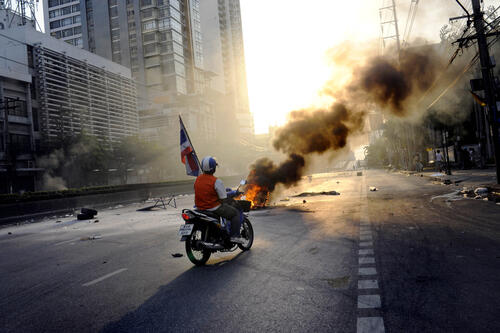
After the Cold War, Thailand became a poster child of democratizing processes in Southeast Asia. Student protests, farmers’ activism, a thriving civil society, and an expanding middle class suggested a model of successful democratic transition. In the last decades, however, many of the forces that supported that process turned sour on electoral politics. Dr. Sopranzettis book will explore how that happened—new class alliances, discourses of corruption and morality, questions of law.  In this context, he will portray Thailand as an experimental space for a new model of authoritarianism, inspired by Beijing and now spreading throughout the region.  The book, Owners of the Maps: Motorcycle Taxi Drivers, Mobility, and Politics in Bangkok, will be available for sale at the talk.


Claudio Sopranzetti is a Postdoctoral Research Fellow at All Souls College at the University of Oxford. He is the author of Owners of the Maps: Motorcycle Taxi Drivers, Mobility, and Politics in Bangkok and he is currently working on Awakened,  an anthropological graphic novel on Thai politics.

Claudio Sopranzetti Postdoctoral Research Fellow, All Souls College, Oxford University
Seminars
-

Over the last dozen years, Taiwan’s democracy has deepened in important ways. Executive power has rotated twice, from the DPP’s Chen Shui-bian to the KMT’s Ma Ying-jeou in 2008, and from Ma to the DPP’s Tsai Ing-wen in 2016. The majority in the legislature also changed for the first time in 2016, from the KMT to the DPP. Taiwan’s most recent overall Freedom House ranking is 93/100, significantly higher than the United States. Its freedom of the press ranking is the highest in all of Asia, ahead of Korea and even Japan, and its rule of law and anti-corruption scores are trending in a positive direction as well.

To be sure, serious concerns remain about the practice of democracy in Taiwan, including a poorly institutionalized and often chaotic lawmaking process, incomplete legislative oversight of executive branch actions, and a partisan and increasingly fragmented media environment. Nevertheless, the greatest threat to Taiwan’s continued place among the world’s liberal democracies now appears to be external, not internal. The People’s Republic of China (PRC) has always posed an existential threat to Taiwan, but its growing economic influence, rapid military modernization, assertive territorial claims in the region, and aggressive global efforts to isolate Taiwan have accelerated in recent years. Put simply, Taiwan’s long-term future as a democracy is imperiled by China’s rise.

The PRC’s growing power presents difficult security challenges for most of the countries in the Asia-Pacific region, not just for Taiwan. But these challenges are rarely considered from a multi-lateral perspective—most analyses of regional security issues instead tend to focus on bilateral or trilateral (US-China-Country X) relationships. This pattern is particularly common in discussions of Taiwan’s security, where the dominant focus is on Cross-Strait and US-Taiwan relations to the neglect of Taiwan’s other relationships in the region.

The goals of this workshop, then, are to place Taiwan’s security challenges in a broader, regional context, to consider possible obstacles to and opportunities for greater regional cooperation on security issues, and to devise a set of recommendations for Taiwan and its partners and allies. Workshop participants will include experts on a wide array of economic, diplomatic, and security topics from Taiwan, the United States, and elsewhere in the Asia-Pacific region.


Remarks are Off-the-Record.  Recording, reporting and citation of remarks is strictly prohibited.

AGENDA

Monday, March 5 - Koret-Taube Conference Center, John A. and Cynthia Fry Gunn Building

9:00-9:30am CONTINENTAL BREAKFAST

9:30-9:45am OPENING REMARKS
Larry Diamond, Senior Research Fellow, Center on Democracy, Development, and the Rule of Law
Karl Eikenberry, Director, U.S.-Asia Security Initiative, Asia-Pacific Research Center

9:45am – 11:30am: PANEL I.
Assessment of US Alliances and the Political and Military Situation in the Western Pacific
Chair: Tom Fingar (APARC, Stanford)
• Overview of Military Trends and US Strategy in Region. Karl Eikenberry (APARC, Stanford)
• US-Taiwan Relations. Robert Wang (Center for Strategic and International Studies)
• US-Japan Relations. TJ Pempel (UC Berkeley)
• US-Korea Relations. Kathy Stephens (APARC, Stanford)

11:30am-1:00pm LUNCH
Keynote Speaker: Robert Sutter (George Washington University) - "Will Trump administration advance support for Taiwan despite China's objections?"

1:15pm-3:00pm: PANEL II.
Trade and Economic Relations in the Western Pacific
Chair: Phillip Lipscy (APARC, Stanford)
• Regional Trade Agreements after TPP: RCEP vs TPP-11. Barbara Weisel (former Assistant US Trade Representative for SE Asia and the Pacific)
• China’s Institution-Building: OBOR, Maritime Silk Road, AIIB. Amy Searight (Center for Strategic and International Studies)
• Taiwan’s New Southbound Policy. Russell Hsiao (Global Taiwan Institute)

3:15-5:00pm: PANEL III.
Maritime Security Issues: The South and East China Seas
Chair: Karl Eikenberry (APARC, Stanford)
• Interpreting Chinese Maritime Strategy in the South China Sea, Don Emmerson (APARC, Stanford)
• China’s Maritime Militia. Andrew Erickson (Naval War College)
• Evolution of US Policy: FONOPS and Beyond. Dale Rielage (Captain, US Navy)
• Taiwan’s Role in Maritime Security Issues. Yeong-Kang Chen, (Admiral (Ret.), ROC Navy)


Tuesday, March 6 - McCaw Hall, Stanford Alumni Center

9:00-9:30am CONTINENTAL BREAKFAST

9:30-11:15am: PANEL IV.
Taiwan’s Key Asian Relations
Chair: Kharis Templeman (APARC, Stanford)
• A Taiwanese Perspective on Asian Relations. Lai I-chung (Prospect Foundation)
• NE Asia, Yeh-chung Lu (National Chengchi University)
• SE Asia, Jiann-fa Yan (Chien Hsin University of Science and Technology)

11:30-1:15pm: PANEL V.
Cross-Strait Relations
Chair: Larry Diamond
• The Domestic Politics of Security in Taiwan. Kharis Templeman (APARC, Stanford)
• Beijing’s Taiwan Policy after the 19th Party Congress. Alice Miller (Hoover Institution)
• US Role in the Trilateral Relationship. Raymond Burghardt (former chairman, American Institute in Taiwan)

1:15am-2:15pm LUNCH

March 5: Koret-Taube Conference Center, Gunn–SIEPR Building, 366 Galvez Street, Stanford, CA 94305

March 6: McCaw Hall, Frances C. Arrillaga Alumni Center, 326 Galvez St, Stanford, CA 94305

Conferences

Shorenstein APARC
Stanford University
Encina Hall E301
Stanford, CA 94305-6055

(650) 724-5667
0
rsd18_095_0131a_nr.jpg DPhil

Noa Ronkin joined APARC in 2018 and serves as the Center’s associate director for communications and external relations. She collaborates with the Center’s leadership to bring the work and expertise of APARC faculty and researchers to audiences including policymakers, industry leaders, and academics in the United States and in Asia. She also assists APARC programs to meet their goals and research mission.

Noa started her career at Stanford as a postdoctoral teaching fellow with the University’s freshman liberal arts program Introduction to the Humanities and later served as associate director of the McCoy Center for Ethics in Society. She subsequently worked as a fundraiser and communications manager at the software-for-good nonprofit Benetech and ran a communications and content marketing consultancy.

Noa earned her DPhil in Buddhist Studies from the University of Oxford, and her MA in Philosophy and a dual BA in Philosophy and Psychology from Tel Aviv University. She is the author of Early Buddhist Metaphysics: The Making of a Philosophical Tradition (Routledge, 2005) and of several articles on the Theravada Buddhist Abhidhamma tradition.


Associate Director for Communications and External Relations
-

Making Money: How Taiwanese Industrialists Embraced the Global Economy is a record of a thirty-year research project that Gary G. Hamilton and Kao Cheng-shu began in 1987.  A distinguished sociologist and university administrator in Taiwan, Kao and his research team (which included Prof. Hamilton during his frequent visits to Taiwan) interviewed over 800 owners and managers of Taiwanese firms in Taiwan, China, and Vietnam.  Some were re-interviewed over ten times during this period.  The length of this project allows them a vantage point to challenge the conventional interpretations of Asian industrialization and to present a new interpretation of the global economy that features an enduring alliance between, on the one hand, American and European retailers and merchandisers and, on the other hand, Asian contract manufacturers, with Taiwanese industrialists becoming the most prominent contract manufacturers in the past forty years.


Image
Gary Hamilton
Gary G. Hamilton is a Professor Emeritus of International Studies and Sociology at the University of Washington.  He specializes in historical/comparative sociology, economic sociology, with a special emphasis on Asian societies. He is an author of numerous articles and books, including most recently Emergent Economies, Divergent Paths, Economic Organization and International Trade in South Korea and Taiwan (with Robert Feenstra) (Cambridge University Press, 2006), Commerce and Capitalism in Chinese Societies (London: Routledge, 2006), The Market Makers: How Retailers Are Changing the Global Economy (co-editor and contributor, Oxford University Press, 2011; paperback 2012), and Making Money: How Taiwanese Industrialists Embraced the Global Economy (with Kao Cheng-shu, Stanford University Press, 2018).


This event is organized by the Taiwan Democracy and Security Project, part of the U.S.-Asia Security Initiative at Shorenstein APARC. Formerly the Taiwan Democracy Project at CDDRL.

Gary G. Hamilton <i>Professor Emeritus of International Studies and Sociology, University of Washington</i>
Lectures
News Type
News
Date
Paragraphs

In October 2017, twenty-two scholars from eight countries attended a workshop titled “ASEAN @ 50, Southeast Asia @ Risk: What should be done?” The workshop was designed to facilitate a frank and creative discussion of policy recommendations, with the intention of providing the resulting proposals to ASEAN member states and other regional powers. Following two days of discussion and debate, the attendees produced a series of specific policy recommendations (SPRs).

Four sets of Southeast Asia-related topics were covered during the workshop: regional security, regional infrastructure, regional economy, and improving ASEAN. The attending scholars—which included Director of the U.S.-Asia Security Initiative Karl Eikenberry and Director of the Southeast Asia Program Donald Emmerson—submitted 24 SPRs for discussion.

Over two-and-a-half days, the group evaluated each SPR for its effectiveness, significance, specificity, and feasibility. The intention was to produce specific proposals addressing some of the main challenges facing Southeast Asia. So as to encourage openness in the dialogue, the workshop was held under the Chatham House Rule.

The Southeast Asia Program and the U.S.-Asia Security Initiative in the Walter H. Shorenstein Asia-Pacific Research Center prepared this program and final publication in cooperation with multiple partners. Their final recommendations have been included in the 20-page report which is now available online.

Hero Image
asean 50 group photo overlay custom resize crop
All News button
1
Subscribe to International Relations