Shorenstein APARC Stanford University Encina Hall E301 Stanford, CA 94305-6055
1
Asia Health Policy Postdoctoral Fellow, 2019-2022
radhika_jain.jpg Ph.D.

Radhika Jain was the Asia Health Policy Postdoctoral Fellow for 2019-2022 at the Walter H. Shorenstein Asia-Pacific Research Center (Shorenstein APARC).  Her research focuses on health care markets, the effectiveness of public health policy, and gender disparities in health.

She completed her doctorate in the Department of Global Health at Harvard University in 2019.  Her dissertation examined the extent to which government subsidies for health care under insurance are captured by private hospitals instead of being passed through to patients, and whether accountability measures can help patients claim their entitlements. Dr. Jain's research has been supported by grants from the Weiss Family Fund and the Jameel Poverty Action Lab (JPAL). She has worked on impact evaluations of health programs in India and on the implementation of HIV programs across several countries in sub-Saharan Africa. She also held a doctoral fellowship at the Center for Global Development.

At Shorenstein APARC, Radhika began new work on understanding the factors that contribute to poor female health outcomes and interventions to increase the effectiveness of public health insurance.

Paragraphs
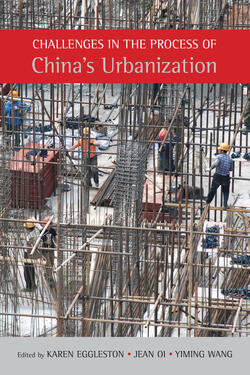
urbanization cover

The same institutions that enabled China’s massive urbanization and spurred its economic growth now require further reform and innovation.

To address the issues facing the next phase of the nation’s transformation, the National New Urbanization Plan (2014–20) set ambitious targets for sustainable, human-centered, and environmentally friendly urbanization. This volume explores the key institutional and governance challenges China will face in reaching those goals. Its policy-focused contributions from leading social scientists in the United States and China explore aspects of urbanization ranging from migration and labor markets to agglomeration economies, land finance, affordable housing, and education policy. Subjects covered in the eleven chapters include:

  • Institutional problems leading to fiscal pressures on local governments and unequal provision of social services to migrant families
  • The history of land financing and threats to its sustainability
  • The difficulty of sorting out property rights in rural China
  • How administrative redistricting has allowed the urbanization of geographical administrative places to outpace the urbanization of populations within those areas
  • How the hukou system may not be the sole, or even primary, mechanism restricting migrants from public goods, such as their childrens’ education
  • Whether the nation’s food security is threatened by its ongoing urbanization
  • The current state of the provision of low-income housing, and future challenges
 
Karen Eggleston is the director of the Asia Health Policy Program at the Shorenstein Asia-Pacific Research Center (Shorenstein APARC). She is a fellow at Stanford's Center for Health Policy/Primary Care and Outcomes Research and a faculty research fellow of the National Bureau of Economic Research.
Jean C. Oi is the William Haas Professor in Chinese Politics in the department of political science and a senior fellow of the Freeman Spogli Institute for International Studies at Stanford University. Oi is the founding director of the China Program at Shorenstein APARC and the Lee Shau Kee Director of the Stanford Center at Peking University.
Wang Yiming is vice president and senior research fellow at the Development Research Center of the State Council, People’s Republic of China. Previously he was with the National Development and Reform Commission (NDRC), where he served for many years as executive vice president of the Academy of Macroeconomics Research and deputy secretary general of the NDRC.
 

Examination copies: Shorenstein APARC books are distributed by Stanford University Press. You can obtain information on obtaining an examination copy at their website.


All Publications button
1
Publication Type
Books
Publication Date
Authors
Karen Eggleston
Jean C. Oi
Book Publisher
Shorenstein APARC
News Type
News
Date
Paragraphs

Shorenstein APARC Fellow Thomas Fingar, FSI Senior Fellow Siegfried Hecker, and CISAC Senior Fellow Scott Sagan are part of a group of 80 national security experts included in a Massive Open Online Course (MOOC) focused on the prospects for peace and security in South Asia.

The MOOC, titled Nuclear South Asia: A Guide to India, Pakistan, and the Bomb, is an inaugural course in a series produced by the Stimson Center in Washington, D.C. It is free to enroll and can be taken anytime and at any pace from a digital device.

Learn more about the MOOC.

Hero Image
missile pakistan
A mock-up of a missile is carried on a truck at a campaign rally in Islamabad, Pakistan, Feb. 16, 2008.
John Moore/Getty Images
All News button
1
News Type
News
Date
Paragraphs

Protecting freedom of expression is essential to vibrant democracies and to meet the needs of people now and into the future, Indian historian Ramachandra Guha said at a Stanford event seeking to draw people together for policy-relevant discussions about India’s growth following 25 years of reforms.

Guha’s remarks were part of a colloquium titled “Eight Threats to Freedom of Expression in India,” and one in a series, co-hosted by the Shorenstein Asia-Pacific Research Center (APARC) and Center for South Asia.

The colloquia, which continue this spring, are motivated by an opportunity to garner reflections and expertise from Kathleen Stephens, the William J. Perry Fellow in the Freeman Spogli Institute, who served as chargé d'affaires at the U.S. Embassy New Delhi in 2014.

“As I was preparing to go to India, I read Ram’s extraordinary book India after Gandhi, which provided much-needed historical, cultural and political context,” Stephens said. “When I visited Bangalore, we met and instantly clicked as we talked about U.S.-India relations. It’s a pleasure to welcome him back to Stanford.”

Guha, a renowned author and scholar, has written numerous critically acclaimed books about India’s history and culture as well as social ecology, and is a frequent commentary contributor to publications such as The Telegraph and Hindustan Times. In 2000, Guha was a visiting professor at Stanford, where he taught courses on the politics and culture of South Asia and cross-cultural perspectives on the global environmental debate.

India is often referred to as the world’s largest democracy for its population size of 1.3 billion and system of governance since partition and independence in 1947. Guha said that, while India is “solidly and certifiably democratic,” there are serious flaws, including growing threats to freedom of expression of Indian artists, filmmakers and writers.

Indian society, Guha said, has become too sensitive to criticism, wherein “somebody will take objection” to any message. This kind of environment has encouraged newspaper editors to self-censor, for example, and led public figures to, at times, neglect to protect artists, filmmakers and writers.

In total, Guha detailed eight threats to freedom of expression in contemporary India: 1) archaic colonial laws affecting the first amendment, 2) imperfections in the judicial system, 3) rising importance of identity politics, 4) complicity of the police force, 5) pusillanimity of politicians, 6) dependence of media on government-sponsored advertisements, 7) dependence of media on commercially-sponsored advertisements and 8) ideologically–driven writers.

Would an absence of those threats imply freedom of expression? Responding to the question from the audience, Guha lamented that the answer wasn’t simple. His task was to offer a diagnosis of the challenges, he said, and not provide instruction on how to solve them, but in general, focused efforts bear change.

“Building democracies is about quiet persistent work,” Guha said of next steps in the process to extinguish threats to freedom of expression. “I think quiet persistent work in repairing our institutions, modernizing our laws and improving civil society institutions can still mitigate some of the threats.”

Guha expressed optimism about India’s civil society, noting an expansion in the supply of non-governmental organizations working on social issues and private philanthropists funding projects in that sector. But he tempered: “we could do more.”

Stephens ended the event by thanking Guha for leading the discussion, and referenced America’s first president George Washington, who at the end of his term in office, called upon citizens to be “‘anxious, jealous guardians of our democracy.’”

“And, I see that today in Ram and in the many people here – very jealous, anxious and passionate guardians of our democracy – who we can learn a lot from,” she said.

Listen to an audio recording of the colloquium.

Hero Image
guha news headline
Indian historian Ramachandra Guha speaks to an audience of nearly 100 faculty, students and community members about freedom of expression in contemporary India, Oksenberg Conference Room, April 5, 2017.
Debbie Warren
All News button
1
News Type
News
Date
Paragraphs

India is a focus of colloquia at the Shorenstein Asia-Pacific Research Center during the next few months. A seminar series entitled “A New India? The Impact of 25 Years of Reform” will explore the country’s economic growth and efforts to revitalize its foreign relations.

The colloquia, co-sponsored by Stanford’s Center for South Asia, will include lectures from scholars, policymakers and other thought leaders on India’s democratic system and society, and provide a forum to discuss how the country can overcome obstacles to long-term prosperity.

Kathleen Stephens, the William J. Perry Fellow at Shorenstein APARC and former U.S. ambassador to the Republic of Korea, has organized and will moderate the colloquia. She served as the chargé d'affaires at the U.S. Embassy in New Delhi in 2014.

Stephens said, “Now is the right time and Stanford is the right place for a renewed focus on India, its daunting challenges and its extraordinary potential. This series will consider the strategic bet U.S. policymakers have made on India's rise, and India's own aspirations to play a bigger global role, particularly in Asia.

“In this series and beyond, we want to knit together the expertise and resources at Stanford and in Silicon Valley with policy leaders from India and elsewhere to expand our understanding of India in all its contemporary complexity and importance.”

From 1999 to 2013, Shorenstein APARC had a prolific initiative that supported scholarly work related to South Asia. The center envisions the colloquia will be some of many activities about the region going forward.

A listing of the seminars and related multimedia can be accessed here; more information will be added as it becomes available.

Hero Image
ellis bridge gujarat india
A rickshaw is driven across Ellis Bridge in Ahmedabad, Gujarat, India.
siraanamwong/Getty Images
All News button
1
616 Serra StreetEncina Hall E301Stanford, CA94305-6055
(650) 736-2532 (650) 723-6530
0
aditya_dasgupta.jpg Ph.D.

Aditya Dasgupta is a 2016-17 Shorenstein Postdoctoral Fellow in Contemporary Asia. He completed his PhD in the Department of Government at Harvard in May 2016. His book project, The Curse of Strong Roots: Pathways of Dominant Party Collapse and Resilience in India, investigates why dominant parties sometimes collapse but in other cases remain competitive after democratization, highlighting the role of an "organizational resource curse."

Shorenstein Postdoctoral Fellow in Contemporary Asia, 2016-17
Authors
Denise Masumoto
News Type
News
Date
Paragraphs
As the new academic year gets underway, the Shorenstein Asia-Pacific Research Center’s Corporate Affiliate Program is excited to welcome its new class of fellows to Stanford:
 
  • Muthukrishnan Anantharamakrishnan, Reliance LIfe Sciences
  • Hareendra Bhaskaran, Reliance LIfe Sciences
  • Takayuki Hayakawa, Japan Patent Office
  • Hirotaka Ishii, Ministry of Economy, Trade & Industry, Japan
  • Hui Liu, PetroChina
  • Rui Minowa, Development Bank of Japan
  • Hiroki Morishige, Shizuoka Prefectural Government
  • Daisuke Nakaya, Japan Air Self Defense Force
  • Hidenori Nishita, Ministry of Economy, Trade & Industry, Japan
  • Kanjiro Onishi, Ministry of Finance, Japan
  • Akihiko Sado, The Asahi Shimbun
  • Yohei Saito, Future Architect, Inc.
  • Aki Takahashi, Nissoken
  • Zhuoyan Wang, PetroChina
  • Kensaku Yamada, Mitsubishi Electric
  • Shaofeng (Sean) Zhang, PetroChina
  • Xuan (James) Zhang, Beijing Shanghe Shiji Investment Company
 
During their stay at Stanford, the fellows will audit classes, work on English skills, and conduct individual research projects; at the end of the year they will make a formal presentation on the findings from their research. During their stay at the center, they will have the opportunity to consult with Shorenstein APARC's scholars and attend events featuring visiting experts from around the world. The fellows will also participate in special events and site visits to gain a firsthand understanding of business, society and culture in the United States.


Hero Image
rsd16 068 0011a Rod Searcey
All News button
1
Subscribe to India