-

This event is made possible by generous support from the Korea Foundation and other friends of the Korea Program.

Common sense states that foreign policy rarely becomes an issue in South Korea’s elections. However, given the unusually high anti-China sentiment among the South Korean public today, some view that it may become an “unspoken agenda” that every South Korean voter is cognizant about. As Seoul and Beijing mark their 30th diplomatic anniversary this year, their mutual attraction appears visibly moderated. Is it a temporary setback in the neighboring countries’ relationship? What choices will Kim Jong-un make under strategic competition between the U.S. and China? The panel will examine the factors that will shape and influence the future prospect of the Seoul-Beijing ties and the relationship between North Korea and China.   

Speakers:

Image
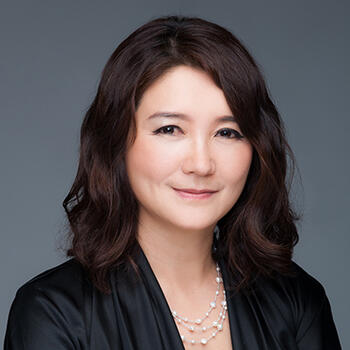
portrait of Seong Hyon Lee

Seong-hyon Lee is a Senior Fellow at the George H. W. Bush Foundation for U.S.-China Relations and a visiting scholar at the Fairbank Center for Chinese Studies at Harvard University. His research focuses on contemporary relations between China and South Korea. Lee received a bachelor’s degree from Grinnell College, a master’s degree from Harvard University and a PhD from Tsinghua University.

Image
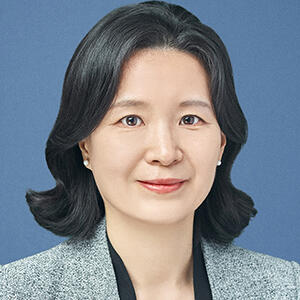
portrait of Sheen Woo

Sheen Woo, Special Policy Advisor to the South Korean Ambassador in China, joined the Korea Program at Shorenstein APARC as a 2021-22 visiting scholar. He is a specialist in China-North Korea relations with expertise in Chinese aid and sanctions against North Korea. He has worked at and with a variety of organizations including NGOs, start-ups, art centers, and state-run think tanks in Korea and China. While at APARC, his research focus is on the development and changes of China's aid to North Korea. He holds a PhD in Management Science from Tsinghua University.

Gi-Wook Shin, director of APARC and the Korea Program, will moderate the discussion.

Via Zoom. Register at https://bit.ly/3tMDyjo

Panel Discussions
-

This event is part of Shorenstein APARC's winter 2022 webinar series, New Frontiers: Technology, Politics, and Society in the Asia-Pacific.

While North Korea’s nuclear capabilities often make headlines, the DPRK increasingly poses a risk that is more difficult to see, in the form of sophisticated cyber attacks. Neighboring South Korea, one of the most digitized nations in the world, must closely monitor and defend against North Korea’s cyber threat, as attacks can disrupt economic, social, and defense infrastructures. This panel will discuss what kind of cyber threat North Korea poses to South Korea and beyond, how South Korea addresses the North Korean cyber attacks, and what other countries can learn from their response.

Speakers:

portrait of Jenny JunJenny Jun is a PhD Candidate in the Department of Political Science at Columbia University and Nonresident Fellow at the Atlantic Council’s Cyber Statecraft Initiative. Her current research explores the dynamics of coercion in cyberspace. Her broader interests include cyber conflict, North Korea, and security issues in East Asia. Jenny is a co-author of the 2015 Center for Strategic and International Studies (CSIS) report North Korea’s Cyber Operations: Strategy and Responses, published by Rowman & Littlefield. She has presented her work on North Korea’s cyber operations at various panels and has provided multiple government briefings and media interviews on the topic. She received her MA and BS each from the Security Studies Program (SSP) and the School of Foreign Service (SFS) at Georgetown University.

Image
portrait of So Jeong Kim

So Jeong Kim is a principal researcher at the National Security Research Institute where she joined in 2004. She currently leads the cybersecurity policy team and provides recommendations on cybersecurity policy and regulatory issues. She was involved in drafting South Korea’s National Cyber Security Strategy published in April 2019, in the 4thand 5th UN Group of Governmental Experts as an adviser, and in the MERIDIAN process as an advisor and organizer. Her main research area is in national cybersecurity policy, international norm-setting processes, confidence building measures, critical information infrastructure protection, law and regulations, and cybersecurity evaluation development. She received her PhD in Engineering from the Graduate School of Information Security at Korea University in 2005.

Gi-Wook Shin, director of APARC and the Korea Program at Stanford University, will moderate the discussion.

Via Zoom. Register at https://bit.ly/3mXJSQW

Panel Discussions
-

To watch the recording of the event, click here.

This event is co-hosted with the East Asia Institute (EAI) in Korea.

Event Time: November 18, 4:00 - 6:00 PM (PST) / November 19, 9:00 - 11:00 PM (Japan and Korea)
Please register for this event at EAI event page.

The ROK-U.S. and U.S.-Japan joint statements have increased expectations for a possible expansion of security and economic cooperation among South Korea, the U.S. and Japan. However, heightened U.S.-China strategic competition, as well as persistent challenges in the region such as historical tensions and the North Korea threat, have complicated the strategic calculus of U.S., South Korea and Japan. Under these circumstances, the South Korea, the U.S. and Japan must define their economic and security interests and seek ways to maintain friendly relations among the three countries. This seminar will discuss security and economic cooperation among Korea, the United States and Japan in the era of strategic competition between the U.S. and China.

Panel 1 on security:

Park Joon Woo, former Chairman of the Sejong Institute; former South Korean Ambassador to E.U. and to Singapore

Tomiko Ichikawa, Director General of the Japan Institute of International Affairs

Gen. Vincent Brooks, former USFK Commander

Moderated by Young Sun Ha, Chairman of East Asia Institute; Professor Emeritus, Seoul National University

Panel 2 on economic cooperation:

Young Ja Bae, Professor of Political Science and Diplomacy, Konkuk University, Korea

Andrew Grotto, Director of the Program on Geopolitics, Technology and Governance, FSI, Stanford University

Kimura Fukunari, Professor of Economics, Keio University, Japan

Moderated by Thomas Fingar, Shorenstein APARC Fellow, Stanford University


Via Zoom. Register at https://bit.ly/3w7Ak9g

Panel Discussions
Paragraphs
Cover of book "Drivers of Innovation"

Innovation and entrepreneurship rank highly on the strategic agenda of most countries today. As global economic competition intensifies, many national policymakers now recognize the central importance of entrepreneurship education and the building of financial institutions to promote long-term innovation, entrepreneurship, and economic growth. Drivers of Innovation brings together scholars from the United States and Asia to explore those education and finance policies that might be conducive to accelerating innovation and developing a more entrepreneurial workforce in East Asia. 

Some of the questions covered include: How do universities in China and Singapore experiment with new types of learning in their quest to promote innovation and entrepreneurship? Is there a need to transform the traditional university into an “entrepreneurial university”? What are the recent developments in and outstanding challenges to financing innovation in China and Japan? What is the government’s role in promoting innovative entrepreneurship under the shadow of big business in South Korea? What can we learn about the capacity of services to drive innovation-led growth in India? 

Drivers of Innovation will serve as a valuable reference for scholars and policymakers working to develop human capital for innovation in Asia.

Contents

  1. Educating Entrepreneurs and Financing Innovation in Asia 
    Fei Yan, Yong Suk Lee, Lin William Cong, Charles Eesley, and Charles Lee
  2. Fostering Entrepreneurship and Innovation: Education, Human Capital, and the Institutional Environment 
    Charles Eesley, Lijie Zhou, and You (Willow) Wu
  3. Entrepreneurial Scaling Strategy: Managerial and Policy Considerations 
    David H. Hsu
  4. Innovation Policy and Star Scientists in Japan 
    Tatsuo Sasaki, Hiromi S. Nagane, Yuta Fukudome, and Kanetaka Maki
  5. Financing Innovation in Japan: Challenges and Recent Progress 
    Takeo Hoshi and Kenji Kushida
  6. Promoting Entrepreneurship under the Shadow of Big Business in Korea: The Role of the Government 
    Hicheon Kim, Dohyeon Kim, and He Soung Ahn
  7. The Creativity and Labor Market Performance of Korean College Graduates: Implications for Human Capital Policy 
    Jin-Yeong Kim
  8. Financing Innovative Enterprises in China: A Public Policy Perspective 
    Lin William Cong, Charles M. C. Lee, Yuanyu Qu, and Tao She
  9. Forging Entrepreneurship in Asia: A Comparative Study of Tsinghua University and the National University of Singapore 
    Zhou Zhong, Fei Yan, and Chao Zhang
  10. Education and Human Capital for Innovation in India’s Service Sector 
    Rafiq Dossani
  11. In Need of a Big Bang: Toward a Merit-Based System for Government-Sponsored Research in India 
    Dinsha Mistree
  12. The Implications of AI for Business and Education, and Singapore’s Policy Response 
    Mohan Kankanhalli and Bernard Yeung


All Publications button
1
Publication Type
Books
Publication Date
Subtitle

Entrepreneurship, Education, and Finance in Asia

Authors
Yong Suk Lee
Fei Yan
Book Publisher
Shorenstein APARC
News Type
Commentary
Date
Paragraphs

"Anti-China sentiment is a global trend among advanced democratic nations [...] probably the most dramatic change is [in] South Korea," said APARC and Korea Program Director Gi-Wook Shin at a Korea Society forum on October 7, 2021.

In conversation with Korea Society Senior Director Stephen Noerper, Shin examines rising anti-China sentiments in South Korea and their implications for the upcoming South Korean presidential election and the U.S.-ROK alliance. He also explores these sentiments relative to Korean feelings toward Japan and the United States.

Watch the video recording or listen to the audio below. You can also view the coverage of the event in the Chosun Ilbo.

Read More

crowd in seoul
Commentary

[Us and Them] I’m Korean, You’re Not, and There’s a Fine Line You Can’t Cross

In a new interview with The Korea Herald, Gi-Wook Shin discusses ethnic homogeneity, its nationalist roots, and the limitations to building multicultural identity in South Korea.
[Us and Them] I’m Korean, You’re Not, and There’s a Fine Line You Can’t Cross
A man holds a 'Stop Asian Hate' sign during a rally protesting rising violence against Asian Americans.
News

Perspectives on Rising Anti-Asian Violence from REDI

The Racial Equity, Diversity, & Inclusion Task Force sheds light on historical roots of anti-Asian racism and considers how our troubling times can present an important opening for Asian Americans to challenge racialization and white supremacy.
Perspectives on Rising Anti-Asian Violence from REDI
"Patterns of Impunity" by Robert King on a backgorund showing the flags of North Korea, South Korea, and the United States.
News

Why North Korean Human Rights Matter: Book Talk with Robert R. King

In his new book, "Patterns of Impunity," Ambassador King, the U.S. special envoy for North Korean human rights from 2009 to 2017, shines a spotlight on the North Korean human rights crisis and argues that improving human rights in the country is an integral part of U.S. policy on the Korean peninsula.
Why North Korean Human Rights Matter: Book Talk with Robert R. King
Hero Image
Protesters participate in a rally oppose a planned visit by Chinese Foreign Minister Wang Yi near the Chinese Embassy on November 25, 2020 in Seoul, South Korea.
Chung Sung-Jun/ Getty Images)
All News button
1
Subtitle

APARC and Korea Program Director Gi-Wook Shin shares insights on rising anti-China sentiments in South Korea and their implications for the upcoming South Korean presidential election.

Paragraphs
Cover of North Korean Conundrum, showing a knotted ball of string.

Read our news story about the book >> 

North Korea is consistently identified as one of the world’s worst human rights abusers. However, the issue of human rights in North Korea is a complex one, intertwined with issues like life in the North Korean police state, inter-Korean relations, denuclearization, access to information in the North, and international cooperation, to name a few. There are likewise multiple actors involved, including the two Korean governments, the United States, the United Nations, South Korea NGOs, and global human rights organizations. While North Korea’s nuclear weapons and the security threat it poses have occupied the center stage and eclipsed other issues in recent years, human rights remain important to U.S. policy. 

The contributors to The North Korean Conundrum explore how dealing with the issue of human rights is shaped and affected by the political issues with which it is so entwined. Sections discuss the role of the United Nations; how North Koreans’ limited access to information is part of the problem, and how this is changing; the relationship between human rights and denuclearization; and North Korean human rights in comparative perspective.

Contents

  1. North Korea: Human Rights and Nuclear Security Robert R. King and Gi-Wook Shin
  2. The COI Report on Human Rights in North Korea: Origins, Necessities, Obstacles, and Prospects Michael Kirby
  3. Encouraging Progress on Human Rights in North Korea: The Role of the United Nations and South Korea Joon Oh 
  4. DPRK Human Rights on the UN Stage: U.S. Leadership Is Essential Peter Yeo and Ryan Kaminski
  5. Efforts to Reach North Koreans by South Korean NGOs: Then, Now, and Challenges Minjung Kim
  6. The Changing Information Environment in North Korea Nat Kretchun
  7. North Korea’s Response to Foreign Information Martyn Williams
  8. Human Rights Advocacy in the Time of Nuclear Stalemate: The Interrelationship Between Pressuring North Korea on Human Rights and Denuclearization  Tae-Ung Baik
  9. The Error of Zero-Sum Thinking about Human Rights and U.S. Denuclearization Policy Victor Cha
  10. Germany’s Lessons for Korea Sean King
  11. Human Rights and Foreign Policy: Puzzles, Priorities, and Political Power Thomas Fingar

Desk, examination, or review copies can be requested through Stanford University Press.

June 2022 Update

The Korean version of The North Korean Conundrum is now available, published by the Database Center for North Korean Human Rights (NKDB). Purchase the Korean version via NKDB's website >>

To mark the release of the Korean version of the book, APARC hosted a book talk in Seoul jointly with the Database Center for North Korean Human Rights, on June 9, 2022.
Watch NTD Korea's report of the event:

View news coverage of the event by Korean Media:

All Publications button
1
Publication Type
Books
Publication Date
Subtitle

Balancing Human Rights and Nuclear Security

Authors
Robert R. King
Gi-Wook Shin
Book Publisher
Shorenstein APARC
-

To watch the recording of the event, click here.

October 5, 4:00pm-5:15pm California time/ October 6, 8:00am-9:15am Korea time

This event is made possible by generous support from the Korea Foundation and other friends of the Korea Program.

This event is part of Shorenstein APARC's fall 2021 webinar series Perfect Storm: Climate Change in Asia.

In this webinar, a panel of climate change experts will discuss the challenges facing Korea and the country's mitigation efforts and policy responses.

Presenters:

Image
Portrait of Young Sook Yoo

Young Sook Yoo, former Minister of Environment in Korea
Dr. Yoo is currently board chair of Climate Change Center in Korea; an honorary research scientist at Korea Institute of Advanced Science and Technology; President of Korean Biofuel Forum; a member of the Korean Academy of Environment Science and National Academy of Engineering of Korea. She holds a PhD in biochemistry and biophysics from Oregon State University, and trained as a postdoctoral fellow at Stanford's School of Medicine.

Image
Portrait of Suh-Yong Chung

Suh-Yong Chung, Professor of International Studies at Korea University
Professor Chung is also director of Center for Global Climate and Marine Governance at Korea University; director of Center for Sustainable Development Law and Policy; a member of policy Advisory Board of Korea Forest Service; and the director of Center for UN Studies of UNA-Korea. He holds degrees in law and international relations from Seoul National University, London School of Economics and Stanford Law School.

Discussant:

Image
Portrait of So-Min Cheong

So-Min Cheong, Associate Professor of Geography & Atmospheric Science, University of Kansas
Professor Cheong's current research focuses on climate change adaptation and disaster management including oil spills, floods, extreme heats, and wildfires. She is a lead author of multiple IPCC (Intergovernmental Panel on Climate Change) reports including the Sixth Assessment Report. She received her PhD in geography, MAs in marine affairs and international studies from University of Washington.
 

Via Zoom. Register at https://bit.ly/3lt42Rh

Panel Discussions

Shorenstein APARC
Stanford University
Encina Hall E301,
Stanford CA 94305-6055

0
ho_ki_kim.jpg

Ho Ki Kim joined the Korea Program at APARC as the 2021 Koret Fellow. Kim is a professor of sociology at Yonsei University in Korea. He received a Ph.D. from Bielefeld University in Germany.

Professor Kim is the author of Contemporary Capitalism and Korean Society (in Korean, 1995), Modernity and Social Change in Korea (in Korean, 1999), Reflections on the Civil Society in Korea  (in Korean, 2007), Zeitgesit and Intellectuals (in Korean, 2012), Adventures of Intellectuals in Modern Korea (in Korean, 2020), and "Change of Ideological Terrain and Political Consciousness in South Korea" (2005). His research interests include political sociology and modern social theories. During his stay at Stanford, Professor Kim will conduct research on democracy in Korea.

Visiting Scholar at APARC
Koret Fellow, 2021-2022
Fall 2021

Shorenstein APARC
Stanford University
Encina Hall E301
Stanford, CA 94305-6055

650-498-9898
0
haley_gordon.jpg

Haley Gordon recently completed her Master of Arts at Stanford’s Center for East Asian Studies, where she wrote her Master’s thesis on human rights in North Korea. Her research interests include migration, nationalism, and multiculturalism in East Asia, as well as the transnational spread of social movements and culture in a globalized world. Haley received her bachelor’s degree in Ecology & Evolutionary Biology from Princeton University, with a minor in Humanistic Studies. In addition, she has studied the Korean language at Yonsei University and Ewha University in Seoul.

At APARC, Haley works at the Korea Program and the Stanford Next Asia Policy Lab, supporting the projects on Talent Flows and Development, Nationalism and Racism, and Re-Engaging North Korea.

Research Associate, Korea Program
Authors
News Type
News
Date
Paragraphs

“How can we engage with North Korea on human rights?” That is the question Robert R. King, former U.S. special envoy for North Korean human rights issues at the U.S. Department of State, has long been focused on. King, a visiting scholar and Koret Fellow at APARC in fall 2019, rejoined the Korea Program to discuss his new book, Patterns of Impunity.

In this volume, he provides an inside look into his time as special envoy, traces U.S. involvement and interest in North Korean human rights, offers insights into the United Nations’ role in addressing the North Korean human rights crisis, and discusses the challenges of providing humanitarian assistance to a country with no formal relations with the United States and where separating human rights from politics is virtually impossible.

King was joined by his longtime colleague Jung-Hoon Lee, South Korea's former Ambassador for Human Rights and the ROK’s inaugural Ambassador-at-Large for North Korean Human Rights. Watch their conversation:

[Subscribe to APARC’s newsletters to receive our experts' latest updates.]

The Role of the Special Envoy

As the Biden administration begins to review policy towards North Korea in earnest, King’s book and perspectives are particularly timely. Drawing on over a decade of experience, King explains how the role of the special envoy provides a unique opportunity to influence the policy agenda on human rights. As a senior member within the U.S. State Department, the envoy is in a position to both elevate the importance of rights violations to policymakers in Washington and provide feedback on how policy decisions impact the situation on the ground.     

King outlines several avenues where U.S. policymakers can increase pressure on North Korea to address the ongoing human rights crisis in the country. Predominantly among them is the recommendation to support the work on human rights already done by the UN and UN agencies, such as the reporting of Special Rapporteur Tomás Quintana.

“North Korea is very sensitive about its international legitimacy,” King notes. “Working through the UN and with UN agencies gives greater validity and acceptability to the human rights issues and puts greater pressure on North Korea to follow international norms.”

King’s other recommendations center more directly on the people of North Korea. He urges ongoing support for initiatives and agreements that foster access to information and proper distribution of resources and aid for North Koreans within the country along with freedom of movement for those who are attempting to leave and face crossing hostile borders into China. 

Responsibilities in Seoul

Speaking as King’s counterpart and colleague in South Korea, Jung-Hoon Lee echoed the need for visibility and accountability — both globally and in South Korea — for the DPRK's human rights crisis. “In the public eye and the global context, the human rights condition in North Korea is not very familiar. Why? There’s no access. The North Korean society is completely cocooned. There are terrible human rights conditions in other parts of the world, but there is access in those cases to see what is going on. In North Korea, there are only testimonials. There are no pictures or documentaries of the gulags and atrocities. That’s why it is so important that we keep raising this issue.”

For Lee, this means working with and through many of the same channels that King points to, such as the UN, and recognizing as a global community the scale of the crimes against humanity being committed.

But it also means accepting responsibilities closer to home. Lee firmly rejects the opinion raised by the South Korean Foreign Minister that refocusing on North Korean human rights and reappointing an ambassador to fill Lee’s now-vacant position is “useless.” Such indifference towards human rights issues in North Korea is damaging, warns Lee, citing the scrutiny South Korea suffered during the recent Tom Lantos Human Rights Commission hearings before the U.S. Congress.

The Road Towards Accountability

Human rights are only one facet of U.S. policy toward North Korea, but we undermine the overall relationship with the North if the United States abandons human rights in pursuit of security or economic goals, writes King in his book. "Policy toward North Korea involves interrelated issues that we frequently separate for analytical purposes or because they are dealt with in different ways or by different means. But these issues are interconnected, and they are not really separable."

Ultimately, any meaningful action to address North Korea's human rights violations will require coordinated efforts from international organizations, national governments, and civic organizations. In the third and final part of the Korea Program’s spring 2021 series on human rights in North Korea, forthcoming on May 20, leaders from the private sector will discuss the challenges of bringing together independent actors and organizations to raise awareness and call for accountability in North Korea. Registration for the event is open to the public.  

Read More

[Top left] Gi-Wook Shin; [top right] Roberta Cohen; [bottom left] Tomás Ojea Quintana; [bottom right] Joon Oh
News

Using the UN to Create Accountability for Human Rights Crimes in North Korea

Experts on human rights agree that the UN needs to work through multiple channels to support ongoing investigations and build evidence for future litigations in order to create accountability and pressure the DPRK to desist in committing human rights crimes.
Using the UN to Create Accountability for Human Rights Crimes in North Korea
Small flags of North Korea and China for sale near the China-North Korea border
Commentary

China’s Dangerous Double Game in North Korea

Biden must force Beijing to cooperate fully with Washington or pivot to obvious obstruction writes FSI Center Fellow Oriana Skylar Mastro in her latest op-ed for Foreign Affairs.
China’s Dangerous Double Game in North Korea
Brightly colored ribbons tied to fences around Imjingak Village in the DMZ on the North Korean Border.
News

Koret Conference Convenes Virtually to Discuss Human Rights Crisis in North Korea

Amid escalating inter-Korean tension and increasing economic and social strain on North Koreans in the era of COVID-19, the importance of keeping international attention on the DRPK’s human rights violations is more urgent than ever.
Koret Conference Convenes Virtually to Discuss Human Rights Crisis in North Korea
Hero Image
"Patterns of Impunity" by Robert King on a backgorund showing the flags of North Korea, South Korea, and the United States.
All News button
1
Subtitle

In his new book, "Patterns of Impunity," Ambassador King, the U.S. special envoy for North Korean human rights from 2009 to 2017, shines a spotlight on the North Korean human rights crisis and argues that improving human rights in the country is an integral part of U.S. policy on the Korean peninsula.

Subscribe to South Korea