0
Global Affiliate Visiting Scholar, 2022-23
Head & Shoulders Financial Group, Hong Kong
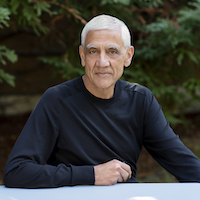
Stanley Choi

Chiu Fai Stanley Choi is a global affiliate visiting scholar at the Walter H. Shorenstein Asia-Pacific Research Center (Shorenstein APARC) for 2022-23. Choi is the founder of Head & Shoulders Financial Group based in Hong Kong. He has over 25 years of experience across the area of derivatives, private equity and blockchain. Currently, he has shifted his focus to personal investments becoming a major shareholder of Air Asia, a leading budget airline in Asia, and China Reinsurance, the largest reinsurance company in China. Choi earned his Master of Science (MS) at the University of Illinois at Urbana Champaign and his Doctor of Business Administration (DBA) at City University of Hong Kong.

Date Label
Paragraphs

Image
Cover of the book 'The China Questions 2'
The belief that China presents a challenge, if not an outright threat, to U.S. national security is increasingly prevalent in elite and public discourse. The main points of contention lie in the degree to which China threatens U.S. national security, how exactly China may challenge U.S. national security, and uncertainty about how the answers to these questions may change over time (which is fundamentally a debate about the drivers of Chinese strategy).

In this chapter, included in the volume The China Questions 2: Critical Insights into US-China Relations​ Harvard University Press, 2022), Oriana Sklayar Mastro focuses on the direct and indirect ways the People's Republic of China poses a threat to U.S. national security today.

Two caveats are in order. First, this focused discussion on challenges and threats may distort the degree to which China threatens the United States. On aggregate, the discussion presents a malign influence from the Perspective of U.S. national security. But it could be much worse. China has resolved many of its territorial disputes peacefully. Beijing has relied mainly on economic and political tools to blunt U.S. influence beyond its immediate region. China is an active member of the vast majority of international institutions. Even though faced with a conventionally superior U.S. military, China has yet to change its minimal no-first-use nuclear doctrine.

Second, while Mastro presents information on trends and trajectories, her focus is on today's challenges. These are likely to expand in scope and increase in intensity over the next five to ten years.

All Publications button
1
Publication Type
Book Chapters
Publication Date
Subtitle

A chapter in The China Questions 2: Critical Insights into US-China Relations, edited by Maria Adele Carrai, Jennifer Rudolph, and Michael Szonyi.

Authors
Oriana Skylar Mastro
Book Publisher
Harvard University Press
Authors
Oriana Skylar Mastro
News Type
Commentary
Date
Paragraphs

This commentary originally appeared in The Economist.


In the afternoon of August 4th, the People’s Liberation Army (PLA) kicked off the largest and most sophisticated military exercises it has ever conducted. Over the course of a week, the Chinese launched dozens of missiles and conducted drills near Taiwan with 100 aircraft, ten destroyers and support vessels. Submarines and aircraft carriers also played a role. The display has made the third Taiwan Strait crisis, which occurred between 1995-96, when China conducted four rounds of tests over the course of several months, with barrages of no more than six missiles, look like child’s play.

Part of the rationale for the latest exercise was to signal Beijing’s anger over Nancy Pelosi’s visit to Taiwan. Ms Pelosi, the speaker of the House of Representatives, was the highest-ranking American government official to visit the island since 1997. Back then Newt Gingrich, who was also the House speaker, made the trip. China warned that if Ms Pelosi added Taipei to her itinerary, there would be hell to pay.

The exercise is also a bit of a “coming-out party” for Beijing. In 1996 the third crisis ended when America sent two aircraft-carrier strike groups within 200 miles (322km) of Taiwan. America saw this as a great strategic success, and Chinese leaders were unhappy with its interference in what China considers a domestic affair. The resentment helped to drive China to build the PLA into one of the greatest armed forces in the world.


Subscribe to APARC newsletters to receive our experts' analysis and commentary.


Compared with 1996, China’s forces today are barely recognizable. Back then it had a large army, with roughly 4m people, but that was a sign of its backwardness more than anything else. With obsolete equipment and poor training, China barely had what could be considered an air force and a navy. Its pilots could not fly over water, at night or in rough weather. In 1999 less than 2% of its fighters were fourth generation, just 4% of its attack submarines were classed as modern (nuclear powered, for example) and none of its surface ships was. Its navy was a glorified coastguard with ships that, lacking air-defense systems, had to hug the coastline on any patrol. Its nuclear weapons, solid-fuelled and housed mainly in fixed silos, could have been taken out in one fell swoop by America.

Now China’s armed forces are comparable to America’s in quality and quantity. Most of its platforms are modern (of the latest technology for the relevant domain) and it boasts the largest navy in the world. In some areas, Chinese military capabilities already surpass America’s—in shipbuilding, land-based conventional ballistic and cruise missiles, and integrated air-defense systems. China possesses the world’s third-largest nuclear arsenal in the world, one that is currently undergoing major modernization.

Chinese leaders knew the PLA had to conduct a series of large, realistic exercises to identify issues and hone their capabilities. If China had done so out of the blue, instead of using Ms Pelosi’s visit as a pretext, international opprobrium would have been stronger.

But even with all these improvements, it is unclear whether China could take Taiwan by force. China has not fought a war since 1979, when it made heavy weather of a “punitive” invasion of Vietnam. An amphibious attack, and to a lesser degree a blockade of the type the exercises off Taiwan were simulating, would demand complex joint operations (involving army, air force and navy), which in turn require impeccable logistics and command and control. Xi Jinping, China’s leader, launched a massive organizational reform to improve in these areas, and the PLA undoubtedly has. But the war in Ukraine may have given him heightened anxiety, given that the Russians struggled precisely with logistics and command.

For this reason, we should see the massive exercises off Taiwan less as a signal, and more as a rehearsal for combat. Mr Xi wants progress on the Taiwan issue, and domestically talk in the press is shifting from peaceful reunification to armed reunification. Chinese leaders knew the PLA had to conduct a series of large, realistic exercises to identify issues and hone their capabilities. If China had done so out of the blue, instead of using Ms Pelosi’s visit as a pretext, international opprobrium would have been stronger.

China will seize the opportunity to practice as much as possible. It has announced already that this round of exercises will continue and that another round in the Bohai Gulf/Yellow Sea is next. And it won’t just be large-scale exercises. It is unlikely that Beijing will return to its previous level of operations. Instead, China might attempt to normalize greater Chinese activity around Taiwan. That makes war more probable. Through a series of exercises the PLA, and the party leadership, might gain confidence that China’s forces are ready to take Taiwan sooner than they would otherwise have thought.

Of course, this all depends on how the exercises and operations go. From the outside, this is hard to assess. The missiles landed where they should have in recent days, and there were no accidents. But we don’t know how much and how well different groups are communicating with each other. To prepare for joint operations, air-force units need to operate in close proximity and coordinate with ground troops and amphibious elements. The PLA needs to practice providing supplies, such as prepositioned fuel stocks, and bringing munitions and medical supplies to forward locations such as Fujian, the province directly across the Taiwan Strait.

This is where the real trouble lies. If activities in the vicinity of Taiwan become more routine, not only does this heighten anxiety in Taipei (and probably other regional capitals as well) but it helps to disguise any preparations for a real military campaign. China needs an element of surprise to be able to take Taiwan before America has time to mobilize adequate forces in the region to defend the island. If China’s forces are simulating formations, blockades, attacks, and amphibious landings, it will be harder to decipher when they are preparing for the real thing. Ms Pelosi’s visit has allowed Beijing to move to a new level of military activity unchallenged, which will make it harder for America to defend Taiwan. No signal of America’s commitment to the island can fix that.

Read More

Nancy Pelosi and Tsai Ing-wen
News

Military Capabilities, Not Commitment, at Stake in Taiwan: Oriana Skylar Mastro Examines Fallout From Pelosi's Visit

Political maneuvers like Speaker Pelosi's visit to Taiwan only anger Beijing but ultimately do not address the key issue of whether the United States has the military capabilities needed to protect Taiwan, argues Center Fellow Oriana Skylar Mastro.
Military Capabilities, Not Commitment, at Stake in Taiwan: Oriana Skylar Mastro Examines Fallout From Pelosi's Visit
Honor guards prepare to raise the Taiwan flag in the Chiang Kai-shek Memorial Hall square.
Commentary

Biden Says We’ve Got Taiwan’s Back. But Do We?

Many will applaud Mr. Biden for standing up for democratic Taiwan in the face of Chinese threats. But he could be putting the island in greater danger, and the United States may not be able to come to the rescue.
Biden Says We’ve Got Taiwan’s Back. But Do We?
An Island that lies inside Taiwan's territory is seen with the Chinese city of Xiamen in the background.
Commentary

The Taiwan Temptation

Why Beijing Might Resort to Force
The Taiwan Temptation
Hero Image
A Taiwanese F-5 fighter jet is seen after taking off from Chihhang Air Base on August 06, 2022 in Taitung, Taiwan.
A Taiwanese F-5 fighter jet is seen after taking off from Chihhang Air Base on August 06, 2022 in Taitung, Taiwan. Taiwan remained tense after U.S. Speaker of the House Nancy Pelosi's visit to the island as part of a tour of Asia aimed at reassuring allies in the region. China has been conducting live-fire drills in waters close to those claimed by Taiwan in response.
Annabelle Chih/ Getty Images
All News button
1
Subtitle

Nancy Pelosi’s visit was more pretext than provocation.

Date Label
Authors
Michael Breger
Noa Ronkin
News Type
News
Date
Paragraphs

This story was last updated on August 10, 2022.

Amid warnings and condemnations from Chinese leadership, Speaker of the U.S. House of Representatives Nancy Pelosi visited Taiwan on August 2, 2022, becoming the highest-ranking U.S. official to visit the island since 1997. A day after Pelosi's visit, furious China began firing missiles near Taiwan in drills that appear to be a trial run for sealing off the island, and Japan said some missiles landed in its exclusive economic zone. In a series of articles and interviews, Center Fellow Oriana Skylar Mastro examines the implications of Speaker Pelosi's visit, Beijing's response, and what the United States might do to prepare for a Chinese invasion of Taiwan. 

Mastro joined CNN's Fareed Zakaria GPS to discuss what she calls the "unprecedented scale and complexity" of China's military drills near Taiwan. Over the past 20 years, China has invested in building up not only one of the most advanced and sophisticated militaries but also one that can attack and keep out the United States. So now, explains Mastro, beyond the live-fire and missile tests, the Chinese military exercises also included complex air and naval operations designed to demonstrate China's readiness to take Taiwan when it feels ready to do so. Watch:

According to Mastro, when China makes a move on Taiwan there has to be an element of surprise, so they don't want to do it right now when the United States has increased its focus and operations in the region. But we will probably see additional rounds of Chinese military exercises in the future, she predicts, "and the more they get to do it the more confident they become and the more likely we are to see Beijing initiate force against the island." 

A Question of Capability

China's round of military exercises in response to Speaker Pelosi's Taiwan visit was a bit of a “coming-out party” for Beijing, writes Mastro in an invited commentary for The Economist. After years of investments to build up and modernize the People's Liberation Army, China’s armed forces are now comparable to America’s in quality and quantity, Mastro says. But even with all these improvements, it is unclear whether China could take Taiwan by force. Chinese leaders knew the PLA had to conduct a series of large, realistic exercises to identify issues and hone their capabilities, and Pelosi's visit gave them the pretext to do exactly that. "China needs an element of surprise to be able to take Taiwan before America has time to mobilize adequate forces in the region to defend the island," Mastro notes. "If China’s forces are simulating formations, blockades, attacks, and amphibious landings, it will be harder to decipher when they are preparing for the real thing."

In an interview with BBC World News, Mastro argues that the political maneuvering intended to signal U.S. commitment to Taiwan — whether it comes in the form of Speaker Pelosi's visit or President Biden's statements that "the United States must protect Taiwan" — is ultimately unhelpful and does not address the more serious issue at hand, which is whether the United States has the military capabilities needed to defend Taiwan.

Mastro also suggested that Chinese leadership has benefited from Pelosi's visit, using the occasion for their own political purposes and to test some of their military capabilities to take Taiwan by force.

Watch the full discussion:

Subscribe to APARC newsletters to receive our experts' analysis and commentary.


According to Mastro, a noteworthy aspect of Pelosi's visit is that she chose to pursue it despite dissuasion from the Biden administration, signaling to Beijing that the U.S. model is grounded in the separation of powers and that Congress would act independently to pass legislation to supply arms or provide military funding to defend Taiwan.

Chinese Military Projection of Power

In response to Pelosi's visit, China announced military exercises in six regions around Taiwan, pressing its forces closer to the island than ever before. "They’re definitely going to use this as an excuse to do something that helps them prepare for a possible invasion,” Mastro says in a New York Times report. "Under the guise of signaling, they’re trying to basically test their ability to conduct complex maneuvers that are necessary for an amphibious assault on Taiwan.”

Mastro recently outlined the array of weaponry China has amassed for a forceful "unification" with Taiwan, pointing out that China has now the world's largest navy and that its missile force is thought to be capable of targeting ships at sea to neutralize the main U.S. tool of power projection, namely, aircraft carriers, notes a New York Times explainer.

Mastro also joined WBUR's On Point Radio host Meghna Chakrabarti to examine the fallout from China's military exercises around Taiwan, current Chinese military capabilities, and what a modern war over Taiwan would look like. Listen to the full conversation:

Artificial intelligence and machine learning will play a major role in a Taiwan contingency, and these are significant because they change much of China's perceptions of its capabilities, Mastro explains. First, the Chinese are concerned about the capabilities of their personnel, but if they can use AI-enabled systems and take the person out of the loop, then that makes them more confident in their military capabilities. Moreover, the Chinese notion of "war control" is such in which thinking through enables planning and preparing for every possible outcome and contingency in a war. "Algorithmic warfare is exactly what they have in mind. They think, 'If we have the right systems, we can project and ensure victory ahead of time.' So, from my perspective, AI is really significant because of how much more confidence it would give China in its ability to win a war."

When people talk about whether or not China can or cannot invade Taiwan, they’re actually talking about the level of operational cost that China would have to pay to do it. They could do it.
Oriana Skylar Mastro

Under Xi Jinping, the People's Liberation Army has modernized to a point where "armed reunification" with Taiwan seems increasingly plausible. But experts differ in interpreting China's calculus on Taiwan. "When people talk about whether or not China can or cannot [invade Taiwan], they’re actually talking about something different, the level of operational cost — the loss of ships, casualties — that China would have to pay to do it," Mastro tells the New York Times. "They could do it," she added.

Paths to Deterrence

Mastro also appeared in an interview with NBC Bay Area, explaining the context for the flaring U.S.-China tensions as they pertain to Taiwan. "The issue is that the United States promised not to have official ties with the Taiwan government, and the visit by Speaker Pelosi is understood by the Chinese as an official delegation, meaning the United States is violating its promise."

Pelosi's visit is not the first time the United States has sent an official delegation to Taiwan, and the Chinese follow-up military exercises are not the first sign of Chinese retaliation. What has changed this time around, according to Mastro, is Chinese military capabilities. "China now has a formidable force that could take Taiwan, if it felt like it, and I think that is encouraging a much more aggressive posturing on the part of Beijing," she said.

Mastro emphasized that the U.S. strategy of making symbolic statements of commitment to Taiwan is misguided and does not deter Beijing from aggressive action. "China's uncertainty right now is not about U.S. commitment but is, instead, about U.S. capability [...] I'm sure the Chinese are watching [Pelosi's visit], but the lessons they're learning is not that they should back off Taiwan, but instead that they need to strengthen their position to convince the United States not to engage in these kinds of activities in the future."


For more of Mastro's analysis of the fallout from Pelosi's visit and cross-Strait tensions, visit the links below:

What Does China Want from Taiwan? 
Sky News, August 12, 2022

Will the US and China Go to War Over Taiwan 
BBC, August 11, 2022

What Are the Issues Between the U.S., China, and Taiwan? Stanford Scholar Explains 
Stanford News, August 10, 2022

China’s Military Operations Around Taiwan After Pelosi Visit Show Intent to Change Status Quo 
South China Morning Post, August 5, 2022

China ‘Convinced It Needs to Hit Us With Pearl Harbor-style Surprise Attack’ to Win War Over Taiwan, Expert Warns 
The U.S. Sun, August 5, 2022

Stanford Experts Cast Grim Predictions for U.S.-China Relations Following Pelosi’s Taiwan Visit 
The Stanford Daily, August 5, 2022

China’s War Games May Not Lead to All-out Conflict Against Taiwan... Yet 
The Telegraph, August 4, 2022

Chinese Missiles Strike Seas Off Taiwan, and Some Land Near Japan 
New York Times, August 3, 2022

Taiwan Lives Under the Threat of a Modernized and Reinforced Chinese Army 
Les Echos, August 3, 2022

China’s Military Drills Could Be a Prelude to Something Much Worse in Taiwan 
The Telegraph, August 3, 2022

Why Pelosi’s Taiwan Visit Is Raising U.S.-China Tensions 
New York Times, August 2, 2022

Pelosi's Taiwan Visit Triggering Potential Military Showdown 
VOA Chinese, August 2, 2022

China and US on a Collision Course: Tensions Over Taiwan Continue to Rise 
de volkskrant, July 29, 2022 (in Dutch)

For Taiwan, Pelosi Visit is About Us, China Controlling Risk 
CBS Bay Area, July 29, 2022

Xi Jinping's Phone Call with Biden 
BBC Chinese, July 28, 2022

Pelosi’s Rumored Taiwan Trip Sparks Uproar 
The Dispatch, July 27, 2022

Taiwan Holds Drills Amid Pelosi Visit Concern, China Tension 
AP, July 25, 2022

Guam: The Sharpening of the Spear’s Tip 
Foreign Policy Focus, July 20, 2022

Expert Voices: Interview with Oriana Skylar Mastro 
Center for Advanced China Research, July 18, 2022

Headshot of Oriana Skylar Mastro

Oriana Skylar Mastro

Oriana Skylar Mastro is a Center Fellow at FSI and is based at APARC, where her research focuses on Chinese military and security policy, Asia-Pacific security issues, war termination, nuclear dynamics and coercive diplomacy.
Full biography

Read More

Honor guards prepare to raise the Taiwan flag in the Chiang Kai-shek Memorial Hall square.
Commentary

Biden Says We’ve Got Taiwan’s Back. But Do We?

Many will applaud Mr. Biden for standing up for democratic Taiwan in the face of Chinese threats. But he could be putting the island in greater danger, and the United States may not be able to come to the rescue.
Biden Says We’ve Got Taiwan’s Back. But Do We?
Two US Navy members guide an air-cushioned landing craft into a port on a naval base,
Q&As

Assessing U.S. Force Posture in a Taiwan Contingency

Center Fellow Oriana Skylar Mastro talks to the Center For Advanced China Research about the risk of Chinese attacks on U.S. military bases in Asia at the outset of a Taiwan conflict, the likelihood of Japanese or NATO involvement in a war over Taiwan, the downsides of focusing on communicating resolve to defend Taiwan, whether the United States is “outgunned” by China, and more.
Assessing U.S. Force Posture in a Taiwan Contingency
Government building in China
News

Problems with Revisionism: A Conceptual Framework for Assessing Chinese Intentions

Deciphering China’s intentions is a pressing task for U.S. scholars and policymakers, yet there is a lack of consensus about what China plans to accomplish. In a new study that reviews the existing English and Chinese language literature on intentions and revisionism, Center Fellow Oriana Skylar Mastro offers five propositions to allow for a more productive and data-driven approach to understanding Beijing’s intentions.
Problems with Revisionism: A Conceptual Framework for Assessing Chinese Intentions
Hero Image
Nancy Pelosi and Tsai Ing-wen
Speaker of the U.S. House Of Representatives Nancy Pelosi (D-CA), left, poses for photographs with Taiwan's President Tsai Ing-wen, right, at the president's office on August 03, 2022 in Taipei, Taiwan. Photo by Handout/Getty Images
All News button
1
Subtitle

Political maneuvers like Speaker Pelosi's visit to Taiwan only anger Beijing but ultimately do not address the key issue of whether the United States has the military capabilities needed to protect Taiwan, argues Center Fellow Oriana Skylar Mastro.

Date Label
Paragraphs

This essay is part of the H-Diplo International Security Studies Forum 35 (2022) on the Scholarship of Nancy Bernkopf Tucker.

Nancy Tucker is widely and appropriately recognized for her brilliant scholarship and teaching abilities, but too few know about her important contributions to the United States while serving at the State Department (1986-1987) and the Office of the Director of National Intelligence (2006-2007). Three factors account for this lack of recognition: Nancy’s self-effacing modesty, the propensity of academics to view even temporary assignments to government positions as digressions from serious scholarly activity, and the failure of government agencies to acknowledge individual contributions to what are inherently collective undertakings. This essay is intended both to illuminate Nancy’s contributions to the national security enterprise and to encourage other accomplished scholars to explore what they can gain from and contribute to the work of government agencies.

All Publications button
1
Publication Type
Journal Articles
Publication Date
Journal Publisher
International Security Studies Forum
Authors
Thomas Fingar

Shorenstein APARC
Stanford University
Encina Hall E337
Stanford, CA 94305-6055

508-333-5934
0
kk_2.png

Kristian has been involved in the Chinese media industry since 1996, when he started his career at Claydon Gescher Associates, a China media-focused law firm and consultancy.

As a founder and managing director of China Media Management Inc, Kristian holds decades of experience building partnerships for international media companies in China and 20 years of bringing Chinese media companies to global film and TV markets in Cannes, Singapore, Hong Kong, Los Angeles, and Austin, TX. He is proficient in Mandarin and has lived in China for more than 25 years, mostly in Beijing.

He is a graduate of both The Ohio State University and the Beijing Languages Institute and was a 2020 Stanford DCI Fellow.

Associate Director, China Program
SCPKU Outreach Advisor
Date Label
Authors
Michael Breger
News Type
News
Date
Paragraphs

For as long as policymakers and scholars of international relations have sought to understand the actions of actors on the global stage, they have also debated the intentions of governments and the role those intentions play in statecraft. In a new article in the Journal of Chinese Political Science, Center Fellow Oriana Skylar Mastro proposes a new research agenda for deciphering Chinese intentions. She argues that the current treatment of intentions in international relations is not granular enough to allow for a nuanced understanding of what China wants, how it plans to achieve it, and what the implications will be for the United States and the U.S.-led world order.


Sign up for APARC newsletters to receive our experts' research updates.


Mastro suggests that there are theoretical and empirical issues with how existing scholarly accounts have defined, measured, and operationalized intentions in the context of understanding China’s rise. She presents five propositions that should drive research moving forward. 

Her first point in advancing a theory of intentions requires a definition distinct from aspirations, motives, preferences, objectives, goals, and grand strategy. She argues that “intentions consist of purposefully designing or manipulating means to achieve some end,” implying “clear formulation and deliberateness.”

Second, a theory of intentions should analytically separate ends from means but include both process intentions and outcome intentions, says Mastro. Process intentions refer to “the preferred methods and the factors that influence how a country thinks it is best to achieve its goals,” outcome intentions to “what one wants to bring about, accomplish or attain.” Scholars thus need to differentiate between what China wants and how it plans to achieve those goals. For example, some argue that China is a “revisionist” power seeking to increase its influence by changing aspects of the international order to further its interests, not a “revolutionary” power intending to upend the system entirely. But more accurately, Mastro notes, “China has revisionist outcome intentions, not process intentions, with respect to international institutions; countries are revolutionary powers when they have both.”

Chinese intentions to control more of the South China Sea are detrimental to U.S. interests, even if China pursues those interests without using force
Oriana Skylar Mastro
Center Fellow

Another problem is that existing measurements of intentions tend to rely on values that are largely subjective and uninformative in explaining what a country is doing and how others should respond. For example, scholars often see revisionist intentions as bad and status quo intentions as good. But Mastro points out that the United States was revisionist after WWII: it set up the network of international institutions that make up the current international system. Why, then, should we ascribe a negative label to China’s revisionist efforts to leverage those institutions for its benefit? According to Mastro, it is more accurate to assess whether intentions are detrimental or beneficial for specific actors. For example, “Chinese intentions to control more of the South China Sea are detrimental to U.S. interests, even if China pursues those interests without using force." 

Fourth, Mastro contends that states’ intentions vary not only by issue area but also within a particular issue area, and therefore it is empirically problematic to analyze one variable describing everything a state wants. She argues that a state’s intentions can vary even within specific spheres of activity, such as security, and in many cases, a particular issue cannot be dissected cleanly into economic or security tropes like China’s One Belt, One Road initiative.

Her fifth proposition addresses a debate in the literature about uncertainty and intentions: while there may be uncertainty about intentions, that does not make them unknowable. Mastro suggests that, in practice, “current intentions are knowable to a great degree... future intentions are less knowable, as states have yet to formulate them — but how the pursuit of current intentions unfolds largely shapes future intentions.”

The study of China and its intentions must be more granular and deeply data-driven, Mastro concludes. The view that “China is revisionist/bad and the United States is status quo/good” risks creating a series of assumptions that hamper good policy, she warns. Embracing the five propositions she lists will allow for a more productive research agenda and policy recommendations based on data instead of “wishful thinking.” For Mastro, this new framework is an important launching pad from which U.S. policymakers not only can better consider China’s intentions but also think innovatively about how to win over partners and build new types of power.

Read the article by Mastro

Read More

Honor guards prepare to raise the Taiwan flag in the Chiang Kai-shek Memorial Hall square.
Commentary

Biden Says We’ve Got Taiwan’s Back. But Do We?

Many will applaud Mr. Biden for standing up for democratic Taiwan in the face of Chinese threats. But he could be putting the island in greater danger, and the United States may not be able to come to the rescue.
Biden Says We’ve Got Taiwan’s Back. But Do We?
Vladamir Putin and Xi Jinping shake hands.
Commentary

Beijing Is Used to Learning from Russian Failures

The invasion of Ukraine is offering useful lessons for the PLA.
Beijing Is Used to Learning from Russian Failures
Putin and Xi
Commentary

An Uncomfortable Friendship: Understanding China’s Position on the Russia-Ukraine War and Its Implications for Great Power Competition

On WBUR’s "On Point" and Fox 2 KTVU, Center Fellow Oriana Skylar Mastro shares insights about China's alignment with Russia and the worldwide implications of its calculus on Ukraine.
An Uncomfortable Friendship: Understanding China’s Position on the Russia-Ukraine War and Its Implications for Great Power Competition
Hero Image
Government building in China Alexander Schimmeck/Unsplash
All News button
1
Subtitle

Deciphering China’s intentions is a pressing task for U.S. scholars and policymakers, yet there is a lack of consensus about what China plans to accomplish. In a new study that reviews the existing English and Chinese language literature on intentions and revisionism, Center Fellow Oriana Skylar Mastro offers five propositions to allow for a more productive and data-driven approach to understanding Beijing’s intentions.

Paragraphs

Image
Cover of The China Quarterly, vol. 251.
The political connection between the state and firms in the context of China's corporate restructuring has been little explored. Using the clientelist framework and unpacking the incentives of both firms and the state, we analyse political connections as repeated patron–client exchanges where the politically connected firms can help the state fulfil its revenue imperative, serving as a failsafe for local authorities to ensure that upper-level tax quotas are met.

Leveraging original surveys of the same Chinese firms over an 11-year period and the variations in their post-restructuring board composition, we find that restructured state-owned enterprises (SOEs) with political connections pay more tax than their assessed amount, independent of profits, in exchange for more preferential access to key inputs and policy opportunities controlled by the state.

Examining taxes rather than profits also offers a new interpretation for why China continues to favour its remaining SOEs even when they are less profitable.

All Publications button
1
Publication Type
Journal Articles
Publication Date
Journal Publisher
The China Quarterly
Authors
Jean C. Oi
Paragraphs

What are intentions and how should states decipher them? For scholars, the debate about uncertainty and intentions lies at the heart of international relations. And yet there are theoretical and empirical issues with how scholars have defined, measured, and operationalized intentions to date in the context of understanding China’s rise.

This article reviews the English and Chinese language literature on intentions and revisionism and presents five propositions that should drive research moving forward. First, a theory of intentions requires a definition distinct from aspirations, motives, preferences, objectives, goals, and grand strategy. Second, states’ intentions about ends should be analyzed independently from those about means. Third, assessments of whether a country’s intentions are good or bad are subjective and vary based on from which country’s perspective the analysis is undertaken. Fourth, states’ intentions vary not only by issue area, but also within a particular issue area, just as international institutions, or territorial disputes. And lastly, while there may be uncertainty about intentions, that does not make them unknowable.

Embracing these five propositions allow for a more productive research agenda and policy recommendations based on data-driven research instead of wishful thinking.

All Publications button
1
Publication Type
Journal Articles
Publication Date
Journal Publisher
Journal of Chinese Political Science
Authors
Oriana Skylar Mastro
Authors
Noa Ronkin
News Type
News
Date
Paragraphs

When U.S. Secretary of State Antony Blinken, in a major China policy speech on May 26, 2022, outlined the Biden administration's strategy to outcompete China, he noted that China “has announced its ambition to create a sphere of influence in the Indo-Pacific and to become the world’s leading power.” But what exactly is China's influence, and how do we know it when we see it? These are some of the questions Dr. Enze Han seeks to answer.

Han, an associate professor at the University of Hong Kong's Department of Politics and Public Administration, joined APARC as a Lee Kong Chian NUS-Stanford Fellow on Contemporary Southeast Asia for the 2022 spring quarter. The fellowship, which is hosted jointly by APARC’s Southeast Asia Program (SeAP) and the Faculty of Arts and Social Sciences at the National University of Singapore, enabled Han to advance his research into Southeast Asia’s relations with China. He recently discussed his work in a seminar hosted by SeAP.

Sign up for APARC newsletters to receive our experts' research updates.


Conceptualizing China as an Unconventional Great Power

Most studies on China’s presence in Southeast Asia tend to focus on China’s power dynamics and how it wields it to gain influence within the region. The emphasis is on intention and causation: how China willingly uses its power to coerce, coopt, or persuade Southeast Asian states to behave in particular ways. This characterization, Han argues, ignores the contemporary Chinese state as fragmented, decentralized, and internationalized. Han goes beyond this conventional approach to explore the variety of actors and the intended versus unintended outcomes associated with China’s presence in Southeast Asia. It is necessary to understand such nuance and complexity, he claims, if we are to make sense of China’s relations with Southeast Asian states.

China’s presence in Southeast Asia is by no means monolithic, notes Han. Rather, it takes numerous everyday forms and involves not only state actors, such as diplomatic missions and state-owned enterprises, but also non-state actors that may or may not be closely associated with the Chinese state. These include civil society organizations, private businesses, and ordinary Chinese citizens who reside in Southeast Asia for work, study, or retirement, in addition to Chinese tourists. The actions of these multiple stakeholders can have intended and unintended consequences, Han argues. In particular, the effects of non-state Chinese actors’ daily encounters with local communities in Southeast Asia deserve attention, he says.

Shadow Economy and Offshore Gambling in Eastern Myanmar

Consider, for instance, the case of the “new city” of Shwe Kokko in Myanmar’s Southeastern Kayin State (known as 'Karen State' among the ethnic-Karen population living there), on the border with Thailand. The emerging “Chinatown” project in Shwe Kokko began attracting international attention as capital investment flowed into the former farmland on the banks of the Moei River and residential complexes, hotels, shops, Chinese restaurants, and glitzy casinos sprang up. Allegations of Chinese mafia involvement have plagued the massive city project, and media outlets and Western observers attributed culpability to the Chinese government, portraying the project as part of the Belt and Road Initiative.

However, Han points out that empirical details show that the new city project was led by a company headed by a fugitive Chinese businessman fleeing the Chinese government’s crackdown on illegal offshore gambling. Therefore, Shwe Kokko is not quite a case of Chinese Belt and Road Initiative expansionism using complex networks of PRC citizens and ethnic Chinese in a neighboring country to fuel dangerous activities colluding with Chinese officials and government agencies. Instead, it demonstrates how shadow economies like the online gambling industry are responding to regulatory attempts by the Chinese state. According to Han, to make sense of the Shwe Kokko story, one must understand who the non-state actors are and how they interact with local communities in Southeast Asian borderlands.

Market Demand and Agricultural Transformation in Northern Myanmar

Now turn to Northern Myanmar, where Han conducted fieldwork in 2019. Over the past decade, he explains, Northern Myanmar has undergone accelerated deforestation due to rising agricultural production in response to increasing demand for grains such as maize and their elevated global commodity market prices. In Myanmar’s Shan State, which borders China, the expansion of maize cultivation is closely related to a surge in Chinese demand for animal feed resulting from the rising domestic consumption of meat. However, a Chinese state ban on maize import from Myanmar had created rampant smuggling coupled with irregular enforcement of border inspections and schisms between the commodity production cycle and financing for local farmers.

One may draw a correlation between the rising demand for meat consumption in China that seemingly created a ripple effect in Myanmar, leading to the expansion of maize cultivation, deforestation, and economic precarity for local farmers. But then again, is this a case of Chinese influence operations? There is no evidence pointing to such deliberate attempts by the Chinese state to influence its neighboring country, although the resulting economic and environmental consequences are related to conditions in China.

Thus, Han argues, understanding an increasingly globalized China and its variegated impacts around the world requires conceptual flexibility. In particular, when referring to China's presence and influence in Southeast Asia, one must not assume a monolith with hegemonic designs for its neighboring states but rather differentiate between multiple types of actors with long histories and multifaceted consequences, both intended and unintended.

Enze Han

Enze Han

Lee Kong Chian NUS-Stanford Fellow on Contemporary Southeast Asia, 2021-2022
Full Biography

Read More

ASEAN leaders during a Summit discussion.
Q&As

ASEAN’s Five-Point Consensus ‘Not Appropriate’ for Myanmar: Ex-US Ambassador

The Irrawaddy spoke to Scot Marciel, former United States ambassador to Myanmar and currently a visiting scholar at APARC, about the current state of regional and international efforts to tackle the Myanmar crisis.
ASEAN’s Five-Point Consensus ‘Not Appropriate’ for Myanmar: Ex-US Ambassador
Portrait of Mary-Collier Wilks
Q&As

Postdoc Fellow Spotlight: Mary-Collier Wilks Explores Power Dynamics and Development Imaginaries in International Organizations

Ethnographer and APARC Postdoctoral Fellow Mary-Collier Wilks unveils how distinct development narratives shape the dynamics of aid chains and international organizations’ delivery of services in Southeast Asia.
Postdoc Fellow Spotlight: Mary-Collier Wilks Explores Power Dynamics and Development Imaginaries in International Organizations
Kate Imy
Q&As

How Feminist Military History Sheds Light on Colonial Rule and Warfare

In this interview, Lee Kong Chian NUS-Stanford Fellow on Southeast Asia Kate Imy discusses her research into identity in the twentieth-century British imperial world and her current book project on the colonial roots of winning "hearts and minds" in war, specifically focusing on Malaya and Singapore.
How Feminist Military History Sheds Light on Colonial Rule and Warfare
Hero Image
Enze Han with background of Encina hall colonade
All News button
1
Subtitle

Departing from international relations scholarship and popular media accounts that tend to portray China as a great power intent on establishing a sphere of influence in Southeast Asia, Lee Kong Chian NUS-Stanford Fellow on Southeast Asia Enze Han argues for conceptualizing China as an unconventional great power whose diverse actors, particularly non-state ones, impact its influence in the region.

Subscribe to China