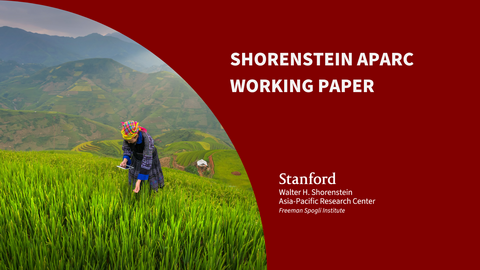
It was long assumed that Western liberal democracy and free-market capitalism held all the answers for development and national progress. Today, in the face of growing inequality and global power imbalances, this post–Cold War narrative has faltered. New players on the international scene, many from South and East Asia, have emerged to vie for influence and offer new models of development. Despite these recent changes, however, prominent international aid organizations still work under the assumption there are one-size-fits-all best practices. In Reimagining Aid, Wilks takes readers to Cambodia, a country at the heart of this transformation. Through a vivid, multi-sited ethnography, the book investigates the intricate interplay between aid donors from Japan and the United States, their competing priorities, and their impact on women's health initiatives in Cambodia. Cambodian development actors emerge not just as recipients of aid, but as key architects in redefining national advancement in hybrid, regional terms that juxtapose "Asia" to the "West." This book is a clarion call for practitioners, policymakers, and scholars to rethink what development means in a multipolar world. A must-read for anyone invested in Southeast Asia's role in global affairs and evolving definitions of gender in development, Reimagining Aid is a powerful reminder that the next chapter of global advancement is being written in unexpected places.
About the Author
Mary-Collier Wilks is currently an assistant professor of sociology at the University of North Carolina Wilmington. She was a 2021–2022 APARC Postdoctoral Fellow in Contemporary Asia at the Shorenstein Asia-Pacific Research Center.
Read our interview with Wilks >
Reviews of Reimagining Aid
"Despite being a longstanding aid-dependent country with one of the highest NGO densities per capita, scholarly attention to aid practitioners in Cambodia remains limited. Reimagining Aid fills this gap by offering rare, ground-level insights into how aid is experienced and negotiated by those implementing it. Its comparison of Western and East Asian development approaches is especially timely as Western aid influence declines while East Asian donors grow more assertive in shaping development agendas in the Global South."
— Soksamphoas Im, Michigan State University
Read the complete review, published in Pacific Affairs, July 20, 2026 >
"Reimagining Aid delivers methodologically inventive, empirically rich analysis of how development norms are remade in the Global South. The ethnography is vivid, the practitioner-centered approach overdue, and the aid chain framework offers a valuable lens for understanding how norms travel and transform."
— Tania DoCarmo, University of Massachusetts Amherst
Read the complete review, published in Social Forces, May 27, 2026 >
Advance Praise for Reimagining Aid
"Reimagining Aid is a groundbreaking and deeply insightful ethnography that reframes how we understand the global development apparatus. Through richly textured fieldwork, Mary-Collier Wilks exposes the tensions between Western and East Asian donor regimes and the ways in which Cambodian practitioners navigate and rework these competing imaginaries. Essential reading for anyone interested in global health, feminist development, and the shifting geopolitics of aid."
— Kimberly Kay Hoang, University of Chicago
"At a time of Asian ascendance and American retreat from foreign aid, Reimagining Aid centers attention on the power of Asian and Western imaginaries in the development field. A must-read for anyone concerned with how development happens, resistance to hegemony in the Global South, and the ways narratives of progress are intimately bound up with ideas about family, gender, and motherhood. A real tour de force!"
— Joseph Harris, Boston University
"This brilliant, beautifully intimate ethnography challenges the image of post-war Western aid hegemony, illustrating the new regionalized global society in which we live. As Cambodian aid workers navigate between Japanese and U.S. aid agencies and between competing 'regional development imaginaries,' they resist what they see as culturally alien, while creatively reconstructing models of aid, and of gender, for their own societies."
—Ann Swidler, University of California, Berkeley