0
Global Affiliate Visiting Scholar, 2021-22
Japan Patent Office
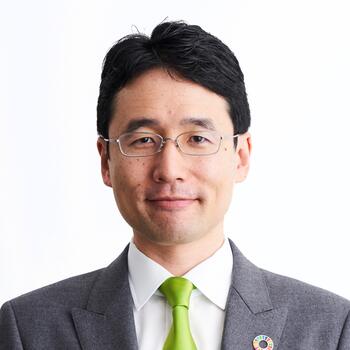
yusuke_mitsumori.jpeg

Yusuke Mitsumori is a global affiliate visiting scholar at the Walter H. Shorenstein Asia-Pacific Research Center (Shorenstein APARC) for 2021-22.

0
Global Affiliate Visiting Scholar, 2021-22
Ministry of Internal Affairs and Communications, Japan
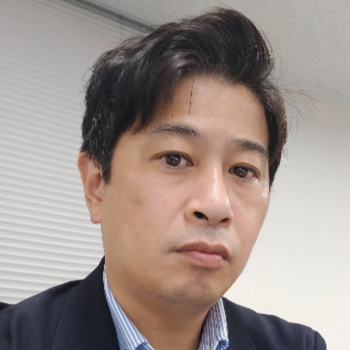
yuko_osaki_2.jpg

Yuko Osaki is a global affiliate visiting scholar at the Walter H. Shorenstein Asia-Pacific Research Center (Shorenstein APARC) for 2021-22.

Authors
News Type
Q&As
Date
Paragraphs

This interview was first published by the Stanford News Service.


The 2020 Summer Olympics have begun this week but public support among the Japanese public for the games has been generally low and their mood can be articulated through the succinct question: “Why are we doing this now?” says Stanford sociologist and Japan Program Director Kiyoteru Tsutsui.

 
Here, Tsutsui discusses how the various challenges posed by the COVID-19 pandemic and other national scandals related to the games have led to a general dissatisfaction among the Japanese public towards their government and the International Olympic Committee. Despite low morale, the country’s mood may change once the Summer Games commence – barring any further complications or disruptions. But given that the games are pared down this year, it still may be hard to generate the same levels of excitement as in previous years, Tsutsui said.
 
Tsutsui is the Henri H. and Tomoye Takahashi Professor and director of the Japan Program at the Walter H. Shorenstein Asia-Pacific Research Center, which is part of the Freeman Spogli Institute for International Studies. Tsutsui is also a professor of sociology and his research focuses on social movements, globalization, human rights and Japanese society. He is the author of Rights Make Might: Global Human Rights and Minority Social Movements in Japan (Oxford University Press, 2018).
 

Polls among the Japanese public show mixed support for the games and meanwhile, major advertisers in the country are pulling out. As a sociologist, how do you see this mixed public sentiment affecting overall mood and morale?

There is no question that there is a strong headwind against the Olympics in the lead-up to the opening ceremony. Opinion polls are still against the games, although the numbers improved a little in recent weeks. The general public sentiment can be summed up as “Why are we doing this now?”

The road to the Tokyo Olympics has been a long and winding one complicated by COVID-19, first and foremost, and various scandals. The Japanese public has been fed up with the COVID-19-related emergency declarations and other restrictions as well as the slower pace of vaccination compared to other developed countries. The perception, right or wrong, is that the government is making decisions based on whether they help in hosting the Olympics successfully, when the focus should be on public health and economic rescue in the COVID environment.

Morale is low, but many are hoping that things will change quickly once the games begin. Whether that happens or not depends on a whole host of factors, most importantly whether major public health incidents and other unfortunate accidents happen or not, how Japanese athletes fare, who might emerge as global stars, and so on.

To what extent has the International Olympic Committee (IOC) helped or hindered support for the games among the Japanese public?

The Japanese public sees the IOC as simply pushing its economic interest without the proper regard for their safety and health. Many people do not understand that the Japanese government does not have the authority to cancel the Olympics and could have faced a lawsuit with a huge compensation at stake if it tried to do so. The IOC looks like the IMF/World Bank during the Asian economic crisis in affected countries or the EU in some European countries – an international entity that pushes its agenda without accountability to the citizens. The frustration has nowhere to go but to the Japanese government, which combined with overall COVID-19-related dissatisfaction, has led to the most recent polls showing the lowest approval rating for the government under Prime Minister Yoshihide Suga.

For Japan, hosting the 2020 Olympic Games initially symbolized the country’s rebound from the devastating Tōhoku earthquake, tsunami and Fukushima Daiichi nuclear accident in 2011 and was poised to boost their economy. Then COVID hit, and meanwhile, Olympic expenses ballooned. Are there any opportunities for the Olympic Games to help the country bounce back? 

The 2020 Olympics was initially framed as a symbol of recovery from the triple disaster in 2011, but that slogan is no longer central. The expenses were justified as a way to develop infrastructure for foreign visitors and increase inbound tourists, and the government’s goals for the number of visitors from abroad have been met already. With no spectators allowed, Japan will lose money on hosting the Olympics, but the economic damage is not irrecoverable. Once the world gets out of COVID-19, the Japanese economy will likely rebound and tourists will come back.

It will be interesting to follow how socially, in terms of the national psyche and its unity, Japan will respond to the Tokyo Olympics. Even when the games take place in other countries, the Olympics often serve as a moment of national unity, especially in Japan. With Japan being the host, many thought that it would serve as an enormous booster towards national confidence and unity. We have yet to see how the games will turn out, but these psychological impacts will likely be lessened as the games are scaled down and may not get as much global attention as typical Olympics do.

There’s still a chance for a better outcome though if the games go smoothly and offer many compelling moments. People in many countries are still more homebound than usual and the contents that the games offer could be attractive. And the Japanese public is known to swing from one side to the other very quickly and on a massive scale, so once the games begin, TV personalities who were questioning whether the games should happen will likely quickly turn around and support Japanese athletes and tout their accomplishments. That is, if no serious outbreak incidents occur.

The Olympics are often celebrated as a nonpolitical event that can unite the world. In a globally turbulent world, what do you make of that assessment? Can the Olympics be nonpolitical?

The Beijing Winter Olympics in 2022 is a case in point. Boycott of the games seems unlikely, but House Speaker Nancy Pelosi has already floated an idea of diplomatic boycott. There’s a lot at stake for the host country, and the Olympics will likely be politicized when countries like China, Russia or even the U.S. host it.

Another problem is that not many democracies would be eager to host the games anymore. Public support is needed for democracies to host the Olympics, but the growing cost of the games, combined with increasingly less clear benefits of hosting, has made it difficult to find democracies that are eager to be the host country. Meanwhile, non-democracies like China and Russia, and even smaller countries like Kazakhstan or Azerbaijan campaign to become host nations. The pattern of dictatorships hosting the Olympics and the world demanding a change in their human rights practices and, threatening a boycott, might be a recurring pattern in the coming decades.

 
Photo of Kiyoteru Tsutsui

Kiyoteru Tsutsui

Senior Fellow at FSI, Professor of Sociology, Director of the Japan Program
Full Biography

Read More

President Biden and President Suga walk through the Rose Garden colonnade at the White House
Commentary

China Looms Large, Despite a Strong US-Japan Alliance

From Taiwan and the Senkaku Islands to economics, trade, and human rights issues in Xinjiang and Hong Kong, the U.S.-Japan alliance has plenty to tackle with its policies towards China.
China Looms Large, Despite a Strong US-Japan Alliance
Logo of the New South Wales Ministry of Health's podcast Future Health
News

Robotics and the Future of Work: Lessons from Nursing Homes in Japan

On the Future Health podcast, Karen Eggleston discusses the findings and implications of her collaborative research into the effects of robot adoption on staffing in Japanese nursing homes.
Robotics and the Future of Work: Lessons from Nursing Homes in Japan
An Island that lies inside Taiwan's territory is seen with the Chinese city of Xiamen in the background.
Commentary

The Taiwan Temptation

Why Beijing Might Resort to Force
The Taiwan Temptation
Hero Image
A man cycles past a security fence outside the New National Stadium, the main stadium for the Tokyo Olympics, on June 23, 2021 in Tokyo, Japan
A man cycles past a security fence outside the New National Stadium, the main stadium for the Tokyo Olympics, on June 23, 2021 in Tokyo, Japan.
Yuichi Yamazaki/ Getty Images
All News button
1
Subtitle

While public support in Japan has been lackluster for the 2020 Tokyo Olympic Games, the mood may change once the games start – provided no major public health incidents and other unfortunate accidents occur, says Stanford sociologist Kiyoteru Tsutsui.

Authors
Noa Ronkin
News Type
News
Date
Paragraphs

Does the new wave of digital technologies portend a future in which robots and automation increasingly replace workers and destroy livelihoods? In one of the first studies of service sector robots, APARC experts find evidence to offset dystopian predictions of robot job replacement.

The researchers — Asia Health Policy Program Director Karen Eggleston, SK Center Fellow Yong Suk Lee, and University of Tokyo health economist Toshiaki Iizuka, our former visiting scholar — set out to examine how robots affect labor, productivity, and quality of care in Japan’s nursing homes. Their findings indicate that robot adoption may not be detrimental to labor and may help address the challenges of rapidly aging societies.

Eggleston recently joined the Future Health podcast, an initiative of the New South Wales Ministry of Health, to discuss the study and its implications. The program is available both as a video and audio podcast. Watch and listen below:

Sign up for APARC newsletters to receive the latest updates from our scholars.


Published by the National Bureau of Economic Research, the study suggests that robot adoption has increased employment opportunities for non-regular care workers, helped mitigate the turnover problem that plagues nursing homes, and provided greater flexibility for workers. It is also published in AHPP's working paper series and is part of a broader research project by Eggleston, Lee, and Iizuka, that explores the impact of robots on nursing home care in Japan and the implications of robotic technologies adoption in aging societies.

The study has attracted media attention. The Financial Times Magazine, in a feature story and podcast, called it “groundbreaking in several ways but perhaps most clearly for setting its sights not on manufacturing but on the services sector, where robots are only just beginning to make their mark.” The Freakonomics Radio podcast also hosted Eggleston and Lee for a conversation about their research as part of an episode on collaborative robots and the future of work.

Read More

Autonomous caregiver robot is holding a insulin syringe, giving it to an senior adult woman, concept ambient assisted living
News

The Unfolding Relationship Between Human Workers and Robots in an Aging World

On the Freakonomics Radio podcast, Karen Eggleston and Yong Suk Lee discuss their research into the effects of robots on staffing in Japanese nursing homes.
The Unfolding Relationship Between Human Workers and Robots in an Aging World
A Japanese robot prototype lifts a dummy patient
News

Robot Adoption Brings Benefits to Japan’s Aging Society

In one of the first studies of service sector robotics, APARC scholars examine the impacts of robots on nursing homes in Japan. They find that robot adoption may not be detrimental to labor and may help address the challenges of rapidly aging societies.
Robot Adoption Brings Benefits to Japan’s Aging Society
A woman walks past a mural referring to the Covid-19 coronavirus painted on a wall on December 10, 2020 in New Delhi, India.
News

How COVID-19 Disproportionately Impacts People with Chronic Conditions in India

A collaborative study by a group of researchers including APARC’s Karen Eggleston documents the adverse effects of COVID-19 on people with chronic conditions in India, particularly among poor, rural, and marginalized populations. The pandemic’s impacts extend beyond health disparities to encompass psychosocial and economic consequences, the study shows.
How COVID-19 Disproportionately Impacts People with Chronic Conditions in India
Hero Image
Logo of the New South Wales Ministry of Health's podcast Future Health
All News button
1
Subtitle

On the Future Health podcast, Karen Eggleston discusses the findings and implications of her collaborative research into the effects of robot adoption on staffing in Japanese nursing homes.

Authors
News Type
Commentary
Date
Paragraphs

This blog post was first published by the Australian Strategic Policy Institute's The Strategist analysis and commentary site.


The Quad is stronger than ever. The informal ‘minilateral’ grouping of Australia, India, Japan and the United States has in the past year held its first stand-alone ministerial meeting and its first leaders’ summit, and launched an ambitious project to deliver Covid-19 vaccines. This ‘golden age’ of the Quad is a product of newfound Indian enthusiasm for the grouping, in turn, spurred by the military crisis in Ladakh, where India faces ongoing Chinese troop incursions across the two countries’ disputed border.

But the Quad is not bulletproof. Some experts have suggested that the economic and diplomatic effects of the devastating second wave of the pandemic in India will preoccupy the Indian government, sapping the Quad of capacity for any new initiatives. Others counter that India remains committed to competition with China—which is what really matters for the Quad—although its partners always expected ‘two steps forward, one step back’ from India.


Sign up for APARC newsletters to receive our experts' commentary and analysis.


Related: On the Conversation Six podcast, Tarapore discusses the policy paper on which this blog post is based with Jawaharlal Nehru University Professor of International Politics Rajesh Rajagopalan. Listen:


The pandemic may well prove to be a hiccup in the Quad’s evolution, but a potentially much larger disruption may come from the ongoing Ladakh crisis itself. As I argue in a new ASPI Strategic Insights paper, the crisis has greatly increased the risk of a border war between India and China, which would present a defining test of the Quad. A possible war could either strengthen or enervate the Quad—depending on how India and its partners, including Australia, act now to shape the strategic environment.

Risk is a function of likelihood and consequence. The likelihood of war on the India–China border is still low—both countries would prefer to avoid it—but has risen since the crisis began. Both countries have greatly expanded their military deployments on the border and backed them with new permanent infrastructure to resupply and reinforce them. China has proved its revisionist intent with large and costly military incursions, although its specific objectives and plans remain unknown. And the interaction of both countries’ military strategies and doctrines would, on the threshold of conflict, promote escalation.

The consequences of a possible conflict would be dire for both belligerents and for the region. China — assuming it is the provocateur of conflict—would likely face some political rebuke from states that consider themselves its competitors, but it will work strenuously to reduce those costs, and would likely have priced them in to its calculations of whether to fight. India will suffer high tactical costs on the border, and may also suffer wider harm if China uses coercive cyberattacks against strategic or dual-use targets.

In a costly war, the repercussions may spill over to damage India’s recently developing strategic partnerships, especially with the United States and Australia. Despite generally favorable views of the US, the Indian strategic elite still harbors some latent suspicions. This was highlighted in two episodes in April 2021, when the US Navy conducted a freedom of navigation patrol through the Indian exclusive economic zone, and when the US was slow in delivering Covid-19 vaccine raw materials and other relief. Both instances quickly receded from the Indian public imagination—thanks to quick correctives from Washington—but they did reveal that, under some conditions, Indian perceptions of its new partnerships can be quickly colored by distrust.

A China–India border war may create exactly those conditions. There is a chance that conflict may result in a redoubled Indian commitment to the Quad, if New Delhi judges that it has no option but to seek more external assistance. Conversely, unless a conflict is managed well by India and its partners, it is more likely to result in Indian disaffection with the Quad. India deepened Quad cooperation during the Ladakh crisis partly as a deterrent signal to China, and partly because the Quad is still full of promise. However, after a conflict—when China hasn’t been deterred and has probably imposed significant costs on India—the Quad’s utility would have been tested, and probably not ameliorated India’s wartime disadvantage.

The task before Quad governments is to be sensitized to this risk and implement mitigation strategies before a possible conflict, to buttress the coalition in advance. As I outline in the ASPI paper, they could do this at three levels. First, they could offer operational support—such as intelligence or resupply of key equipment, as the US already has done in the Ladakh crisis—although Quad partners’ role here would be limited. Second, they could provide support in other theatres or domains—with a naval show of force, for example, although cyber operations would probably be more meaningful in deterring conflict or dampening its costs. Third, they could provide political and diplomatic support — signaling to Beijing that a conflict would harm its regional political standing.

For Quad members, the main goal would be to deter conflict in the first place, and, failing that, to preserve the long-term strategic partnership with India for the sake of maintaining as powerful and energetic a coalition as possible to counterbalance China in the long term.

Read More

An Island that lies inside Taiwan's territory is seen with the Chinese city of Xiamen in the background.
Commentary

The Taiwan Temptation

Why Beijing Might Resort to Force
The Taiwan Temptation
Protesters against the military coup in Myanmar hold banners.
Commentary

Southeast Asia: China’s Long Shadow

Chinese foreign policy in Southeast Asia affects, and is affected by, the more despotic character of ASEAN’s mainland compared with its maritime member states. But the destiny of even the already undemocratic mainland portion of Southeast Asia is not—not yet at least—made in Beijing.
Southeast Asia: China’s Long Shadow
Little white cup of espresso coffee, opened book, blue semi-transparent vase with purple lilac flowers on rustic wooden table in the garden at spring morning after sunrise or at evening before sunset
News

What to Read This Summer — 2021: Book Recommendations by APARC Faculty

APARC faculty suggest dozens of books for your summer reading.
What to Read This Summer — 2021: Book Recommendations by APARC Faculty
Hero Image
Indian Prime Minister Narendra Modi rides in a tank at Longewala in Jaisalmer, Rajasthan, 14 November 2020.
Indian Prime Minister, Narendra Modi rides in a tank at Longewala in Jaisalmer, Rajasthan, 14 November 2020.
Press Information Bureau, Government of India
All News button
1
Subtitle

The Ladakh crisis between China and India seems to have settled into a stalemate, but its trajectory could again turn suddenly. If it flares into a limited conventional war, one of its incidental victims could be the Quad.

Paragraphs
A quote from Arzan Tarapore's policy brief on the implications of the China-India border tension for the Quad and a cover of the paper in the Australian Strategic Policy Institute

The Ladakh crisis between China and India seems to have settled into a stalemate, marked by somewhat reduced tactical tensions and continuing fruitless talks on disengagement—but its trajectory could again turn suddenly, even flaring into a limited conventional war. Despite a limited disengagement, both sides continue to make military preparations near the Line of Actual Control (LAC) to increase their readiness for potential conflict. While China proved its revisionist intent with its 2020 incursions, its specific goals and plans remain opaque. The broader political context is marked by distrust and hostility, and bilateral relations are at their lowest ebb in decades. War remains unlikely—both sides can ill-afford the distraction from higher national priorities and have demonstrated a recent keenness to step back from the brink. But, with growing capabilities and unclear intent, and with military operations no longer impaired by winter, the Ladakh crisis may still escalate to conflict.

The crisis has been full of surprises. Despite observing major military maneuvers in China, India didn’t anticipate the multiple incursions across the LAC in May 2020. For weeks thereafter, the Indian Army leadership insisted the incursions were nothing out of the ordinary. After both sides agreed to an early disengagement plan, the crisis took a shocking turn with a deadly skirmish in June — the first loss of life on the LAC in 45 years. India also mustered its own surprises, deploying troops to occupy tactically valuable heights in late August, to gain some bargaining leverage. And the crisis also abated with a surprise, with the sudden announcement of disengagement from heavily militarised stand-off sites around Pangong Tso Lake in February 2021.

Future surprises may yet occur. This paper argues that the risk of China–India conflict is significant because, even if its likelihood is low, its consequences may be considerable. A limited conventional war would be likely to impose significant costs on India, but, depending on the reactions of its partners, it may also reinforce latent Indian suspicions over the utility and reliability of its strategic partnerships. In that way, even a localized limited war on the LAC may have far-reaching implications, if it incidentally drives a wedge between India and its partners in the Quad. Mitigating that risk will require sound policy settings and astute diplomatic and public messaging from Canberra, Washington, Tokyo, and other like-minded capitals.

The remainder of this paper is in three parts: first, why a border war is plausible; second, what costs it would impose on India and how it might stir distrust of India’s Quad partners; and, finally, a framework to mitigate those risks.

All Publications button
1
Publication Type
Policy Briefs
Publication Date
Journal Publisher
Australian Strategic Policy Institute
Authors
Authors
Kiyoteru Tsutsui
News Type
Commentary
Date
Paragraphs

This commentary by Kiyoteru Tsutsui and Charles Crabtree was originally published in The Hill.


The recent White House summit meeting between President Biden and Japanese Prime Minister Yoshihide Suga signaled to the world, and especially to China, that the U.S.-Japan alliance is strong and ready for intensifying competition in Asia.

For the first time in more than 50 years, the Japanese and American leaders mentioned Taiwan in their joint statement. China immediately responded with strong words, as expected, but since has moderated its tone. Furthermore, Chinese leader Xi Jinping participated in the U.S.-organized Leaders Summit on Climate the week after the Biden-Suga meeting and took a collaborative stance, a hopeful sign that competition will not eliminate the possibility of some collaboration and that climate change is an area where Beijing, Tokyo and Washington can work together.

But the U.S. and Japan still have at least three concerns about China: Beijing’s continued posturing on Taiwan and the Senkaku Islands; its significant leverage in economic relations; and its repression of human rights in Xinjiang, Hong Kong and beyond. How should the alliance handle these important issues? 

On the security front, America’s return to multilateralism under Biden is a welcome development for Japan and other like-minded states in the region. The U.S.-Japan alliance is obviously central in the coalition of democratic nations concerned about China’s ambitions. The primary goal of these countries ought to be walking the thin line between demonstrating their resolve to counter any aggressive behavior by China with force and avoiding any unnecessary provocation against China. 

Toward that end, the most promising framework is the Quad that includes India and Australia in addition to Japan and the U.S. The first-ever leader-level meeting in March elevated the Quad’s status significantly. While it still is a long way from becoming a NATO-like security apparatus — and it’s not even clear if that’s the consensus goal — it could help stabilize the region by creating a credible counterweight to check China’s territorial ambitions.

Beyond the Quad, the inclusion of other like-minded stakeholders such as South Korea and ASEAN countries on security matters is important. With South Korean President Moon Jae-in’s visit to Washington planned in late May, a good first step for the Biden administration would be to invest some diplomatic capital in mending fences between Japan and South Korea. A full-scale reconciliation between the two regional powers is unlikely this year; Suga faces elections in the fall, for which he needs to consolidate the conservative base, and Moon is a lame duck with limited political power. But some reconciliation would be welcome for the U.S. as it seeks to resurrect the trilateral alliance with Japan and South Korea to complement the Quad in deterring China’s ambitions and addressing the threat posed by North Korea. 

In the economic domain, China is arguably even more difficult to contain, being the largest trade partner for virtually all the countries in the region. Decoupling from China was a key theme at the Biden-Suga summit, but this is a task that has proven much easier said than done. From semiconductors to rare earth minerals, the battle for key materials for the 21st century economy will only intensify, and China’s grand scheme in the Belt and Road Initiative needs to be countered by a similarly grand long-term strategy that would flesh out the Free and Open Indo-Pacific vision.

In this regard, the U.S.-Japan Competitiveness and Resilience Partnership can be quite consequential. In addition to pledging cooperation on “sensitive supply-chain” issues, it outlines the agenda for technological innovation that cuts across security and economic domains, making it a critical tool in the competition with China. This is because whoever develops an edge in transformational technologies — such as artificial intelligence, 5G infrastructure, and outer space development — will enjoy diplomatic and military advantages as well as economic profits. The combined $4.5 billion investment in the partnership is a good first step to ensuring that the U.S. and Japan retain an innovation advantage. Additional expenditures likely will be necessary, though, considering China’s commitment in these areas.

On human rights, Japan and America take different approaches. While the U.S. has called the situation in Xinjiang a genocide and imposed sanctions there, as well as in Myanmar following the military coup, Japan has taken a more subdued stance. This is a standard approach for Tokyo, which prefers to emphasize engagement with violating governments.

The Biden administration seems to accept Suga’s strategy of engagement, and perhaps the diplomatic channel that this approach provides can be useful in negotiating some kind of settlement. However, the strategy of engagement that has produced some benefits in countries such as Thailand and possibly Myanmar is unlikely to be as effective with China. Furthermore, several Western corporations are facing boycotts in China for taking a stand against forced labor in Xinjiang. If Japanese corporations avoid paying the price and continue business as usual, Tokyo might face greater pressure to take some action. Given the central importance of the Chinese market for Japanese businesses, this could give rise to significant tension between Tokyo and Washington. 

On all these dimensions, for Japan and the U.S. to be effective in countering China, both Biden and Suga would have to consolidate domestic support. Biden’s first 100 days generally were seen as successful, with COVID-19 vaccine distribution going smoothly and Congress passing ambitious spending bills. Besides, Biden has at least until the midterm elections in November 2022 to move things forward.

The timetable is less friendly for Suga, who needs to win the Liberal Democratic Party (LDP) presidential election in September and hold a House of Representatives election by October. His fate will be shaped in large measure by his government’s pandemic response and how that influences economic fortunes, and to a lesser extent the success of the Tokyo Olympics. Most Tokyo insiders predict that he will remain in office past October, citing weak opposition both in and outside of the ruling LDP. If, however, COVID-19 vaccine distribution does not move forward by the fall, as projected by the government, and the economy continues to slide, that could still trip him up.

Only with domestic political stability and economic prosperity can Tokyo and Washington take the next steps in projecting strength vis-à-vis China, and that is the best deterrent against China’s expansionist ambitions and toward ensuring peace and stability in the Indo-Pacific area.

Read More

President Biden and President Suga walk through the Rose Garden colonnade at the White House
Commentary

U.S. and Japan Gear Up for a New Era of Competition with China

The time is near when other Asian nations will have to pick a side in the great power competition between the United States and China, says Japan Program Director Kiyoteru Tsutsui.
U.S. and Japan Gear Up for a New Era of Competition with China
A man wearing a face mask prays for the new year at Meiji Shrine in Tokyo, Japan.
Commentary

Japan's Challenges in the Next Year are Greater than its Opportunities

Surging coronavirus cases and ongoing political scandals have docked Suga's approval ratings, but successfully handling the upcoming Olympics and taking further strides with the United States, ASEAN, and South Korea may help him rebound.
Japan's Challenges in the Next Year are Greater than its Opportunities
A loaded shipping liner sails out of port.
Commentary

Let's Keep it the 'Free and Open' Indo-Pacific

Both Japan's Suga and the incoming Biden administration should maintain the language of the "free and open Indo-Pacific" for consistency and to signal their ongoing commitment to maintaining a firm policy stance on China's ambitions.
Let's Keep it the 'Free and Open' Indo-Pacific
Hero Image
President Biden and President Suga walk through the Rose Garden colonnade at the White House Getty Images
All News button
1
Subtitle

From Taiwan and the Senkaku Islands to economics, trade, and human rights issues in Xinjiang and Hong Kong, the U.S.-Japan alliance has plenty to tackle with its policies towards China.

-

The six Asian countries examined in the new book Shifting Gears in Innovation Policy — China, India, Japan, Singapore, South Korea, and Taiwan — have achieved high economic growth in many industrial sectors, but the catch-up phase of their growth is over or ending. These countries can no longer rely on importing or imitating new technologies from abroad. Rather, they must develop their own innovations to maintain growth. The traditional industrial policy tools they often used to advance “innovation” by selecting promising industries and diverting resources to them are no longer effective. Indeed, governments in Asia have recently put forward new policies, such as China’s push for mass entrepreneurship and innovation. It is at this juncture that the authors of Shifting Gears reassess Asia’s innovation and focus on national strategies and regional cluster policies that can promote indigenous entrepreneurship and innovation in the larger Asia-Pacific. In this virtual book launch, contributing chapter authors join Yong Suk Lee to discuss their findings.

SPEAKERS

Image
Edison Tse
Edison Tse is an Associate Professor in the Department of Management Science & Engineering at Stanford University. He is also the Director of Asia Center of Management Science and Engineering, which has the charter of conducting research on the growth of emerging economy in Asia, with a special focus in China, Korea and India. In 1973, he received the prestigious Donald Eckman Award from the American Automatic Control Council in recognition of his outstanding contribution in the field of Automatic Control. In 2003, he received the Golden Nugget Award from General Motors R & D and Planning. In 2008, he received the Dean’s Award for Industry Education Innovation from School of Engineering, Stanford University. He had served as an Associate Editor of the IEEE Transactions of Automatic Control, and a co-editor of the Journal of Economic Dynamics and Control, which he co-founded. Since 2003, he dedicated his research effort in dynamic entrepreneurial strategy and transformation of Chinese production economy to innovation economy. He wrote a book in Chinese entitled “源创新”on this theory and published in China in 2012. A second edition of this book, with new chapters incorporating some experiences of practicing the theory in China, was published in 2016 by China CITIC Press with a new title “重新定义创新(Redefine Innovation)”. He is now working on the extension of this theory to developing countries. His main thesis is that innovation is cultural dependent. Successful innovation in a developing country must be synergistic to its culture, its political, social and economic environment. Professor Edison Tse received his BS, MS, and Ph.D. in Electrical Engineering from Massachusetts Institute of Technology. 

Image
Dinsha Mistree
Dinsha Mistree is a Lecturer and Research Fellow in the Rule of Law Program at Stanford Law School. In his research, he examines how formal legal systems sometimes can sometimes stimulate economic development, while at other times these same systems can hold back development. His work considers incentives for innovation and entrepreneurship, meritocracy in public administration and education, and drivers of economic development more broadly. Much of Dr. Mistree’s research focuses on India and other South Asian countries. His work has appeared or is forthcoming at Social Science and MedicineStanford Law Review, and Cambridge University Press. Dr. Mistree holds a PhD and an MA in Politics from Princeton University and an SM in Political Science from MIT.

Image
Michelle Hsieh
Michelle F. Hsieh is an Associate Research Fellow in the Institute of Sociology, Academia Sinica, Taipei, Taiwan. She received her PhD (in Sociology) from McGill University, Montreal, Canada, and was a Shorenstein Postdoctoral Fellow at the Shorenstein Asia-Pacific Research Center at Stanford University. Her research interests include economic sociology, sociology of development, comparative political economy, and East Asian societies. Her ongoing research explores the variations and consequences of industrial upgrading among the East Asian latecomers. She has done empirical analysis of the different configurations of the state-society linkages for innovation through comparative industry studies on Taiwan and South Korea. Her investigations focus on how technology learning and adaptation take place in a decentralized system of SME network production and the institutional arrangements that can facilitate or hinder coordination and collaboration. Other research interests are the origins of the East Asian developmental state and the connection between technological development and Cold War geopolitics in the latter half of the twentieth century. 

Image
WoonJoon Kim
Wonjoon Kim is the Head of the Graduate School of Innovation and Entrepreneurship, a Professor at the School of Business and Technology Management, KAIST. He is also the Director of KAIST Center for Innovation Strategy and Policy. He has been conducting and publishing numerous researches on the strategic management of innovation of firms, industry, and governments centering on emerging innovation paradigms. His current research interest also covers the changing nature of innovation, including AI and industrial and social change, the convergence of technology as well as the changing nature of the process of entrepreneurship. Currently, he is the President of Asia Innovation and Entrepreneurship Association (AIEA), Organizing Committee Chair for the AIEA-NBER Conference and a Vice President of the Korean Society for Innovation Management and Economics. He is also serving as the Editor of the Journal of Technology Innovation, and an Editorial Board Member for several journals on innovation such as Technovation, Innovation Studies. Before he joined KAIST, he has been an Adjunct-Assistant Professor at the Department of Economics, NYU as and a Research Fellow at the Yale School of Management. He holds a Ph.D. in Economics of Innovation including Science and Technology Policy from Seoul National University. 

MODERATOR 

Yong Suk Lee, SK Center Fellow at the Freeman Spogli Institute for International Studies and Deputy Director of the Korea Program at the Walter H. Shorenstein Asia-Pacific Research Center at Stanford University. 

This event is being held virtually via Zoom. Please register for the webinar via the following link: https://bit.ly/3axXNab

Edison Tse <br><i>Associate Professor in the Department of Management Science & Engineering at Stanford University</i><br><br>
Dinsha Mistree <br><i>Research Fellow and Lecturer at the Program in the Rule of Law at Stanford Law School</i><br><br>
Michelle Hsieh <br><i>Associate Research Fellow in the Institute of Sociology, Academia Sinica, Taipei, Taiwan</i><br><br>
Wonjoon Kim <br><i>Head of the Graduate School of Innovation and Entrepreneurship and Professor at the School of Business and Technology Management at KAIST</i><br><br>
Panel Discussions
Authors
Kiyoteru Tsutsui
News Type
Commentary
Date
Paragraphs

This op-ed by Kiyoteru Tsutsui originally appeared in Nikkei Asia.


In one of the few unscripted moments in the meticulously planned U.S.-Japan summit meeting last Friday, President Joe Biden referred to Prime Minister Yoshihide Suga as "vice president" before quickly correcting himself.

In a different era, this could have turned into a diplomatic incident, with right-leaning Japanese pundits calling it evidence of the U.S.'s patronizing approach to Japan. Fortunately for Biden, the current geopolitical environment is not conducive to such provocation, and no major media picked up on the slip.

[Subscribe to APARC's newsletters to receive updates on our scholars.]

Much has been made of Suga being the first foreign leader to meet Biden in person. According to the U.S. State Department Office of the Historian, this is only the second time ever that a Japanese prime minister became the first foreign leader to meet a new president in the White House.

The other time was in 1989, when Prime Minister Noboru Takeshita visited President George H.W. Bush. Back then, Japan was a major threat to U.S. economic hegemony. Today, China is that threat, and not just in the economic domain. China is the first bona fide competitor to the U.S. since the Soviet Union, and its threat extends to every nook and cranny of the globe.

To counter China's ascension, the U.S. needs its allies, and Japan is the most important partner for that purpose. This is the context in which Suga visited the White House despite all the COVID-related restrictions.

Not surprisingly, the statements were carefully crafted to send strong signals to China. Building on the two-plus-two dialogue in March, the joint statement touched on the importance of peace and stability in the Asia-Pacific, from the East and South China seas to even Hong Kong, Xinjiang and Taiwan.

Japan certainly wanted a reference to the Senkaku Islands, which Beijing claims and calls the Diaoyu, and the applicability there of Article V of the U.S.-Japan Treaty of Mutual Cooperation and Security. The Biden administration had made that commitment earlier, calming concerns among Japanese leaders that the new administration may be softer on China than the Trump administration.

Biden has, in fact, been quite tough on China and has given almost a perfect answer to what Japanese foreign policymakers wanted. In return, the U.S. wanted Japan to be squarely on Washington's side. The wording of the joint statement — negotiated until the last minute — saw Japan agree to include a reference to Taiwan for the first time in 52 years, but with Japan's preferred wording, encouraging "the peaceful resolution of the cross-Strait issues."

Predictably, China reacted quickly and strongly, accusing the two countries of interfering in its domestic affairs and warning Japan about siding with the U.S. We have yet to see what retaliatory actions China might take, but the reference to Taiwan signals the beginning of a new trilateral relationship between China, Japan and the U.S.

The summit covered other important issues, all with China in the background. One key issue is economic security. In particular, supply chain decoupling will become a battle cry for the U.S. and its allies as they seek to reduce dependence on materials from China. Semiconductors are especially critical, as they power all the major growth areas in the new economy. Taiwan's dominance in the semiconductor industry is the main reason why Taiwan is so important to both sides.

To remain in the driver's seat in the new economy, the joint statement announced a new U.S.-Japan Competitiveness and Resilience (CoRe) Partnership. The most concrete proposal was an initial commitment of $4.5 billion from the two governments toward fifth generation (5G) and 6G networks, reflecting concerns about China's dominance in the key digital infrastructure of the future.

Human rights is another thorny issue, with the joint statement specifying concerns over Xinjiang and Hong Kong. With some companies joining the boycott campaign on cotton from Xinjiang, and China countering by criticizing racial division in the U.S., the clash between China and the U.S. will intensify in this area as well. Japan has stepped out of its comfort zone and criticized China on human rights, following the American approach more explicitly than before. In this regard, it is notable that Suga also referred to rising violence against Asians in the U.S.

One area in which China might be more of a partner than a competitor is climate change, with all three countries committing to zero emissions by mid-21st century. Almost concurrently with the Biden-Suga meeting, American and Chinese climate envoys — John Kerry and Xie Zhenhua — met in China and issued a joint statement affirming their commitment to work together on global climate challenges.

All these initiatives and commitments are potentially meaningful and consequential developments that can reshape the Indo-Pacific, although more concrete ideas are needed before we can evaluate their impact. The biggest take-away ought to be the confirmation that the U.S.-Japan alliance is gearing up for a new era of competition with China.

Japan more than reaffirmed its commitment to the alliance with the U.S., risking its economic relations with China. The U.S. will be sure to ask for more concrete actions from Japan on the basis of the joint statement, and Japan can no longer evade questions about what it would do in a confrontation with China. Japan has to navigate a tough terrain of standing with the U.S. in the competition with China while preventing the escalation of tensions between Beijing and Washington, and at the same time protecting its own national interests.

A new phase of the trilateral relationship has just begun, and like it or not, other Asian nations might face the same decision that Japan faced, and sooner rather than later.

Read More

Protesters hold signs and chant slogans during a Black Lives Matters Peaceful March on June 14, 2020 in Tokyo, Japan.
Commentary

What Japan and the U.S. Can Learn from Each Other

Japan Program Director Kiyoteru Tsutsui explores the cost of racial division versus the cost of homogeneity by comparing the experiences of Japan and the United States.
What Japan and the U.S. Can Learn from Each Other
President Biden walks past a row of Chinese and American flags.
News

APARC Experts on the Outlook for U.S.-Asia Policy Under the Biden Administration

Ahead of President-elect Biden’s inauguration and on the heels of the attack on the U.S. Capitol by a pro-Trump mob that has left America shaken, an APARC-wide expert panel provides a region-by-region analysis of what’s next for U.S. policy towards Asia and recommendations for the new administration.
APARC Experts on the Outlook for U.S.-Asia Policy Under the Biden Administration
President-elect Joe Biden and Chinese President Xi Jinping
News

Biden Administration Will Rely On U.S. Allies for Support as Tensions with China Continue to Rise

On the World Class Podcast, international security expert Oriana Skylar Mastro says conflict between China and Taiwan is plausible within the next 15 years, and the U.S. will likely be involved.
Biden Administration Will Rely On U.S. Allies for Support as Tensions with China Continue to Rise
Hero Image
President Biden and President Suga walk through the Rose Garden colonnade at the White House Getty Images
All News button
1
Subtitle

The time is near when other Asian nations will have to pick a side in the great power competition between the United States and China, says Japan Program Director Kiyoteru Tsutsui.

-

This event is part of Shorenstein APARC's spring webinar series "The United States in the Biden Era: Views from Asia."

American politics, especially presidential elections, have always drawn significant attention from Japanese policy makers and the public, because of their enormous impact on Japanese politics. The recent developments in the U.S. – from the Trump presidency to the contested election and the unconventional transition of power that included a riot at the Capitol – have engendered an elevated level of curiosity and concern about the state of American politics in Japan. This webinar will examine how Japanese leaders and citizens have processed what unfolded in the U.S. and how it may have shaped their current views on US-Japan relations, featuring two leading experts on the topic, Keiko Iizuka (Yomiuri Shimbun) and Toshihiro Nakayama (Keio University). Moderated by Kiyoteru Tsutsui, Director of the Japan Program at APARC, the webinar will have a Q&A session, and the participants are welcome to submit their questions in advance using the registration form and at the event using the Q&A function of Zoom.

SPEAKERS

Image
Keiko Iizuka
Keiko Iizuka is Senior Political Writer/Editorial Writer at The Yomiuri Shimbun and lead commentator for the nightly news program “News in Depth (Shinso News)” on the BS4 channel. Her expertise is international relations specially focusing on Indo-Pacific, Japan-U.S. relations, and European affairs. Her U.S. experience includes working at the Brookings Institution as a visiting fellow (2008-2009) and a role of Washington Bureau Chief with Yomiuri (2013-2015). She has held several other positions at the paper including chief editor for international news department (2015-2017) and chief political correspondent at the Prime Minister’s office of Japan (2006-2007). She was posted twice in London as correspondent (2003-2006, 2017-2019).

Image
Toshihiro Nakayama
Toshihiro Nakayama, Ph.D, is a Professor of American Politics and Foreign Policy at the Faculty of Policy Management at Keio University. He is also a Senior Adjunct Fellow at the Japan Institute of International Affairs (JIIA). He was a Special Correspondent for the Washington Post at the Far Eastern Bureau (1993-94), Special Assistant at the Permanent Mission of Japan to the United Nations in New York (1996-98), Senior Research Fellow at The Japan Institute of International Affairs (2004-06), Associate Professor at Tsuda College (2006-10), and Professor at Aoyama Gakuin University (2010-14). He was also a CNAPS Visiting Fellow at the Brookings Institution (2005-06), Sir Howard Kippenberger Chair Visiting Professor at the Center for Strategic Studies, Victoria University in Wellington (2017) , Japan Scholar at the Woodrow Wilson Center (2018-2019), and an Advisor to the Ministry of Defense (2019-2020). He received his M.A.(1993) and Ph.D.(2001) from Aoyama Gakuin University. He has written two books and numerous articles on American politics, foreign policy and international relations. Recipient of Nakasone Yasuhiro Award (Incentive Award) in 2014.

MODERATOR 

Image
Kiyoteru Tsutsui
Kiyoteru Tsutsui is Henri H. and Tomoye Takahashi Professor and Senior Fellow in Japanese Studies at the Walter H. Shorenstein Asia-Pacific Research Center at Stanford University, where he is also Director of the Japan Program, a Senior Fellow of the Freeman Spogli Institute for International Studies, and a Professor of Sociology. He is the author of Rights Make Might: Global Human Rights and Minority Social Movements in Japan (Oxford University Press, 2018), co-editor of Corporate Responsibility in a Globalizing World (Oxford University Press, 2016) and co-editor of The Courteous Power: Japan and Southeast Asia in the Indo-Pacific Era (University of Michigan Press, forthcoming 2021). 

This event is being held virtually via Zoom. Please register for the webinar via the following link: https://bit.ly/3sfxcVs

Keiko Iizuka <br><i>Senior Political Writer/Editorial Writer at The Yomiuri Shimbun</i><br><br>
Toshihiro Nakayama <br><i>Professor of American Politics and Foreign Policy at the Faculty of Policy Management at Keio University</i><br><br>
Seminars
Subscribe to Japan