-

Forecasting is a difficult profession. International economist David Hale and writer Lyric Hughes Hale do not claim they can foretell the future. But as veteran observers of the Asian economies, they can envision scenarios that are contrary to current conventional wisdom, and trends that deserve more attention than they are given in the media. What if China and Japan actually engage in armed conflict? Could East Asia experience its own version of the Arab Spring? What would be the consequences of another major earthquake in Japan? When the United States was the dominant power in the Pacific, security interests and economic interests were aligned in the region. Now that China has become the largest trading partner for many ASEAN countries, a new Great Divergence is emerging, with  potentially destabilizing consequences. While our national attention has been dominated by the Middle East for a decade now, in the coming era of energy self-sufficiency in the United States, we must shift our focus to the Far East.

Image
David Hale
David Hale
Global Economist & Chairman
David Hale Global Economics, Inc.

                    and

Image
Lyric Hughes Hale
Lyric Hughes Hale
Independent International Affairs Professional &
Board Director, The Japan America Society of Chicago

Philippines Conference Room

Seminars
-

North Korea, arguably the most isolated country in the world, poses unique challenges for journalists. Access to the country is severely limited and even when a journalist is able to gain entry, the secretive and repressive nature of the state significantly limits what can be learned. Still, despite these difficult conditions, the realities of North Korean life are increasingly finding their way into various media, from newspaper reporting and on-line media to thinly fictionalized accounts.

This panel will take a multi-faceted look at the coverage of North Korea through the journalist (represented by 2012 Shorenstein Journalism Award winner Barbara Demick), the editor, the development/relief worker, and the novelist.

Panelists include:

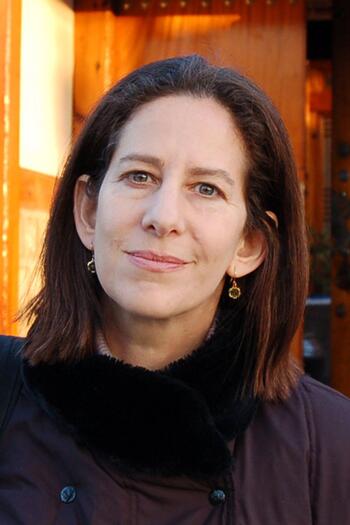
Image
Barbara Demick
Barbara Demick, has been Beijing bureau chief for the Los Angeles Times since 2008. She has focused on human trafficking, corruption, and minorities, as well as North Korea. Demick is the author of two books -- Nothing to Envy: Ordinary Lives in North Korea and Logavina Street: Life and Death in a Sarajevo Neighborhood. Her work has won awards from the Asia Society, the Overseas Press Club, the American Academy of Diplomacy, among others. Her North Korea book, which has been translated into more than 20 languages, recently won the International Book Award on Human Rights. She is a graduate of Yale and taught a seminar on coverage of repressive regimes at Princeton University. She lives in Beijing with her son Nicholas.

Image
Susan Chira
Susan Chira, was named assistant managing editor for news for the New York Times in September 2011. Previously, she had served as foreign editor (since January 2004), and as editorial director of book development (since September 2002). Before that, Chira was the editor of the "Week in Review" section at the Times (since October 1999), after having served as deputy foreign editor of the newspaper (since February 1997). Earlier, she served in a variety of reporting positions including national education correspondent, Tokyo correspondent (from October 1984 until February 1989), metropolitan reporter in the Albany and Stamford bureaus, and reporter for the "Business Day" section.
 

Image
Katharina Zellweger
Katharina Zellweger, a Pantech Fellow, joined the Korean Studies Program at the Walter H. Shorenstein Asia-Pacific Research Center after five years of living in Pyongyang where she has served as the North Korea country director for the Swiss Agency for Development and Cooperation (SDC). Through her SDC and earlier work, she has witnessed modest economic and social changes not visible to most North Korea observers. Her research at the Center has drawn on her over 15 years of humanitarian work in North Korea and explore how aid intervention can stimulate positive sustainable change there


Image
Adam Johnson
Adam Johnson is an associate professor of English, with emphasis in creative writing, at Stanford University. A Whiting Writers’ Award winner, his fiction has appeared in Esquire, Harper's, Playboy, Paris Review, Granta, Tin House, and Best American Short Stories. He is the author of Emporium, a short-story collection, and the novel Parasites Like Us, which won a California Book Award. His novel The Orphan Master's Son, a novel set in North Korea, has just been published by Random House. His books have been translated into sixteen languages. Johnson was a 2010 National Endowment for the Arts Fellow.

Bechtel Conference Center

Conferences
-

With new or newly re-elected leaderships in both North and South Korea and all of Korea’s neighbors and the United States, the year 2013 will see increased diplomatic movement regarding the Korean Peninsula. Accordingly, the fifth annual Koret conference will take the form of a policy workshop on North Korea policy. The workshop participants will examine the interests and policies of the new governments of North and South Korea and their neighbors toward the "North Korea problem" and consider what policy adjustments may have made possible by the leadership changes. They will consider initiatives that the concerned countries, individually and collectively, could take to begin a sustainable process of establishing permanent peace and security on the Korean Peninsula and realizing economic and political liberalization in North Korea.

The 5th Annual Koret Conference is made possible by the generous support of the Koret Foundation.

Bechtel Conference Center

Conferences
Authors
News Type
Q&As
Date
Paragraphs

North Korea successfully launched a long-range rocket Wednesday, with the North American Aerospace Defense Command (NORAD) confirming Pyongyang had "deployed an object that appeared to achieve orbit." The defiant rocket launch has prompted worldwide consternation: Japan has called for an urgent meeting of the U.N. Security Council; the Obama administration called the launch a "highly provocative act that threatens regional security" and violates U.N. resolutions; and South Korea has raised its security threat level. 

Pyongyang insists it has a right to pursue a peaceful space program and that the rocket was armed with a communications satellite to help in that endeavor. But the U.S. and its allies worry the technology could lead to an intercontinental ballistic missile capable of carrying a nuclear warhead.  

We turn to three experts on North Korea for their views on the launch: David Straub, associate director of the Korean Studies Program at the Walter H. Shorenstein Asia-Pacific Research Center; Thomas Fingar, an international intelligence expert and the Oksenberg-Rohlen distinguished fellow at FSI; and Nick Hansen, a CISAC affiliate and expert in foreign weapons and imagery intelligence who writes for Jane’s Defense and 38North.org, a website for the U.S.-Korea Institute at SAIS.


Why is the global community surprised North Korea has successfully launched a rocket and apparently put a satellite into orbit? 

Straub: It shouldn't come as a surprise that North Korea has finally succeeded with its fifth test of a long-range rocket, which it's been trying to do since 1998. North Korea has pursued the development of nuclear weapons and missiles with great determination and intensity over many decades, because its leaders regard these as a panacea for problems actually originating in their own failed economic and political systems. 

Fearful that domestic reform would result in their overthrow, they continue to oppress and isolate their people while using military threats to intimidate other countries. Their aim is to remain in power and eventually prevail over their rival South Korea by forcing the lifting of international sanctions and being accepted as a nuclear weapons state. It is not irrational but it is very unrealistic. Most members of the international community, including the United States, will never accept this. North Korea is thus going ever deeper down a blind alley. 

The rocket technology is dangerously close to long-range missile technology and the United Nations Security Council has issued several resolutions and forbidden North Korea from conducting any further tests. 


Was there any significance to the Dec. 10-29 launch window? 

Straub: The media is full of speculation about why North Korea announced this particular window of dates, such as that it means to send a message to the Obama administration or to influence the upcoming South Korean presidential election on December 19.  My own guess is that it is keyed to the first anniversary Kim Jong Il’s death on December 17. 

But in the end, the most important question is why the North Koreans conducted the launch. It is fundamentally because they have a long-standing missile program to which they have devoted a great deal of resources. If the leadership had devoted those resources to taking care of its citizens, it could have bought enough food on the global market to prevent hunger, instead of calling on the international community for assistance.


The North Koreans typically pick the spring or summer to test their rockets. Why did it launch now amid constraining winter weather? 

Hansen: The timing is purely political. The reasons they prefer to launch in the spring and summer are, of course, better weather conditions and longer days to work on the pad. But the anniversary of the death of Kim Jong Il, the presidential elections in South Korea, beating the south to a satellite launch or putting the DPRK back in the international spotlight – these could all have driven the decision. 

North Korea may be following the same script they used for the (failed) April 12 Unha-3 launch. If they continued at the April pace, the rocket should have been completely stacked on the pad on Dec. 7 in order to be checked out on the 8th and 9th and be ready to launch on the 10th, which was the first day of the launch window. This was a tight schedule with little room for technical problems or weather delays. (The North's Korean Central News Agency announced Dec. 10 that the launch window had been extended to the 29th, thus catching many North Korea observers off guard by the earlier launch.) 

Fingar: The timing is indeed outside the normal window of relatively better weather. Possible factors include commemoration of the anniversary of Kim Jong Il’s death; a ploy to capture the attention of new administrations in Washington, Beijing, Seoul, and Japan; and intent to buttress the North’s claim to having a nuclear deterrent by demonstrating that it can launch at any time of the year. There might also have been a simpler explanation, namely that DPRK engineers thought they had found and fixed the problem that caused the previous tests to fail and persuaded Kim Jong Un that there was no technical reason to delay.


What are the larger implications of North Korea’s actions and why do these rocket launches provoke such global condemnation? 

Fingar:  Perhaps the primary reason is that North Korea is widely perceived to be dangerous and more than a little bizarre. In other words, it is an easy target and symbolic embodiment of “worst case” fears about what a defiant and “irrational” country might do with its nuclear and missile capabilities. 

The world also sees that North Korea’s attempt to launch a satellite is interpreted, not unreasonably, as defiance of U.N. Security Council Resolution 1718, which demands that the DPRK not conduct any further nuclear test or launch a ballistic missile. Pyongyang argues that a rocket used for space launches is not a ballistic missile, and therefore is not proscribed by the U.N. resolution. 

Straub: North Korea has been developing medium- and long-range missiles for more than two decades, during which time it has repeatedly attacked South Korea and threatened the United States and other countries. It has also been working on its nuclear program and has already tested two nuclear devices. The fear is that North Korea is trying to miniaturize a nuclear device that could be used as a warhead on a long-range missile. 

In January 2011, former Defense Secretary Robert Gates voiced U.S. concern that North Korea was becoming a direct threat to it, and that Pyongyang could successfully develop intercontinental ballistic missile capability within five years.  

In South Korea, the launch is unlikely to have a major impact on the presidential election December 19. Conservative South Koreans regard North Korean behavior as stemming from the nature of its system, while progressives also blame the policies of the United States and conservative South Korean administrations for making North Korea feel insecure. Each side will simply interpret the launch from its longstanding perspective on North Korea.  

In Japan, where concern about North Korea runs deep both because of the nuclear and missile programs and North Korea's abduction of Japanese citizens, the launch will likely further strengthen the front-running conservatives in the Lower House election on December 16.


How is the international community responding to the launch? 

Straub: The United States has already signaled that it will seek even stronger international sanctions against North Korea. If China is unwilling to agree in the U.N. Security Council, the United States and its allies will pursue increased sanctions on their own. 

China has again been embarrassed by North Korea, but there is no indication that it will change its basic policy of supporting North Korea for fear it might collapse, creating an unpredictable situation on China's border. Even if China agrees to some increased sanctions against North Korea in the UN Security Council, its record of actually enforcing international sanctions is decidedly mixed. In any event, it has dramatically increased its economic support for and engagement with North Korea since that country's first test of a nuclear device in 20006. 


Is there anything more that Washington can do to prevent these provocations by the North aside from pushing the Six Party Talks and threats of greater sanctions? 

Fingar:  Probably not. Some argue that Pyongyang’s goal is to use the provocations to persuade the United States to negotiate directly with North Korea, but its conditions for doing so include U.S. acknowledgment – and acceptance – of the North’s self-proclaimed status as a nuclear weapon state. That is not likely to happen. I think the best course for the United States would be to avoid over-reacting and to focus attention on Pyongyang’s defiance of U.N. Security Council resolutions.


There is speculation that a third underground nuclear test will follow the rocket launch if it fails to put a satellite into orbit.


Hansen: I believe they will test regardless of the successful launch.  I have been following the nuclear test site at Punggye-ri all November. Details from a Nov. 19 image show that part of the dirt road into the complex from the valley is unusable, as three bridges have been washed out. Instead they have upgraded an old road that runs up the west side of the valley and enters the complex just in front of the new south tunnel. Imagery on Nov. 24 revealed some changes. The new road is still being used and there appears to be more vehicle tracks going to the support area. The most significant development is the probable clearing of snow at the entrance to the south tunnel. It also appears that the mine cart tracks are being reinstalled on the spoil pile to carry dirt out from the tunnel, but I can't be sure of that. 

See our interactive timeline on key events in North Korea here at Storify.com 

Hansen Interview with the Australia Broadcasting Corp. 

Hansen's Q&A with Popular Science with Popular Science on Why Launch Doesn't Spell Doom 

Hero Image
northkorea rocketlaunch 12 12 12 logo
North Koreans dance to celebrate their country's rocket lauch in Pyongyang, in this photo taken by Kyodo December 12, 2012.
Reuters
All News button
1
News Type
News
Date
Paragraphs
North Korea successfully launched a long-range rocket on December 12, despite a UN ban and a North Korean announcement about possible technical issues. KSP associate director David Straub comments on the motives and larger implications of the launch.
Hero Image
RTR30HU1 sqare2
The West Sea Satellite Launch Site in the northwest of Pyongyang, April 2012.
Reuters/Bobby Yip
All News button
1
-

United Nations Secretary-General Ban Ki-moon presented a free public talk at Stanford on Thursday, Jan. 17.

Ban, who is the eighth secretary-general of the UN, will speak about the UN's role in creating opportunities out of the challenges posed by today's rapidly transitioning world.

"Times of transition are times of profound opportunity," he recently said during his acceptance speech for the Seoul Peace Prize. "The decisions we make in this period will have an impact for generations to come.”

Ban's initiatives as UN secretary-general have focused on promoting sustainable development; empowering women; supporting countries in crisis or instability; generating new momentum on disarmament, arms control, and nonproliferation; and strengthening the UN. Among his many activities as secretary-general, he has successfully raised major pledges and financing packages for aid and crisis response, established the agency UN Women, and introduced new measures to promote UN transparency and efficiency.

Ban was born in the Republic of Korea in 1944, and he served for 37 years with the ROK Foreign Ministry, in roles including that of minister of foreign affairs and trade, foreign policy adviser to the president, and chief national security adviser to the president. He took office as UN secretary-general in January 2007, and was re-elected for a second term by the UN General Assembly in June 2011. Ban will serve as secretary-general until December 2016.

The Walter H. Shorenstein Asia-Pacific Research Center (Shorenstein APARC) and the Freeman Spogli Institute for International Studies are co-sponsoring the event. Ban's talk, part of the Asia-Pacific Leaders Forum, will kick off a series of activities commemorating Shorenstein APARC's thirtieth anniversary.

Founded in 2005, Shorenstein APARC's Asia-Pacific Leaders Forum regularly convenes senior leaders from across Asia and the Pacific to exchange ideas on current political, economic, and social dynamics in the region.

RELATED Resources

Speech transcript

Stanford News Service

San Jose Mercury News

Stanford Daily

U.N. News Centre


Dinkelspiel Auditorium
471 Lagunita Drive
Stanford Campus

Ban Ki-moon Secretary-General of the United Nations Speaker
Conferences
-

China and India are, by far, the two most populous countries in the world. As a result of declining fertility, increasing life expectancy, and the progression of large cohorts to the older ages, both of them, like all other countries, have aging populations. However, China’s total fertility rate began to fall much earlier and faster than India’s, and its life expectancy began to rise much earlier. As a result, China is aging rapidly, with the ratio of working-age to dependent population set to decline. In India, the ratio is still rising.

For a variety of reasons that encompass but also extend beyond demographic factors, both countries have experienced rapid economic growth, though China’s rate has been much higher than India’s. With the two populations aging at different rates, the relative economic growth paths of the two countries may also change.

This conference features research papers addressing the economic determinants or consequences of population aging in China or India. Some focus on China or India; some compare the two. A lunchtime panel will feature roundtable discussion of invited researchers.

The conference is sponsored by the Program on the Global Demography of Aging, the South Asia Initiative, the Asia Center, the Harvard-Yenching Institute, the Harvard China Fund, and the Weatherhead Center for International Affairs (all at Harvard University), and the Walter H. Shorenstein Asia-Pacific Research Center (at Stanford University).

Bechtel Conference Center

Jinkook Lee Speaker RAND Corporation
David Weir Speaker University of Michigan
Mark E. McGovern Speaker Harvard University
Ajay Mahal Speaker Monash University, Australia
David Bloom Speaker Harvard University
Indrani Gupta Speaker Institute of Economic Growth, Delhi, India
Ang Sun Speaker Renmin University, China
Anjini Kochar Speaker Stanford University
Kim Babiarz Speaker Stanford University
Jeremy Goldhaber-Fiebert Speaker Stanford University
Wang Feng Speaker Brookings - Tsinghua
Conferences

In the ninth session of the Strategic Forum, former senior American and South Korean government officials and leading experts focused on leadership changes on and around the Korean Peninsula and the possible implications for North Korea policy, the U.S.-South Korea alliance, and Northeast Asia. They analyzed North Korean behavior under its new leader Kim Jong-un and the likelihood his regime would continue nuclear and missile development. Participants also compared and contrasted the North Korea and alliance policies of South Korea’s leading candidates in the December 19 presidential election. The session was hosted by the Sejong Institute, a top South Korean think tank, in Seoul, in association with the Korean Studies Program at the Shorenstein Asia-Pacific Research Center.


PARTICIPANTS

Republic of Korea:

Chul Hyun Kwon, Chairman of the Board, The Sejong Foundation

Dae Sung Song, President, The Sejong Institute

Sang Woo Rhee, President, New Asia Research Institite

Jae Chang Kim, Co-Chairman, Council on US-Korea Security Studies

Myung Hwan Yu, Former Minister, Foreign Affairs & Trade Ministry

Yong Ok Park, Governor, PyungAn Nam-do Province (North Korea territory)

Se Hee Yoo, Chairman, Daily NK; Hanyang University

Ho Sup Kim, Professor, Chung-ang University; Chairman, KPSA (2012)

Young Sun Ha, Chairman, East Asia Institute

Jung Hoon Lee, Professor, Yonsei University

Seong Whun Cheon, Chief, North Korea Studies Center, KINU

Chol Ho Chong, Research Fellow, The Sejong Institute

United States:

Gi-Wook Shin, Director, Shorenstein APARC, Stanford University

Michael Armacost, Distinguished Fellow, Shorenstein APARC

Bruce Bennett, Senior Research Fellow, RAND Cooperation

Karl Eikenberry, Distinguished Fellow, Shorenstein APARC

Thomas Fingar, Distinguished Fellow, Shorenstein APARC

David Kang, Director, Korean Studies Institute, University of Southern California

T.J. Pempel, Professor, Political Science Dept., University of California, Berkeley

Daniel C. Sneider, Associate Director for Research, Shorenstein APARC

David Straub, Associate Director, Korean Studies Program, Shorenstein APARC

Joyce Lee, Research Associate, Korean Studies Program, Shorenstein APARC 

Seoul, Korea

Workshops
Subscribe to Northeast Asia