Paragraphs

Improving the environment for business is an important part of the growth strategy of Abenomics. As the goal for this effort, the Abe Administration aims to improve Japan’s rank in the World Bank Doing Business Ranking to one of the top three among OECD. This paper clarifies what it takes for Japan to achieve the goal. By looking at details of the World Bank Doing Business ranking, we identify various reforms that Japan could implement to improve the ranking. Then, we classify the reforms into six groups depending on whether the reform requires legal changes and on political resistance that the reform is likely to face. By just doing the reforms that do not require legal changes and are not likely to face strong political opposition, Japan can improve the ranking to 13th. To be in the top 3, Japan would need to implement all the reforms that are not likely to face strong political resistance. The conclusions, however, are based on the assumption that the conditions in the other countries do not change, which is unrealistic. Thus, Japan would need to carry out all the reforms including those with high political resistance to be among the top three.

All Publications button
1
Publication Type
Working Papers
Publication Date
Authors
Takeo Hoshi
Authors
News Type
News
Date
Paragraphs

Research associate Kenji E. Kushida argues that Japan's top political leadership during the 2011 Fukushima nuclear crisis actually handled the situation more effectively than originally thought. Otherwise, the incident could have been much worse due to Japan's long-existing lack of emergency preparation.

Faced with an unprecedented disaster in postwar Japan, then-Prime Minister Naoto Kan and his Democratic Party of Japan government handled the Fukushima Daiichi nuclear disaster better than originally perceived, according to new Stanford research.

It could have been far worse.

That's the conclusion of research associate Kenji Kushida of the Walter H. Shorenstein Asia-Pacific Research Center. He wrote in the journal Japanese Political Economy that Kan's party had to overcome bureaucratic problems and a lack of emergency planning, both of which they inherited after winning a landslide victory in 2009. The Fukushima nuclear crisis in March 2011 occurred when the plant was hit by a tsunami that resulted from a 9.0 earthquake off the coast of Tohoku, Japan, which claimed more than 15,000 lives.

Three of the plant's six nuclear reactors melted down and more than 300,000 people were evacuated. At the time, the Democratic Party of Japan and TEPCO, the private company that operated the power plant, were criticized for their responses.

"Japan's political leadership, and particularly Prime Minister Kan, has been blamed widely for worsening the crisis as the nuclear disaster unfolded," Kushida said. "However, an objective analysis of events as they transpired suggests that the political leadership, newly in power after over 50 years of virtually uninterrupted rule by its opposition, had inherited a very difficult situation, with vested interests, lack of emergency planning and insufficient bureaucratic capacity."

Kushida examined reports by Japanese government commissions, independent committees, a private investigation, TEPCO, the International Atomic Energy Agency and the U.S. Nuclear Regulatory Commission, among others. He also conducted interviews with key observers.

'Saved Japan'

Based on his research, Kushida said he believes that Japan's political leadership reined in a disaster that could have spiraled out of control on a far larger scale.

"Rather, Prime Minister Kan, often accused of excessive micro-management and a  counterproductive management style, was actually responsible for a government stance and concrete actions that, in some sense, saved Japan from a far worse disaster," he said.

In the article, Kushida said it was difficult for the general public, inside and outside Japan, to gauge how Japan's government was responding. "In the media confusion surrounding the nuclear accident, and subsequent politicized debates over the Tohoku disaster, the (Japanese) general public was left largely confused," he wrote.

Critiques focused on delays in declaring the emergency and evacuations, chaotic press conferences, micro-management and a slow response to hydrogen explosions at the plant.

But Kan, Kushida wrote, understood the broad risk to Japan if the Fukushima crisis got even worse. So he wrested control of the situation from TEPCO and the bureaucracy. Japan does not have martial law.

"Kan played a critical role in shifting the government's nuclear response into emergency mode," which allowed, for example, sustained water-cooling of the hot reactors, according to Kushida.

Kushida noted that the Democratic Party of Japan ran its 2009 election campaign on "seizing power from the bureaucracies" – giving rise to the criticism during the Fukushima event that it lacked the ability to coordinate such expertise in emergency situations.

"The DPJ's inexperience governing the country was clearly manifested in policy paralysis during its early days in power, suggesting that the party might not have the capacity to deal with Japan's largest postwar natural disaster and nuclear accident," Kushida wrote.

On the other hand, he added, the DPJ inherited a government and nuclear industry structure from the Liberal Democratic Party, which had enjoyed virtually uninterrupted power in Japan from 1955 until 2009. It was the LDP, not the DPJ, that had created the policies, units and procedures that were called upon in the Fukushima disaster.

Kushida found that Japan's existing government structures were not up to the challenge of dealing with Fukushima – no matter which political party was in power.

"Existing procedures and organizations were drastically inadequate for planning and executing an evacuation, and the government suffered shortcomings in information gathering, expertise, and on-the-ground response during the crisis," he wrote.

Kushida said that Kan's leadership was "beneficial in that he took control of a situation in which the locus of responsibility became ambiguous during the crisis and he solved several serious information and coordination problems."

As for blaming Kan's style, Kushida said that strong leadership was precisely what Japan needed at the time: "He did not measurably worsen the crisis, although his relatively abrasive leadership style (for Japanese norms or expectations, at least) alienated many with whom he worked."

Kushida said that much of the "blame-game" after the crisis was a result of the Liberal Democratic Party using Fukushima against the Democratic Party of Japan for electoral gain. In 2012, the LDP regained power based on this strategy.

American perspective

The lessons of Fukushima apply to America's nuclear industry and political leadership as well, Kushida said.

"The U.S. Nuclear Regulatory Commission is more independent from industry than Japan's regulators at the time, but the American political leadership needs to continue applying sustained pressure and attention to ensure that it remains as neutral and objective as possible," he said in an interview.

Kushida suggested that America's political leadership should diligently examine the repeated extensions of the maximum lifespan of nuclear power plants, the increased risk of nuclear power plant inundation due to climate change, and the need for contingency plans when cascading events overwhelm nuclear plant operators. 

He also pointed to the importance of input from outside the established nuclear engineering community on key issues.

Kushida, who grew up in Tokyo, describes himself as "very deeply attached to Japan." When the 2011 disaster hit, he was in the United States attending graduate school – and felt helpless.

"I desperately wanted to do something to help, and over time it became clear that my potential contribution with the greatest impact would be an objective analysis," he said.

Kushida's initial research grew out of a conference report that he wrote for Shorenstein APARC director Gi-Wook Shin.

Today, Japan's 48 nuclear reactors all remain offline for safety checks. Now in power, the Liberal Democratic Party plans to have them reactivated once the Nuclear Regulation Agency confirms their compliance with the new safety standards introduced after the Fukushima nuclear crisis. Prior to the earthquake and tsunami of 2011, Japan had generated 30 percent of its electrical power from nuclear reactors.

Clifton Parker is a writer for the Stanford News Service.

Hero Image
iaea fukushima original
Two experts from the International Atomic Energy Agency examine recovery work at one of TEPCO's Fukushima Daiichi nuclear power stations in 2013.
Flickr/IAEA
All News button
1
Paragraphs
Image
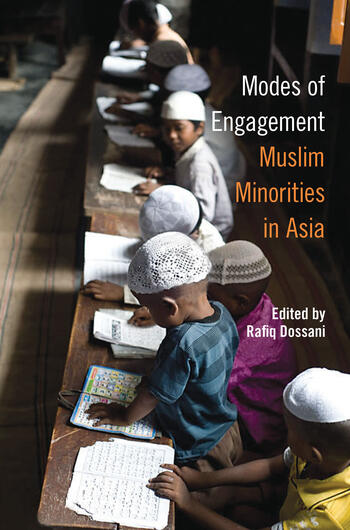
Modes of Engagement front cover.

Of Asia’s 800 million Muslims, 215 million are minorities within their countries. These Muslim minorities have experienced a persistent decline in their socioeconomic and political status. Along with this decline, they are increasingly identified by their faith and largely accorded no other identity for civic relations. Why have these Muslim minorities been particularly affected during a time of unprecedented opportunities for the mainstream in Asia’s unprecedented era of growth and rising freedoms?

Using detailed analyses of China, India, and the Philippines, Modes of Engagement argues that key factors in this phenomenon include the linkage between socioeconomic decline, loss of political power, and narrowing of identity; nationalism and its associated connotations of the assimilation of minorities; the weakness of civil society generally in Asia; and the rise in regional and global alliances for security and trade.

Contributors include Wajahat Habibullah (National Commission for Minorities and National Institute of Technology, India), Rakesh Basant (Indian Institute of Management), Dru C. Gladney (Pomona College), and Joseph Chinyong Liow (Nanyang Technological University’s S. Rajaratnam School of International Studies, Singapore).

Rafiq Dossani is a senior economist at the RAND Corporation. His research interests include regional integration, security, and education. Previously, Dossani was a senior research scholar at the Shorenstein Asia-Pacific Research Center and director of the Stanford Center for South Asia.

Examination copies: Shorenstein APARC books are distributed by Stanford University Press. Contact them for information on obtaining examination copies.

All Publications button
1
Publication Type
Books
Publication Date
Subtitle

Muslim Minorities in Asia

Book Publisher
Shorenstein APARC
-

GOVERNORS' MEETING IN SILICON VALLEY

U.S.-Japan Economic Collaboration at the State-Prefecture Level


July 28, 2014

MacCaw Hall at Arrillaga Alumni Center, Stanford University


This July, as part of the U.S.-Japan Council’s (USJC) Governors’ Circle Initiative, USJC and The Walter H. Shorenstein Asia-Pacific Research Center (APARC) will convene a Japan Governors’ Meeting in Silicon Valley. Governors from six prefectures, namely Fukuoka, Hiroshima, Oita, Okayama, Saga and Shizuoka, have confirmed their attendance, and each plans to bring a delegation of business leaders and government officials involved in bilateral economic collaboration. These governors are interested in the state of California, particularly Silicon Valley, as a leader in the fields of IT, biomedical/healthcare, automobile technology, clean energy and consumer goods. This event will serve as a catalyst for select Japanese prefectures to connect with the Silicon Valley’s innovative companies, pilot projects, and state-of-the-art technologies across a number of sectors, including technology licensing, market development, manufacturing agreements, investments, joint ventures, and strategic partnerships.

For registration, please visit http://bit.ly/GovCircle    


Date: July 28:  Plenary Session and Networking Reception/Sake Tasting (Open to Public)  

2:00 - 2:15 pm:    Opening Remarks

2:15- 2:45 pm:     Presentation by the Director of Stanford’s Freeman Spogli Institute for International Studies (FSI)

2:45 – 4:00 pm:   Governors’ Panel Discussion on Prefectures’ Economic Collaboration Targets and Collaboration with Silicon Valley

4:00 - 4:15 pm:    Break

4:15 - 5:15 pm:    Presentations:  “How Stanford Played a Significant Role in Creating New Businesses Collaborations in Silicon Valley”

5:15 - 5:30 pm:    Closing Remarks

5:30 – 7:30 pm:  Networking Reception

Frances C. Arrillaga Alumni Center

Conferences
News Type
News
Date
Paragraphs

Fourteen Stanford researchers addressing global poverty through a range of academic disciplines are receiving a total of $4.6 million in awards from the university-wide Global Development and Poverty (GDP) initiative.

Their projects, which are the first to be funded by the GDP, deal with challenges of health, violence, economics, governance and education in the developing world.

“GDP seeks to transform scholarly activity and dialogue at Stanford around the topic of global poverty, so that the university may have a greater impact on poverty alleviation in developing economies,” said GDP faculty co-chair Jesper B. Sørensen. “By focusing on placing a small number of big bets, GDP encourages researchers to think big, and to move beyond the conventional way of doing things. We are thrilled by the inaugural set of awardees, as they demonstrate the creative, inter-disciplinary approaches that will make Stanford a leader in this area.”

The GDP initiative is part of the Stanford Institute for Innovation in Developing Economies (SEED) and is administered in partnership with Stanford's Freeman Spogli Institute for International Studies (FSI). The GDP is co-chaired by Sørensen, the faculty director for SEED and the Robert A. and Elizabeth R. Jeffe Professor of Organizational Behavior at the Graduate School of Business; and Mariano-Florentino Cuéllar, senior fellow and director of FSI and the Stanley Morrison Professor at Stanford Law School.

SEED, which seeks to alleviate poverty by stimulating the creation of economic opportunities through innovation, entrepreneurship and the growth of businesses, was established in 2011 through a generous gift from Robert King, MBA '60, and his wife, Dorothy.

Through complementary areas of focus, GDP funding and other SEED research initiatives will stimulate research, novel interdisciplinary collaborations and solutions to problems of global poverty and development. GDP research aims to pursue answers to crucial questions that are essential to an understanding of how to reduce global poverty and promote economic development. That includes governance and the rule of law, education, health, and food security – all of which are essential for entrepreneurship to thrive. By contrast, other SEED research focuses on innovation, entrepreneurship, and the growth of businesses in developing economies.

Since 2012, SEED’s Entrepreneurship and Innovation in Developing Economies Award program also has doled out 22 awards and seven PhD fellowships to help support and scale businesses in developing economies. Among the $1 million in funded projects were studies of how to improve the livelihoods of small-holder cacao farmers throughout the tropics; how to identify startups with high job- and wealth-creating potential in Chile; how political accountability affects the ability to attract investment in Sierra Leone; and how managerial practices affect trade entrepreneurship in China.

First GDP Awards

The first 14 GDP award recipients are professors of economics, political science, law, medicine, pediatrics, education and biology, and senior fellows from FSI, the Woods Institute, and the Stanford Institute for Economic Policy Research (SIEPR).

“Each of these projects cuts across disciplines, reflects innovative thinking, and has the potential to generate crucial knowledge about how to improve the lives of the poor around the world,” Cuéllar said. “These projects, along with a variety of workshops engaging the university and external stakeholders, will help us strengthen Stanford’s long-term capacity to address issues of global poverty through research, education and outreach.”

Among the award recipients is Pascaline Dupas, an associate professor of economics and senior fellow at SIEPR. Dupas, along with faculty from the Center for Health Policy and Center on Democracy, Development and the Rule of Law, will launch the Stanford Economic Development Research Initiative using GDP funds.  This initiative will focus on collecting high-quality institutional and individual-level data on economic activity in a number of developing countries over the long term, and making these data available to scholars around the world.

Beatriz Magaloni, an associate professor of political science and senior fellow at FSI, is receiving an award to lead a team focused on criminal violence and its effects on the poor in developing economies, and the practical solutions for increasing security in those regions.

Douglas K. Owens, a professor of medicine and FSI senior fellow, was awarded an award to help him lead a team that will develop models to estimate how alternative resource allocations for health interventions among the poor will influence health and economic outcomes.

Stephen Haber, a professor of political science and history and a senior fellow at the Hoover Institution, received an award to bring together Stanford researchers interested in examining the long-term institutional constraints on economic development. Their goal will be to provide policymakers with a framework for determining the conditions under which particular innovations are likely to have positive payoffs, and the conditions under which resources will likely be wasted.

Other projects will address the educational impacts of solar lighting systems in poor communities; identifying interventions to improve the profits and safety among poor, smallholder pig farmers in Bangladesh and China; the role of law and institutions in economic development and poverty reduction; and how to rethink worldwide refugee problems. Awards are also being provided to researchers focused on microfinance, online education and teacher training.

The project proposals were reviewed by an interdisciplinary faculty advisory council chaired by Cuéllar and Sørensen. 

“We were very encouraged by the impressive number of project proposals from a wide range of areas and are looking forward to introducing several new capacity and community-building activities in the fall,” Sørensen said.. “This wide range of research initiatives will form a vibrant nucleus for Stanford’s growing community of scholars of global development and poverty.”

All News button
1
News Type
News
Date
Paragraphs

In early 2014, Stanford Graduate School of Business (GSB) launched a new organization structured to further increase the research support of our faculty and their teaching objectives. That group, called Centers and Initiatives for Research, Curriculum and Learning Experiences (CIRCLE), supports areas of academic focus including social innovation, entrepreneurship, value chain, data and analytics, and corporate governance, in addition to China-related work.

With staffing and a facility now grounded in Beijing, the GSB is transitioning management of our China initiatives to CIRCLE led by Wendy York-Fess, Assistant Dean and Executive Director. Within CIRCLE, Frank Hawke, located in Beijing, is the director of GSB China-related activities designed to continue the focus on building a bridge between China and Silicon Valley.

Going forward, updates on China programs will be communicated through other GSB online channels. Content hosted on this site will remain available, and we encourage you to engage with our rich library of videos, podcasts, and stories.

China 2.0 originated from within the Stanford Program on Regions of Innovation and Entrepreneurship (SPRIE), which was active from 1998 through fall 2013. Led by faculty co-directors William F. Miller and Henry S. Rowen, with Associate Director Marguerite Gong Hancock, SPRIE was dedicated to the understanding and practice of innovation and entrepreneurship in leading regions around the world. SPRIE fulfilled its mission through interdisciplinary and international collaborative research, seminars and conferences, publications, and briefings for industry and government leaders.

“We are grateful to have made our home at two remarkable parts of Stanford, the Shorenstein Asia Pacific Research Center until 2011 and then the Graduate School of Business,” said Henry Rowen. William Miller added, “The impact of SPRIE’s work among leaders around the world has been made possible through wonderful relationships with faculty colleagues across the university and beyond, active Advisory Board members, generous donors, engaging alumni and students, strong corporate and government partners, and extraordinary staff.”

SPRIE’s work resulted in publications in journals and monographs, as well as three books published by Stanford: The Silicon Valley Edge (2000), Making IT: The Rise of Asia in High Tech (2006), and Greater China’s Quest for Innovation (2008), including editions in Chinese, Korean, and Japanese. During the most recent phase of work, SPRIE included four major projects: the Silicon Valley Project, Smart Green Cities, the Stanford Project on Japanese Entrepreneurship, and China 2.0.

Under the direction SPRIE faculty co-directors William F. Miller and Henry S. Rowen, Marguerite Gong Hancock launched and led China 2.0 from 2010 to June 2014. Important contributors to the development of the program included faculty from across campus, a distinguished and active Advisory Board, generous donors and sponsors, as well as GSB staff, including China 2.0 team members Yan Mei and Rustin Crandall. During this time, it has grown into a platform for convening thought leaders in China and Silicon Valley, supporting cutting-edge research and curriculum development by faculty, and organizing programs to educate students as next-generation leaders.

Through conferences at Stanford University and in Beijing, to date China 2.0 has engaged with more than 100 speakers, dozens of media, and more than 2,500 Stanford faculty, students, and alumni. China 2.0 seminars have enhanced student educational experiences and facilitated cross-campus faculty and student interaction. China 2.0 content has become part of our classrooms, online resources, and also reached hundreds of thousands of viewers in English and Chinese.

As part of the GSB reorganization, we are pleased to announce that Marguerite Gong Hancock is now the director for a new CIRCLE research effort called Stanford Project on Emerging Companies 2.0 (SPEC 2.0), where she will focus on supporting faculty research on entrepreneurship, as part of the Center for Entrepreneurial Studies.

While our organization has changed, Stanford Graduate School of Business remains committed to bringing together executives, entrepreneurs, investors, policy makers, academics and students through a number of existing and emerging programs related to innovation and entrepreneurship around the world.

All News button
1
News Type
News
Date
Paragraphs
 Mari Tanaka

Mari Tanaka1, a Ph.D. candidate in economics at Stanford, has been named the Shorenstein APARC Predoctoral Fellow in Contemporary Asia for 2014­–15. She will join the Shorenstein Asia-Pacific Research Center this fall, examining the effects of enterprise development and international trade in low-income countries.

The fellowship supports a Stanford predoctoral student researching topics related to contemporary political, economic and social change in the Asia-Pacific region. 

Tanaka’s dissertation focuses on the impact of Myanmar’s recent trade opening on local manufacturing firms. She is interested in how trade with the United States, European Union and Japanese buyers affects firms’ management practices and working conditions, particularly safety and health standards.

By analyzing data collected in about 400 firms in 2013–14, Tanaka plans to compare the evolutions of those measures in garment plants, an industry heavily affected by trade opening, to processed food plants, an industry little affected because of strict food regulations imposed by developed countries.

Tanaka is a fourth-year Ph.D. student in economics at Stanford. She holds a master’s degree in economics from the University of Tokyo and a bachelor’s degree from the International Christian University, Japan.

Hero Image
Downtown Yangon Myanmar WorldBank Headline
The skyline of Yangon, Myanmar's largest city.
Flickr/World Bank
All News button
1
News Type
News
Date
Paragraphs

South Korea held their regional elections on June 4th, not long after the Sewol ferry capsized and claimed the lives of many school-aged children. The ballot was largely viewed as a referendum on President Park Geun-hye’s response to the ferry tragedy. In the Economist, Shorentein APARC Director Gi-Wook Shin says Ms. Park will likely take the poll results as an opportunity to reform.

Hero Image
Portrait of Gi-Wook Shin
All News button
1
Authors
Lisa Griswold
News Type
News
Date
Paragraphs

The Obama administration’s policy of “re-balance” toward Asia, that began as early as 2009, is now increasingly under stress, as those in the region question American staying power and China emerges as a challenger to U.S. dominance. As the territorial disputes in the East and South China Seas in recent months have demonstrated, China’s relations with the region and the United States have become visibly strained, bringing the U.S. re-balance policy into question and raising concerns about security tensions and the danger of conflict. 

U.S.-China relations are heading, for the foreseeable future, into “a very scratchy time,” predicted Kenneth Lieberthal, a respected senior China scholar at The Brookings Institution, in his keynote speech delivered at the annual Oksenberg Lecture on June 3 at the Shorenstein Asia-Pacific Research Center.

Lieberthal told a standing room audience in Encina Hall that while the U.S. attempt to temper its relations with China and others has “worked quite well over time,” now, “at a geostrategic level, we seem to be sliding with increasing speed toward an inflection point in U.S.-China relations.”

Lieberthal was joined by a panel of China experts, including Cui Liru of the China Institutes of Contemporary International Relations (CICIR), and Stanford’s Karl Eikenberry and Thomas Fingar, distinguished fellows at the Freeman Spogli Institute for International Studies, and Jean C. Oi, director of the Stanford China Program.

The discussion was part of the Oksenberg Lecture, an annual dialogue that functions as a policy workshop on U.S.-Asia relations, named in honor of late professor and senior fellow Michel Oksenberg (1938–2001). Oksenberg was a noted China specialist, who served as a senior member of the National Security Council and is credited as the architect of the normalization of relations with China under the Carter administration in the late 1970s.

Points of tension in the U.S.-China relationship have been increasingly visible. Senior American officials have assailed China for its aggressive actions toward its neighbors over the Diaoyu/Senkaku Islands and in South China Sea, including its latest altercations with Vietnam and the Philippines. The United States recently indicted five members of China’s People’s Liberation Army for carrying out cyber espionage against U.S. technology companies.

Incidents like these have prompted both countries to throw harsh words at each other, leading to a situation of brinkmanship. However, Lieberthal pointed out that tense relations between the United States and China are certainly not new. Most notably, relations took a nosedive in 1989 when China cracked down on democratization protests at Tiananmen Square, in 1999 after the accidental bombing of the Chinese Embassy in Serbia, and in 2008, in response to the global financial crisis.

The U.S.-China relationship has been riddled with periods of distrust in the past. But now, “the speed and scale of China’s economic growth, especially over the last two decades, has also increased concerns, on all sides, that the evolving distribution of power may create new frictions and suspicions,” Lieberthal said.

Yet, refusing to work with each other is not an option, the senior scholar, who also served in the Clinton administration, told the audience. Without the United States and China in conversation, progress in multilateral areas such as climate change and trade would falter, he argued. Given the two countries’ position as the world’s largest economies, the international system would effectively be constrained if the two were entrenched in long-term bitterness.

Lieberthal recognized the common admonition, “if we treat China as an enemy, it will surely become one,” saying this warning could be applied to both sides. China and the United States must make greater efforts to manage and mitigate tensions.

“The question is whether we can prevent bad things, not only specific conflicts, but the political tensions and politics that make cooperation on major issues very, very difficult at best.”

He then outlined a few steps that could help China and the United States sort out their disputes. His recommendations began with the need for strong determination on the part of top political leaders to move things forward and the importance of clear, consistent use of vocabulary when discussing issues.

As a final point, but one that was offered as a contingent factor to success, Lieberthal said U.S.-China relations and both countries’ roles in greater Asia will depend on “how effective each of us is in dealing with domestic reforms,” because, “that will determine how dynamic, how vibrant, how innovative, and how secure we feel.”

______________________________________________________ 

During the lecture, Ret. Lt. Gen. Karl Eikenberry shared his observations from the Shangri-La Dialogue, an inter-governmental security forum held from May 30 – June 1 in Singapore. The Dialogue has in recent years become a gathering of premiere defense ministers to discuss security issues in Track I and “quasi-track” meetings.

Afterward, Eikenberry talked with Shorenstein APARC about key highlights and implications that emerged from the Dialogue:


IISS Photo KEikenberry Gallery Shangri-La Dialogue

Photo credit: Flickr/The International Institute for Strategic Studies 

Media reported a tense environment overlaid the Dialogue. What was the general atmosphere there?

The remarks at the Shangri-La Dialogue by Japanese Prime Minister Abe and U.S. Defense Secretary Hagel on the one hand, and Chinese General Wang Guanzhong, made clear very different views on the causes for tension surrounding various maritime sovereignty claims in the East and South China Seas. Still, if you read the full text of all three speeches and the Q&As that followed, there is still great emphasis placed on dialogue and common interests. And in the many meetings that took place between national delegations on the margins of the conference events, the emphasis was on cooperation. 

What revelations at the Dialogue were surprising?

I think the degree to which dissatisfaction with China’s assertive behavior in pursuing its maritime claims was expressed by many of the participants – not just the United States and Japan. Vietnam, the Philippines and India were explicit. Analysts have said the only China (through threatening behavior) could contain China by catalyzing a counterbalancing response. From the results of the Dialogue, I think this is correct.   

Japanese Prime Minister Shinzo Abe emphasized values and international law throughout his keynote speech. What is your take on this?

The Prime Minister did emphasize both democracy and rule of law during his prepared remarks and answers to questions from conference participants. He was drawing an obvious distinction between Japan’s and China’s political systems and commitment to approaches to resolving territorial disputes. I think the Prime Minister is trying to establish Japan as a leader in East and Southeast Asia, and wanted to make clear what he views as important differences between the Japanese and Chinese “models.” 

U.S. Defense Secretary Chuck Hagel referenced China’s suspension of the U.S.-China Cyber Working Group. What direction do you think the cybersecurity dialogue will go now?

It was unfortunate that China suspended its participation in the U.S.-China Cyber Working Group after the U.S. Government’s indictment of five People’s Liberation Army officers for alleged cyber theft. The U.S. Government has been providing the PRC Government with evidence of cyber theft being conducted by entities in China and has failed to receive any meaningful response so the indictments seem warranted. It would seem that the Cyber Working Group is precisely the forum to discuss this matter and the many related to managing the cyber domain with agreed rules and procedures. Working Groups provide a forum to address disagreement and disputes. I think China’s response was counterproductive and hope the government will indicate a willingness to resume the dialogues in the near future.

Where do you see the regional security conversation heading next?

The risk is that security dialogues will be divided into two camps – one led by the United States and its close allies and partners, and the other by China – somewhat isolated at this time but seeking to entice Asian nations to bandwagon to its side. Perhaps further regional economic integration can facilitate a more common approach to security, but this year’s Shangri-La Dialogue is perhaps a warning that trends, for now, are not heading in a positive direction.

Hero Image
oksenberg lecture 2014 headline 2
Kenneth Lieberthal of The Brookings Institution delivered the keynote speech at the annual Oksenberg Lecture on June 3.
Irene Bryant/Debbie Warren
All News button
1
Subscribe to Northeast Asia