News Type
News
Date
Paragraphs

Image
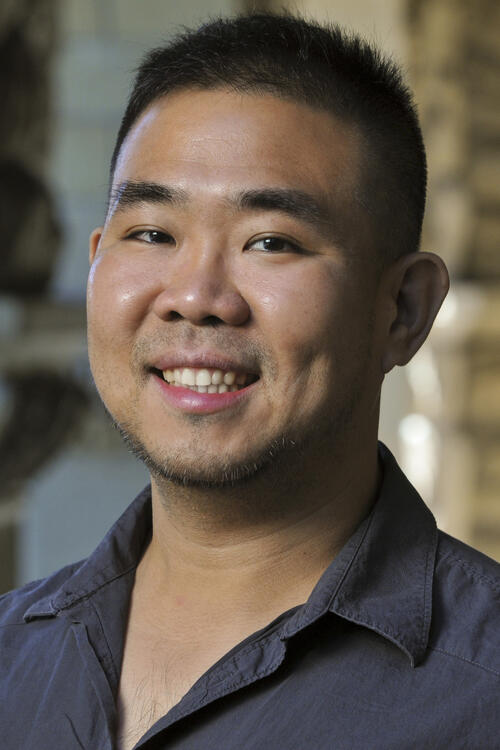
kyou hyun kim img 3207
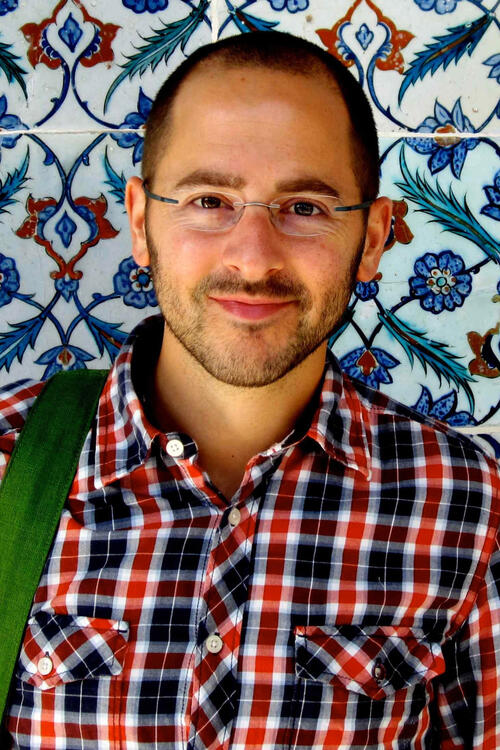
Kyou Hyun Kim will join the Korea Program at Stanford’s Walter H. Shorenstein Asia-Pacific Research Center (Shorenstein APARC) as the program’s 2017-18 Koret Fellow.

A career diplomat by training, Kim most recently served as senior secretary to the president for foreign affairs and national security in South Korea from October 2015 to May 2017 during which he played a key role in enacting the North Korea human rights law. He led the South Korean negotiation team for inter-Korean dialogue that led to the reunion of separated families in 2014.

"Kyou Hyun Kim brings wealth of knowledge in the Korean affairs to Shorenstein APARC. He has decades of experience in diplomacy and national security, and it is very timely that he joins the Korea Program as this year’s Koret Fellow,” said Gi-Wook Shin, director of Shorenstein APARC.

Kim’s extensive diplomatic career includes serving as first vice foreign minister (2013-14), deputy foreign minister for political affairs (2012-13), ambassador for performance evaluation, and special advisor to the minister of foreign affairs (2010-12). He also served at the South Korean embassy in the United States as minister for political affairs. His 37 years of public service was mostly dealing with South Korea’s foreign and security policies and North Korean affairs.

During his fellowship, Kim will review South Korea’s past administrations’ policies toward North Korea and aim to focus on a path leading to unification of two Koreas for permanent peace and stability in and around the Korean Peninsula.  He will also attempt to map out ways to narrow the physical, economic, societal and identity gaps between South and North Korea in order to help the South Korean public to tolerate and accept North Koreans as equal citizens in a unified Korea. His two main research questions will be (1) how to build the internal capability for socioeconomic transformation in North Korea, and (2) how to build domestic support for reunification in South Korea.

Kim received a Doctor of Dental Surgery from the School of Dentistry at Seoul National University, and a Master of Public Administration from Harvard University.

Supported by the Koret Foundation, the fellowship brings leading professionals to Stanford to conduct research on contemporary Korean affairs with the broad aim of strengthening ties between the United States and Korea.

Hero Image
kyou hyun kim img 3207
All News button
1
0
Corporate Affiliate Visiting Fellow, 2017-18
michelle_chen.jpg

Michelle Chen is a corporate affiliate visiting fellow at the Walter H. Shorenstein Asia-Pacific Research Center (Shorenstein APARC) for 2017-18.  Chen began her career in investment in 1992 and now works at Yongjin Group where she is responsible for its cross border investments.  She focuses on the sectors of finance, healthcare and education.

616 Serra StreetEncina Hall E301Stanford, CA94305-6055
0
hyun_seung_cho.jpg Ph.D.

Ashton Cho is a 2017-2018 Shorenstein Postdoctoral Fellow in Contemporary Asia. His research focuses on U.S. and Chinese foreign policy towards East Asia's regional institutions with a broader interest in U.S.-China relations, the political economy of East Asia, and qualitative and mixed research methods. During his time at Shorenstein APARC Ashton will be developing his book manuscript on how U.S. and China compete over East Asia's institutional architecture.

Ashton holds a Ph.D. in Political Science from Columbia University and a BSc and MSc from the London School of Economics.

He is located in the Central West wing at C338-I-2 and can be reached at ashtoncho@stanford.edu

More information can be found on his personal webpage www.ashtoncho.com

 
2017-2018 Shorenstein Postdoctoral Fellow in Contemporary Asia
-

Hurricane Harvey and Irma have brought home to everyone the impact of climate change on our economy, our society, and our daily lives. Curtailing climate change is an urgent issue, one that requires international cooperation. In this session experts from Japan and the United States discuss some of the lessons that have been learned from Asia’s experiences. In the case of Japan, following the period of high growth (1960s-1980) which made Japan an economic power house, the government took strong steps to clean up polluted air and water. The Fukushima nuclear power plant disaster in 2011 forced Japan to take even more aggressive action to reduce energy consumption and lessen its impact on the global environment. In contrast, the United States, the world’s largest economy, is one of the world’s largest polluters and recently made headlines when it withdrew from the Paris Agreement negotiated at the 2015 United Nations Climate Change Conference (COP2). California, and other state and municipal governments, are now taking the lead in US efforts to deal with climate change. Speakers will address questions on strategies for limiting carbon emissions and possibilities for future international cooperation on climate change.

Shorenstein APARC is pleased to host the Abe Fellows Global Forum (Abe Global) inaugural season’s flagship event. A new initiative of the Abe Fellowship Program, Abe Global brings the research and expertise of Abe Fellows on issues of global concern to broader audiences. The event is co-organized with the Social Science Research Council, in collaboration with the Center for Global Partnership of the Japan Foundation, which funds the Abe Fellowship Program


Abe Fellows Global Forum
Confronting Climate Change:
What Can the U.S. and Japan Contribute to Creating Sustainable Societies?


Conference Program

13:30-14:00     Registration

14:00-14:20     Welcome remarks

       Takeo Hoshi, Director, Japan Program, Shorenstein APARC, Stanford University

       Junichi Chano, Executive Director, CGP

       Opening Remarks

       George P. Shultz, Thomas W. and Susan B. Ford Distinguished Fellow, Hoover Institution,

        Stanford University

14:20-14:45     Keynote Speech

                             Michael Armacost, Shorenstein APARC Fellow, APARC, Stanford University

14:45-15:00     Break

15:00-17:00     Panel Discussion “What Can the US and Japan Contribute to Creating Sustainable Societies?”

                  Moderator:      Takeo Hoshi

       Presenters:      Toshi H. Arimura,  Waseda Univeristy

                              Janelle Knox-Hayes, Massachusetts Institute of Technology

                               Phillip Lipscy, Stanford University

                               Dana Buntrock, University of California, Berkeley

                               Michael Armacost, Stanford University

16:55                 Closing Remarks

                               Linda Grove, Consulting Director, SSRC 

17:00-18:00     Cocktail Reception

Conferences
Authors
Lisa Lee
News Type
News
Date
Paragraphs

The Asia Health Policy Program, established in 2007, promotes a comparative understanding of health and health policy in the Asia-Pacific region through research and collaboration with regional scholars, a colloquium series on health and demographic change, and conferences and publications on comparative health policy topics. The program is committed to supporting young researchers through its Asia Health Policy Postdoctoral Fellowship. Every year, the program director, Karen Eggleston, mentors recent doctoral graduates invited to come to Stanford to undertake original research on contemporary health policy of relevance to the Asia-Pacific region. The Program recently organized the Workshop of Young Leaders in Asia Health Policy in Beijing to celebrate its 10th anniversary.

Asia Health Policy Program alumni have been expanding around the globe. Young Kyung Do, from South Korea, was the first Asia Health Policy Postdoctoral Fellow in 2008-09. He earned his doctorate in health policy and management from the University of North Carolina at Chapel Hill, and is currently an associate professor in the Department of Health Policy and Management at Seoul National University in South Korea. His research interests include aging and long-term care, the interplay of health, education and labor, health behavior, sleep and time use, risk literacy and risk communication, value of medical interventions, and quality assessment from the patient's perspective. Working papers: 

The Effect of Informal Caregiving on Labor Market Outcomes in South Korea

The Effect of Coresidence with an Adult Child on Depressive Symptoms among Older Widowed Women in South Korea: An Instrumental Variable Estimation

The Effect of Sleep Duration on Body Weight in Adolescents: Evidence from a Natural Experiment

Brian K. Chen, from the United States, was the 2009-10 Asia Health Policy Postdoctoral Fellow. He earned his doctorate in business administration from the Haas Business School at the University of California, Berkeley. He is currently an associate professor in the Department of Health Services Policy and Management at the Arnold School of Public Health, University of South Carolina in the United States.  He is also the associate director of Taiwan Doctoral Program housed in the Department of Health Services Policy and Management.  He has a unique combination of legal and economic expertise. He received a Juris Doctor from Stanford Law School in 1997. His research focuses on health policy, particularly with respect to health disparities, the burden of chronic illnesses and aging as well as the impact of incentives in health care organizations on provider and patient behavior.  Working papers: 

Strict Liability for Medical Injuries? The Impact of Increasing Malpractice Liability on Obstetrician Behavior: Evidence from Taiwan

Patient Copayments, Provider Incentives and Income Effects: Theory and Evidence from China’s Essential Medications List Policy

Qiulin Chen, from China, was the 2010-11 Asia Health Policy Postdoctoral Fellow. He earned his doctorate in economics from Peking University. He is currently an associate professor and director of the Social Security Research Division of the Institute of Population and Labor Economics, and deputy director of the Research Center of Health Industry Development at the Chinese Academy of Social Sciences in Beijing. His research interests are health economics and health policy, aging and social security, and public finance.

There were two Asia Health Policy Postdoctoral Fellows from 2011until 2012. Ang Sun, from China, earned her doctorate in economics from Brown University in the United States. She is currently an associate professor at Central University of Finance and Economics in Beijing, China. Her research focuses on household and marriage, development, demography and health. The second fellow, Siyan Yi from Cambodia, was the first recipient of the Developing Asia Health Policy Fellowship for citizens of low-income countries in Asia. Dr. Yi earned his doctorate in international health sciences from the University of Tokyo. He is currently a director of KHANA Center for Population Health Research in Cambodia and adjunct associate professor at Center for Global Health Research of Touro University California in the United States. His research projects are in population health, including clinical epidemiology, social and behavioral determinants of health, health promotion, health system strengthening, and health policy in both developed and developing countries.

Marjorie Pajaron, from the Philippines, was the 2012-13 Asia Health Policy Postdoctoral Fellow. She earned her doctorate in economics from the University of Hawaii at Manoa. She is currently an assistant professor at the School of Economics, University of the Philippines. Her research lies at the intersection of applied microeconomics and health policy, with a focus on gender, health, development and labor economics.  Working papers: 

Remittances, Informal Loans, and Assets as Risk-Coping Mechanisms: Evidence from Agricultural Households in Rural Philippines

The Roles of Gender and Education on the Intrahousehold Allocations of Remittances of Filipino Migrant Workers

Margaret Triyana, from Indonesia, was the 2013-14 Asia Health Policy Postdoctoral Fellow. She earned her doctorate in public policy from the Harris School of Public Policy at the University of Chicago. She is currently a visiting assistant professor at the Keough School of Global Affairs at the University of Notre dame, in the United States. Prior to joining the Asia Health Policy Program, she was an Indonesia research fellow at the Harvard Kennedy School. She is particularly interested in how social policies affect health outcomes for the poor, early health investments, and health-seeking behavior in limited-resource settings.

Gendendarjaa Baigalimaa, from Mongolia, was the 2013-14 Visiting Scholar for Developing Asia Health Policy. A medical doctor by training, she studied cancer prevention and the impact of the National Cervical Cancer Program in Mongolia. Upon completion of her fellowship with the Asia Health Policy Program, she became a gynecological oncologist at Mungun Guur Hospital in Mongolia.

There were two Asia Health Policy postdoctoral fellows from 2014 until 2015. Pham Ngoc Minh, from Vietnam, who earned his doctorate in medical science from Kyushu University in Japan, is currently a visiting research fellow at Curtin University in Australia. His main research interests include the epidemiology and prevention of metabolic diseases, particularly diabetes, and depression in Asian adults. He also works on systematic reviews and meta-analyses of observational and clinical studies to inform health policy. The second postdoctoral fellow was Phyu Phyu Thin Zaw, from Myanmar, who completed her doctorate in epidemiology from the Prince of Songkla University in Thailand. She is a research scientist at the Department of Medical Research in the Pyin Oo Lwin branch of the Ministry of Health and Sport in Myanmar. Currently, she is on leave to attend a master of public policy at Oxford University, in the United Kingdom.  Her current research work involves equitable allocation of healthcare resources, the current health system transformations, and the democratization process in Myanmar.

Darika Saingam, from Thailand, was the 2015-16 Asia Health Policy Postdoctoral Fellow. She earned her doctorate in epidemiology from the Prince of Songkla University in Thailand. Her research interests are public health, substance abuse and drug policy. She seeks to identify potentially effective policy directions suitable for Thailand. Before she joined the Asia Health Policy Program, she served as a researcher at Songkla University’s Epidemiology Unit. She has since continued her work on substance abuse research.

Kim Ngan Do, from Vietnam, was the 2016-17 Asia Health Policy Postdoctoral Fellow. She earned her doctorate in health policy and management from the College of Medicine at Seoul National University, South Korea. She has a strong interest in health system-related issues, especially health financing, human resources for health, and health care service delivery. She implemented comparative studies at the regional level and completed fieldwork in Cambodia, Laos, Philippines, South Korea and Vietnam.

Since its inception, the Asia Health Policy Program has supported numerous fellows to develop their expertise. They continue to pursue their academic and research interests, and have become experts in their fields. Alumni hold various academic, research and professional positions around the world, and are part of a vital community that promotes deeper understanding of comparative health policy through education, training and implementation of best healthcare practice.

Hero Image
ahpp young leaders Courtesy of Asia Health Policy Program
All News button
1
-

Image


-

In the face of population aging, policymakers throughout the Asia-Pacific are seeking ways to improve health service provision for older individuals. The InterRAI (International Resident Assessment Instrument) is a comprehensive assessment tool for older people, and is used as a de facto assessment tool for the care needs of older people in many countries, including New Zealand (see http://www.interrai.org). Part of the full InterRAI assessment is a home care assessment, which provides the data we use in this study, including three main outcome measures: (1) CHESS (Changes in Health, End-stage Disease, Signs, and Symptoms); (2) MAPLe (Method of Assigning Priority Levels); and (3) the ADL (Activities of Daily Living) hierarchy. Specifically, we use data on over 8000 assessments in the Waikato region of New Zealand over the period 2013-2016.

In this seminar, Professor Cameron discusses the relationship between the three outcome measures and a range of clinical and operational outcomes within 90 days of the assessment, including hospital admissions; dementia admissions; number of bed days; and mortality. The CHESS outcome measure offers the greatest predictive validity of the three measures, with a one unit increase in CHESS score (interpreted as a higher risk of serious decline in health status) associated with 26 percent higher odds of hospital admission within 90 days of assessment, 18 percent more bed days, and 30 percent higher odds of mortality. Finally, Cameron discusses how these results are being used by the Waikato District Health Board to improve the services provided to older people in the region.

Image
cameron michael crop
Dr. Michael Cameron is an associate professor in economics at the University of Waikato (New Zealand). He is also a research fellow in the National Institute of Demographic and Economic Analysis (NIDEA). He was a PGDA Visiting Fellow at the Harvard T.H. Chan School of Public Health at Harvard University from 2015-16.

Dr. Cameron gained his PhD from University of Waikato in 2007, with a thesis titled "The Relationship between Poverty and HIV/AIDS in Rural Thailand". His current research interests include population, health and development issues (including the social impacts of liquor outlet density, the economics of communicable diseases especially HIV/AIDS, health applications of non-market valuation, and health and development project monitoring and evaluation), population modelling and stochastic modelling, financial literacy and economics education.

He also blogs regularly at Sex, Drugs and Economics (http://sex-drugs-economics.blogspot.com/).


Michael P. Cameron National Institute of Demographic and Economic Analysis (NIDEA), University of Waikato, New Zealand
Seminars
0
Corporate Affiliate Visiting Fellow, 2017-18
toshi_watanabe.jpg

Toshiyuki Watanabe is a corporate affiliate visiting fellow at the Walter H. Shorenstein Asia-Pacific Research Center (Shorenstein APARC) for 2017-18.  Watanabe has more than 14 years of experience as a computer engineer, editor, and in business development at The Asahi Shimbun, the national leading newspaper in Japan.  Prior to joining Shorenstein APARC, Watanabe worked mainly in business development working on the mobile website and apps.  Watanabe graduated from the University of Tsukuba with a B.S. in Information Technology.  

0
Global Affiliate Visiting Scholar, 2017-19
Hamamatsu Iwata Shinkin Bank
hayato_watanabe.jpg

Hayato Watanabe is a global affiliate visiting scholar at the Walter H. Shorenstein Asia-Pacific Research Center (Shorenstein APARC) for 2017-18.  Watanabe is assistant chief at the Hamamatsu Iwata Shinkin Bank.  He has over 15 years of experience in supporting small businesses especially in the area of expansion.  To help revitalize regional economy, his research will focus on bridging the regional specialty manufacturing industry and American companies.

0
Corporate Affiliate Visiting Fellow, 2017-18
jeong_ah_ryou.jpg


Jeong Ah Ryou is a corporate affiliate visiting fellow at the Walter H. Shorenstein Asia-Pacific Research Center (Shorenstein APARC) for 2017-18.  Ryou is the Chief Investment Office of the Yozma Group, Korea, Ltd., where she has experience in start-up accelerating programs.  She has over 16 years of experience in portfolio asset management, private equity funds, and venture capital investment.  She co-founded Link Investments in Seoul and worked for NH Securities & Investments, Hong Kong Shanghai Banking Corporation and Tong Yang Investment Bank.  Ryou is interested in applying her knowledge acquired here to make a new platform of Korean startup ecosystem interacting within the community.  She earned her MBA degree from Korea University and her Bachelor of Political Science from Ewha Womans University in Korea. 

Subscribe to Asia-Pacific