-

Asia’s transformation presents both challenges and opportunities at international, regional, and domestic levels. One key to a peaceful, prosperous Asia in the 21st century is good relations between the United States and China. But other challenges exist: nuclear proliferation, maritime security, violent conflict, environmental degradation, natural disasters, food security, cyber-security, and social and gender inequality, among others. Social transformation is outpacing political and institutional reform in many Asian countries, and the widening gap between state and society is a potent force for change. How will Asians address these challenges over the next one to two decades? What role will Asian women play in this transformation? How should the United States respond? The panelists and the discussant have contributed answers to these and other questions regarding Asia’s future in the latest iteration of The Asia Foundation’s quadrennial investigation and dissemination of Asian views of America’s role in Asia, including policy recommendations for the Trump administration. Stanford’s Southeast Asia Program director Don Emmerson will chair the session.

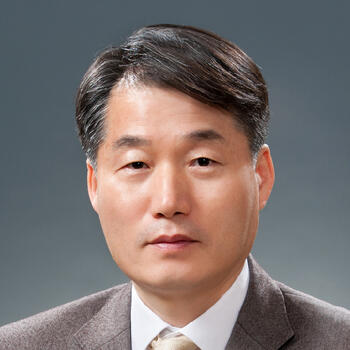
Chheang Vannarith

Image
chheang vannarith cropped
is a co-founder and vice-chairman of the Cambodian Institute for Strategic Studies and an adjunct senior fellow and member of the board at the Cambodia Institute for Cooperation and Peace. He was a visiting fellow at ISEAS-Yusof Ishak Institute in Singapore, China Institute of International Studies in China, IDE-JETRO in Japan, and East-West Center in the US. He was a lecturer in Asia-Pacific Studies at the University of Leeds, and he served as executive director of the Cambodian Institute for Cooperation and Peace from 2009 to 2013. His research interests include Asia-Pacific international politics, regionalism, governance, social innovation, and social entrepreneurship. Chheang earned a bachelor’s degree in International Relations from the Diplomatic Academy of Vietnam in 2002, a master’s degree in International Relations from the International University of Japan in 2006, the Graduate Certificate in Leadership from the East-West Center in the United States in 2008, and a doctoral degree in Asia-Pacific Studies from the Ritsumeikan Asia Pacific University in 2009. He was honored as Young Global Leader by the World Economic Forum in 2013.

Image
sm photo
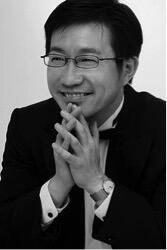
Sylvia Mishra is a researcher with Observer Research Foundation New Delhi and is presently with the James Martin Center for Nonproliferation Studies (CNS), Monterey, California. Her current research is focused on South Asian security issues and nuclear dynamics, India’s foreign policy, defence and security cooperation with the United States and disruptive technologies. She is a former CNS Visiting Fellow and Center for Strategic and International Studies (CSIS) Project on Nuclear Issues scholar. She has presented papers and delivered talks at national and international conferences and at platforms like the Comprehensive Nuclear Test Ban Treaty Organization, the United States Strategic Command, Air Force Technical Applications Center Patrick Air Force Base (Florida), Asia-Pacific Center for Security Studies and The Asia Foundation, among others. She has a number of publications to her credit, including chapters in books, articles in journals such as the Indian Foreign Affairs Journal, Global Policy, and commentaries/opinion pieces for CSIS, RUSI, The Fletcher Forum of World Affairs, Crawford School of Public Policy ANU, CNS, Stimson, The Diplomat, Hindustan Times and several other publications. She holds a master’s degree in History of International Relations from London School of Economics and has received a Certificate for completing a course on ‘International Safeguards Policy and Information Analysis’ from Lawrence Livermore National Laboratory.

Image
duyeon kim hi res
Duyeon Kim is a visiting senior fellow at the Korean Peninsula Future Forum, a non-partisan think tank in Seoul, and a columnist for the Bulletin of the Atomic Scientists. Her specialties include East Asian security, the two Koreas, nuclear nonproliferation, and arms control. She has been an associate on nuclear policy and Asia at the Carnegie Endowment for International Peace and, earlier, a senior fellow and deputy director at the Center for Arms Control and Non-Proliferation in Washington, DC. Kim has written in leading publications including Foreign Affairs, Foreign Policy, and the National Interest. Previously, as a correspondent for South Korea’s Arirang TV News, she covered the Six-Party Talks, inter-Korean relations, and U.S. foreign policy, among other topics. Her degrees are from the Georgetown University School of Foreign Service (MS) and Syracuse University (BA).


Image
john brandon mar2014 2
John Brandon is the Senior Director of International Relations Programs in The Asia Foundation’s Washington, DC office. He has been responsible for many of the Foundation’s publications including Asian Views on America’s Role in Asia (2016). Trained as a Southeast Asianist, he lectures and publishes widely on US-Asian relations. Publications he has co-authored, edited, or contributed to include three books on Burma/Myanmar and one on US-Southeast Asia relations. His MA in political science and Southeast Asian studies is from Northern Illinois University.


This panel discussion is co-sponsored by The Asia Pacific Research Center and The Asia Foundation with support from The Carnegie Corporation of New York


Chheang Vannarith Senior Fellow and Member of the Board, Cambodian Institute for Cooperation and Peace
Sylvia Mishra Researcher, Observer Research Foundation, Researcher, James Martin Center for Nonproliferation Studies, Middlebury Institute of International Studies at Monterey
Duyeon Kim Visiting Senior Fellow at the Korean Peninsula Future Forum, a non-partisan think tank in Seoul
John Brandon Senior Director, International Relations Programs, The Asia Foundation
Panel Discussions
Date Label
-

Co-sponsored by the Center on Democracy, Development, and the Rule of Law, Center for East Asian Studies, and the Southeast Asia Program

Who is Rodrigo Duterte?  How did he become president of the Philippines?  How has his rule impacted Philippine democracy and society?  Is his ascent part of a broader “Duterte wave” of strongman leadership in Russia, Turkey, India, China, and Southeast Asia?  What is his foreign policy?  How has it affected Sino-US rivalry in Asia including the situation in the South China Sea?  Richard Heydarian will address these and other questions drawing on field research for his latest book, The Rise of Duterte.  Regarding China, he will argue that Duterte’s willingness to realign Manila with Beijing at Washington’s expense offers a glimpse of what China’s rise could imply for nations around the world.  The book will be available for sale at his talk. 

Image
javad richard heydarian
Richard Javad Heydarian is the most prolific and interviewed geopolitical analyst currently writing and speaking not only in the Philippines but arguably in Southeast Asia as well. Outlets for his articles and remarks have included Aljazeera English, The Atlantic, BBC, Bloomberg, The Economist, The Financial Times, Foreign Affairs, The Guardian, The New York Times, Nikkei Asian Review, South China Morning Post, The Straits Times, The Wall Street Journal, and The Washington Post. In addition to the 2017 book that entitles his talk, he has written two others: Asia's New Battlefield: US, China, and the Struggle for Western Pacific (2015) and How Capitalism Failed the Arab World (2014). He lectures widely; has taught political science at Ateneo de Manila University and De La Salle University in the Philippines; has published in leading scholarly journals on Asian politics and security; and is a regular contributor to the Center for Strategic and International Studies and the Council on Foreign Relations. 


Richard Javad Heydarian Resident Political Analyst, GMA Network, and Non-resident Fellow, Stratbase-ADR Institute, Manila
Seminars
-

Indonesia has not signed the 1951 Refugee Convention and does not offer legal pathways for the permanent integration of refugees into its society. Rohingya refugees fleeing Myanmar across the Andaman Sea to Aceh in 2015 did, nevertheless, receive “hospitality” in the form of a humanitarian welcome by local non-state actors. Indonesian authorities have argued that this “Aceh model” deserves emulation by other countries experiencing emergency in-migrations. Since the crisis, academics and policymakers in Indonesia and elsewhere have debated the merits of the model compared with state-funded refugee-protection schemes.

Dr. Missbach will examine the reactions of the Indonesian hosts towards the Rohingya through the conceptual lens of “hospitality.” The diverging motivations of the different stakeholders and groups who provided hospitality, she will argue, were not always as altruistic as claimed. By documenting the tensions inherent in hospitality practices, Dr. Missbach will reveal a subtle instrumentalization of hospitality by non-state actors for non-refugee related purposes, and thus question the effectiveness of such ad hoc approaches when it comes to ensuring basic refugee rights. Privately offered hospitality alone, traditional or religious, cannot resolve migration crises in ways that respect those rights. Accordingly, in Indonesia and Southeast Asia generally, the state should take more responsibility for helping refugees seeking safety.

Image
antje missbach
Antje Missbach is a senior lecturer and research fellow at the School of Social Sciences in Monash University (Melbourne). Among her books are Troubled Transit: Asylum Seekers Stuck in Indonesia (2015) and Politics and Conflict in Indonesia: The Role of the Acehnese Diaspora (2011). Her many other writings include a prize-winning piece on people-smuggling, fishermen, and poverty on Rote island in eastern Indonesia (“Perilous Waters”) that appeared in the Dec. 2016 Pacific Affairs. In addition to migration, her research interests include irregular migration, anti-trafficking efforts, diaspora politics, and long-distance nationalism. She obtained her PhD from the Australian National University in 2010.

Antje Missbach 2017-18 Lee Kong Chian NUS-Stanford Fellow on Contemporary Southeast Asia
Seminars
News Type
News
Date
Paragraphs

William F. Miller, a former provost at Stanford University, a founding member of the university's Computer Science Department, and former CEO of SRI, died at the age of 91 on Wednesday, September 27.

Miller held an array of other leadership, industry, and academic roles, but at Shorenstein Asia-Pacific Research Center (APARC), Bill was better known as one of the leaders of the Stanford Program on Regions of Innovation and Entrepreneurship (SPRIE), along with Henry S. Rowen and Marguerite Gong Hancock. SPRIE was established at Shorenstein APARC in 2001 after the publication of The Silicon Valley Edge by Stanford University Press, co-edited by Miller, Rowen, Hancock, and Chong-Moon Lee; the book, the program's research, and Miller and Rowen's vast experience were responsible for a steady stream of visitors to Encina Hall, all looking to understand the Valley's success and replicate it abroad.

Two more books were published by SPRIE, focusing on the rise of innovation in Asia: Making IT: The Rise of Asia in High Tech (2006), and Greater China's Quest for Innovation (2008). In 2011, the program moved to the Graduate School of Business.

Full details on Bill Miller's life, as a leader, an entrepreneur, a tireless advisor and advocate, and as a generous human being, can be found here.

Hero Image
svm 43
William F. Miller speaks in Madrid in 2007.
Courtesy Stanford Program on Regions of Innovation and Entrepreneurship
All News button
1
-

Co-sponsored by the Center for East Asian Studies and the Asia Health Policy Program

With rapid economic development, changes in lifestyle, epidemiologic transition and the ageing of the population, China’s primary health challenge has become Non-Communicable Diseases (NCDs). Zhejiang province—one of the wealthiest and longest-lived—illustrates how China is responding to this challenge. In Zhejiang, NCDs account for 85% of deaths; the prevalence of hypertension and diabetes are 26.7 % and 7.4%, respectively; and the age of onset of diabetes is getting progressively younger. This seminar will focus on two inter-related strategies: strengthening primary care management of chronic disease, and leveraging newly created regional “big data” platforms to improve policy. Drawing on collaborative research with Stanford’s Asia Health Policy Program, Dr. Zhong will discuss management of hypertension and diabetes patients in community health centers, as well as how Ningbo City of Zhejiang exemplifies the experience of many local governments (municipalities or counties) in building their own regional health information platforms. By gradually collecting all administrative data and other health-related information for their residents from birth to death, including medical claims, vaccination records, lifestyle behaviors, environmental and meteorological factors, and so on, more and more local policymakers seek to analyze big data to explore potential risk factors, pilot targeted interventions, and support evidence-based health policies.

Image
zhong jieming
Zhong, Jieming graduated from the school of public health of Zhejiang University and received his master's degree in public health (MPH) from the Chinese Center for Disease Control and Prevention. He is the director of the Department of Non-communicable Disease (NCD) Control and Prevention in the Zhejiang CDC. He served as deputy director of the Department of Tuberculosis Control and Prevention in Zhejiang CDC during 2008-2014. He is a member of the Zhejiang Preventive Medicine Association and has engaged in and chaired several international cooperation and local research projects. He has in-depth research on NCDs and TB control and prevention, and has published over 30 scientific papers in related fields.

Zhong Jieming Director of the Department of NCD Control and Prevention, Zhejiang CDC, China.
Seminars
-

Co-sponsored by the Abbasi Program in Islamic Studies and the Southeast Asia Program

For much of the 2000s, scholars and activists lauded Indonesia’s surprisingly successful transition to democracy. Unlike Yugoslavia’s disintegration into smaller ethno-nationalist states, Indonesia witnessed the political marginalization of the military, the moderation of Islamists, the resolution of some regional rebellions, and the resurgence of a vibrant, plural, civil society. Recent years, however, have made imperfections in Indonesian democracy visible to the point where the death of Indonesian democracy is imaginable if not yet underway. Prof. Menchik will outline the role that Indonesian Islamic civil society may play in the death of Indonesian democracy.

Drawing on original survey data and interviews, as well as case studies in which the preferences of Nahlatul Ulama and Muhammadiyah leaders have become visible, Prof. Menchik will argue that their values are compatible with both democracy and authoritarianism. While NU and Muhammadiyah exemplify the civic associational ties and democratic culture that are necessary for making democracy work, civic pluralism is not their only value. NU and Muhammadiyah have a hierarchy of values that they promote and defend, and they are willing to forgo civic pluralism in order to defend against the blasphemy of Islam. As a result, if Indonesian democracy dies, it will likely be a result of a coalition of Islamists and autocrats using appeals to populism and the defense of Islam in order to capture the lower classes and moderate Muslims, including many members of NU and Muhammadiyah.

Image
menchik 0917 cropped
Jeremy Menchik, in addition to his professorship at Boston University, is a BU faculty affiliate in Political Science and Religious Studies. His teaching and research focus on comparative politics and the politics of religion. His first book, Islam and Democracy in Indonesia: Tolerance without Liberalism, won the International Studies Association award for the best book on religion and international relations published in 2016. His research has appeared in scholarly journals such as Comparative Studies in Society and History, Comparative Politics, and South East Asia Research, as well as in The New York Times, The New York Review of Books, The Washington Post, and The Wall Street Journal, among other publications. 


Walter H. Shorenstein
Asia-Pacific Research Center
616 Serra St C331
Stanford University
Stanford, CA 94305-6055

(650) 724-5656 (650) 723-9741
0
Shorenstein Fellow (2011-2012)
MenchikJeremy.jpg PhD

Jeremy Menchik joins the Walter H. Shorenstein Asia-Pacific Research Center (Shorenstein APARC) from the Department of Political Science at the University of Wisconsin-Madison. His research is in the area of comparative politics and international relations with a focus on religion and politics in the Muslim world, especially Indonesia. At Shorenstein APARC, he is preparing his dissertation for publication as a book titled, Tolerance Without Liberalism: Islamic Institutions in Twentieth Century Indonesia, and developing related projects on the origins of intolerance, the relationship between religion and nationalism, and political symbolism in democratic elections.

Menchik holds an MA and a PhD in political science from UW-Madison and a BA, also in political science, from the University of Michigan. He will be an assistant professor in international relations at Boston University beginning in 2013.

Assistant Professor, Pardee School of Global Studies, Boston University
Seminars
News Type
News
Date
Paragraphs
As the new academic year gets underway, the Walter H. Shorenstein Asia-Pacific Research Center’s Corporate Affiliate Program is excited to welcome its new class of fellows to Stanford University:
 
  • Hiroto Akai, Ministry of Finance, Japan
  • Hong Cao, PetroChina
  • Michelle Chen, Yongjin Group
  • Takahito Inoshita, Kozo Keikaku Engineering
  • Kazumasa Ito, Mitsubishi Electric
  • Yoshihiro Kato, Future Architect, Inc.
  • Jiangbo Lu, PetroChina
  • Hiroki Morishige, Shizuoka Prefectural Government
  • Hiroshi Nishinaka, Ishin Co., Ltd.
  • Kazushi Nomura, Japan Patent Office
  • Takeshi Okamoto, Ministry of Economy, Trade & Industry, Japan
  • Ramya Raveendran, Reliance Life Sciences
  • Jeong Ah Ryou, Yozma Group
  • Hayato Watanabe, Hamamatsu Shinkin Bank
  • Toshiyuki Watanabe, The Asahi Shimbun
 
During their stay at Stanford University, the fellows will audit classes, work on English skills, and conduct individual research projects; at the end of the year, they will make a formal presentation on the findings from their research. During their stay at the center, they will have the opportunity to consult with Shorenstein APARC's scholars and attend events featuring visiting experts from around the world. The fellows will also participate in special events and site visits to gain a firsthand understanding of business, society, and culture in the United States.


Hero Image
2017group11 19a
The 2017-18 Corporate Affiliate Fellows
Rod Searcey
All News button
1
News Type
News
Date
Paragraphs

In association with the Sejong Institute, a think tank in South Korea, Shorenstein APARC published a report from the seventeenth session of the semiannual Korea-U.S. West Coast Strategic Forum held on June 29, 2017. The forum continued its focus on Northeast Asian regional dynamics, the North Korea problem, and the state of the U.S.-Republic of Korea alliance. Participants engaged in candid, productive discussion about issues relating to these topics.

All News button
1
Authors
News Type
Commentary
Date
Paragraphs

In his Tuesday address at the United Nations General Assembly, President Donald Trump threatened to “totally destroy North Korea” if the U.S. is forced to defend itself or its allies. Over the past month, North Korea conducted its largest nuclear test and fired its longest-traveling missile. The tension between the United States and the East Asian country continues to intensify.

Stanford News Service interviewed two Stanford experts about the escalating situation between the two countries and what options leaders have on the table when it comes to North Korea.

Michael R. Auslin is the inaugural Williams-Griffis Research Fellow in Contemporary Asia at the Hoover Institution. He specializes in global risk analysis, U.S. security and foreign policy strategy, and security and political relations in Asia.

Gi-Wook Shin is a professor of sociology, a senior fellow at the Freeman Spogli Institute for International Studies and director of the Shorenstein Asia-Pacific Research Center.

Since North Korea conducted its first nuclear test in 2006, the United Nations and individual countries, including the U.S., have imposed several sanctions on the country. Despite those efforts to pressure North Korea to denuclearize, the country’s nuclear capabilities have steadily increased. Why do you think these previous efforts did not work?

Auslin: North Korea has been intent on getting a nuclear weapon for decades, so the basic premise that Pyongyang would bargain away its program was likely faulty. Serious, comprehensive sanctions were never tried, in part because of Chinese and Russian opposition. By effectively taking the threat of the use of force off the table, previous administrations gave Pyongyang no incentive to take negotiations seriously. Previous North Korean undermining of agreements resulted in no serious cost and instead spurred Washington and its allies to offer further negotiations.

Shin: I think that the main obstacles to the previous efforts to pressure North Korea were China and Russia’s partial support for, and not-so-full implementation of, the sanctions. For instance, despite Beijing’s announcement that it would uphold the sanctions, border trade and economic activities between China and North Korea continued, and Beijing knowingly allowed this to happen. Additionally, North Korea is so used to living under difficult economic circumstances that it has found ways to be less affected by sanctions, learning how to get around sanctions – e.g., through smuggling – instead.

What does North Korea hope to gain by amassing a nuclear arsenal?

Auslin: North Korea has wanted to prevent the possibility of any foreign attack and a nuclear capability is the best means of achieving that goal. It also seeks to use any means to intimidate its neighbors and prevent them from undertaking any anti-North Korean action. It also may hope to end its international isolation by fielding a nuclear arsenal so that it can no longer be “ignored” by the international community.

Shin: By amassing a nuclear arsenal, North Korea hopes to secure the Kim regime internally and externally. Nuclear development is a main pillar of Kim’s byeongjin policy, a policy of simultaneous development of nuclear weapons and the economy. Once North Korea obtains nuclear state status, it will try to negotiate with the U.S. and South Korea for what it really wants. This could be economic support, international recognition, a peace treaty with the U.S., etc.

Are there still diplomatic means of addressing this situation that have not been explored? What are they and what is the likelihood they would be effective?

Shin: I am a believer in diplomatic power and continue to think that we shouldn’t give up on diplomacy, but it’s true that all previous diplomatic efforts with North Korea have failed, and it is questionable whether any diplomatic approach will be effective at this point. But one possible – perhaps final – approach that has not yet been explored is a Trump-Kim summit at which the two leaders might make a “big deal” – that is, to get North Korea to denuclearize in exchange for a normalization of their relationship, i.e., a peace treaty, between North Korea and the U.S. But this would be an extremely difficult thing to pull off, both politically and diplomatically.

Auslin: No package of incentives has been effective for the past quarter-century, and both bilateral and multilateral negotiations have failed. There is little reason to believe that there are untried diplomatic means that can make a breakthrough where so many have failed.

Can a diplomatic solution be reached without the cooperation of China?

Shin: China has always advocated diplomacy with North Korea, and I believe that China’s cooperation is essential, but I would also caution against relying or counting on China too heavily. From China’s perspective, the main reason for North Korea’s nuclearization has to do with the American threat – perceived or real – to its national security.

Auslin: China has shown little appetite for constructively solving the North Korean crisis through diplomatic means. Moreover, it is unclear that China retains significant political influence in Kim Jong-un’s era, even given the importance of Chinese trade with North Korea. However, if Washington and Beijing decided that a more coercive approach was necessary, then China would have a major role to play.

What are the military options on the table for the U.S.?

Auslin: Very few, short of all-out war. The North Korean nuclear program is too advanced and dispersed to be taken out by pinpoint bombing, and its missiles are on road-mobile launchers when not hidden, making them difficult to track and destroy. Seoul remains at risk from thousands of conventional artillery launchers that would certainly be used in the event of an American strike inside North Korea.

Shin: There are a number of possibilities, including a surgical strike, but given that North Korea would most likely retaliate by attacking South Korea – an action that would lead to the deaths of hundreds of thousands of South Korean citizens, plus a good number of U.S. soldiers and citizens in the country – it’s not a tempting option. The U.S. government and its military are well aware that any military action would be very dangerous.

What potential actions could lead to even more destabilization and should be avoided?

Shin: Any major military action should be avoided, as it would put both South Korea and possibly the U.S. at great risk. Given that North Korea will continue its efforts to become a nuclear state, and given that military options are not viable, we may have to find a way to live with a nuclear North Korea. It is a reality that we have worked hard to avoid, but time is not on our side. I hear more and more South Koreans calling for South Korea to go nuclear now and a similar movement could begin in Japan. This would mean that the region is entering into a very unfortunate and dangerous situation.

Alex Shashkevich is a writer for the Stanford News Service.


All News button
1
-

Image

Dr. Forbes chairs the Steam Engineering Companies of Forbes Marshall, India’s leading Steam Engineering and Control Instrumentation firm. 

Dr. Forbes was an occasional Lecturer and Consulting Professor at Stanford University from 1987 to 2004, where he developed courses on technology in newly industrializing countries. He received his Bachelors, Masters and PhD degrees from Stanford University.

Dr. Forbes is on the Board of several educational institutions and public companies. He is the Chairman of Centre for Technology, Innovation and Economic Research in Pune. He has long been an active member of CII and has, at various times, chaired the National Committees on Higher Education, Innovation, Technology and International Business. He was President of CII from 2016-2017.


About the Colloquia:

In 2016, the Walter H. Shorenstein Asia-Pacific Research Center, in collaboration with the Stanford Center for South Asia, launched a series of public lectures to broaden our understanding and discussion of contemporary India — its enormous domestic potential and problems, its place in the region and the world, and the ambitious agenda of the new Modi administration. Building on the strong engagement of those issues from across the university community and beyond, we are continuing the series, with generous support from the U.S. India Business Council, in the 2017-2018 academic year. We will  draw business, political, diplomatic and academic experts from the U.S. and India to explore topics including India’s innovation economy, India-China relations, India’s pivotal role in global health, and U.S.-India relations. 


This Colloquia is co-sponsored with 

Image

Naushad Forbes Co-Chairman, <i>Forbes Marshall</i>
Seminars
Subscribe to Asia-Pacific