-

The event is jointly sponsored by the Japan Program at the Shorenstein Asia-Pacific Research Center and the Japan Foundation Center for Global Partnership.

Image
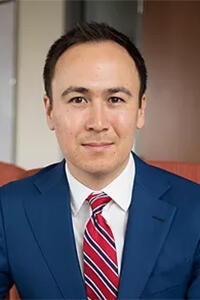
urata shujiro1
Japan and the US were involved in fierce trade frictions beginning with textiles in the 1950s to semi-conductors in the 1990s. Bilateral trade problems between Japan and the US have resurged recently after Donald Trump became US President. Analysis of Japan-US trade frictions can provide useful implications for ongoing trade war between the US and China.

Shujiro Urata is a Professor at the Graduate School of Asia-Pacific Studies, Waseda Univeristy.  His focus of research is in international and development economics.  He received his PhD in Economics from Standford University in 1978.

Philippines Conference Room Encina Hall, 3rd Floor 616 Serra Mall, Stanford, CA 94305
Shujiro Urata Professor Waseda University
Seminars
News Type
News
Date
Paragraphs

Former head of the CIA’s Korea Mission Center Andrew Kim will bring rich perspectives and experiences on North Korea. Kim joins the Walter H. Shorenstein Asia-Pacific Research Center at the Freeman Spogli Institute for International Studies.

January 7, 2019
FOR IMMEDIATE RELEASE

STANFORD, CA — Stanford University’s Walter H. Shorenstein Asia-Pacific Research Center (Shorenstein APARC) announced today the appointment of Sung Hyun “Andrew” Kim as a William J. Perry visiting scholar through the winter quarter of 2019.

Image
Portrait of Andrew Kim
Kim, who recently retired as a senior intelligence officer from the Central Intelligence Agency after 28 years of service, is the outgoing assistant director of the CIA’s Korea Mission Center, where he helped secure the foundation for the Trump-Kim summit of June 2018. At Stanford, he will contribute to studies of current North Korea diplomacy in comparison to previous negotiations with the DPRK, a research scope that he refers to as “U.S.-DPRK summit of the century and the tide of history.” Kim will also participate in policy engagement regarding North Korea issues through Shorenstein APARC and its Korea Program, which are part of the Freeman Spogli Institute for International Studies (FSI).

“I am delighted to welcome Andrew to Stanford,” said Gi-Wook Shin, director of Shorenstein APARC and of the Korea Program. “I have known him for many years, and his extraordinary expertise and rich experiences in Korean affairs are an invaluable addition to FSI’s and APARC’s community of scholars and practitioners. I look forward to Andrew’s contributions to our explorations of ways to promote sustainable reengagement of North Korea, which reflect our mission of producing policy-relevant research and strengthening dialogue and cooperation between counterparts in the Asia-Pacific and the United States.”

Kim established the CIA’s Korea Mission Center in April 2017 in response to a presidential initiative to address North Korea’s longstanding threat to global security. As part of his role as head of the Mission Center, he managed and guided CIA Korea analysts in providing strategic and tactical analytic products for a range of policymakers. He accompanied CIA Director and then Secretary of State Mike Pompeo to Pyongyang in meeting with the North Korean leader Kim Jong Un several times. Formerly he served as the Agency’s associate deputy director for operations and technology, leading all efforts to update operational technology and incorporate a state-of-the-art doctrine into CIA training curricula.

Earlier in his career, Kim served as the CIA’s chief of station in three major East Asian cities, while also managing the intelligence relationship with politically and militarily complicated foreign countries and advancing U.S. interests. In recognition of his many contributions, Kim was honored by the Agency with the Director’s Award (2018), Presidential Rank Award (2012), and the Donovan Award (1990). He speaks fluent Korean, Japanese, and Mandarin Chinese.

###

About the Walter H. Shorenstein Asia-Pacific Research Center
The Walter H. Shorenstein Asia-Pacific Research Center (Shorenstein APARC) addresses critical issues affecting the countries of Asia, their regional and global affairs, and U.S.-Asia relations. As Stanford University’s hub for the interdisciplinary study of contemporary Asia, APARC produces policy-relevant research, provides education and training to students, scholars, and practitioners, and strengthens dialogue and cooperation between counterparts in the Asia-Pacific and the United States. Founded in 1983, APARC today is home to a scholar community of distinguished academics and practitioners in government, business, and civil society, who specialize in trends that cut across the entire Asia-Pacific region.

Media contact:
Noa Ronkin, Associate Director for Communications and External Relations
Walter H. Shorenstein Asia-Pacific Research Center
noa.ronkin@stanford.edu


Hero Image
Portrait of Andrew Kim
All News button
1
-

Improvements in medical treatment have clearly contributed to significant increases in medical spending, yet there is relatively little quantitative evidence on whether the rise in expenditure is “worth it” in the sense of producing health outcomes of commensurate value. This seminar will focus on empirical research assessing the net value of health care for patients with chronic disease, using the case of type 2 diabetes mellitus. Based on analysis of detailed longitudinal, patient-level data, the collaborating researchers from Hong Kong, Japan, Taiwan, the Netherlands, and the US describe patterns in resource use and quality outcomes as measured by clinical markers and predicted risk of complications and death. In most of the studied cases, increases in spending were accompanied with improvements in outcomes of commensurate or greater value, given a range of values for a quality-adjusted life year. The authors conclude with a discussion of what the results imply about productivity of medical care, quality adjustment of price indices for healthcare, and policies for healthy aging in Asia (based on a forthcoming book).

Philippines Conference Room Encina Hall, 3rd Floor 616 Serra Mall, Stanford, CA 94305
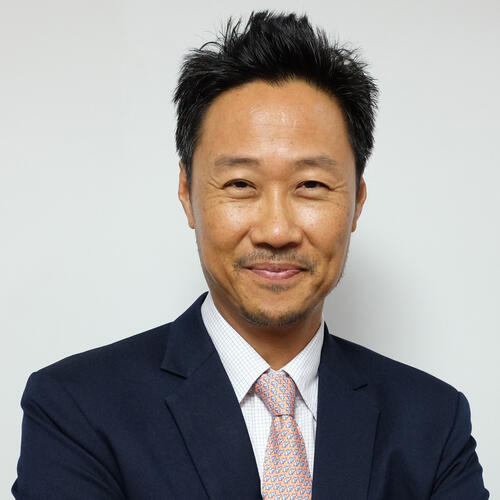
Jianchao Quan Hong Kong University
616 Serra StreetEncina Hall E301Stanford, CA94305-6055
0
toshiaki_iizuka.jpg Ph.D.

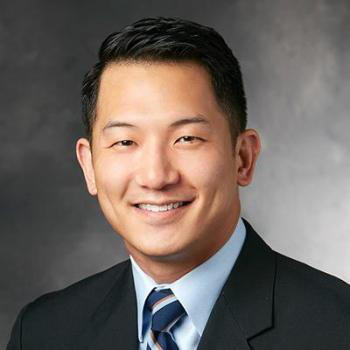
Toshiaki Iizuka is Professor at Graduate School of Public Policy and Graduate School of Economics, the University of Tokyo. Before joining the University of Tokyo in 2010, he taught at Vanderbilt University (2001-2005), Aoyama Gakuin University (2005-2009), and Keio University (2009-2010). He served as Dean of Graduate School of Public Policy, the University of Tokyo, between 2016 and 2018. He is a recipient of Abe Fellowship (2018-2019). 

His research interests are in the field of health economics and health policy. He has written a number of articles on incentive and information in the health care markets. His research articles have appeared in leading professional journals, including American Economic Review, RAND Journal of Economics, Journal of Health Economics, and Health Affairs, among others. Dr. Iizuka holds a PhD in Economics from the University of California, Los Angeles, an MIA from Columbia University, and an ME and BE from the University of Tokyo.
Visiting Scholar, Asia Health Policy Program at APARC
University of Tokyo

Shorenstein APARC
Stanford University
Encina Hall E301
Stanford, CA 94305-6055

(650) 723-9072 (650) 723-6530
0
Senior Fellow at the Freeman Spogli Institute for International Studies
Center Fellow at the Center for Health Policy and the Center for Primary Care and Outcomes Research
Faculty Research Fellow of the National Bureau of Economic Research
Faculty Affiliate at the Stanford Center on China's Economy and Institutions
karen-0320_cropprd.jpg PhD

Karen Eggleston is a Senior Fellow at the Freeman Spogli Institute for International Studies (FSI) at Stanford University and Director of the Stanford Asia Health Policy Program at the Shorenstein Asia-Pacific Research Center at FSI. She is also a Fellow with the Center for Innovation in Global Health at Stanford University School of Medicine, and a Faculty Research Fellow of the National Bureau of Economic Research (NBER). Her research focuses on government and market roles in the health sector and Asia health policy, especially in China, India, Japan, and Korea; healthcare productivity; and the economics of the demographic transition.

Eggleston earned her PhD in public policy from Harvard University and has MA degrees in economics and Asian studies from the University of Hawaii and a BA in Asian studies summa cum laude (valedictorian) from Dartmouth College. Eggleston studied in China for two years and was a Fulbright scholar in Korea. She served on the Strategic Technical Advisory Committee for the Asia Pacific Observatory on Health Systems and Policies and has been a consultant to the World Bank, the Asian Development Bank, and the WHO regarding health system reforms in the PRC.

Director of the Asia Health Policy Program, Shorenstein Asia-Pacific Research Center
Stanford Health Policy Associate
Faculty Fellow at the Stanford Center at Peking University, June and August of 2016
CV
Date Label
Stanford University and NBER
Seminars
Paragraphs

Abstract: A large literature has established that the International Monetary Fund (IMF) is heavily politicized. We argue that this politicization has important consequences for international reserve accumulation and financial crises. The IMF generates moral hazard asymmetrically, reducing the expected costs of risky lending and policies for states that are politically influential vis-à-vis the institution. Using a panel data set covering 1980 to 2010, we show that proxies for political influence over the IMF are associated with outcomes indicative of moral hazard: lower international reserves and more frequent financial crises. We support our causal claims by applying the synthetic control method to Taiwan, which was expelled from the IMF in 1980. Consistent with our predictions, Taiwan's expulsion led to a sharp increase in precautionary international reserves and exceptionally conservative financial policies.

All Publications button
1
Publication Type
Journal Articles
Publication Date
Journal Publisher
International Organization
Authors
Phillip Lipscy
Authors
Noa Ronkin
News Type
News
Date
Paragraphs

People who are acquainted with the work of Shorenstein APARC’s Asia Health Policy Program (AHPP) may be aware of the Innovation for Healthy Aging collaborative research project led by APARC Deputy Director and AHPP Director Karen Eggleston. This project, which identifies and analyzes productive public-private partnerships advancing healthy aging solutions in East Asia and other regions, encompasses an upcoming volume, co-authored by Eggleston with Harvard University professors Richard Zeckhauser and John Donohue, about public and private roles in governance of multiple sectors in China and the United States, including health care and elderly care. This volume, however, is not the first collaboration between Eggleston and Zeckhauser.

Zeckhauser, the Frank P. Ramsey Professor of Political Economy at Harvard University’s Kennedy School, is known for his many policy investigations that explore ways to promote the health of human beings, to help markets work more effectively, and to foster informed and appropriate choices by individuals and government agencies. In 2006, Eggleston and Zeckhauser co-wrote a paper about antibiotic resistance as a global threat, an issue that has since received much attention as it has become a critical public health and public policy challenge. Zeckhauser was a pioneer in framing antibiotic resistance as a global threat.

On October 20, 2018, Eggleston was among some 150 colleagues, students, and friends who participated in a special symposium at the Kennedy School to celebrate Zeckhauser’s 50th anniversary of teaching and research, and to anticipate what the next 50 years might bring in the multiple fields he has influenced throughout his long career.

Eggleston joined the first of two panels in that symposium, where she spoke about Zeckhauser’s impact on health policy and about what academics and policymakers should be tackling next on the path to addressing the global threat of antibiotic resistance.

The panel was moderated by Harvard Professor Edward Glaeser. In addition to Eggleston, it included Jeffrey Liebman, Daniel Schrag, and Cass Sunstein.

A video recording of the panel is made available by the Kennedy School. Listen to Eggleston’s remarks (beginning at the 8:42 and 36:20 time marks):


Hero Image
Karen Eggleston speaking on a panel celebrating Harvard Professor Richard Zeckhauser. Harvard Kennedy School
All News button
1
-

Co-sponsored by the Southeast Asia Program and

the Center on Democracy, Development and the Rule of Law

Indonesia features Southeast Asia’s most vibrant and dynamic democracy, but debilitating institutional dysfunctions persist.  Age-old patronage-style practices remain commonplace, despite voter demands for governance reform.  In effect, two mutually incompatible systems operate simultaneously: the rule of law on the one hand—“Ruler’s Law” on the other.  The disarray provides space for mafias and Islamist fringe groups to wield clout.  The contradiction tends to deter investment that Indonesia sorely needs in order to escape a “middle-income trap.”  What are the prospects for change in the April 2019 national elections?  Join the Indonesia political analyst Kevin O’Rourke for a presentation and discussion of poll data, political trends, and potential post-2019 scenarios in the world’s fourth most populous country. 

Image
kevin orourke cropped
Kevin O’Rourke’s Reformasi Weekly analyzes politics and policy-making for organizations operating in Indonesia. Subscribers include embassies, NGOs, universities, and companies. His firm, Reformasi Information Services, provides political risk consul­ting and customized research. His latest publication, 2019 Election Primer: Players, Playing Field and Scenarios (Nov. 2018), reviews in detail the rules, issues, and possible results of the country’s nationwide elections in April 2019. Earlier writings include Who’s Who in Yudhoyono’s Indonesia (2010) and Reformasi: The Struggle for Power in Post-Soeharto Indonesia (2002). Kevin started his career in Indonesia in 1994 as an equity research analyst. He is a graduate of Harvard University with an honors degree in government.

Philippines Conference Room Encina Hall, 3rd Floor 616 Serra Mall, Stanford, CA 94305
Kevin O’Rourke Writer and producer, Reformasi Weekly Review of Indonesian politics and policymaking
Seminars
-

This study focused on an important but often overlooked aspect of safety in medicine: physician safety. In China, patients may violently protest against doctors via disruptive behaviors when facing unsatisfying results, jeopardizing physicians’ security, affecting their diagnostic reasoning, and ultimately harming patient safety. We investigated the relationship between disruptive behaviors, government intervention, and protest results. Statistical analyses reveal that the ‘paying for peace’ mechanism can create distorted incentives for patients and encourage more riots. Efforts should be made to improve service quality and channel medical disputes into the legal framework.

Image
lingrui liu yale cropped
Lingrui Liu is an Associate Research Scientist at the Yale School of Public Health, Department of Health Policy and Management. Prior to joining the YSPH faculty in fall of 2018, she obtained an ScD from Harvard University (2018). Her research interests include health care organizations, quality improvement, patient safety, organizational design and culture, and implementation of evidence-based practices.

Lingrui Liu Associate Research Scientist, the Yale School of Public Health
Seminars
Authors
News Type
News
Date
Paragraphs


The two-day forum, part of a project of the American Academy of Arts and Sciences, led by the Freeman Spogli Institute’s Karl Eikenberry and Stephen Krasner, gathered experts to examine trends in civil wars and solutions moving forward.   


Image
Attendees at a two-day forum, part of a project of the American Academy of Arts and Sciences

The Council on Foreign Relations presently tracks six countries in a state of civil war, including three (South Sudan, Afghanistan, and Yemen) where the situation is currently worsening. Furthermore, three states (Central African Republic, Myanmar, and Nigeria) are experiencing sectarian violence with the potential to become larger conflicts. With two months still remaining in 2018, the combined fatalities in Afghanistan, Syria, and Yemen alone is fast approaching 100,000 for the year.

It was against this backdrop that Shorenstein APARC’s U.S.-Asia Security Initiative (USASI), the American Academy of Arts and Sciences (AAAS), and the School for International Studies at Peking University recently co-hosted the security workshop “Civil Wars, Intrastate Violence, and International Responses.” Held in Beijing, on October 22-23, the workshop brought together thirty-five U.S. and international experts to gain a wider perspective on intrastate violence and consider the possibilities for, and limits of, intervention. The workshop is the latest activity of the AAAS project on Civil Wars, Violence, and International Responses, chaired by Ambassador Karl Eikenberry, director of USASI, and by Stephen Krasner, senior fellow at the Freeman Spogli Institute for International Studies (FSI) and professor of international relations.

“Some of the major discussion topics included the appropriate political and economic development models to apply to fragile states recovering from internal conflict, justifications for intervention, and the likely impact of great power competition on the future treatment of civil wars." - Karl Eikenberry

Workshop participants included academics and professionals with expertise in political science, global health, diplomacy, refugee field work, United Nations, and the military. Countries represented at the table included the United States, Ethiopia, France, and China. Throughout the two-day session, they examined three crucial questions: What is the scope of intrastate conflicts and civil wars, and to what extent is it attributable to domestic or international factors? What types of threats to global security emanate from state civil wars? What policy options are available to regional powers and the international community to deal with such threats?


Image
USASI Director Karl Eikenberry addresses one of the sessions

USASI Director Karl Eikenberry addresses one of the sessions

China’s Emerging Role in Addressing Intrastate Violence

The workshop’s timing and location was prescient. Over the past two decades, China’s global exposure–through trade, investment, and financing–has increased dramatically. Coupled with a growing number of its citizens living abroad, China’s equity in other states has reached the point where it has a direct interest in those experiencing or are at risk of political instability and internal violence. Indeed, through its ambitious Belt and Road Initiative, China has the opportunity to help stabilize fragile states by stimulating economic development.

“The workshop revealed, at least for me, that China is backing away from its absolute defense of sovereignty and non-intervention,” said Stephen Krasner. “As Chinese interests have expanded around the world, and as both its investments and the number of its citizens living abroad have increased, the Chinese have become more concerned with political conditions in weakly governed countries.”

With China’s growing policy and academic interests in addressing civil wars and intrastate violence, as well as its higher international profile in places like United Nations peacekeeping operations, the Beijing event provided an excellent opportunity for Chinese experts to exchange views with their international colleagues.

Paul H. Wise, MD, MPH; Senior Fellow at Stanford Health Policy

Paul H. Wise, MD, MPH; Senior Fellow at Stanford Health Policy

Where We are Today, Where We Go Tomorrow

The Beijing workshop was arranged into four sessions, with themes focusing on trends in intrastate violence, the threats it poses to international security, the limits of intervention, and advice to policymakers.

Each panel included presentations of prepared papers, moderator comments, and an open discussion by all participants. A fifth and final session provided an opportunity to summarize the preceding discussions. The workshop then closed out with an open conversation, where participants offered insight and policy recommendations developed over the preceding two days of dialogue.

Image
Martha Crenshaw seated at round table
“The workshop,” observed Martha Crenshaw (shown above), a Senior Fellow at FSI, “was a unique opportunity to exchange views with Chinese colleagues on the subject of civil conflict in the contemporary world. A valuable learning experience for all of us."

The "Civil Wars, Intrastate Violence, and International Responses” workshop marks the second phase of the AAAS project by the same name that launched in 2015. The first phase of the project culminated in the publication of 28 essays across two volumes of the AAAS quarterly journal Dædalus. The ongoing second phase consists of a series of roundtables and workshops in which project participants engage with academics and with government and international organization officials to build a larger conceptual understanding of the threats posed by the collapse of state authority associated with civil wars, and to contribute to current policymaking. Project activities have included meetings with the United Nations leadership and staff; academic activities in the United States; sessions with the U.S. executive and legislative branches; and a visit to Nigeria.

Throughout the workshop, Chatham House Rule of non-attribution applied to all dialogue. A workshop report will be published by the co-hosts in early 2019.

The U.S.-Asia Security Initiative is part of Stanford University’s Walter H. Shorenstein Asia-Pacific Research Center (APARC). Led by former U.S. Ambassador and Lieutenant General (Retired) Karl Eikenberry, USASI seeks to further research, education, and policy relevant dialogues at Stanford University on contemporary Asia-Pacific security issues.

March 1, 2019 update: the workshop report is now available online. Download the report >> 

Group photo of Participants in the “Civil Wars, Intrastate Violence, and International Responses” workshop

Participants in the “Civil Wars, Intrastate Violence, and International Responses” workshop

Hero Image
Karl Eikeberry at Civil Wars, Intrastate Violence, and International Response Workshop
All News button
1
-

Four member states of the Association of Southeast Asian Nations (ASEAN) have made territorial claims in the South China Sea that conflict with China’s professed entitlement to all of the “islands and the adjacent waters.” Because the “ASEAN Way” is to make decisions by consensus, each member state can, in effect, veto what the group might otherwise decide. Prof. O’Neill will explore how China has used its financial power to divide ASEAN’s members in order to prevent them from acting collectively to resolve their territorial disputes with China in the South China Sea. He will compare China’s relations with Cambodia, the Philippines, and Myanmar in order to highlight the key role that a recipient country’s type of regime plays in enhancing or constraining Beijing’s ability to use aid, loans, and investments to influence the policies and politics of developing states. He will argue that authoritarian institutions facilitate Chinese influence while democratic institutions inhibit it.

Image
oneill dan 35 cropped
Daniel C. O’Neill’s current project is a co-authored volume on the politics of China’s Belt and Road Initiative in Southeast and South Asia. His new book, Dividing ASEAN and Conquering the South China Sea: China’s Financial Power Projection (2018), has been called “well-crafted and theoretically sound” by the highly regarded GWU Southeast Asianist Prof. Robert Sutter. O’Neill’s shorter writings have appeared in venues including Asian Survey, Contemporary Southeast Asia, the Journal of Eurasian Studies, and The Washington Post. Audiences have heard him lecture in, for example, the Philippines, China, and Kazakhstan. For three years running, the School of International Studies where he works named him “Outstanding Teacher of the Year.” His Ph.D. in political science is from Washington University in St. Louis.

Philippines Conference Room
Encina Hall, 3rd Floor
616 Serra Mall
Stanford, CA 94305

Daniel C. O’Neill Associate Professor of Political Science, School of International Studies, University of the Pacific
Seminars
Authors
News Type
News
Date
Paragraphs

5,100 miles separate Tokyo from Stanford. But for Hiroyuki Fukano, the distance was measured in more than miles. It was also a journey of time and memory–of 30 years, to be precise.

As a visiting fellow in the 1988-89 cohort of APARC’s Corporate Affiliate Program (now called Global Affiliates Program), Fukano joined Center alumni and friends from the last four decades for reunions in Beijing and Tokyo. In all, more than 100 former affiliates and visiting fellows gathered to reconnect with peers, meet new ones, and reflect on their times at Stanford.

"These gatherings are a reminder, both to our faculty and alumni, of the power of the APARC experience to change lives,” shared Director Gi-Wook Shin, who delivered welcoming remarks at both events. “We have with us alumni and affiliates from the private and public sectors, as well as from academia. They are doing amazing work in their specific fields; work influenced, in part, by their time at Stanford.”

“Clearly, the APARC experience stretches beyond barriers, both geographical and temporal.”

The gatherings also underscored the influence of the APARC experience on strengthening connections across Asia at large. For example, one Korean affiliate flew in for the Tokyo event, while a Japanese alum, now working in China, joined his Stanford peers at the Beijing gathering.

“It’s an especially unique bond that the affiliates share,” noted Global Affiliates Program Manager Denise Masumoto. “Regardless of the industry or field from which they come, their fellowship year at APARC is a unifying experience for them; it’s something each of them carries forward into everything they do.”

Fukano, who delivered remarks at the Tokyo event, echoed this sentiment. As he reflected on the thirty years that had passed since his time at Stanford, he shared that, even to this day, his year at APARC still held great significance for him.

Director Shin was joined at the events by several Center faculty members. Professor Takeo Hoshi, director of the Japan Program at APARC, updated the Tokyo audience on new research and partnerships being explored by the program.

Professor Jean Oi, director of the China Program at APARC, addressed the Beijing gathering at the Stanford Center at Peking University (SCPKU). Professor Oi spoke about the program’s collaboration this fall with SCPKU on their "On the Road to China" program, which brings Stanford students to SCPKU for three months of coursework and area experiences.

We thank everyone who joined us for these alumni events and look forward to seeing even more friends and partners next time.

Prof. Takeo Hoshi, Lei Guo (2016-17 Visiting Scholar, Peking University), and Masami Miyashita (2011-12 Corporate Affiliate, Ministry of Economy, Trade & Industry, Japan)

Prof. Takeo Hoshi, Lei Guo (2016-17 Visiting Scholar, Peking University), and Masami Miyashita (2011-12 Corporate Affiliate, Ministry of Economy, Trade & Industry, Japan)

Luguang Li (2002-03 Corporate Affiliate, PetroChina) and Professor Gi-Wook Shin

Luguang Li (2002-03 Corporate Affiliate, PetroChina) and Professor Gi-Wook Shin

Masami Miyashita (2011-12 Corporate Affiliate, METI, Japan, now based in Hong Kong) and Zhuoyan Wang (2016-17 Corporate Affiliate, PetroChina)

Masami Miyashita (2011-12 Corporate Affiliate, METI, Japan, now based in Hong Kong) and Zhuoyan Wang (2016-17 Corporate Affiliate, PetroChina)

Zhuoyan Wang (2016-17 Corporate Affiliate, PetroChina)

Zhuoyan Wang (2016-17 Corporate Affiliate, PetroChina)

Jung-Yi Lee (2013-14 Visiting Scholar, Hanmaum Peace & Research Foundation)

Jung-Yi Lee (2013-14 Visiting Scholar, Hanmaum Peace & Research Foundation)

Xiuxiao Wang (2016-17 Visiting Scholar, Central University of Finance and Economics) and Professor Gi-Wook Shin

Xiuxiao Wang (2016-17 Visiting Scholar, Central University of Finance and Economics) and Professor Gi-Wook Shin

Liang (Leon) Fang (2014-15 Corporate Affiliate, China Sunrain Solar Energy Co., Ltd.) and Zhuoyan Wang (2016-17 Corporate Affiliate, PetroChina)

Liang (Leon) Fang (2014-15 Corporate Affiliate, China Sunrain Solar Energy Co., Ltd.) and Zhuoyan Wang (2016-17 Corporate Affiliate, PetroChina)

Hong Cheng (2016-17 Visiting Scholar, Wuhan University), Lei Guo (2016-17 Visiting Scholar, Peking University), Professor Takeo Hoshi, and Jianxiong Liu (2016-17 Visiting Scholar, Chinese Academy of Social Sciences)

Hong Cheng (2016-17 Visiting Scholar, Wuhan University), Lei Guo (2016-17 Visiting Scholar, Peking University), Professor Takeo Hoshi, and Jianxiong Liu (2016-17 Visiting Scholar, Chinese Academy of Social Sciences)

Professor Jean Oi and Guofeng Sun (2003-04 Corporate Affiliate, Research Institute of People’s Bank of China)

Professor Jean Oi and Guofeng Sun (2003-04 Corporate Affiliate, Research Institute of People’s Bank of China)

Lei Guo, 2016-17 Visiting Scholar from Peking University, and Professor Andy Walder

Lei Guo, 2016-17 Visiting Scholar from Peking University, and Professor Andy Walder

Image
Beijing reception on September 10, 2018

Beijing reception on September 10, 2018

Toshiyuki Watanabe (2017-18 Corporate Affiliate, The Asahi Shimbun) and Takahito Inoshita (2017-18 Corporate Affiliate, Kozo Keikaku Engineering)

Toshiyuki Watanabe (2017-18 Corporate Affiliate, The Asahi Shimbun) and Takahito Inoshita (2017-18 Corporate Affiliate, Kozo Keikaku Engineering)

Hiroyuki Fukano (1988-89 Corporate Affiliate, ITOCHU Corporation)

Hiroyuki Fukano (1988-89 Corporate Affiliate, ITOCHU Corporation)

Takashi Imoto (1998-99 Corporate Affiliate, Kansai Electric Power Company), Yasuhiro Kanda (2005-06 Corporate Affiliate, Kansai Electric Power Company), and Professor Takeo Hoshi

Takashi Imoto (1998-99 Corporate Affiliate, Kansai Electric Power Company), Yasuhiro Kanda (2005-06 Corporate Affiliate, Kansai Electric Power Company), and Professor Takeo Hoshi

Aki Takahashi (2015-17 Corporate Affiliate, Nissoken), Kenichi Kamai and Kimie Kawamoto (affiliate representatives from Nissoken)

Aki Takahashi (2015-17 Corporate Affiliate, Nissoken), Kenichi Kamai and Kimie Kawamoto (affiliate representatives from Nissoken)

Ryuichiro Takeshita (2014-15 Corporate Affiliate, Huff Post Japan), Toshiyuki Watanabe (2017-18 Corporate Affiliate, The Asahi Shimbun) and Takahito Inoshita (2017-18 Corporate Affiliate, Kozo Keikaku Engineering)

Ryuichiro Takeshita (2014-15 Corporate Affiliate, Huff Post Japan), Toshiyuki Watanabe (2017-18 Corporate Affiliate, The Asahi Shimbun) and Takahito Inoshita (2017-18 Corporate Affiliate, Kozo Keikaku Engineering)

Yotaro Akamine (2007-08 Corporate Affiliate, Tokyo Electric Power Company)

Yotaro Akamine (2007-08 Corporate Affiliate, Tokyo Electric Power Company)

Professor Gi-Wook Shin and Keiichi Uruga (2013-14 Corporate Affiliate, Ministry of Economy, Trade & Industry, Japan)

Professor Gi-Wook Shin and Keiichi Uruga (2013-14 Corporate Affiliate, Ministry of Economy, Trade & Industry, Japan)

Tadashi (Brian) Miyakawa (2000-01 Corporate Affiliate, IBM, Japan)

Tadashi (Brian) Miyakawa (2000-01 Corporate Affiliate, IBM, Japan)

Yohei Saito (2016-17 Corporate Affiliate, Future Architect Inc.), Col. Daisuke Nakaya (2016-17 Corporate Affiliate, Japan Air Self Defense Force), Akihiko Sado (2016-17 Corporate Affiliate, The Asahi Shimbun), Hiroki Morishige (2016-18 Corporate Affiliate, Shizuoka Prefectural Government) and Aki Takahashi (2015-17 Corporate Affiliate, Nissoken)

Yohei Saito (2016-17 Corporate Affiliate, Future Architect Inc.), Col. Daisuke Nakaya (2016-17 Corporate Affiliate, Japan Air Self Defense Force), Akihiko Sado (2016-17 Corporate Affiliate, The Asahi Shimbun), Hiroki Morishige (2016-18 Corporate Affiliate, Shizuoka Prefectural Government) and Aki Takahashi (2015-17 Corporate Affiliate, Nissoken)

Tokyo reception on September 5, 2018

Tokyo reception on September 5, 2018

Hero Image
Group photo of Global Affiliates Program participants for 2019-20. Rod Searcey
All News button
1
Subscribe to Asia-Pacific