Authors
Noa Ronkin
News Type
News
Date
Paragraphs

The Shorenstein Asia-Pacific Research Center (APARC) is delighted to share that Center Fellow Oriana Skylar Mastro is the recipient of the John H. McArthur Research Fellowship for 2022-23 in recognition of her outstanding scholarship.

Awarded by the Asia Pacific Foundation of Canada (APF Canada), the fellowship provides opportunities for exceptional mid-career scholars working on programs and research areas directly relevant to Canada and Canada’s interests in Asia. It honors the memory of John H. McArthur, a world-renowned Canadian business educator who, among other roles, was dean at Harvard Business School and chair of the APF Canada Board of Directors.

Mastro’s current research projects focus on the U.S.-China great power competition, deterrence in the Taiwan Strait, China’s maritime ambitions, and the China-Russia military relationship.

Prior to her appointment at Stanford in August 2020, Mastro was an assistant professor of security studies at the Edmund A. Walsh School of Foreign Service at Georgetown University. She holds a B.A. in East Asian Studies from Stanford University and an M.A. and Ph.D. in Politics from Princeton University.

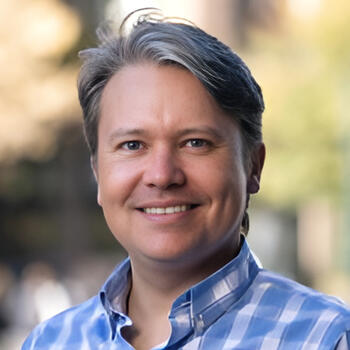
Headshot of Oriana Skylar Mastro

Oriana Skylar Mastro

Center Fellow at the Freeman Spogli Institute for International Studies
Full biography

Read More

Chinese President Xi Jinping waves during a meeting.
News

China’s Xi Expands Power at Party Congress: Commentary Roundup

With Xi at the helm for a third term, we should expect to see a more assertive China and more turbulence in the regional and global order, say APARC Director Gi-Wook Shin and Center Fellow Oriana Skylar Mastro. They offer their assessments of the outcomes of the 20th National Congress of the Chinese Communist Party and its implications for China’s trajectory and U.S.-China relations.
China’s Xi Expands Power at Party Congress: Commentary Roundup
South Korean soldiers participate in a river crossing exercise with U.S. soldiers.
News

Striking the Right Balance: What South Korea Can Do to Enhance Deterrence in the Taiwan Strait

Despite obstacles and risks, there are good reasons why South Korea should want to increase deterrence against China. In a new article, Center Fellow Oriana Skylar Mastro and co-author Sungmin Cho chart an optimal strategy for Seoul to navigate the U.S.-China rivalry and support efforts to defend Taiwan.
Striking the Right Balance: What South Korea Can Do to Enhance Deterrence in the Taiwan Strait
U.S. President Joe Biden hosts a Quad Leaders Summit at the White House.
News

New Essay Collection Examines Minilateral Deterrence in the Indo-Pacific

A new Asia Policy roundtable considers whether and how minilateral groupings, such as the Quad and AUKUS, can deter coercion and aggression in the Indo-Pacific. The roundtable co-editor is APARC South Asia Research Scholar Arzan Tarapore, and it opens with an essay by Center Fellow Oriana Skylar Mastro.
New Essay Collection Examines Minilateral Deterrence in the Indo-Pacific
Hero Image
Portrait of Oriana Skylar Mastro with text "Recipient of the Asia Pacific Foundation of Canada 2022-23 John H. McArthur Research Fellowship"
All News button
1
Subtitle

The fellowship, established by the Asia Pacific Foundation of Canada, recognizes Mastro’s exceptional scholarly contributions in the fields of Chinese military, Asia-Pacific security, war termination, and coercive diplomacy.

-
Flyer for webinar "Media, Politics, and Polarization in Asia" with portraits of speakers Cherian George and Zuraidah Ibrahim.

Stark contradictions mark Asia’s news and information landscape.  Citizens have gained unprecedented ability to express and inform themselves through media.  Yet the internet, once thought of as a great liberator and equalizer, has been harnessed by powerful interests.  Social media platforms, even as they facilitate collective action, have deepened divisions, circulated hate, and undermined public-interest journalism.  What are the political and other effects of this combination of abundant informative discourse and divisive manipulative bias?  A media scholar and a media practitioner with professional experience in both Southeast Asia and Hong Kong will reflect on these contrary trends and their implications.

Image
Cherian George 110922
Cherian George, a media professor at Hong Kong Baptist University, is a visiting scholar at Stanford’s Department of Communication. His books include Red Lines: Political Cartoons and the Struggle Against Censorship, a double finalist for the American Association of Publishers PROSE award for scholarly books (2021); Media and Power in Southeast Asia (2019); and Hate Spin: The Manufacture of Religious Offense and its Threat to Democracy (2016).

Image
Zuraidah Ibrahim 110922
Zuraidah Ibrahim is executive managing editor at Hong Kong’s English language daily, South China Morning Post, where her responsibilities include overseeing Hong Kong and international coverage. She was previously deputy editor and political editor of Singapore’s Straits Times. Her books include Rebel City: Hong Kong’s Year of Water and Fire (2020); Singapore Chronicles: Opposition (2017); and Lee Kuan Yew: Hard Truths to Keep Singapore Going (2011).

Donald K. Emmerson

Via Zoom Webinar

Cherian George Professor of Media Studies, Hong Kong Baptist University
Zuraidah Ibrahim Executive Managing Editor, South China Morning Post
Seminars
Paragraphs

Arzan Tarapore is the co-editor of the Asia Policy roundtable 'Minilateral Deterrence in the Indo-Pacific' and the co-author of its introductory essay, "Minilaterals and Deterrence: A Critical New Nexus." Oriana Skylar Mastro is the author of the first essay in the roundtable, "Deterrence in the Indo-Pacific." Excerpts from both essays are included below.


Excerpt from "Minilaterals and Deterrence: A Critical New Nexus," by Arzan Tarapore and Brendan Taylor:

As countries around the Indo-Pacific strive to manage the challenges of China’s growing power and assertiveness, they have emphasized two concepts. First, they have increasingly embraced “minilateral” groupings—small, issue-based, informal, and uninstitutionalized partnerships — as a way of coordinating international policy action.

Second, the United States and its allies, such as Australia and Japan, have renewed their commitment to deterrence to maintain regional stability. Rather than relying on institutions to deepen regional integration, which was their preferred option after the end of the Cold War, they are designing defense policies to dissuade potential adversaries, especially China, from revisionist behavior.

The Cold War produced a distinguished body of scholarship addressing the concept of deterrence.3 There is also a burgeoning literature on minilateral security cooperation in the Indo-Pacific.4 Yet little, if any, work has thus far addressed the potential convergence between these two increasingly dominant trends in the region’s security politics. By bringing together six leading security experts to explore the nexus between deterrence and minilateralism, this roundtable constitutes a first attempt to fill this gap. 


Excerpt from "Deterrence in the Indo-Pacific," by Oriana Skylar Mastro:

As China’s military might and tendency toward regional aggression grow, the United States and its allies are increasingly concerned with deterrence. Their strategies seek to prevent Beijing from disrupting the rules-based order in the Indo-Pacific by, for example, invading Taiwan or conducting gray-zone operations in the South China Sea.

Yet deterring China with minilateral groupings of states is more complex and difficult than traditional deterrence theory might suggest. This essay lays out some of the unique characteristics of the China challenge before considering how minilaterals can best enhance deterrence in these circumstances. 

All Publications button
1
Publication Type
Journal Articles
Publication Date
Subtitle

An Asia Policy roundtable co-edited by Arzan Tarapore, including an essay by Oriana Skylar Mastro.

Journal Publisher
Asia Policy
Authors
Oriana Skylar Mastro
Number
4
Authors
Noa Ronkin
News Type
News
Date
Paragraphs

Over the past decade, as China’s might and assertiveness have grown, countries around the Indo-Pacific have increasingly embraced informal partnerships, or minilateral groupings, to deepen international policy action and defense coordination. Two prominent examples of the minilateral model are the Quad, which comprises Australia, India, Japan, and the United States, and AUKUS, which includes Australia, the United Kingdom, and the United States. However, deterring China with minilateral groupings is more complex than traditional deterrence theory might suggest. Can minilateral groupings deter coercion and aggression in the Indo-Pacific, and if so, under what conditions? 

A collection of essays in a new Asia Policy roundtable tackles this question. Shorenstein APARC South Asia Research Scholar Arzan Tarapore is a co-editor of the roundtable. Center Fellow Oriana Skylar Mastro is the author of the first essay in the collection.


Sign up for APARC newsletters to receive our scholars' updates.

The roundtable brings together six leading security experts to explore the nexus between deterrence and minilateralism in Indo-Pacific security politics. The motivation for this endeavor, Tarpore and co-editor Brendan Taylor of the Australian National University explain in the roundtable introductory essay, is to fill the gap in the existing literature, which has largely not addressed the possible convergence between these two increasingly dominant trends in the region.

The roundtable opens with Mastro's essay, in which she identifies the unique characteristics of the China challenge and considers how minilateral groupings can best enhance deterrence in these circumstances. First, she explains why minilaterals, such as the Quad, could address some of the challenges of “deterrence by punishment.” This traditional form of deterrence employs the threat of severe penalties — ranging from economic sanctions to nuclear retaliation — to prevent attacks by an adversary. Here, Mastro says, “economic or political costs may have greater deterrent value against Beijing than military costs, thus creating an opportunity for the Quad.”

Next is the category of “deterrence by denial,” which includes strategies that prevent or limit aggressive actions of an adversary by creating the perception that they will not succeed. Such denial-based strategies are more effective than punishment-based ones in circumstances where China could blunt U.S. attempts at punishment or choose to incur the costs. But the United States, Mastro says, “does not have the regional force posture to deny China its objectives.” 

Mastro then considers a third, less analyzed category, “deterrence by resilience,” where the goal is to encourage the perception that disruptive events such as military operations will not be effective in attaining the adversary’s objectives. Here, “resiliency is about signaling to China that the benefits of a particular action are less than China believes them to be.” By building resiliency, smaller countries can push back against Chinese coercion to abide by China's interests. Countries in minilateral groupings should therefore prioritize this form of deterrence as they consider ways to cooperate, Mastro concludes.

Read More

 U.S. President Joe Biden speaks during the G7 summit at Schloss Elmau on June 26, 2022.
Commentary

Creativity Key for U.S. to Best China in Infrastructure Race

Biden's Partnership for Global Infrastructure and Investment can take lessons from successes involving the private sector.
Creativity Key for U.S. to Best China in Infrastructure Race
Chinese President Xi Jinping is applauded by senior members of the government and delegates.
Commentary

In China, Xi Jinping Is Getting an Unprecedented Third Term. What Should the World Expect?

Xi's plans are long term and unlikely to shift, but he can now be more aggressive than before in their pursuit.
In China, Xi Jinping Is Getting an Unprecedented Third Term. What Should the World Expect?
Emily Feng speaking at the 2022 Shorenstein Journalism Award.
News

Shorenstein Journalism Award Winner Emily Feng Examines the Consequences of China’s Information Void and the Future of China Reporting

The challenges facing foreign correspondents in China are forcing the West to reconfigure its understanding of the country, creating opacity that breeds suspicion and mistrust, says Emily Feng, NPR’s Beijing correspondent and recipient of the 2022 Shorenstein Journalism Award. But China seems to want the appearance of foreign media coverage without getting to the heart of what happens in the country.
Shorenstein Journalism Award Winner Emily Feng Examines the Consequences of China’s Information Void and the Future of China Reporting
Hero Image
U.S. President Joe Biden hosts a Quad Leaders Summit at the White House.
U.S. President Joe Biden hosts a Quad Leaders Summit along with Indian Prime Minister Narendra Modi, Australian Prime Minister Scott Morrison and Japanese Prime Minister Suga Yoshihide in the East Room of the White House on September 24, 2021 in Washington, DC.
Sarahbeth Maney-Pool/ Getty Images
All News button
1
Subtitle

A new Asia Policy roundtable considers whether and how minilateral groupings, such as the Quad and AUKUS, can deter coercion and aggression in the Indo-Pacific. The roundtable co-editor is APARC South Asia Research Scholar Arzan Tarapore, and it opens with an essay by Center Fellow Oriana Skylar Mastro.

Authors
Scot Marciel
News Type
Commentary
Date
Paragraphs

This commentary was first published by Nikkei Asia.


The White House has styled the Partnership for Global Infrastructure and Investment announced by U.S. President Joe Biden in June as a $40 billion pathway to work with allies, partners and the private sector to offer sustainable, green infrastructure alternatives.

This marks the latest American effort to offer an infrastructure alternative to China's Belt and Road Initiative. But given the disappointing results seen with previous such programs, it is imperative that Washington look for lessons in the successes of other more creative efforts in recent years.

Experience shows that the U.S. and its allies can win important infrastructure victories by being strategic, proactive and persistent, and by building close partnerships between government and private business.


Subscribe to APARC newsletters to receive our experts' commentary and analysis.


Consider the deal under which U.S. private equity group Cerberus Capital acquired a bankrupt shipyard in the Philippines last April, keeping it out of Chinese hands.

The U.S. embassy in Manila had alerted Washington to the business' failure in 2019, noting that its Subic Bay location provided the closest deep-water port access and ship supply and repair facilities to the disputed South China Sea and that Philippine officials were concerned about the prospect of Chinese companies moving in. Some in Washington showed interest, but the bureaucracy initially struggled to translate this into action. Fortunately, key players in the government persisted.

Working closely with Cerberus executives to overcome delays and a decision by the U.S. International Development Finance Corp. (DFC) not to participate in the project, these officials developed a creative solution: obtaining commitments from the U.S. Army and the Philippine Navy to lease parts of the project area, thereby guaranteeing Cerberus the steady revenue stream it required to proceed. The deal was a big win but happened only through the ad hoc efforts of a few people.

The Australian government took a more proactive approach toward the sale of the Pacific arm of Digicel Group, which controlled much of the communications and internet infrastructure in six island nations, including Papua New Guinea. Two Chinese state-owned companies had immediately expressed interest in the assets when Irish billionaire Denis O'Brien put them up for sale in 2020.

While Digicel Pacific was profitable, private companies were reluctant to bid because of concerns about political stability in some host countries, and bankers were unwilling to bankroll the $1.52 billion in new debt required to complete a deal.

Canberra overcame these challenges by working with Australian telecom operator Telstra to buy the assets. The Australian government is now reportedly seeking to lay off some of the debt it incurred to the DFC and the Japan Bank for International Cooperation.

The key to getting the deal done was the Australian government's willingness to essentially de-risk the transaction for Telstra speedily and creatively. It moved quickly with international partners to fund cheap debt and guarantee regulatory, foreign exchange and sovereign risk while giving Telstra full equity ownership.

The U.S. and its allies can, when they focus imaginatively, offer countries in the region viable infrastructure options that reduce their dependence on Chinese investments. [But] this process remains ad hoc and needs substantial improvement.

The U.S. took a different but equally strategic approach toward a third infrastructure development of strategic importance: China's building of a deep-water port at Kyaukphyu on the Bay of Bengal in Myanmar.

CITIC Group, the Chinese state-owned lead investor, had initially proposed a $7.3 billion port complex which would have made Kyaukphyu as big as Southern California's massive Long Beach freight hub.

Some U.S. and Myanmar officials were concerned that Naypyidaw could be saddled with sizable debt for a project of questionable commercial viability as the Chinese proposal included loans worth hundreds of millions of dollars for Myanmar to finance its 15% stake. CITIC was to take 85%.

In response to a request from the National League for Democracy-led government, Washington's embassy in Yangon used funds from an existing U.S. Agency for International Development program to hire independent experts to conduct due diligence on the project.

They succeeded in downsizing the project to $1.3 billion and doubling Myanmar's equity participation to 30%, thus avoiding the need for borrowing from China. Going ahead on a smaller scale then greatly reduced concerns about potential repercussions.

These three efforts demonstrate that the U.S. and its allies can, when they focus imaginatively, offer countries in the region viable infrastructure options that reduce their dependence on Chinese investments.

They also highlight, however, that this process remains ad hoc and needs substantial improvement. For the Partnership for Global Infrastructure and Investment to be successful, the U.S. and its partners must adopt a more systematic strategic approach.

This approach should include three components. First, the U.S. should build on its recent appointment of a global infrastructure coordinator at the State Department by moving that position to the White House. It should give the coordinator authority to bring together personnel from different agencies and ample staff of his or her own and provide a clear mandate to identify and pursue priority infrastructure projects aggressively.

Second, the U.S. must make better use of existing tools by bolstering the DFC's flexibility, requiring each embassy to assign an officer to identify potential projects and ensuring senior officials match Beijing's aggressive lobbying efforts.

Third, the U.S. infrastructure team should forge partnerships with private companies on specific infrastructure projects and redouble efforts to overcome the obstacles that have hindered cooperation with allies, including Japan, which on its own has achieved success on the infrastructure front, to co-finance and coordinate so as to avoid needless competition.

These recommendations will take commitment, political will and resourcing. But if Washington wants PGII to succeed, it will require the White House's strong commitment and a willingness to be nimble and creative in responding to opportunities.

The U.S. has made many promises in a variety of programs on global infrastructure development and consistently under-delivered. PGII must prove it can get things done.


James Carouso leads the advisory board to the Australia chair of the Center for Strategic and International Studies in Washington. Scot Marciel is the Oksenberg-Rohlen Fellow at the Shorenstein Asia-Pacific Research Center of Stanford University and a former U.S. ambassador to ASEAN, Indonesia and Myanmar. Both are senior advisers at strategic advisory firm BowerGroupAsia.

Read More

Flanked by Sultan of Brunei Haji Hassanal Bolkiah (L) and President of Indonesia Joko Widodo (R), U.S. President Joe Biden points towards the camera.
Commentary

In Southeast Asia, the United States Needs to Up its Economic Game

The harsh reality is that, even with still-strong security partnerships, it is hard to imagine the US being able to sustain its overall influence in the region if it continues to lose ground economically.
In Southeast Asia, the United States Needs to Up its Economic Game
Stanford Arcade
News

2022-23 Lee Kong Chian National University of Singapore-Stanford Fellows to Explore Legacies of War in Southeast Asia, Islamic Law in Indonesia

Political scientist Jacques Bertrand and social anthropologist Reza Idria will join APARC as Lee Kong Chian NUS-Stanford Fellows on Southeast Asia for the 2022-23 academic year.
2022-23 Lee Kong Chian National University of Singapore-Stanford Fellows to Explore Legacies of War in Southeast Asia, Islamic Law in Indonesia
Hero Image
 U.S. President Joe Biden speaks during the G7 summit at Schloss Elmau on June 26, 2022.
President Joe Biden speaks about the Partnership for Global Infrastructure and Investment during the G7 summit at Schloss Elmau on June 26, 2022.
Sean Gallup/ Getty Images
All News button
1
Subtitle

Biden's Partnership for Global Infrastructure and Investment can take lessons from successes involving the private sector.

-
Event flyer with portrait of speaker Daniel Leese.

This event is co-sponsored by the German Historical Institute, Pacific Office Berkeley and the ZEIT-Stiftung Ebelin und Gerd Bucerius. 

After the founding of the People’s Republic of China, the Chinese Communist Party (CCP) faced a major predicament. Since the new leadership did not allow a free exchange of opinions, the problem was how to obtain reliable information and prevent the circulation of rumors and “fake news.” To deal with this “dictator’s dilemma,” the CCP developed a two-pronged approach. Besides public news items that catered to the mobilizational aspects of party policies, it established secret feedback channels, the so-called neican, or internal reference, bulletins. These were strictly tasked with separating facts from opinion to provide the leadership with an objective account of developments in China and abroad. Over time, a distinct system for the controlled circulation of intelligence, an “information order,” took shape. In this talk, Leese will outline some general features of this information order and comment on whether it was able to circumvent the problem of information bias in authoritarian systems.

Speaker

Image
Daniel Leese Headshot
Daniel Leese is professor of Chinese history and politics at the University of Freiburg, Germany. He is, among others, the author of Mao cult. Rhetoric and Ritual during China’s Cultural Revolution (CUP 2011) and Mao’s Long Shadow: How China dealt with its Past (in German), which won the ICAS Best Book Award and was shortlisted for the German Non-Fiction Award. He currently works on a new project that traces what the party leadership knew about domestic and international affairs through secret communication channels.

Andrew G. Walder

In-Person at Okimoto Room, Encina Hall 3rd Floor

Daniel Leese
-
Flyer for a webinar about U.S.-China relations with portraits of speaker Laura Stone and moderator Jean Oi.

This event is part of APARC’s 2022 Fall webinar seriesAsian Perspectives on the US-China Competition.

The China Program brings Inaugural China Policy Fellow Laura Stone to provide on the ground views of what the U.S.-China competition means for the region. As Asia perspectives on U.S.-China competition and Chinese intentions in the region develop and change, Laura will give us insights into how Washington stakeholders’ understanding of these perspectives has shifted and evolved. In a complex iterative process, Chinese and U.S. actions — and the reactions from the countries and countries and entities in Asia — shape a dynamic policy process within the region.

Speaker

Image
Laura Stone2
Laura Stone joins the Walter H. Shorenstein Asia-Pacific Research Center (Shorenstein APARC) as Visiting Scholar and Inaugural China Policy Fellow for the 2022-2023 academic year. She was formerly the Acting Deputy Assistant Secretary for China and Mongolia, the Director of the Office of Chinese and Mongolian Affairs, and the Director of the Economic Policy Office in the Bureau of East Asia and Pacific Affairs. She served three tours in Beijing as well as tours in Bangkok, Tokyo, the Public Affairs Bureau, the Pentagon Office of the Secretary of Defense, and the Bureau of Intelligence and Research. Most recently, she serves the U.S. Department of State as Deputy Coordinator for the Secretary's Office for COVID Response and Health Security. While at APARC, she will be conducting research with the China Program and Professor Jean Oi regarding contemporary China affairs and U.S.-China policy.

Jean C. Oi

Virtual event via Zoom

Laura M. Stone
Seminars
-
CP_Nov2_Bill Kirby

America’s preeminence in higher education is relatively new, and there is no reason to assume that U.S. schools will continue to lead the world a century from now. Will China challenge its position in the twenty-first? The modern university was born in Germany. In the twentieth century, the United States leapfrogged Germany to become the global leader in higher education. Today, American institutions dominate nearly every major ranking of global universities. However, America’s supremacy in higher education is under great stress, particularly at its public universities. At the same time Chinese universities are on the ascent. Thirty years ago, Chinese institutions were reopening after the catastrophe of the Cultural Revolution; today they are some of the most innovative educational centers in the world. Will China threaten American primacy?

Please join us for the China Program’s Author Series.

The book is available for purchase here

Speaker

Image
William Kirby.jpg
William C. Kirby is T. M. Chang Professor of China Studies at Harvard University and Spangler Family Professor of Business Administration at Harvard Business School. He is a University Distinguished Service Professor. Professor Kirby serves as Chairman of the Harvard China Fund and Faculty Chair of the Harvard Center Shanghai. At Harvard he has served as Director of the Fairbank Center for Chinese Studies, Chairman of the History Department, and Dean of the Faculty of Arts and Sciences. His current projects include case studies of trend-setting Chinese businesses and a comparative study of higher education in China, Europe, and the United States. His recent books include Can China Lead? (Harvard Business Review Press) and China and Europe on the New Silk Road (Oxford University Press). His latest book, Empires of Ideas: Creating Modern Universities from Germany to America to China (Harvard University Press), is now available.

Discussant

Image
Andrew G. Walder
Andrew G. Walder is the Denise O'Leary and Kent Thiry Professor at Stanford University, where he is also a senior fellow in the Freeman Spogli Institute for International Studies. Previously, he served as chair of the Department of Sociology, and as director of the Walter H. Shorenstein Asia-Pacific Research Center and of the Division of International, Comparative and Area Studies in the School of Humanities and Sciences.

Jean C. Oi

In-Person at Philippines Room, Encina Hall 3rd Floor

William C. Kirby
Seminars
-

The Trans-Pacific Sustainability Dialogue convenes social science researchers and scientists from Stanford University and across the Asia-Pacific region, alongside student leaders, policymakers, and practitioners, to accelerate progress on achieving the United Nations-adopted 2030 Agenda for Sustainable Development. The conference aims to generate new research and policy partnerships to expedite the implementation of the Agenda's underlying framework of 17 Sustainable Development Goals.

The two-day event is held in Seoul, South Korea, on October 27 and 28, 2022 Korea Standard Time, and is free and open to the public.

Registration is now open for in-person attendees. The conference is also offered online. Watch the live webcast from this page below (session available in English and Korean) and follow the conversation on Twitter: @StanfordSAPARC #AsiaSDGs2022.

The Dialogue's main hosts and organizers are Stanford's Walter H. Shorenstein Asia-Pacific Research Center (APARC) and the Ban Ki-moon Foundation For a Better Future. The co-hosts are the Korea Environment Institute (KEI) and Ewha Womans University. The co-organizers include the Natural Capital Project (NatCap) of Stanford University, the Ministry of Foreign Affairs of the Republic of Korea, Korea Environmental Industry and Technology Institute (KEITI), Korea Environment Corporation (K-eco), and Korea Water Resources Corporation (K-water).

Day 1 Livestream (English)

Day 1 Livestream (Korean)

Day 2 Livestream: Expert Panel (English)

Day 2 Livestream: Expert Panel (Korean)

Day 2 Livestream: Student Panel (English)

NOTE: The times below are all in Korean Standard Time.

DAY 1: THURSDAY, OCTOBER 27, 2022

Hosted by the Korea Environment Institute

Grand Ballroom​, The Plaza Seoul
119 Sogong-Ro, Jung-gu, Seoul


9:00 – 9:30 AM
Opening Session
Welcome remarks:
Ban Ki-moon, the 8th Secretary-General of the United Nations and Chairman of the Ban Ki-moon Foundation For a Better Future
Gi-Wook Shin, Director of the Shorenstein Asia-Pacific Research Center and Korea Program, Professor of Sociology, William J. Perry Professor of Contemporary Korea, and Senior Fellow at the Freeman Spogli Institute for International Studies, Stanford University

Congratulatory remarks:
Kevin Rudd, former Prime Minister of Australia and Chief Executive Officer and President of the Asia Society (pre-recorded video message)
Han Duck-soo, Prime Minister of the Republic of Korea


Plenary 1
9:45 – 10:45 AM
World Leaders Session

Keynotes:
Ban Ki-moon, the 8th Secretary-General of the United Nations and Chairman of the Ban Ki-moon Foundation For a Better Future
Iván Duque, former President of the Republic of Colombia (live video link)
Gombojav Zandanshatar, Chairman of the State Great Hural (Parliament) of Mongolia

Moderator:
Gi-Wook Shin, Director of the Shorenstein Asia-Pacific Research Center and Korea Program, Professor of Sociology, William J. Perry Professor of Contemporary Korea, and Senior Fellow at the Freeman Spogli Institute for International Studies, Stanford University


Plenary 2
11:00 AM – 12:15 PM
Climate Change Session

Organized by the Climate Change, Energy, Environment and Scientific Affairs Bureau of the Ministry of Foreign Affairs, Republic of Korea

Keynote: 
Henry Gonzalez, Deputy Executive Director of Green Climate Fund

Panelists: 
Nabeel Munir, Ambassador of the Islamic Republic of Pakistan to the Republic of Korea and Chair of the G77 at the United Nations
Hyoeun Jenny Kim, Ambassador and Deputy Minister for Climate Change, Ministry of Foreign Affairs of the Republic of Korea
Oyun Sanjaasuren, Director of External Affairs of Green Climate Fund

Moderator:
Tae Yong Jung, Professor of Sustainable Development at the Graduate School of International Studies, Yonsei University


12:15 – 1:30 PM

Lunch 
Hosted by the Korea Environment Institute

Welcome remarks:
Chang Hoon Lee, President of the Korea Environment Institute

Congratulatory remarks:
Kim Sang-Hyup, Co-Chairperson of the 2050 Carbon Neutrality and Green Growth Commission
Eun Mee Kim, President of Ewha Womans University, Professor at the Graduate School of International Studies, and Director of the Ewha Global Health Institute for Girls and Women, Ewha Womans University


Plenary 3
1:30 – 2:45 PM
Multilateralism for a Resilient and Inclusive Recovery Towards the Achievement of the SDGs

Organized by the Development Cooperation Bureau of the Ministry of Foreign Affairs, Republic of Korea

Keynote: 
Hidehiko Yuzaki, Governor of Hiroshima Prefectural Government, Japan

Panelists:
Kaveh Zahedi, Deputy Executive Secretary, United Nations Economic and Social Commission for Asia and the Pacific (UN ESCAP) (live video link)
Kim Sook, Executive Director of the Ban Ki-moon Foundation For a Better Future and former Ambassador and Permanent Representative of the Republic of Korea to the United Nations
Won Doyeon, Director-General of the Development Cooperation Bureau, Ministry of Foreign Affairs of the Republic of Korea 

Moderator:
Eun Mee Kim, President of Ewha Womans University, Professor at the Graduate School of International Studies, and Director of the Ewha Global Health Institute for Girls and Women, Ewha Womans University


Plenary 4
3:00 – 4:15 PM
KEI Green Korea: SDGs in North Korea

Organized by the Korea Environment Institute

Keynote: 
Sung Jin Kang, Professor of the Department of Economics and the Graduate School of Energy and Environment, Korea University

Panelists:
Habil Bernhard Seliger, Representative of Hanns Seidel Stiftung - Seoul Office, Republic of Korea (pre-recorded video message)
Ganbold Baasanjav, Head of Subregional Office for East and North-East Asia, United Nations Economic and Social Commission for Asia and the Pacific (UN ESCAP)
Haiwon Lee, Emeritus Professor of Hanyang University and President of Asian Research Network for Global Partnership

Moderator:
Chang Hoon Lee, President of the Korea Environment Institute


Plenary 5
4:30 – 5:30 PM
Valuing Nature to Achieve the SDGs

Organized by the Natural Capital Project of Stanford University

Keynote:
Gretchen Daily, Bing Professor of Environmental Science in the Department of Biology, Faculty Director of the Natural Capital Project, Director of the Center for Conservation Biology, and Senior Fellow at the Woods Institute for the Environment, Stanford University

Panelists:
Juan Pablo Bonilla, Manager of the Climate Change and Sustainable Development Sector, Inter-American Development Bank
Choong Ki Kim, Senior Research Fellow, Korea Environment Institute

Moderator:
Nicole Ardoin, Emmett Faculty Scholar and Associate Professor in the Stanford Doerr School of Sustainability, Sykes Family Director of the Emmett Interdisciplinary Program in Environment and Resources, and Senior Fellow at the Woods Institute for the Environment, Stanford University


DAY 2: FRIDAY, OCTOBER 28, 2022

Hosted by Ewha Womans University 
52 Ewhayeodae-gil, Seodaemun-gu, Seoul


Expert panels are held in Room B412
Student panels (see below) are held in Room B143
ECC, Ewha Womans University


9:00 – 9:15 AM
Opening Session for Expert Panels

Welcome remarks:
Eun Mee Kim, President of Ewha Womans University, Professor at the Graduate School of International Studies, and Director of the Ewha Global Health Institute for Girls and Women, Ewha Womans University
Gretchen Daily, Bing Professor of Environmental Science in the Department of Biology, Faculty Director of the Natural Capital Project, Director of the Center for Conservation Biology, and Senior Fellow at the Woods Institute for the Environment, Stanford University


Expert Panel 1
9:15 – 10:30 AM
Livable, Sustainable Cities

Organized by the Walter H. Shorenstein Asia-Pacific Research Center of Stanford University

Keynotes:
Park Heong-joon, Mayor of Busan Metropolitan City, Republic of Korea
Khurelbaatar Bulgantuya, Member of the State Great Hural (Parliament) of Mongolia and Chair of Sustainable Development Goals Sub-Committee of Parliament

Panelists:
Anne Guerry, Chief Strategy Officer and Lead Scientist at the Natural Capital Project, Stanford University
Perrine Hamel, Assistant Professor at the Asian School of the Environment, Nanyang Technological University

Moderator:
Kiyoteru Tsutsui, Deputy Director of the Shorenstein Asia-Pacific Research Center and Director of the Japan Program, Professor of Sociology, Henri H. and Tomoye Takahashi Professor of Japanese Studies, Senior Fellow at the Freeman Spogli Institute for International Studies, and Director of the Center for Human Rights and International Justice, Stanford University


Expert Panel 2
11: 00 AM – 12:15 PM
Climate Change, Disaster Risks, and Human Security in Asia

Organized by Ewha Womans University

Panelists:
Juan M. Pulhin, Professor, Scientist, and former Dean of the College of Forestry and Natural Resources, University of the Philippines, Los Baños (live video link)
Rajib Shaw, Professor in the Graduate School of Media and Governance, Keio University
Brendan M. Howe, Professor and Dean of the Graduate School of International Studies, Ewha Womans University
Rafael Schmitt, Lead Scientist at the Natural Capital Project, Stanford University

Moderator:
Jaehyun Jung, Assistant Professor at the Graduate School of International Studies, Ewha Womans University


12:15 – 1:30 PM
Lunch 

Hosted by Ewha Womans University

Welcome remarks:
Eun Mee Kim, President of Ewha Womans University, Professor at the Graduate School of International Studies, and Director of the Ewha Global Health Institute for Girls and Women, Ewha Womans University


Expert Panel 3
1:30 – 2:45 PM
Valuing Nature in Finance for Systems Transformation


Organized by the Natural Capital Project of Stanford University

Keynote:
Elías Albagli, Director of the Monetary Policy Division of the Central Bank of Chile

Panelists:
Qingfeng Zhang, Chief of Rural Development and Food Security (Agriculture) Thematic Group and Chief of Environment Thematic Group of the Sustainable Development and Climate Change Department, Asian Development Bank (live video link)
Tong Wu, Senior Scientist and Associate Director of the China Program at the Natural Capital Project, Stanford University

Moderator:
Chung Suh-Yong, Professor at the Division of International Studies of Korea University and Director of the Center for Climate and Sustainable Development Law and Policy of Seoul International Law Academy


Expert Panel 4
3:15 – 4:30 PM
Valuing Nature to Achieve Sustainable Development


Organized by the Natural Capital Project of Stanford University

Keynote:
Mary Ruckelshaus
, Director at the Natural Capital Project, Stanford University

Panelists:
James Salzman, Donald Bren Distinguished Professor of Environmental Law at the Bren School of Environmental Science & Management at the University of California, Santa Barbara and the School of Law at the University of California, Los Angeles
Yong-Deok Cho, General Director at K-water and Secretary General of the Asia Water Council

Moderator:
Alejandra Echeverri, Senior Scientist at the Natural Capital Project, Stanford University


9:00 – 9:15 AM
Opening Session for Student Panels

Welcome remarks:
Brendan M. Howe, Professor and Dean of the Graduate School of International Studies, Ewha Womans University
Nicole Ardoin, Emmett Faculty Scholar and Associate Professor in the Stanford Doerr School of Sustainability, Sykes Family Director of the Emmett Interdisciplinary Program in Environment and Resources, and Senior Fellow at the Woods Institute for the Environment, Stanford University


Student Panel 1
9:15 – 10:30 AM
Green Financing and Sustainable Investments

Organized by Ewha Womans University

Panelists:
Assia Baric, PhD student, Graduate School of International Studies, Ewha Womans University
Siddharth Sachdeva, PhD student, Emmett Interdisciplinary Program in Environment and Resources, Stanford University
Sevde Arpaci Ayhan, PhD candidate, Graduate School of International Studies, Seoul National University 
Mae Luky Iriani, Master’s student, Department of International Relations, Universitas Katolik Parahyangan
Wu Qichun, PhD candidate, Asia-Europe Institute, University of Malaya

Moderator:
Hannah Jun
, Assistant Professor at the Graduate School of International Studies, Ewha Womans University


Student Panel 2
11:00 AM – 12:15 PM
Gender Mainstreaming and Climate Governance

Organized by Ewha Womans University

Panelists:
Vimala Asty Fitra Tunggal Jaya, PhD student, Graduate School of International Studies, Ewha Womans University 
Liza Goldberg, Undergraduate student, Computer Science Department and Earth Systems Program of the Doerr School of Sustainability, Stanford University
Gahyung Kim, PhD candidate, Global Education Cooperation Program, Seoul National University
Maria Golda Hilario, Master’s student, College of Liberal Arts, De La Salle University 
Putri Ananda, Master’s student, Osaka School of International Public Policy, Osaka University

Moderator:
Minah Kang, Professor at the Department of Public Administration, Bioethics Policy Studies, and Department of International Studies, Ewha Womans University


Student Panel 3
1:30 – 2:45 PM
Development Cooperation for Sustainable Governance

Organized by Ewha Womans University

Panelists:
Elham Bokhari, PhD student, Graduate School of International Studies, Ewha Womans University 
Suzanne Xianran Ou, PhD candidate, Department of Biology, Stanford University
So Yeon Park, PhD student, Global Education Cooperation Program, Seoul National University 
Emmanuel O. Balogun, PhD candidate, Department of Mechanical Engineering, Stanford University
Darren Mangado, PhD student, Osaka School of International Public Policy, Osaka University
 
Moderator:
Jinhwan Oh, Professor of the Graduate School of International Studies, Ewha Womans University


Student Panel 4
3:15 – 4:45 PM
Bringing Environmental Solutions to Scale Through a Business and Social Justice Lens

Organized by the Walter H. Shorenstein Asia-Pacific Research Center of Stanford University

Panelists:
Patricia Aguado Gamero, PhD candidate, Graduate School of International Studies, Ewha Womans University
Sergio Sánchez López, PhD student, Emmett Interdisciplinary Program in Environment and Resources, Stanford University
Felicia Istad, PhD candidate in Public Policy, Department of Public Administration, Korea University 
Sardar Ahmed Shah, PhD student, Osaka School of International Public Policy, Osaka University 
Ma. Ella Calaor Oplas, PhD student in Development Studies and Faculty Member, School of Economics, De La Salle University
Shiina Tsuyuki, Undergraduate student, Keio University

Moderator:
Cheryll Alipio, Associate Director for Program and Policy of the Shorenstein Asia-Pacific Research Center, Stanford University


Closing Session 
5:00 – 5:30 PM
Readying Human Capital for Sustainable Development

Organized by the Walter H. Shorenstein Asia-Pacific Research Center of Stanford University

Closing remarks:
Nicole Ardoin, Emmett Faculty Scholar and Associate Professor in the Stanford Doerr School of Sustainability, Sykes Family Director of the Emmett Interdisciplinary Program in Environment and Resources, and Senior Fellow at the Woods Institute for the Environment, Stanford University
Gi-Wook Shin, Director of the Shorenstein Asia-Pacific Research Center and Korea Program, Professor of Sociology, William J. Perry Professor of Contemporary Korea, and Senior Fellow at the Freeman Spogli Institute for International Studies, Stanford University
Brendan M. Howe, Professor and Dean of the Graduate School of International Studies, Ewha Womans University
Kim Bong-hyun, former Ambassador of the Republic of Korea to Australia, former President of Jeju Peace Institute, and Advisor to Mr. Ban Ki-moon, the 8th Secretary General of the United Nations at the Ban Ki-moon Foundation for a Better Future

Offered online via live webcast and in-person in Seoul, South Korea.

Day 1: October 27, 9 AM - 5:30 PM KST | Grand Ballroom, The Plaza Hotel, Seoul
Day 2: October 28, 9 AM - 5:30 PM KST | Room B412 (Expert Panels), Room B143 (Student Panels), ECC, Ewha Womans University

SCROLL DOWN TO WATCH THE LIVE WEBCAST

Conferences
Subscribe to Asia-Pacific