Aging
News Type
News
Date
Paragraphs

More than fifty experts met in Xi’an, China, for an international academic conference on demographic change and social development last week. Several scholars from the Freeman Spogli Institute for International Studies (FSI) spoke at the conference, including Karen Eggleston, Marcus Feldman, Jean Oi and Scott Rozelle.

The conference marked the 120th anniversary of Xi’an Jiaotong University’s founding and more than three decades of collaboration with Stanford scholars. Researchers at Xi’an Jiaotong University’s Institute for Population and Development Studies collaborate on policy-relevant research and educational activities with Stanford faculty at FSI as well as the Morrison Institute and Woods Institute.

For more information on FSI’s work in the areas of global health and medicine, please visit this page and the Asia Health Policy Program website.

Image
xian group

Hero Image
xian summit logo
All News button
1
-

As the keynote for Shorenstein APARC's 8th annual Koret Workshop, Se Young Ahn, one of South Korea's leading public intellectuals, will analyze the Korean experience of utilizing global talent and immigration in the context of an extremely rapidly aging society.

Image
ahn 2
Ahn is the chairman of the National Research Council for Economics, Humanities and Social Sciences in South Korea. He oversees 23 national think tanks including Korea Institute for Industrial Economics and Trade, Korea Development Institute, Science and Technology Policy Institute, Korea Institute for International Economic Policy, Korea Labor Institute, and Korea Institute for Health and Social Affairs. He also chairs the National Advisory Committee for Trade Negotiation, and is a professor at the Graduate School of International Studies at Sogang University. Ahn's research areas include trade policy and economic integration in the Asia-Pacific region as well as the China-Korea Free Trade Agreement and Japan-Korea Free Trade Agreement. A graduate of Seoul National University, Chairman Ahn received a doctoral degree from the Pantheon-Sorbonne (Paris I) University in France.

The Koret Workshop is made possible through the generous support of the Koret Foundation.

Se Young Ahn <i>Chairman, National Research Council for Economics, Humanities and Social Sciences</i>, Korea
Seminars
Authors
Lisa Griswold
News Type
News
Date
Paragraphs

China announced plans to discontinue its “one-child policy” in October, relaxing over three decades of controversial family planning policies and changing to a universal two-child policy. This new policy is a step forward, but China’s population aging and gender imbalance will create challenges for decades, according to a leading Stanford health researcher.

“China has reached a certain level of social and economic development where low fertility and population aging have become norms,” said Karen Eggleston, a senior fellow in the Freeman Spogli Institute (FSI) and director of the Asia Health Policy Program. “Similar trends are seen in Japan and South Korea, and governments are struggling to catch up.”


[[{"fid":"214529","view_mode":"crop_870xauto","fields":{"format":"crop_870xauto","field_file_image_description[und][0][value]":"","field_file_image_alt_text[und][0][value]":false,"field_file_image_title_text[und][0][value]":false,"field_credit[und][0][value]":"Rod Searcey","field_caption[und][0][value]":"","field_related_image_aspect[und][0][value]":"0","thumbnails":"crop_870xauto"},"type":"media","field_deltas":{"1":{"format":"crop_870xauto","field_file_image_description[und][0][value]":"","field_file_image_alt_text[und][0][value]":false,"field_file_image_title_text[und][0][value]":false,"field_credit[und][0][value]":"Rod Searcey","field_caption[und][0][value]":"","field_related_image_aspect[und][0][value]":"0","thumbnails":"crop_870xauto"}},"link_text":null,"attributes":{"width":"870","style":"margin-bottom: 30px; margin-left: 15px; float: right; width: 250px; height: 285px;","class":"media-element file-crop-870xauto","data-delta":"1"}}]]


The policy change comes amid concerns of potential labor shortages and a burgeoning aging population that could pressure the Chinese economy for years to come. 

The country has had record growth – China’s GDP growth rate averaged 8.6 percent over the past five years – which is now slowing. That trend coupled with China’s rising life expectancy reinforces the need for a healthy, economically productive population to support the elderly, experts say.

“Demographers who study China knew a policy change was coming, but not when,” said Eggleston. “The policy was strategically announced with the Five Year Plan – a sort of developmental roadmap for the country.”

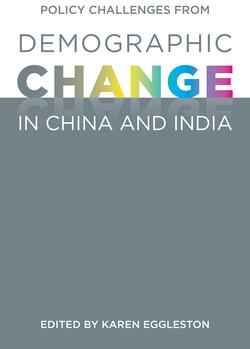
A forthcoming book, Policy Challenges from Demographic Change in China and India, edited by Eggleston examines the policy challenges posed by demographic change in China and India, from family planning to social pensions systems that support the elderly. One chapter looks exclusively at population policy, sex ratio and fertility in China.

A spur to action?

A shift to a consistent, nationwide two-child policy is a step in the right direction, Eggleston said, and it is unlikely to translate to a boom in the birthrate.

Some areas of the country and specific couples already enjoyed a two-child policy due to local policy differences and an earlier national policy easing. In 2013, the Chinese government allowed couples with a husband or wife from a single-child family to have a second child.

Chinese cities that never had a one-child policy to begin with, like Hong Kong and Macau, have very low fertility. A recent article in China Journal noted that, despite the ubiquity of the one-child policy campaign, China’s rapid economic development since 1980 deserves the “lion’s share of credit” for reduced births as the country’s total fertility rate has declined.

“The real question is how responsive the Chinese will be,” Eggleston said. “It’s not clear that there will be a noticeable response in the short or medium-term.”

Implementation of the policy will take time, but China will work “quite expeditiously” to apply such policies so that people’s expectations are met. Alongside legal change of China’s varying local policies, it’s expected that China will employ several public education campaigns and its cadre of family planning staff as conduits for disseminating the new national policy, Eggleston said.


Image
Chinese Family Planning Poster

A 1986 poster highlights China's one-child policy.

Credit: Flickr/Collection Stefan R. Landsberger, International Institute of Social History (Amsterdam).


But other factors are at play, too, such as urbanization and changes in labor force participation.

“Young and middle-aged couples will be thinking twice about having another child because of education expense, job demands and the need to support aging parents,” Eggleston said.

paper published by Eggleston and three other scholars in the Journal of Labor & Development analyzed how employment of females from rural areas affected fertility, using data from a survey of 2,355 married women in China. The survey examined “off-farm” employment, which was defined as travel to another village, town or city for work.

The researchers found that off-farm employment for those women reduced the probability of having more than one child by 54.8 percent and the probability of preferring more than one child by 49.6 percent. An earlier blog piece on VoxEU highlighted those research outcomes.

Another aspect of China’s demographic change is gender imbalance. Male preference has long been a cultural factor in China and, with the pressures of the one-child policy, a cause behind its skewed population.

That reality will not dramatically change soon, Eggleston said. Even if the end to the one-child policy brought the sex ratio at birth back to normal levels, the existing imbalance of the younger population will create millions of “forced bachelors” among poorer men who cannot find brides, as well as a whole set of related issues.

Choice restored

What the policy assuredly does, though, is remove a barrier. Many Chinese women who before did not have the opportunity to give birth to a second child, now have that opportunity.


[[{"fid":"221573","view_mode":"crop_870xauto","fields":{"format":"crop_870xauto","field_file_image_description[und][0][value]":"","field_file_image_alt_text[und][0][value]":false,"field_file_image_title_text[und][0][value]":false,"field_credit[und][0][value]":"","field_caption[und][0][value]":"","field_related_image_aspect[und][0][value]":"","thumbnails":"crop_870xauto"},"type":"media","field_deltas":{"3":{"format":"crop_870xauto","field_file_image_description[und][0][value]":"","field_file_image_alt_text[und][0][value]":false,"field_file_image_title_text[und][0][value]":false,"field_credit[und][0][value]":"","field_caption[und][0][value]":"","field_related_image_aspect[und][0][value]":"","thumbnails":"crop_870xauto"}},"link_text":null,"attributes":{"width":"870","style":"margin-right: 15px; padding: 10px; float: left; height: 321px; width: 230px;","class":"media-element file-crop-870xauto","data-delta":"3"}}]]


“This is a crucial arena of choice restored to the Chinese,” Eggleston wrote of the 2013 policy relaxation in a brief presented at the Federal Reserve Bank of Kansas City.

Previously, the absence of such a freedom led some couples to face substantial fines from the government, depending on the local variation of the one-child policy.

“Regardless of the new policy, demographic trends point to the importance of investing in child education, nutrition and skill development,” Eggleston said.

A similar message is carried in a chapter in Policy Challenges, co-authored by Sanghyop Lee and Qiulin Chen, who suggest that putting resources toward human capital development – education and health – can offset the destabilizing effects of demographic transition.

Research being done by FSI’s Rural Education Action Program led by Stanford professor Scott Rozelle works to directly inform education, health and nutrition policy in China.

Spending more on education – particularly for women and girls – is win-win. It complements pro-employment policies, and boosts productivity for women and the economy as a whole, Eggleston said.

Hero Image
beijing woman ballons
A woman in Beijing, China, holds children's balloons.
Flickr/Michael Abshear
All News button
1
News Type
Q&As
Date
Paragraphs

Demographic change is fast becoming one of the most globally significant trends of the 21st century. Declining fertility rates and rising life expectancy -- two of the patterns triggering demographic change -- will cause vast socioeconomic strains, especially in the Asia-Pacific region, which has some of the world's most populous countries. Stanford health researcher Karen Eggleston says comparison and cross-collaboration are needed to induce creative solutions.

In an interview with the Office of International Affairs, Eggleston discusses her research approaches and partnerships in the study of healthcare systems and health policy in the Asia-Pacific region. She leads a multiyear research initative that examines comparative policy responses to demographic change in East Asia. Eggleston says the goal is to help move global health policy to a place where everyone has an "equal opportunity for a healthier and longer life."

The Q&A may be viewed in full by clicking here.

Analyzing demographic change in China, Japan and South Korea is the focus of the book Aging Asiaan outcome of a conference between the Walter H. Shorenstein Asia-Pacific Research Center and the Stanford Center on Longevity.

Eggleston also coedited a special issue of the Journal of the Economics of Ageing with David Bloom, a professor at Harvard University, looking at a range of economic issues related to population change in China and India.

Hero Image
dsc 4402 online
Karen Eggleston (left) confers with a healthcare worker at a primary care clinic in Hangzhou, China.
Robin Yao
All News button
1
-

In this session of the Shorenstein APARC Corporate Affiliate Visiting Fellows Research Presentations, the following will be presented:


Yun Bae Lim, Samsung Life Insurance, “Demographic Changes in Korea:  How to Cut Through the High Seas”

Particularly in industrialized countries, people are living longer, while birth rates are declining.  Today, the average Korean lives longer than the average citizen in developed nations (as represented by the members of the OECD).  This is a significant milestone for a country that back in the 1960’s had a life expectancy of 52 years, which was amongst the lowest in the world. 

In his research presentation, Lim will focus on these demographic changes and the effects such as the decrease in the producing population, the increase in the total dependency rate and the shrinking potential growth rate.  Lim will offer some policy-related solutions to address this critical issue.


Jong Soo Paek, Samsung Electronics, “Open Innovation in the Electronics Industry”

Many companies in the electronics industry are struggling to survive because of lack of demand, low profit, etc.  Companies are also failing to make new innovative business while existing businesses are showing their limitation in terms of growth potential.  As a result, customers are seeing the electronics industry is not innovative. 

To overcome this hurdle, the open innovation model has become more popular replacing the closed innovation model in the past.  The open innovation model is a kind of process or strategy, in which companies can increase new ideas and technologies flowing into their innovation funnel by searching external sources and integrating them with internal ideas and resources.

Even though the open innovation model is really powerful, in reality, for large companies with Asian legacy and culture, it is not an easy task to manage.  There are many issues that undermine the success rate and effectiveness of open innovation such as closed-minds, the NIH syndrome, internal resistance, lack of capabilities necessary and so on.  Through his research presentation, Paek will discuss some solutions that are suitable for large, Asian companies like Samsung Electronics.


Philippines conference room

Encina Hall, Third Floor, Central

0
Corporate Affiliate Visiting Fellow
yun_bae_lim.jpg

Shorenstein APARC
Stanford University
Encina Hall, Room E301
Stanford, CA 94305-6055

(650) 725-8659 (650) 723-6530
0
Corporate Affiliate Visiting Fellow
jong_soo_paek.jpg MBA

Jong Soo Paek is a corporate affiliate visiting fellow at the Walter H. Shorenstein Asia-Pacific Research Center (Shorenstein APARC) for 2014.  Paek has been working at Samsung Motors, Samsung Corporations, and Samsung Electronics since 1997 in various teams such as Marketing Strategy and Strategy Planning.  Most recently, he was Senior Manager in Corporate Strategy Offices and was responsible for public relations and communications.  Prior to joining the Corporate Strategy Office, he was the manager responsible for strategy planning.  Paek majored in Business Administration and received his bachelor's and master's degree from Seoul National University.

Seminars
0
Former SK Center Fellow at the Freeman Spogli Institute for International Studies
yong_resize2.jpg PhD, MPP

Yong Suk Lee was the SK Center Fellow at the Freeman Spogli Institute for International Studies and Deputy Director of the Korea Program at the Walter H. Shorenstein Asia-Pacific Research Center at Stanford University. He served in these roles until June 2021.

Lee’s main fields of research are labor economics, technology and entrepreneurship, and urban economics. Some of the issues he has studied include technology and labor markets, entrepreneurship and economic growth, entrepreneurship education, and education and inequality. He is also interested in both the North and South Korean economy and has examined how economic sanctions affect economic activity in North Korea, and how management practices and education policy affect inequality in South Korea. His current research focuses on how the new wave of digital technologies, such as robotics and artificial intelligence affect labor, education, entrepreneurship, and productivity.

His research has been published in both economics and management journals including the Journal of Urban Economics, Journal of Economic Geography, Journal of Business Venturing, Journal of Health Economics, and Labour Economics. Lee also regularly contributes to policy reports and opinion pieces on contemporary issues surrounding both North and South Korea.

Prior to joining Stanford, Lee was an assistant professor of economics at Williams College in Massachusetts. He received his Ph.D. in Economics from Brown University, a Master of Public Policy from Duke University, and a Bachelor's degree and master's degree in architecture from Seoul National University. Lee also worked as a real estate development consultant and architecture designer as he transitioned from architecture to economics.

While at APARC, Dr. Lee led and participated in several research projects, including Stanford-Asia Pacific Innovation; Digital Technologies and the Labor Market; Entrepreneurship, Technology, and Economic Development; The Impact of Robotics on Nursing Home Care in Japan; Education and Development in the Digital Economy; and New Media and Political Economy.

Former Deputy Director of the Korea Program at Shorenstein APARC
-

Il Rae Cho"Preparing Financially for Aging and Retirement"

Recently, many issues related to aging have become more serious in both economic and social aspects all over the world.  Aging is something that nobody can avoid or neglect. However, most people tend to consider the issue of aging and retirement less serious than needed in real situations.  The lack of preparation for retirement may cause an economic turmoil to an individual's retirement life and national finance for social security.  In this presentation, Cho will show the current situations about aging and retirement and will offer practical solutions.


Yong Je Kim, "Next Generation Multimedia - What Will That Be?

Can you imagine the future TV and mobile phone?  What will they look like?

Only a few years ago, the main feature of a mobile phone was to make simple voice calls.  Today, we can do so much more - watch drama shows, sports and movies; take pictures and send them anywhere; and stay up-to-date checking the news and stock information of all countries in real time.  Through social media, we can share our opinion with many people regardless of location.  We can purchase goods or buy tickets for a concert simply using our mobile phones - without needing actual money or credit cards.  At the same time, TVs are getting smarter - providing useful functions like online shopping, remote video calls and watching movies without going to the movie theater. 

There are many technologies to enable these improvements, but the key technology is multimedia.  In this presentation, Kim will introduce some noticeable multimedia components and their progress, including examples of possible future TV and mobile phones. 

Philippines Conference Room

0
Corporate Affiliate Visiting Fellow
Il_Rae_Cho.jpg

Il Rae Cho is a corporate affiliate visiting fellow at the Walter H. Shorenstein Asia-Pacific Research Center (Shorenstein APARC) for 2013.  Cho has been working at Samsung Life Insurance since 1989 in various teams such as accounting, sales planning, and public relations.  Most recently, he was Vice President in charge of corporate planning teams and was responsible for making long-term and progressive plans for the future of Samsung Life Insurance.  Prior to joining the corporate planning team, he was the General Manager responsible for public relations and communications.  Cho received his bachelor's degree in public law from Seoul National University.  

Il Rae Cho Speaker
0
Corporate Affiliate Visiting Fellow
Yong_Je_Kim.jpg MS

Yong Je Kim is a corporate affiliate visiting fellow at the Walter H. Shorenstein Asia-Pacific Research Center (Shorenstein APARC) for 2013.  Kim has been working at Samsung Electronics for 28 years in the R&D Center.  His work has focused mainly in the area of multimedia signal processing for digital TV and mobile phones, serving most recently as the Senior Vice President of the multimedia R&D team.  Kim received his bachelor's degree in electronic engineering from Sogang University and his master's degree from Ajou University.

Yong Je Kim Speaker
Seminars
-

A tremendous amount of radioactive products were discharged as a result of the accident at the Fukushima nuclear power plant in March 2011, which resulted in radioactive contamination of the plant and surrounding areas. While geographical distribution of radioactive iodine, tellurium, and cesium in the surface soils was smoothly (but not always systematically) widespread all over the region, health risk information by the government, media, and other organizations is most likely to be given in terms of administrative boundaries (cf. prefectures, municipalities, etc.) and/or distance from the radiation source.

This paper estimates the effect of such health risk information rather than the actual health risks of radiation on land and other prices in different locations. We find that the prefecture and municipality border effects – but not the distance effect from the nuclear power plant – are significantly related to a reduction in land and other prices after the accident. This shows that people responded to health risk information based on administrative boundaries rather than the actual health risk of radiation after the disaster. Although health risk information based on prefecture and municipality boundaries has an obvious advantage of distilling large and complex risk information into a simple one, the government, media, and other organizations need to recognize and carefully examine the potential of misclassifying non-contaminated areas into contaminated prefectures. Doing so will avoid unintentional consequences to the region’s economy.

Hiroaki Matsuura is currently Departmental Lecturer in the Economy of Japan in the School of Interdisciplinary Area Studies, University of Oxford and a Junior Research Fellow of St. Antony’s College. His main interests are health economics and demography, with a special interest in the relation between laws and population health. Hiroaki received his B.A. in Economics from Keio University, M.A. in Social Science from the University of Chicago, M.S. in Project Management from Northwestern University’s McCormick School of Engineering and Applied Science, and Sc.D. in Global Health and Population (Economics track) from Harvard University’s School of Public Health. In the past, he was affiliated with Institute of Quantitative Social Sciences, Human Rights in Development, and Takemi Program in International Health at Harvard University. He also worked as a research assistant at the National Bureau of Economic Research. His doctoral dissertation research explores a right to health or to health care in national constitutions of 157 countries and state constitutions of the 50 U.S. states and estimates the impact of introducing (or removing) a right to health or to health care into national and state constitutions on health system and population health outcomes. His most recent article, “The Right to Health in Japan: Challenges of a Super Aging Society and Implication from Its 2011 Public Health Emergency” (with Eriko Sase) will be appeared on “Advancing the Human Right to Health”, edited by José M. Zuniga, Stephen P. Marks, and Lawrence O. Gostin, Oxford University Press, 2013. 

Daniel and Nancy Okimoto Conference Room

Hiroaki Matsuura Departmental Lecturer in the Economy of Japan in the School of Interdisciplinary Area Studies Speaker University of Oxford
Seminars
Paragraphs

China's population of 1.34 billion is now 50 percent urban, over 13 percent above age 60, and with 118 boys born for every 100 girls. For such a large population at a relatively low level of per capita income, how will aging interact with substantial gender imbalance and rapid urbanization?

Will Demographic Change Slow China’s Rise? In the eponymous article recently published in the Journal of Asia Studies, five Stanford scholars of political science, sociology, and economics based at the Shorenstein Asia-Pacific Research Center — Karen Eggleston, Jean C. Oi, Scott Rozelle, Andrew Walder, and Xueguang Zhou, with a former postdoctoral fellow Ang Sun — discuss how the intertwined demographic changes pose an unprecedented challenge to social and economic governance, contributing to and magnifying the effects of a slower rate of economic growth.

The authors touch upon a wide range of topics of policy import:
· China must overhaul rural education quickly if it is going to avoid producing tens of millions of workers who will be marginalized in the nation's future high-wage, high-skill economy.
· Growth slowdowns are almost always productivity growth slowdowns. Many forces impinge on multi-factor productivity; the stability and predictability of markets and governance are lynchpins. Discontent with widening disparities in China could undermine this fundamental foundation of growth.
· Demographic change will fundamentally challenge the conventional governance structures in China. Efforts to impose a bureaucratic solution to the intertwined social challenges China faces will almost inevitably stoke tensions between the society and the state. In both urban and rural areas, expansion of the bureaucratic state may become the central target of popular contention.
· China's high savings rate is partly explained by low fertility and parents' need to save for their own old-age support. Initiation of rural pensions and significant expansion of health insurance coverage and are examples of the social policy responses that China has undertaken to prepare for “growing old before becoming rich.” But much remains to be done.
· China's increasing burden of chronic disease further exacerbates the growth-slowing potential of a more elderly population and its associated medical expenditure burden.
· Although reducing precautionary savings and increasing domestic consumption as an engine of economic growth are widely acknowledged goals for China's economy, a rapid decline in savings could also imperil China's future economic growth by jeopardizing the current basis of the financial system.
· Demographic change will shape almost every aspect of how China copes with a slowing rate of economic growth, and may play a decisive role in the future social stability of China, with spillover effects for the region and the rest of the world.
The research is one product of a 3-year project analyzing Asian demographic change which will conclude in 2014 with a conference and edited book on demographic change and urbanization in China, in comparative international perspective.

All Publications button
1
Publication Type
Journal Articles
Publication Date
Journal Publisher
The Journal of Asian Studies
Authors
Karen Eggleston
Jean C. Oi
Scott Rozelle
Andrew G. Walder
Xueguang Zhou
Ang Sun
Paragraphs

"Old while not affluent" situation, together with an unsustainable high investment rate and high dependency on foreign trade, spurs hot debates on the challenges of a fast-aging population and the exploitation of the second demographic dividend in today’s China. Literature related to elderly health in countries other than China often starts with medical concepts and then dwells on economic issues, mainly focusing on socioeconomic, behavioral, and environmental factors and their effects on the health of the elderly. This article reviews economic research on these topics and then discusses possible implications for the economic analysis of aging China.

All Publications button
1
Publication Type
Working Papers
Publication Date
Journal Publisher
Asia Health Policy Program working paper # 34
Authors
Subscribe to Aging